RBD and other things PD-related

Diagnosis of PD is often not made until a person is in their 60s. With all the attention that has been focused on the disease(s) in the last 20 years or so, I suspect that more people are getting diagnosed at an earlier age, although most cases of young onset PD are likely to be genetic in origin.

However, an “early” diagnosis may not be a timely diagnosis, as  the title of one opinion piece I read some time ago said (see link below).

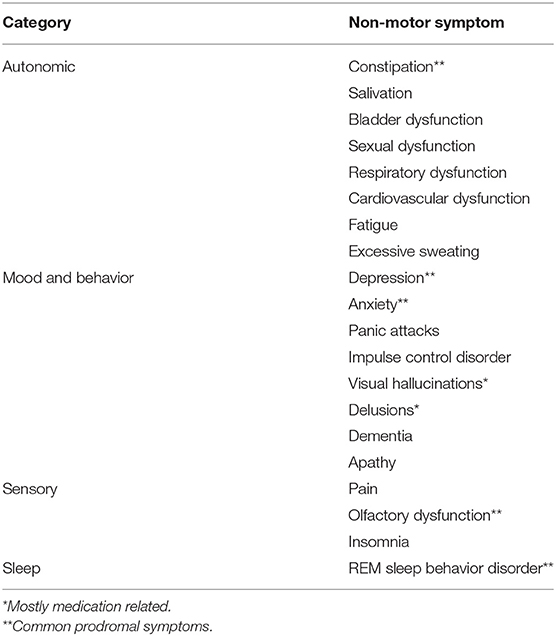
It is now becoming apparent that “Parkinson’s”includes several categories of symptoms, not just rigidity, tremors, and gait, as shown in the table below::

Source for the following table, accessed 11/28/2021:  URL=https://www.frontiersin.org/article/10.3389/fneur.2020.00686

The problem is that treatment and diagnosis are often delayed until PD has already reduced Quality of Life for many folks.

Good evidence for the quality-of-life benefits of existing symptomatic treatment supports the argument for earlier diagnosis at a time when symptoms are already present (emphasis added). This argument would be significantly bolstered by the development of disease-modifying treatments. Benefits of early diagnosis and treatment would affect not only the individual (and their families) but also the wider society and the research community. Ultimately, however, shared decision-making and the principles of autonomy, beneficence, and non-maleficence will need to be applied on an individual basis when considering a “timely” diagnosis.

Therefore, the earlier one can predict the probability or inevitability of PD the sooner one can use treatments – whether pharmacological, surgical, nutritional, or lifestyle in nature – that can either reduce, delay, or defer (and possibly reverse?) the symptoms of PD.

Of all the symptoms associated with PD: tremors, bradykinesia, depression & anxiety, posture, gait issues (difficulties walking), REM Sleep Behavior Disorder (RBD), anosmia (loss of ability to smell), cognitive issues, facial masking, and micrographia (small handwriting) – RBD is the one which is most highly predictive of a later PD diagnosis.

The predictive ‘specificity’ is so strong that if someone has RBD, the chance of being diagnosed with Parkinson’s or related conditions over the next 15 years or more is over 80%

If an 18-21 year old person walked into a physician’s office with RBD, essential tremors, and depression as main symptoms, what would happen? In 1970, probably nothing – one might get treated for depression, but essential tremors are also called “benign”tremors, and were ignored, even if the patient reported being able to feel the tremors while resting, though invisible to the external observer. As for RBD, it would probably also be ignored.

By “a physician,” we are talking about a General Practitioner, or “family doctor,” and not s specialist like a  Movement Disorders Specialist who would be trained to identify varied symptoms, including those that are prodromal. And, of course, the identification of prodromal symptoms has only been investigated within the last decade or so, and are identified as for “research only” purposes – not for clinical diagnosis. A recent survey article (not referenced below) indicated that a majority of general practitioners were either unaware of the Movement Disorders Society’s list of prodromal symptoms, or were not using them to make referrals to Movement Disorders Specialists.

But thanks to the dedication and generosity of folks like Michael J. Fox and others, PD has become a respectable disease for which the person who has it has no reason to be apologetic or ashamed, and can hold their head up (and they ought to, since one symptom is to walk with shoulders stooped down) and proudly proclaim that they have Parkinson’s, which is why they walk funny. And so it goes.

Articles that were quoted above or which contributed to this article are found in the links below.

But first:

I See The Signs of PD

Perspective: Current Pitfalls in the Search for Future Treatments and Prevention of Parkinson’s Disease

An early diagnosis is not the same as a timely diagnosis of Parkinson’s disease

Prodromal REM Sleep Behavior Disorder and PD

10 Early Signs of Parkinson’s Disease / Parkinson’s Foundation

REM Sleep Behavior and Motor Findings in Parkinson’s Disease: A Cross-sectional Analysis

Current Update on Clinically Relevant Sleep Issues in Parkinson’s Disease: A Narrative Review

The prodromes of Parkinson’s disease

Exercise-Induced Neuroprotection of the Nigrostriatal Dopamine System in Parkinson’s Disease

###

Agalinis species found on my way to cast my ballot . . .

Agalinis strictifolia

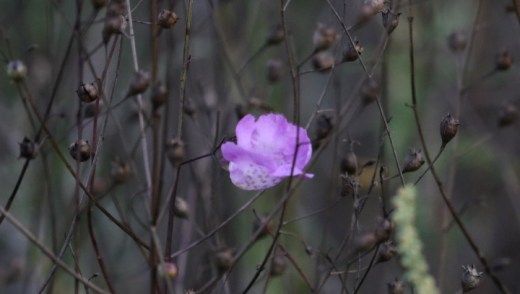
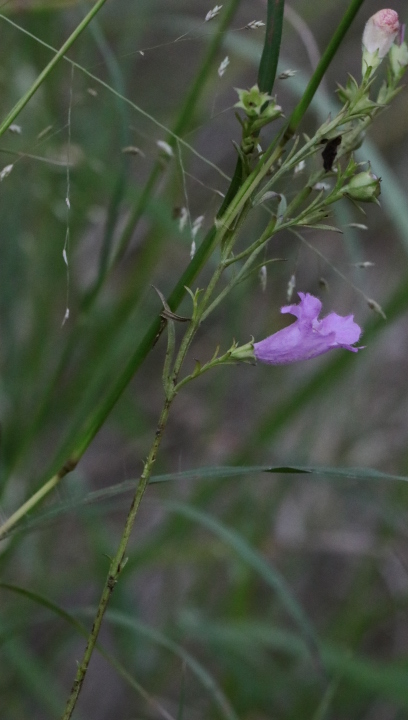
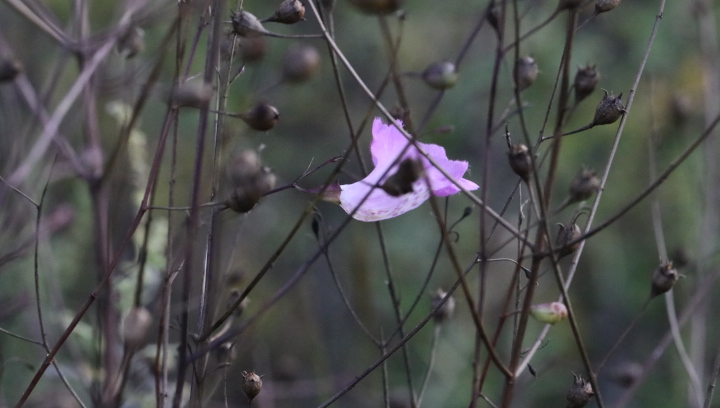
November 2nd, 2021, was a primary election day where I live. I decided to carry my camera in order to get some better photos of the first species shown below. Good enough for positive identification, if nothing else. On the other side of the draw, along the actual hike and dog walk bathroom trail, found a different set of Agalinis species. Plus other stuff, which I might post later. The Agalinis species are also known by the common name of “False Foxgloves” due to their resemblance to the “True” Foxgloves, one might suppose.

Agalinis in bloom and gone to seed on Election day:

Agalinis heterophylla

Agalinis heterophylla

and, not so far away,  Agalinis strictifolia:

Agalinis strictifolia

Agalinis sstrictifolia

I had a difficult time making the correct identification,  but thanks to the good-hearted folks on iNaturalist.org. I was able to get through my confusion and agree to the IDs they made from my numerous photos. Next year, I won’t wait until November to look for these. And hopefully, will be able to identify which Agalinis is which, using the field guides and other materials available.

###

Old man’s beard

Last September, the bulldozers came and razed a 19 acre plot of land that was for sale. Along with it went any number of wildflowers, including a healthy stand of Old Man’s Beard, aka Texas Virgin’s Bower, and other native and a few invasive plants.

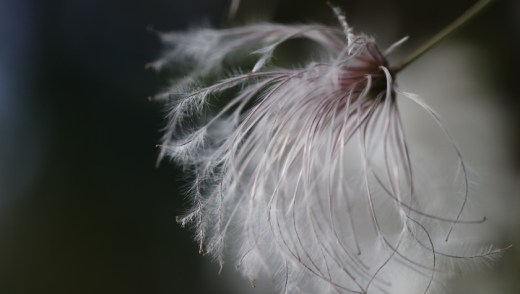
recently I came upon a female C. drummondii wending its way through some planted holly (most likely a non-native variety), catching the November sun in feathery achenes. 

A possible explanation to Monarchs’ dallying around Texas this year

This article came up in my newsfeed recently,.

It suggests  why some Monarch butterflies seem to be hanging around Texas this year – the popularity of Tropical milkweed (Asclepias curassavica). The article further goes on to explain that

” Tropical milkweed becomes a problem when planted in temperate areas where it does not die back in winter. A protozoan parasite of monarch butterflies, Ophryocystis elektroscirrha or OE for short, can travel with monarchs visiting the plants and become deposited on leaves. When caterpillars hatch and start eating the plant, they ingest the OE. High OE levels in adult monarchs have been linked to lower migration success in the eastern monarch population, as well as reductions in body mass, lifespan, mating success, and flight ability.”

Milkweeds native to the region die back after blooming, and with them, the OE. Thus each new flight of Monarchs gets to lay their eggs on new, uninfected milkweeds.

Interestingly, the article was written over three years ago…

Tropical Milkweed is a No-Grow – by the Xerxes Society

On the other hand, I have now seen and photographed Monarchs in my backyard from late March through November . I went to vote  on Tuesday, November ,2, and  observed more than a few Monarch butterflies, both in the greenbelt and in the demonstration garden. Sadly,  many of the flowers being used didn’t appear to be natives.  I also noticed that the milkweeds at the community center garden appear to be Tropical milkweed. (They have yellow flowers instead of orange flowers).

Some plants and wildlife in October:

Can Parkinson’s be predicted using Artificial Intelligence (AI)??

Today we take a look at a review of other papers (a way to get a paper published without having to do any actual research yourself, and the drudge work can be delegated to grad students, someone once told me), but nevertheless, there’s much to be learned from looking at the big picture instead of focusing on individual studies, so we’ll forge ahead. Next article will be on rehabilitation therapies that address motor and cognitive issues in PD.

Interestingly enough, this article comes from Indonesian Journal of Electrical Engineering and Computer Science – not the first place you’d probably look for information n Parkinson’s (PD). And, unless you’re a computer science major or are developing applications using AI, I wouldn’t recommend looking this one up.

Most of the studies reviewed used various techniques to analyze datasets of speech recordings, and tried to differentiate between “healthy”people and people with PD. Some of the approaches were fairly accurate (in the 90% plus range) while others were not that much better than reliance on the four cardinal symptoms to be observed clinically (resting tremor, rigidity, bradykinesia and postural instability). 

This one will either be good reading before going to sleep (unless you’re into neural networks and Bayesian prediction) or a good way to induce a headache. The authors do call for more research (naturally) in this area, especially in regard to developing biomarkers using either neuro-imaging or biofluids. And they note that fine-tuning of biomarkers must be  done, so that there is an acceptable balance between false positives and false negatives in predicting whether a person will likely get PD in the near or distant future.

Citation for this is:

A comparative and comprehensive study of prediction of Parkinson’s Disease, (2021) Pandi, V., et al., Indonesian Journal of Electrical Engineering and Computer Systems, vol. 23, No. 2, September 21, pp. 1748-1760.

It’s an open access article, so if you are interested in computer systems. go ahead and search for it. 


Late Stage Parkinson’s (LSP): Undertreated?

This paper (or rather a chapter in a thesis) landed in my newsfeed recently. In it, the authors describe a study done to see whether people with Parkinson’s in the later stages are getting adequate treatment and whether they could benefit from more specific treatment. (A link to the PDf file is at the end of this post).

A person in Late Stage Parkinson’s has more than one of the following:

  • Motor symptoms not controlled despite medication.
  • Levadopa-related dyskinesias or dystonia,
  • PD dementia (defined according to MDS Task Force definition (Dubois et al. 2007), and
    not treated with cholinesterase inhibitors,
  • Depression not adequately treated,
  • Neuropsychiatric symptoms, such as agitation/ aggression; anxiety and irritability,
  • Orthostatic hypotension, pain, constipation, urinary symptoms, insomnia or daytime sleepiness (autonomic systems degeneration),
  • Falls on a regular basis,
  • Other symptoms related to risk of choking, speech issues, or producing too much saliva,
  • Inadequate Home environment.

Basically, the study provided a list of recommended activities and treatment on a sheet of paper (the control group) and actually providing the treatments and activities recommended, (the treatment group).

Not surprisingly, the treatment group did better at the end of the study than the controls. The conclusions were that people in late-stage Parkinson’s are often undertreated and could benefit from implementation of movement disorder specialists’ recommendations. (One would hope that the control group would also be provided with the treatments after the study ended. Perhaps, leading to another report)?

I’ve paraphrased the table used to describe late stage Parkinsonism in order not to infringe on their copyright. The title of the entire thesis is “Impairment and Disability in Late Stage Parkinsonism” and the overall author is Danny Hommel. I couldn’t find an email to ask for permission in writing to reproduce anything verbatim.

Other chapters include:

  • The late-stage of parkinsonism’s – motor and non-motor complications
  • The prevalence and determinants of neuropsychiatric symptoms in late-stage parkinsonism
  • Prevalence and prescribed treatments of orthostatic hypotension in institutionalized peoples with Parkinson’s disease (the chapter discussed in this post)
  • Optimizing treatment in undertreated late-stage parkinsonism: a pragmatic randomized trial
  • General discussion/English summary

Published as: ALAJ Hommel, MJ Meinders, NJ Weerkamp, C Richinger,
C Schmotz, S Lorenzl, R Dodel, M Coelho, JJ Ferreira, F Tison, T Boraud,
WG Meissner, K Rosqvist, J Timpka, P Odin, M Wittenberg, BR Bloem,
RT Koopmans, A Schrag and the CLaSP consortium.
Optimizing treatment in undertreated late-stage parkinsonism: a pragmatic
randomized trial.
J Parkinsons Dis. 2020;10(3):1171-1184.

Monarchs and Queens

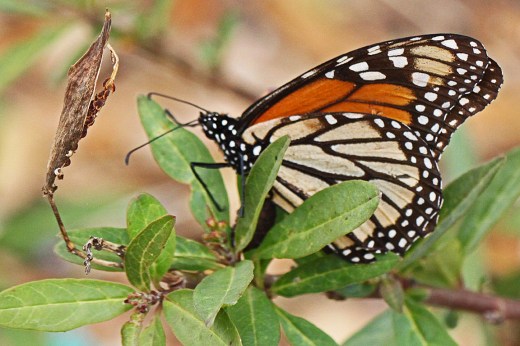
Danaus plexippus - Monarch

This year has been a strange one for Monarchs in my backyard.

Usually I just get a few Monarchs passing through in the Spring and Fall Monarch migrations. My geographic location is on the Southern edge of the pathway usually taken as the Monarchs pass from Mexico into Texas, mostly between Del rio and Eagle Pass, and then spreading out in a pie wedge or fan shaped flight plan spread across the US Midwest and up to the Northeast US and even into Canada.

This year, I have seen at least one Monarch every month since March 27, through September 1st, though I wasn’t able to capture photographs of all of them. It appears that the Monarchs have either been staying around the neighborhood, or they lay some eggs, head on their way, and the newly hatched adults do a little egg laying before heading up North as well.

It is difficult to say which is the case.But I can show you some of them: (Click on the thumbnail for a larger view).

We’ll see how many come through the yard in September and October.

###

A global resource

Who would have guessed it?

There is now a checklist for all the vascular plants on the globe. Actually, probably many folks could have guessed it – this is what the internet was invented for, not for sharing cute kitten pictures on Facebook or Instagram (sorry, don’t mean to offend anyone. I like cute kitten pictures, too).

In an article (open access) published on nature.com, you will find The World Checklist of Vascular Plants, a continuously updated resource for exploring global plant diversity. The DOI reference is https://doi.org/10.1038/s41597-021-00997-6  where you can find the actual citation to use:

Govaerts, R., Nic Lughadha, E., Black, N. et al. The World Checklist of Vascular Plants, a continuously updated resource for exploring global plant diversity. Sci Data 8, 215 (2021). https://doi.org/10.1038/s41597-021-00997-6

There have been other checklists, and the authors provide a table explaining the differences.

To maximise utility, such lists should be accessible, explicitly  evidence-based, transparent, expert-reviewed, and regularly updated, incorporating new evidence and emerging scientific
consensus. WCVP largely meets these criteria, being continuously updated and freely available online. Users can browse, search, or download a user-defned subset of accepted species with corresponding synonyms and bibliographic details, or a date-stamped full dataset

The World Checklist of Vascular Plants (WVCP)

As sloppy as I am as a scientist, I might not make use of this as often as I should. But I’ll post it, and maybe someone else will get more use out of it than I will. Who knows? Maybe I’ll make more use of it, having shared this post.

###

August: the heat goes on… But if you plant it, they will come.

But not as hot here in Central Texas as it is elsewhere, and not as hot as it has been in recent years, when there were streaks of thirty or forty days of 100 plus Fahrenheit weather. This year has been hot but humid – hey, the moisture from the melting ice caps has to go somewhere, right?

And yet, “Mother Nature” continues to give us native plants that thrive in whatever kind of weather and climate she gives us. Or we make for her, given that the current climate change is driven by the Industrial Revolution, which began some two hundred years or so past.

The Conoclinium greggii (Gregg’s Mistflower) will bring Queen and Monarch butterflies to your yard. It has been interesting to watch the Queens defend their territory against the one or two Monarchs that attempt to get a pheromone enhancing boost from the mistflowers.

 I’ve even seen a Gulf Fritillary take a break from the Passion Flowers and go after the mistflowers.(click on photos in the gallery to see them full size).

Well, this didn’t start out as an orange and black butterfly identification post, but that’s where it ended up, it seems. Go figure.

As you plant more native plants, you will find that you attract more native wildlife (and, hopefully ,fewer exotic or invasive fauna).

Sitting on the steps of the deck before dinner, as I took several of thee photos, the line from Ray Bolger’s character in The Wizard of Oz came to mind: “I could while away the hours, conversing with the flowers…”

###

Not a cure, but a biomarker

A biomarker for Parkinson’s?  Maybe… (If you don’t have a free ResearchGate account, yu might not be able t see this link):

A blood marker for Parkinson’s Disease: Neuronal exosome-derived α-synuclein

This isn’t in print yet, so I’ll just quote frm the abstract:

18 To date, no reliable clinically applicable biomarker has been established for Parkinson’s
19 disease (PD). Our results indicate that a long hoped blood test for Parkinson’s disease may
20 be realized. We here assess the potential of pathological α-synuclein originating from
21 neuron-derived exosomes from blood plasma as a possible biomarker. Following the
22 isolation of neuron-derived exosomes from plasma of PD patients and non-PD individuals
23 immunoblot analyses were performed to detect exosomal α-synuclein. Under native
24 conditions significantly increased signals of disease-associated α-synuclein forms in neuron25 derived exosomes were measured in all individuals with PD and clearly distinguished PD
26 samples from controls. By performing a protein misfolding cyclic amplification assay these
27 aggregates could be amplified and seeding could be demonstrated. Moreover, the
28 aggregates exhibited β-sheet-rich structures and showed a fibrillary appearance. Our study
29 demonstrates that the detection of pathological α-synuclein conformers from neuron-derived
30 exosomes from plasma samples has the potential of a promising blood-biomarker of PD.

Exosomes are small bundles of proteins  enclosed by a membrane (if I understand it correctly)(feel free to correct me- the Wikipedia article hd a note saying that it was too technical for most readers – and I agree).

Exosomes contain material from the cells from which they originated, so might be used as biomarkers. Obviously, it will take a while to fund the research and develop some way to determine how far along the way to developing PD someone is.  But the sooner a person can deal with it, the better the opportunity to live well with it. I look forward to the development of biomarkers that will help predict who might get Parkinson’s, so those folks can take preventive action.

I am fortunate that my symptoms did not appear in the usual sequence,and that I had DBS early after diagnosis, have had an outstanding medical team looking out for me and working with me, have a strong local community supporting people with Parkinson’s, and have a care partner who makes sure that my diet is full of organic foods, produce, and as few highly processed foods as possible. And I get lots of exercise, considering that I’m not athletic and I am not into weightlifting or bodybuilding.

Lucky me.

###