A brief excursion…

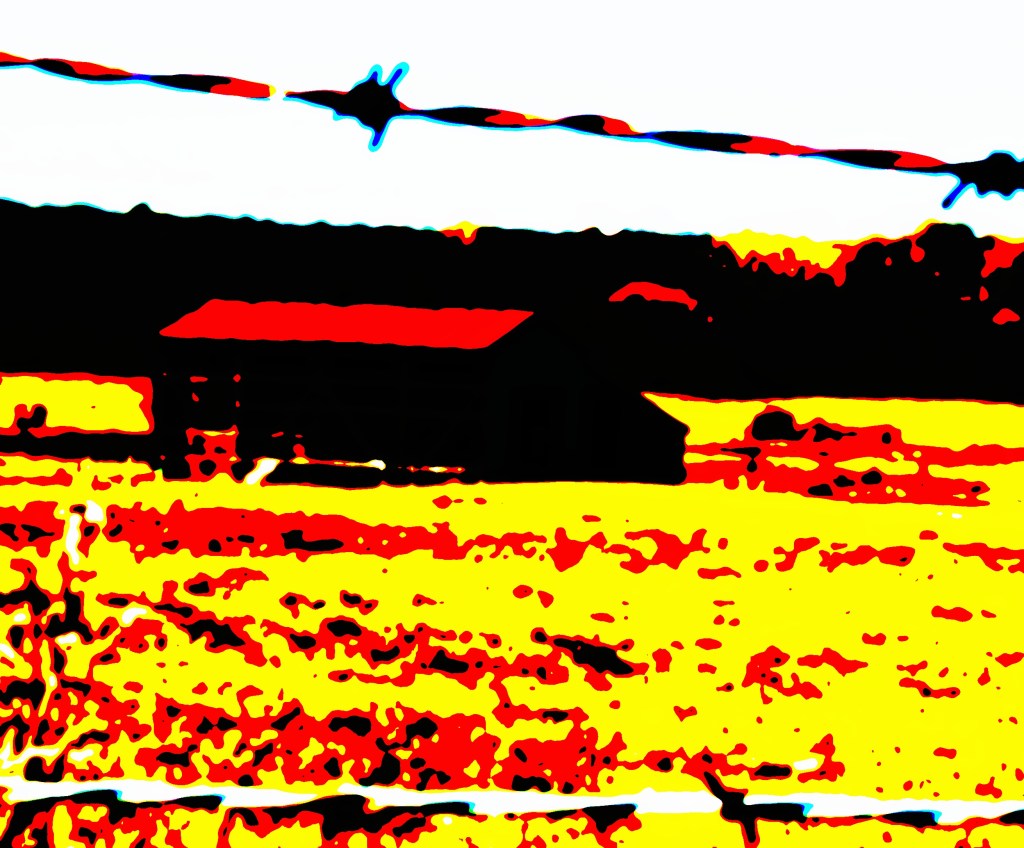
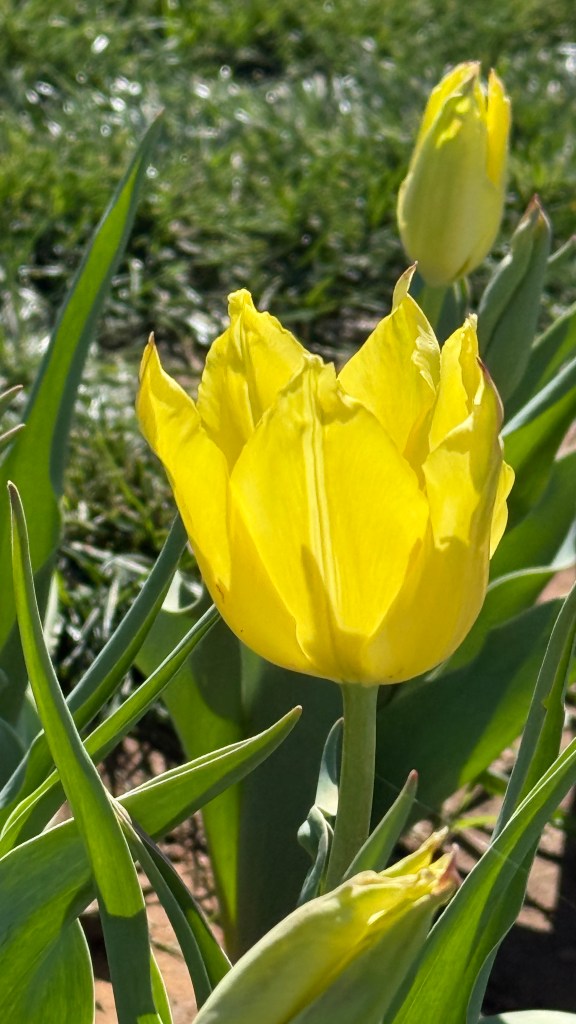
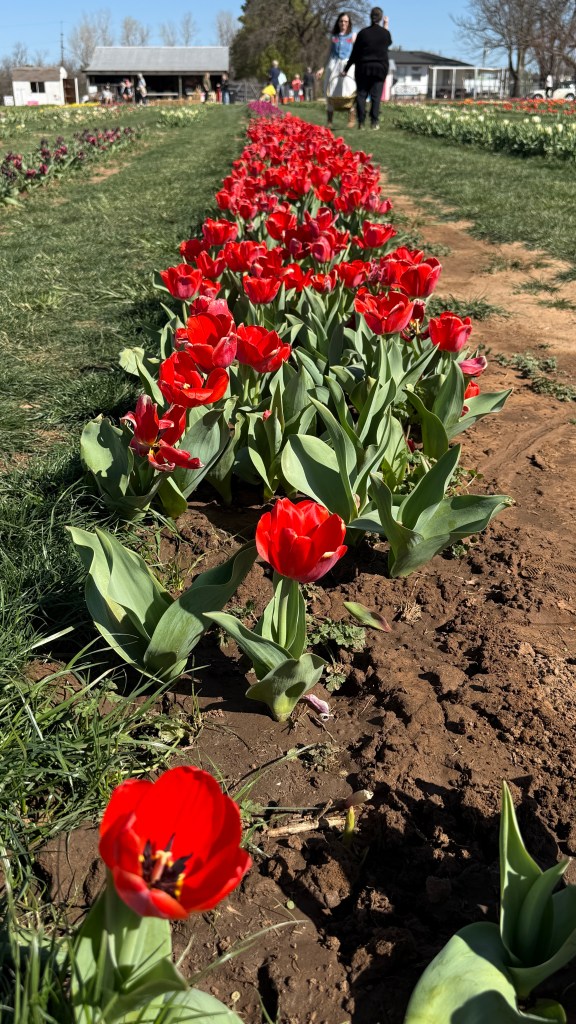
Took a side trip with the Master Gardeners class group to the Oklahoma Tulip Farm in Harrah, OK, the other day. Tulips were blooming in various stages and colors, and I took a few photos:

The first is a view at the farm outbuilding on the adjacent property, posterized and framed between the barbed wire fence.

The next few are of tulips, of course:

And later the same day, caught some silhouettes against the Western horizon…

Some days, you need to take a break from the “brief excursions” of what passes for reality, and remind oneself what reality is like in the real world of this tiny outpost in the vast emptiness of space, the cosmos, and appreciate the quiet times.

If I Had More Time

###

Shoes: Vincent’s, Bob’s, and Carl’s

I once had the pleasure (or punishment) of reading from Jacques Derrida’s “A Derrida Reader: Between the Blinds, ” a collection of essays and lectures translated from the original French  while doing volunteer work with Vocal Eyes, a group at the University of Florida in. Gainesville Florida, which read various textbooks which were not available through Books on Tape, Recordings for the Blind, or other sources, in order to provide assistance to others who may have had impairments or disabilities, such as partial or full blindness, years of promotion through a coach’s pressure on academics instead of insisting they be taught to read at their grade level (for the sake of the young person and not for the sake of the coach’s desire to have a winning team – and if you think this is a run on sentence, you should definitely try reading this book, which can be found on the internet archive (but only available for vision impaired people), or can be found at various used bookstores for under $12.00. 

The purpose of mentioning this somewhat dense and difficult to read book (although I must admit, by the time I had reached his discussion of Vincent Van Gogh’s painting of a pair of shoes, I had gotten into the rhythm of the lecture and had started reading with feeling, emotion, and meaning, which hopefully helped whoever was having to listen to this book as an assignment).

Nope, the reason for this lengthy prologue was to introduce a couple of photos, one from the book Van Gogh: The Complete Paintings, and the other, a photo of my own hiking boots, which had reminded me of the essay about. the boots, so I manipulated my photo to imitate (sort of) Van Gogh’s pair of shoes. Whose shoes Vincent had painted, I do not know. I actually had some shoelaces showing in the original picture of my shoes, but they were cut off during the cropping.

Vincent Van Gogh: Pair of Shoes / Bob Kamper: Hiking Boots

Vincent Van Gogh: Pair of Shoes / Bob Kamper: Hiking Boots

Kinda anti-climactic, no?

Oh well, I can always end the post with a song and a question:

Who wrote “Blue Suede Shoes?”

and a reprise:

Carl Perkins with Eric Clapton, George Harrison, Ringo Starr, Dave Edmunds, and many more…

Exercise is good medicine

As several of my Power for Parkinson’s instructors are fond of repeating “Motion is the Lotion.”

As late as 2018, the society for Movement Disorders (or International Parkinson’s and Movement Disorder Society, to be more exact) had stated that there was insufficient evidence that exercise had any effect on the progression of the disease or its symptoms. (The exact reference can be found in an earlier post in which I included a presentation with references to studies linking the effects of music and dance as the best of the best forms of exercise (it goes without saying, however, that the best exercise is the one that you yourself find and enjoyable and reinforcing, and will therefore actually continue to do).)(Although I just said it, in contradiction to the previous sentence.)(Come to think of it, I should update that presentation with more current citations…)

Which brings us up to 2025, just seven years later, in which a review article concludes that:

These findings provide strong evidence that exercise, even light intensity, benefits general cognition, memory and executive function across all populations, reinforcing exercise as an essential, inclusive recommendation for optimising cognitive health.” (Singh B, Bennett H, Miatke A, et al, Effectiveness of exercise for improving cognition, memory and executive function: a systematic umbrella review and meta-meta-analysis, British Journal of Sports Medicine Published Online First: 06 March 2025. doi: 10.1136/bjsports-2024-108589

Results 133 systematic reviews (2,724 RCTs and 258 279 participants) were included. Exercise significantly improved general cognition (SMD=0.42), memory (SMD=0.26) and executive function (SMD=0.24). Memory and executive function improvements from exercise were greater for children and adolescents than for adults and older adults. Those with attention-deficit/hyperactivity disorder exhibited greater improvement in executive function than other populations. Effects were generally larger for low- and moderate-intensity interventions. Shorter interventions (1–3 months) and exergames (video games that require physical movement) had the largest effects on general cognition and memory. Findings remained statistically significant after excluding reviews rated as low and critically low quality.” (Emphasis added)

For the non-nerds out there, the review has also been been reported as Exercise of Any Kind Boosts Brain Power At Any Age in the Medical Express News by the University of South Australia.

In addition to several quotes from the lead author, Dr. Singh, the article mentioned Senior researcher Professor Carol Maher, who said exercise should be encouraged to boost cognitive health across all ages and fitness levels.

Cognitive decline and neurodegenerative disease are growing global health concerns, according to Professor Maher.

The review, which included over a quarter of a million subjects, presented compelling evidence that exercise should be integrated into health care and education settings to promote cognitive health.

Even small amounts of exercise can improve memory and brain function—especially for those at higher risk—means exercise should be included in clinical and public health guidelines.

You don’t maintain good cognitive health on a diet of hamburgers and diet soda, staying up late and sleeping until noon, one might conjecture. Riding around a golf course on a golf cart doesn’t exactly fit the description of the types of exercise reviewed in this study.

And, as fitting such an occasion, I’ll close out with a self-serving rendition of a “Parkinson’s Parody” of a song written by Christine McVie, originally. performed by Fleetwood Mac, and made even more famous by former President Bill Clinton’s campaign in the late 20th Century:

#Parkinson’s #PowerForParkinson’s #Reviews #Exercise #Cognitive #Memory #ExecutiveFunction #BenefitsOfExercise

###

Me and My PD – 14 Sept 2024

It’s been said that if you’ve met one person with Parkinson’s Disease (PD), then you’ve met one person with PD.

Today I saw a news segment about a guy who plays trombone, and how he had experienced a deterioration in his ability to play in the previous year. He was diagnosed with Essential Tremors (ET), also known as familial tremors or benign tremors. The point of the story was that he had opted for Deep Brain Stimulation (DBS), during which the patient is awake (at least part of the time), and that he played trombone during the operation.

I hope his physician got the diagnosis correct. As noted earlier in this blog, et-pd-is-there-is-or-is-there-aint-a-connection, a research paper was published that established a link between ET and PD: “LINGO1 rs9652490 is associated with essential tremor and Parkinson disease.” Having had essential tremors since my teenage years, I checked my DNA analysis and discovered that I did have that specific variation on the LINGO1 gene. As I’ve often remarked about PD research, this would have been good information to know 50 years ago.

I did remark a couple of times to my Movement Disorders Specialist’s team that I regretted not having asked to play the saxophone or guitar during my own DBS operation. To their credit, they attempted to fine tune my settings, but either due to lack of practice or progression of PD symptoms, I was not able to recover the picking and strumming skills I had back in 1997. And so it goes.

These days, I try to play on my keyboard as often as I can, but any attempt to follow an instructional program, or parse out simple pieces written for instruction (e.g., Bach’s selections from the notebook for Anna Magdalena, Bela Bartok’s pieces for children), soon devolve into loose jams on simple chord progressions, or attempts to recall, remember, and play some of my own simple songs with a minimum of egregious errors.

But I have promises to keep and chores to do before I sleep, so I will just end this with a selection from 1997, when I could play a little bit (self-taught). Unlike many of my songs, this one was not influenced by Bob Dylan.

You’re A Mystery To Me

#Essentialtremors #Parkinsonsdisease #music #DBS #idiopathic

###

Where have all the (native) flowers gone?

Prosser, R.S., Brain, R.A. Where have all the flowers gone? A systematic evaluation of factors driving native terrestrial plant decline in North America. Environ Sci Pollut Res (2024). https://doi.org/10.1007/s11356-024-34349-9 

Prosser and Brain have done the research and  have come up with the following conclusions:

  • Habitat alteration and non-native species are the most important drivers of the decline in native terrestrial plant diversity in North America.
  • No listed species in the U.S. or Canada faced a singular threat. In the recovery plans for all listed species, several threats were identified as contributing to their risk of extirpation or extinction.
  • Pesticides, specifically herbicides, represent a micro-scale contributor to the decline of plant biodiversity in North America relative to other drivers.

(Note: the above three points are taken verbatim from text in the article, although they are not presented as bullets in the subject article. Emphasis using bold and italics has been added).

In their conclusion, they argue that pesticides and herbicides make an easy target for litigation, even though they contribute minimally to the extirpation or extinction of native plants .

On the other hand, Paraquat is an herbicide that not only has been banned in over 50 other nation-states, and has been linked as a probable cause of Parkinson’s Disease in the book Ending Parkinson’s Disease: A Prescription For Action  and in this February 2024 article on the EarthJustice website: This Weed Killer Is Linked to Parkinson’s. Why Isn’t It Banned Yet?

I would suggest that the authors of the article on causes contributing to reduction of native plant species are failing, in their words, to see the forest by focusing on the trees. I am a native plant advocate who also has Parkinson’s Disease. I don’t know whether I have been exposed to Paraquat in the past. Just because pesticides and herbicides are not a major factor in the reduction of native species doesn’t mean I should just ignore the bigger picture of the effect of herbicides like Paraquat on the species Homo sapiens, many of whom, including myself, have displaced other native occupants of this territory, like the Apaches, the Tonkawas, and other tribal groups who are members of the same Genus and species.

This post has covered most of my main interests: scientific research, Parkinson’s Disease, and native plants. All that’s missing is some music:

The Parkinson’s Anthem (We Ain’t Givin’ Up Hope)

#nativeplants  #research #parkinsonsdisease #advocacy

Music, music music (and exercise)

Dial the wayback machine to 2021, where this digital commons paper from Sacred Heart University on Influence and Effect of Music on Exercise  By Kendall Stewart appeared.

… Lack of adherence to exercise and physical activity, and related programs, is correlated with absence of motivation and enjoyment. Research has proven the presence of music, during physical activity, to be a strong motivator and linked to increased enjoyment, thus increasing exercise adherence. The purpose of this essay is to compile research in order to analyze and explain how the presence of music during physical activity increases mood and affective state of mind to bring about increased adherence and motivation as well as describe how individuals feel as though they are doing less work/exercising less when listening to music while being physically active. In addition, … examine the effect that different music genres, speeds, paces, and preferences have on exercise performance, enjoyment and adherence. (emphasis added).

Among the citations are:

de Dreu MJ, van der Wilk ASD, Poppe E, Kwakkel G, van Wegen EEH. Rehabilitation,
exercise therapy and music in patients with Parkinson’s disease: A meta-analysis of the
effects of music-based movement therapy on walking ability, balance and quality of life.
Parkinsonism & Related Disorders. 2012;18(Suppl 1):S114-S119. doi:10.1016/S1353-
8020(11)70036-0

which also refers to:

Goodwin VA, Richards SH, Taylor RS, Taylor AH, Campbell JL. The effectiveness of exercise interventions for people with Parkinson’s disease: a systematic review and meta-analysis. Mov Disord. 2008 Apr 15;23(5):631-40. doi: 10.1002/mds.21922. PMID: 18181210.

Evidence supported exercise as being beneficial with regards to physical functioning, health-related quality of life, strength, balance and gait speed for people with PD. There was insufficient evidence support or refute the value of exercise in reducing falls or depression.

On the topic of music and PD, we have:

Poliakoff, E., Bek, J., Phillips, M., Young, W. R., & Rose, D. C. (2023). Vividness and Use of Imagery Related to Music and Movement in People with Parkinson’s: A Mixed-methods Survey Study. Music & Science, 6. https://doi.org/10.1177/20592043231197919

excerpts from the abstract (as always, emphasis added):

… Music is used in interventions for people with Parkinson’s, either to pace movements, or as an integral element of activities such as dance. This study explored self-reported vividness of two forms of imagery – motor imagery evoked by music and auditory (including musical) imagery – in people with Parkinson’s, and whether and how they use these types of imagery in everyday life.

Participants (N = 199) completed:

(i) vividness ratings of visual and kinesthetic music-evoked motor imagery,

(ii) vividness ratings of auditory imagery, and

(iii) ratings and open questions about their everyday use of these types of imagery.

…  <20% reported actively using music to support motor imagery in daily activities. In contrast, participants reported a broad range of contexts and uses for musical imagery (imagined music), from supporting movement (e.g., walking or exercise) to emotion regulation, and concentration.

Correlational analyses associated vividness of music- evoked motor imagery with an urge to dance and musical training, while the use of musical imagery was associated with singing ability.

A minority of participants reported not experiencing either motor or musical imagery, suggesting that interventions based on imagery may not be suitable for all.

even participants with more severe motor symptoms reported experiencing and using both types of imagery, indicating promise for their strategic use at different stages of Parkinson’s. … musical and motor imagery have the potential to support rehabilitation strategies for Parkinson’s, either separately or in combination.

Not the “hardest” scientific evidence there is, but hey, Einstein (a guy who only has to be referred to by his surname, and we all know who were talking about) reported that he did his though experiments using visual imagery, and only later (and with much labor) worked out the math. (I believe the reference can be found in a book “The Act of Creation” by Arthur Koestler, if memory serves. As Einstein reportedly said, you can always look it up).

How to end this post on music and Parkinson’s Disease? Rather than submit one of my own YouTube videos, how about one from another person whose first name alone is sufficient to identify him:

Elvis
We got the beat

This open access article piqued my interest. I have long been aware of studies that showed that infants are basically altruistic. This is the first one I came across that shows that infant “Spontaneous Motor Tempo”  (SMT)  is something that can be measured. Here’s the link:

Infant Spontaneous Motor Tempo

From the abstract:

We present the first data documenting the SMT of infants from 5 to 37 months of age using a simple drumming task. As in late childhood and adulthood, we predicted that infant SMT would slow across the first years of life. However, we find that older infants drum more quickly than younger infants. Furthermore, studies of adults suggest larger bodies prefer slower rhythms. 

(emphasis added to quote)  … which explains why this is the first time I’ve heard about infant SMT. A couple of their research highlights:

  • SMT can be measured at 5 months old using a simple drumming task
  • Infant drumming gets faster and more regular as they get older

Kinda makes you want to read  the whole article…

or sing along to the title to this post:

We Got The Beat

An early Spring, this year

This February has seen no scenes like the one above (Feb. 15, 2021) where we saw over 6 inches of snow and sub freezing temperatures for about two weeks. Thousands of people lost power, and I don’t want to look up how many died from the pre-20th Century conditions to which they were not conditioned or prepared to deal with.

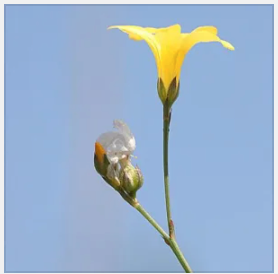
However, thanks to Global Warming, this Winter has been warm, for the most part. So we’ve seen some early blooms, one of which always persists, is the Ten-Petal Anemone. This bloom is white, but the species can vary from white through pinkish to violet. (An artist might differ with my choice of descriptive colors).

And here’s an unopened Anemone berlandieri from the violet end of the spectrum.

What are these doing in the Bob’s Brain: Living well with PD and other co-morbidities blog?

  • Bob’s brain mistakenly failed to switch to the Back to the natives: Native plants are the answer before beginning the draft, or
  • Bob’s brain has other interests in his life other than an incurable, progressive,  degenerative neurological disease,
  • or both of the above… whatever answer you choose, you won’t go wrong.

Oh well, might as well end with a song:

https://youtu.be/sxoTWy0bTXo?si=NmKkd0bLzysH8ZSO

###

Do you wanna dance?

Costa V, Suassuna AOB, Brito TSS, da Rocha TF, Gianlorenco AC. Physical exercise for treating non-motor symptoms assessed by general Parkinson’s disease scales: systematic review and meta-analysis of clinical trials. BMJ Neurol Open. 2023 Oct 4;5(2):e000469. doi: 10.1136/bmjno-2023-000469. PMID: 37808516; PMCID: PMC10551973.

This study was a systematic review and meta-analysis.  Like many such desk reviews and meta-analyses, it winds up, in layperson’s terminology, comparing apples and oranges and pears and papayas and tangerines and dragon fruit and kiwis to each other. Treatments included “multimodal, aerobic, resistance, dance, conventional physical therapy and other types.” Five studies apparently were vulnerable to bias (in favor of the treatment being studied, one would suppose). They did conclude that, after sifting the studies down to eight, that aerobic exercise had a stronger effect than conventional exercise on non-motor symptoms. This is in conformance with other reviews that I have read (or read the abstracts of) in the past.

And then we have this study, which might have been kicked out due to possibility of bias, or maybe it wasn’t published early enough to be included.

Physical activity based on dance movements as complementary therapy for Parkinson’s disease: Effects on movement, executive functions, depressive symptoms, and quality of life
Duarte JdS, Alcantara WA, Brito JS, Barbosa LCS, Machado IPR, et al. (2023) Physical activity based on dance movements as complementary therapy for Parkinson’s disease: Effects on movement, executive functions, depressive symptoms, and quality of life. PLOS ONE 18(2): e0281204. https://doi.org/10.1371/journal.pone.0281204

Methods used were described as follows:

13 individuals with PD (Hoehn & Yahr I-III, MDS-UPDRS 67.62 ± 20.83), underwent physical activity based on dance movements (2x week for 6 months). Participants were assessed at baseline and after 6 months on movement (POMA, TUG and MDS-UPDRS Part III), executive function (FAB), depressive symptoms (MADRS), quality of life (PDQ-39), and severity of PD (MDS-UPDRS TOTAL).

The results were:

significant improvement in the movement (balance and gait) by the POMA test, p = 0.0207, executive function by the FAB test, p = 0.0074, abstract reasoning and inhibitory control by the FAB, Conceptualization test, p = 0.0062, and Inhibitory Control, p = 0.0064, depressive symptoms assessed by the MADRS test significantly reduced, p = 0.0214, and the quality of life by the PDQ-39 had a significant increase after the intervention, p = 0.0006, showed significant improvements between the pre-and post-intervention periods of physical activity based on dance movements.

The conclusions were obvious:

Physical activity based on dance movements contributed to significant improvements in movement (balance and gait), executive functions, especially in cognitive flexibility and inhibitory control, and the quality of life too. Sensorimotor integration, most cognitive processing and social skills may have contributed to the results.

Personally, I have to wonder whether inhibitory control and executive functions apply to my individual results, based on feedback from others, but it could be that I just need to keep on dancing more and worry less about what other folks think.

For nerds like myself, clicking on the following link will get you a list of similar articles published within the past five years (2019 – 2024)  available with free full text.

So, to reiterate the title of this post:

Just a song and dance man

[updated April 8, 2025]

Some folks may recognize the title as an allusion to an old interview with Bob Dylan in which a reporter asked about him being considered a protest singer and/or the voice of a generation. If not, do a search on YouTube for the interview – probably in San Francisco, 1965, maybe – If my memory serves me well.

A hallmark of human movement is volitional control – the freedom to move easily, automatically, and safely within the changing demands of daily living. Clinical signs characteristic of Parkinson’s disease (PD) include rigidity and tremor, hypokinesia, stooped posture, vocal alterations, facial masking, and progressive loss of peri- and extrapersonal use of space . These movement aberrations are one of many factors that increase the risk of falling and point to the need for improving fall prevention strategies . These disease-related limitations experienced by people with Parkinson’s disease (PPD) increasingly rob them of movement freedom. Quality of life declines as conscious attention and effort in everyday living replace spontaneity of communication and safety in navigation.

Reading those words in the introduction to this article  flowed off of the page like they  were written in my soul. Many times I have avoided falling by using dance steps learned in my Rhythm and Moves class from Power for Parkinson’s® (PfP) (taught by Nancy Bain) located in nearby Austin, Texas. And certainly the improvisational dance techniques used in the class have improved my quality of life, allowing me to be more spontaneous. Following a fall in April of 2023, I have been on a 6 month journey of rehabilitation, and certainly my quality of life has deteriorated somewhat due to the conscious attention and effort in performing activities of daily living. But  dance, music, and improvisation continue to be the core of my spirit as I strive to improve against this incurable (yet!), progressive, degenerative, neurological disease. Even though I don’t get around much anymore…

This study reported on one of the co-authors’ method in teaching dance to mild-to-moderate stage People with Parkinson’s over a 3-year period (2013–2015). She is a tenured university dance professor also trained in the Mark Morris Dance for PD® program. 

Another (modified) quote from the article is this table, which I find reflects many of the implicit and explicit principles used in dance classes.  Verbal Auditory Cueing (VAC) is the acronym used in the table. Color coding has been added to separate the different methods more clearly:

Principles

and Methods 

Non-judgment

Class advertised as movement class


Greeting at entrance by teacher


Class offered free of charge


Inclusion of carepartners as students


VAC that there are no mistakes, only new movement options

Non-competitiveness

All movement is seen as an honest effort


VAC focused on action, not quality of movement


VAC “Yes, and …” replaces “Not that” or “Rather try this”

Curiosity and

playfulness

Awareness of movement possibilities

VAC “Stay curious in what you are doing” or “Keep going”

VAC “Nothing is precious”

Pacing of VAC does not allow self-editing

Risk taking

Selection of class environment


Student self-selection of participation level


VAC to validate self-selected level of participation


Adaptation of exercises to sitting or at the barre as needed


Structured, directive (non-improvised) activity transitions

VAC to attend to constraints of an activity rather than invoke fear

Another point used in the method was to increase challenge by gradually increasing the variety and complexity of movement tasks. In this way, the participants maintained safety while increasing their sense of confidence.  In PfP classes, this is called “Fun.” They even have a t-shirt with the definition of Fun printed on the back.

FUN Tshirt — Power for Parkinson's - www.powerforparkinsons.org

This particular study was published back in 2016,  and most of the authors were associated with Wake Forest University in Winston-Salem North Carolina.

Here’s the citation and a link to the open access article, which goes into more detail about the principles and the practice of the improvisational dance classes.

Batson G, Hugenschmidt CE, Soriano CT. Verbal Auditory Cueing of Improvisational Dance: A Proposed Method for Training Agency in Parkinson’s Disease. Front Neurol. 2016 Feb 17;7:15. doi: 10.3389/fneur.2016.00015. PMID: 26925029; PMCID: PMC4756105.

More information about Power for Parkinson’s®, their classes, and YouTube channel can be found at:

https://powerforparkinsons.org

Another 501(c)(3) charitable organization which happens to be focused on improvisation as a means to offer People with Parkinson’s (and their caregivers) to a safe environment using many of the principles listed above is Yes, and… Exercise (if that sounds familiar, take a look at the methods related to non-competitiveness in the table above) at https://yesandexercise.org.

And since the title says it, here’s a song about dance that I loved as a kid (still do, and probably still will, if I ever grow up)(note 2025-04-08: the original link is no longer available, so I just created a link to a song  that I also loved during my wasted youth, besides, I don’t remember what the original link was about.)

The Contours “Do You Love Me (Now That I can dance?)”

###