Late Stage Parkinson’s (LSP): Undertreated?

This paper (or rather a chapter in a thesis) landed in my newsfeed recently. In it, the authors describe a study done to see whether people with Parkinson’s in the later stages are getting adequate treatment and whether they could benefit from more specific treatment. (A link to the PDf file is at the end of this post).

A person in Late Stage Parkinson’s has more than one of the following:

  • Motor symptoms not controlled despite medication.
  • Levadopa-related dyskinesias or dystonia,
  • PD dementia (defined according to MDS Task Force definition (Dubois et al. 2007), and
    not treated with cholinesterase inhibitors,
  • Depression not adequately treated,
  • Neuropsychiatric symptoms, such as agitation/ aggression; anxiety and irritability,
  • Orthostatic hypotension, pain, constipation, urinary symptoms, insomnia or daytime sleepiness (autonomic systems degeneration),
  • Falls on a regular basis,
  • Other symptoms related to risk of choking, speech issues, or producing too much saliva,
  • Inadequate Home environment.

Basically, the study provided a list of recommended activities and treatment on a sheet of paper (the control group) and actually providing the treatments and activities recommended, (the treatment group).

Not surprisingly, the treatment group did better at the end of the study than the controls. The conclusions were that people in late-stage Parkinson’s are often undertreated and could benefit from implementation of movement disorder specialists’ recommendations. (One would hope that the control group would also be provided with the treatments after the study ended. Perhaps, leading to another report)?

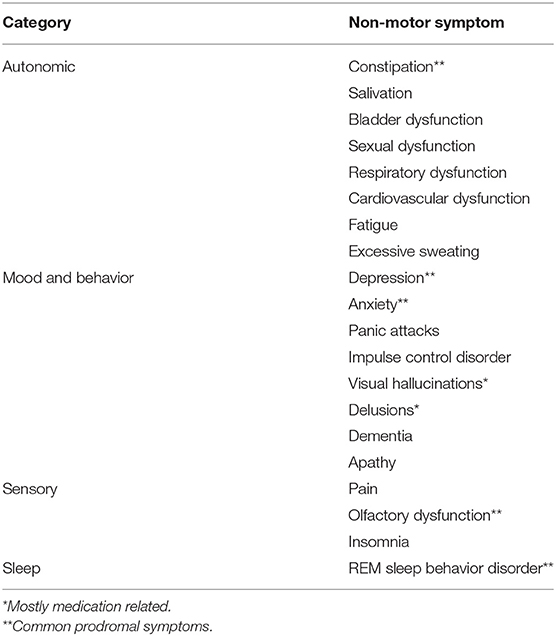
I’ve paraphrased the table used to describe late stage Parkinsonism in order not to infringe on their copyright. The title of the entire thesis is “Impairment and Disability in Late Stage Parkinsonism” and the overall author is Danny Hommel. I couldn’t find an email to ask for permission in writing to reproduce anything verbatim.

Other chapters include:

  • The late-stage of parkinsonism’s – motor and non-motor complications
  • The prevalence and determinants of neuropsychiatric symptoms in late-stage parkinsonism
  • Prevalence and prescribed treatments of orthostatic hypotension in institutionalized peoples with Parkinson’s disease (the chapter discussed in this post)
  • Optimizing treatment in undertreated late-stage parkinsonism: a pragmatic randomized trial
  • General discussion/English summary

Published as: ALAJ Hommel, MJ Meinders, NJ Weerkamp, C Richinger,
C Schmotz, S Lorenzl, R Dodel, M Coelho, JJ Ferreira, F Tison, T Boraud,
WG Meissner, K Rosqvist, J Timpka, P Odin, M Wittenberg, BR Bloem,
RT Koopmans, A Schrag and the CLaSP consortium.
Optimizing treatment in undertreated late-stage parkinsonism: a pragmatic
randomized trial.
J Parkinsons Dis. 2020;10(3):1171-1184.

Monarchs and Queens

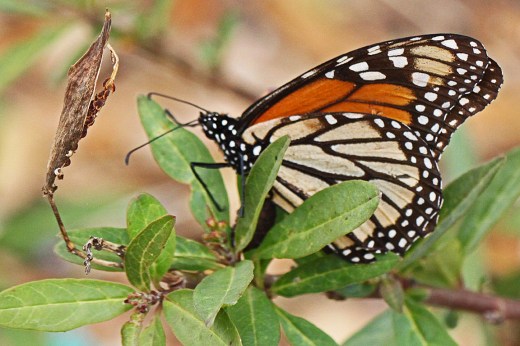
Danaus plexippus - Monarch

This year has been a strange one for Monarchs in my backyard.

Usually I just get a few Monarchs passing through in the Spring and Fall Monarch migrations. My geographic location is on the Southern edge of the pathway usually taken as the Monarchs pass from Mexico into Texas, mostly between Del rio and Eagle Pass, and then spreading out in a pie wedge or fan shaped flight plan spread across the US Midwest and up to the Northeast US and even into Canada.

This year, I have seen at least one Monarch every month since March 27, through September 1st, though I wasn’t able to capture photographs of all of them. It appears that the Monarchs have either been staying around the neighborhood, or they lay some eggs, head on their way, and the newly hatched adults do a little egg laying before heading up North as well.

It is difficult to say which is the case.But I can show you some of them: (Click on the thumbnail for a larger view).

We’ll see how many come through the yard in September and October.

###

A global resource

Who would have guessed it?

There is now a checklist for all the vascular plants on the globe. Actually, probably many folks could have guessed it – this is what the internet was invented for, not for sharing cute kitten pictures on Facebook or Instagram (sorry, don’t mean to offend anyone. I like cute kitten pictures, too).

In an article (open access) published on nature.com, you will find The World Checklist of Vascular Plants, a continuously updated resource for exploring global plant diversity. The DOI reference is https://doi.org/10.1038/s41597-021-00997-6  where you can find the actual citation to use:

Govaerts, R., Nic Lughadha, E., Black, N. et al. The World Checklist of Vascular Plants, a continuously updated resource for exploring global plant diversity. Sci Data 8, 215 (2021). https://doi.org/10.1038/s41597-021-00997-6

There have been other checklists, and the authors provide a table explaining the differences.

To maximise utility, such lists should be accessible, explicitly  evidence-based, transparent, expert-reviewed, and regularly updated, incorporating new evidence and emerging scientific
consensus. WCVP largely meets these criteria, being continuously updated and freely available online. Users can browse, search, or download a user-defned subset of accepted species with corresponding synonyms and bibliographic details, or a date-stamped full dataset

The World Checklist of Vascular Plants (WVCP)

As sloppy as I am as a scientist, I might not make use of this as often as I should. But I’ll post it, and maybe someone else will get more use out of it than I will. Who knows? Maybe I’ll make more use of it, having shared this post.

###

August: the heat goes on… But if you plant it, they will come.

But not as hot here in Central Texas as it is elsewhere, and not as hot as it has been in recent years, when there were streaks of thirty or forty days of 100 plus Fahrenheit weather. This year has been hot but humid – hey, the moisture from the melting ice caps has to go somewhere, right?

And yet, “Mother Nature” continues to give us native plants that thrive in whatever kind of weather and climate she gives us. Or we make for her, given that the current climate change is driven by the Industrial Revolution, which began some two hundred years or so past.

The Conoclinium greggii (Gregg’s Mistflower) will bring Queen and Monarch butterflies to your yard. It has been interesting to watch the Queens defend their territory against the one or two Monarchs that attempt to get a pheromone enhancing boost from the mistflowers.

 I’ve even seen a Gulf Fritillary take a break from the Passion Flowers and go after the mistflowers.(click on photos in the gallery to see them full size).

Well, this didn’t start out as an orange and black butterfly identification post, but that’s where it ended up, it seems. Go figure.

As you plant more native plants, you will find that you attract more native wildlife (and, hopefully ,fewer exotic or invasive fauna).

Sitting on the steps of the deck before dinner, as I took several of thee photos, the line from Ray Bolger’s character in The Wizard of Oz came to mind: “I could while away the hours, conversing with the flowers…”

###

Not a cure, but a biomarker

A biomarker for Parkinson’s?  Maybe… (If you don’t have a free ResearchGate account, yu might not be able t see this link):

A blood marker for Parkinson’s Disease: Neuronal exosome-derived α-synuclein

This isn’t in print yet, so I’ll just quote frm the abstract:

18 To date, no reliable clinically applicable biomarker has been established for Parkinson’s
19 disease (PD). Our results indicate that a long hoped blood test for Parkinson’s disease may
20 be realized. We here assess the potential of pathological α-synuclein originating from
21 neuron-derived exosomes from blood plasma as a possible biomarker. Following the
22 isolation of neuron-derived exosomes from plasma of PD patients and non-PD individuals
23 immunoblot analyses were performed to detect exosomal α-synuclein. Under native
24 conditions significantly increased signals of disease-associated α-synuclein forms in neuron25 derived exosomes were measured in all individuals with PD and clearly distinguished PD
26 samples from controls. By performing a protein misfolding cyclic amplification assay these
27 aggregates could be amplified and seeding could be demonstrated. Moreover, the
28 aggregates exhibited β-sheet-rich structures and showed a fibrillary appearance. Our study
29 demonstrates that the detection of pathological α-synuclein conformers from neuron-derived
30 exosomes from plasma samples has the potential of a promising blood-biomarker of PD.

Exosomes are small bundles of proteins  enclosed by a membrane (if I understand it correctly)(feel free to correct me- the Wikipedia article hd a note saying that it was too technical for most readers – and I agree).

Exosomes contain material from the cells from which they originated, so might be used as biomarkers. Obviously, it will take a while to fund the research and develop some way to determine how far along the way to developing PD someone is.  But the sooner a person can deal with it, the better the opportunity to live well with it. I look forward to the development of biomarkers that will help predict who might get Parkinson’s, so those folks can take preventive action.

I am fortunate that my symptoms did not appear in the usual sequence,and that I had DBS early after diagnosis, have had an outstanding medical team looking out for me and working with me, have a strong local community supporting people with Parkinson’s, and have a care partner who makes sure that my diet is full of organic foods, produce, and as few highly processed foods as possible. And I get lots of exercise, considering that I’m not athletic and I am not into weightlifting or bodybuilding.

Lucky me.

###

This is photography on Parkinson’s

This is photography on Parkinson’s… sometimes. Sometimes you accidentally hit the button due to herky-jerky movements, sometimes you manage to get the shot you envisioned in the viewfinder. Some days your vision is blurred and it’s hard to say whether or not you have the item you want in focus, in focus. More often than not, it’s blurred, and the background or foreground isn’t focused instead. Of course, one can always use autofocus, but that has the same issues as manual focus with blurry vision. The best one can do in that situation is to click the shutter as soon as the screen blinks red, indicating that everything’s in focus. And then, of course, somedays you get the focus right and the shutter speed and it all works. Then again, when life hands you bitter citrus, sometimes you can make a Margarita. Or better yet, KeyLime Pie.

Verbal fluency, DBS, and parkinson’s

How many animals can you name in one minute?

Wait one year, and do the same test. 

How did you do? better or worse? Basically, that’s what this post is about.

Several articles in this post (all free PubMedCentral articles):

  1. Changes in Verbal Fluency in Parkinson’s Disease
  2. Semantic and phonemic verbal fluency in Parkinson’s disease: Influence of clinical and demographic variables
  3. The Verbal Fluency Decline After Deep Brain Stimulation in Parkinson’s Disease: Is There an Influence of Age?
  4. Worsening of Verbal Fluency After Deep Brain Stimulation in Parkinson’s Disease: A Focused Review
  5. Striatal volume is related to phonemic verbal fluency but not to semantic or alternating verbal fluency in early Parkinson’s disease

The first two studies looked at verbal fluency as measured by counting the number of animals one could name during a timed minute. Basically, the further along folks were in the stage of the disease, the lower their verbal fluency, and the lower their quality of life. Analysis indicated that several other factors were involved, such as depression, age, and executive functioning. People with Parkinson’s (PWP) with higher verbal fluency scores had better quality of life and lower caregiver burden, as measured by scores on standardized rating scales such as the PDQ-29 and The Modified Caregiver Strain Index (MCSI)

In the  second pair of articles, The first suggests that age might be accountable for the reported decline in Verbal Fluency (VF) following Deep Brain Stimulation (DBS) surgery, and provides data to support that hypothesis. The second article is a review of the literature, which notes that the effect seems to be moderate, and that studies to find the reason for the observed decline in VF have been inclusive overall.

Based on recent and earlier meta-analyses, there is reliable evidence for a worsening of both phonemic and semantic VF after DBS. This primarily pertains to STN-DBS…  …disease progression does not seem to be able to account for the worsening of VF in DBS patients. Also, DBS-related reductions in dopaminergic medication (mainly in STN-DBS patients) cannot account for the VF decline. …it seems that either surgery or stimulation itself or both together in combination with the electrode positions are driving factors. However, the evidence in this relation is inconclusive and sparse…. …recommendations for future studies on VF include optimizing study designs to include both ON and OFF stimulation as well as baseline measures, calculating reliable change indices (RCI) for neuropsychological results, and acquiring diffusion-weighted MRI on patients for tractography of cortical and subcortical connections to and from STN/GPi

The fifth article reports on brain imaging studies which indicate that the verbal fluency decline is related to different areas of the brain for VF and semantic fluency.

The fact that phonemic fluency, but not semantic or alternating fluency, was associated with caudate gray matter volume at early stage PD suggests that different fluency tasks rely on different neural substrates, and that language networks supporting semantic search and verbal-semantic switching are unrelated to brain gray matter volume at early disease stages in PD.

Since previous research on dance have indicated increased gray matter volume in dancers (somewhere earlier in this blog, search on “dance” to find it); this would suggest that one way to combat the decline in VF is to dance, preferably in classes that are specifically geared towards Parkinson’s symptoms.

At least that’s my take-away from these articles. Your mileage may vary.

### 

All my weeds are wildflowers (I wish)

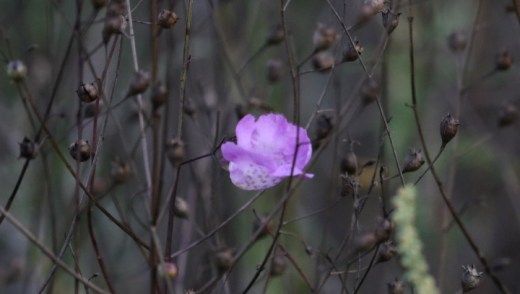
Passiflora incarnata/Ruellia nudiflora hybrid?

A couple of native plant species have begun to spread like weeds in the narrow area separating my subdivision plat from my neighbor’s house.

Passiflora incarnata, or Purple Passionflower, has sprung up where a corkscrew passionflower vine used to be, and through rhizomes has managed to propagate itself all along the Southern side of the house. I’ve done some pulling of the pups as the poke up through the mulch, and have been able to give away a few of them for others to try to get their own vines going.

The flowers of the Passion flower vine are about three inches in diameter, with the petals forming a wavy fringe. Stamens and stigmas also are striking in appearance as well. Several different types of butterflies use this as a larval host, most notably the Gulf Fritillary (Agraulis vanillae ) and Variegated Fritillary (Euptoieta  claudia ) butterflies. 

Passiflora icarnata infloresence, tri-lobed leaves, and tendril

Passiflora icarnata inflorescence, tri-lobed leaves, and tendril

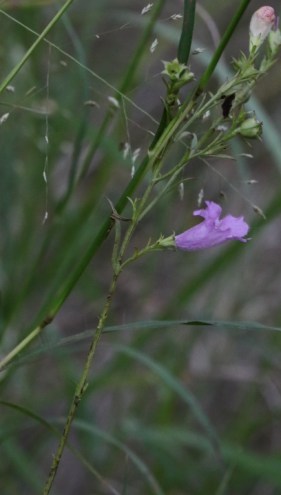
The Ruellia nudiflora, or Wild Petunia, also has a purple to lavender flower, but it is trumpet-shaped. And it’s not a vine, but a sub-shrub perennial . After having transplanted this volunteer several years ago, it has now decided to propagate itself, like a weed, in the mulched bed and in the gravel path. Although its inflorescences look much like those of the cultivated Petunia, it is in the Acanthus Family, while the cultivated Petunia is in the Potato Family. The blossoms open in the morning, falling off in the afternoon. Like several other of my favorite wildflowers, its flowers are ephemeral, lasting for just a day.

Ruellia nudiflora inflorescence, surrounded by Passiflora leaves and tendril

Ruellia nudiflora inflorescence, surrounded by Passiflora leaves and tendril

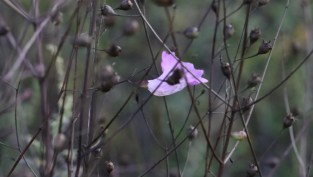
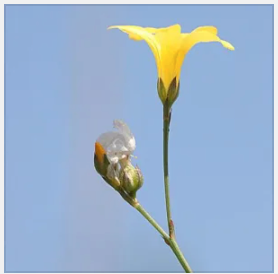
As if having to “weed” native species wasn’t bad enough, as one can see from the top photo in this post, it looks as though the two plants have begun to hybridize to form a new species. Fortunately, (or unfortunately), that’s not the case: A blossom from the Ruellia has been captured by a tendril from the Passiflora, making it look (almost) like it belongs to the vine. 

Not sure what I’d do if they actually did start to hybridize – probably get a botanist or two to take a closer look. And get a nursery to work with to develop and patent the new species. And sit back and watch the money roll in (ha!).

###

Depression, Parkinson’s Disease, Cannabis, suicidal ideation, and more…

There are two types of depression, we are sometimes told: Depression, and bipolar disorder. To my way of thinking, at least, ALL depressions are bipolar in nature. It’s just that those who don’t have the wild swings of high to low, but just from “normal” to low, aren’t considered to be be bipolar. (The report on Cannabis and suicide doesn’t mention PD, but it seemed close enough to the topic of depression that I included it.

But what do I know? I’m not a trained psychiatrist or psychologist.Here’s some articles from some folks who seem to have expertise in the area:

First: find out whether someone with PD is depressed.

Williams JR, Hirsch ES, Anderson K, Bush AL, Goldstein SR, Grill S, Lehmann S, Little JT, Margolis RL, Palanci J, Pontone G, Weiss H, Rabins P, Marsh L. A comparison of nine scales to detect depression in Parkinson disease: which scale to use? Neurology. 2012 Mar 27;78(13):998-1006. doi: 10.1212/WNL.0b013e31824d587f. Epub 2012 Mar 14. PMID: 22422897; PMCID: PMC3310315.

Conclusions: The Geriatric Depression scale (GDS-30) may be the most efficient depression screening scale to use in PD because of its brevity, favorable psychometric properties, and lack of copyright protection. However, all scales studied, except for the UPDRS Depression, are valid screening tools when PD-specific cutoff scores are used. (emphasis added).

And guess what? Comorbidities need to be considered, and depression rating scales don’t really tease out one of the more common ones. 

Calleo J, Williams JR, Amspoker AB, Swearingen L, Hirsch ES, Anderson K, Goldstein SR, Grill S, Lehmann S, Little JT, Margolis RL, Palanci J, Pontone GM, Weiss H, Rabins P, Marsh L. Application of depression rating scales in patients with Parkinson’s disease with and without co-Occurring anxiety. J Parkinsons Dis. 2013;3(4):603-8. doi: 10.3233/JPD-130264. PMID: 24275604.

Conclusions: Co-occurring anxiety disorders do not impact performance of depression rating scales in depressed PD patients. However, depression rating scales do not adequately identify anxiety disturbances alone or in patients with depression.

Why should we care? Because depression has an adverse effect on daily living for those with PD.

Pontone GM, Bakker CC, Chen S, Mari Z, Marsh L, Rabins PV, Williams JR, Bassett SS. The longitudinal impact of depression on disability in Parkinson disease. Int J Geriatr Psychiatry. 2016 May;31(5):458-65. doi: 10.1002/gps.4350. Epub 2015 Aug 18. PMID: 26284815; PMCID: PMC6445642.

Objective: Depression in Parkinson disease (PD) is a common problem that worsens quality of life and causes disability. However, little is known about the longitudinal impact of depression on disability in PD. This study examined the association between disability and DSM-IV-TR depression status across six years.

Results: A total of 43 participants were depressed at baseline compared to 94 without depression. Depressed participants were more likely to be female, were less educated, were less likely to take dopamine agonists, and more likely to have motor fluctuations. Controlling for these variables, symptomatic depression predicted greater disability compared to both never depressed (p = 0.0133) and remitted depression (p = 0.0009). Disability associated with symptomatic depression at baseline was greater over the entire six-year period compared to participants with remitted depressive episodes or who were never depressed.

Conclusions: Persisting depression is associated with a long-term adverse impact on daily functioning in PD. Adequate treatment or spontaneous remission of depression improves ADL function. (emphasis added).

Teamwork is needed. If the person with PD can’t be their own advocate, then someone needs to help coordinate and communicate.

Taylor J, Anderson WS, Brandt J, Mari Z, Pontone GM. Neuropsychiatric Complications of Parkinson Disease Treatments: Importance of Multidisciplinary Care. Am J Geriatr Psychiatry. 2016 Dec;24(12):1171-1180. doi: 10.1016/j.jagp.2016.08.017. Epub 2016 Sep 3. PMID: 27746069; PMCID: PMC5136297.

Abstract

Although Parkinson disease (PD) is defined clinically by its motor symptoms, it is increasingly recognized that much of the disability and worsened quality of life experienced by patients with PD is attributable to psychiatric symptoms. The authors describe a model of multidisciplinary care that enables these symptoms to be effectively managed. They describe neuropsychiatric complications of PD itself and pharmacologic and neurostimulation treatments for parkinsonian motor symptoms and discuss the management of these complications. Specifically, they describe the clinical associations between motor fluctuations and anxiety and depressive symptoms, the compulsive overuse of dopaminergic medications prescribed for motor symptoms (the dopamine dysregulation syndrome), and neuropsychiatric complications of these medications, including impulse control disorders, psychosis, and manic syndromes. Optimal management of these problems requires close collaboration across disciplines because of the potential for interactions among the pathophysiologic process of PD, motor symptoms, dopaminergic drugs, and psychiatric symptoms. The authors emphasize how their model of multidisciplinary care facilitates close collaboration among psychiatrists, other mental health professionals, neurologists, and functional neurosurgeons and how this facilitates effective care for patients who develop the specific neuropsychiatric complications discussed.

And, with a cautionary reminder that correlation does not equal causation, and that the new release about the referenced article comes from the Council on Drug Abuse: (which could possibly have a conflict of interest regarding the results of the data):

B Han, WM Compton, EB Einstein, ND Volkow. Associations of Suicidality Trends With Cannabis Use as a Function of Sex and Depression Status(link is external). JAMA Network Open. DOI: 10.1001/jamanetworkopen.2021.13025 (2021).

An analysis of survey data from more than 280,000 young adults ages 18-35 showed that cannabis (marijuana) use was associated with increased risks of thoughts of suicide (suicidal ideation), suicide plan, and suicide attempt. These associations remained regardless of whether someone was also experiencing depression, and the risks were greater for women than for men. The study published online today in JAMA Network Open and was conducted by researchers at the National Institute on Drug Abuse (NIDA), part of the National Institutes of Health.

“While we cannot establish that cannabis use caused the increased suicidality we observed in this study, these associations warrant further research, especially given the great burden of suicide on young adults,” said NIDA Director Nora Volkow, M.D., senior author of this study. “As we better understand the relationship between cannabis use, depression, and suicidality, clinicians will be able to provide better guidance and care to patients.”

On the other hand, it could be that young adults are depressed or suicidal because they live in a world in which constant war is being fought, in which war profiteering is not a crime, in which they see politics reduced not to a game of collaboration and mutual benefit, but a zero sum game in which the winner takes all. Perhaps they are depressed over the failure of the governments to address the mounting scientific evidence that climate “change” is resulting in climate chaos, and yet the governments of the world, funded by the fossil fuel industries, are “rearranging deck chairs on the Titanic” while the media band plays on. I could go on, but I won’t.

I used to be suicidal, but my life has changed. 

More to the point:

The National Suicide Prevention Lifeline is available today, providing suicide prevention and mental health crisis assistance at 1-800-273-8255 and through online chats. 988 is not a nationwide calling code right now. The Veterans Crisis Line is available today, providing Veteran specific suicide prevention and crisis assistance at 1 800 273 8255 (Press 1), by texting 838255, and through online chats at veteranscrisisline.net. On July 16, 2020, the FCC adopted rules to establish 988 as the new, nationwide, easy-to-remember 3-digit phone number for Americans in crisis to connect with suicide prevention and mental health crisis counselors.

And a final note: one of the main defenses against depression is activity is physical activity and human or non-human interaction. So get out here and run a mile, walk along a nature trail, play some music, call a friend, join a group or club, hug a tree, kiss a girl/boy, and get connected with the world we live in. 

You’ll feel better if you do.

###