And so it goes – Asclepias tuberosa and friends

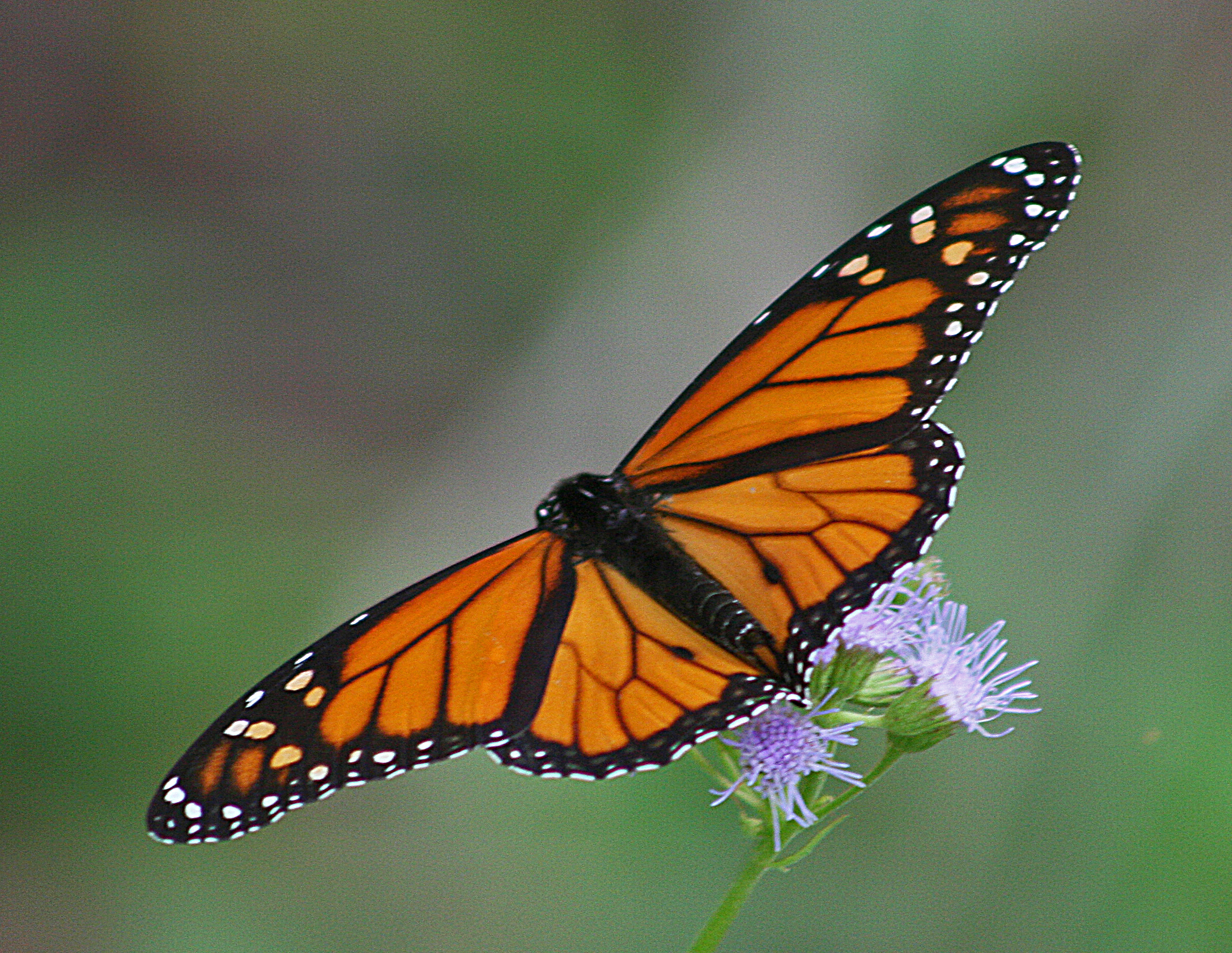
Asclepias tuberosaThis is the native milkweed that the Monarch butterflies use as a food source in both the larval and adult stages, though in the larval stage it consumes the leaves, and in the adult phase it consumes only the nectar, but may leave behind little eggs that hatch into caterpillars.

The nursery trade typically only has Asclepias curassavica, commonly known as Tropical milkweed, which can be distinguished from tuberosa by the colors of its flowers, which include both red and orange.Monarch butterfly

I was at a local demonstration garden near where I live, and observed a large number of plants that were definitely yellow, along with a few that were the red and orange  A. curassavica species. They even had a few Monarchs visiting, although the southbound butterflies have been few and far between so far this season.

Larva - Danaus plexippus (Monarch)

Larva – Danaus plexippus (Monarch)

This past Friday, October 3, 2014, I found four Monarch larvae on the milkweeds in my front yard. In the cool of Saturday morning, I located one still on the milkweeds and one on a nearby rock, slowly moving towards some groundcover under the oak tree. Later that afternoon, someone came by who has been actively nurturing the caterpillars, and we found just one, on a milkweed, that was transplanted to their yard a few miles north.

And so it goes. Imagine how many more Monarchs would be around if large chemical companies had to include some sort of environmental impact statement in their marketing, such as :

For a Few Dollars More – improves crop yield by selectively killing native plants that are essential to the survival of certain insect species, including the Monarch Butterfly (Danaus plexippus).

Extinction Is Forever – The life of an insect may span less than a year, but the extinction of a species may echo through the years. Who knows what pests you may unleash by using a pesticide to upset the natural balance of your local ecosystems? Who cares as long as we get a positive growth in this year’s balance on the bottom line? Let the next generation of scientists and economists figure out the true costs of our actions today.

“And so it goes.”  (I think Kurt Vonnegutt said that fisrt.)

###

The force that through the green fuse drives the flower . . .

Lygodesmia texana - Texas skeleton-plant

Lygodesmia texana – Texas skeleton-plant

Just as the name of this blog might remind you of Thomas Hardy’s novel The Return of the Native, perhaps the title to this post will remind you of the poem by Dylan. Dylan Thomas, of course. Or the photo might remind you of the title of the poem. One could also think of an oak tree as a slow explosion, with its mushroom cap shaped crown. But enough said. Click on the photo for a larger picture and meditate on the photo and the title together.

Seasonal post-bloom fine-feathered achenes

Old man's beard (Clematis drummondii)

Old man’s beard (Clematis drummondii)

It’s getting on past halfway through summer and the Clematis drummondii are starting to show off their old man’s beards – which is interesting, since this plant has both male and female plants – the stamens are sterile on the female plants, and the stigma on the male plants are probably sterile too, I would guess – haven’t seen it documented anywhere yet.

Another common name for these flowers is Virgin’s Bower, or Texas Virgin’s Bower. Go figure.

Salvia greggii – autumn sage

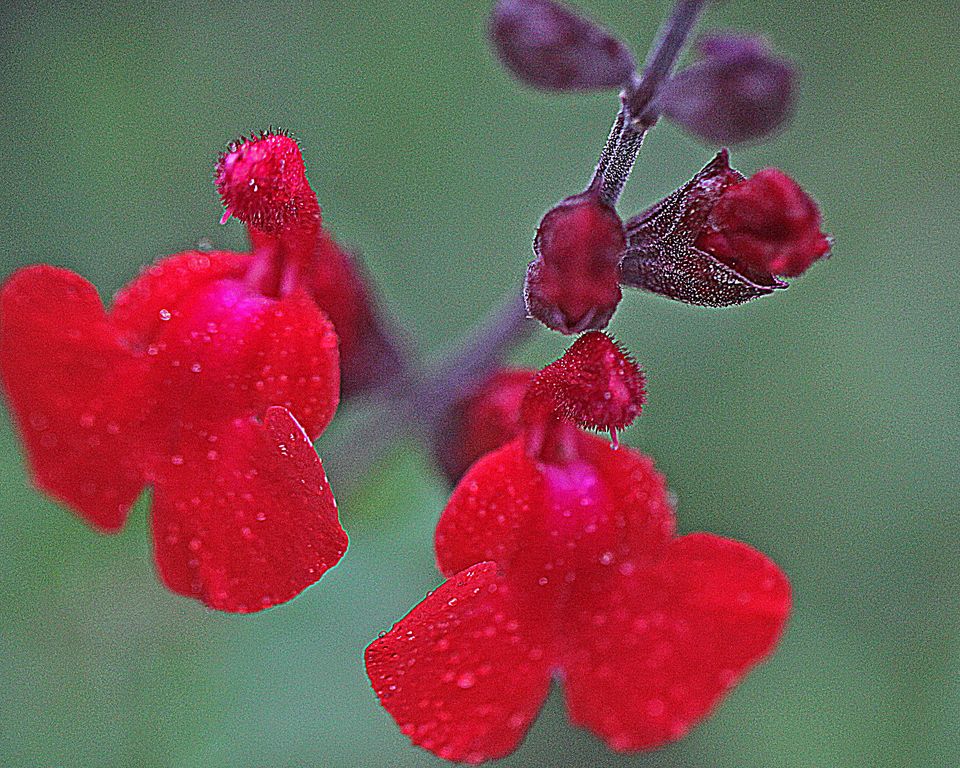
Clearing the decks – this is from an old draft post, taken and posted in February of 2013. Who doesn’t like Salvia greggii? Gardeners certainly do – they can bloom throughout the year, when conditions are right, and all it takes is a little deadheading of the fading blooms. They don’t get too tall or too bushy, and although you might see many insects in their vicinity, they don’t seem to be vulnerable to infestation by pests.

Insects you will see, everything from bumblebees and carpenter bees to butterflies and wasps. If you’re lucky you might see a hummingbird buzzing around, grabbing nectar from the tubular flowers.

Salvia Greggii - Autumn Sage

Salvia Greggii – Autumn Sage

Hiatus

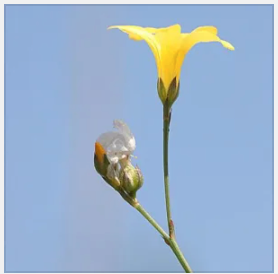
Linum rupestre - Rock Flax

Linum rupestre – Rock Flax

July 14, 2013

This is the end of updates for this blog, at least for the time being.

There is just so much one can do, and keeping this blog going on a regular basis is one of those things. It has always been an amateur effort and one can do more useful things, so this blog has been dropped from the B list to the D list and off the To-Do list.

Agraulis vanillae Gulf Fritillary Butterfly larva

Agraulis vanillae Gulf Fritillary Butterfly on Passiflora sp

Agraulis vanillae Gulf Fritillary Butterfly on Passiflora sp


While the Gulf Fritillary, as the name implies, is native to the area surrounding the Gulf of Mexico, but its range actually extends far beyond that. It is found as far south as Argentina and as far north as San Fransisco, according to Wikipedia.

Here it is on one of the Passiflora vines, one which is not native to the part of Central Texas where I live. It seems that one cannot find locally native plants unless one digs them up, which can’t be both ethical and legal, or manages to find some that have gone to seed and from which a small taking of seed would not endanger reproduction in the natural state.


Capsicum annuum – Chile Pequin

 Capsicum annuum - Chile Pequin

Capsicum annuum – Chile Pequin

Hadn’t really looked at the tiny flowers of the Chile Pequin before, but here they are, with a slight touch of purple in them.

Off to the right is the fruit, which turns a bright shiny red when it has fully ripened. Easy to grow, withstands drought, edible, attracts nectar feeders when in bloom and birds after bloom has turned to fruit. Reseeds itself if allowed to.


Ratibida columnifera- Mexican Hat

Ratibida columnifera- Mexican Hat

Ratibida columnifera- Mexican Hat

Also known as Prairie Coneflower,  this perennial also comes with yellow petals instead of the orange, brown, and yellow petals shown here.  In their native environment, they can form large colonies, sometimes interspersed with similarly colored Gaillardia pulchella Firewheel. Whether seen singly or en masse, it is singularly and strikingly sttractive. It is drought tolerant and can grow in a wide variety of soil types.