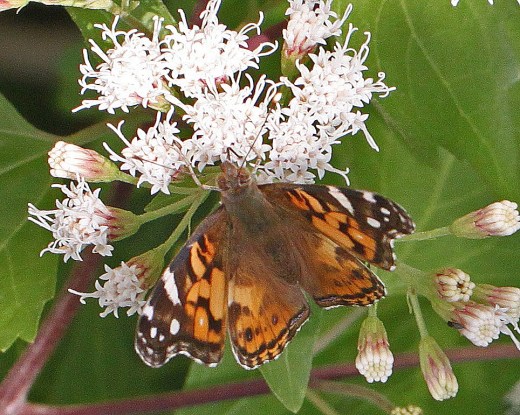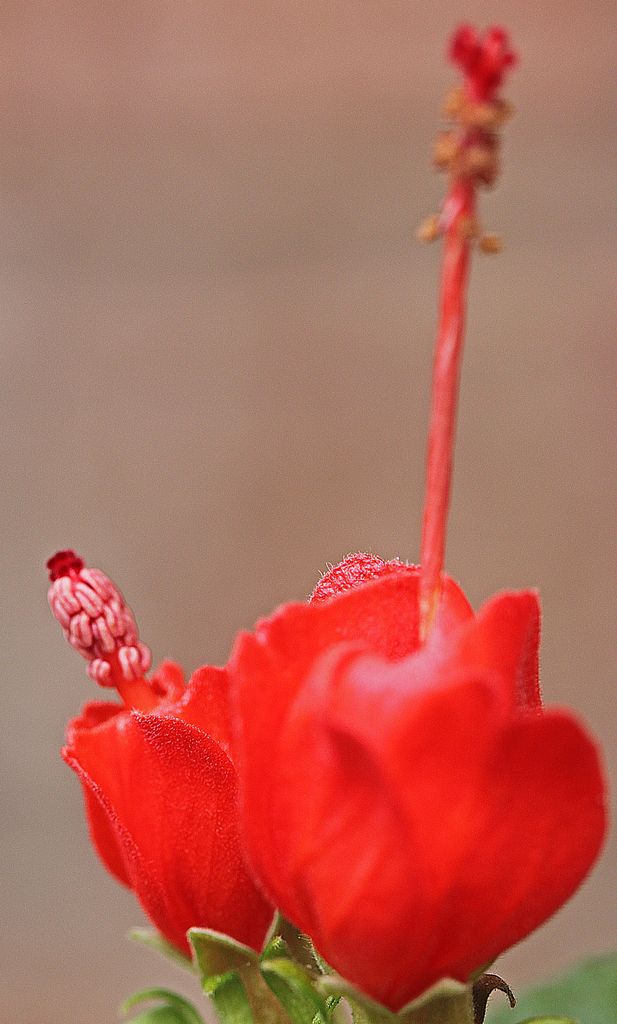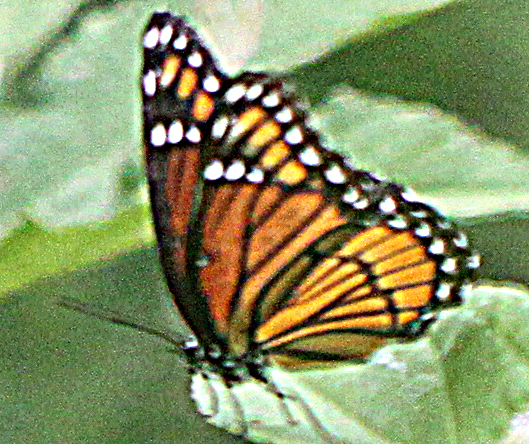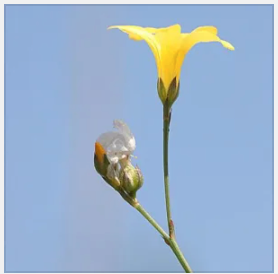
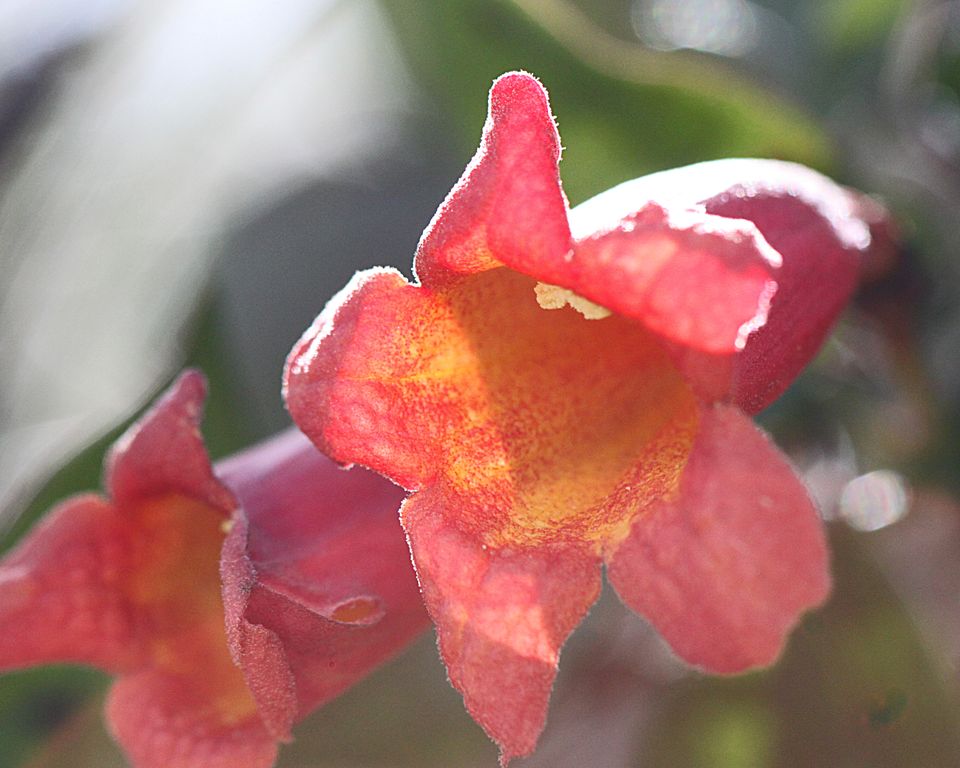
The Crossvine is blooming, draped across the Eastern Redbud, and it seems to be handling the drought with less stress than the Redbud. The blooming period is from March through May. It attracts hummingbirds (if there happen to be any in the suburban desert) and butterflies that feed on the nectar. Which reminds me – I saw my first Monarch Butterfly (Danaus plexippus) of the season over the weekend (Saturday to be exact). Oddly enough, it was feeding on the Texas Mountain Laurel Sophora secundiflora, but apparently not long enough for me to grab the camera, Also spotted a couple of Red Admiral (Vanessa atalanta) butterflies yesterday and did grab my camera, but the creature wouldn’t settle down long enough for me to get a shot. So here’s the Bignonia capreolata instead.
Tag Archives: butterflies
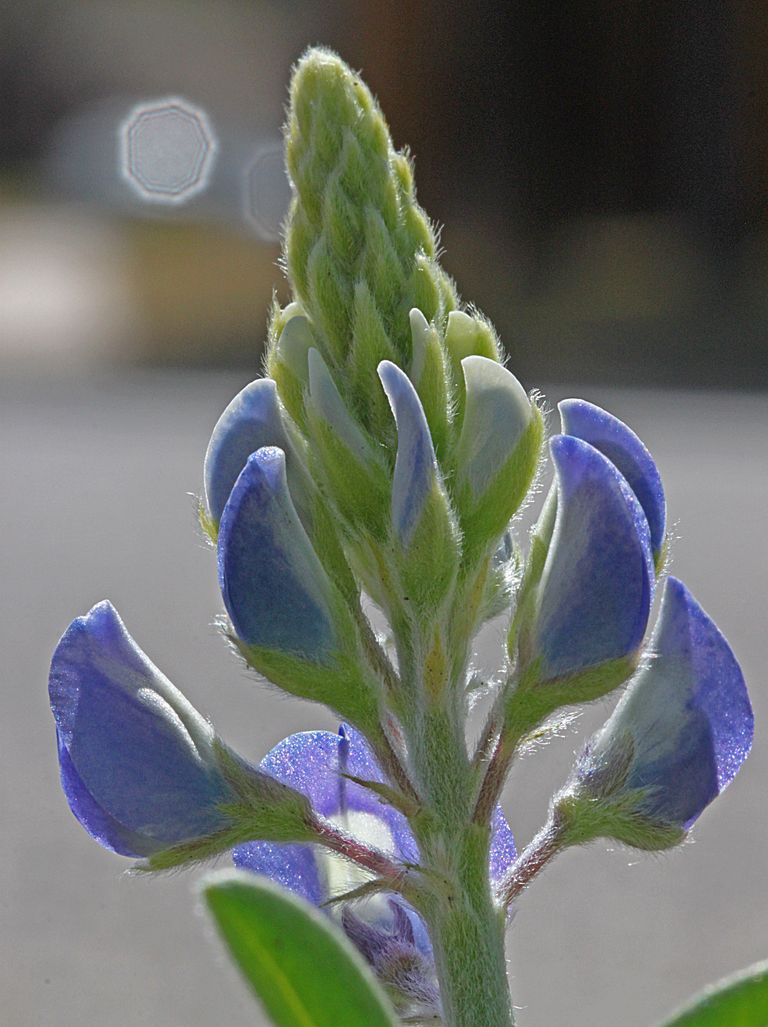
Lupinus texensis – Texas Bluebonnet
While most instances of the state flower in my yard are still scrawny and small rosettes thanks to the continuing drought in Central Texas, this example has started to put out blossoms in the area between the curb and the sidewalk. Conversations with other native plant advocates have indicated that some bluebonnets have been putting out new blossoms for a couple of weeks now.
The normal bloom period of this annual is from March through May, so it appears to be right on schedule this year. It is especially attractive to native bees and is frequented by butterflies as well. It serves as a larval host for the Hairstreak and Elfin butterflies.
Colias eurytheme- Orange Sulphur
Vanessa cardui – Painted Lady

Vanessa cardui – Painted Lady
Phyciodes phaon – Phaon Crescent on Ageratina havanensis – White Mistflower

Phyciodes phaon – Phaon Crescent on Ageratina havanensis – White Mistflower
Aster oblongifolium hosting fiery nectar feeder
Here’s a busy little Fiery Skipper blending in with the similarly colored central flower blossoms of the fall aster. I’ve been busy resurrecting a different website and other such things and haven’t updated this site for some time.
Here’s another aster that has volunteered to appear in my yard and seems to be either a Prairie Fleabane out of season (not unheard of in this year of strangely out of season bloomers.) It looks to me to be a hierba del marrano
or aster subulaus. The key identifier is the blush of purple … I seem to have noticed elsewhere that “baby’s breath” is another common name…
- Aster subulatus possibly
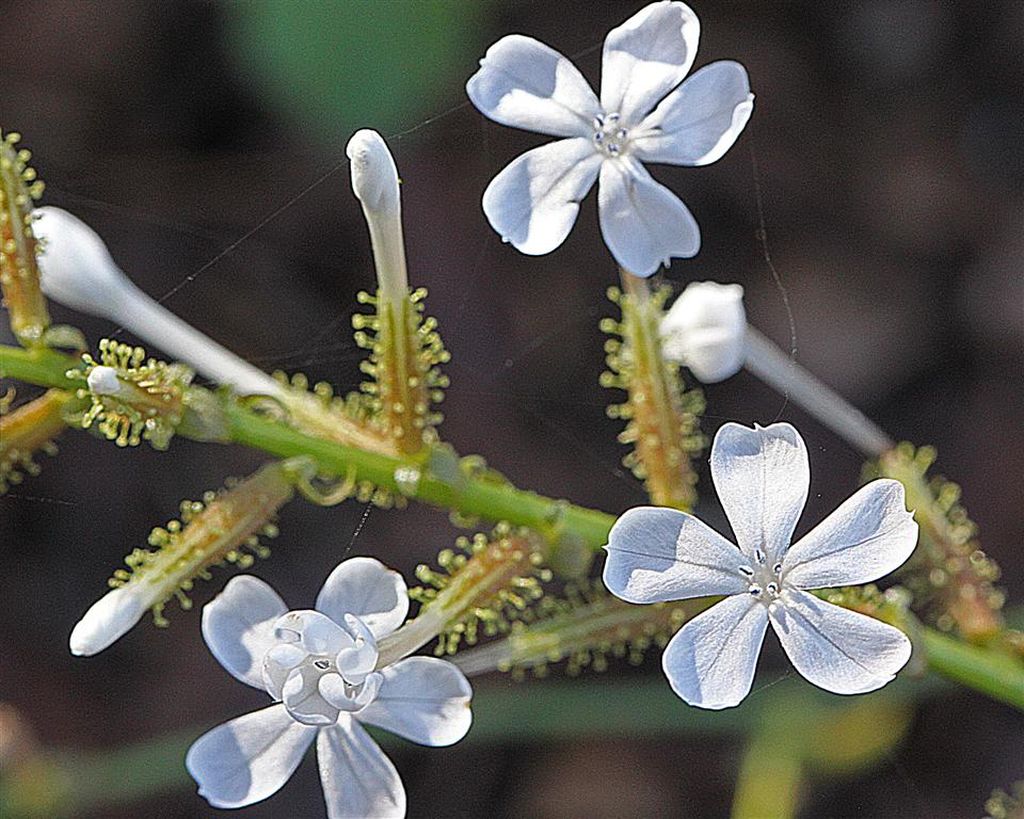
And from October 29, and a trip to South Austin to the roadway around the Lady Bird Johnson Wildflower Center, comes this picture of an unidentified white flower that i haven’t been able to identify using the WFC’s online database. I’ve asked some folks but no one else seems to know either. I will be checking The Weeds OF The West and Toxic Plants Of Texas to see if there’s a match there…and the search for knowledge goes on.
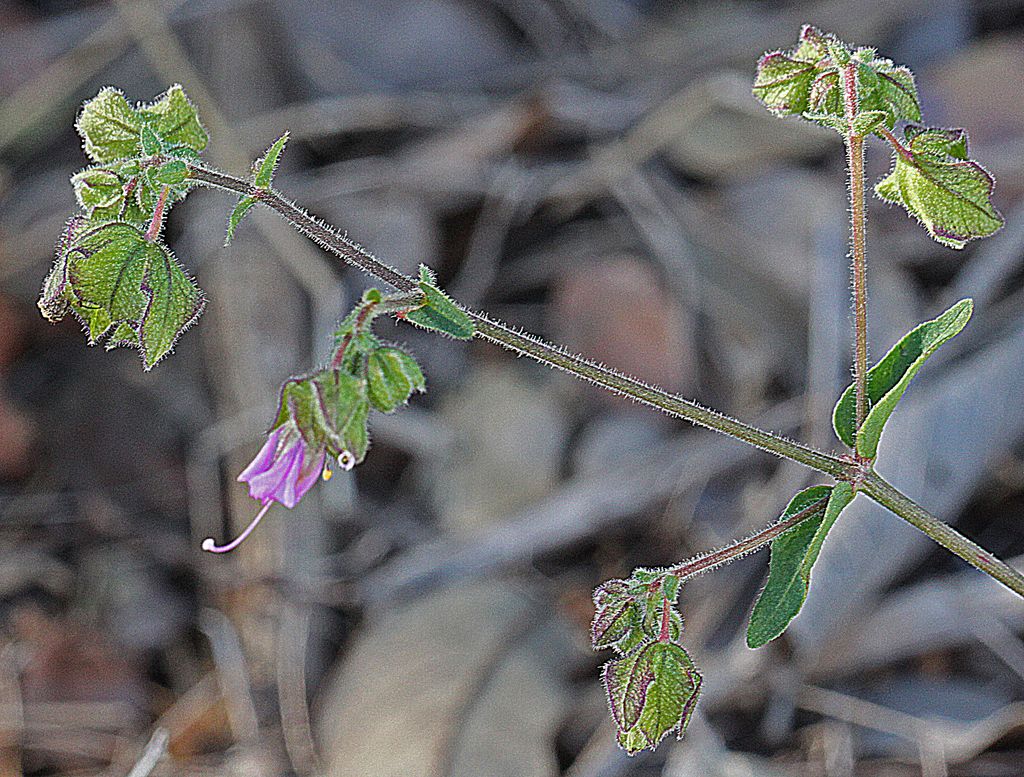
And finally, since we are displaying our ignorance and searching for knowledge, here’s another unidentified flower from the roadside next to the closed on Mondays LBJ WFC – it does appear to be some sort of mallow to me, but so far no luck in figuring out each one. Oh well… tomorrow’s another day, or, based on the time zone in which this is being written, tomorrow is here, but the world is waiting for the sun to rise and I am waiting to sleep, perhaps to dream…
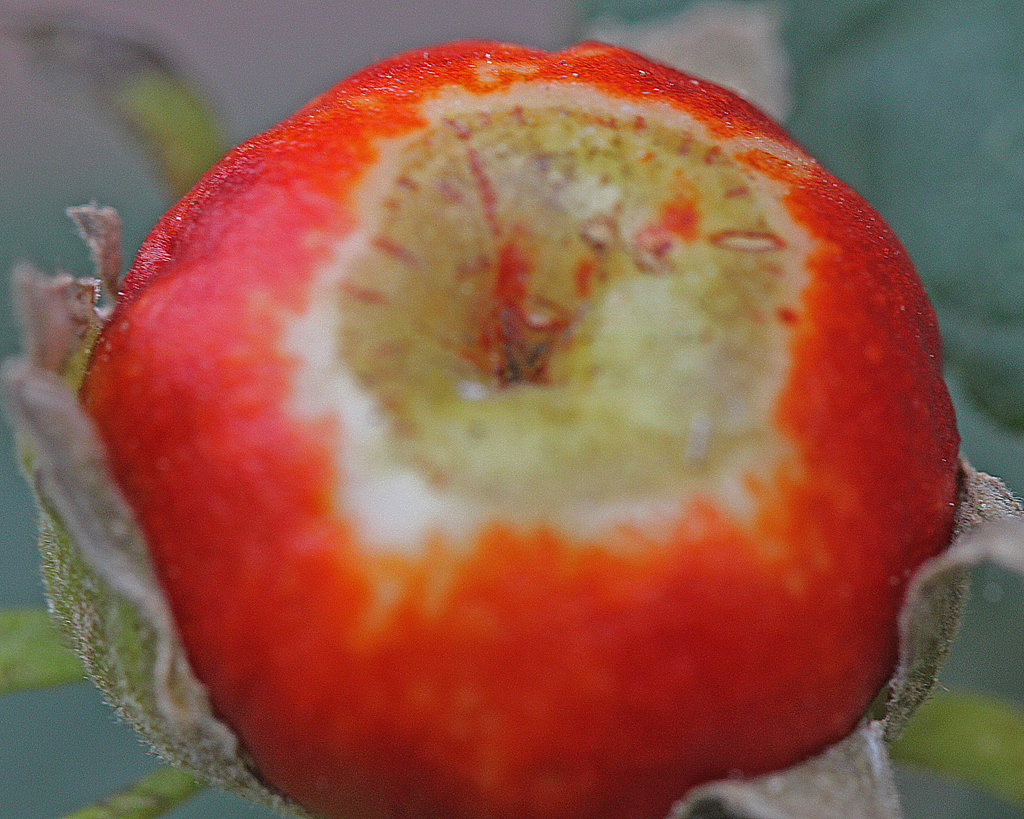
Fruit of Malvaviscus arboreus – Manzanilla
You might know this plant by the common name associated with its flower – Turks Cap. Today we see its edible fruit, with its obvious resemblance to a small apple, hence the common names Manzanilla and Mexican Apple. Manzanas of course, is Spanish for apples, and Manzanilla literally meaning “little apple” in translation.
The fruit is edible – I went back to look for this one a few days later and couldn’t find it. I assume it was eaten by a critter of some sort.
This illustrates some of the disadvantages of using common names for describing plants as well as some of the advantages of native plants in landscaping. The Malvaviscus arboreus provides nectar to hummingbirds and butterflies and other wildlife during its flowering stage, and fruit for wildlife after the bloom has gone. Having evolved in common with its habitat, it provides services to other living things that share that habitat. It’s deciduous, so it sheds its leaves which decompose into compost, enriching the soil if given the chance.
It makes a good alternative to the exotic or alien Nandina which is ubiquitous in the nursery trade and has aggressively escaped into nature. Generally, folks advise cutting the dead wood back to about 1 foot somewhere around mid-February, but anytime after it drops its leaves is fine and should keep HOAs from finding fault with your native plantings.
It is shade tolerant as well as drought resistant, and also comes in a white-flowered variation.
Danaus plexippus – Monarch Butterfly
After posting photos of Monarch mimic Viceroy Butterfly and the Queen Butterfly, it seems only appropriate to post the iconic Monarch Butterfly. if only to distinguish among them.
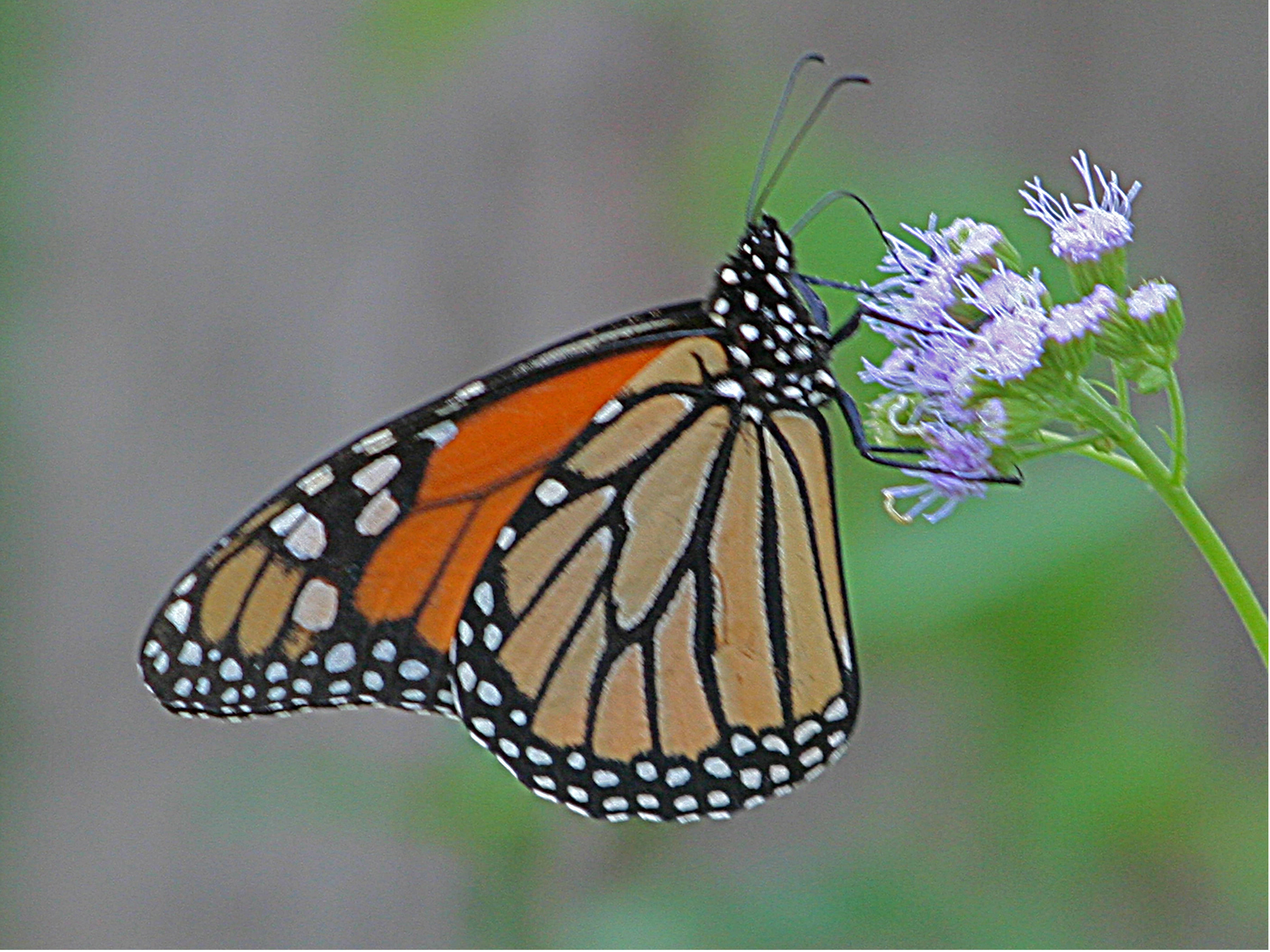
In Central Texas, both Monarchs and Queens can be found hovering over and feeding on Gregg Mistflower Conoclinium Greggii, shown here alongside the Monarch. Of course, while Queen can be found here in the middle of July and August, Monarchs tend to hang in Ohio and Canada until maybe September and October. This particular photo was taken in May a few years ago, probably a second generation new hatched, as Monarchs tend to clear out of Central Texas by May.
Around October, it would be helpful to be able to distinguish between the Monarch and the Queen. One thing is size – Monarchs tend to be larger. With folded wings, the Monarch has a much lighter orange on its hindwing, while the Queen’s orange is much more saturated. On the upper wing, the Monarch continues the “stained-glass” like pattern of black lines separating panels of orange, while the Queen has no lines. When the wings are opened, the Queen lacks any lines, with a solid orange, while the Monarch has the same pattern on both sides of its wings. And of course, the Viceroy has the horizontal line across the hindwing and is smaller than the monarch.
Queen Butterfly – Danaus gilippus
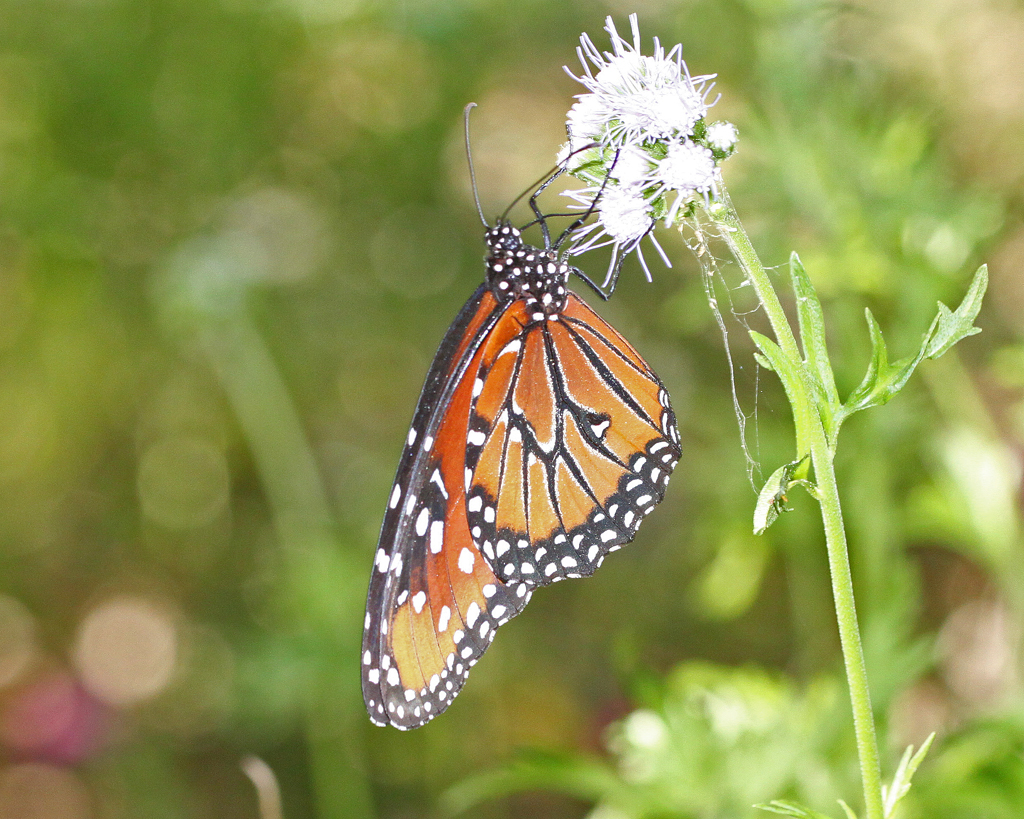
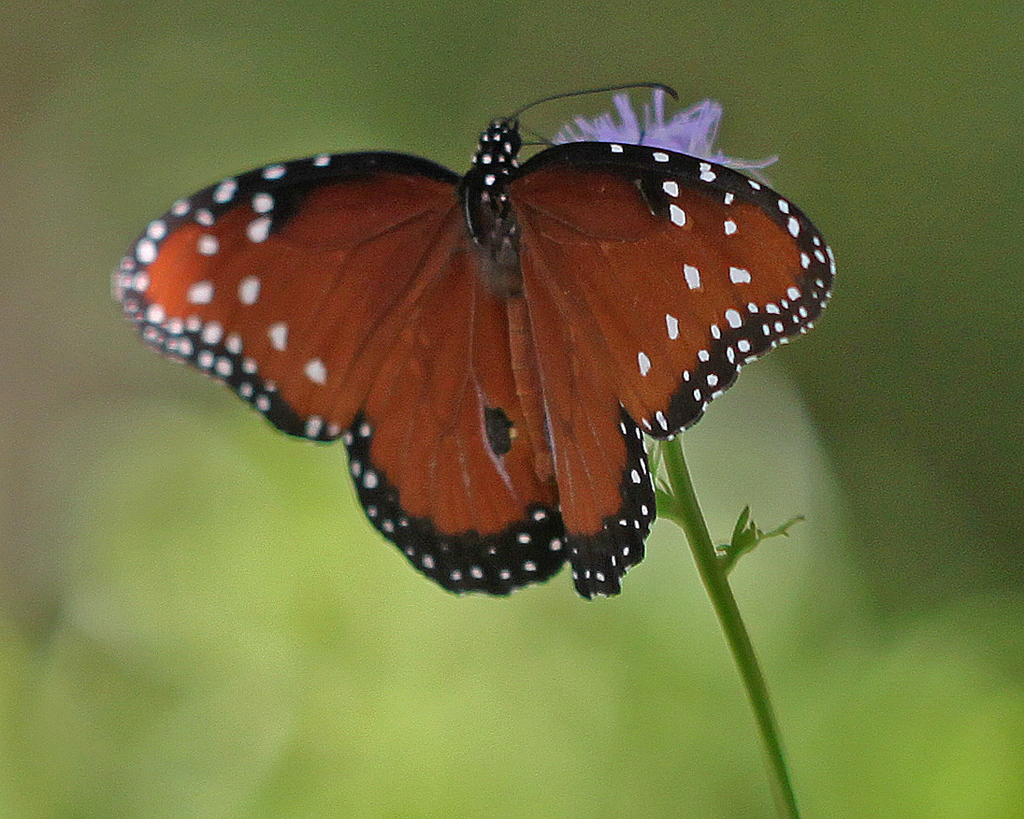
In contrast to the Viceroy Butterfly that was shot 2 weeks ago, this Queen Butterfly was located in my front yard just morning. You can see in this view the loose arrangement of white dots across the top of the wing and the lack of the horizontal black line across the hindwing. It isn’t very noticeable, but part of the “black spot” on the lower wing can be seen with a white dot in the middle of it.
The black spot, which is more vixible in this other picture with spread wings, is used to attract members of the oppsoite sex. Note also that when it spreads its wings out that the inner side of the wing doesn’t have the mosaic-like “staned glass” effect of the outer wings disappears.
Viceroy Butterfly – Limenitis archippus
The first tip-off that this might not be a Monarch Butterfly was the size – it wasn’t nearly as large as a Monarch usually is. And it wasn’t a Queen – they have a looser arrangement of spots and a dark spot near the tail. The clincher was the black line crossing the hind wing in the lower right hand corner of the picture. Sure enough, a Viceroy! Though not an endangered species, they are not seen nearly as often as the Monarch and Queen. And another thing, Monarchs are not seen in Williamson County in mid-July… In fact, the Butterflies and Moths of North America website at http://www.butterfliesandmoths.org/checklists?species_type=All&tid=3013 doesn’t even list the Viceroy among the confirmed sightings for Williamson County. Quite the feather in the cap for our little field trip party. Too bad I didn’t have a telephoto lens with me at the time…