Clematis and Milkweeds, welcome to the family…

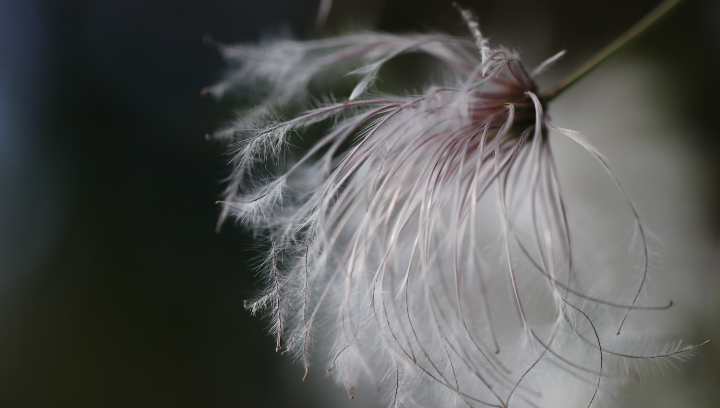
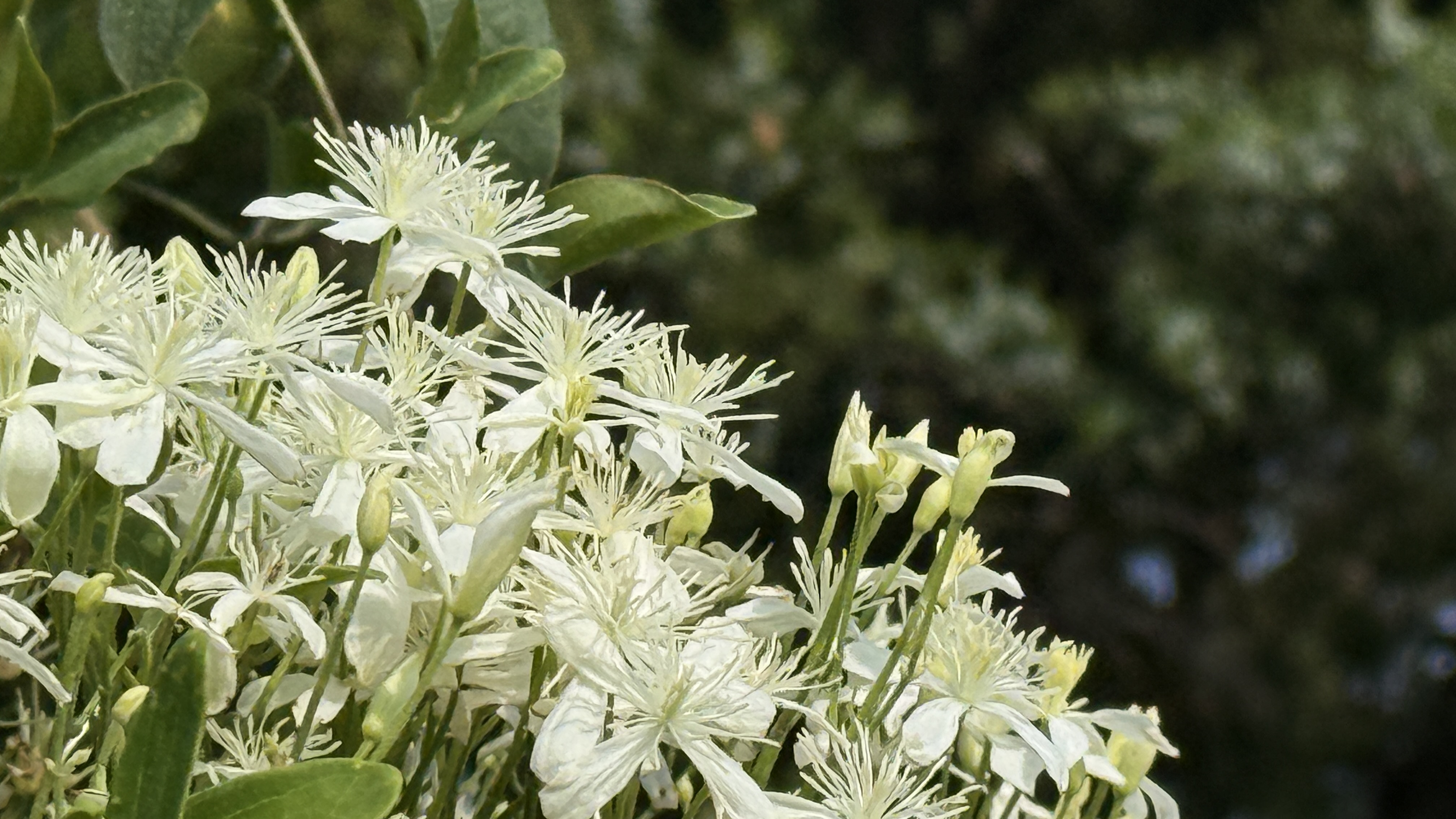
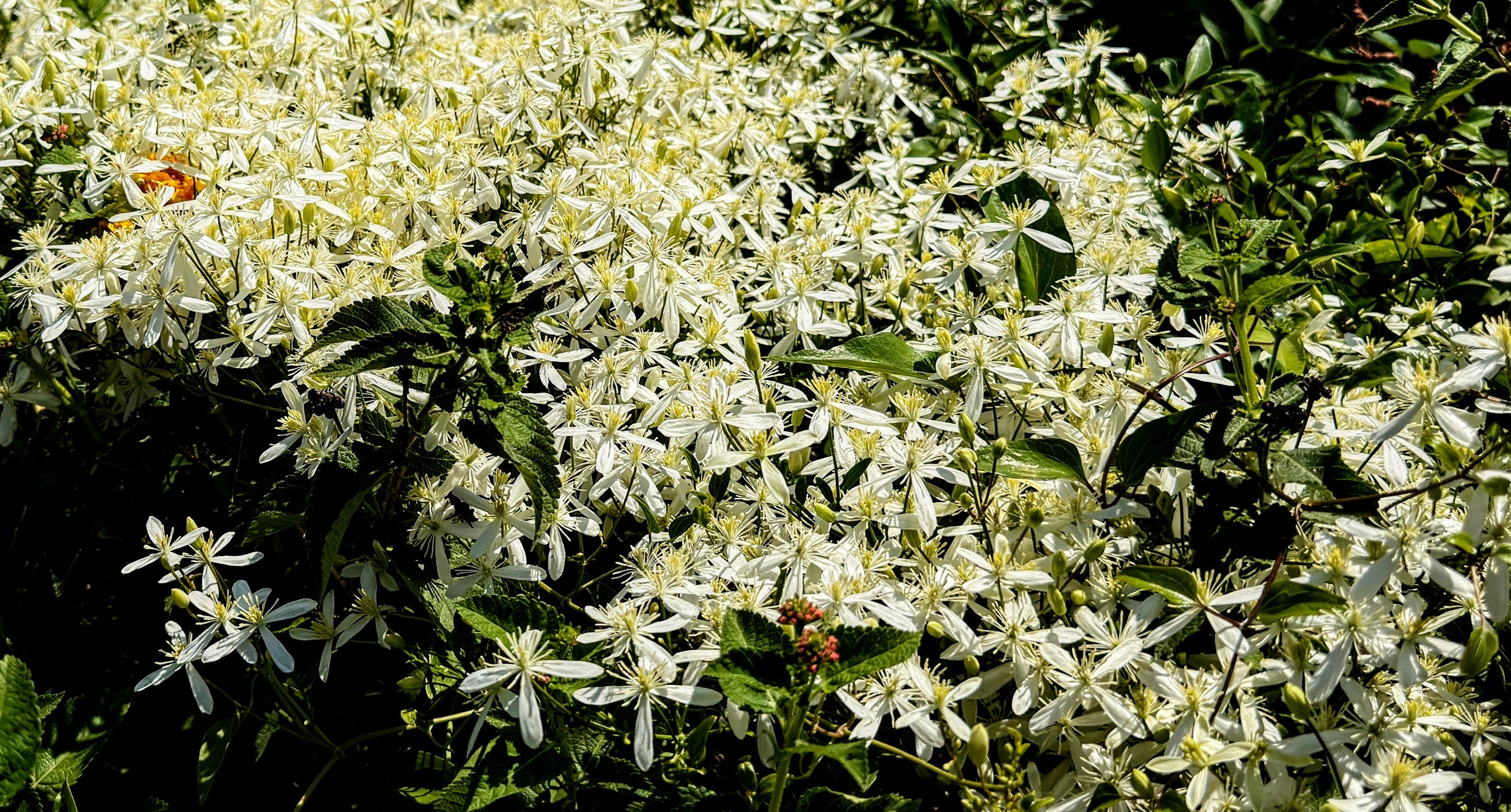
One of my favorite “flowers” is the female Clematis drummondii which is most noticeable in the late summer as the achenes turn into cascades of clouds that give it one of its common names, Old Man’s Beard. The actual flower is shown in the first photo following, the achenes in the other two:

Another favorite plant is Matelea reticulata, commonly known as Pearl Milkweed Vine, due to the “pearl” in the middle of its flower. It, too, is native to Central Texas, where I no longer reside, having “pulled up roots” to move a bit further to the North.

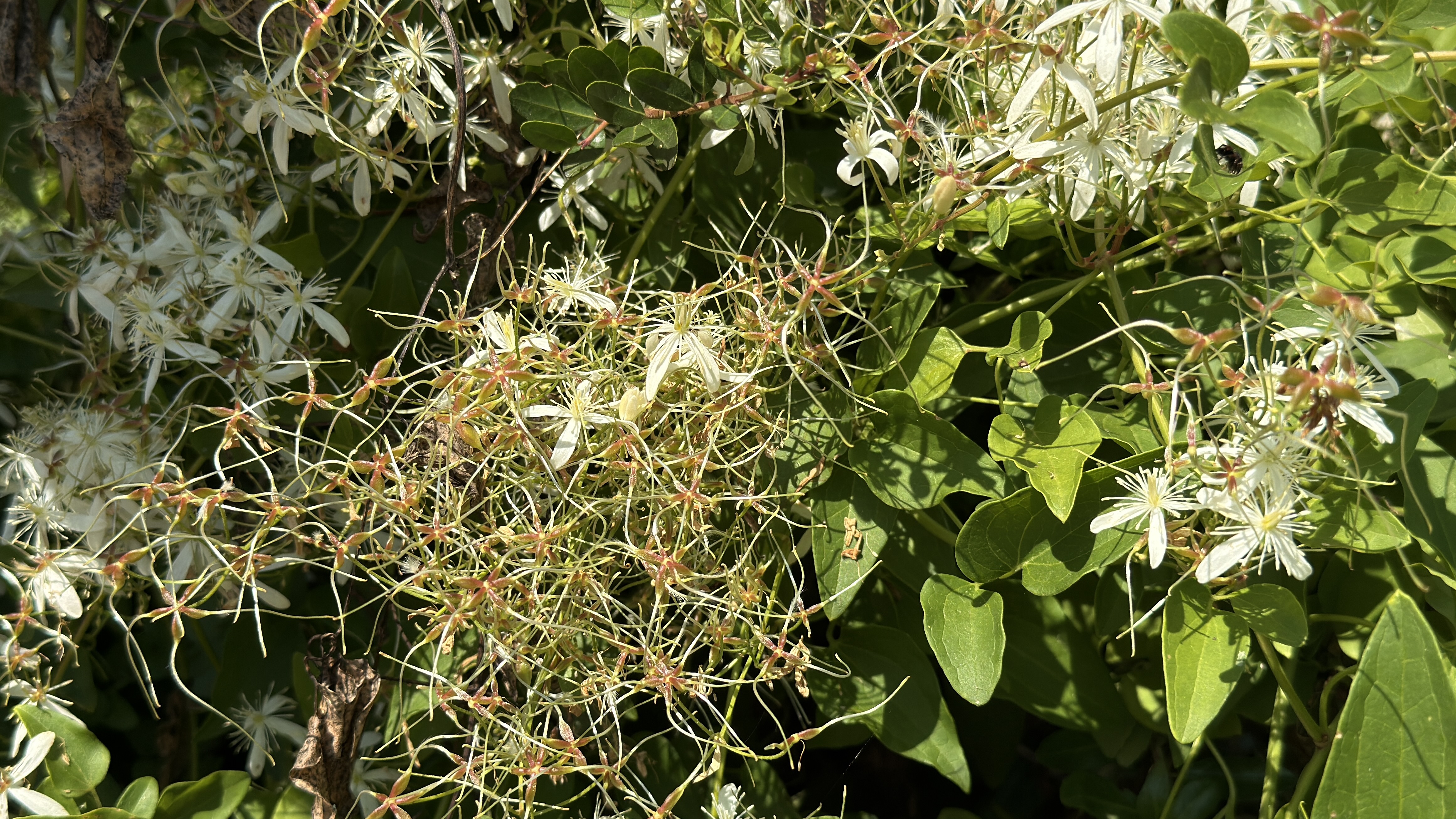
I was pleasantly surprised to find, recently, a different Clematis, native to Central Oklahoma. Clematis terniflora, or Autumn Clematis, as it’s commonly known, is smaller than its Texas cousin, but still provides striking clouds of white flowers and achenes along the roadsides and in ditches. In this case, the flowers provide the show, and the achenes are less showy than those of C. drummondii, as seen in the third photo following:
Cynanchum laeve, common name Honey Milkweed Vine, has been observed in several locations around here, notably near the airport and a few miles away. As suggested by the common name, the flowers give off a strong, sweet smell attractive to humans and pollinators alike.

While they’re not the same species one has become accustomed to, the “new” species are familiar enough to provide a sense of a welcoming environment.

###
Blooming in late May and Early June…

Here are a few of the flowers and other stuff I managed to capture on digital media recently.

Actually, there are a lot more items in bloom, but these were closest on hand. The front yard also has Four-nerve daisies, Wright’s skullcap, Autumn Sage, Simpson’s rosinweed, Turkscaps, Engelmann daisies, Rock Rose, and White avens in bloom, besides those pictured below.

The South side of the house has Passiflora vines, copious amounts of Gulf Fritillary and other butterflies in varied stages of development, a Texas lantana, a Datura , lots of Blue Curls, a couple of White mistflowers (not blooming until the Fall), Clematis texensis and drummondii, some Asclepias plants for the Monarchs, and that pretty much covers what’s on bloom in June.

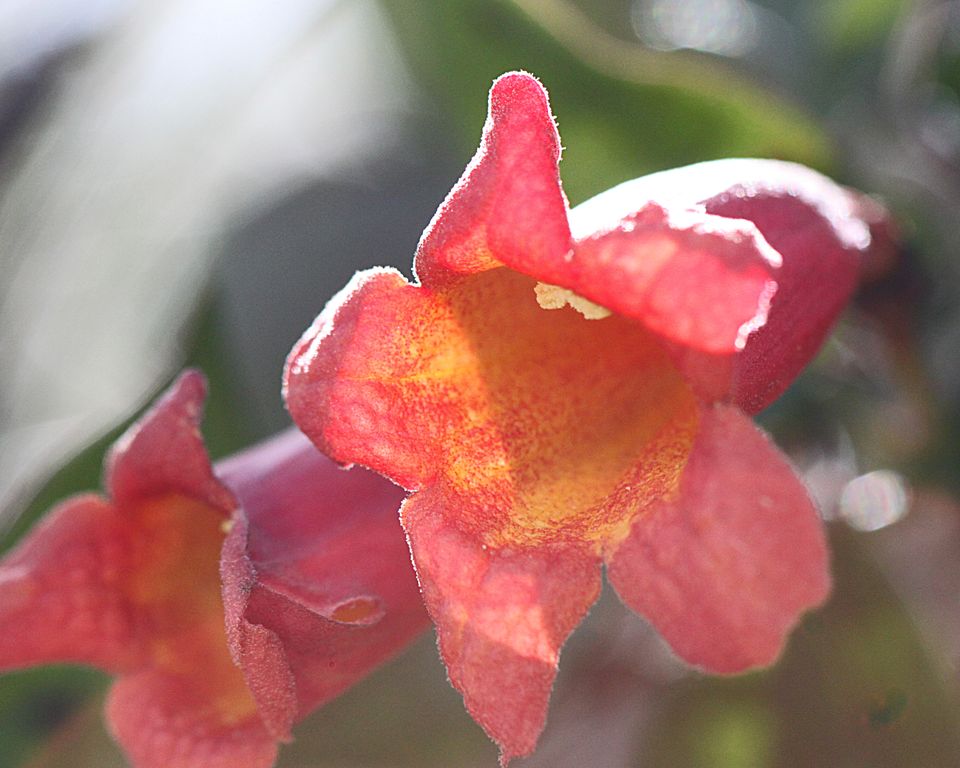
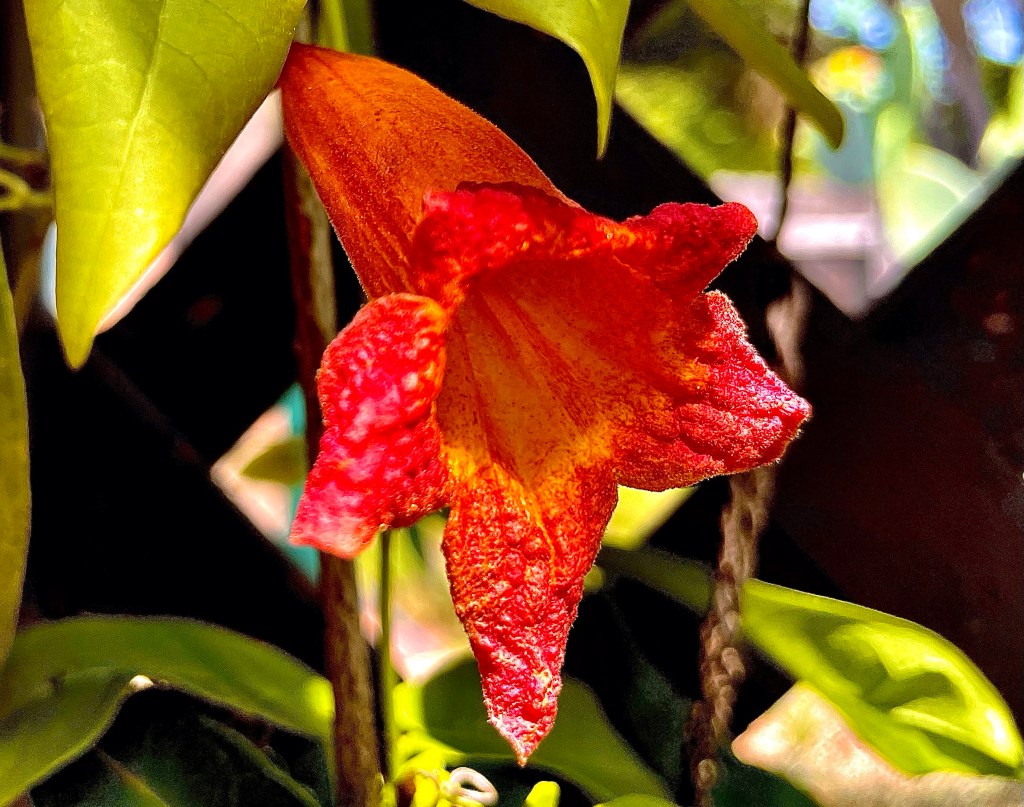
Bignonia capreolata (Crossvine), slightly past its glory

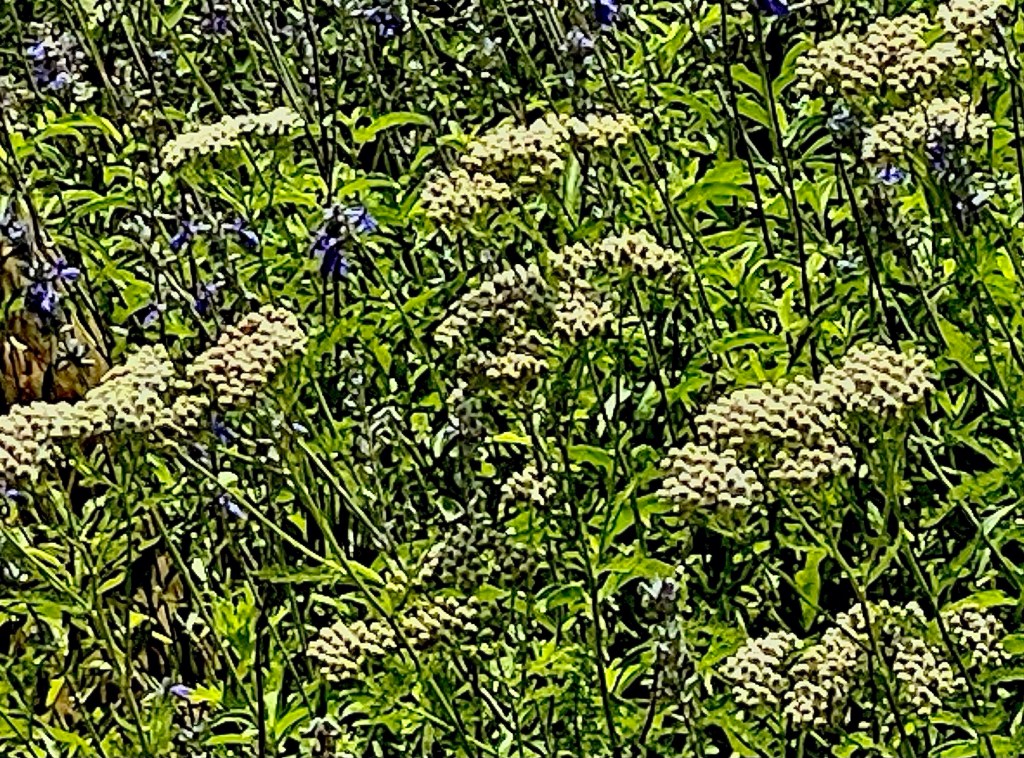
(Achillea millifolium) Milfoil

(Salvia farinacea) Mealy blue sage
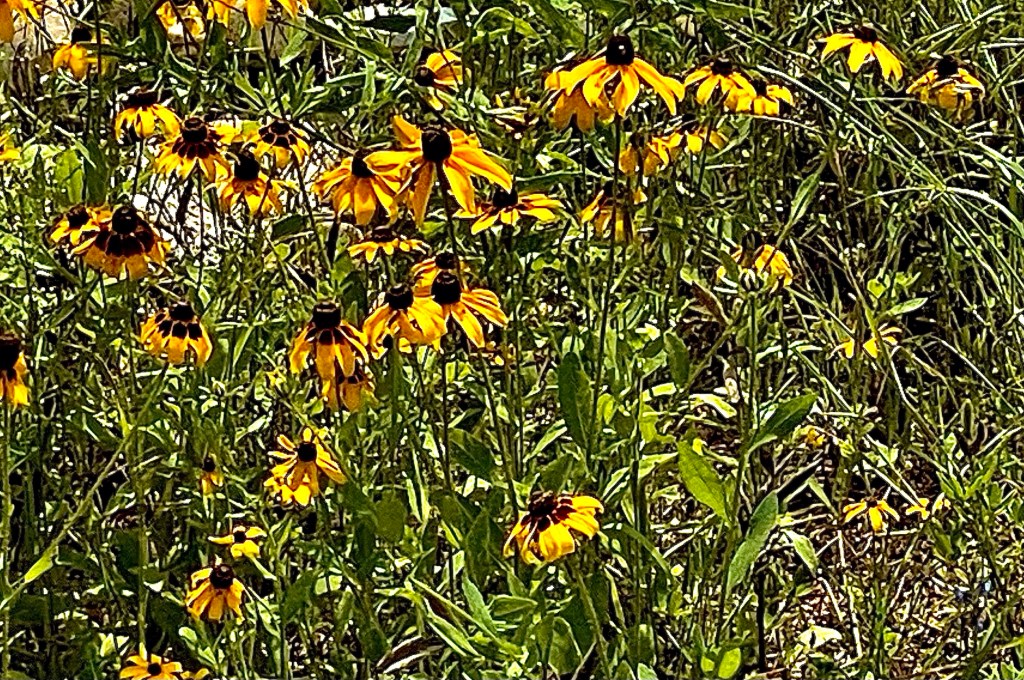
Rudbeckia hirta – Brown eyed Susans

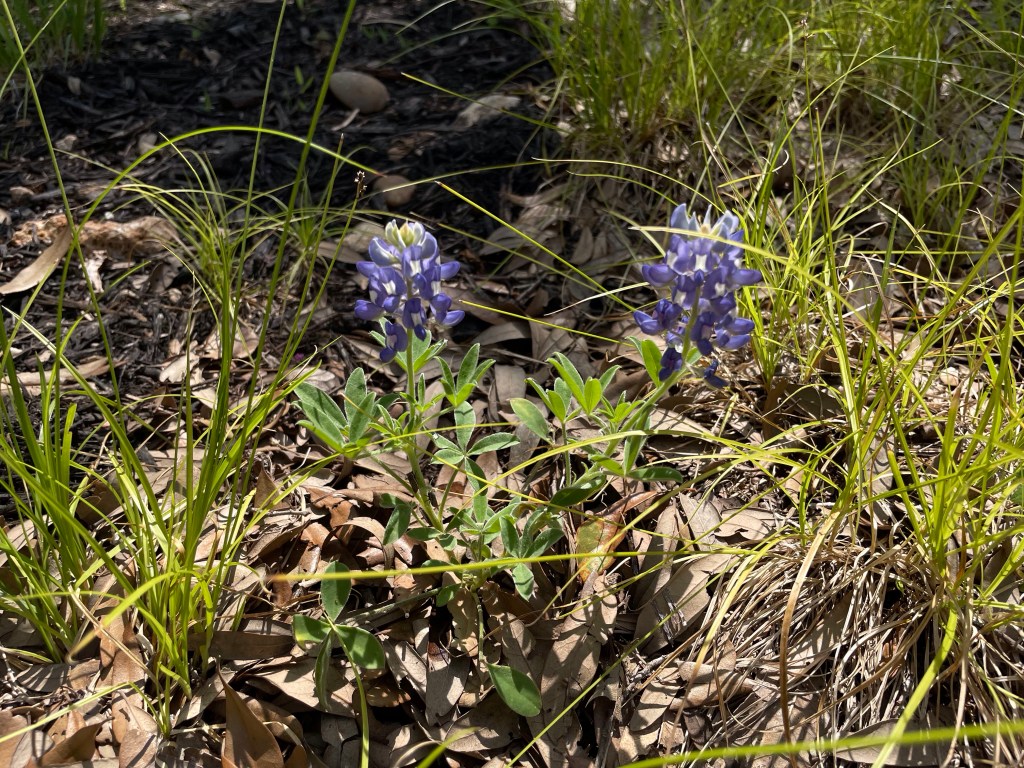
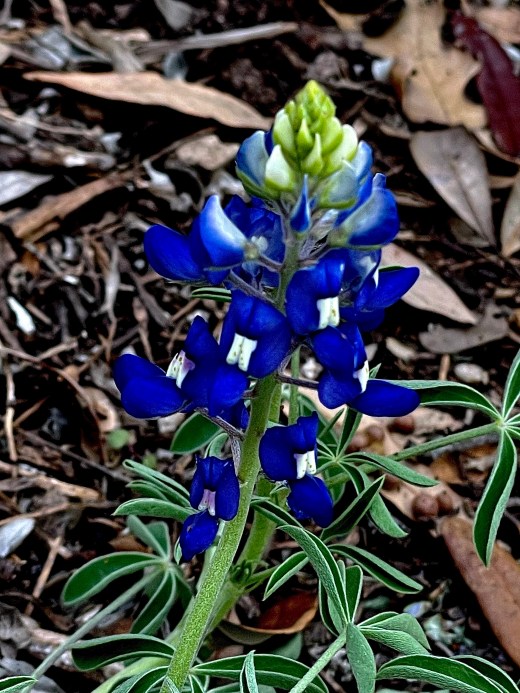
A surprise on June 1st – two baby Bluebonnets (Lupinus Texensis) blooming in the front yard!

From my Nextdoor neighborhood group:

https://nextdoor.com/embed/sxW7MxB4bd-p

Okay, laziness is the mother of invention, so I’m trying to hit two birds with one stone, so to speak. The above is a link to my Nextdoor post this morning showing a few species of plants and animals related to Central Texas.

You might notice that the group there is also named Return To The Natives/Native Plants Are The Answer. If you think that’s a coincidence, you’d be wrong.

What’s in bloom in December?

Just a look at the most recent shots:

Taken on December 1, 2021. Since March 27, I have seen and photographed at least one Monarch Butterfly in each of the following months in 2021. And that just doesn’t seem right…

A possible explanation to Monarchs’ dallying around Texas this year

This article came up in my newsfeed recently,.

It suggests  why some Monarch butterflies seem to be hanging around Texas this year – the popularity of Tropical milkweed (Asclepias curassavica). The article further goes on to explain that

” Tropical milkweed becomes a problem when planted in temperate areas where it does not die back in winter. A protozoan parasite of monarch butterflies, Ophryocystis elektroscirrha or OE for short, can travel with monarchs visiting the plants and become deposited on leaves. When caterpillars hatch and start eating the plant, they ingest the OE. High OE levels in adult monarchs have been linked to lower migration success in the eastern monarch population, as well as reductions in body mass, lifespan, mating success, and flight ability.”

Milkweeds native to the region die back after blooming, and with them, the OE. Thus each new flight of Monarchs gets to lay their eggs on new, uninfected milkweeds.

Interestingly, the article was written over three years ago…

Tropical Milkweed is a No-Grow – by the Xerxes Society

On the other hand, I have now seen and photographed Monarchs in my backyard from late March through November . I went to vote  on Tuesday, November ,2, and  observed more than a few Monarch butterflies, both in the greenbelt and in the demonstration garden. Sadly,  many of the flowers being used didn’t appear to be natives.  I also noticed that the milkweeds at the community center garden appear to be Tropical milkweed. (They have yellow flowers instead of orange flowers).

Some plants and wildlife in October:

All my weeds are wildflowers (I wish)

Passiflora incarnata/Ruellia nudiflora hybrid?

A couple of native plant species have begun to spread like weeds in the narrow area separating my subdivision plat from my neighbor’s house.

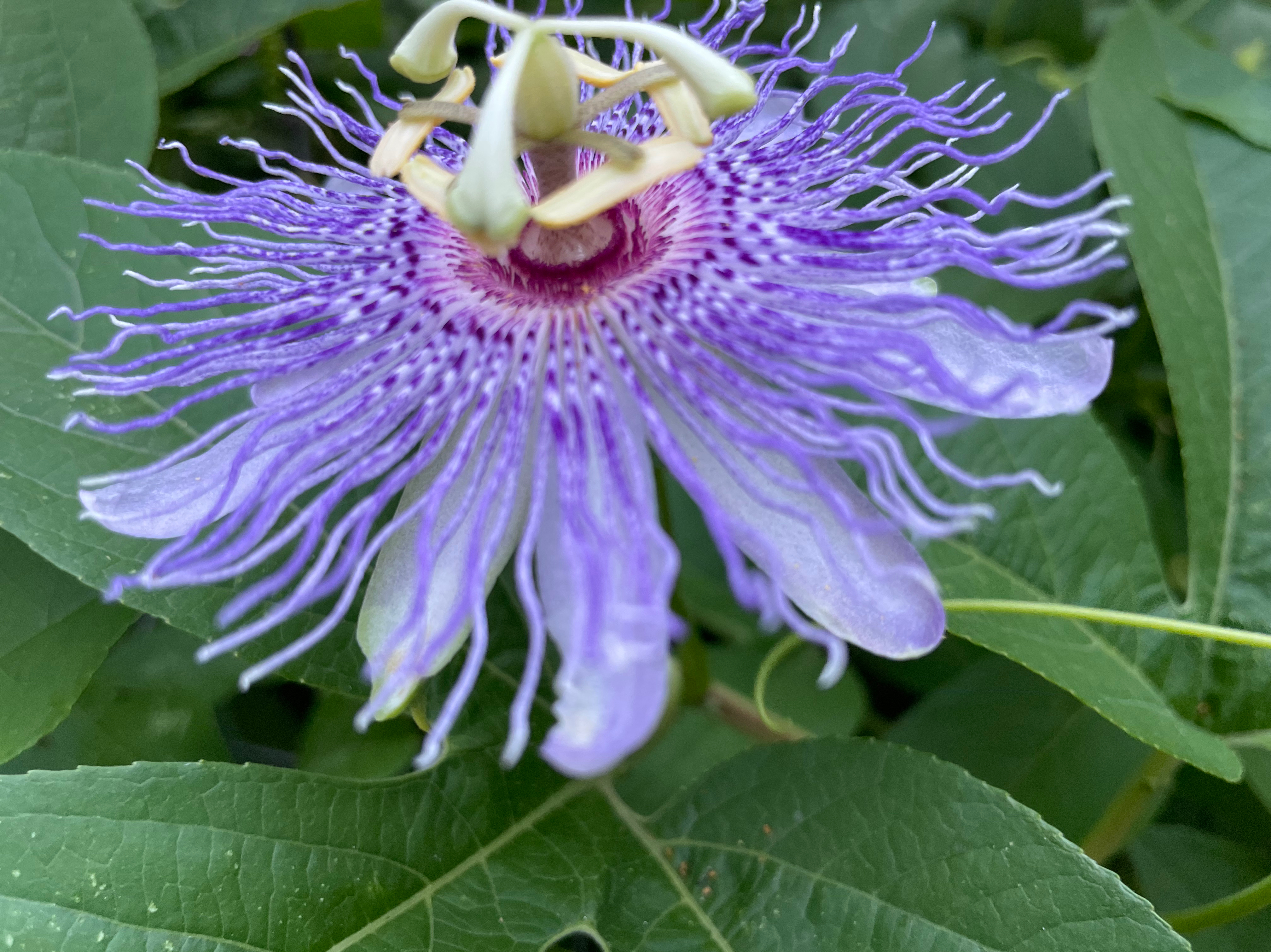
Passiflora incarnata, or Purple Passionflower, has sprung up where a corkscrew passionflower vine used to be, and through rhizomes has managed to propagate itself all along the Southern side of the house. I’ve done some pulling of the pups as the poke up through the mulch, and have been able to give away a few of them for others to try to get their own vines going.

The flowers of the Passion flower vine are about three inches in diameter, with the petals forming a wavy fringe. Stamens and stigmas also are striking in appearance as well. Several different types of butterflies use this as a larval host, most notably the Gulf Fritillary (Agraulis vanillae ) and Variegated Fritillary (Euptoieta  claudia ) butterflies. 

Passiflora icarnata infloresence, tri-lobed leaves, and tendril

Passiflora icarnata inflorescence, tri-lobed leaves, and tendril

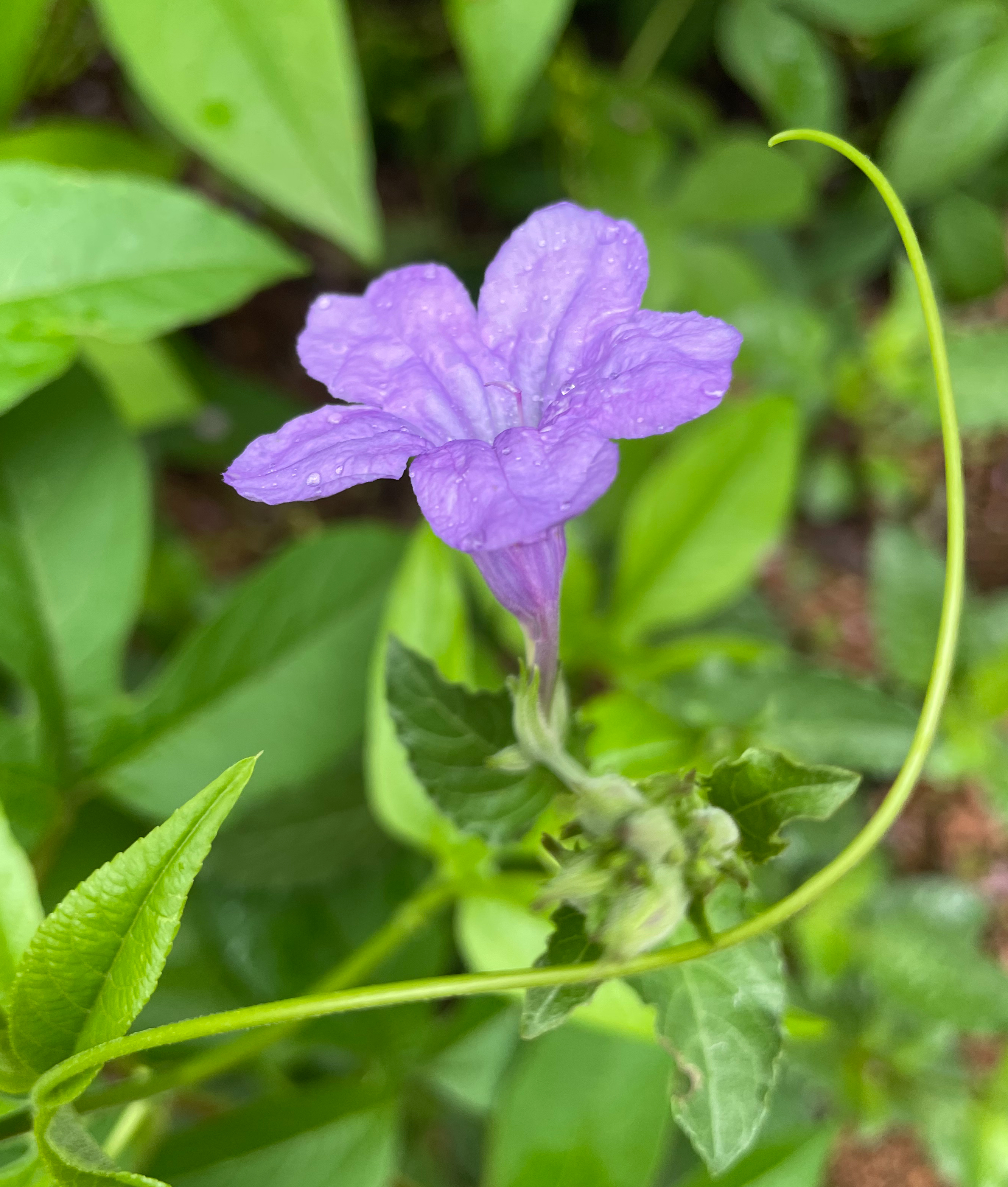
The Ruellia nudiflora, or Wild Petunia, also has a purple to lavender flower, but it is trumpet-shaped. And it’s not a vine, but a sub-shrub perennial . After having transplanted this volunteer several years ago, it has now decided to propagate itself, like a weed, in the mulched bed and in the gravel path. Although its inflorescences look much like those of the cultivated Petunia, it is in the Acanthus Family, while the cultivated Petunia is in the Potato Family. The blossoms open in the morning, falling off in the afternoon. Like several other of my favorite wildflowers, its flowers are ephemeral, lasting for just a day.

Ruellia nudiflora inflorescence, surrounded by Passiflora leaves and tendril

Ruellia nudiflora inflorescence, surrounded by Passiflora leaves and tendril

As if having to “weed” native species wasn’t bad enough, as one can see from the top photo in this post, it looks as though the two plants have begun to hybridize to form a new species. Fortunately, (or unfortunately), that’s not the case: A blossom from the Ruellia has been captured by a tendril from the Passiflora, making it look (almost) like it belongs to the vine. 

Not sure what I’d do if they actually did start to hybridize – probably get a botanist or two to take a closer look. And get a nursery to work with to develop and patent the new species. And sit back and watch the money roll in (ha!).

###

Queen of the blue mistflowers

Gregg’s mistflower (Conoclinium greggii)

It has been a while since I posted anything on this blog, and so now we can compute just how long “a while” is.

Of course, this picture was taken several months earlier when I was fooling around with a different camera and lens, and trying to transfer learning between one of two systems (in alphabetical order: Canon and Nikon) without recourse to written instruction. This picture appeared on at least one Native Plant Society of Texas blog, and reappears in these pages because it is quicker and easier than processing some other photo.

Sad to say, the result shown here was probably more a matter of luck than transfer of skill. But it is skill in choosing native plants appropriate to the region that results in the Queen (Danaus gilippus) and Monarch (Danaus plexippus) butterflies that have been seen recently. I did manage to get a shot of the Monarch, but haven’t gone after the Queens yet – it has been windy, and they rarely stay still for long. Why a Monarch is in my neck of the woods in mid-July seems to be one of those outliers to the norm mysteries for which the answer may never be known for sure.

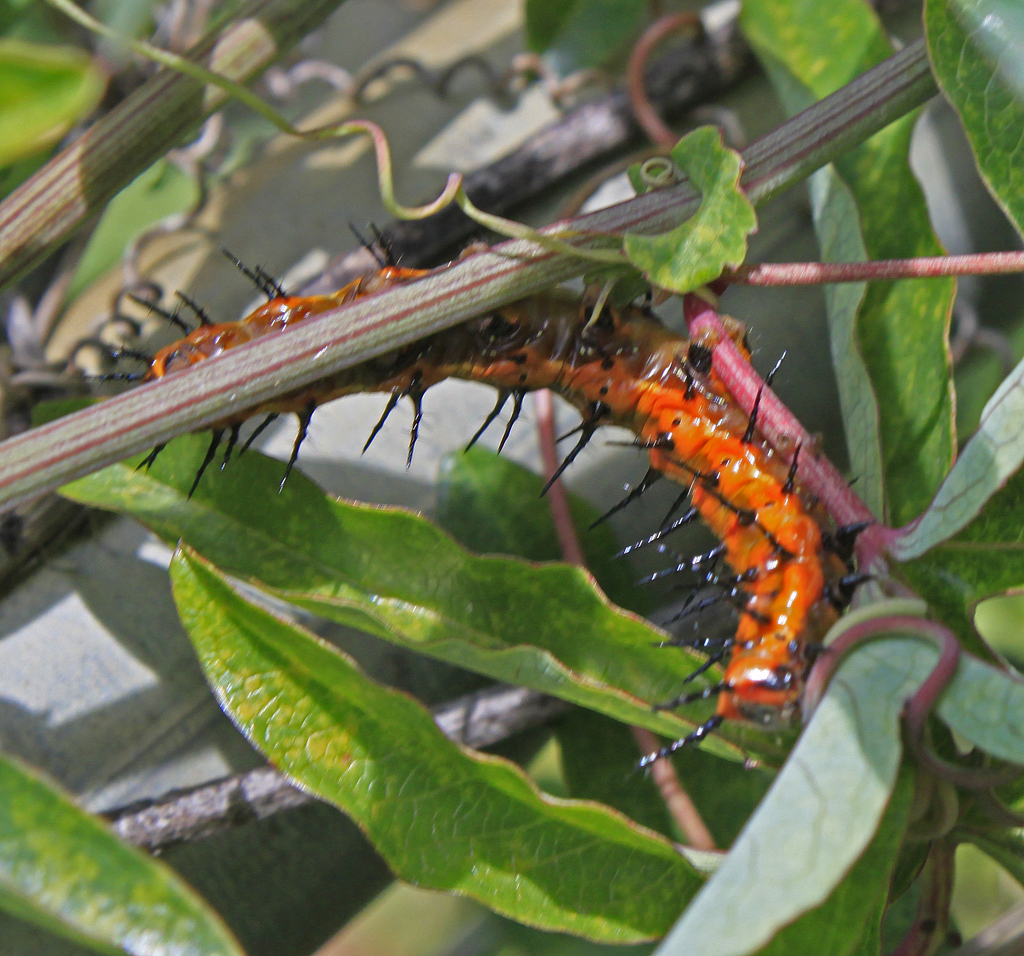
Agraulis vanillae Gulf Fritillary Butterfly larva

Agraulis vanillae Gulf Fritillary Butterfly on Passiflora sp

Agraulis vanillae Gulf Fritillary Butterfly on Passiflora sp


While the Gulf Fritillary, as the name implies, is native to the area surrounding the Gulf of Mexico, but its range actually extends far beyond that. It is found as far south as Argentina and as far north as San Fransisco, according to Wikipedia.

Here it is on one of the Passiflora vines, one which is not native to the part of Central Texas where I live. It seems that one cannot find locally native plants unless one digs them up, which can’t be both ethical and legal, or manages to find some that have gone to seed and from which a small taking of seed would not endanger reproduction in the natural state.


Bignonia capreolata – Crossvine

Bignonia capreolata - Crossvine

Bignonia capreolata – Crossvine

The Crossvine is blooming, draped across the Eastern Redbud, and it seems to be handling the drought with less stress than the Redbud.   The blooming period is from March through May. It attracts hummingbirds (if there happen to be any in the suburban desert) and butterflies that feed on the nectar. Which reminds me – I saw my first Monarch Butterfly (Danaus plexippus) of the season over the weekend (Saturday to be exact). Oddly enough, it was feeding on the Texas Mountain Laurel Sophora secundiflora, but apparently not long enough for me to grab the camera, Also spotted a couple of Red Admiral  (Vanessa atalanta) butterflies yesterday and did grab my camera, but the creature wouldn’t settle down long enough for me to get a shot. So here’s the Bignonia capreolata instead.