It’s PT (Physical Therapy) time again

I have described myself as “71 going on 17” frequently enough lately to others that isn’t getting funny anymore. But a couple of things have happened that go beyond a palindromic allusion to the soundtrack from “The Sound Of Music.”

On March 27, 2019, I was reaching over a landscape boulder in my yard, trying to put in place a sun shade umbrella stand that would serve as a solar panel stand for a small water feature, when I lost my balance, fell forward, and broke my fall with my left hand. I was actually in physical therapy at the time for rehabilitation following a couple of bunionectomies on the same foot, so after X-rays confirmed there was no fracture, I continued with both rehabs. This past October, 2020, I managed to step off a different landscape boulder in my yard with no apparent damage while falling on my back. Then later in the month, on the 24th and 31st, while out photographing wildflowers in a preserve, I fell backwards stepping off – again, no apparent damage. On the 31st, I attempted to catch up with the group I was with by taking a shortcut, stepping up on a boulder using my walking stick. I almost made it, but teetered and fell backwards. Fortunately there were no apparent fractures. But it did make the symptoms from the 2019 return. Short story long – my Primary Care Provider referred me to rehab, I was assigned to a PT who had seen me before, and she quickly focused in on the worst pain, and then worked on the other, postural habits and problems that continued to cause problems. And noted that when I step up, I tend to lean back, which probably had something to do with my October 31 fall.

All of which is a roundabout way to lead in to this review article: Physiotherapy in Parkinson’s Disease:A Meta-Analysis of Present Treatment Modalities   

Results:

  •  Conventional physiotherapy significantly improved motor symptoms, gait, and quality of life.
  • Resistance training improved gait.
  • Treadmill training improved gait.
  • Strategy training improved balance and gait.
  • Dance, Nordic walking, balance and gait training, and martial arts improved motor symptoms, balance, and gait.
  • Exergaming improved balance and quality of life.
  • Hydrotherapy improved balance.
  • dual task training did not significantly improve any of the outcomes studied.

citation info: Neurorehabilitation and Neural Repair 2020, Vol. 34(10) 871–880 © The Author(s) 2020 Article reuse guidelines: sagepub.com/journals-permissions DOI: 10.1177/1545968320952799 journals.sagepub.com/home/nnr

Some research that might be of interest…

My Google Scholar alert feed tossed a couple of items my way  that might be of interest. They are in PDF format, so you can read them online or download them for future reference:

Tricky partners: native plants show stronger interaction preferences than their exotic counterparts.

Citation: Coux, C., I. Donoso, J. M. Tylianakis, D. Garcı´a, D. Martı´nez, D. M. Dehling, and D. B. Stouffer. 2021. Tricky partners: native plants show stronger interaction preferences than their exotic counterparts Ecology 102(2):e03239. 10.1002/ecy.3239

Main takeaway (my interpretation): Increasing presence of exotic plants may put rare native plants at higher risk of extinction.

(Caveat: my browser says the site is not secure. However, I have several security programs that (hopefully) would mitigate. the risks).

That being said, the article is from a group of scientists from New Zealand, Germany and Spain who looked into the interactions that native and exotic plant species had with other plant species.

Exotic species interact with many partners with which they have not coevolved, and it remains unclear whether this systematically influences the strength of neutral processes on interactions, and how these interaction-level differences scale up to entire networks. To fill this gap, we compared interactions between plants and frugivorous birds at nine forest sites in New Zealand varying in the relative abundance and composition of native and exotic species, with independently sampled data on bird and plant abundances from the same sites

The results found that native plants’ interactions with birds were both more positive (preference for) and negative (avoidance of). Their analysis suggests that the blending of species communities through dispersal of exotics into native plant communities might result in an increase of neutral interactions between birds and native plants or exotic plants.

This could make rare species more vulnerable to this loss of selectivity and to greater randomness in the identity of their interaction partner.

So there’s another argument for getting rid of invasives.

Moving right along, here comes

Where Have the Native Grasses Gone: What a LongTerm Repeat Study Can Tell Us about California’s Native Prairie Landscapes

…found that native grass cover decreased dramatically (especially on the valley floor), exotic grass cover fluctuated widely over time, while both native and exotic forb cover increased over time. The findings support the notion that prior grazing management practices may have supported the former stands of Stipa pulchra.

… Several trends became apparent when the data from the three periods are viewed together. Both native and exotic forbs increased between each data collection. There were consistently more native forbs than exotic ones and native grasses decreased in cover. Though exotic grasses fluctuated, they always made up a greater amount of cover than their native counterparts. Lastly, cover of bare ground fluctuated and shrubs declined. The Fisher’s Exact test of the increases and decreases of forb and grass cover across quadrats from 1981 to 2015 had a p-value of 0.00012 indicating that we can reject the null hypothesis of independence…

… native bunchgrasses have declined dramatically since the end of the ranching era. Simultaneously, native forbs have increased (at least temporarily), especially on the valley floor. Our findings also suggest that the historical ranching practices in LJV likely supported the excellent stands of Stipa observed in the valley prior to release from grazing. These findings are in agreement with those of previous long-term studies in other parts of California that also found a decline in Stipa cover on lands released from grazing. (emphasis added).

If one were to generalize the conclusions of this study to Texas, where this writer resides, I would say that the presence of large stands of Prickly Pear (Opuntia sp.). and Texas Cedars (Juniperus ashei) as the dominant species in large parts of Central Texas is probably due to past practices of overgrazing, similar to the presence of the native bunchgrasses in California has been attributed to the previous grazing practices in the study cited above.

However, I do not believe that the answer to the problem is to bulldoze the soil away and to cover the land with non-permeable surfaces like buildings and asphalt parking lots.  One can develop land while leaving large portions of native plant species intact, and without replacing them with crappy myrtles and Nandina plants.

postscript:

One of the references used in the article on California grasses was California’s Fading Wildflowers  by Richard A. Minnich. The table of contents and lists of illustrations and tables and preface are available for open access, but the book itself costs a hefty $128.00.  Another reference was Terrestrial Vegetation of California. California Native Plant Society Special Publication Number 9 (pp. 733–760). Sacramento, California., which is not on the web.

###

Cannabis and Parkinson’s Disease (PD)

This article popped up in my email alerts. Although I do not have access to the journal in which it appeared, I thought I would post it anyway, along with several article titles that appeared in the same journal. (If my former employer would grant me access to their technical library, I would be most grateful, and might even forego any patent filing awards that I would be eligible for if I hadn’t retired. I come across at least one new Human-Computer Interface issue that could be solved each week, But I digress). (The actual link to the article was in Medscape News).

Despite high interest (no pun intended(?)) in the use of cannabis as a treatment for Parkinson’s Disease symptoms, this study  finds that actual use remains low (at least in Germany). The article appeared in  Journal of Parkinson’s Disease: Yenilmez, Ferhat et al. ‘Cannabis in Parkinson’s Disease: The Patients’ View’. 1 Jan. 2021 : 309 – 321. 11, no. 1, pp. 309-321, 2021.

Sadly, it is not available as open access, but fortunately the methods and results provide adequate data regarding the study.

Abstract:

Background: Little is known about the patients’ view on treatment with medical cannabis (MC) for Parkinson’s disease (PD). Objective: To assess the PD community’s perception of MC and patients’ experience with MC.Abstract:

Methods: Applying a questionnaire-based survey, we evaluated general knowledge and interest in MC as well as the frequency, modalities, efficacy, and tolerability of application. Questionnaires were distributed nationwide via the membership journal of the German Parkinson Association and locally in our clinic to control for report bias.

Results: Overall, 1.348 questionnaires (1.123 nationwide, 225 local) were analysed. 51% of participants were aware of the legality of MC application, 28% of various routes of administration (ROA) and 9% of the difference between delta9-tetrahydrocannabinol (Δ9-THC) and cannabidiol (CBD).

PD-related cannabis use was reported by 8.4% of patients and associated with younger age, living in large cities and better knowledge about the legal and clinical aspects of MC. Reduction of pain and muscle cramps was reported by more than 40% of cannabis users. Stiffness/akinesia, freezing, tremor, depression, anxiety and restless legs syndrome subjectively improved for more than 20% and overall tolerability was good. Improvement of symptoms was reported by 54% of users applying oral CBD and 68% inhaling THC-containing cannabis. Compared to CBD intake, inhalation of THC was more frequently reported to reduce akinesia and stiffness (50.0% vs. 35.4%; p < 0.05). (emphasis added) Interest in using MC was reported by 65% of non-users.

Conclusion: MC is considered as a therapeutic option by many PD patients. Nevertheless, efficacy and different ROA should further be investigated.

Some other articles on the same issue that might be of interest (All are at the above link):

The Subjective Experience of Living with Parkinson’s Disease: A Meta-Ethnography of Qualitative Literature

Does Gut Microbiota Influence the Course of Parkinson’s Disease? A 3-Year Prospective Exploratory Study in de novo Patients

Association Between Thyroid Diseases and Parkinson’s Disease: A Nested Case-Control Study Using a National Health Screening Cohort  ” The rates of levothyroxine treatment for more than 3 months, hypothyroidism, and hyperthyroidism were higher in the PD group than the control group (3.2%, 3.8%, and 2.8% vs. 2.5%, 2.9%, and 1.9%, respectively, p  < 0.05). The adjusted odds ratios (ORs) in model 2, which was adjusted for all potential confounders, for hypothyroidism and hyperthyroidism in the PD group were 1.25 (95% confidence interval (CI) 1.01–1.55, p  = 0.044) and 1.37 (95% CI 1.13–1.67, p  = 0.002), respectively. 

Subthalamic Stimulation Improves Quality of Sleep in Parkinson Disease: A 36-Month Controlled Study

Diet Quality and Risk of Parkinson’s Disease: A Prospective Study and Meta-Analysis

Identification of Pre-Dominant Coping Types in Patients with Parkinson’s Disease: An Abductive Content Analysis of Video-Based Narratives

Dissonance in Music Impairs Spatial Gait Parameters in Patients with Parkinson’s Disease Conclusion: Our observations suggest that dissonant music negatively affects particularly spatial gait parameters in PD by yet unknown mechanisms, but putatively through increased cognitive interference reducing attention in auditory cueing.”

###

So.. what’s new?

A couple of recently published reviews (for folks that want to stay on top of things) :

What do we know about PD and what can we do about it?   This one is more of a commentary piece, that is to say, it isn’t an experiment or a structured desk review of other papers. It covers PD in (almost) layman’s terms, the causes (genetic, environmental, and perhaps lifestyle choices – nicotine and caffeine seem to have a neuroprotective effect), and the signs and symptoms:

… symptoms appear in other diseases as well so that not everyone with one or more of these symptoms has
the disease. In some people, the disease evolves more quickly than in others and it is not possible to predict what course the disease will take.

According to the author, the younger the age at onset, the more likely it is to be genetically related. Later onset symptoms appear more gradually. ( my note: I had many of the prodromal symptoms beginning around age 16, including REM Sleep Behavior Disorder, depression (probably due to environmental (e.g., workplace management) factors), essential tremors,  and have the LINGO1 gene variant that has been linked to both essential tremors and Parkinson’s. A recent Michael J. Fox Foundation – 23AndMe study found another couple of dozen or more gene variants associated with a higher risk for Parkinson’s. Clearly, there is a need for earlier detection and mitigation of Parkinson’s and parkinsonism conditions).

PD dementia and dementia with Lewy bodies differ in when dementia occurs, among other things. In PD, dementia occurs after PD diagnosis, in the latter, dementia occurs before PD symptoms become apparent. 

The author continues to provide an overview. But for me the sentence that stuck out glaringly was “Scientists still do not know what causes cells that produce dopamine to die.” (I need to finish reading this one… Will have to put it on my to-do list). 

Parkinson’s patients’ needs during the pandemic   This was a survey study done in Northern Italy with PD patients. Findings included:

(i) fearing the risk of contracting coronavirus,

(ii) the reduction of physical activity,

(iii) perception of the risk of not being able to access outpatient clinics or support services, and

(iv) the suffering from the important reduction in socialization.

The authors also noted that the perception could be greater than the actual difference, especially for item iii.

Enhanced differentiation of human induced pluripotent stem cells toward the midbrain dopaminergic neuron lineage through GLYPICAN-4 downregulation    I just tossed this link in for kicks – it is way outside of my area of expertise, but might be of interest to someone who knows something about the workings of the brain.

A scoping review of the nature of physiotherapists’ role to avoid fall in people with Parkinsonism – Now, here’s something I have a little more experience with – having fallen 3 times in October 2020 while stepping backward off of boulders, or trying to step up onto a boulder, either in my yard or in a park/preserve. Fortunately, I was referred to an excellent Physical Therapist who zeroed in on the greatest source of pain and then has moved toward improving strength, balance and posture. She noted my habit of leaning back when stepping high, and suggested that this might have caused the last, and most painful fall. 

As for the review, it noted that PT can have a positive effect on many issues related to falls in Parkinsonism. But the many studies were so varied, that many more studies would have to be done to specify which therapy works best for which problem at what stage of the disease. (surprise, surprise).

And now, to sleep, perchance to dream (Shakespeare) and hopefully, not to be tossin’ and turnin’ all night (Phillip Upchurch).

###


Discrete choice experiment

Published in the Australian Journal of Physiotherapy as an open access article, we have an experiment in which several factors were used to determine participants’ preferences in a hypothetical exercise program.

People with Parkinson’s disease are more willing to do additional exercise if the exercise program has specific attributes

Conclusions were:

People with Parkinson’s disease were more willing to participate in exercise programs that cost less, involve less travel, provide physical or psychological benefits and are supervised by qualified professionals. To enable more people with Parkinson’s disease to exercise, health services should provide programs addressing these factors and account for sex differences. [emphasis added. Men were more likely to favor strength training, women were averse to aerobic exercise, and folks already exercising 300 minutes per week were less likely to favor adding more exercises.]

The group to which I subscribe on their YouTube channel, and support in various ways, is Power For Parkinson’s® (PFP). I also am a member of the Georgetown Area Parkinson’s Support group (GAPS) and the Capital Area Parkinson’s Society (CAPS) Both PFP and GAPS sponsor several exercise groups aimed directly at people with Parkinson’s Disease (PD) and their needs, so I am usually working out at least one hour daily. So I might fall into the last group of folks not willing to add more exercises.

On a different tangent, A couple of articles showed up that deal with the idea of Multiple Intelligences. Actually, one is a book excerpt with selected portions available on Google Books, and the other is the cover, Table of Contents, Bibliography, and Index of a different book. Granted, the Index does list Parkinson’s Disease on at least 2 pages. Why bother? Because, as those who have read the earlier blog post(s) on Moses Maimonides and Me, I don’t particularly subscribe to Maimonides’ categories of four ways in which humans strive to achieve perfection.

These books are:

Eastern European Perspectives on Emotional Intelligence

in which some of the available pages include charts of Howard Gardner’s Multiple Intelligences, and some of the results which seem to show a clustering of several factors (using factor analysis). Since that is outside of my area of expertise, I won’t comment on it. (This is all copyrighted material, provided only for personal education, etc.

The other is Mind Ecologies: Body, Brain and World which has the extensive bibliography and index. Probably well worth looking into the bibliography, if one has a mind to do so (but not today). The TOC reads:

1. Life, Experimentalism, and Valuation 16
2. Pragmatism and Embodied Cognitive Science 51
3. Social Cohesion, Experience, and Aesthetics 94
4. Pragmatism and Affective Cognition 124
5. Perception, Affect, World 156
6. Broadening Ecologies 184 

and the whole thing is copyright The Columbia University Press.

My pulmonologist prescribed a nap in the morning and afternoon, and since I missed the morning nap, will head off to do one this afternoon.

###

Research on the arts and outcomes related to Parkinson’s – and more related research and hypotheses

For our first article, we have a review on group based dance, singing, music, and theatrical treatments on a variety show of outcomes. 

A systematic review of active group-based dance, singing, music therapy and theatrical interventions for quality of life, functional communication, speech, motor function and cognitive status in people with Parkinson’s disease

Basically, they found that the arts seemed to have positive effects for folks with PD – but that not all types of arts were evaluated against all of the outcomes listed. So “More research is needed” to look into all aspects. But it’s a good thing.

Next up is a review of the effects of oxytocin and the effects of music on the human brain. And on social behavior and bonding. While not specifically directed at Parkinson’s disease, it is certainly applicable to treatments for people with Parkinson’s.

Links Between the Neurobiology of Oxytocin and Human Musicality

 It is argued that many of these characteristics of oxytocin biology closely mirror the diverse effects that music has on human cognition and emotion, providing a link to the important role music has played throughout human evolutionary history and helping to explain why music remains a special prosocial human asset. Finally, it is suggested that there is a potential synergy in combining oxytocin- and music-based strategies to improve general health and aid in the treatment of various neurological dysfunctions.

Keywords: oxytocin, music, dance, reward, empathy, trust, therapy

If there is a link between neurobiology and music, then it stands to reason that music played a part in the evolution of modern Homo sapiens. That is the topic of the brief review of:

Music and the Meeting of Human Minds by Alan Harvey

The author addresses

  1. when and why  modern humans evolved musical behaviors,
  2. the evolutionary relationship between music and language, and 
  3. why humans, perhaps unique among all living species, universally
    continue to possess two complementary but distinct communication streams.

He argues that “early in our history, the unique socializing and harmonizing power of music acted as an essential counterweight to the new and evolving sense of self, to an emerging sense of individuality and mortality that was linked to the development of an advanced cognitive capacity and articulate language capability.”

Dopamine is one of the keywords, so it should be of interest to People with Parkinson’s.

Another article along similar lines is Music as a coevolved system for social bonding,  The authors put forth an hypothesis and

make testable predictions for future research, including neurobiological bases of musicality and relationships between human music, language, animal song, and other domains. The music and social bonding (MSB) hypothesis provides the most comprehensive theory to date of the biological and cultural evolution of music.

More materials on this area of interest:

Four principles of bio-musicology (2015)

Without it no music: cognition, biology and evolution of musicality (2015)

Motor constraints influence cultural evolution of rhythm 

Music and Language in Social Interaction: Synchrony, Antiphony, and Functional Origins

How to sum it all up?  In the words of James Brown: 

I Feel Good

###

And we have some losers…

Proboscidea louisianica - Ram's Horn, Devil's Claw

Not so long ago, (November 10th 2020) I went out to the backyard and looked over the fence to find that the mowers had once again been through the berm ( the area between the houses and the greenbelt/protected zone that prevents (one hopes) undesirable materials (such as pesticides) from draining into the cavern which houses an endangered species.

Here’s what I observed:

2020-11-10-3715

2020-11-10-3711

“Scalping” of the berm in several places. The berm is slightly sloped, so as one drives over the top from either side, it is hard to avoid scalping unless the blades of the mower are set to the seven inches which the Texas Department of Transportation specifies in its 2018 Roadside Vegetation Management Manual for rural areas and five inches in urban areas (Chapter 2, page 17). The reasoning is this: low cutting is undesirable because it:

  • stresses the vegetation, especially in dry, hot conditions, resulting in loss of desirable vegetative cover,
  • deprives wildlife of cover,
  • and the lack of leaves above the ground reduces the ability of the plants to develop roots below the ground, resulting in susceptibility to things like
    • erosion,
    • loss of native plant cover, and
    • vulnerability to invasive plant species which can crowd out native species because they have no natural enemies or symbiotic fauna species ( which might depend on them for survival).

Earlier posts on this blog have documented

  • Mowing on wet ground after a rain (Chapter 2, page 16)
  • Mowing down stands of wildflowers still in bloom, (Chapter 1, page 8), and
  • invasive species that were most likely introduced by failure to follow safe hygiene (Special Provision 730-003, which requires pressure washing before and after equipment enters and leaves an area).

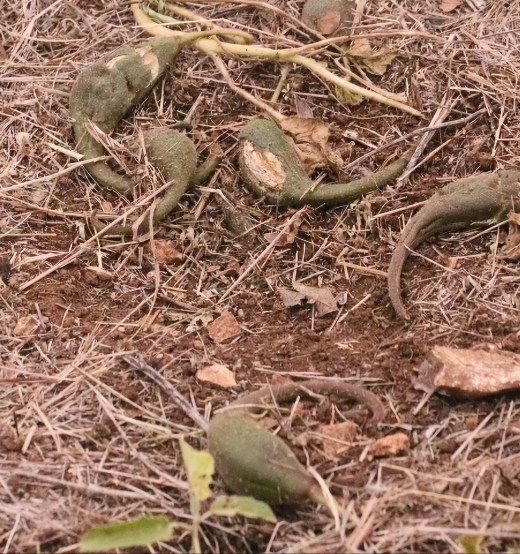
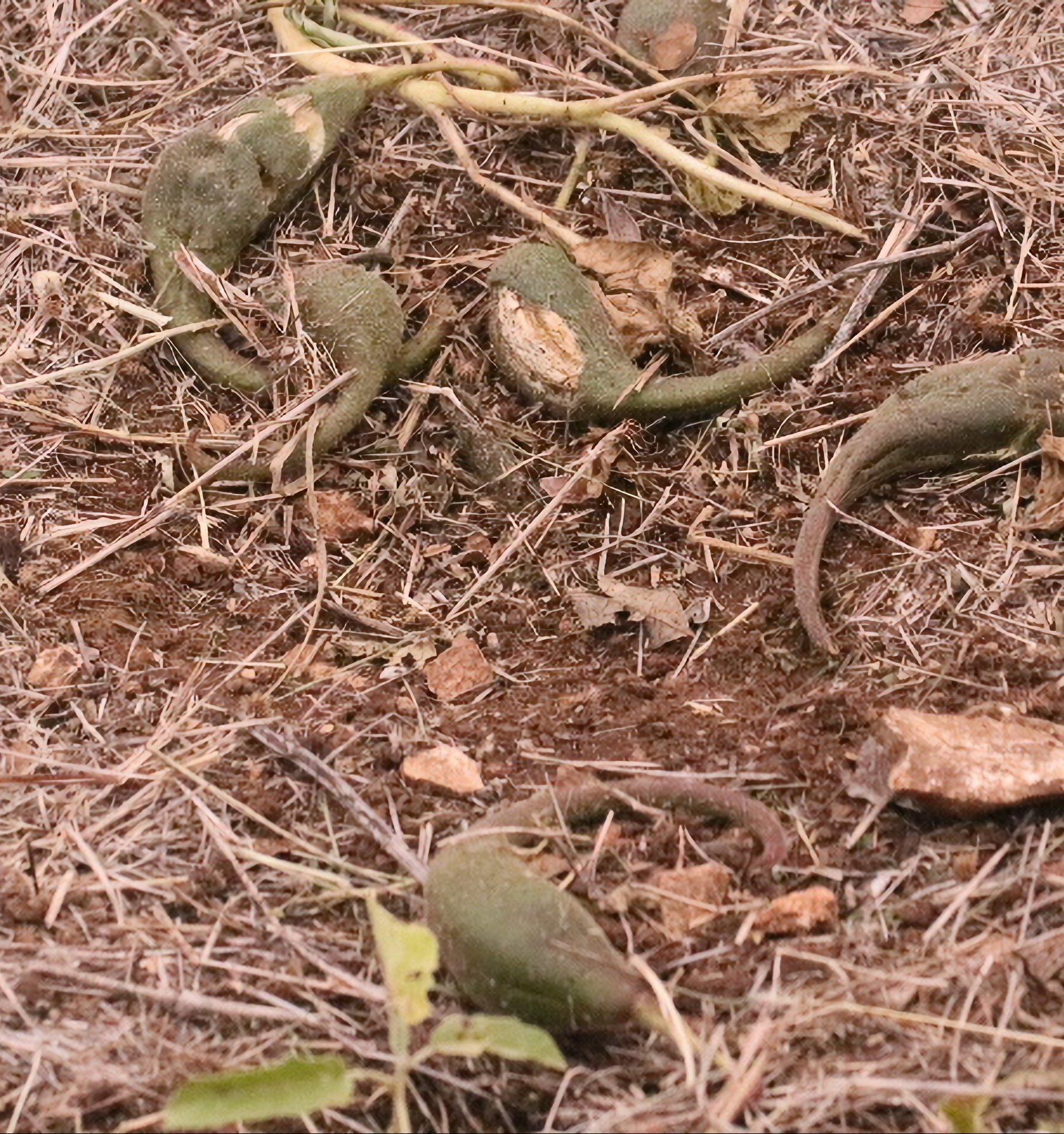
The November mowing was no exception, although it was done on dry soil, before a predicted rainfall the following week. But no plants below the height of three inches was spared. Although this Proboscidea louisianica was no longer in bloom, it had not completely set seed, as evident in these still green fruits. The mower had no sympathy for this Devil’s Claw.

Proboscidea louisianica - Ram's Horn, Devil's Claw

Proboscidea louisianica – Ram’s Horn, Devil’s Claw

One of my favorite Korean drama series, “Romance Is A Bonus Book” has a scene in which the CEO of the book publishing company says “You don’t need a botanist to mow the lawn.”

I’m beginning to think that you DO need a botanist, if not to mow the lawn, to tell the mowers When to mow, Where to mow, What to mow, How to mow, and Why to mow or not mow, so that the person Who does the mowing understands what he or she is doing, and can take pride in a job well done. The supervisors of the people who have mowed the berm between my house and the greenbelt, as well as other locations, based on the evidence I see, do not know, or have not trained their employees well.

Every time I see a roadside scalped, or steep sloped ditch mowed when it should have been planted with appropriate native plants, I wonder how long humans have before they realize that they are not the only species on this planet, and start to act as intelligently as they seem to think they are, “the most intelligent creatures on Earth.”

We have a winner!

2020-NPSOT-PhotoContest-GulfCoastPlainsAndMarrshes-winner

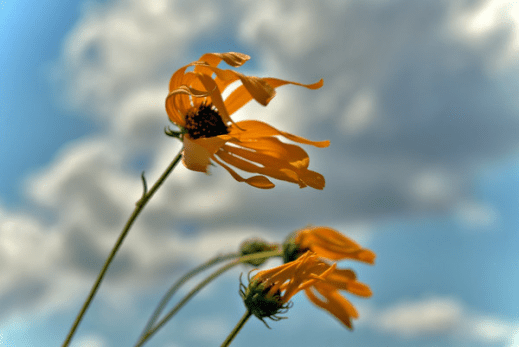
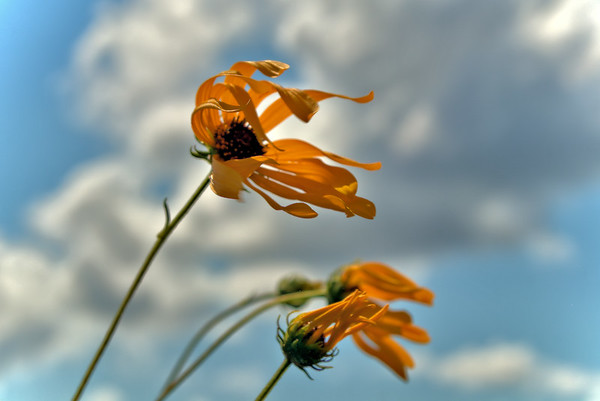
I am happy to say that I lucked out at the 2020 Native Plant Society of Texas photo contest with this photo taken at a pocket prairie East of League City, Texas. The category was the ecoregion of the Gulf Plains and Marshes (there are 12 ecoregions in the 2020 NPSOT photo contest).

I was consciously channeling my “inner Steven Schwartzman” when I took this photo of the Maximillian Sunflowers (Helianthus maximiliani) that were blowing in the wind against a cloudy but sunny sky.. This one had the best composition of those that I took that day – other species were either out of focus or not suitable for a contest entry.

I did enter three other photos in a contest that was marked by many high quality photos – perhaps in part because Steven Schwartzman, who won in a majority of the 12 ecoregions last year, made the rounds to many of the chapters across the state to deliver his presentation on nature photography.

Here are my “losers.”

From the Edwards Plateau, this photo of a Wild Petunia (Ruellia nudiflora) taken early in the morning to catch the sun in the upper right, showing off the translucency of the petals and the red “sundog” created by the lens in. the lower left, and highlighting the hirsute stem and body:

2020-08-16-Wild-Petunia-Ruellia-nudiflora-rjk1024x768-IMG-3346

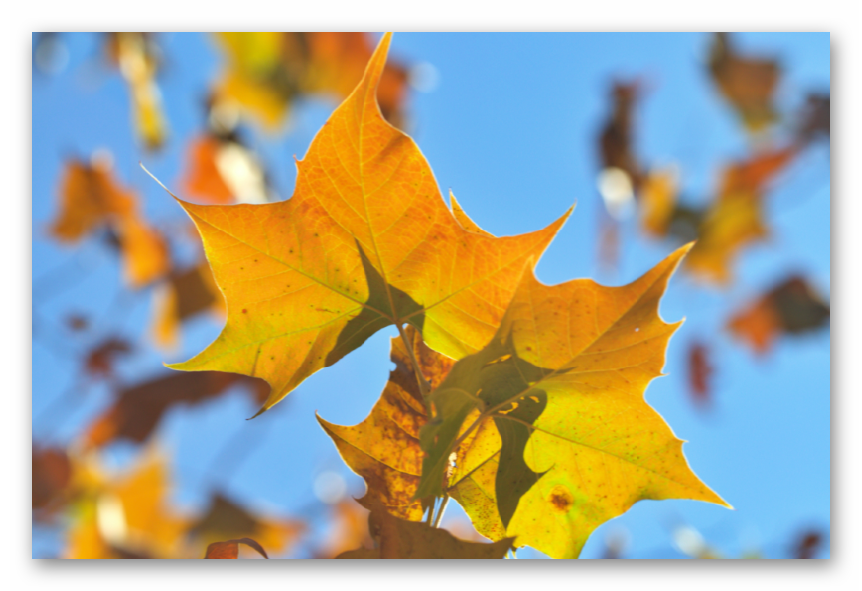
From the Cross Timbers ecoregion, this shot of an American Sycamore (Platanus occidentalis) with the autumn colors against a blue sky (Taken at Miller Springs Park near Belton, TX:

CrossTimbers

And finally, this photo from 2014 of a Southern Prairie Aster ( Eurybia hemispherica) in the East Texas Plains, this was the only one that showed the bloom off individually – although I used photo-editing software to sharpen it, I did not hype the colors. (And it might have disqualified because it was taken 6 years ago – the judges might have considered photos taken only with the last couple of years – I’m not entirely clear on that, but I not complaining, the overall qualities of the entries was awesome, and I was lucky to get one picked as a winner). And I’m not sure that i got this ID correct.

EastCentralPlains

All in all, any of the. above might have won, had there been different judges, or if there hadn’t been so many other high quality entries. I suspect that the latter is the main reason.  Check out the link to the contest entries (and winners) above and see if you don’t agree.

This has been a busy season, and I have yet to return to the issue of the berm between me and the greenbelt, or protected species area (there is a cave in the area, with an endangered species, so it is protected from development, but not from invasive species).

But that is for a different day.

Sleep, drowsiness, DBS and PD

Here are a few links to articles that look at the effects of Deep Brain Stimulation (DBS) on sleep, and daytime drowsiness, which could be a side effect from poor sleep. Or it could be something else.

Long term effects of DTN DBS on sleep

10 year study on daytime drowsiness and PD

REM Sleep Behavior Disorder is one of the more highly correlated conditions that end up with Parkinson’s.I remember having to spend the night on the floor of a motel when traveling with the college marching band. I was dreaming about a girl, and reached out to put my arm around her,  waking the guy who was sharing the queen bed with me.  It’s funny, now. I’ve had worse dreams. Still act out some of them.  Which as a lead-in to:

The largest clinical investigation to date of Prodromal Parkinsonism and Neurodegenerative Risk Stratification in REM Sleep Behavior Disorder

Abstract from a chapter in a book on sleep disorders:

 Significant progress has been made in understanding the pathophysiology of sleep and wake disruption in alphasynucleinopathies during the past few decades. Despite these advancements, treatment options are limited and frequently associated with problematic side effects. Further studies that center on the development of novel treatment approaches are very much needed. In this article, the author discusses the current state of the management of disturbed sleep and alertness in PD and MSA. © 2017 International Parkinson and Movement Disorder Society (emphasis added)

accessed at this link:

Management of sleep disorders in Parkinson’s disease and multiple system atrophy

As someone once wrote: To sleep, perchance to dream…

Self management and care partnerships

I don’t know about y’all, but without my care partner I would have been dead a long time ago. As it is, I am able to let her go off for a couple of weeks to help take care of her elderly old father and still manage to handle all the Activities of Daily Living (AD). This thesis looked into care partnerships and clinicians, and what could be done to improve outcomes. Four insights emerged:

Self-Management as a means to Achieving Client-Centred Care for the Care Partnership Living withParkinson’s disease

This research program has given rise to four main insights, grounded in the perspectives of both care partnerships and the clinicians who provide their care.

First, is the importance of incorporating the care partner into clinical care discussions, both about how to support the person diagnosed with PD, and for their own health.

Second, is to consider self management education as a means of achieving client-centered care by supporting the care partnership to effect the cognitive, emotional and behavioural responses required to manage the many dimensions of PD.

Third, is the importance of supporting the care partnership to assemble a healthcare team of relevant professionals and connecting them with appropriate community resources.

Finally, identifying and managing expectations through empathetic,
effective communication is paramount to the care partnership’s satisfaction with their clinical care.

Understanding how care partnerships learned to care for themselves while living with PD carries important implications for clinical practice in various disciplines. Healthcare professionals may reflexively contemplate these insights and consider how they may be applied in their clinical settings.