
A small gift after clearing away invasive plants

20200520_190727

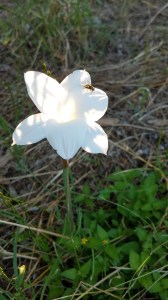
Cooperia pedunculata syn. Zephyranthes drummondii – Rain Lily

Thanks to some poor hygiene and poor knowledge regarding mowing ( or not mowing) next to a greenbelt, the berm behind my house and the neighboring greenbelt which has a cavern populated by endangered insects, has become overrun with Lolium perenne (annual ryegrass, winter ryegrass), Centaurea melitensis (Malta star thistle), and Bromus japonica (Japanese brome), to name the three worst offenders.

This February I wrote to both my HOA and my Municipal Utility District to report the failure of their mowers to follow the guidelines established in 2013 and 2018 by the Texas Department of Transportation on mowing of roadside vegetation, and vegetation adjacent to natural preserves.

Thankfully, the berm has not been mowed since early February, and I have been able to put in an hour or two, mostly on days following Spring rains, to fill about ten 42 gallon bags with the offending weeds. Although the natural covering of Gaillardia pulchella (Firewheel, Indian Blanket) and Ratibida columnifera (Prairie coneflower, Mexican hat) is greatly reduced at present, and I know that I will have to maintain vigilance and start pulling invasive weeds and grasses earlier next year, I did receive a small reward this past Wednesday.

As I was about to enter the berm to take a photograph of this Rain lily (Cooperia pedunculata, syn. Zephyranthes drummondii),  I noticed a small movement. It turned out to be an Eastern cottontail rabbit, munching on the plants in the berm. We both stood still for a few moments while I took some photos with my Android, it then hopped into the greenbelt and the cover of brush.

Then I went in, took a few shots of the Rain lily that would have been blocked from the sunlight by the ryegrass that I had removed, and caught the above photo of the light from the sunset shining through to backlight its stamens.

A small reward, perhaps, but a big warm feeling…
20200520_19073520200520_190755

For a fully detailed botanical description see: Studies on the Vascular Plants of Williamson County, Texas

###

Endemic in a time of a pandemic

2020_04_10_Clematis_texensis_1521

Clematis texensis – Scarlet Leatherflower

I just realized that there is an analogy between the pandemic coronavirus now causing troubles throughout the planet’s human organizations and the title and subtitle of this blog  – “Return To The Natives – Native Plants Are The Answer.”

C. texensis is endemic to the Texas Hill Country, or the Edwards Plateau, although because of the scarlet flowers, it has been exported to other locations for cultivation. However, it doesn’t seem to be an aggressive plant, so most places outside of Texas where it is found are probably in containers, where they are tended carefully by loving horticulturists.

The example shown above is a next door neighbor example of this phenomenon: Although it it is in Williamson County, TX, it was introduced and is under cultivation. I don’t know of any locations where it is growing in Williamson County without having been introduced by humans. But – it is native to Texas, and to neighboring counties, and who knows? – there might be some undiscovered instances of this species in the Balcones Canyon National Wildlife Refuge.

Unlike some other plants, like Poison Ivy, Malta Star Thistle, Perennial Rye, and Bur Clover, which are aggressive and spread rapidly when they are introduced to an area through human intervention, often by poor mowing practices, this one is unlikely to dominate your garden. But with the right conditions and in the right place, it can and will flourish in Central Texas.

More detailed information on Clematis texensis can be found at Studies on the Vascular Plants of Williamson County, Texas. If that is too much detail for you, there’s always the Native Plant Information Network (NPIN) database at the Lady Bird Johnson Wildflower Center

The analogy mentioned above?

The pandemic virus is like an exotic plant that is introduced to areas where it doesn’t belong – and spreads, unchecked, unless we take quick action to recognize the problem and isolate, treat, and follow up on contacts, to eradicate and mitigate the adverse effects. The same analogy applies to invasive animals, whether Zebra mussels in the lakes of the South, or pythons in the Florida Everglades. It’s hard to get the genie back in the bottle, or to get everything back inside Pandora’s box.

Stay home. Practice good hygiene, whether traveling or working with plants. The only thing that can prevent pandemics is you, to borrow a slogan from a well known fire prevention campaign.

Plant and grow things that are native to the area in which you live – practice proper hygiene when traveling from place to place, being careful not to spread seeds through carelessness, and if you gotta mow, mow only at the right time and the right places that need mowing for the primary reason of safety. Bermuda grass is hard to eradicate once it has spread, and viruses are hard to kill but easily spread through careless hygiene practices.

Don’t “stop to smell the roses” – Learn about the plants that are native to your area, and take the time to enjoy them and their relationships with the wildlife, butterflies, and native bees that are in your six feet of separation.

###


Return of Return To The Natives

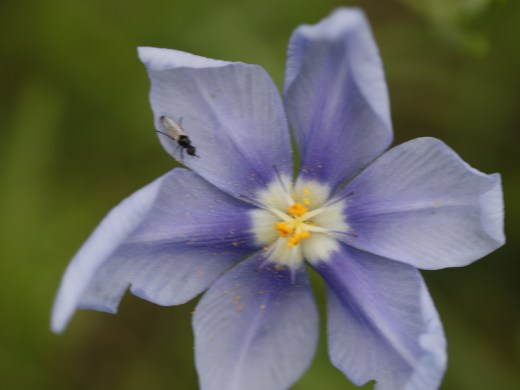
Well, folks, this site was left behind a few years ago, but from my overall WordPress traffic reports, it seems to be visited from time to time. Thus it seems that it might not be a bad idea to start updating it. Could be wrong of course, but here goes nothing: One of my favorite Texas native wildflowers, the Prairie Celestial.

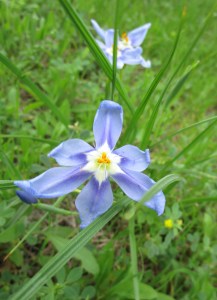
Nemastylis geminiflora - Prairie Celestial

Nemastylis geminiflora – Prairie Celestial

These members of the Iris family bloom for approximately two weeks, beginning with somewhere near the Spring equinox, and ending around April 1st. This year, there was an early “scouting” expedition around the 13th-15th of March, then a gap, followed by the expected blooming around the 19th of March through April 1st, which appeared to have been the last of it. Then, around the 5th through the 10th of April, I discovered some more blooms, stragglers, as it were.

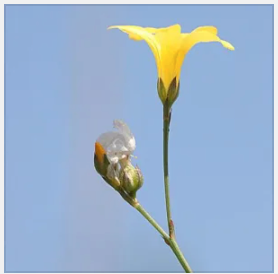
Each flower blooms for just one day, and they often appear in pairs, hence the species name geminiflora. Each plant, which is a deep seated bulb (and hard to dig up, even for scientific sampling), may have several flowers. Another common name is Pleat Leaf Lily, derived from the “pleats” in the leaves, as shown below.

You might also note the bur clover or yellow clover, an invasive weed that forms a carpet and crowds out native plants, especially when mowing is frequent and close to the ground, and mowers move between locations without pressure washing plant materials off the blades of their mowers.

Nemastylis geminiflora - Pleat Leaf Lily

Nemastylis geminiflora – Pleat Leaf Lily

Don’t stop moving to the music

Neither of these articles addesses Parkinson’s Disease, buut what the heck, I’ll report on them anyway.

music therapy in the schools

Basically, the abstract says that music therapists in the schools do a lot of good for a lot of kids.

and another abstract, this one about dance:

Effect of dance therapies on motor-cognitive dual-task performance in middle-aged and older adults: a systematic review and meta-analysis

Purpose: To systematically review the effectiveness of dance-based programs to improve motor-cognitive dual-task performance in middle-aged and older adults.

Materials and methods: Five scientific databases were selected Ninety-one articles were found in the electronic databases. Fourteen articles fulfilled all inclusion and exclusion criteria…

Results: All the studies had an acceptable methodological quality. Dance-based interventions had a duration of 8–52 weeks, 1–3 sessions per week, with sessions lasting 40–90 min. According to the overall effect size, dance-based interventions significantly improved dual-task performance (−0.48 with a 95% confidence interval from −0.88 to −0.08).

Conclusions: Dance-based intervention programs may be effective at improving the performance on motor-cognitive dual-task in middle-aged and older adults. Apart from the effects on the cognitive Time Up and Go test, dance interventions may also improve speed walking with a cognitive task. All these conclusions must be taken with caution due to the heterogeneity and the small number of articles. Future research can be developed to increase the knowledge on these issues.

Alvaro Murillo-Garcia, Santos Villafaina, Daniel Collado-Mateo, Juan Luis Leon-Llamas & Narcis Gusi (2020) Effect of dance therapies on motor-cognitive dual-task performance in middle-aged and older adults: a systematic review and meta-analysis, Disability and Rehabilitation, DOI: 10.1080/09638288.2020.1735537

Say what?

Not specifically related to Parkinson’s, this study looked into whether providing musical training to older non-musicians would have an effect on the experimental task.

Experienced musicians outperform non-musicians in understanding speech-in-noise (SPIN). The benefits of lifelong musicianship endure into older age, where musicians experience smaller declines in their ability to understand speech in noisy environments…  results suggest that short-term musical training in older adults may enhance neural encoding of speech, with the potential to reduce age-related decline in speech perception. [emphasis added]

The effects of short-term musical training on the neural processing of speech-in-noise in older adults

… these findings suggest that music training enhances neural responses to speech in speech-motor and control regions.The absence of training-related interactions with noise level suggests that the benefit of music training is related to processing speech in general, and not separating it from background noise;

– BUT analysis of functional Magnetic Resonance Imaging showed electrical activities in a couple of areas of the brain related to speech perception for those who were in the musical training group.

Obviously, “further research is needed,” as the saying goes, and perhaps for longer periods of time.

Whatever type of musical training one chooses, singing, keyboard, string, or wind instruments, there’s another saying that applies to that as well: “It may not help, but it can’t hurt.”

###


Just the facts, ma’am

As Sergeant Friday used to say on Dragnet: Just the facts.

Well, here they are.

Narcolepsy-Fact-Sheet

Which answers all those questions that keep you up at night:

What is narcolepsy?
Who gets narcolepsy?
What are the symptoms?
What are the types of narcolepsy?
What causes narcolepsy?
How is narcolepsy diagnosed?
What treatments are available?
What behavioral strategies help people cope with symptoms?
What is the state of the science involving narcolepsy?
What research is being done?
How can I help research?
Where can I get more information?

Then again, a little background information doesn’t hurt, and reading a historical review just might be what you need to put you to sleep:

Historical review of narcolepsy

To sleep, perchance to dream… or to stay up all night, that is the question

Other than the sound of Shakespeare rolling in his grave at that title, what else might be involved in insomnia? (disregarding the occasional benefits such as hearing Isaac Hayes’ version of “By The Time I Get To Phoenix” on a radio show titled “For Mushrooms and Night People,” or reading through James Joyce’s “Finnegan’s Wake” in one sleepless night).

Insomnia related to PD – according to this study abstract, the authors found that insomnia disorder co-morbid with Parkinson’s Disease was consistent with that of folks without PD, and they recommend a cognitive behavioral therapy approach to help treat people with this problem.

Insomnia co-morbid with Parkinson’s Disease

On the other hand, insomnia can lead to daytime drowsiness. And that, as this author can attest, can be co-morbid with REM Sleep Behavior Disorder (RSBD) or as narcolepsy for many years without a diagnosis.

Here are a couple of other articles on longitudinal studies related to PD and sleep issues. They are open access, so one can read and draw one’s own conclusions. As usual, one of the conclusions one might reach is that further research is needed on the topic.

Long term effects of STN DBS on sleep     In this study, it was found that DBS improved nocturnal sleep quality but had no effect on excessive daytime sleepiness.

10 year study on daytime drowsiness and PD   In this long term study, it was found that daytime drowsiness did not improve, even while other symptoms of PD progressively got worse.

The author refers you to the paragraph above in which RSBD was co-morbid and precedent to PD diagnosis, as well as narcolepsy, which was only diagnosed in recent years. Although symptoms may be associated with Parkinson’s, they might not be a part of the Parkinson’s Disease, and other causes must be ruled out in order to arrive at accurate diagnoses. For this, a team of medical personnel is required, and not specialists, each working alone in their own silo. (Opinions provided free of charge).


Music on the brain


Why do we like some kinds of music but not others?

Back in college, Jerry Coker (who taught jazz improvisation, said that we tended to like music that was not entirely predictable, but that a certain level of surprise increased our enjoyment of jazz. Music that was too unpredictable led to diminished enjoyment. Now, a study has been done that mathematically analyzed people’s enjoyment of musical snippets, and basically confirmed what Jerry taught us. Surprise us every now and then, but don’t make us feel like we’re stupid and can’t guess the next note that’s coming along.

Here’s the article with a reference and link to the original research (if you can afford it): The brain’s favorite type of music

Dopamine’s role in music enjoyment.

In this study, researchers looked at people’s responses to music under three separate conditions. One group received levodopa, another received risperidone, a dopamine antagonist, and a third group received a placebo. Folks in the levodopa group reported and were recorded as having higher levels of enjoyment, and those taking the antagonist, lower levels of enjoyment. Each group[ went through all the conditions, separated by a week in between sessions. The results clearly indicate that dopamine is the brain is related to musical pleasure. Now, if  playing and singing music promote an increase of dopamine in the brain, we have a prescription for Parkinson’s Disease (and depression) that can’t be beat (although it can be counted off).

Dopamine role in musical pleasure    

the actual research article which appears to be available in its entirety online: Dopamine modulates the reward experiences elicited by music


Oh, I’m walking to New Orleans… or maybe the Outback

Here’s a conference poster reporting some recent research on music and gait… and the effects of dual tasks on Parkinson’s Disease diagnosed people. It seems that all the researchers are in Australia, hence the title to this post.

Walkin’ and Talkin’: dual task effects on Gait

They had a few different tasks – just walking, walking while saying all the words one could think of starting with the letter (name a letter), and walking while counting in intervals. The conclusion was that Dance For Parkinson’s® had a positive effect. Naturally, they called for more research with larger numbers of participants.

In the meantime, as I always say: Don’t stop moving to the music!


###

I would definitely volunteer…

For a longitudinal followup study. The longer the better. This is the sort of study you can sink your teeth into…

Food for thought, indeed.

Dark chocolate consumption versus depressive symptoms

Well, the results aren’t conclusive, but apparently the theory is that dark chocolate contains Flavonoids and possibly activates the endocannabinoid receptors in the brain, which make folks feel good instead of angry and hostile or depressed.

And chocolate is still legal in all 50 states of the USA.

###