Last post was nearly 6 months ago, after having gotten elected to my subdivision’s Home Owners Association (HOA). Fortunately for me, the new President has an excellent leadership style and a sense of humor – he’s commented a few times on my lack of love for Crape Myrtle (aka Crepe Myrtle) (Lagerstroemia spp.), and I have made a gavel from the remains of a few branches which had the misfortune of hanging over my property. (I have four longer pieces which I hope will become walking sticks or canes).
But I digress. This year Central Texas faced a drought throughout the Spring and Summer. Then, throughout November, we’ve had plenty of rain to raise our hopes for an abundant crop of wildflowers in the Spring. With the warmest December day we’ve ever had (82º F) this week, however, we should be cautious in making predictions.
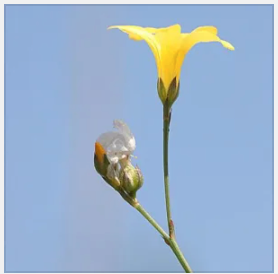
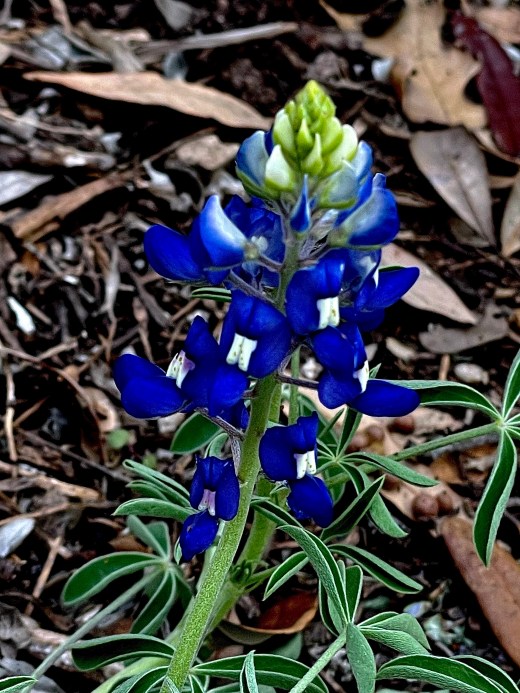
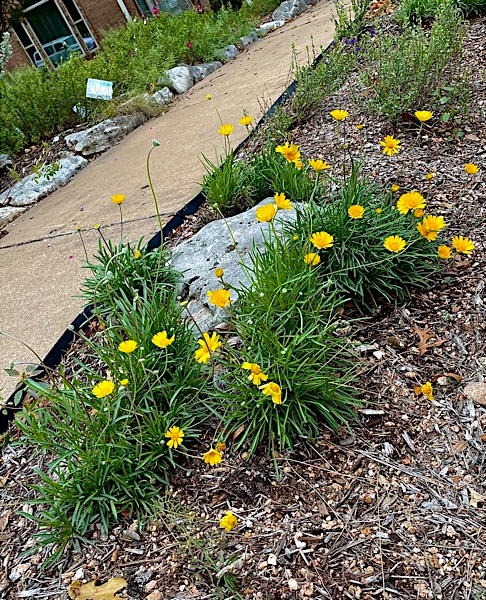
So, recently, I’ve stepped outside and found Gulf Fritillary caterpillars still on green Passiflora leaves (photo 1), and further below, bunches of yellow Tetraneuris scaposa flowers taking advantage of the extended growing season.
Photo taken December 2, 2022 of caterpillar.
Four Nerve Daisies (Tetraneuris scaposa) (photo 2) planted in the “nuisance strip” between the sidewalk and the curb; blooms are still going strong into December.
However, Tetraneuris scaposa can and will bloom throughout the year, here in Central Texas. Conditions have to be right, of course. They bear up to the heat of 100º F summers, but do need some water. And, as always, rain water seems to be the best for promoting growth in these and in BlackFoot Daisies (Melampodium leucanthum) of which I recently added a small plant and which has responded well to the recent rains.

The results suggested that elevated serum levels of triglycerides (TG), low density cholesterol (LDL) and total cholesterol (TC) may be protective factors for the pathogenesis of PD.
And here’s another meta analysis that bottom lines the results in the title:
Fifteen cohort studies with 9740 participants, including 2032 PD patients and 7708 controls were analyzed, and the analysis found that lipid levels in the PD patients was significantly lower than that of healthy controls. So dyslipidemia might have a predictive value.
As a Person With PD (PwP), this sort of information could have been useful, say, oh, between 50 or 60 years ago. Of course, it would have taken general practitioners with a broad knowledge of factors affecting the prodromal symptoms and signs of PD to pick up on it. (And that information wasn’t available at that time).
As it so happened, I had essential tremors, and could feel resting tremors oscillating away, even though they were not visible to the human eye. And other prodromal symptoms were present, too, and at an early age. Fortunately, I did not have the LRRK or PARK gene variations that cause early onset PD that can not be denied (Michael J. Fox’s case comes to mind). Unfortunately, my particular set of symptoms did not result in an actual diagnosis of PD until after I had been retired early due to one of my other prodromal symptoms (MDD) put me on disability leave for over 9 months, and I was unable to hold down a steady job for a couple of years. Fortunately, the Social Security Administration provided me with retroactive disability benefits to the day following the date the insurance company gave up on trying to recoup their losses by representing my case to the OASDI. Fortunately, I have been able to find folks who have supported me through the years, intellectually and socially, as my continuing journey with PD has become a larger part of my life.
Perhaps the future of medicine lies in something like the application of IBM’s Big Blue computer (or other advanced Artificial Intelligence systems) to assimilating the huge (not just big) data residing in the NIH and other medical libraries, so that correlations among various signs could be identified and point to diagnostic criteria and effective treatment modalities, so that until there is a cure for Parkinson’s (and other diseases), we can do what we can to identify the probability of an eventual diagnosis (provided decent medical information and observations) and then to defer or delay and to mitigate the symptoms.
And until then, I will do my best to forgive those who have caused me harm, whether through omission or commission, while asking forgiveness of those against whom I have “trespassed,” to use the word in the KJV.
(Didn’t mean to take an ethical/religious tangent at the end, but there it is. I’ve said too much, I haven’t said enough… I was sentenced to twenty years of boredom, for trying to change the system from within…[insert your favorite poplar song phrase here]).
My first draft of this got lost in the computer (Thanks, all you coders who think you know how to create intuitive, ease to use interfaces). So here’s another attempt to get stuff from one location to another. We’ll see how it it goes…
A while back I posted a Powerpoint presentation on research on music, dance, and singing, which cited a review in the Movement Disorders Society (2018, I believe), in which the conclusion was that exercise did not affect Parkinson’s Disease (PD) symptoms. Since then, there have been many more studies on the effects of different modalities of exercise. In this first article, a meta review of publications, found that exercise is good for you if have PD.
The purpose of the review was to compare and rank the types of exercise that improve PD symptoms by quantifying information from randomised controlled trials. Out of 10,474 citations, 250 studies were included involving 13,011 participants. The results (drumroll, please):
Power training (PT) had the best benefits for motor symptoms
Body weight support treadmill training showed the best improvement in balance, gait velocity and walking distance
Robotic assisted gait training had the most benefits for freezing of gait
Dance showed the best benefits for depression
Only Yoga significantly reduced anxiety symptom compared with controls
Only resistance training significantly enhanced sleep quality and cognition
Physical Therapy showed the best results for muscle strength
Five types of therapy showed improvement in concerns about falling versus control groups.
If interested, the full free text is available at the linked citation above. Other reviews have shown different results. Best recommendation is to find a variety of exercises that you enjoy, and do them as often as you can. But don’t try so hard that you wind up hurting yourself.
The second meta review alluded to in the title has to do with sleep disorders.
Fifty-three longitudinal studies of sleep in PD were identified, which included:
Excessive daytime sleepiness,
Insomnia,
Obstructive sleep apnea,
Rapid eye movement sleep behavior disorder (RBD),
Restless legs syndrome, and
Shift work disorder were studied in addition to other studies that had focused on either multiple sleep disorders or broadly on sleep disorders as a whole.
RBD is now considered an established prodromal feature of PD, but other sleep disorders do not clearly increase risk of subsequent PD.
I’ll throw in one last citation. Not just because it plays on the title to one of Bob Dylan’s songs, but also because it is one of many nutritional supplements prescribed to aid in cleaning out neural cell debris in (where else?) Bob’s Brain:
I’m not sure why the line numbers were included in the PDF, my guess is that it is/was pre-publication. At any rate, it just adds to the body of evidence that rhythm and movement helps get rid of the blues.
Music can help people make more positive evaluations of acute exercise as an affective and
113 ergogenic stimulant. A recent meta-analysis of 139 studies revealed that listening to music during
114 acute bouts of exercise and sport activities increases positive affective valence (g = 0.48, CI [0.39,
115 0.56]), reduces ratings of perceived exertion (RPE; g = 0.22, CI [0.14, 0.30]), enhances physical 116 performance (g = 0.31, CI [0.25, 0.36]), and improves oxygen consumption (VO2max; g = 0.15, CI
117 [0.02, 0.27]) compared with activities without music (Terry et al., 2020). These findings support the
118 notion that music helps physical activity to be more joyous, less arduous, and more energetic and
119 efficient, arguably motivating the exerciser to join additional bouts. It is noteworthy that the
120 beneficial effects of music on affect and RPE were not moderated by physical activity intensity in the
121 meta-analysis (Terry et al., 2020), which indicates that music provides psychological benefitsacross
122 the full range of intensities.
Here’s a few studies that came up in my news feed from PubMed Central (PMC) or elsewhere for articles recently published on the topics in which I’m interested – namely, prodromal symptoms related to PD, the relationship of REM sleep disorder and depression to PD, and, of course, the use of singing and dance therapies as complementary approaches to dealing with the symptoms of PD.
The prevalence and duration of non-motor symptoms (NMS) in prodromal Parkinson’s disease (PD) has not been extensively studied. The aim of this study was to determine the prevalence and duration of prodromal NMS (pNMS) in a cohort of patients with recently diagnosed PD.
…subtracted the duration of the presence of each individual NMS reported from the duration of the earliest motor symptom. NMS whose duration preceded the duration of motor symptoms were considered a pNMS. Individual pNMS were then grouped into relevant pNMS clusters based on the NMSQuest domains. Motor subtypes were defined as tremor dominant, postural instability gait difficulty (PIGD) and indeterminate type according to the Movement Disorder Society Unified Parkinson’s Disease Rating Scale revision.
Results: Prodromal NMS were experienced by 90.3% of patients with PD. … males reporting more sexual dysfunction, forgetfulness and dream re-enactment, whereas females reported more unexplained weight change and anxiety. There was a significant association between any prodromalgastrointestinal symptoms and urinary symptoms and the PIGD phenotype.[n.b.: phenotype includes inherent traits or characteristics that are observable]. [Emphases added].
Citation: Durcan R, Wiblin L, Lawson RA, Khoo TK, Yarnall AJ, Duncan GW, Brooks DJ, Pavese N, Burn DJ; ICICLE-PD Study Group. Prevalence and duration of non-motor symptoms in prodromal Parkinson’s disease. Eur J Neurol. 2019 Jul;26(7):979-985. doi: 10.1111/ene.13919. Epub 2019 Mar 1. PMID: 30706593; PMCID: PMC6563450.
Purpose: To explore the effect of sleep disorders, including the probable rapid eye movement (REM) sleep behavior disorder (pRBD) and the daytime sleepiness, on depressive symptoms in patients with early and prodromal PD.
5-year follow-up study showed that sleep disorders, including pRBD and daytime sleepiness, were associated with the increased depressive-related score in individuals with early and prodromal PD.
Conclusion: … Sleep disorders, including pRBD and daytime sleepiness, are associated with depression at baseline and longitudinally, … partially mediated by the autonomic dysfunction in early and prodromal PD, … implication that sleep management is of great value for disease surveillance.
Citation: Ma J, Dou K, Liu R, Liao Y, Yuan Z, Xie A. Associations of Sleep Disorders With Depressive Symptoms in Early and Prodromal Parkinson’s Disease. Front Aging Neurosci. 2022 Jun 10;14:898149. doi: 10.3389/fnagi.2022.898149. PMID: 35754965; PMCID: PMC9226450.
Abstract Background Previous reports suggest that group therapeutic singing (GTS) may have a positive effect on motor symptoms in persons with Parkinson’s disease (PD).
Objective To determine the effect of a single session of GTS on clinical motor symptoms.
Methods Clinical motor symptom assessment was completed immediately before and after 1 hour of GTS in 18 participants.
Results A significant decrease in average scores for gait and posture and tremor, but not speech and facial expression or bradykinesia was revealed.
Conclusion These results support the notion that GTS is a beneficial adjuvant therapy for persons with PD that warrants further research.
Citation: Stegemoller E, Forsyth E, Patel B, et al. Group therapeutic singing improves clinical motor scores in persons with Parkinson’s disease BMJ Neurology Open 2022;4:e000286. doi: 10.1136/bmjno-2022-000286
Seems that I went and got elected to my HOA board, which will require me to cut back or off on certain activities until my 3 year term is up, or I have to resign for any of a number of possible reasons that one might imagine. (Health is the most likely culprit). I might post on an even more irregular basis – maybe some of the stuff I do for my HOA, if it proves to be of value.
Therefore, I am once again abandoning this blog, although if you’ve seen one year’s worth of photos here, you’ve probably seen most of what there is to see within 1/2 mile of my home, or in my yard.
I will be posting directly to the Williamson County chapter of the Native Plant Society of Texas (NPSOT-Wilco) Facebook page from time to time.
Hopefully, I can help to improve my community by ensuring that the virtues and benefits of native plants are more than the appeal of cheap prices and easy availability of common exotics.
So, as parting photos, I present one taken recently by my smartphone when I wasn’t trying to take a photo (above), and another of a volunteer in my backyard (below).
What research has found its way into the email inbox recently?
Although singing is a nearly universal human behavior, many adults consider themselves poor singers and avoid singing based on self-assessment of pitch matching accuracy during singing (here referred to as singing accuracy), in contrast to the uninhibited singing exhibited by children. In this article, I report results that shed light on how singing accuracy changes across the lifespan, using data from a large online sample, including participants ranging from 6 to 99 years old. Results suggest that singing accuracy improves dramatically from childhood to young adulthood, unperturbed by voice changes during adolescence, and remain at a similarly high level for the remainder of life, exhibiting no strong tendency toward age-related decline. Vocal or instrumental musical training has significant positive effects on singing accuracy, particularly in childhood, though there was no evidence for gender differences. Finally, pitch discrimination varied with age similarly to singing accuracy, in support of views that singing accuracy reflects sensorimotor learning. Taken together, these results are consistent with the view that singing accuracy is a learned motor skill that benefits from engagement and can remain a fruitful endeavor into old age. (emphasis added).
Basically, this says that if you learned how sing accurately when you were young, you can probably sing well into your later years. And, since singing is a learned motor skill, one might assume that it can be learned even as one gets older.
Relevance to folks with Parkinson’s Disease (PD)?
Vocal strength exercises, such as those provided by Power for Parkinson’s as free YouTube video classes, can help with specific Parkinson’s related symptoms:
Many people with PD speak quietly and in one tone; they don’t convey much emotion. Sometimes speech soundsbreathy or hoarse. People with Parkinson’s might slur words, mumble or trail off at the end of a sentence.Most people talk slowly, but some speak rapidly, even stuttering or stammering.
Parkinson’s motor symptoms, such as decreased facial expression, slowness and stooped posture, may add to speech problems. These can send incorrect non-verbal cues or impact the ability to show emotion. Source: https://www.michaeljfox.org/news/speech-swallowing-problems accessed June 20, 2022 (emphasis added).
Since our vocal cords are muscles, and singing is a learned motor skill, we can strengthen those muscles and push against the progressive, degenerative symptoms of PD through exercises that:
remind us to breathe deeply to sustain vocal volume,
improve our posture in order to enable deep breathing,
exercise the muscles of the face and mouth
to enable crisp diction instead of slurring and mumbling, and that
support emotional expression through inflection and singing.
And “Everybody Knows” that if exercise is fun, one is more likely to continue doing it.
Full disclosure: The author has attended Power for Parkinson’s ® vocal exercise classes since their inception in 2016, and co-founded a participant organized singing group (with the late Jeff Berke) in 2015. Therefore, he might be (definitely is) biased in favor of this modality of treatment for vocal and speech related symptoms of PD.
Early June 2022 and the heat is in the “triple digits”as the meteorologists like to say in TV-land. or 39 ° Celsius, as we were told we would have converted to 50 or more years ago. Either system, hot to humans is hot.
But to native plants that evolved in Central Texas for more years than Crepe Myrtle has been here, even these signs of Global Warming haven’t phased them. (Granted, I do some supplemental watering, especially of small trees for the first few years, but other plants like Passiflora incarnata grow like “weeds”).
I’ll let the plants speak for themselves:
Malvaviscus arboreus – Turks Cap
Allium drummondii – Wild Garlic
LILI Nothoscordum bivalve – Crow-Poison
Hylephila phyleus (male) – Fiery Skipper on Fall Aster
Malvavisus arboreus – Manzanilla
Clematis drummondi – Old Man’s Beard
Echinacea purpurea – Purple Coneflowewr
Malpighia glabra – Barbados Cherry
Aster subulatus possibly
unknown flower at WFC
white flower 10-29-2012
Pavonia lasiopetala – rose pavonia
Those are just the photos I took on June 8, 2022, mostly in my yard. The Rain Lilies were just past the back fence (the ones in my yard had bloomed and gone to seed after the previous week’s mild spattering of rain drops).
This past Saturday (May 29, 2022), I went out of the house for a change, on a field trip with the Williamson County Chapter of the Native Plant Society of Texas (NPSOT-Wilco), at the Southwest Williamson County Regional Park (SWCRP). The field trip consisted of walking along the Jim Rodgers Nature Trail, 1.75 miles long, I’m told.
I managed to arrive late, but soon caught up with the group. (Usually I arrive a week early, having managed to forget the actual date and time).
Then I managed to continually fall behind and catch up, working up a sweat. Because this was an evening field trip on a fairly even path (it does need mulching to give it a little more comfort underfoot), the pace of the hike was a little closer to a real hike than the usual NPSOT or Texas Master Naturalists’ walk in the woods – where it often takes an hour to go half a mile down the trail – if that much. And yet, I was able to get some interesting shots of some of the native plants and wildflowers.
And from the abstract and significance statement of the original (non-open access) article:
Physical exercise improves motor performance in individuals with Parkinson’s disease and elevates mood in those with depression. Although underlying factors have not been identified, clues arise from previous studies showing a link between cognitive benefits of exercise and increases in brain-derived neurotrophic factor (BDNF). (emphasis added).
and:
Exercise has been shown to improve movement and cognition in humans and rodents. Here, we report that voluntary exercise over 30 days leads to an increase in evoked dopamine (DA) release throughout the striatum, and an increase in BDNF in the dorsal (motor) striatum. The increase in DA release appears to require BDNF, indicated by the absence of DA release enhancement with running in BDNF+/- mice. Activation of BDNF receptors using a pharmacological agonist was also shown to boost DA release. Together these data support a necessary and sufficient role for BDNF in exercise-enhanced DA release, and provide mechanistic insight into the reported benefits of exercise in individuals with dopamine-linked neuropsychiatric disorders, including Parkinson’s disease and depression. (emphasis added).
The citation:
Voluntary exercise boosts striatal dopamine release: evidence for the necessary and sufficient role of BDNF, Guendalina Bastioli, Jennifer C. Arnold, Maria Mancini, Adam C. Mar, Begoña Gamallo-Lana, Khalil Saadipour, Moses V. Chao, Margaret E. Rice,Journal of Neuroscience 16 May 2022, JN-RM-2273-21; DOI: 10.1523/JNEUROSCI.2273-21.2022
So that covers why exercise is good for all. But what about what is good for the one?
… there is growing recognition that PD is not a single entity but instead reflects multiple diseases, in which different combinations of environmental, genetic and potential comorbid factors interact to direct individual disease trajectories… The clear consequence of there being distinct diseases that collectively form PD, is that there is no single biomarker or treatment for PD development or progression. We propose that diagnosis should shift away from the clinical definitions, towards biologically defined diseases that collectively form PD, to enable informative patient stratification. N-of-one type, clinical designs offer an unbiased, and agnostic approach to re-defining PD in terms of a group of many individual diseases. . (emphasis added).
The citation links to PubMed where you can download the full article, should you be so inclined. The next citation also links to an open access free article.
In this article, Riggare reports on self tracking done in 2012 (as a Person with Parkinson’s), and the offer the possibility that self-tracking of symptoms and medications can help to inform the physician’s decisions over the course of treatment. In other words, one should be a self-advocate as a patient and work with your physician to achieve the best combination of treatments to address Parkinson’s and its comorbidities. (At least that’s my takeaway from the article. Others might differ).
Another look at PD aims to categorize it into various sub-types:
This article is a “desk review”of other studies, using specific criteria to either include/exclude each study in the results. Their conclusion:
Conclusion: Subtyping studies undertaken to date have significant methodologic shortcomings and most have questionable clinical applicability and unknown biological relevance. The clinical and biological signature of PD may be unique to the individual, rendering PD resistant to meaningful cluster solutions. New approaches that acknowledge the individual-level heterogeneity and that are more aligned with personalized medicine are needed. (emphasis added).
Among the articles cited in the bibliography is this one (another open access article):
In this, the authors describe their methodology and results from the Oxford cohort (one of several cohorts of PwPs and controls that have been used for research. (I would take the time and effort to locate the original publication describing the different cohorts involved in the effort to find biomarkers, but I am currently experiencing a wave of Parkinson’s related apathy. Check my past posts, or do a search on PubMed – I do remember that Oxford and Boston were two of the cohorts of PwPs. But I digress).
Results: Apolipoprotein A1 and C-reactive protein levels differed across our PD subtypes, with severe motor disease phenotype, poor psychological well-being, and poor sleep subtype having reduced apolipoprotein A1 and higher C-reactive protein levels. Reduced apolipoprotein A1, higher C-reactive protein, and reduced vitamin D were associated with worse baseline activities of daily living (MDS-UPDRS II).
In other words: Close, but no cigar. But I, for one, certainly could have benefited from this knowledge had it been available 60 years ago. (don’t get me started – I’ve played that tape many times before).