We got the beat

This open access article piqued my interest. I have long been aware of studies that showed that infants are basically altruistic. This is the first one I came across that shows that infant “Spontaneous Motor Tempo”  (SMT)  is something that can be measured. Here’s the link:

Infant Spontaneous Motor Tempo

From the abstract:

We present the first data documenting the SMT of infants from 5 to 37 months of age using a simple drumming task. As in late childhood and adulthood, we predicted that infant SMT would slow across the first years of life. However, we find that older infants drum more quickly than younger infants. Furthermore, studies of adults suggest larger bodies prefer slower rhythms. 

(emphasis added to quote)  … which explains why this is the first time I’ve heard about infant SMT. A couple of their research highlights:

  • SMT can be measured at 5 months old using a simple drumming task
  • Infant drumming gets faster and more regular as they get older

Kinda makes you want to read  the whole article…

or sing along to the title to this post:

We Got The Beat

Prairie Celestials – it was an average year

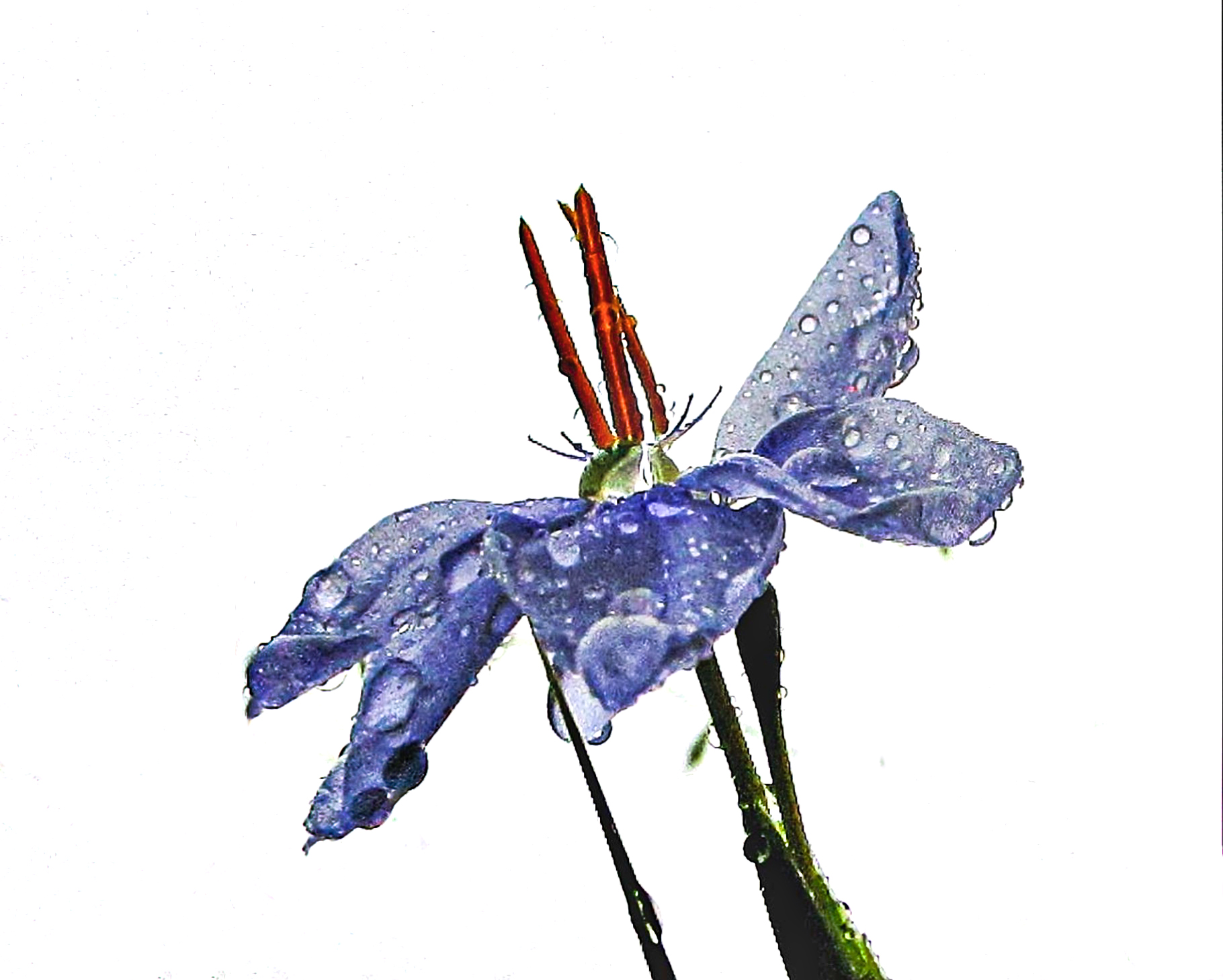
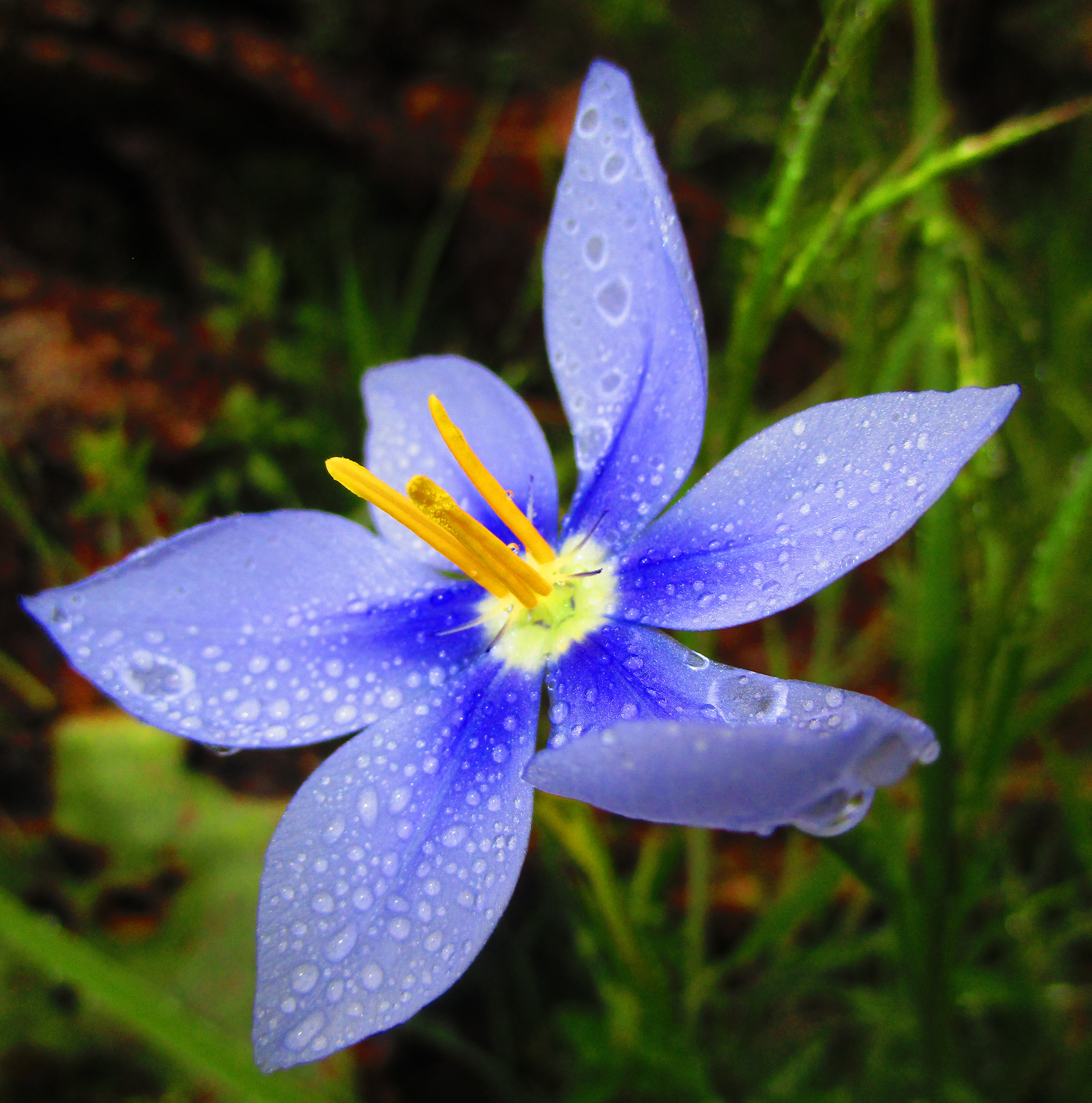
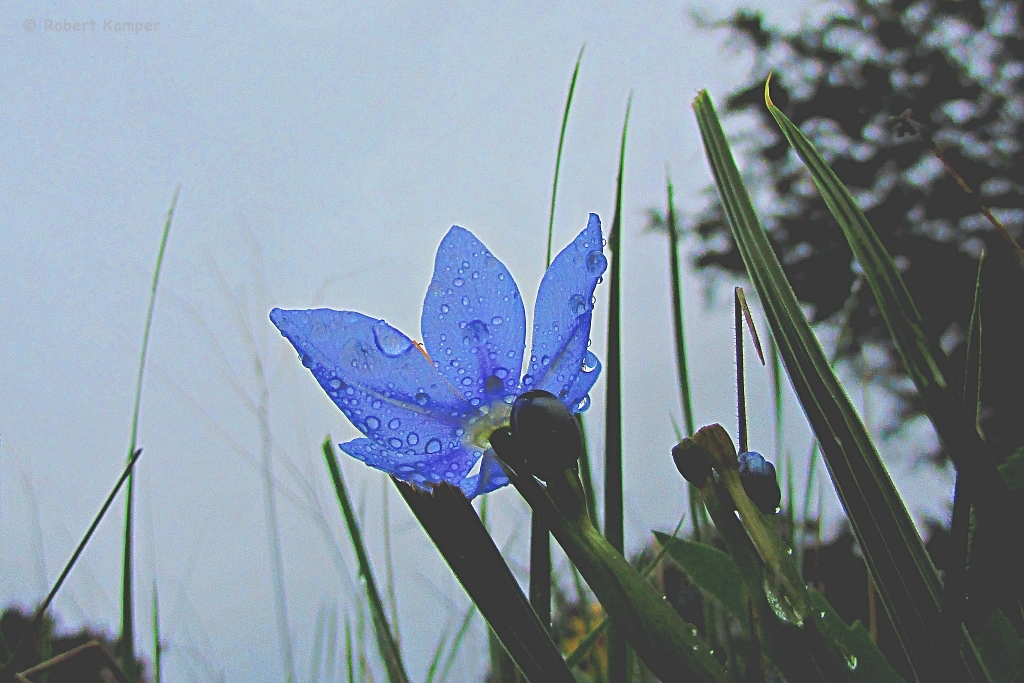
One of my favorite wildflowers is the Nemastylis geminiflora, a member of of the Iridaceae, or Iris family, in spite of some of its common names including Pleat-leaf Lily, Prairie Celestial, Celestial, and Celestial Lily. Below are photos from this year and a few years ago. I was on a Power for Parkinson’s Zoom call this past Friday (4/5/24) in which we were asked to share what gives us joy in our lives. I shared this photo:

Neamstylis geminiflora

The first photo was taken in 2021, The other, in 2024.

Both taken with a Canon Elph 190IS Powershot small camera, if I recall correctly (this year’s photo might have been taken with an iPhone 12 Pro). The difference in the photos can be accounted for by four possible influences:

  1. The photographer fell and fractured a femur following 2023’s bloom period, and is more cautious about lying down on the ground to emulate Steven Scwhartzman’s signature technique of using the sky as a background, due to the possibility of not being able to get back up again.
  2. The abundance and proliferation of exotic, invasive species on the berm, such as Japanese Brome, Malta Star Thistle, which reduce the native Nemastylis’ access to sunlight, and
  3. The failure of mowers who maintain the firebreak between the greenbelt and the to practice good hygiene by pressure washing and cleaning of mower blades between sites (one can only assume) and
  4. The setting of mower blades at less than 7 inches above the ground, which results in scalping of top of the berm, inviting aggressive invasive species onto the berm and into the greenbelt.


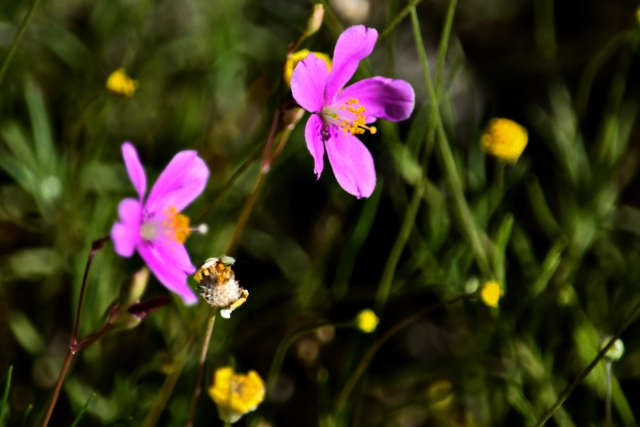
Tradescantia gigantea (Giant Spiderwort) an early bloomer in late Winter to early Spring, with blooms ranging from pinkish to purple. Provides color during an otherwise bleak season for landscaping.
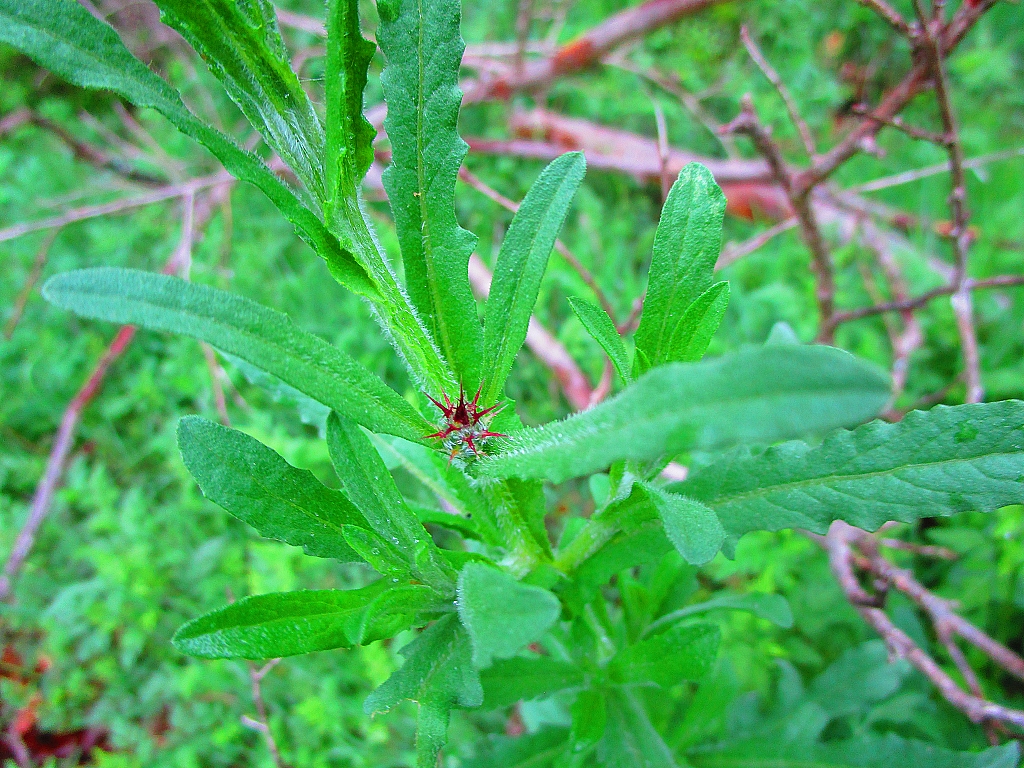
Finally, Malta Star Thistle (Centaurea melitensis) a very nasty and invasive plant that produces thousands of seeds per plant. Just too many of them on the greenbelt

###

An early Spring, this year

This February has seen no scenes like the one above (Feb. 15, 2021) where we saw over 6 inches of snow and sub freezing temperatures for about two weeks. Thousands of people lost power, and I don’t want to look up how many died from the pre-20th Century conditions to which they were not conditioned or prepared to deal with.

However, thanks to Global Warming, this Winter has been warm, for the most part. So we’ve seen some early blooms, one of which always persists, is the Ten-Petal Anemone. This bloom is white, but the species can vary from white through pinkish to violet. (An artist might differ with my choice of descriptive colors).

And here’s an unopened Anemone berlandieri from the violet end of the spectrum.

What are these doing in the Bob’s Brain: Living well with PD and other co-morbidities blog?

  • Bob’s brain mistakenly failed to switch to the Back to the natives: Native plants are the answer before beginning the draft, or
  • Bob’s brain has other interests in his life other than an incurable, progressive,  degenerative neurological disease,
  • or both of the above… whatever answer you choose, you won’t go wrong.

Oh well, might as well end with a song:

https://youtu.be/sxoTWy0bTXo?si=NmKkd0bLzysH8ZSO

###

Do you wanna dance?

Costa V, Suassuna AOB, Brito TSS, da Rocha TF, Gianlorenco AC. Physical exercise for treating non-motor symptoms assessed by general Parkinson’s disease scales: systematic review and meta-analysis of clinical trials. BMJ Neurol Open. 2023 Oct 4;5(2):e000469. doi: 10.1136/bmjno-2023-000469. PMID: 37808516; PMCID: PMC10551973.

This study was a systematic review and meta-analysis.  Like many such desk reviews and meta-analyses, it winds up, in layperson’s terminology, comparing apples and oranges and pears and papayas and tangerines and dragon fruit and kiwis to each other. Treatments included “multimodal, aerobic, resistance, dance, conventional physical therapy and other types.” Five studies apparently were vulnerable to bias (in favor of the treatment being studied, one would suppose). They did conclude that, after sifting the studies down to eight, that aerobic exercise had a stronger effect than conventional exercise on non-motor symptoms. This is in conformance with other reviews that I have read (or read the abstracts of) in the past.

And then we have this study, which might have been kicked out due to possibility of bias, or maybe it wasn’t published early enough to be included.

Physical activity based on dance movements as complementary therapy for Parkinson’s disease: Effects on movement, executive functions, depressive symptoms, and quality of life
Duarte JdS, Alcantara WA, Brito JS, Barbosa LCS, Machado IPR, et al. (2023) Physical activity based on dance movements as complementary therapy for Parkinson’s disease: Effects on movement, executive functions, depressive symptoms, and quality of life. PLOS ONE 18(2): e0281204. https://doi.org/10.1371/journal.pone.0281204

Methods used were described as follows:

13 individuals with PD (Hoehn & Yahr I-III, MDS-UPDRS 67.62 ± 20.83), underwent physical activity based on dance movements (2x week for 6 months). Participants were assessed at baseline and after 6 months on movement (POMA, TUG and MDS-UPDRS Part III), executive function (FAB), depressive symptoms (MADRS), quality of life (PDQ-39), and severity of PD (MDS-UPDRS TOTAL).

The results were:

significant improvement in the movement (balance and gait) by the POMA test, p = 0.0207, executive function by the FAB test, p = 0.0074, abstract reasoning and inhibitory control by the FAB, Conceptualization test, p = 0.0062, and Inhibitory Control, p = 0.0064, depressive symptoms assessed by the MADRS test significantly reduced, p = 0.0214, and the quality of life by the PDQ-39 had a significant increase after the intervention, p = 0.0006, showed significant improvements between the pre-and post-intervention periods of physical activity based on dance movements.

The conclusions were obvious:

Physical activity based on dance movements contributed to significant improvements in movement (balance and gait), executive functions, especially in cognitive flexibility and inhibitory control, and the quality of life too. Sensorimotor integration, most cognitive processing and social skills may have contributed to the results.

Personally, I have to wonder whether inhibitory control and executive functions apply to my individual results, based on feedback from others, but it could be that I just need to keep on dancing more and worry less about what other folks think.

For nerds like myself, clicking on the following link will get you a list of similar articles published within the past five years (2019 – 2024)  available with free full text.

So, to reiterate the title of this post:

Turn off the TV and get some exercise! (Or use it to exercise to Power for Parkinson’s YouTube videos).

That’s the takeaway message from an analysis of non-identifiable patient data recently reported in this article:

Too much TV watching correlated with higher rates of dementia, depression, and PD

However, the study did find that some computer screen time had a neuroprotective effect. (This blog’s  author’s note: It would not be a bad idea to set a timer to remind yourself to get up every hour or so and get up, stand up, and dance to a little Bob Marley music for a minute or two, or three).

Methods

  • 473,184 participants initially free of dementia, PD, and depression from UK Biobank, as well as 39,652 participants who had magnetic resonance imaging (MRI) data
  • Self-reported screen time exposure variables included
    • TV viewing and
    • computer use
  • Regression models were used to estimate the association between different types of screen time and
    • Incidence of dementia,
    • Parkinson’s disease,
    • depression, and
    • Multimorbidity status.
  • Multiple linear regression models were used to assess the linear relationship between different types of screen time and MRI biomarkers in a subgroup of participants.

Multimorbidity was defined as two or more diagnoses of chronic diseases occurring simultaneously in an individual.

During the study time frame,

  • 6,091 (1.29%) participants developed dementia
  • 23,632 (4.99%) participants developed depression,
  • 1,214 (0.26%) participants developed both dementia and depression,
  • 486 (0.10%) participants developed both PD and depression

Participants

  •  Highest TV viewing time were
    • Older,
    • Typically male,
    • Higher body mass index (BMI),
    • Lower Physical Activity (PA) and
    • More likely  previous or current smokers.

Risk for dementia and depression increased substantially among those with both low PA and highest TV viewing time.

The main novel finding of this study is that TV viewing time was positively associated with an increased risk of dementia, PD, depression and their multimorbidity status. Moderate computer using time (i.e., approximately 0.5–1 h/day) is associated with a lower risk of dementia, PD, and depression.  

Longitudinal analysis and eliminating cases of depression, dementia, and PD that were diagnosed within the first three years are the strengths of the study. Self-reports on the amount of screen time by participants is a weakness.

In conclusion:

 computer using was U-shaped associated with risk of dementia, PD, depression and their multimorbidity status, while TV viewing was associated with an increased risk. And different screen time may affect diseases risk through its association with brain structures. Although associations between different types of screen time and diseases are not strongly attenuated with different levels of PA. Replacing different types of screen time with daily-life PA or structured exercise is associated with lower disease risk. Our results support the potential of limiting different types of screen time and shifting to physical activity to mitigate disease risk.

And this person with PD has spent too many hours in front of the computer screen writing this up, so I will follow their advice and engage in some PA.


Citation:

Wu, H., Gu, Y., Du, W. et al. Different types of screen time, physical activity, and incident dementia, Parkinson’s disease, depression and multimorbidity status. Int J Behav Nutr Phys Act 20, 130 (2023). https://doi.org/10.1186/s12966-023-01531-0

###

ET & PD – is there is or is there ain’t a connection?

As a person who has had essential tremors ever since his teenage years, and a person who was diagnosed with Parkinson’s disease at the average onset age of 62 years, it was with great interest that the author reviewed the abstracts and full text open access PubMedCenter articles available on the topic.

The author can recall others (medical professionals included) who did not observe tremors, although this subject could feel the tremors within, during teenage years. During undergraduate studies, he once was told that his initial impression on a fellow college student looking to sublet a room was that of a “speed freak” (methamphetamine abuser to those unfamiliar with the term). At age 28, his future wife remarked on his trembling hands as he reached out to touch her cheek in a moment of intimacy. And at age 60, following several recurring episodes of depression and increasing tremors, he was treated for essential tremors for almost two years, beginning in 2010. Then, after having opted for Deep Brain Stimulation (DBS), and undergoing further testing for several months, a third symptom, rigidity, one of the four cardinal symptoms of PD, was observed, allowing the Movement Disorder Specialist to finally make a diagnosis of PD. Mind you, the four cardinal symptoms required to make the call haven’t changed since 1817, when James Parkinson published his Essay On The Shaking Palsy. In case you don’t  already know, they are Tremors, Postural Instability, Bradykinesia, and Rigidity.

On the other hand, it was only in 2009 that the study “LINGO1 rs9652490 is associated with essential tremor and Parkinson disease” came out online and published in print a few months later in 2010.  In which year, the observant reader will notice, was when this author began receiving treatments for essential tremors, finally diagnosed in late 2011 as Parkinson’s.

After a few articles reported similar results, a few negative results were reported, in part by one group of desk jockeys who conducted a meta-review and concluded that there was NO association between ET and PD.  On looking just briefly at the abstracts, one can see that those that found a positive connection and those that found no connection were looking at different populations. The positive association came from a European background, and those with no association came from a Chinese population sample.  Mix them all together and you get mixed results, which doesn’t mean that a person with a half European background (like myself) with this specific variation doesn’t have an increased risk of developing ET (P = 0.014) and Parkinson’s(P = 0.0003), as reported in the article noted above.

So who should I believe? A study that involved a sample in which the participants were similar in ethnic/DNA background to mine? Or a meta-review which concludes that the null hypothesis is true? Or my own brain and body, which began exhibiting strong tremors back in late teens to early twenties? And which became so severe by age 60  that I couldn’t carry a cup of coffee from the kitchen to the living room without going into extreme oscillations?

Those were rhetorical questions, by the way.

References:

Jiménez-Jiménez FJ, García-Martín E, Lorenzo-Betancor O, Pastor P, Alonso-Navarro H, Agúndez JA. LINGO1 and risk for essential tremor: results of a meta-analysis of rs9652490 and rs11856808. J Neurol Sci. 2012 Jun 15;317(1-2):52-7. doi: 10.1016/j.jns.2012.02.030. Epub 2012 Mar 17. PMID: 22425540.

Agúndez JA, Lorenzo-Betancor O, Pastor P, García-Martín E, Luengo A, Alonso-Navarro H, Jiménez-Jiménez FJ. LINGO1 rs9652490 and rs11856808 are not associated with the risk of Parkinson’s disease: results of a meta-analysis. Parkinsonism Relat Disord. 2012 Jun;18(5):657-9. doi: 10.1016/j.parkreldis.2011.09.005. Epub 2011 Sep 28. PMID: 21955595.

Lorenzo-Betancor O, Samaranch L, García-Martín E, Cervantes S, Agúndez JA, Jiménez-Jiménez FJ, Alonso-Navarro H, Luengo A, Coria F, Lorenzo E, Irigoyen J, Pastor P; Iberian Parkinson’s Disease Genetics Study Group Researchers. LINGO1 gene analysis in Parkinson’s disease phenotypes. Mov Disord. 2011 Mar;26(4):722-7. doi: 10.1002/mds.23452. Epub 2011 Jan 4. PMID: 21506150.

Wu YW, Rong TY, Li HH, Xiao Q, Fei QZ, Tan EK, Ding JQ, Chen SD. Analysis of Lingo1 variant in sporadic and familial essential tremor among Asians. Acta Neurol Scand. 2011 Oct;124(4):264-8. doi: 10.1111/j.1600-0404.2010.01466.x. Epub 2010 Dec 15. PMID: 21158743.

Zuo X, Jiang H, Guo JF, Yu RH, Sun QY, Hu L, Wang L, Yao LY, Shen L, Pan Q, Yan XX, Xia K, Tang BS. Screening for two SNPs of LINGO1 gene in patients with essential tremor or sporadic Parkinson’s disease in Chinese population. Neurosci Lett. 2010 Sep 6;481(2):69-72. doi: 10.1016/j.neulet.2010.06.041. Epub 2010 Jun 19. PMID: 20600614.

Clark LN, Park N, Kisselev S, Rios E, Lee JH, Louis ED. Replication of the LINGO1 gene association with essential tremor in a North American population. Eur J Hum Genet. 2010 Jul;18(7):838-43. doi: 10.1038/ejhg.2010.27. Epub 2010 Apr 7. PMID: 20372186; PMCID: PMC2987362.

Nica AC, Montgomery SB, Dimas AS, Stranger BE, Beazley C, Barroso I, Dermitzakis ET. Candidate causal regulatory effects by integration of expression QTLs with complex trait genetic associations. PLoS Genet. 2010 Apr 1;6(4):e1000895. doi: 10.1371/journal.pgen.1000895. PMID: 20369022; PMCID: PMC2848550.

Vilariño-Güell C, Wider C, Ross OA, Jasinska-Myga B, Kachergus J, Cobb SA, Soto-Ortolaza AI, Behrouz B, Heckman MG, Diehl NN, Testa CM, Wszolek ZK, Uitti RJ, Jankovic J, Louis ED, Clark LN, Rajput A, Farrer MJ. LINGO1 and LINGO2 variants are associated with essential tremor and Parkinson disease. Neurogenetics. 2010 Oct;11(4):401-8. doi: 10.1007/s10048-010-0241-x. Epub 2010 Apr 6. PMID: 20369371; PMCID: PMC3930084.

Wu Y, Wang X, Xu W, Liu W, Fang F, Ding J, Song Y, Chen S. Genetic variation in LINGO-1 (rs9652490) and risk of Parkinson’s disease: twelve studies and a meta-analysis. Neurosci Lett. 2012 Jul 26;522(1):67-72. doi: 10.1016/j.neulet.2012.06.018. Epub 2012 Jun 15. PMID: 22710005.

Jasinska-Myga B, Wider C. Genetics of essential tremor. Parkinsonism Relat Disord. 2012 Jan;18 Suppl 1:S138-9. doi: 10.1016/S1353-8020(11)70043-8. PMID: 22166413.

Bourassa CV, Rivière JB, Dion PA, Bernard G, Diab S, Panisset M, Chouinard S, Dupré N, Fournier H, Raelson J, Belouchi M, Rouleau GA. LINGO1 variants in the French-Canadian population. PLoS One. 2011 Jan 11;6(1):e16254. doi: 10.1371/journal.pone.0016254. PMID: 21264305; PMCID: PMC3019170.

Guo Y, Jankovic J, Song Z, Yang H, Zheng W, Le W, Tang X, Deng X, Yang Y, Deng S, Luo Z, Deng H. LINGO1 rs9652490 variant in Parkinson disease patients. Neurosci Lett. 2011 Jan 7;487(2):174-6. doi: 10.1016/j.neulet.2010.10.016. Epub 2010 Oct 15. PMID: 20951767.

Thier S, Lorenz D, Nothnagel M, Stevanin G, Dürr A, Nebel A, Schreiber S, Kuhlenbäumer G, Deuschl G, Klebe S. LINGO1 polymorphisms are associated with essential tremor in Europeans. Mov Disord. 2010 Apr 30;25(6):717-23. doi: 10.1002/mds.22887. PMID: 20310002.

Vilariño-Güell C, Ross OA, Wider C, Jasinska-Myga B, Cobb SA, Soto-Ortolaza AI, Kachergus JM, Keeling BH, Dachsel JC, Melrose HL, Behrouz B, Wszolek ZK, Uitti RJ, Aasly JO, Rajput A, Farrer MJ. LINGO1 rs9652490 is associated with essential tremor and Parkinson disease. Parkinsonism Relat Disord. 2010 Feb;16(2):109-11. doi: 10.1016/j.parkreldis.2009.08.006. Epub 2009 Aug 31. PMID: 19720553; PMCID: PMC2844122.

Deng H, Gu S, Jankovic J. LINGO1 variants in essential tremor and Parkinson’s disease. Acta Neurol Scand. 2012 Jan;125(1):1-7. doi: 10.1111/j.1600-0404.2011.01516.x. Epub 2011 Apr 7. PMID: 21470193.

Zimprich A. Genetics of Parkinson’s disease and essential tremor. Curr Opin Neurol. 2011 Aug;24(4):318-23. doi: 10.1097/WCO.0b013e3283484b87. PMID: 21734494.
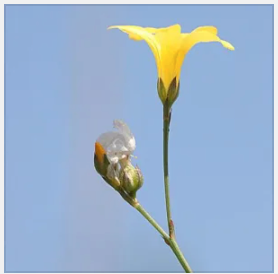
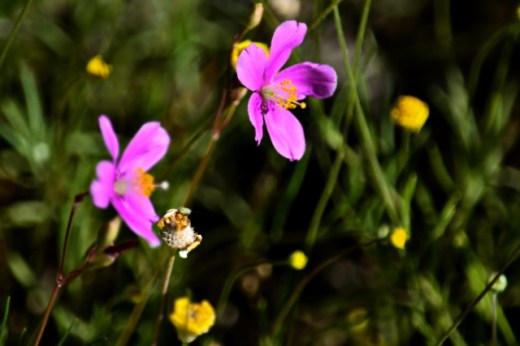
It might as well be Spring… or Fall

The long dry Summer was followed by a few showers (about a week, and 6″ of the liquid stuff), and some more warm weather. Some plants, like the Clematis drummondii in the first few frames, decided it was a good time to put out new fowers, even though they had already gone through the yearly cycle of blooms, with the female plants putting out their achenes that have given the plant the common name of Old Man’s Beard.

The vignetted shot towards the sun shows a Cedar Elm (Ulmus crassifolia) with some of its leaves already starting to turn to their Fall golden yellow color. In the tangled web of branches and vines are a few other species, difficult to identify in the photo.

The bottom left shot shows the desiccated remains of a Monarda sp. (hard to tell them apart from just the skeletal remains). Meanwhile, in the lower right is Tetraneuris scaposa or Four-nerve daisy, a perennial that can bloom throughout all four seasons, given the right conditions.

And so it goes…

###


Recent blooms, both contained and wild

All the photos above were taken in September and October 2023, either in our yard or in the berm and greenbelt behind it. As one can tell, there was some rain during that time, enough to push up a few rain lilies, but not so much that most plants thrived.

###

Just a song and dance man

[updated April 8, 2025]

Some folks may recognize the title as an allusion to an old interview with Bob Dylan in which a reporter asked about him being considered a protest singer and/or the voice of a generation. If not, do a search on YouTube for the interview – probably in San Francisco, 1965, maybe – If my memory serves me well.

A hallmark of human movement is volitional control – the freedom to move easily, automatically, and safely within the changing demands of daily living. Clinical signs characteristic of Parkinson’s disease (PD) include rigidity and tremor, hypokinesia, stooped posture, vocal alterations, facial masking, and progressive loss of peri- and extrapersonal use of space . These movement aberrations are one of many factors that increase the risk of falling and point to the need for improving fall prevention strategies . These disease-related limitations experienced by people with Parkinson’s disease (PPD) increasingly rob them of movement freedom. Quality of life declines as conscious attention and effort in everyday living replace spontaneity of communication and safety in navigation.

Reading those words in the introduction to this article  flowed off of the page like they  were written in my soul. Many times I have avoided falling by using dance steps learned in my Rhythm and Moves class from Power for Parkinson’s® (PfP) (taught by Nancy Bain) located in nearby Austin, Texas. And certainly the improvisational dance techniques used in the class have improved my quality of life, allowing me to be more spontaneous. Following a fall in April of 2023, I have been on a 6 month journey of rehabilitation, and certainly my quality of life has deteriorated somewhat due to the conscious attention and effort in performing activities of daily living. But  dance, music, and improvisation continue to be the core of my spirit as I strive to improve against this incurable (yet!), progressive, degenerative, neurological disease. Even though I don’t get around much anymore…

This study reported on one of the co-authors’ method in teaching dance to mild-to-moderate stage People with Parkinson’s over a 3-year period (2013–2015). She is a tenured university dance professor also trained in the Mark Morris Dance for PD® program. 

Another (modified) quote from the article is this table, which I find reflects many of the implicit and explicit principles used in dance classes.  Verbal Auditory Cueing (VAC) is the acronym used in the table. Color coding has been added to separate the different methods more clearly:

Principles

and Methods 

Non-judgment

Class advertised as movement class


Greeting at entrance by teacher


Class offered free of charge


Inclusion of carepartners as students


VAC that there are no mistakes, only new movement options

Non-competitiveness

All movement is seen as an honest effort


VAC focused on action, not quality of movement


VAC “Yes, and …” replaces “Not that” or “Rather try this”

Curiosity and

playfulness

Awareness of movement possibilities

VAC “Stay curious in what you are doing” or “Keep going”

VAC “Nothing is precious”

Pacing of VAC does not allow self-editing

Risk taking

Selection of class environment


Student self-selection of participation level


VAC to validate self-selected level of participation


Adaptation of exercises to sitting or at the barre as needed


Structured, directive (non-improvised) activity transitions

VAC to attend to constraints of an activity rather than invoke fear

Another point used in the method was to increase challenge by gradually increasing the variety and complexity of movement tasks. In this way, the participants maintained safety while increasing their sense of confidence.  In PfP classes, this is called “Fun.” They even have a t-shirt with the definition of Fun printed on the back.

FUN Tshirt — Power for Parkinson's - www.powerforparkinsons.org

This particular study was published back in 2016,  and most of the authors were associated with Wake Forest University in Winston-Salem North Carolina.

Here’s the citation and a link to the open access article, which goes into more detail about the principles and the practice of the improvisational dance classes.

Batson G, Hugenschmidt CE, Soriano CT. Verbal Auditory Cueing of Improvisational Dance: A Proposed Method for Training Agency in Parkinson’s Disease. Front Neurol. 2016 Feb 17;7:15. doi: 10.3389/fneur.2016.00015. PMID: 26925029; PMCID: PMC4756105.

More information about Power for Parkinson’s®, their classes, and YouTube channel can be found at:

https://powerforparkinsons.org

Another 501(c)(3) charitable organization which happens to be focused on improvisation as a means to offer People with Parkinson’s (and their caregivers) to a safe environment using many of the principles listed above is Yes, and… Exercise (if that sounds familiar, take a look at the methods related to non-competitiveness in the table above) at https://yesandexercise.org.

And since the title says it, here’s a song about dance that I loved as a kid (still do, and probably still will, if I ever grow up)(note 2025-04-08: the original link is no longer available, so I just created a link to a song  that I also loved during my wasted youth, besides, I don’t remember what the original link was about.)

The Contours “Do You Love Me (Now That I can dance?)”

###

Music, movement, and PD

Jerry Coker, who was one of my instructors my first year in undergraduate college, and then again my last semester before graduation , had an hypothesis that for improvisation to be enjoyable, it had to be approximately 75% predictable and 25% unpredictable. Vary too far from those parameters, and you end up with something that is either too boring and predictable, or something that leaves the listener wondering what’s going on, trying to guess where the melody is.

I never advanced far enough to get his insights on swing, or the concept of where the beat is. Duke Ellington, whom I saw at a festival once, did have a short primer on swing. He began with the person who snaps his fingers or taps his feet on the downbeats (ONE-and-TWO-and….). Then he progressed to the folks who tapped their feet or snapped their fingers on the upbeat (1-AND-two-AND..). I forget where it went from there (maybe to Latin rhythm patterns), although I do remember him saying that when he greeted people, he always gave two kisses to the right, and two to the left, one for each cheek.

Love You Madly (ending)

Today’s readings all relate to music and movement –

From  Saluja A, Goyal V, Dhamija RK. Multi-Modal Rehabilitation Therapy in Parkinson’s Disease and Related Disorders. Ann Indian Acad Neurol. 2023 Jan;26(Suppl 1):S15-S25. doi: 10.4103/aian.aian_164_22. Epub 2022 Nov 21. PMID: 37092020; PMCID: PMC10114534. 

(emphasis added to the section quoted below):

Dance, Music, and Singing Therapy in Pd Rehabilitation

Dancing may improve speed of movement, balance, wellbeing, and QOL in patients with PD.[74,75] Multiple dancing interventions and their impact on symptomatology of PD patients have been assessed. In a systematic review of 38 articles that studied the role of various dancing interventions (tango, waltz/foxtrot, Sardinian folk dancing, Irish set dancing, Brazilian samba, Zumba, mixed dance forms, and home-based dance interventions), there was a moderate-to-large beneficial effect of dancing interventions in mild-to-moderate PD. Dancing sessions (once/week to daily for 30 minutes to 2 hours) significantly improved balance, total UPDRS, mobility, endurance, gait freezing, and depression among PD patients.[76]

Music and rhythmic auditory stimulation can improve gait parameters in PD.[77] BEATWALK is a smartphone-based application that initially assesses cadence in PD patients and then progressively increases musical tempo in order to reach the desired speed. A recent study found that BEATWALK significantly improved gait velocity (P < 0.01), cadence (P: 0.01), stride length (P: 0.04), and distance (P: 0.01) among 39 PD patients who could walk unaided and had no gait freezing.[78] The ParkinSong trial studied the effect of singing intervention (at weekly and monthly intervals) in PD and found significant improvements in vocal intensity (P = 0.018), maximum expiratory pressure (P = 0.032), and voice-related QOL (P = 0.043) among PD patients when compared to controls.[79] A recent systematic review and meta-analysis including 67 publications found that tango resulted in significantly improved UPDRS-III scores (Z = 2.87, P = 0.004) and TUG scores (Z = 11.25, P < 0.00001), whereas PD-specific dance resulted in improvement in PDQ-39 scores (Z = 3.77, P = 0.0002) when compared to usual care.[80]

Cox L, Youmans-Jones J. Dance Is a Healing Art. Curr Treat Options Allergy. 2023 Apr 10:1-12. doi: 10.1007/s40521-023-00332-x. Epub ahead of print. PMID: 37361639; PMCID: PMC10088655.

This article is considered an Opinion Statement rather than a “research study,”although they used the same armchair/desk jockey methods used by many reviews and meta-reviews. From the abstract (emphasis added):

The purpose of this review is to evaluate the health benefits of dance and dance therapy in various health domains. Dance interventions included movement therapy with certified therapists, common dances such as ballroom dancing, salsa, and cha-cha as well as ethnic dances, such as the Chinese Guozhuang Dance and the Native American jingle dance. The health domains included depression, cognitive function, neuromotor function, dementia, balance, neurological growth factors, and subjective well-being. The National Library of Medicine, Congress of Library, and the Internet were searched using the terms: dance, dance movement therapy, health, cognitive function, healing, neurological function, neuromotor function, and affective disorders from 1831 to January 2, 2023. Two-thousand five hundred and ninety-one articles were identified. Articles were selected if they provided information on the health benefits of dance in one or more of the above domains as compared to a “non-dance” control population. Studies included systematic reviews, randomized controlled studies, and long-term perspective studies. Most of the subjects in the studies were considered “elderly,” which was generally defined as 65 years or older. However, the benefits of DI on executive function were also demonstrated in primary school children. Overall, the studies demonstrated that DI provided benefits in several physical and psychological parameters as well as executive function as compared with regular exercise alone. Impressive findings were that dance was associated with increased brain volume and function and neurotrophic growth function. The populations studied included subjects who were “healthy” older adults and children who had dementia, cognitive dysfunction, Parkinson’s disease, or depression.

The benefits of dance for PwPs include movements and connections with others:

Jola C, Sundström M, McLeod J. Benefits of dance for Parkinson’s: The music, the moves, and the company. PLoS One. 2022 Nov 21;17(11):e0265921. doi: 10.1371/journal.pone.0265921. PMID: 36409733; PMCID: PMC9678293.

From the abstract:

Dance classes designed for people with Parkinson’s are very popular and associated not only with increasing individuals’ motor control abilities but also their mood; not least by providing a social network and the enjoyment of the music. However, quantitative evidence of the benefits is inconsistent and often lacks in power. For a better understanding of the contradictory findings between participants’ felt experiences and existing quantitative findings in response to dance classes, we employed a mixed method approach that focussed on the effects of music. Participant experience of the dance class was explored by means of semi-structured interviews and gait changes were measured in a within-subjects design through the Timed Up and Go (TUG) test before and after class, with and without music. We chose the TUG test for its ecological validity, as it is a simple test that resembles movements done in class. We hypothesised that the music and the dance class would have a facilitating effect on the TUG performance. In line with existing research, we found that before class, the gait of 26 participants was significantly improved when accompanied by a soundtrack. However, after class, music did not have a significantly facilitating effect, yet gait without music significantly improved after class compared to before.We suggest that whilst the music acts as an external stimulator for movement before the dance class, after the dance class, participants have an internalised music or rhythm that supports their motor control. Thus, externally played music is of less relevance. The importance of music was further emphasised in the qualitative data alongside social themes. A better understanding of how music and dance affects Parkinson’s symptoms and what aspects make individuals ‘feel better’ will help in the design of future interventions.

The entire article is Open Access at the link above. My own impression of the discussion of the contradictory results (from what was expected) reminded me of a quote my statistics professor was fond of repeating: It is meaningless to discuss what the data might have been if the data were something other than what they are. 

As a PwP, one explanation for the lack of significance difference in the TUG post-test could very well be fatigue. I, therefore, suggest that this could be looked into as a possible explanation for the lack of significant difference between external music v no external  music stimulus. Clearly, “Further research is needed.”

Morris ME, McConvey V, Wittwer JE, Slade SC, Blackberry I, Hackney ME, Haines S, Brown L, Collin E. Dancing for Parkinson’s Disease Online: Clinical Trial Process Evaluation. Healthcare (Basel). 2023 Feb 17;11(4):604. doi: 10.3390/healthcare11040604. PMID: 36833138; PMCID: PMC9957486.

The above citation reports on a clinical trial which was conducted with a fairly large and coordinated collaborative effort. Again, an excerpt from the abstract:

Results: Twelve people with PD, four dance instructors and two physiotherapists, participated in a 6-week online dance program. There was no attrition, nor were there any adverse events. Program fidelity was strong with few protocol variations. Classes were delivered as planned, with 100% attendance. Dancers valued skills mastery. Dance teachers found digital delivery to be engaging and practical. The safety of online testing was facilitated by careful screening and a home safety checklist. Conclusions: It is feasible to deliver online dancing to people with early PD.

As a PwP who has participated in Power for Parkinson’s online video dance Rhythm and Moves and other exercise videos, both live and asynchronously, the last line comes as no surprise.

The hour grows late, and I have medications to take before I sleep, oh so many medications to take before I sleep. To sleep, perchance to dream…

###