Linum rupestre – Rock Flax

Linum rupestre - Rock Flax

  Linum rupestre – Rock Flax

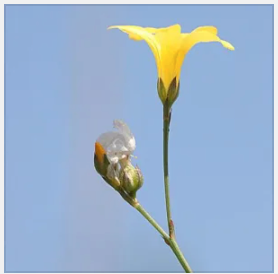
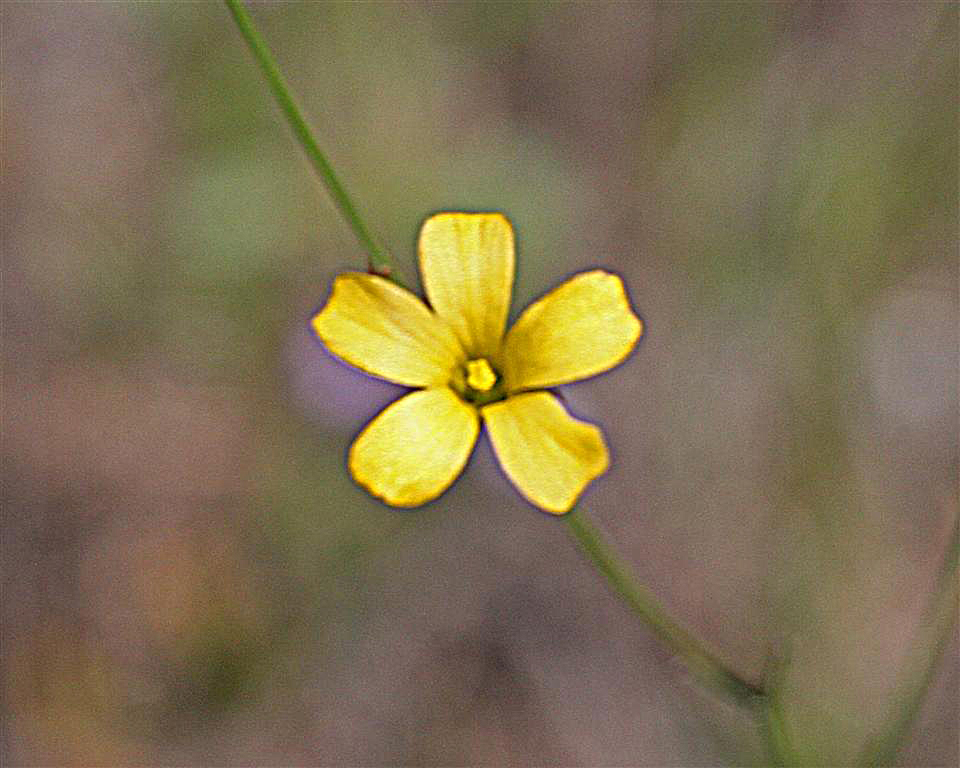
Here’s a different look at the Rock Flax, this time from above.  Although not as artistic as the previous photo, this one does have the advantage of making it easier to identify the plant. Note the five petals and the yellow throat. Although not as obvious, another differentiating factor is the spindly stem, that grows upright from one to two feet tall.
Linum rupestre – Rock Flax

 Linum rupestre - Rock Flax

Linum rupestre – Rock Flax

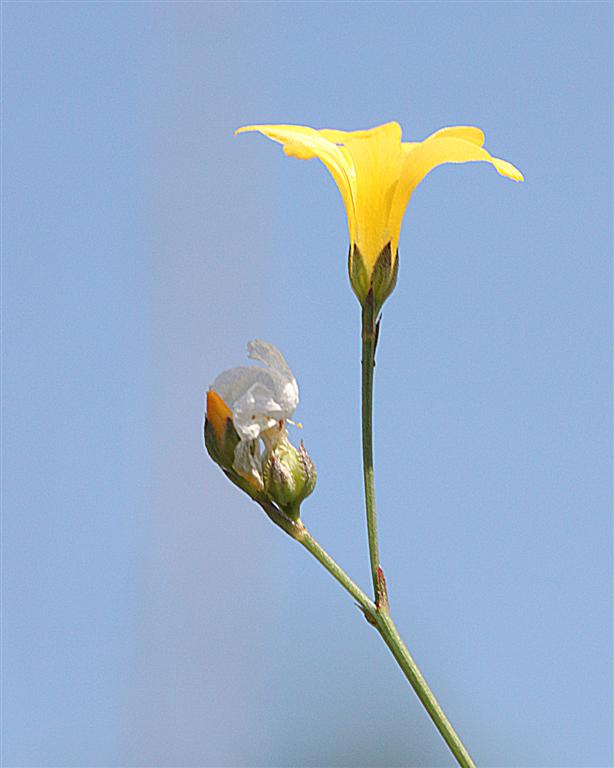
This is actually a fairly nondescript little yellow flower that grows in calcareous soils, hence the name Rock Flax. It is often found on caliche out in the sun. The yellow flowers have five petals. This photo was taken in an attempt to show the “tiny gland-tipped teeth” that line the margins of the sepals.  Not sure that goal was completely achieved, but the photo is aesthetically pleasing nonetheless.

Cirsium undulatum – Plumed Thistle

Cirsium undulatum - Plumed Thistle

Cirsium undulatum – Plumed Thistle

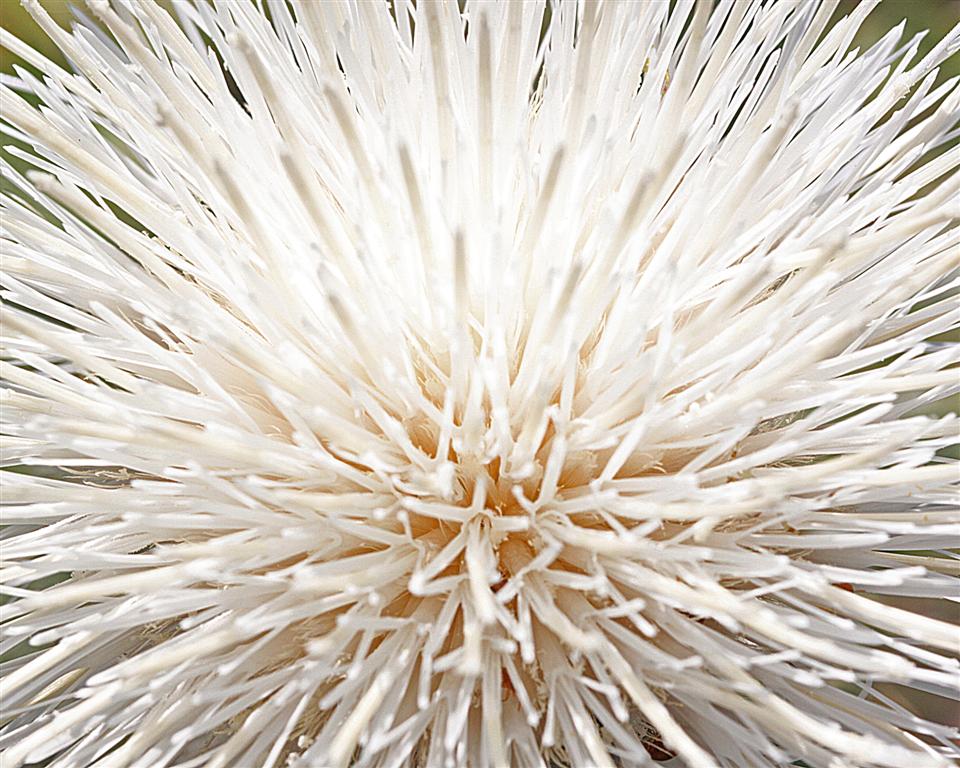
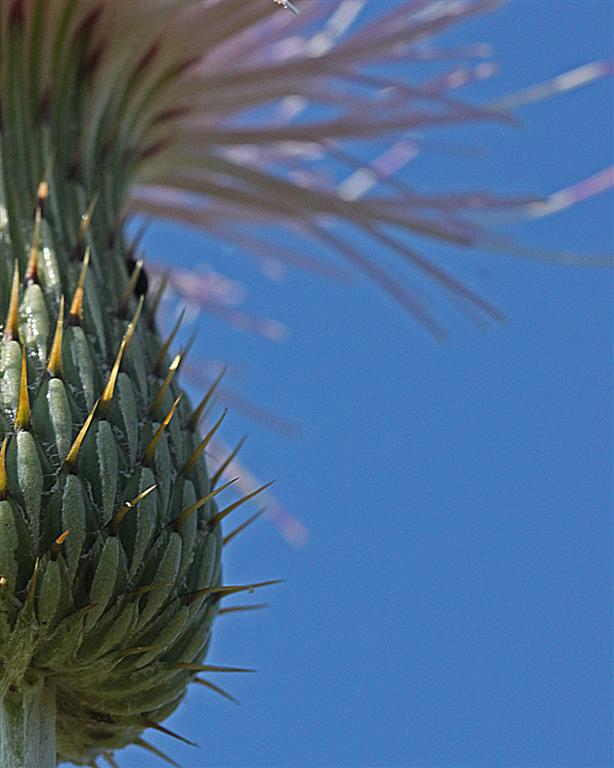
In addition to the Texas Thistle. Plumed Thistle can also be mistaken at first glance for Centaurea americana American Basket-Flower. The distinguishiing characteristic is the presence of thorns on the thistle and the lack of them on the Basket-Flower.  Here we see the flower of the Plumed Thistle in its more common creamy white coloration. Here we also see the photographer’s dilemma – crop for aesthetics or for plant identification. Alas, it isn’t always an easy choice. So we take multiple pictures in order to capture all the facets of the flowering plant, which, taken as a whole, provide a more comprehensive view.

Cirsium undulatum – Plumed Thistle

 
Cirsium undulatum – Plumed Thistle
Cirsium undulatum - Plumed Thistle

Cirsium undulatum – Plumed Thistle

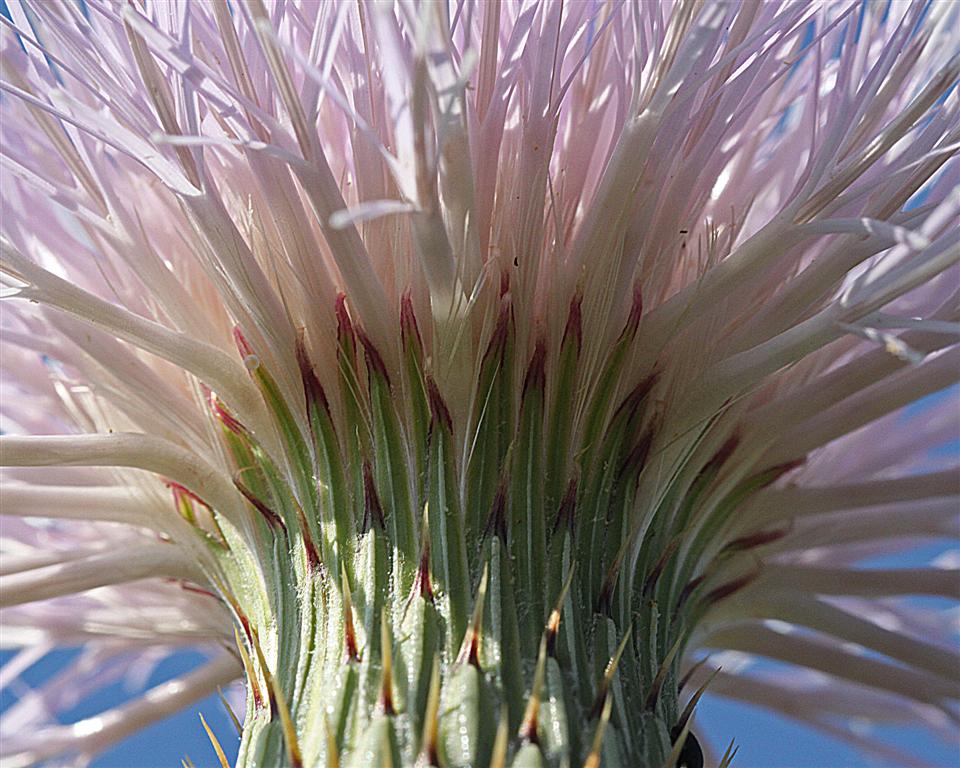
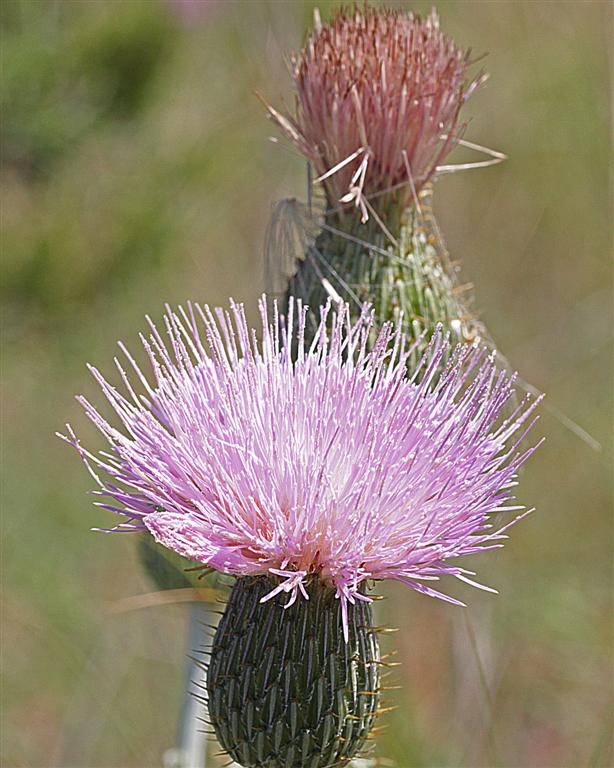
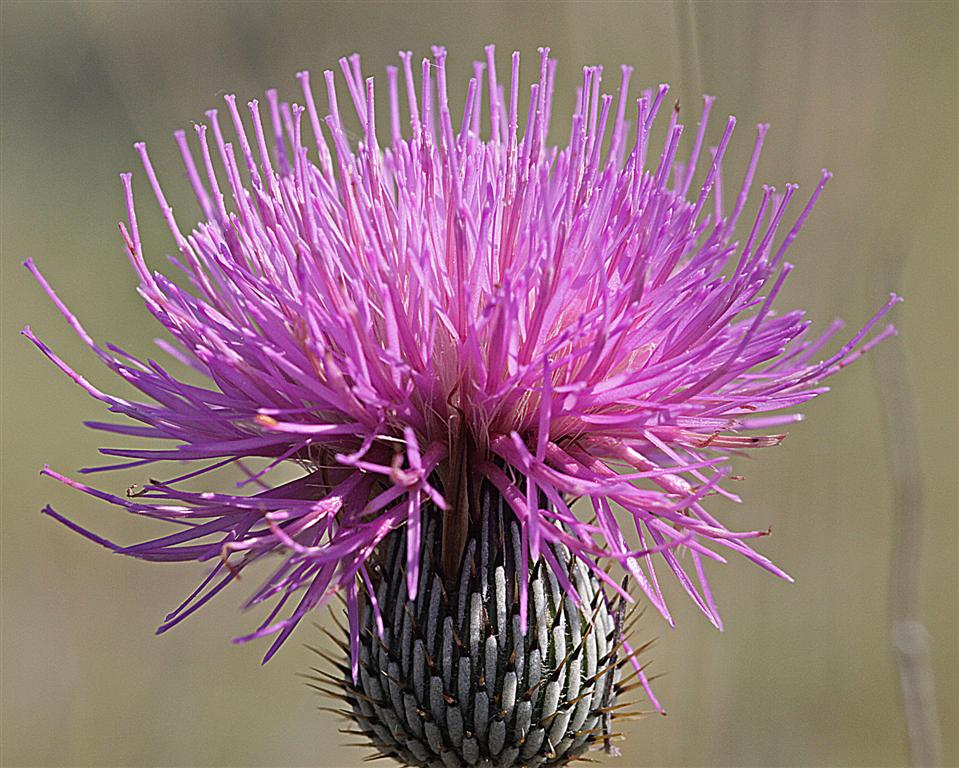
At first glance, this might be mistaken for Texas Thistle, especially this particular specimen, which has the purplish-reddish blossom that is exceptionally similar to Texas Thistle Cirsium texanum.  Or rose-lavender, if you prefer those hues.  Actually, the Plumed Thistle more often has a more creamy-white color to its blossom, which I’ll post later.

Salvia… most likely texana

Scutellaria Drummondii - Drummond's Skullcap

Salvia

Thanks to Megan Lowery for catching this incorrect identification from a shot taken back in 2012. She suggests either S. engelmannia or S. texana as the correct ID. Not sure how the wrong name got attached, whether it was in the field, or just sloppiness on my part, but I do recall having had a Salvia texana, aka Teas Sage, in my yard at one point, and perhaps a picture of it was mislabeled prior to publication on this blog, which hasn’t been updated for several years. I noted that Scutellaria drummondii is called Salvia drummondii on the Lady Bird Johnson Plant ID part of their website: “Salvia drummondii grows up to 12 inches tall. It is often branched at the base, forming clumps. Leaves are opposite and densely arranged. ” (https://www.wildflower.org/plants/result.php?id_plant=SCDR2). Live and learn.

Calyophus Berlandieri – Square-Bud Primrose

Calyophus Berlandieri - Square-Bud Primrose

Calyophus Berlandieri – Square-Bud Primrose

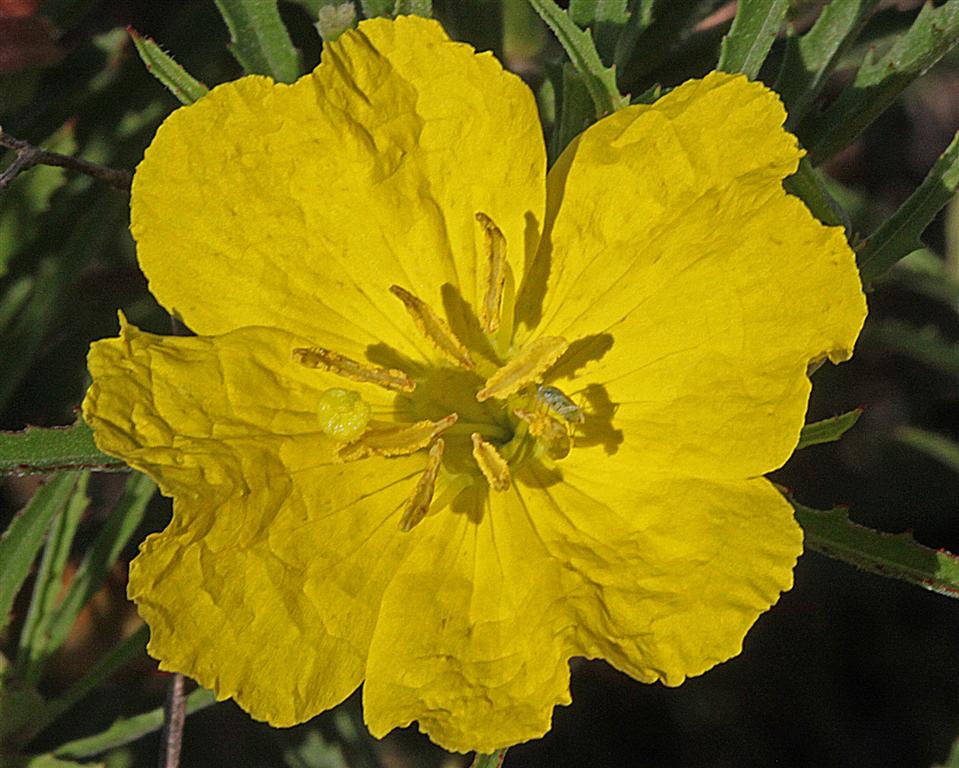
Most primroses are members of the Oenothera genus, which means that their stigma are X-shaped. Not so with Calyophus genus, which has a rounded stigma, which can be seen better if you click on the picture above. Usually the Square-Bud Primrose has a black throat and a black stigma, but this particular variety has yellow throat and stigma.   In bloom at a Williamson County park near me…