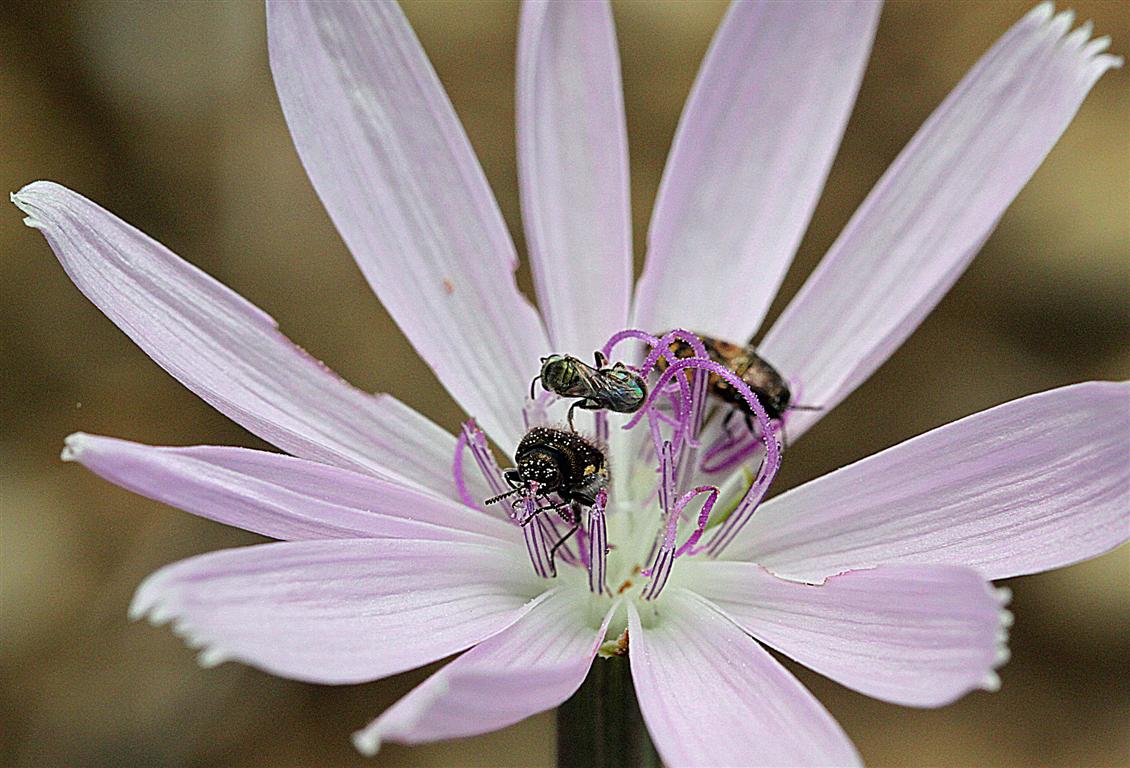
The Skeleton Plant gets its common name from the fact that it has little in the way of foliage, so its stem appears to be the bones of a skeleton-plant. Or so one would guess. This particular shot includes three – count em, three – different types of insects clustered about the flower. Usually one has trouble getting one insect to stay still long enough to get a shot of it, but these three amigos went about their business with no apparent concern for each others’ presence on the same blossom. It usually blooms throughout the Spring and Summer (April through August), so at least that part of the picture is nothing unusual. This flower is a bit on the pale side, since the flowers usually range from Rose to Lavender in hue, and are often quite saturated as far as color goes. On the other hand, it has attracted three different potential pollinators (one assumes the insects might provide this service), so who are we to criticize?
Tag Archives: wildflowers
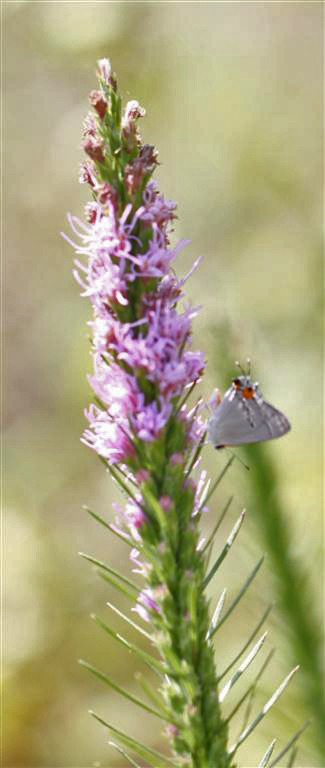
Liatris mucronata with Strymon melinus
Here we have a Gray Hairstreak Strymon melinus perched on the blooms of Liatris mucronata aka Gayfeather. The Gray Hairstreak covers much of North America and as far south as Venezuela. It is distinguished by the red spot on its hindwing. One interesting thing about this butterfly is that it bobs its hindquarters up and down while the head remains fairly still, sucking nectar from the flowers. Click on the image anf look closely at the larger image with more detail and you’ll see what I am talking about. This picture was taken July14 at Taylor Park near Lake Granger and shows one of the few Liatris that were actually blooming at the time.
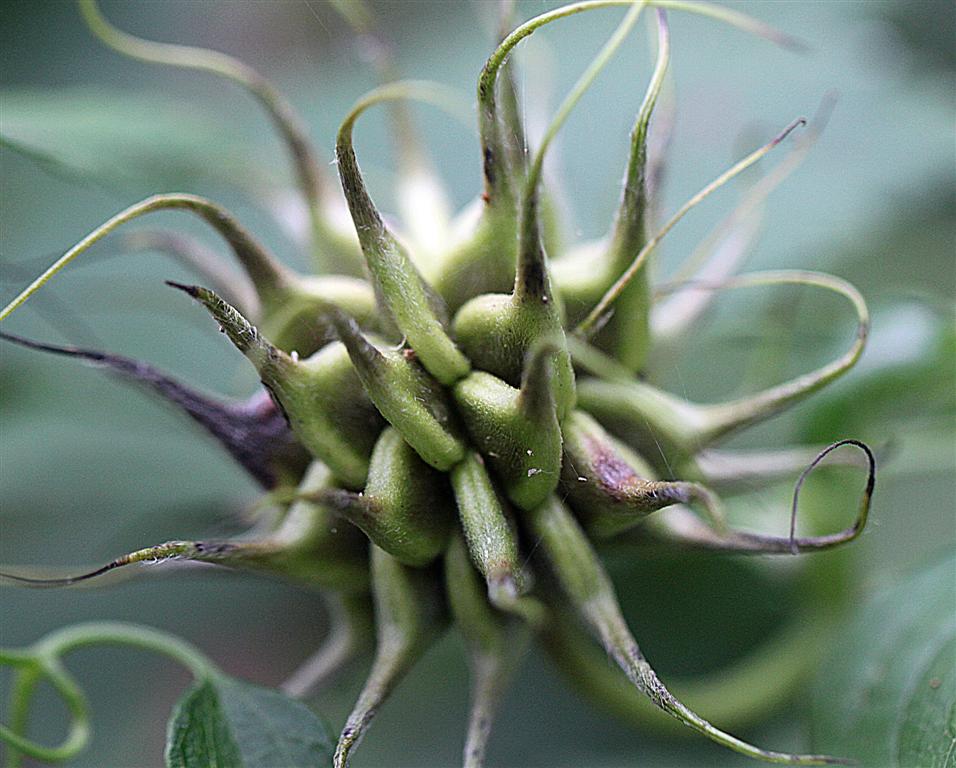
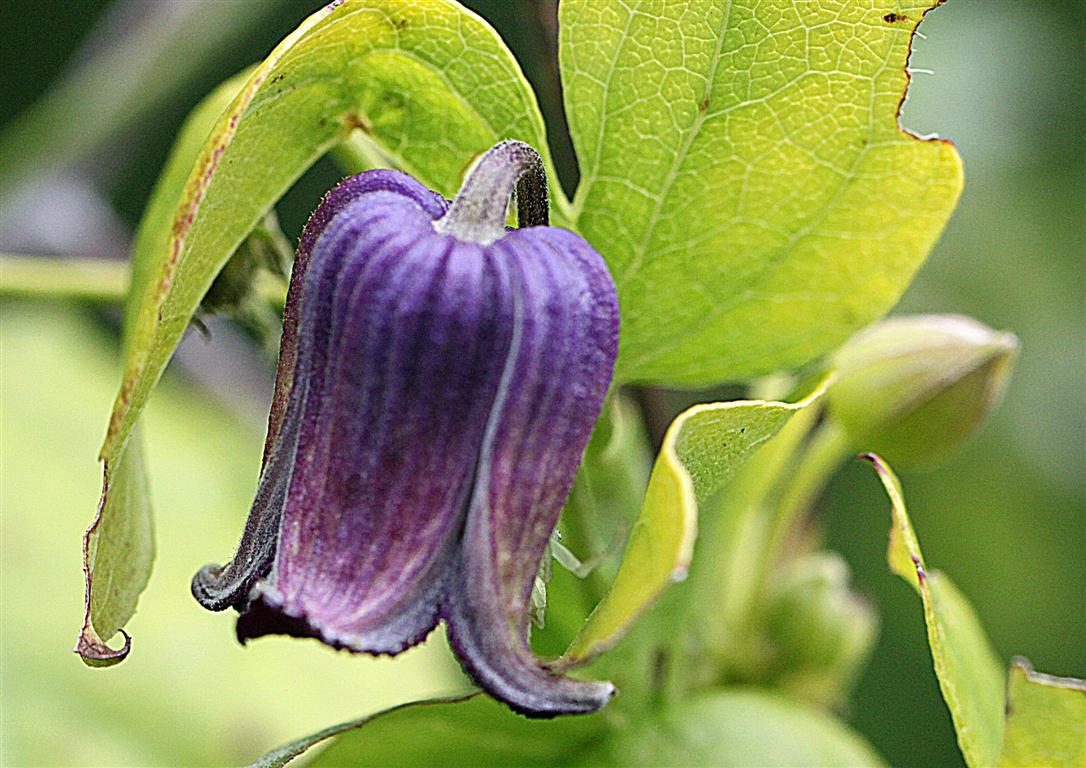
Clematis pitcheri – Purple Leatherflower
This is part of the Purple Leatherflower, presumably the seed pod after the blossom has faded.
Here we see instead the flower, which is hanging, its four purple sepals looking like petals, which are absent. The flowers do appear to be somewhat leathery, hence the common name. It is a vine, from six to twelve feet in length, and makes its living standing on the shoulders of shrubs.
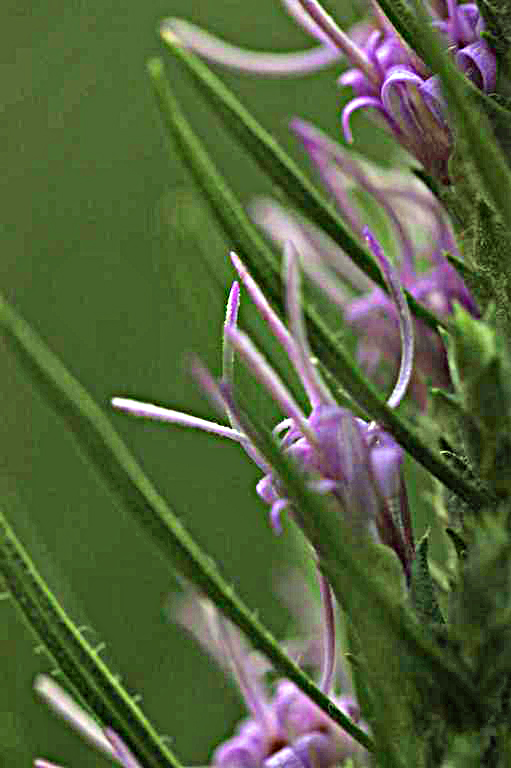
Liatris – Gayfeather
Here’s another shot of the Liatris mucronata in my front yard. Again, up close and personal and looking at a small portion of a spike, showing the needle-like leaves and the flowers. I feel confident in calling this one L. mucronata since that’s what the Wildflower Center had on its label when I bought it, assuming I bought it there…I will be posting some more Liatris in the next few days for which the species is not as certain, since they were found in the wild and mostly they weren’t in bloom, making it more difficult to identify them.
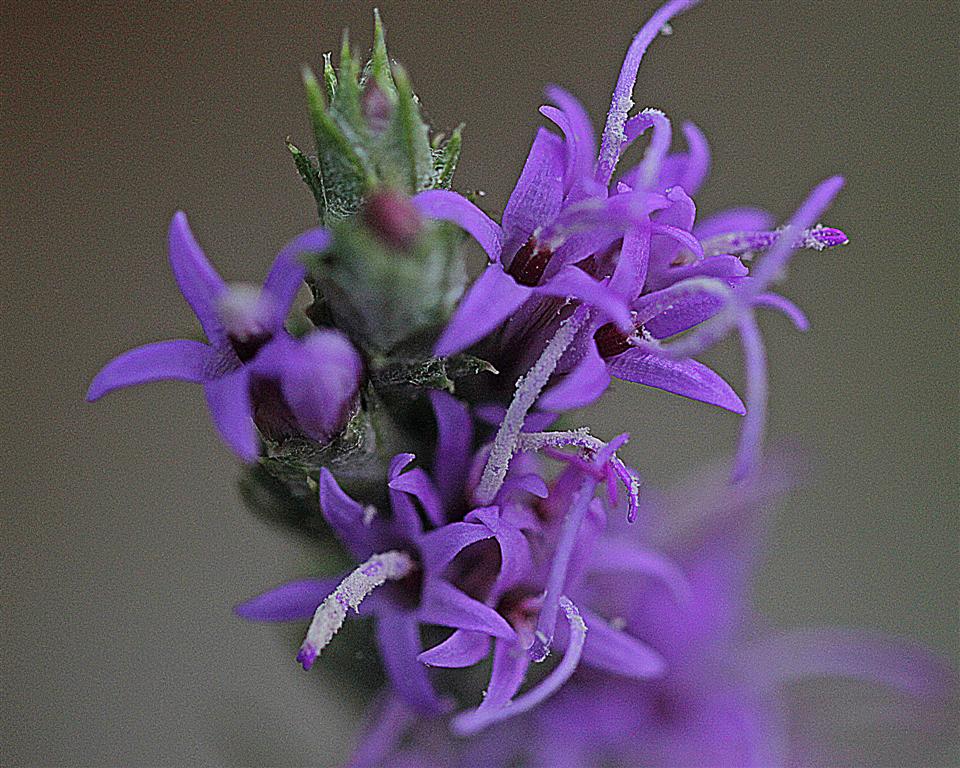
Liatris mucronata – Gayfeather
Liatris is in bloom, and this spiky looking plant doesn’t mind the heat, providing nectar for a variety of insects. Last year, it was one of the few plants that stood up to the series of 100 degree days that we had. This is a close-up of the blossoms, which form along the sides of the spikes. While the photo gives you the details, it doesn’t convey the overall shape of the plant and flowers. That will have to wait for another day.
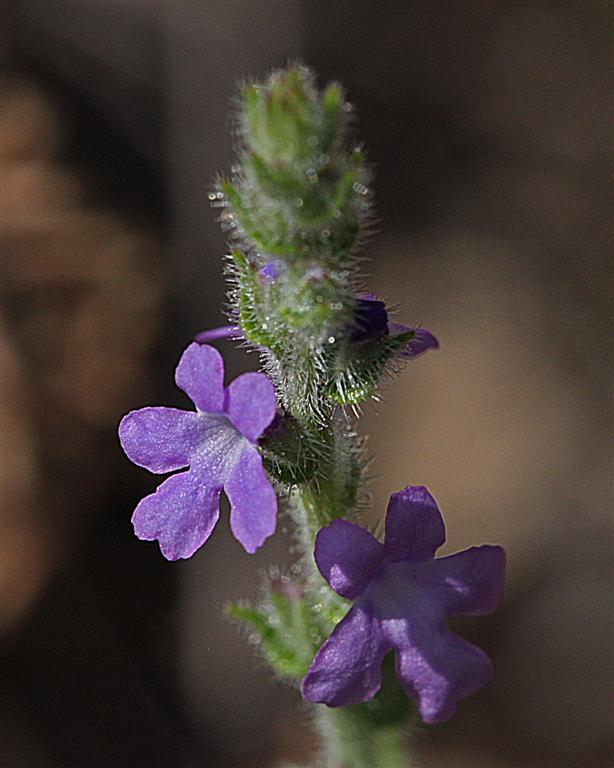
Verbena canescens – Gray Vervain
Gray Vervain is another one of those small plants likely to be unnoticed, or if it is, to be considered a weed by many. Here you can see some of the dense hairs that give it its “Gray” appellation. The small flowers of lavender or purple appear on 3″-6″ spikes from April through October.
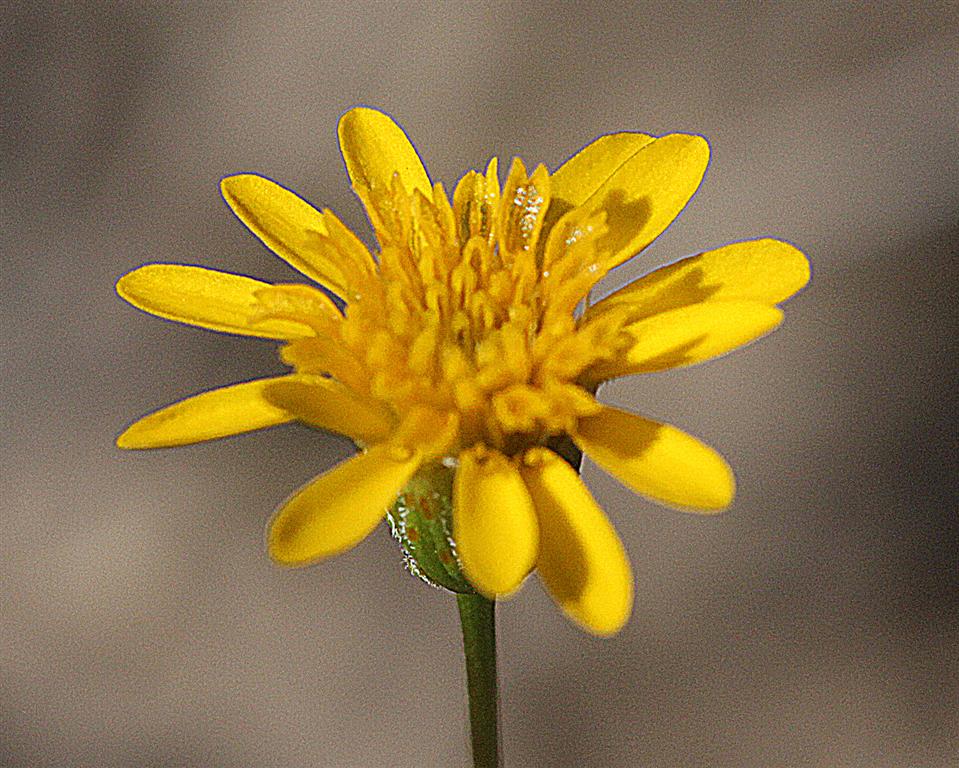
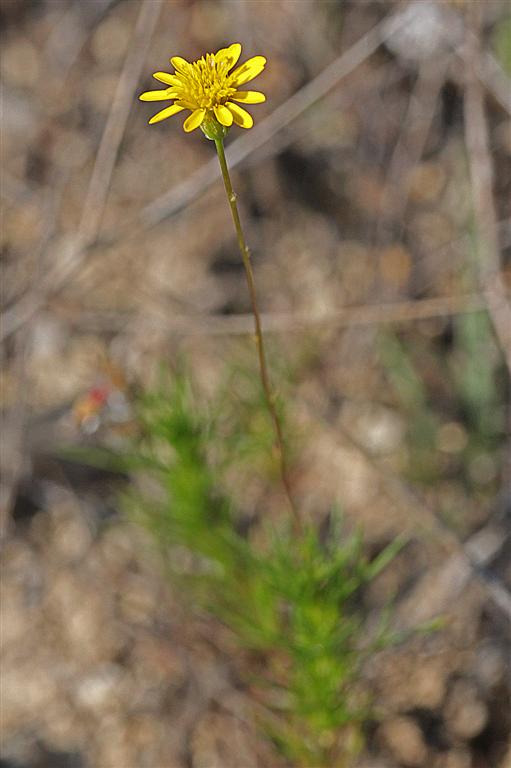
Dyssodia pentachaeta – Parralena
This perennial composite is on the short side – less than a foot tall. It’s found on dry caliche throughout Central Texas. This one was photographed during June’s plant survey field trip. The flowers are at the end of peduncles from 1 to 4 inches. I might have seen this in someone’s front yard the other day, but didn’t have my Enquist with me at the time to check it out.
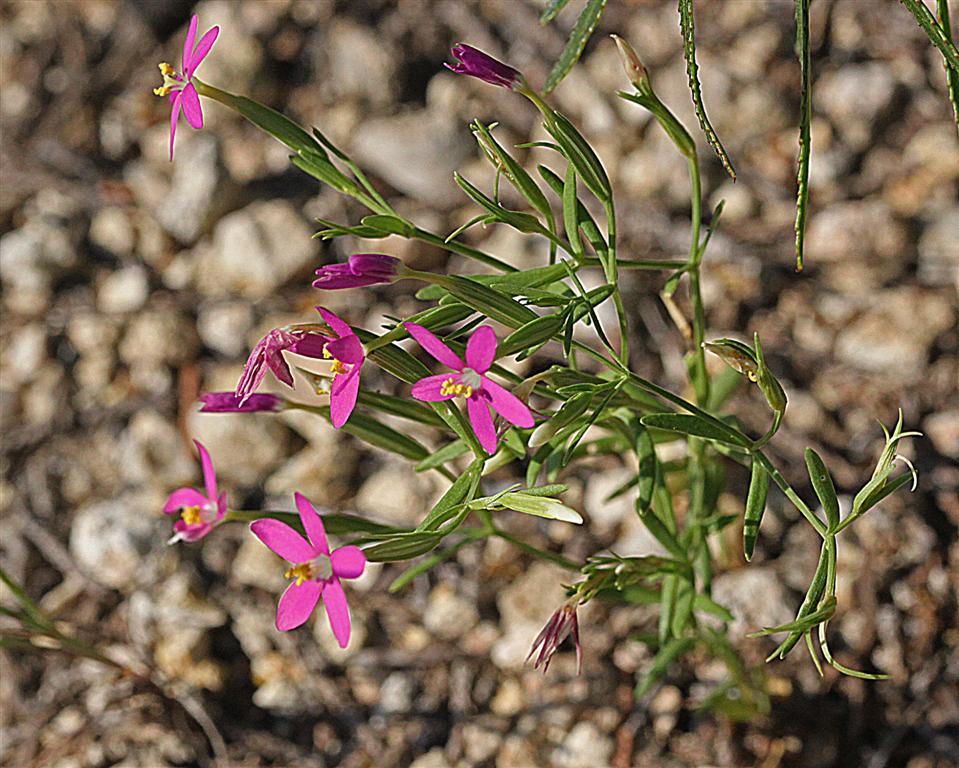
Centaurium texense – Lady Bird’s Centaury
Here’s another look at Lady Bird’s Centaury. this time a whole plant view. As mentioned previously, Mountain Pink is similar but it occurs in tightly bunched profuse cones of flowers, like a bouquet. As you can see, Centaurium texense is more loosely configured. In the field, this difference helps in the identification. Also obvious in this picture is the rocky calcareous soil in which it grows.
Centaurium texense – Lady Bird’s Centaury
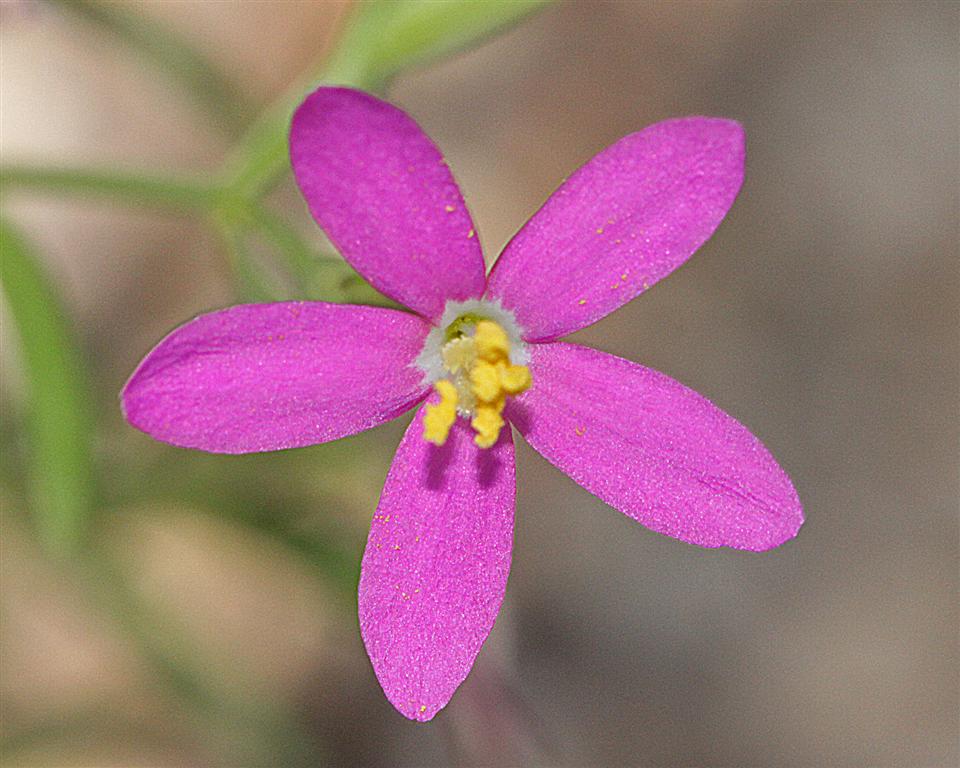
Named after the former First Lady whose legacy lives on at the Wildflower Center south of Austin, this modest yet colorful little pink flower can be found on the rocky soils of the Hill Country. The individual bloom bears some resemblance to Mountain Pink, but the fact that one can isolate an individual bloom is a clue that this is indeed Centaurium texense.
Linum rupestre – Rock Flax
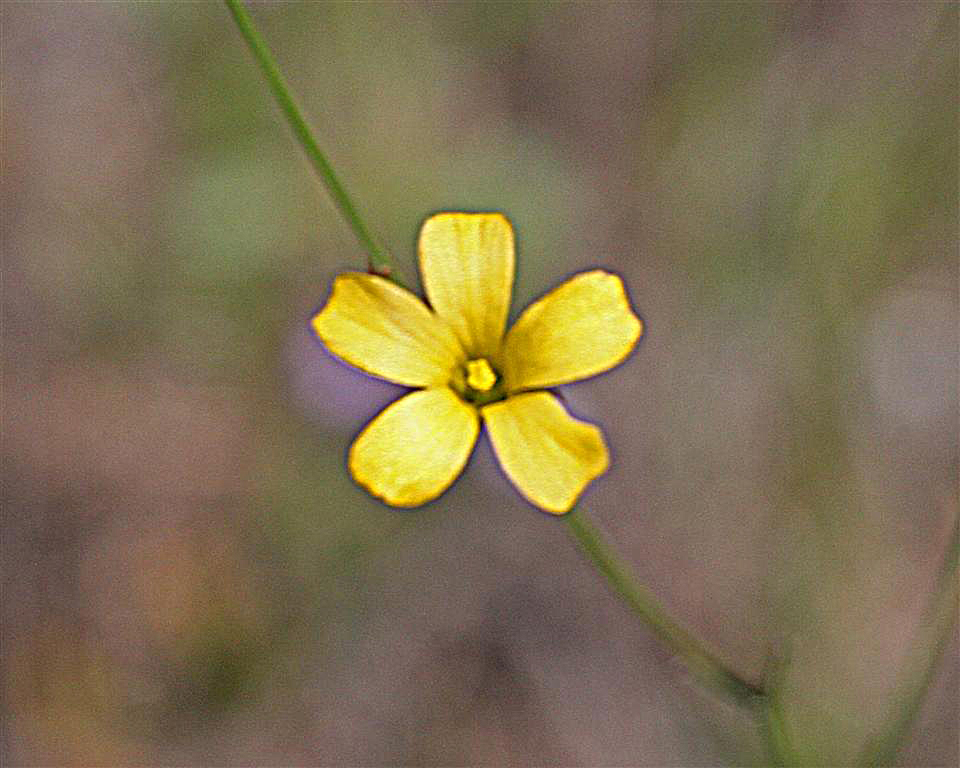
Here’s a different look at the Rock Flax, this time from above. Although not as artistic as the previous photo, this one does have the advantage of making it easier to identify the plant. Note the five petals and the yellow throat. Although not as obvious, another differentiating factor is the spindly stem, that grows upright from one to two feet tall.