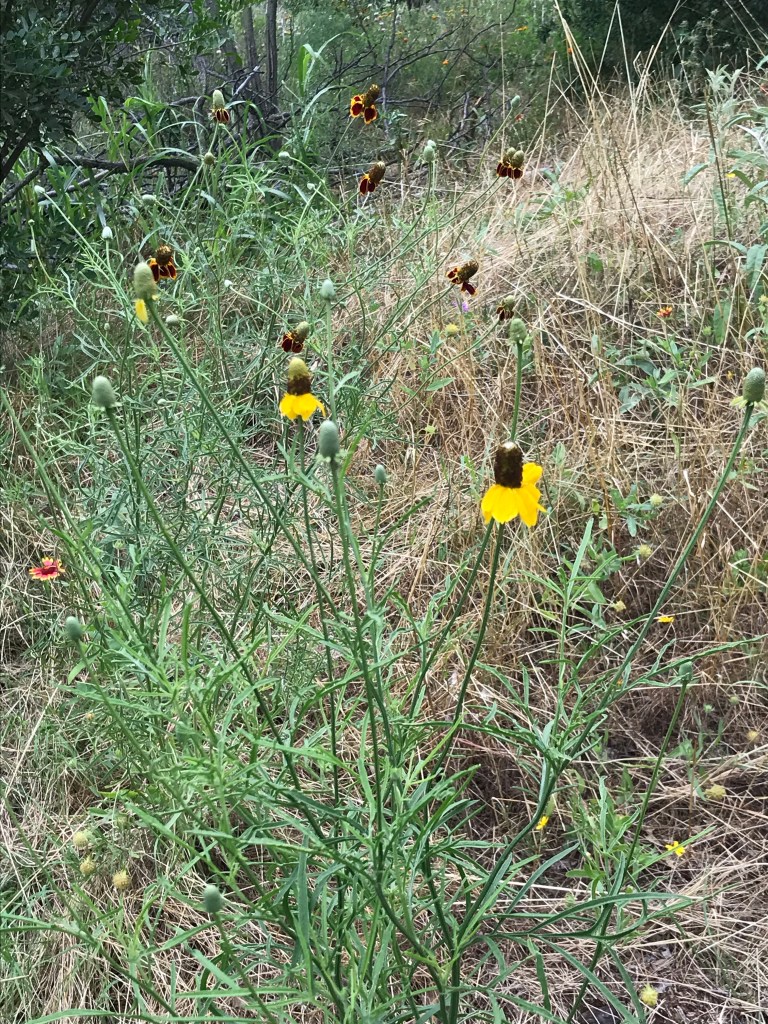
On the road again…

This past Saturday (May 29, 2022), I went out of the house for a change, on a field trip with the Williamson County Chapter of the Native Plant Society of Texas (NPSOT-Wilco), at the Southwest Williamson County Regional Park (SWCRP). The field trip consisted of walking along the Jim Rodgers Nature Trail, 1.75 miles long, I’m told.

I managed to arrive late, but soon caught up with the group. (Usually I arrive a week early, having managed to forget the actual date and time).

Then I managed to continually fall behind and catch up, working up a sweat. Because this was an evening field trip on a fairly even path (it does need mulching to give it a little more comfort underfoot), the pace of the hike was a little closer to a real hike than the usual NPSOT or Texas Master Naturalists’ walk in the woods – where it often takes an hour to go half a mile down the trail – if that much. And yet, I was able to get some interesting shots of some of the native plants and wildflowers.

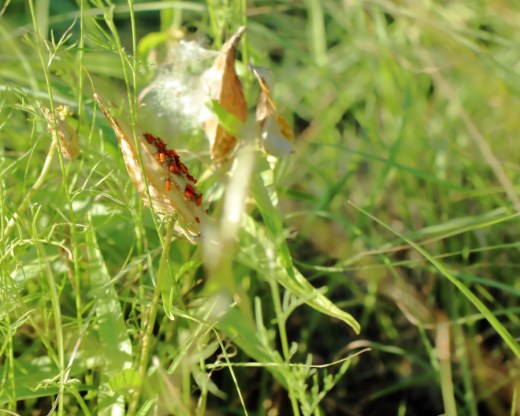
Asclepias asperula (Antelope Horns) milkweed seed pods ripened.

Asclepias asperula (Antelope Horns) milkweed, seed pods ripened.

Quercas marilandis (Blackjack Oak) has distinctive "duckfoot"shaped leaves.

Quercus marilandica (Blackjack Oak) has distinctive “duckfoot”shaped leaves.

2022-05-29-006703

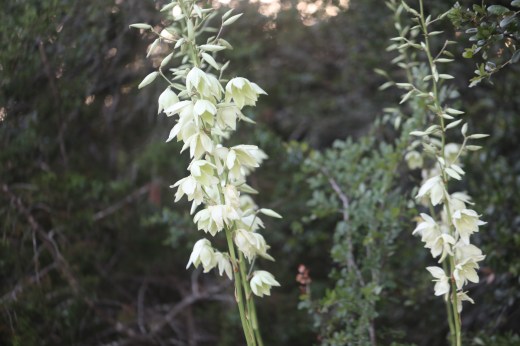
Yucca rupicola (Twist-Leaf Yucca) was in bloom

2022-05-29-006697-Yucca-rupicola

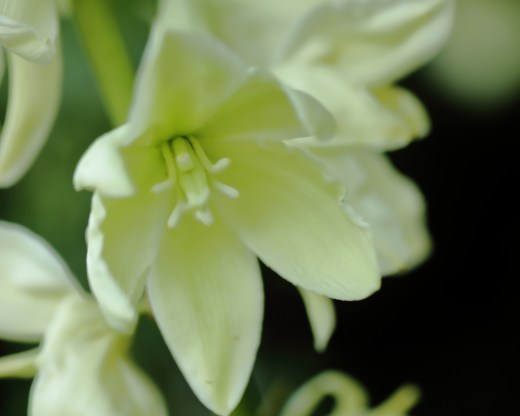
Yucca rupicola flower detail

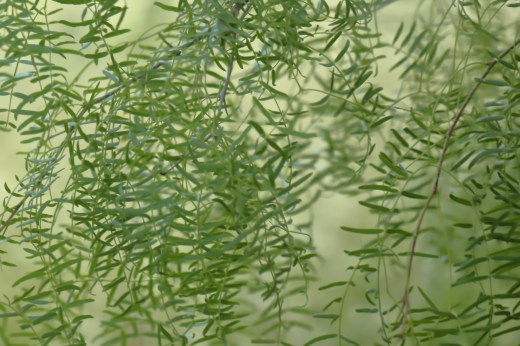
2022-05-29-006695-Prosopis glandulosa

Prosopis glandulosa (Honey Mesquite)

2022-05-29-006714

Toxicodendron radicans (Poison Ivy)

2022-05-29-006704

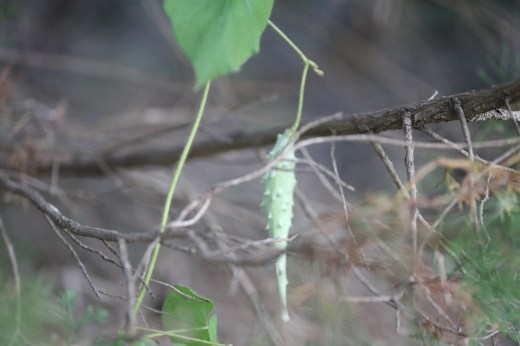
Pearl Milkweed vine seed pod

###

Lack of April Showers… doesn’t faze native wildflowers

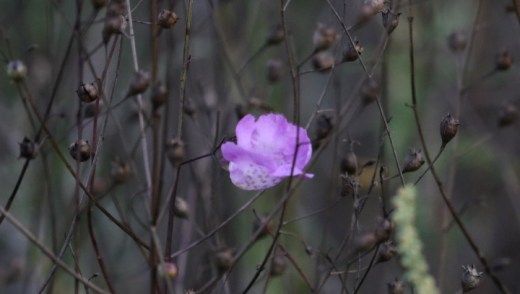
Rock Rose (Pavonia lasiopetala)

Well, the month of April is nearly over.

Here in Central Texas, the Golden Groundsel (Packera obvata) have already gone to seed, and the state flower, the Texas Bluebonnet (Lupinus texensis) is still in bloom, but many have started to go to seed.

My Milkweeds are coming up and thriving, but no blooms yet. Four Nerve Daisies (Tetraneuris scaposa)continue to push out blossoms. False Foxglove (Penstemon cobea) and Brazos Penstemon (Penstemon tenuis )are blooming..

The Mealy Blue Sage  (Salvia farinacea) are bouncing up and are in bloom in the backyard. The inconspicuous Purple Milkweed (Matalea biflora ) has bloomed, and the Purple Passion Flower (Passiflora incarnata) vines nearby, have bloomed.

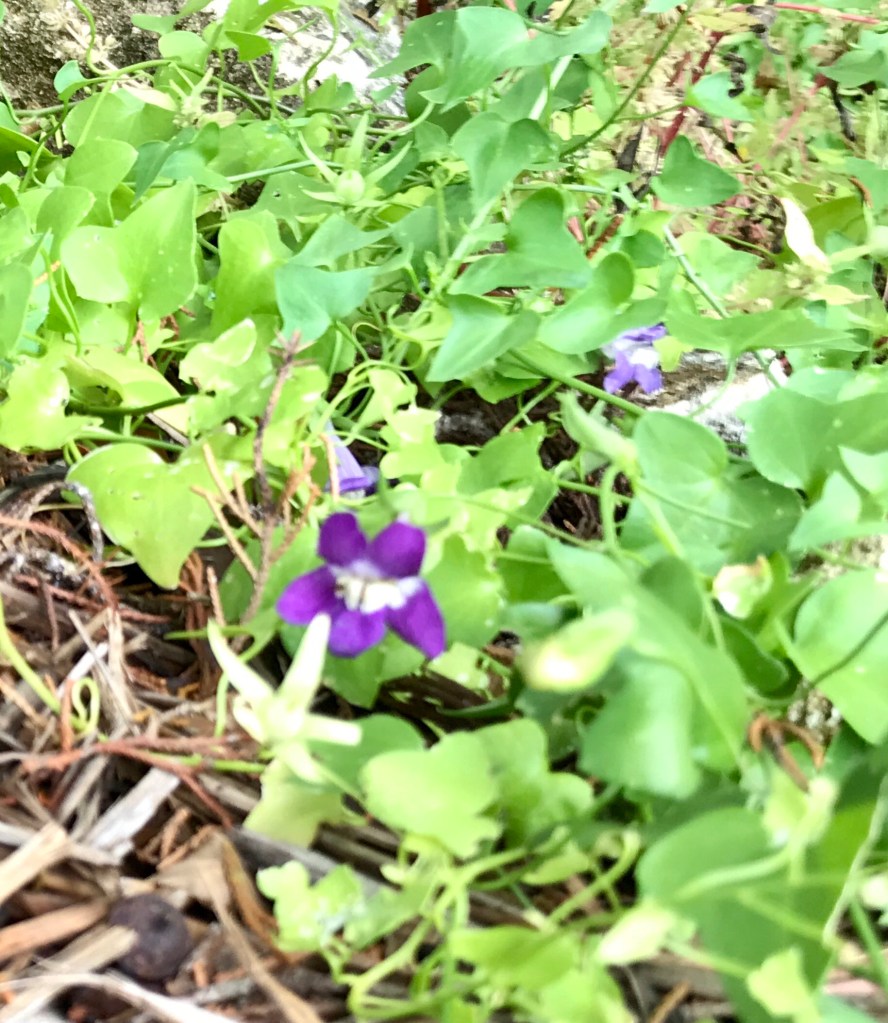
Lyre-Leaf Sage (Salvia lyrata )and Missouri Violets are in bloom lining the front yard stone walkway.

And the Scarlet LeatherFlower (Clematis texensis ), which is endemic to the Edwards Plateau, has also put out several flowers. The Coral Yucca (Hesperaloe parviflora) flowers are starting to open. And a few white wine cups (Callirhoe involucrata var. lineariloba) that I had rescued from a construction culvert on Old Chisholm Trail in Round Rock are in bloom, with their white petals and faint purple lines. They are endemic to just a few counties in Texas, and the Williamson County chapter of the Native Plant Society of Texas has adopted the name “Williamson County Winecup” for this species.

Finally, let’s hear it for the  red, white and blue blooms.

Rose Pavonia (Pavonia lasiopetala) (more hot pink than red) Autumn Sage (Salvia greggii)(both red and white, and Blue-eyed Grass (Sisyrinchium pruinosum) are all in evidence.

I don’t need any more evidence to arrive at my verdict.

Native plants are the answer.

Agalinis species found on my way to cast my ballot . . .

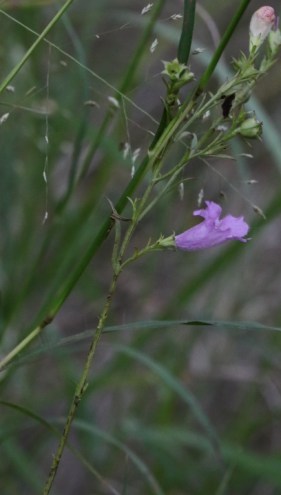
Agalinis strictifolia

November 2nd, 2021, was a primary election day where I live. I decided to carry my camera in order to get some better photos of the first species shown below. Good enough for positive identification, if nothing else. On the other side of the draw, along the actual hike and dog walk bathroom trail, found a different set of Agalinis species. Plus other stuff, which I might post later. The Agalinis species are also known by the common name of “False Foxgloves” due to their resemblance to the “True” Foxgloves, one might suppose.

Agalinis in bloom and gone to seed on Election day:

Agalinis heterophylla

Agalinis heterophylla

and, not so far away,  Agalinis strictifolia:

Agalinis strictifolia

Agalinis sstrictifolia

I had a difficult time making the correct identification,  but thanks to the good-hearted folks on iNaturalist.org. I was able to get through my confusion and agree to the IDs they made from my numerous photos. Next year, I won’t wait until November to look for these. And hopefully, will be able to identify which Agalinis is which, using the field guides and other materials available.

###

All my weeds are wildflowers (I wish)

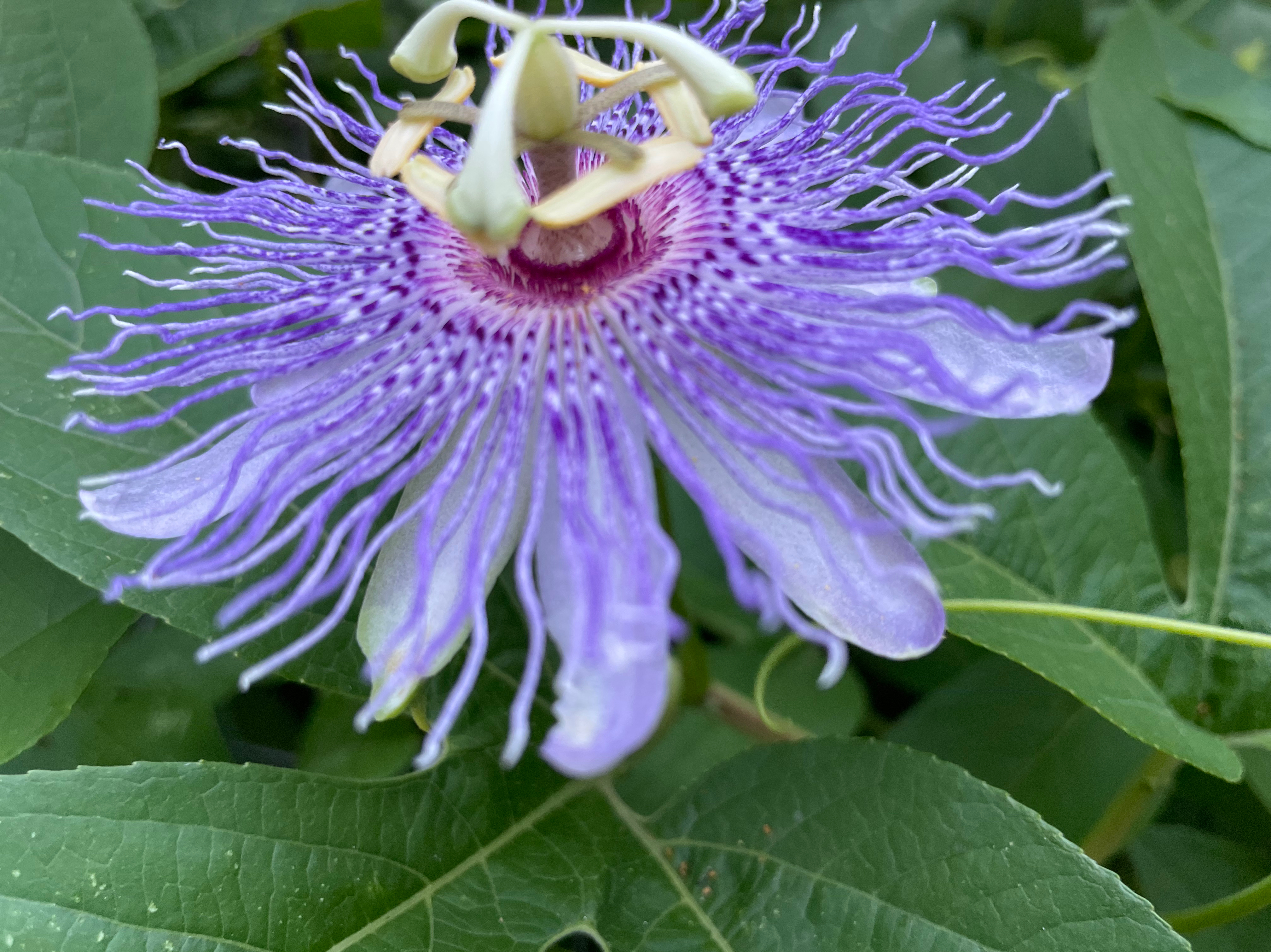
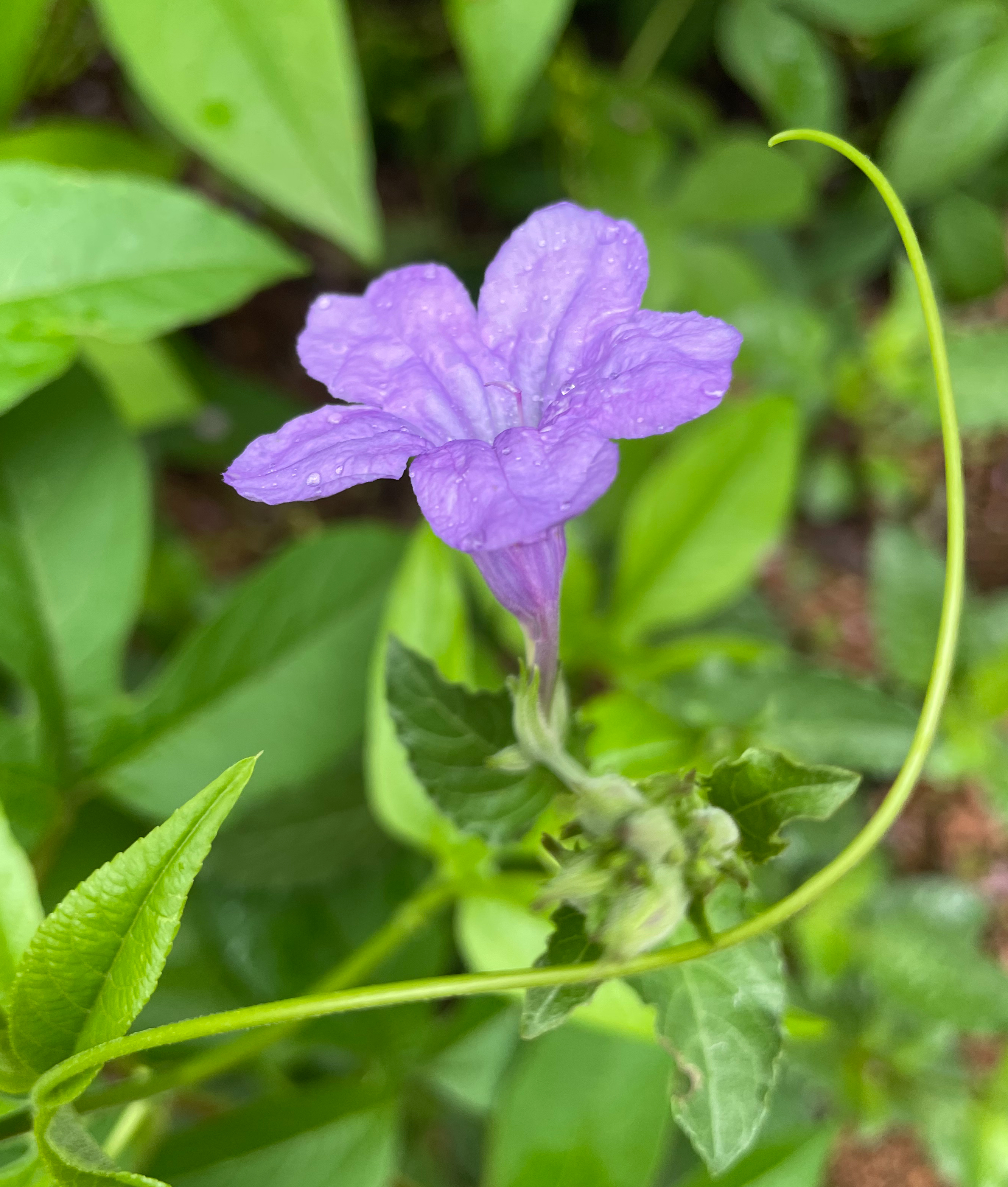
Passiflora incarnata/Ruellia nudiflora hybrid?

A couple of native plant species have begun to spread like weeds in the narrow area separating my subdivision plat from my neighbor’s house.

Passiflora incarnata, or Purple Passionflower, has sprung up where a corkscrew passionflower vine used to be, and through rhizomes has managed to propagate itself all along the Southern side of the house. I’ve done some pulling of the pups as the poke up through the mulch, and have been able to give away a few of them for others to try to get their own vines going.

The flowers of the Passion flower vine are about three inches in diameter, with the petals forming a wavy fringe. Stamens and stigmas also are striking in appearance as well. Several different types of butterflies use this as a larval host, most notably the Gulf Fritillary (Agraulis vanillae ) and Variegated Fritillary (Euptoieta  claudia ) butterflies. 

Passiflora icarnata infloresence, tri-lobed leaves, and tendril

Passiflora icarnata inflorescence, tri-lobed leaves, and tendril

The Ruellia nudiflora, or Wild Petunia, also has a purple to lavender flower, but it is trumpet-shaped. And it’s not a vine, but a sub-shrub perennial . After having transplanted this volunteer several years ago, it has now decided to propagate itself, like a weed, in the mulched bed and in the gravel path. Although its inflorescences look much like those of the cultivated Petunia, it is in the Acanthus Family, while the cultivated Petunia is in the Potato Family. The blossoms open in the morning, falling off in the afternoon. Like several other of my favorite wildflowers, its flowers are ephemeral, lasting for just a day.

Ruellia nudiflora inflorescence, surrounded by Passiflora leaves and tendril

Ruellia nudiflora inflorescence, surrounded by Passiflora leaves and tendril

As if having to “weed” native species wasn’t bad enough, as one can see from the top photo in this post, it looks as though the two plants have begun to hybridize to form a new species. Fortunately, (or unfortunately), that’s not the case: A blossom from the Ruellia has been captured by a tendril from the Passiflora, making it look (almost) like it belongs to the vine. 

Not sure what I’d do if they actually did start to hybridize – probably get a botanist or two to take a closer look. And get a nursery to work with to develop and patent the new species. And sit back and watch the money roll in (ha!).

###

Oh no! They (almost) did it again!?!

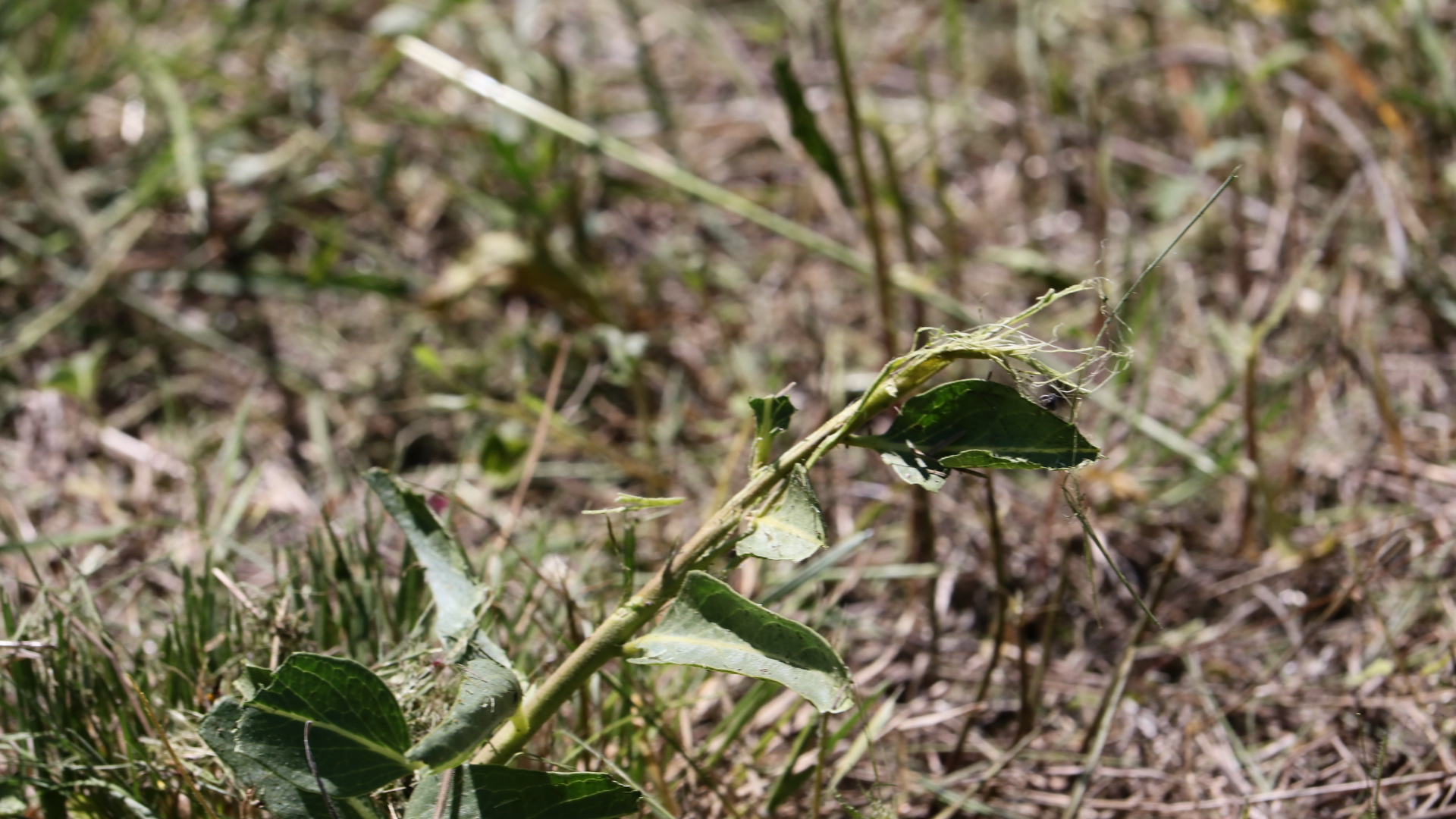
May 7, 2021: I was just about to go out into the greenbelt for some photo taking when I heard the sound of a mower on the berm. I quickly came back running and shouting for him to stop.

Pointing out all of the native Texas wildflowers still in bloom, I explained that one should NEVER mow down a stand of wildflowers in bloom (as was done last year while I talked on the phone with their home office). I mentioned that I was trying to eliminate the invasive weeds so that the native wildflowers would have a chance to return, including the Bluebonnets, some of which had not set seed yet. (And to which he replied something along the lines of yeah, I thought I saw some back there, indicating the area that he had just mowed, and which now showed no evidence of Bluebonnets).

For an idea of what happened in 2020, refer to these two posts: May 25, 2020 May 28, 2020

Last year I managed to pull most of the Perennial ryegrass (Lolium perenne) that had covered the berm. This time around, Maltese star-thistle (Centaurea melitensis) was the infestation of the year, and as of May 11, 2021, I have removed about 10 bags of this from the berm behind my house. Of course, it has already infested the greenbelt.

To their credit, the mowers backed off, apparently called someone for instructions on what to do, and then proceeded not to mow any more of the berm behind my fence, although he did have to drive through the area, choosing a path that would minimize the damage to the wildflowers. And crushed a good deal of the thistles to the ground, along with some wildflowers.

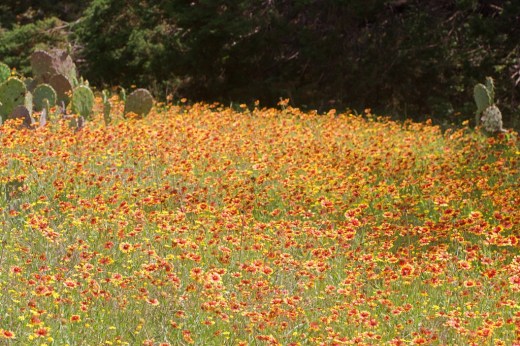
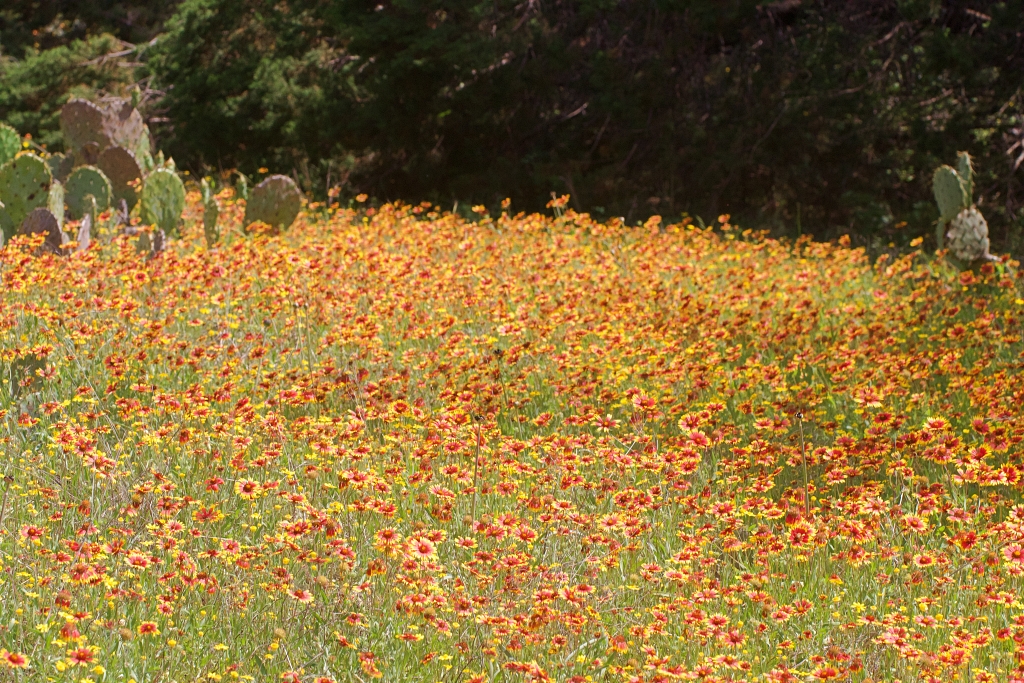
Thankfully, in spite of the C. melitensis, the wildflower population was much more numerous than last year. The recessive gene all-yellow Gaillardia pulchella (Indian blankets) for which I have coined the common name “Sunwheels” in contrast to the all-red pigmented “Firewheels” have also bloomed again, this time almost entirely on the berm. In previous years I have seen them in a few nearby locations, but for the last three years I have observed them directly behind my house, on the berm or in the greenbelt. (Of course, when you only have to step out the back yard to see them, you are not motivated to search very far for them).

But enough blah blah blah. Here are some pictures worth a thousand words, especially when compared with the posts from 2020.

2021-05-05-7870

Asclepias asperula (Antelope Horns) after the mowing.

2021-05-05-7885

Gaillardia pulchella (“Sunwheel”) surrounded by Centaurea melitensis (Maltese star thistle)

2021-05-05-7803

Berm behind my house – native plants plus invasive weeds

2021-05-14-8172-greenbelt2-1024pxl

The green belt – Gaillardia pulchella in bloom

2021-05-14-8146

The mower mows, leaving nothing behind. Looking South from behind my house, greenbelt to the left, berm behind my fence in the foreground.

May all your weeds be wildflowers.

#BCMUD

###

Return of the Celestials (or, A Day In The Life)

Fully open early in the day Nemastylis geminiflora

 I had been looking for Nemastylis geminiflora, commonly known as Celestials, among other names, since the middle of March. On March 23, 2021, I saw the first bloom or two. On the 24th, nothing blooming. Even went out later in the afternoon to see if anything had come up after the earlier jaunt, but still nothing new to show.

Note: I once contacted a seed source company to enquire if they had any seeds or bulbs for this plant. They indicated that they had a small amount sometime in the past, but they had quickly sold out. IF you have a large colony on your property, you might consider checking with a reputable native seed source to see how one might go about collecting seeds. I do not recommend trying to dig them up. They have bulbs which are buried deep in the soil which here in Central Texas is very rocky. Please refer to the Native Plant Society of Texas’s policy on the “taking” of plants.

First of all, what to look for?
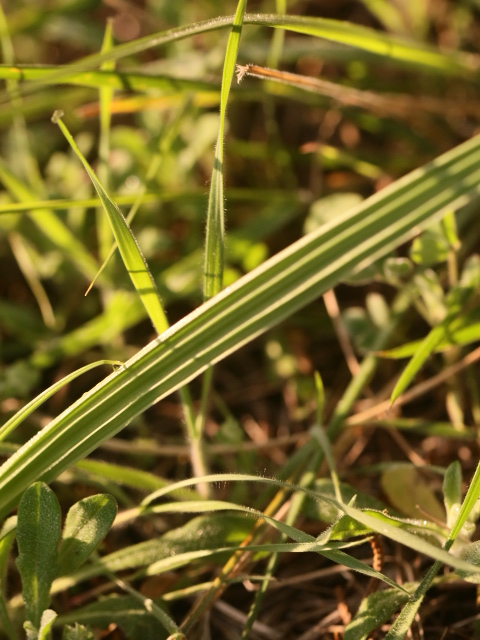
Pleatleaf Lily, one of the common names of N. geminiflora, comes from the distinctive shape of its leaves

Pleatleaf Lily, one of the common names of N. geminiflora, comes from the distinctive shape of its leaves.

Somewhere around midwinter the plant starts sending up a leaf or two. This inferred from the apparently chopped off tips of some of the leaves, following a presumed mowing. and probable weed-eater-ing of the berm, probably in January, which kept the berm shorn to less than 3 inches in height and scalped to bare soil in several places (but that’s a different post). Or maybe it was deer browse or rabbit nibbles.

In Central Texas, somewhere around mid-March, I am now beginning to scout out the individual plants, supposedly so I can find them later. In 2017 and 2020, I photographed plants in bloom around the 15 or 16th of the month, but most years they have appeared right about the Spring Equinox. Last year, the first plants appeared around the 15th-17th of March, then no blooms until around the 27th-29th. Then nothing, until I stumbled across a few around April 10th.This year, 2021, the first blooms did not appear until the 23rd, and these two or three seem to have been early bloomers. The majority of the plants in the area in which I am familiar were still just pleated leaves.

Eventually one will observe the stems with the pre-blossoms (for want of the correct botanical term) coming up, and from that, if one is lucky, the unfurled blossom in the early morning hours. 
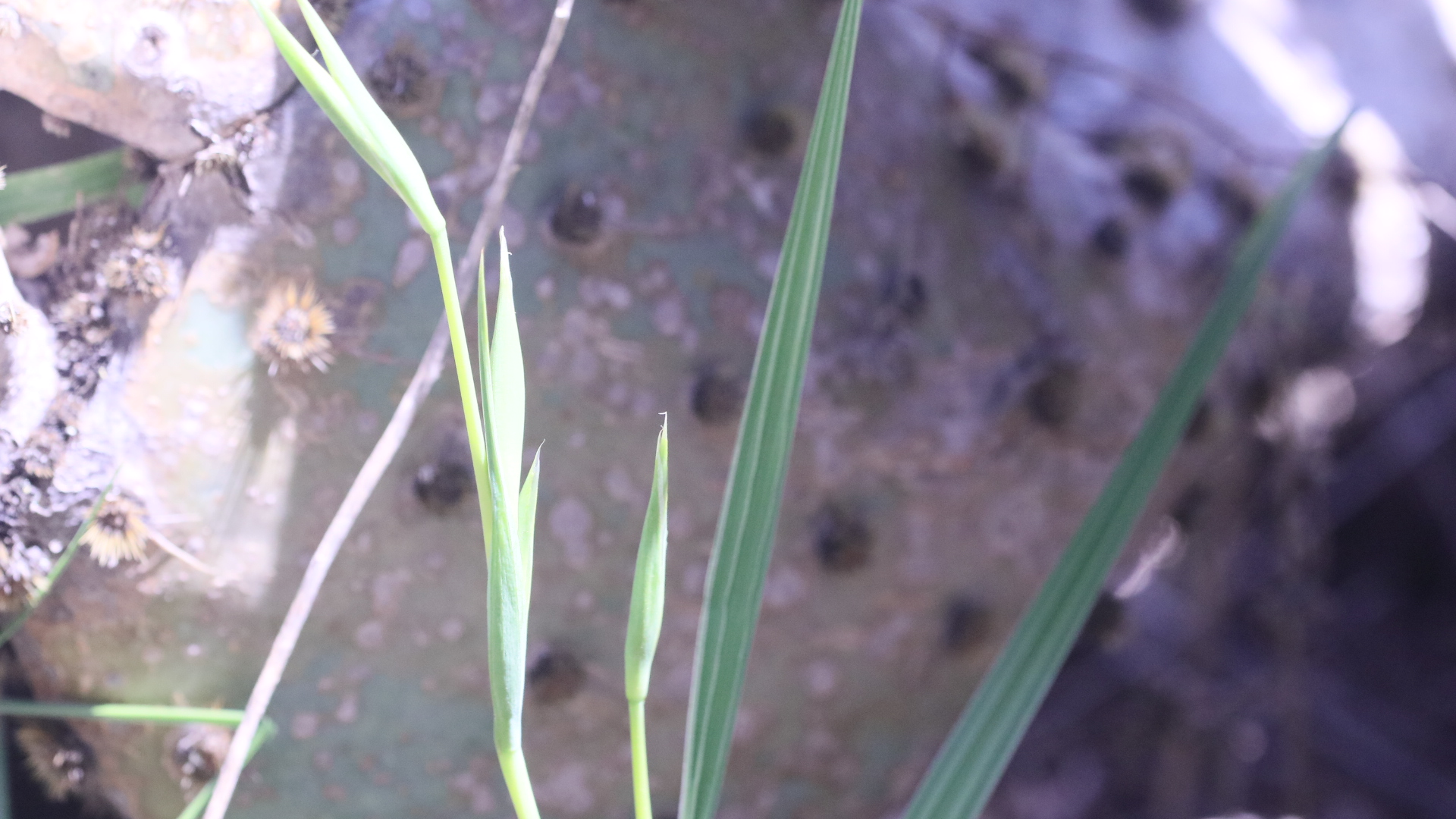
Celestial before blooms open (leaves to the right, stems with unopened inflorescences on the left)
Celestial before blooms open (leaves to the right, stems with unopened inflorescences on the left)

Inflorescence, still unfurled

Inflorescence, still unfurled

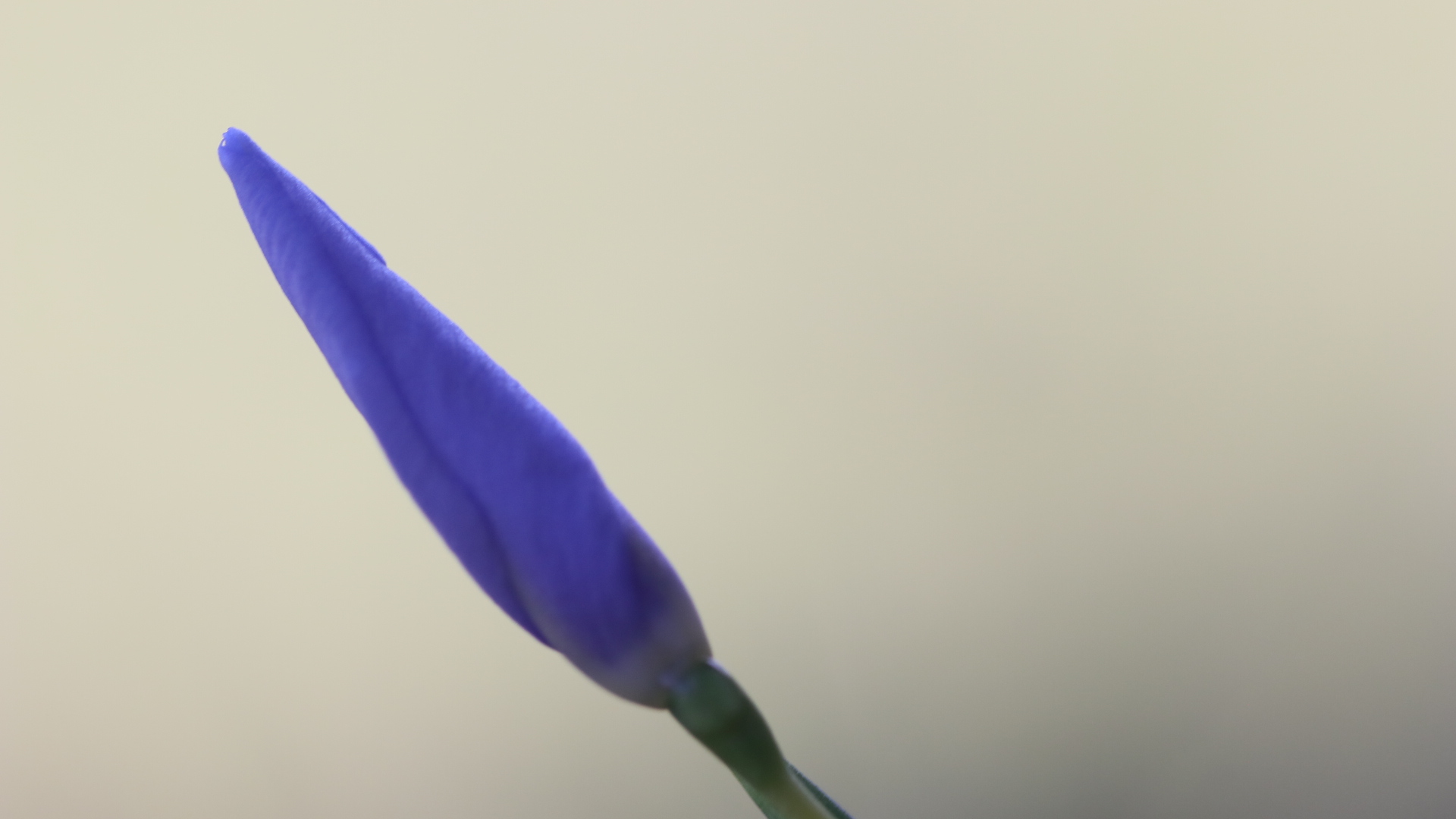
Then, usually the day before or earlier in the morning that the inflorescence fully extends, you’ll see a purple or bluish “flag,” not yet unfurled. 
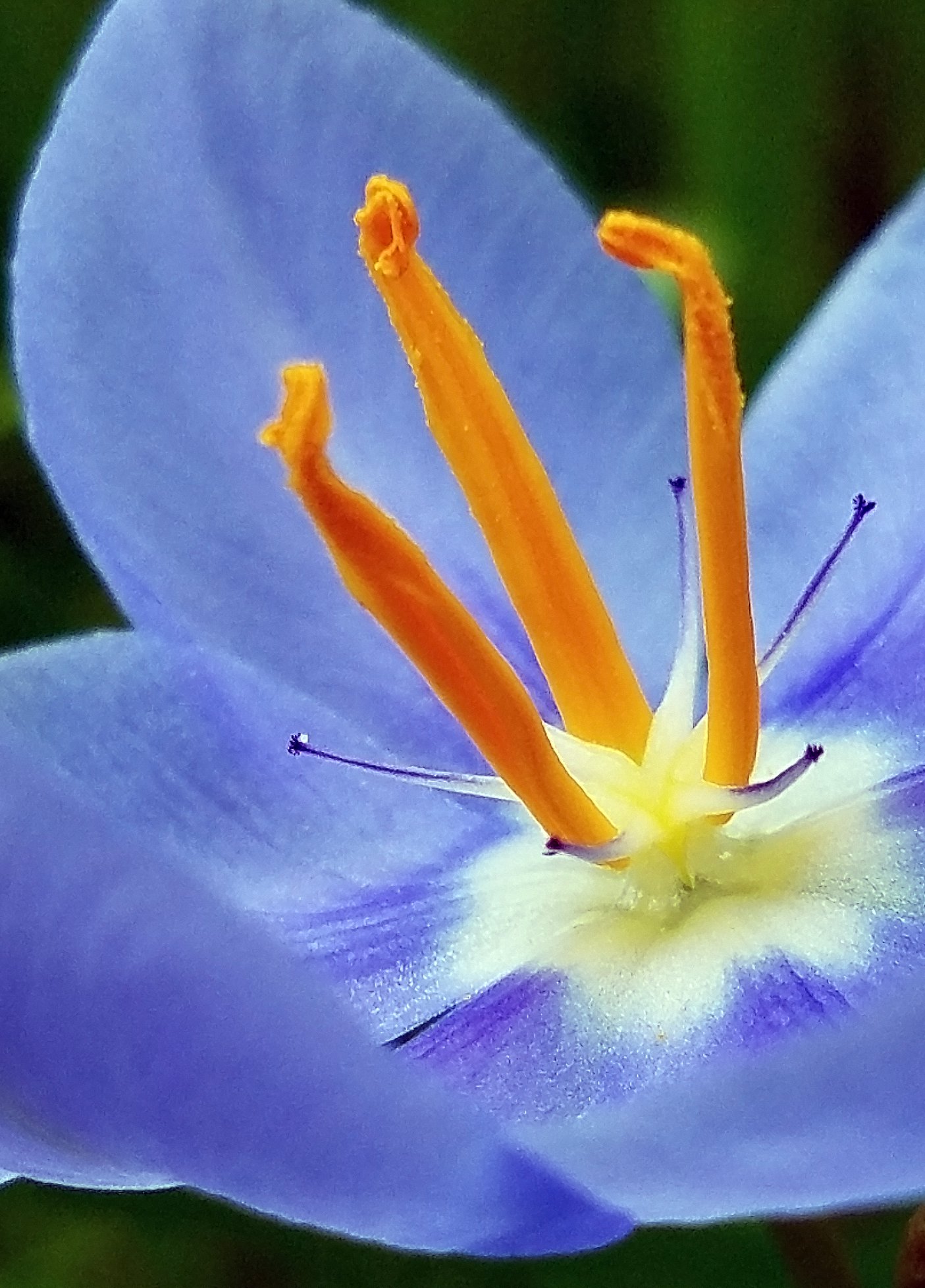
Fully open early in the day Nemastylis geminiflora

Fully open early in a day in the life of a Nemastylis geminiflora.

Either the next day or later the same day, depending upon the sort of day it is (cloudy days they seem to remain closed until after noon. Sunny days they seem to open earlier).

Later in the day, the three tall yellow stamens will have curled up and descended/curled up towards the six stigma spread out at the bottom of the flower as show below. This particular photo taken around 2:30 PM CDT, on a fairly sunny day this March 27th or 28th.

Stamens curled up as a pollinator of undetermined species is busy at work in mid afternoon.
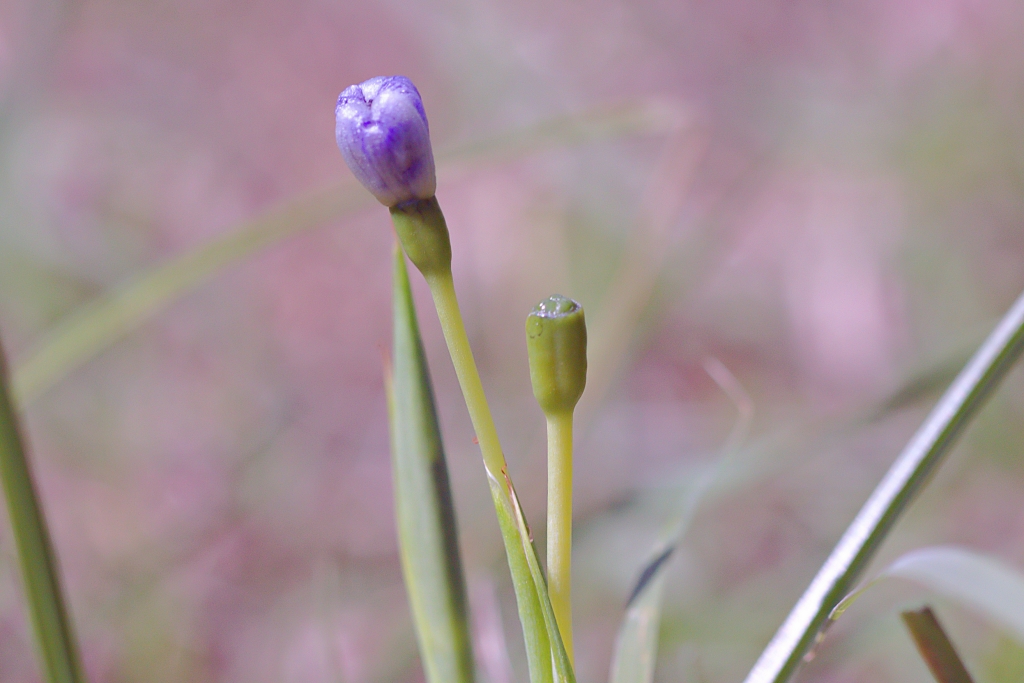
Stamens curled up as a pollinator of undetermined species is busy at work in mid afternoon.

Tomorrow, and tomorrow... the petals have folded, and then the fruit begins to form, as seen left to right.

Yesterday, today, and tomorrow… the tepals have folded, and then the fruit begins to form, as seen left to right.

Although each flower blooms for a single day, a plant may have several flowers. Above, you can see what looks like a potential inflorescence to the left, either today or yesterday’s flower folded in on itself in the center, and to the right, the immature fruit which will eventual mature and provide seeds for future generations. When dry, they dehisc, popping out the small black seeds into the near vicinity.

So: That’s the life cycle of. the Nemastylis geminiflora, which usually blooms for a few short weeks from around the Vernal Equinox until the beginning of April – although sometimes it will fool you as I was last year when I chanced upon some late bloomers around the 10th of April. (I know, the Beatles’ song “Fool On The Hill” comes to mind – if not yours, in my mind, and “In My Life” at least).

Two takeaways:

  1. Do not pick the flowers – this prevents them from going to seed and producing new flowers for the next year. 
  2. Do not try to dig them up. Although they are called Prairie Celestials, the soil in which these are found is rocky and the bulbs are buried deep below the surface, so any attempt to dig them up will likely as not result in damaging the stem or the bulb, thus rendering such efforts useless.

 And a third:

Do get out to a local park or trail where native plants have not been discouraged by putting green level mowing practices, and take a leisurely walk (wearing a face mask, and maintaining a safe social distance). Even if you don’t see any Celestials, you just might see some other native plants and wildflowers. (In Central Texas, they were a little late in their blooming, so maybe they will extend it a little further into April. Who knows? Plants apparently don’t read field guides or any other books, so they don’t seem to follow the “rules” all the time).

###
We have a winner!

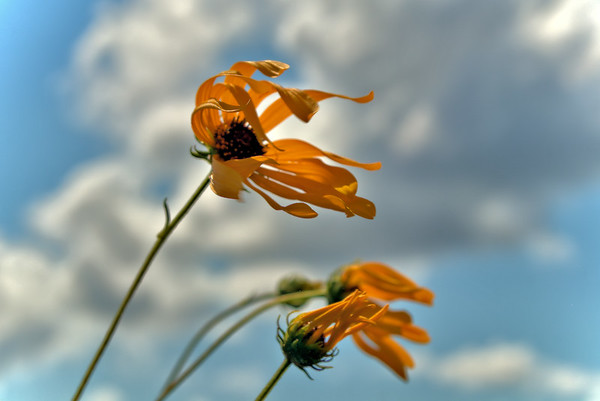
2020-NPSOT-PhotoContest-GulfCoastPlainsAndMarrshes-winner

I am happy to say that I lucked out at the 2020 Native Plant Society of Texas photo contest with this photo taken at a pocket prairie East of League City, Texas. The category was the ecoregion of the Gulf Plains and Marshes (there are 12 ecoregions in the 2020 NPSOT photo contest).

I was consciously channeling my “inner Steven Schwartzman” when I took this photo of the Maximillian Sunflowers (Helianthus maximiliani) that were blowing in the wind against a cloudy but sunny sky.. This one had the best composition of those that I took that day – other species were either out of focus or not suitable for a contest entry.

I did enter three other photos in a contest that was marked by many high quality photos – perhaps in part because Steven Schwartzman, who won in a majority of the 12 ecoregions last year, made the rounds to many of the chapters across the state to deliver his presentation on nature photography.

Here are my “losers.”

From the Edwards Plateau, this photo of a Wild Petunia (Ruellia nudiflora) taken early in the morning to catch the sun in the upper right, showing off the translucency of the petals and the red “sundog” created by the lens in. the lower left, and highlighting the hirsute stem and body:

2020-08-16-Wild-Petunia-Ruellia-nudiflora-rjk1024x768-IMG-3346

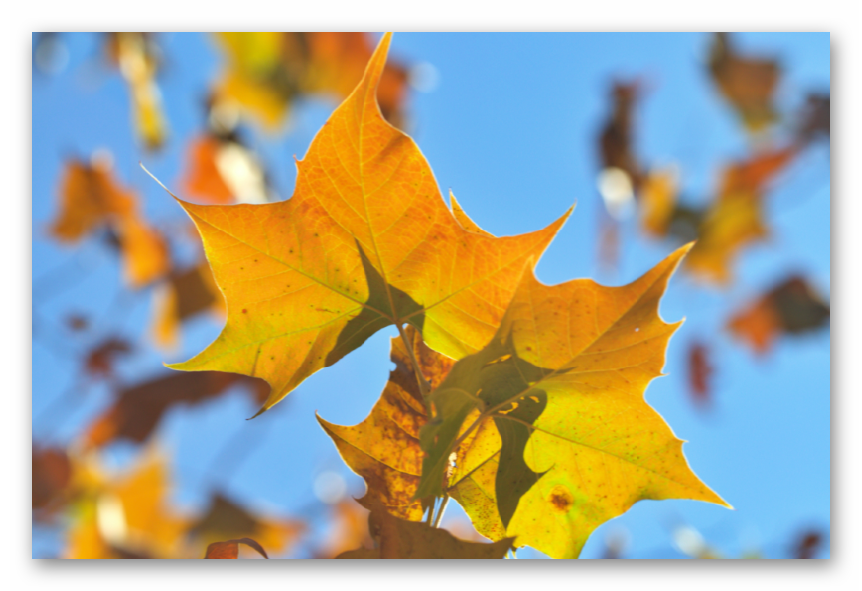
From the Cross Timbers ecoregion, this shot of an American Sycamore (Platanus occidentalis) with the autumn colors against a blue sky (Taken at Miller Springs Park near Belton, TX:

CrossTimbers

And finally, this photo from 2014 of a Southern Prairie Aster ( Eurybia hemispherica) in the East Texas Plains, this was the only one that showed the bloom off individually – although I used photo-editing software to sharpen it, I did not hype the colors. (And it might have disqualified because it was taken 6 years ago – the judges might have considered photos taken only with the last couple of years – I’m not entirely clear on that, but I not complaining, the overall qualities of the entries was awesome, and I was lucky to get one picked as a winner). And I’m not sure that i got this ID correct.

EastCentralPlains

All in all, any of the. above might have won, had there been different judges, or if there hadn’t been so many other high quality entries. I suspect that the latter is the main reason.  Check out the link to the contest entries (and winners) above and see if you don’t agree.

This has been a busy season, and I have yet to return to the issue of the berm between me and the greenbelt, or protected species area (there is a cave in the area, with an endangered species, so it is protected from development, but not from invasive species).

But that is for a different day.

A mid-Summer’s nightmare

I have seen the best plants of my eco-region driven into ghettos of greenbelts, invaded by non-native plants, poisoned with herbicides…

I see public areas, along roadways and in park areas, mowed so low that the grass is turning brown and burnt by the sun, despite sprinklers and watering, and occasional rains brought on from sub-tropical weather disturbances in the Gulf of Mexico.

I see the berm behind my house, where a stand of wildflowers in bloom had been cut down in late May while the ground was still wet, and where the native Silver Bluestem grass, which had once dominated the berm, had returned, mowed down in late July, parched and sere under the August sun. Because the contracts signed say they have to mow a certain number of times within certain calendar limits.

I have written emails to my HOA and the Municipal Utility District, and received no response. If a tree falls in the forest, or a native plant goes extinct or disappears from a region because of destruction of habitat, does it make a sound if there are no humans to hear it cry out?

And yet, life goes on.

I have seen the Clematis drummondii, with their achenes in showy white plumes, and must make a note to get out of the house for a photo safari soon, while this year’s show is still on. I have seen the Passiflora  vines and the Gulf Fritillary butterflies in their back and forth movements between fertilization, egg-laying, larvae consuming the plant, and adult butterflies dancing about. I have seen the native plants in my yard, both those intentionally planted, and those volunteers who have been recognized and protected, thrive or at least survive.

And I have seen the birds drinking from the water fountain, having been provided with plants that provide food (and insects that thrive and provide food as well), shelter, and a place to build their homes. I have seen the hummingbirds zooming about, grabbing sips of nectar from the salvias, the Texas Red Mallows, and the Flame Acanthus (though this year, I’m afraid I haven’t quick enough to focus and click on the camera quickly enough to capture one in mid-flight.

And as the globe warms, I wonder what changes I’ll be seeing in the plants that thrive in this area, and whether enough humans will start to think outside the box of “that’s the way we’ve always done it,” or “that’s the I’ve always heard it should be,” to make a dent in the greenhouse we are living in.

But enough of that. Time for some photos – some OK, some not so great, but the subject matter supersedes this one’s talents:

What was blooming (or not) 25 May 2020

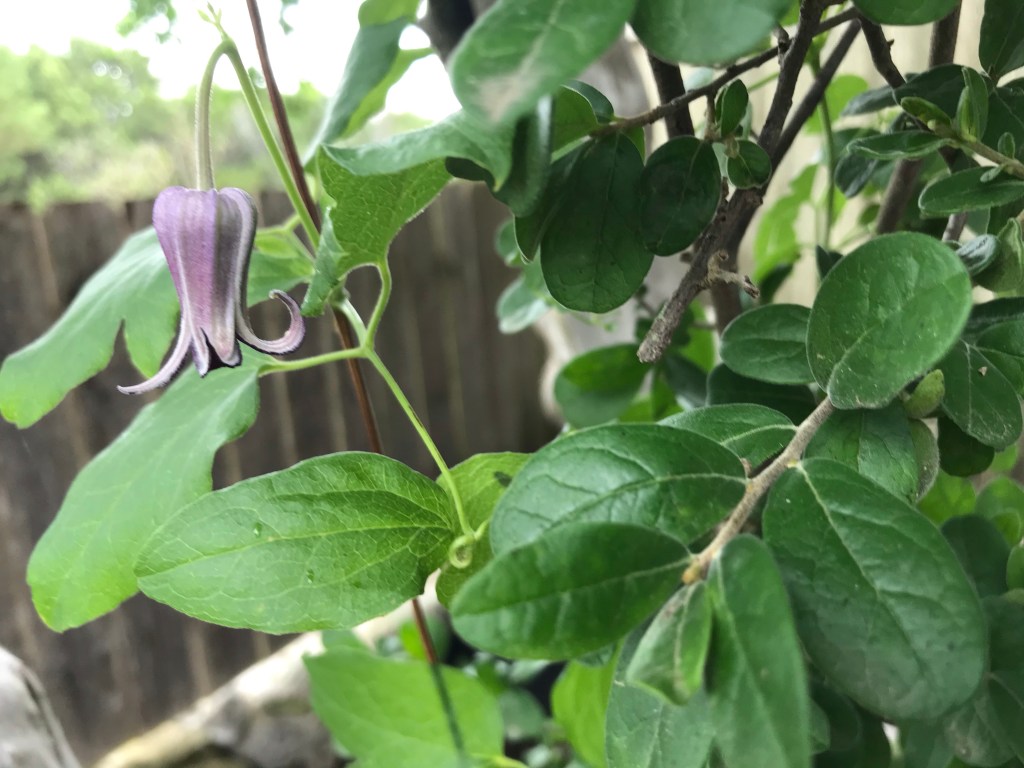
Clematis pitcheri (Purple leather flower) (cultivated)

(Posted about a year ago – edited to add the names of the plants), Went out in the yard and beyond today and captured a few items of interest. Didn’t go into the front yard because it was getting close to dinnertime.

Lantana urticoides (Texas Lantana)
Salvia farinacea (Mealy blue sage)(cultivated)
Symphyotrichum oblongifolium (Fall aster or Aromatic aster) (cultivated)
Merremia dissecta. (Alamo vine)(cultivated)(escaped from cultivation)
(Maurandella antirrhiniflora) (Roving sailor or Snapdragon vine) (native, not cultivated)
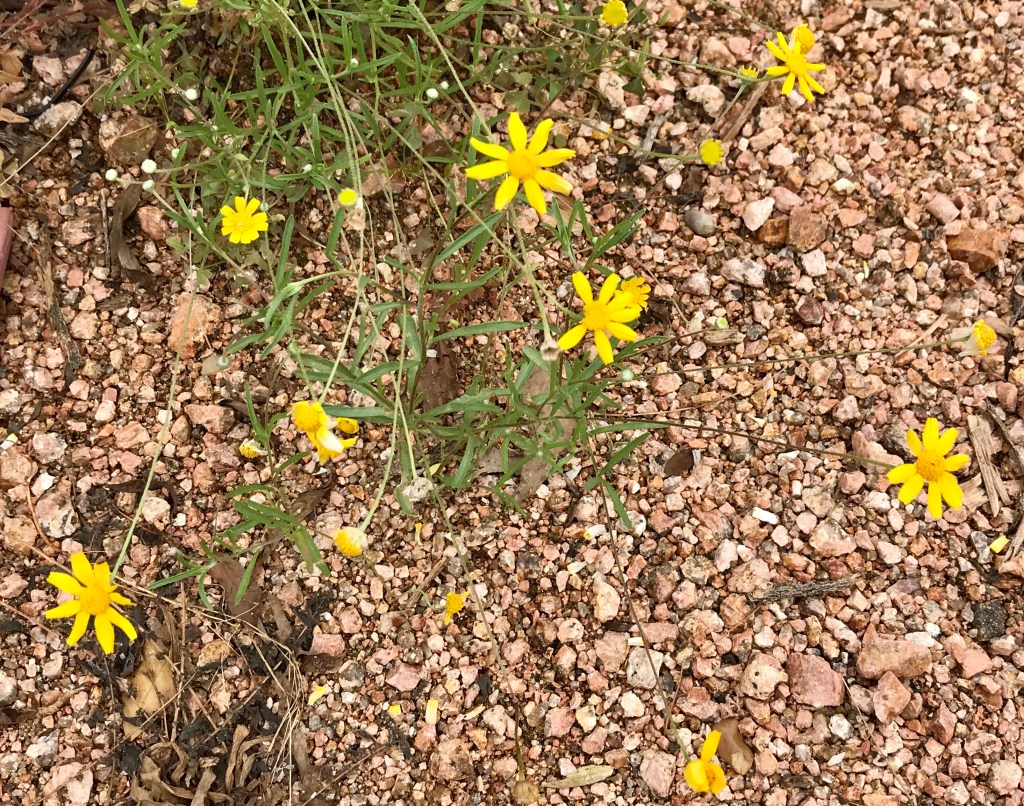
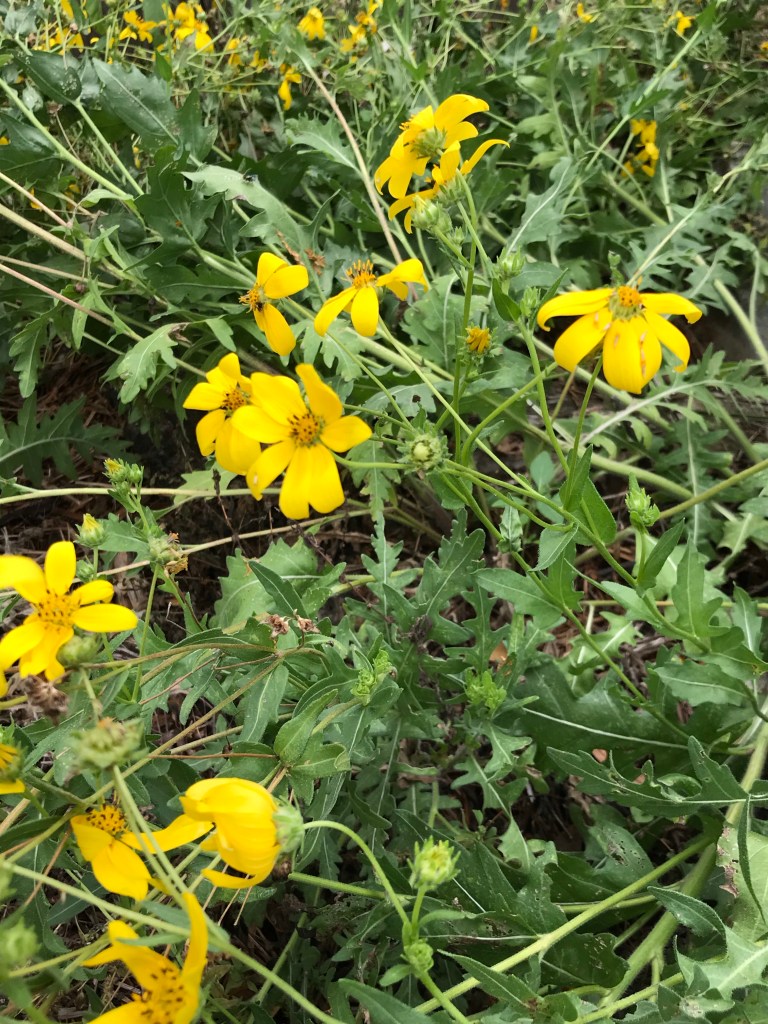
Tetraneuris linearifolia var. linearifolia (Slenderleaf bitterweed) (native, not cultivated)
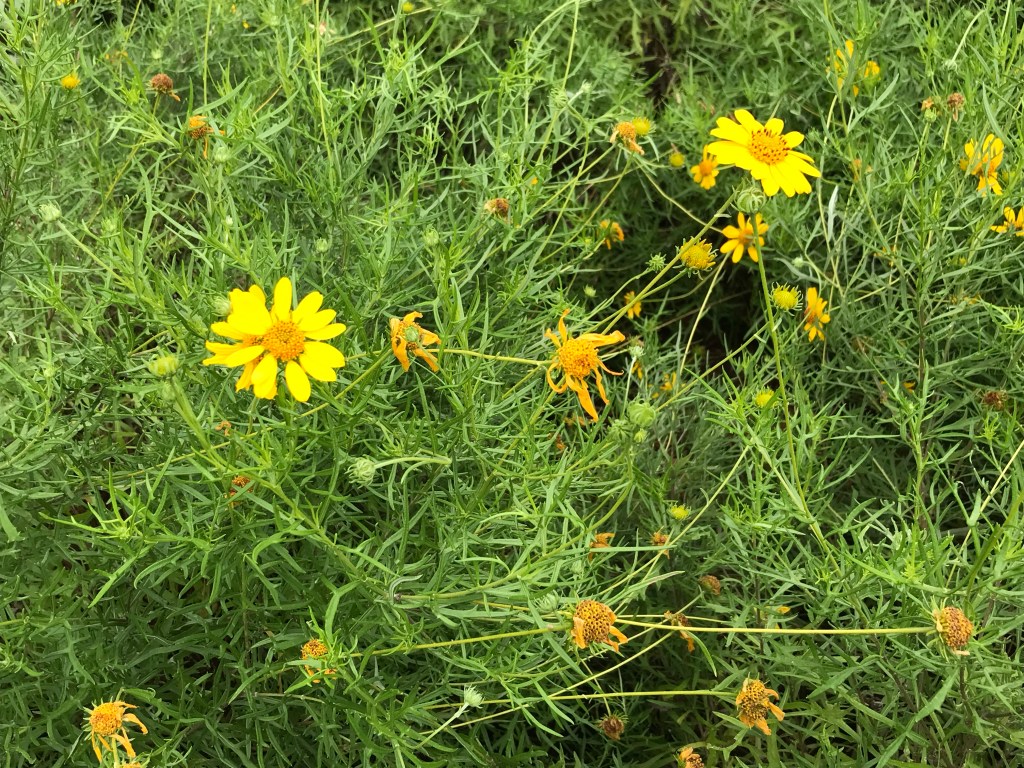
(Viguiera stenoloba) Skeleton-leaf Goldeneye (cultivated)
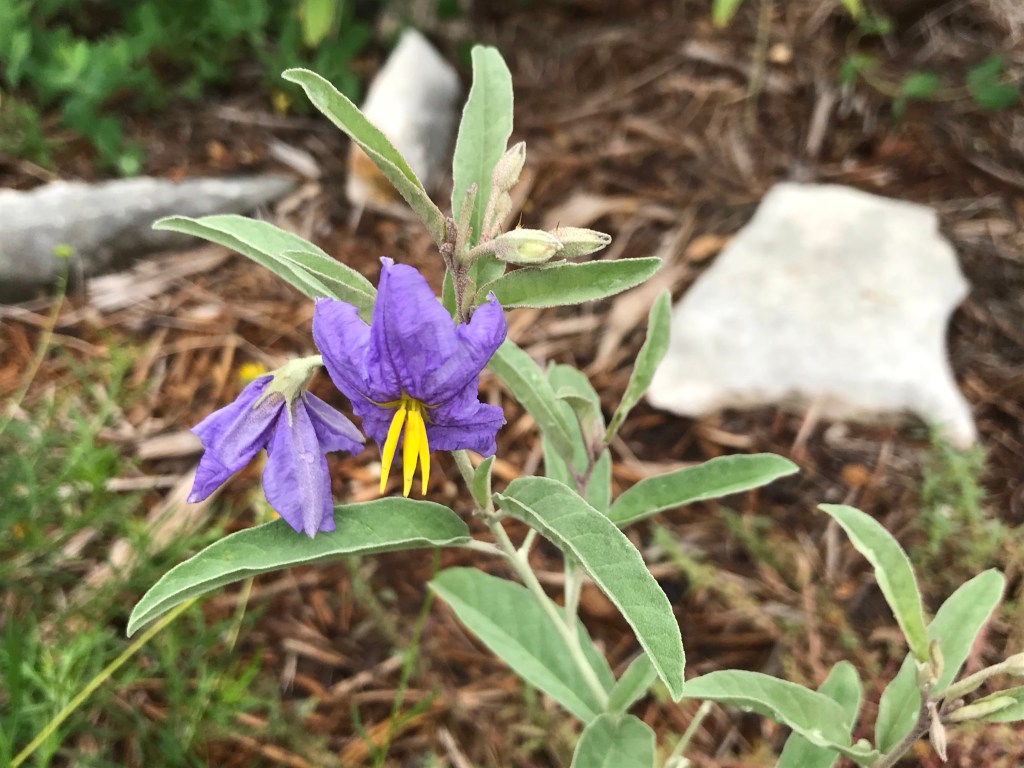
Solanum elaeagnifolium (Silverleaf nightshade) (native, not cultivated)
Conoclinium greggii (Gregg’s mistflower) (cultivated)
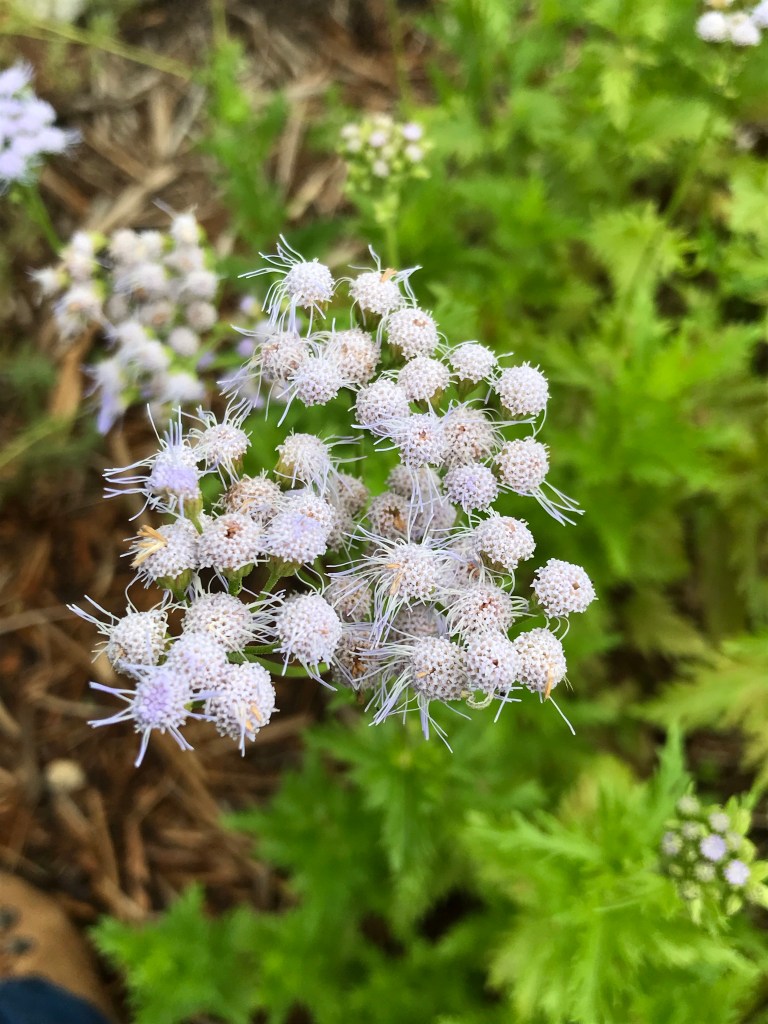
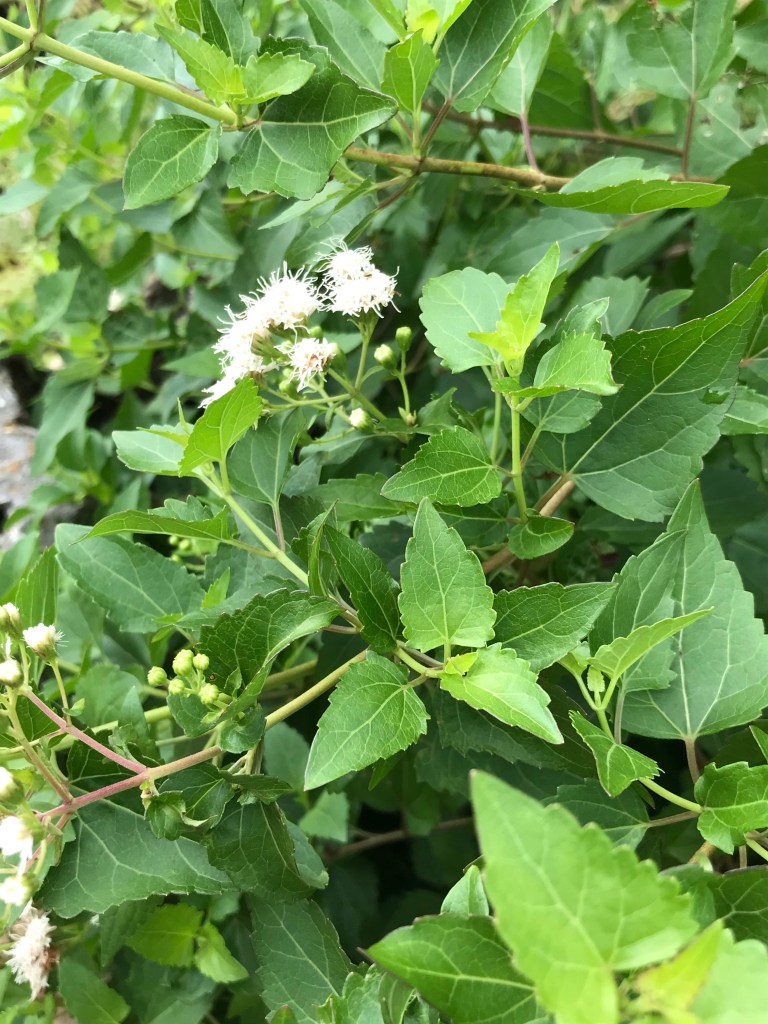
Ageratina havanensis (White mistflower, White boneset) (cultivated)
Viguiera stenoloba . (Skeleton-leaf goldeneye) (cultivated)
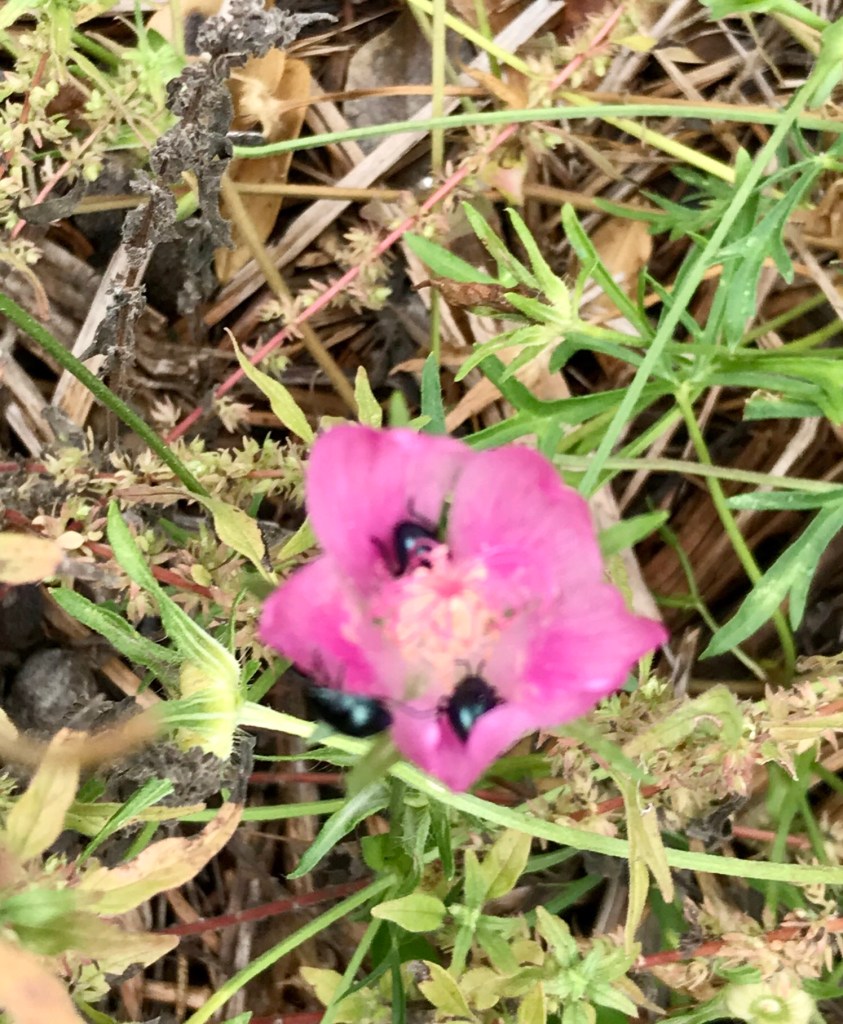
Callirhoe involucrata (Winecup, Purple Poppy Mallow)(cultivated)
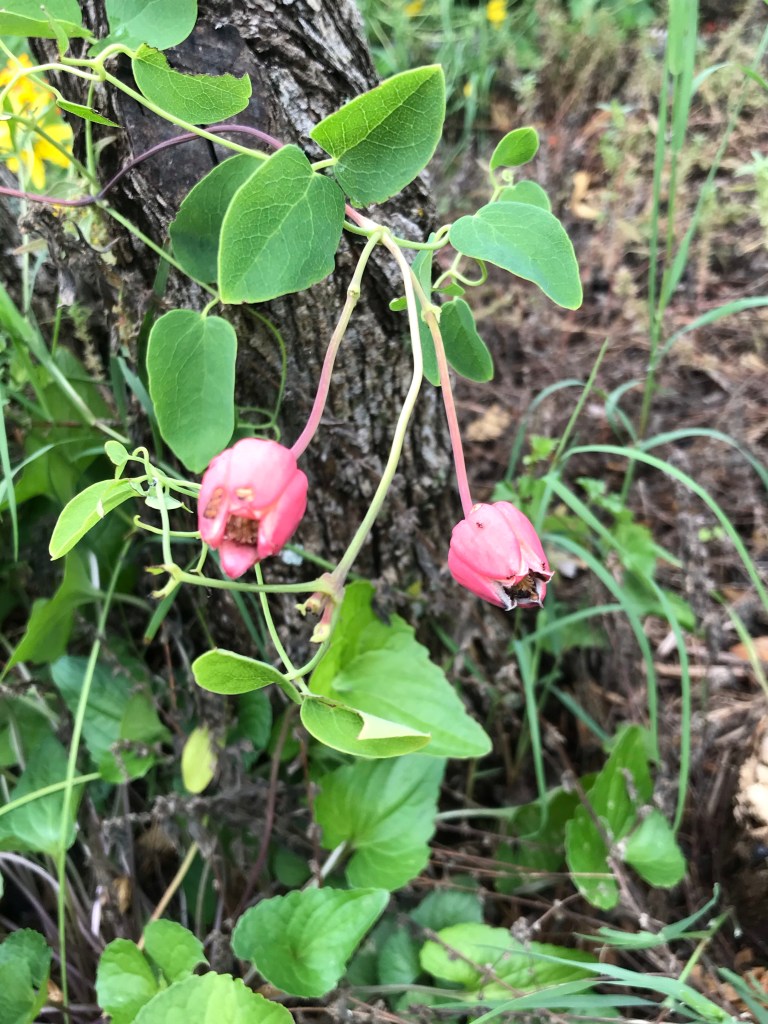
Clematis texensis (Scarlet Clematis, Scarlet Leatherflower, Texas Clematis)(cultivated)
Opuntia sp. (Prickly pear)(cultivated, “spineless varietal)
Luchophxllum frutescems (Cenizo, Purple sage, Trvas sage)(cultivated))
Gaillardia pulchella (Firewheel, Indian Blanket) (natiive, not cultivated)
Oenothera speciosa (Pink Evening Primrose, Pink Ladies) (native, not cultivated)
A variety of native plants (mostly)
Glandularia bipinnatifida (Dakota Mock Vervain, Prairie verbena) (native, not cultivated)
Cirsium texanum (Texas Thistle) (native, not cultivated)
Gaillardia pulchella (Indian Blanket) including recessive gene lacking red pigment, “Sunwheel” (native, not cultivated)
Ratibida columnifera (Prairie Coneflower, Mexican Hat)(native, not cultivated)

Return of the purple leather flower

_MG_08451024jpg

Clematis pitcheri – Purple leather flower

Back in the corner of our tiny lot, next to the compost bins and under the Diospyros texana, is a gallant vine that until now has shown no intentions of putting out any flowers.

Yesterday was the first day a bud showed up, so maybe it will get some followups as it matures, or other flowers come out. The Texas persimmon mentioned by its scientific name above provides the majority of the foliage in the photo above. but the Clematis leaves can be seen, they’re just much larger and out of focus.

Yesterday, while sitting on the back porch/deck, a titmouse came up to the trellis and started poking its head about. As I fumbled with my camera, I was able to get about four poorly focused or poorly framed shots, so my best guess is that it was a tufted and not aa black crested titmouse. As I tried to follow it around the yard after it left the deck, I took several shots of dubious quality. I was surprised to find that instead of the aforementioned bird, the next best shot was of a Carolina chickadee. Naturally, after the initial excitement of tiny birds flitting about the yard, I was left standing holding the camera without any feathered bipeds in sight, though I could still hear them singing – mostly a mockingbird.

Which I guess is why I mostly stick to plant photos – at least they stand still, more or less, except when the wind blows, or even breathes a whisper across them.