Blooming in late May and Early June…

Here are a few of the flowers and other stuff I managed to capture on digital media recently.

Actually, there are a lot more items in bloom, but these were closest on hand. The front yard also has Four-nerve daisies, Wright’s skullcap, Autumn Sage, Simpson’s rosinweed, Turkscaps, Engelmann daisies, Rock Rose, and White avens in bloom, besides those pictured below.

The South side of the house has Passiflora vines, copious amounts of Gulf Fritillary and other butterflies in varied stages of development, a Texas lantana, a Datura , lots of Blue Curls, a couple of White mistflowers (not blooming until the Fall), Clematis texensis and drummondii, some Asclepias plants for the Monarchs, and that pretty much covers what’s on bloom in June.

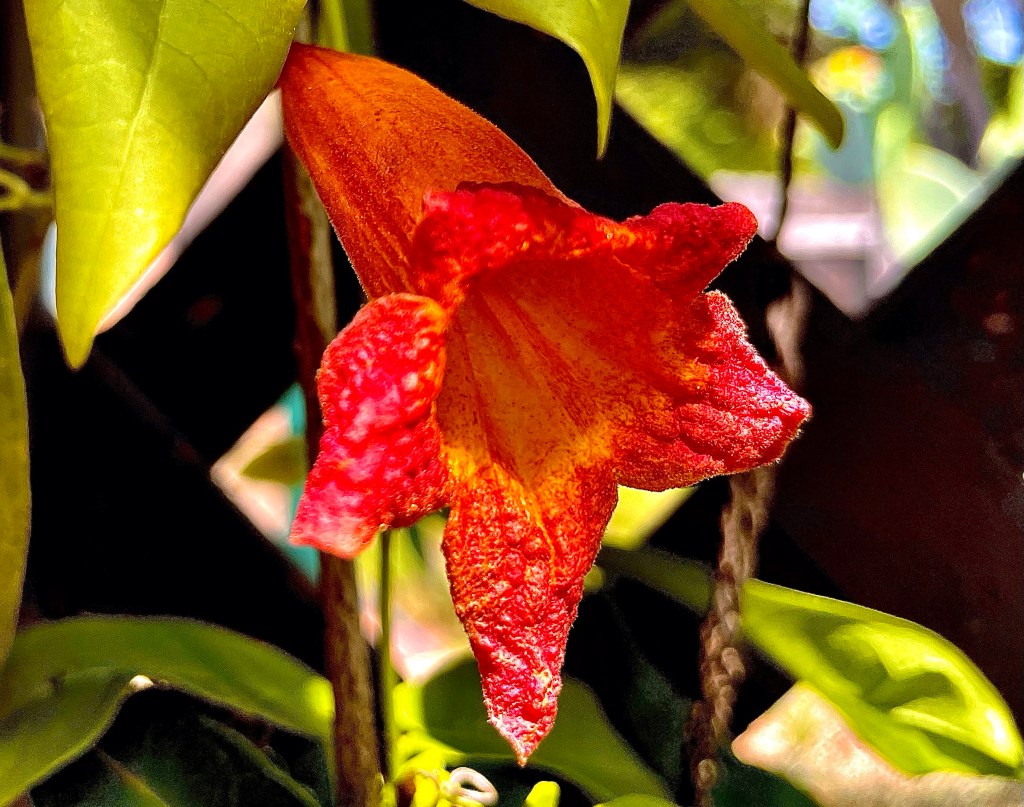
Bignonia capreolata (Crossvine), slightly past its glory

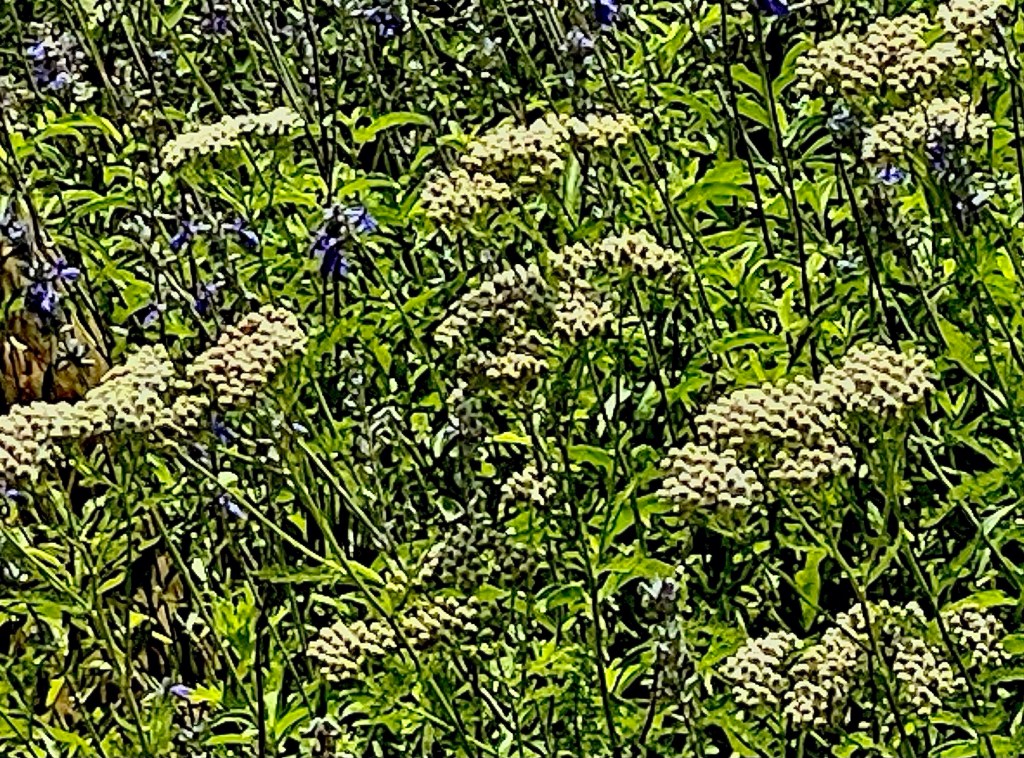
(Achillea millifolium) Milfoil

(Salvia farinacea) Mealy blue sage
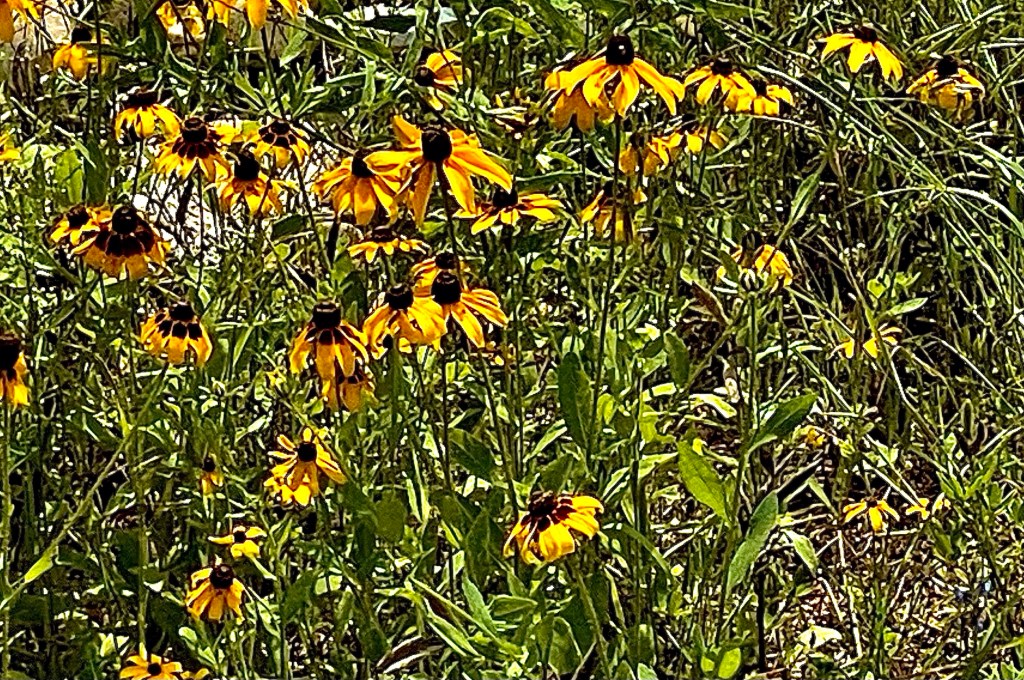
Rudbeckia hirta – Brown eyed Susans

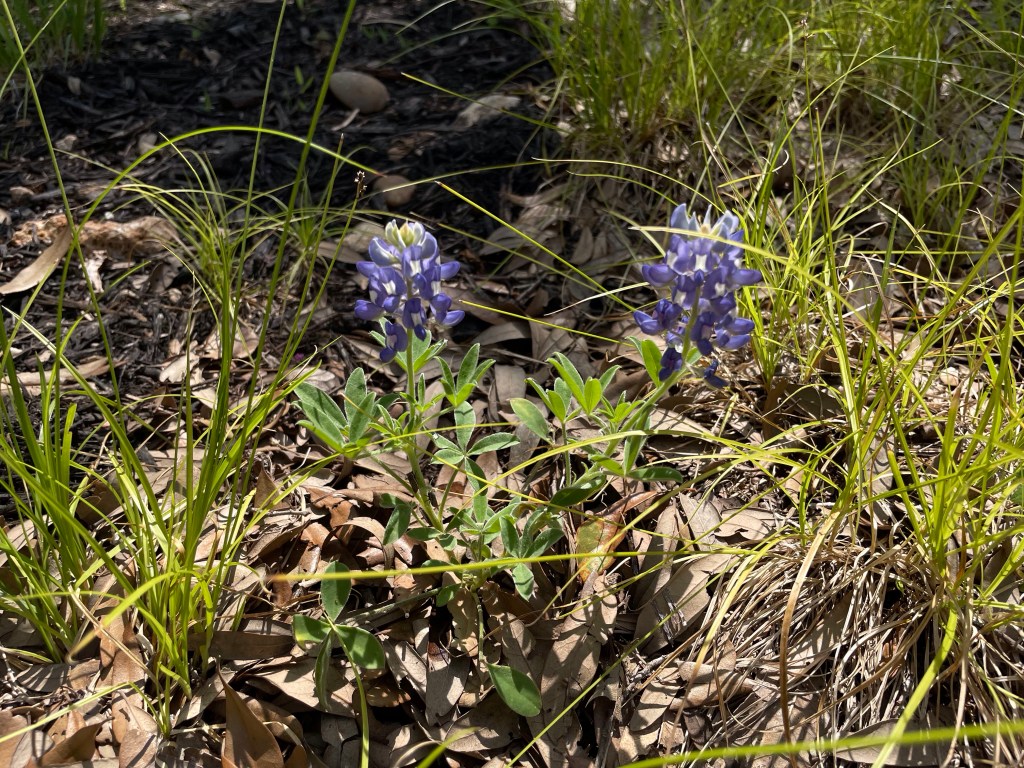
A surprise on June 1st – two baby Bluebonnets (Lupinus Texensis) blooming in the front yard!

Back in my own backyard…

Early June 2022 and the heat is in the “triple digits”as the meteorologists like to say in TV-land. or 39 ° Celsius, as we were told we would have converted to 50 or more years ago. Either system, hot to humans is hot.

But to native plants that evolved in Central Texas for more years than Crepe Myrtle has been here, even these signs of Global Warming haven’t phased them. (Granted, I do some supplemental watering, especially of small trees for the first few years, but other plants like Passiflora incarnata grow like “weeds”).

I’ll  let the plants speak for themselves:

Those are just the photos I took on June 8, 2022, mostly in my yard. The Rain Lilies were just past the back fence (the ones in my yard had bloomed and gone to seed after the previous week’s mild spattering of rain drops).

###

All my weeds are wildflowers (I wish)

Passiflora incarnata/Ruellia nudiflora hybrid?

A couple of native plant species have begun to spread like weeds in the narrow area separating my subdivision plat from my neighbor’s house.

Passiflora incarnata, or Purple Passionflower, has sprung up where a corkscrew passionflower vine used to be, and through rhizomes has managed to propagate itself all along the Southern side of the house. I’ve done some pulling of the pups as the poke up through the mulch, and have been able to give away a few of them for others to try to get their own vines going.

The flowers of the Passion flower vine are about three inches in diameter, with the petals forming a wavy fringe. Stamens and stigmas also are striking in appearance as well. Several different types of butterflies use this as a larval host, most notably the Gulf Fritillary (Agraulis vanillae ) and Variegated Fritillary (Euptoieta  claudia ) butterflies. 
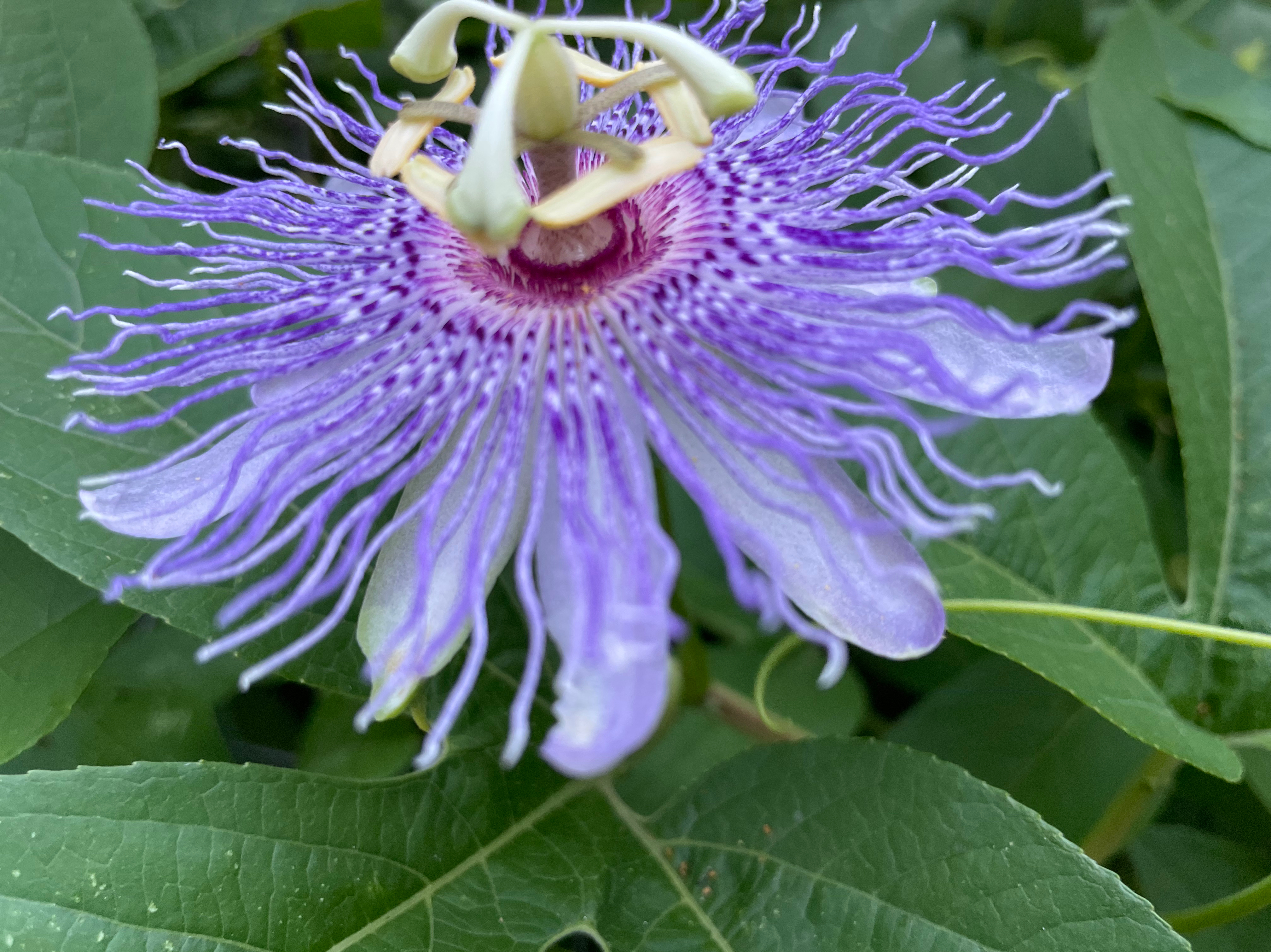
Passiflora icarnata infloresence, tri-lobed leaves, and tendril

Passiflora icarnata inflorescence, tri-lobed leaves, and tendril

The Ruellia nudiflora, or Wild Petunia, also has a purple to lavender flower, but it is trumpet-shaped. And it’s not a vine, but a sub-shrub perennial . After having transplanted this volunteer several years ago, it has now decided to propagate itself, like a weed, in the mulched bed and in the gravel path. Although its inflorescences look much like those of the cultivated Petunia, it is in the Acanthus Family, while the cultivated Petunia is in the Potato Family. The blossoms open in the morning, falling off in the afternoon. Like several other of my favorite wildflowers, its flowers are ephemeral, lasting for just a day.
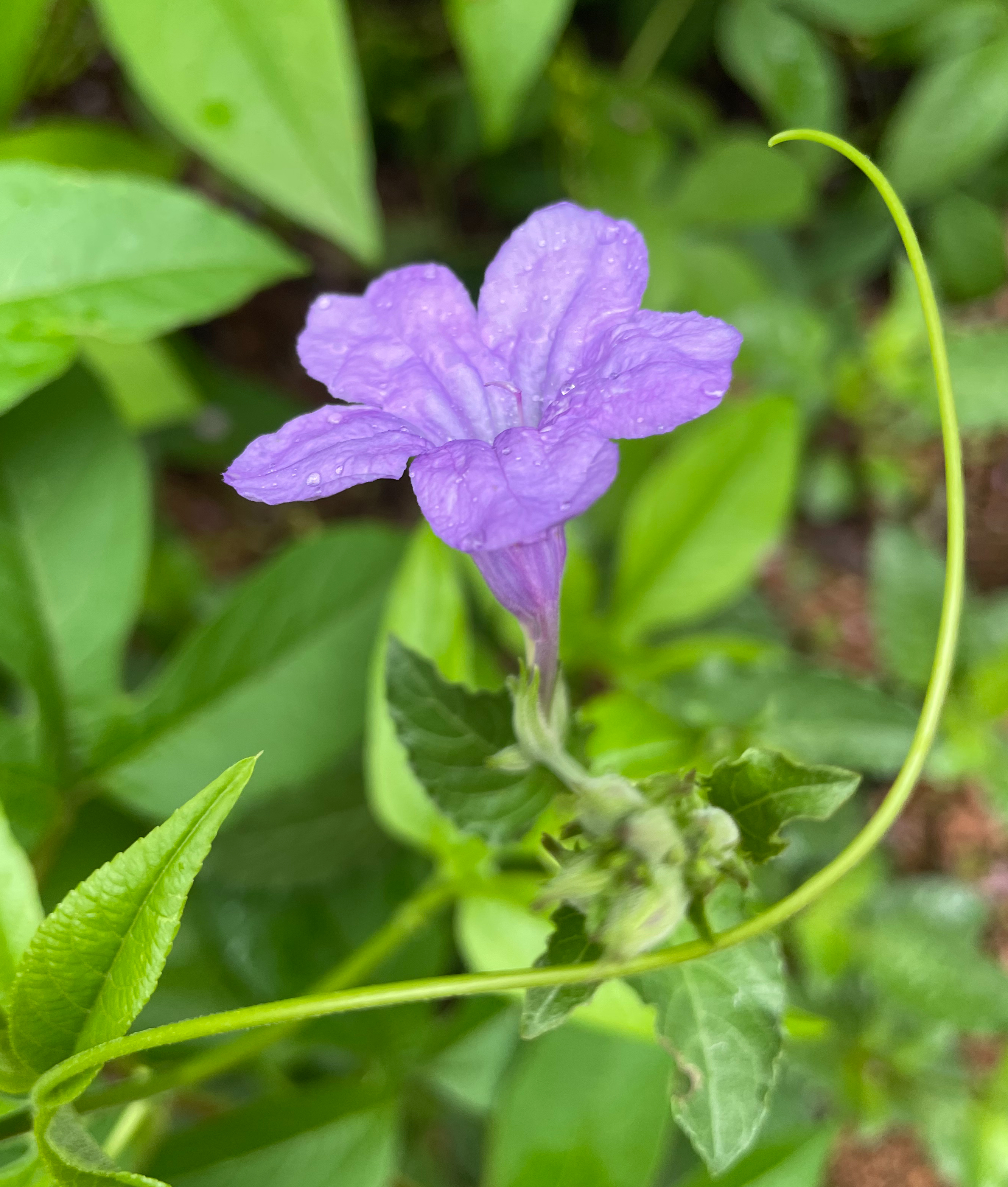
Ruellia nudiflora inflorescence, surrounded by Passiflora leaves and tendril

Ruellia nudiflora inflorescence, surrounded by Passiflora leaves and tendril

As if having to “weed” native species wasn’t bad enough, as one can see from the top photo in this post, it looks as though the two plants have begun to hybridize to form a new species. Fortunately, (or unfortunately), that’s not the case: A blossom from the Ruellia has been captured by a tendril from the Passiflora, making it look (almost) like it belongs to the vine. 

Not sure what I’d do if they actually did start to hybridize – probably get a botanist or two to take a closer look. And get a nursery to work with to develop and patent the new species. And sit back and watch the money roll in (ha!).

###
A small gift after clearing away invasive plants

20200520_190727

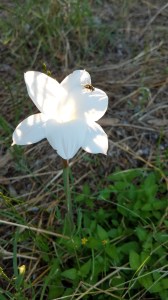
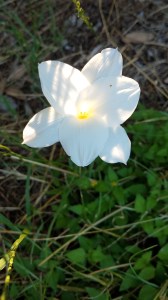
Cooperia pedunculata syn. Zephyranthes drummondii – Rain Lily

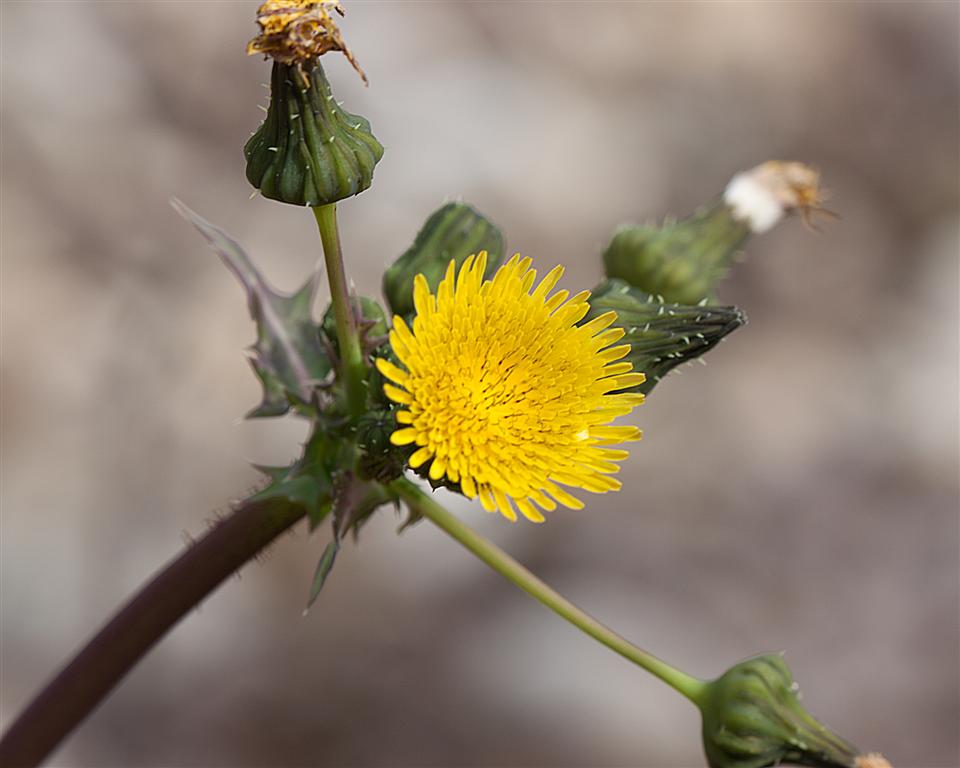
Thanks to some poor hygiene and poor knowledge regarding mowing ( or not mowing) next to a greenbelt, the berm behind my house and the neighboring greenbelt which has a cavern populated by endangered insects, has become overrun with Lolium perenne (annual ryegrass, winter ryegrass), Centaurea melitensis (Malta star thistle), and Bromus japonica (Japanese brome), to name the three worst offenders.

This February I wrote to both my HOA and my Municipal Utility District to report the failure of their mowers to follow the guidelines established in 2013 and 2018 by the Texas Department of Transportation on mowing of roadside vegetation, and vegetation adjacent to natural preserves.

Thankfully, the berm has not been mowed since early February, and I have been able to put in an hour or two, mostly on days following Spring rains, to fill about ten 42 gallon bags with the offending weeds. Although the natural covering of Gaillardia pulchella (Firewheel, Indian Blanket) and Ratibida columnifera (Prairie coneflower, Mexican hat) is greatly reduced at present, and I know that I will have to maintain vigilance and start pulling invasive weeds and grasses earlier next year, I did receive a small reward this past Wednesday.

As I was about to enter the berm to take a photograph of this Rain lily (Cooperia pedunculata, syn. Zephyranthes drummondii),  I noticed a small movement. It turned out to be an Eastern cottontail rabbit, munching on the plants in the berm. We both stood still for a few moments while I took some photos with my Android, it then hopped into the greenbelt and the cover of brush.

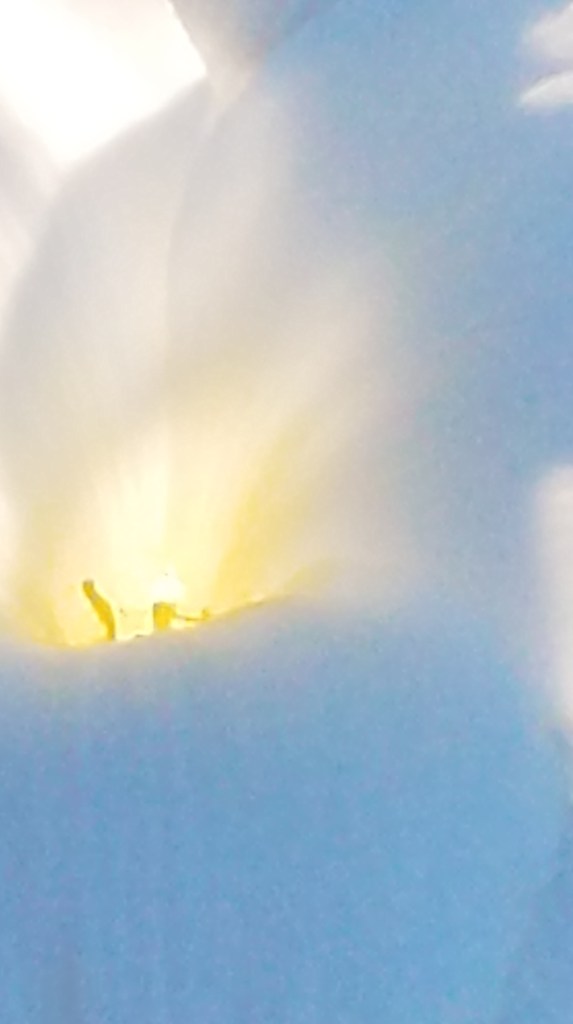
Then I went in, took a few shots of the Rain lily that would have been blocked from the sunlight by the ryegrass that I had removed, and caught the above photo of the light from the sunset shining through to backlight its stamens.

A small reward, perhaps, but a big warm feeling…

20200520_19073520200520_190755

For a fully detailed botanical description see: Studies on the Vascular Plants of Williamson County, Texas

###

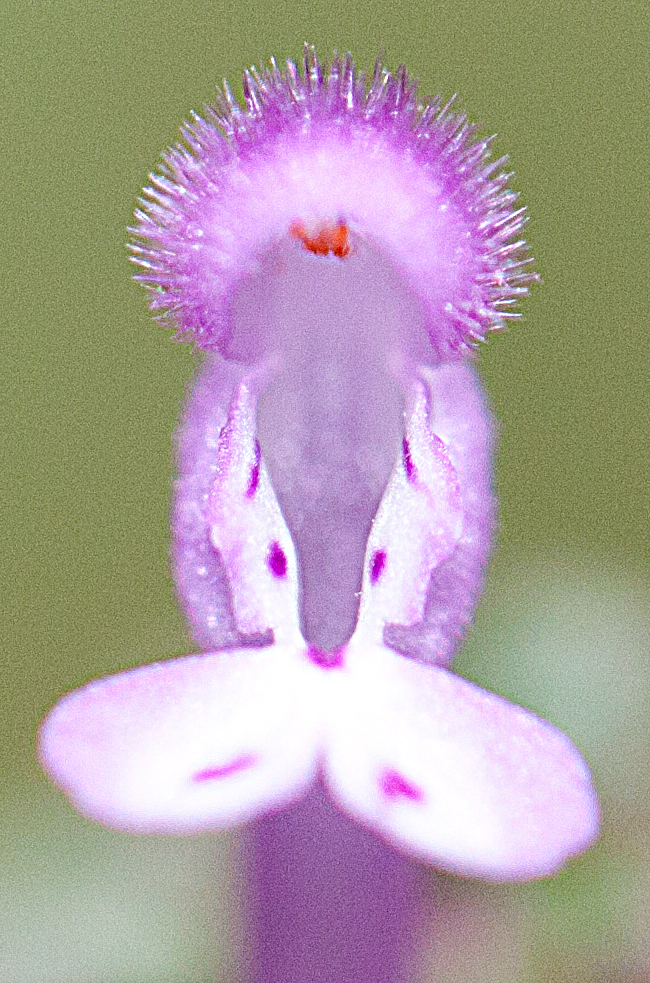
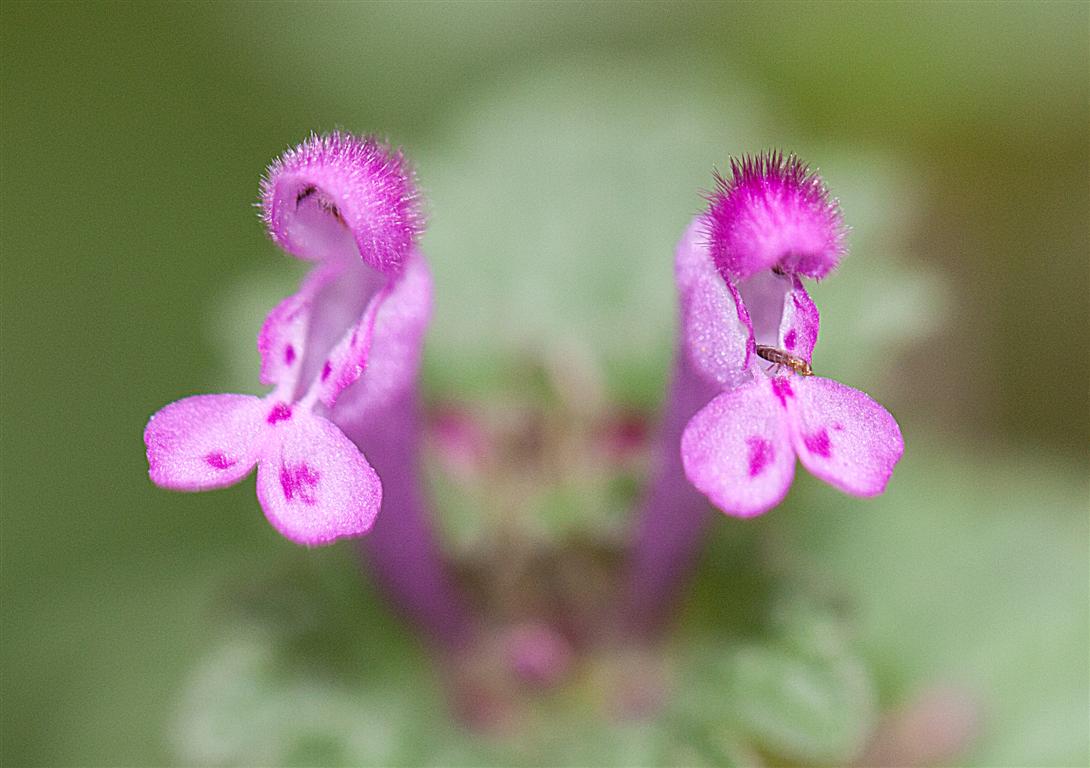
Lamium amplexicaule

I rarely use an actual “weed” as a photo subject, since one of my slogans is “May all your weeds be wildflowers” and I don’t want to encourage the “wrong sort” of flowers. But it is raining and I have an excuse for not doing any hand weeding, so I took a picture of what is commonly known as Henbit. It’s a member of the mint family and is rather more attractive than St. Augustine or Bermuda grass, but that won’t help it escape being considered a noxious weed among the turf grasses. Oh well…

Lamium amplexicaule - Henbit

Lamium amplexicaule - Henbit (Click for detail)