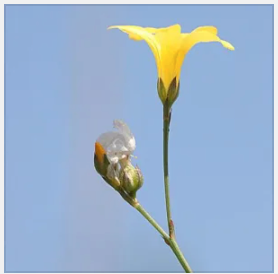
In the heat of the summer

I seem to suffer from Gilligan’s Syndrome – what starts out as a five minute walk outside to water the plants in their containers that I am hoping will hold on until cooler weather comes (September? October?) turns into an hour or more photo safari. Sometimes I go beyond the confines of my yard, sometimes not.

Ruellia nudiflora, for instance, has suddenly been blooming like crazy. A Passiflora incarnata volunteer popped up in the mulched bed across from the Passiflora lutea and Passiflora suberosa, and started putting out blooms. The Malvaviscus arboreus var. drummondii continue to bloom, as do the Salvia greggii, Lantana urticoides, Scutellarria wrightii, Salvia farinacea, and Conoclinium greggii. In the “nursery,” several Asclepias milkweeds have bloomed or budded, along with Tetraneuris scaposa. In the gravel pathway, I had to (reluctantly) trim the Boerhavia coccinea back to allow human passage. The Fallugia paradoxa has put out a few blooms and plumes, and the Pavonia lasiopetala has been a pleasant surprise with its hibiscus-like pink blossoms.

We have Liatris punctata still in bloom, Melampodium leucanthum, Asclepias texana, and a native grass that I have been calling “Indian Grass,” (turns out that is the common name for Sorghum nutans. The Aloysia gratissima has attracted pollinators, as has the Anisacanthus quadrifidus, and behind the fence, the Proboscidea louisianica or “Devil’s Claw,” has held out with a bloom or two. The Glandularia bipinnatifida has come up in various spots, too low for the mowers’ blades most of the time. As can be seen in some of the photos, these native plants of Texas, most of which are not receiving any supplemental watering, provide food for Bumblebees, butterflies, and even hummingbirds, lizards, and wasps. I even went out and over the course of several days, harvested enough Diospyros texana fruit to make a Texas Persimmon Loaf. The slide show that follows includes photos taken the week of August 10 – 16, 2020
This slideshow requires JavaScript.

What was blooming (or not) 25 May 2020

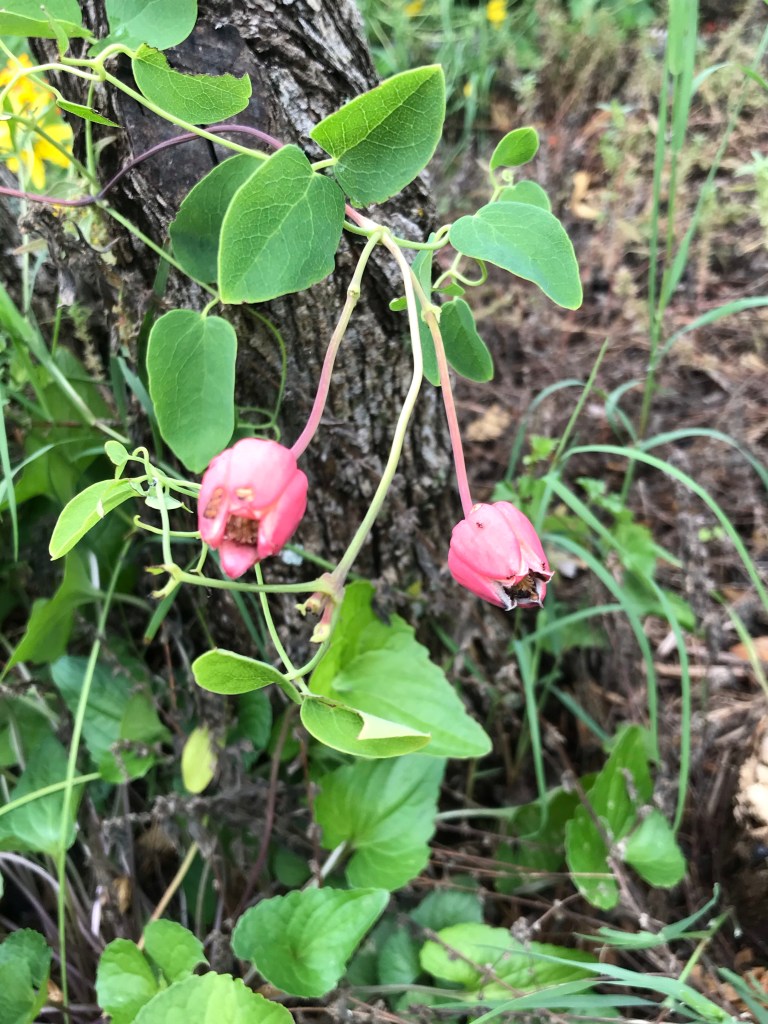
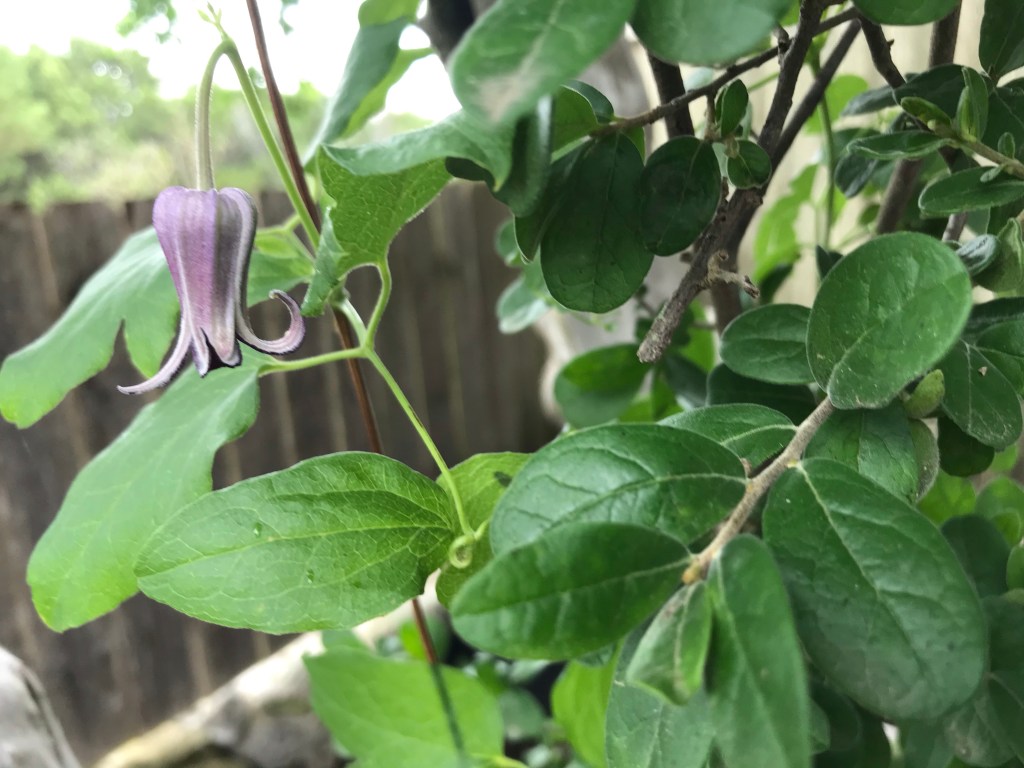
Clematis pitcheri (Purple leather flower) (cultivated)

(Posted about a year ago – edited to add the names of the plants), Went out in the yard and beyond today and captured a few items of interest. Didn’t go into the front yard because it was getting close to dinnertime.

Lantana urticoides (Texas Lantana)
Salvia farinacea (Mealy blue sage)(cultivated)
Symphyotrichum oblongifolium (Fall aster or Aromatic aster) (cultivated)
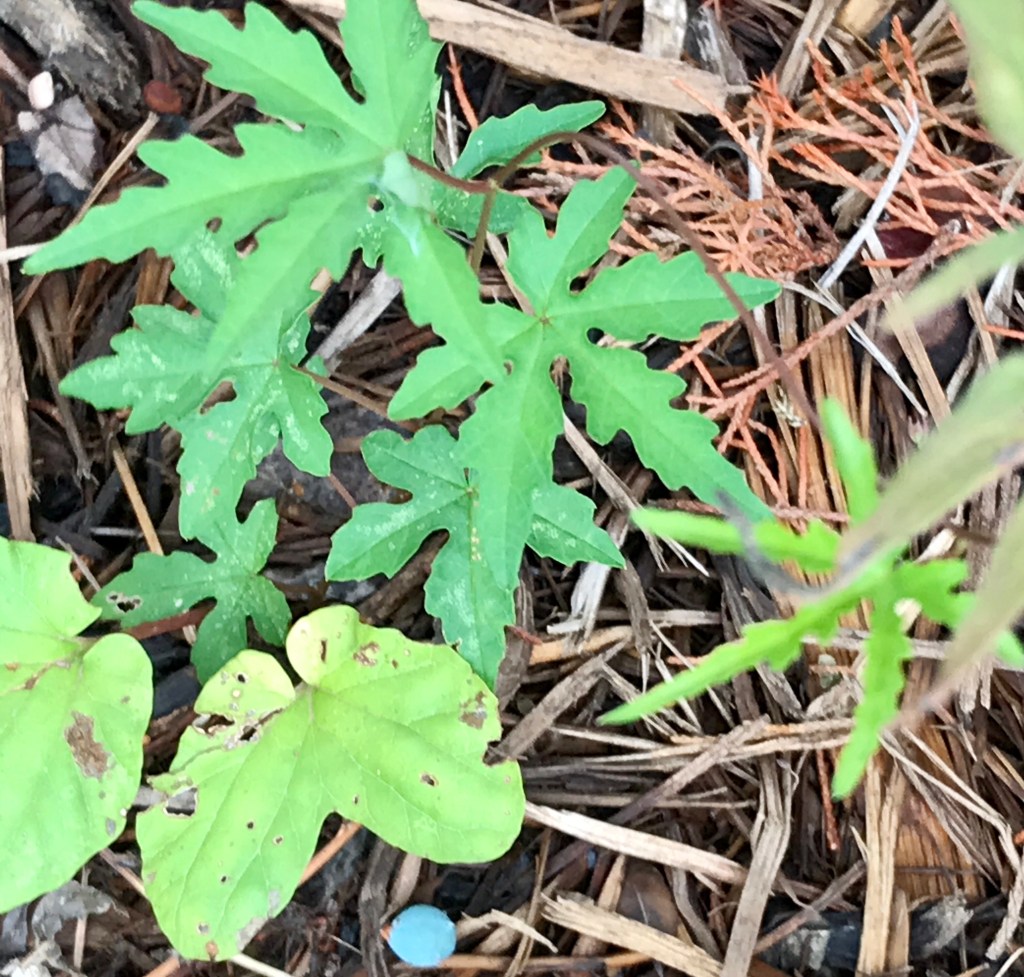
Merremia dissecta. (Alamo vine)(cultivated)(escaped from cultivation)
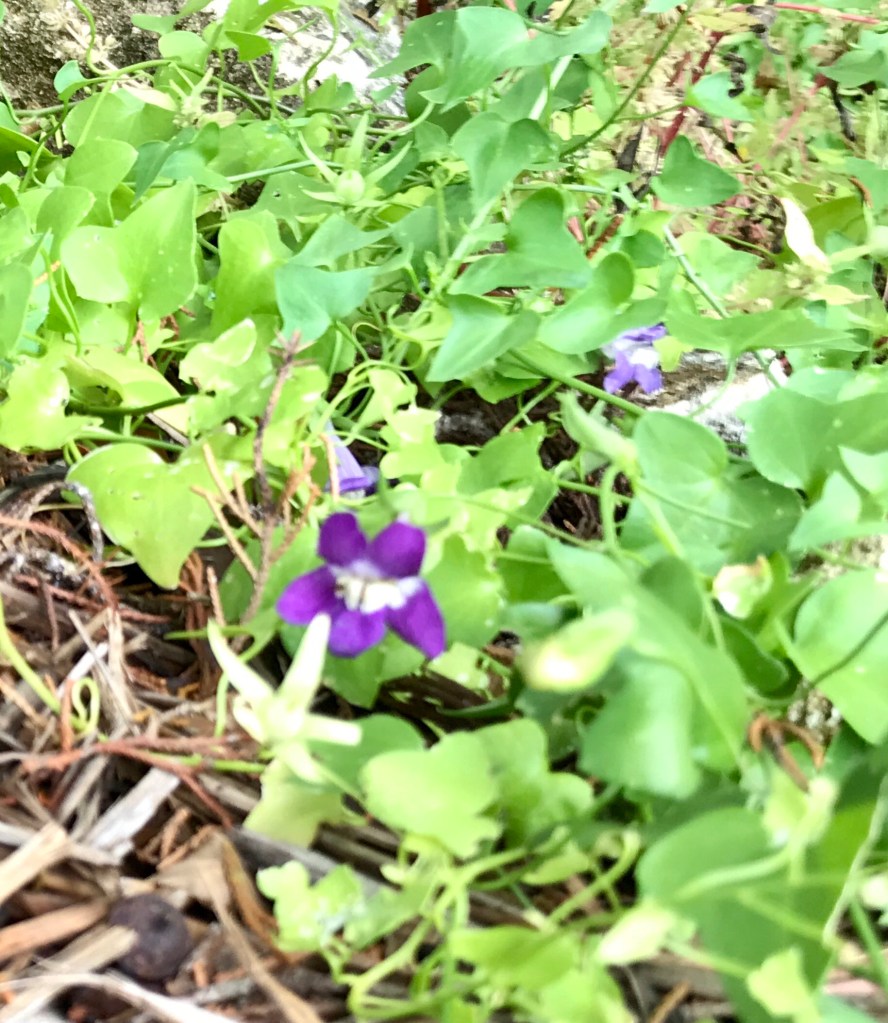
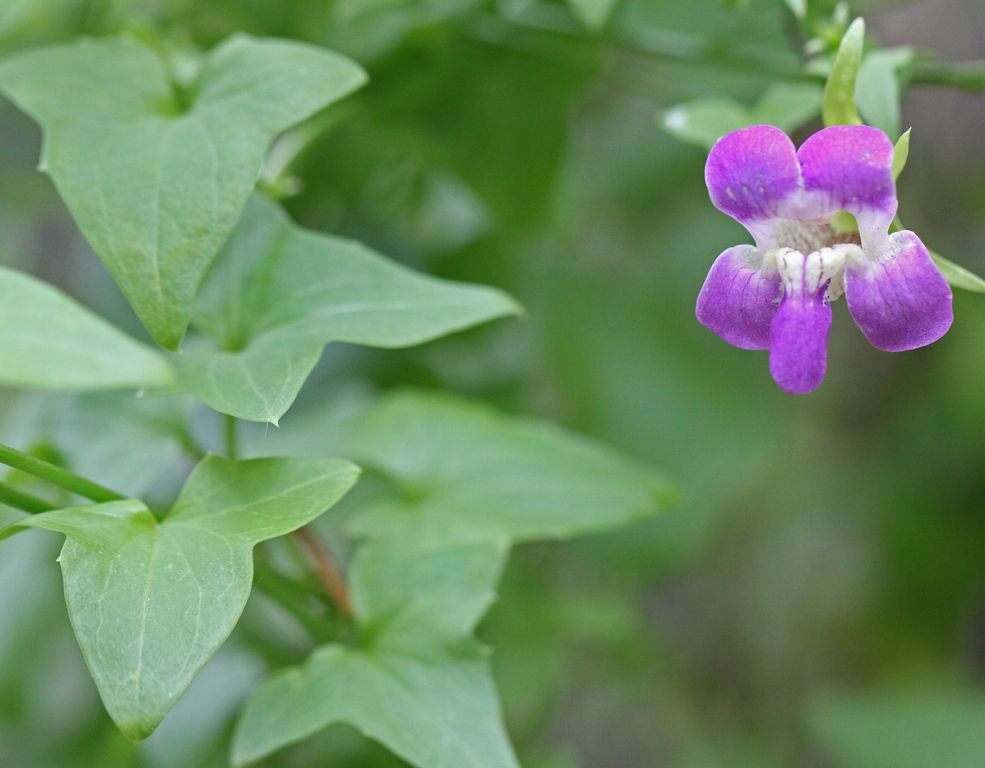
(Maurandella antirrhiniflora) (Roving sailor or Snapdragon vine) (native, not cultivated)
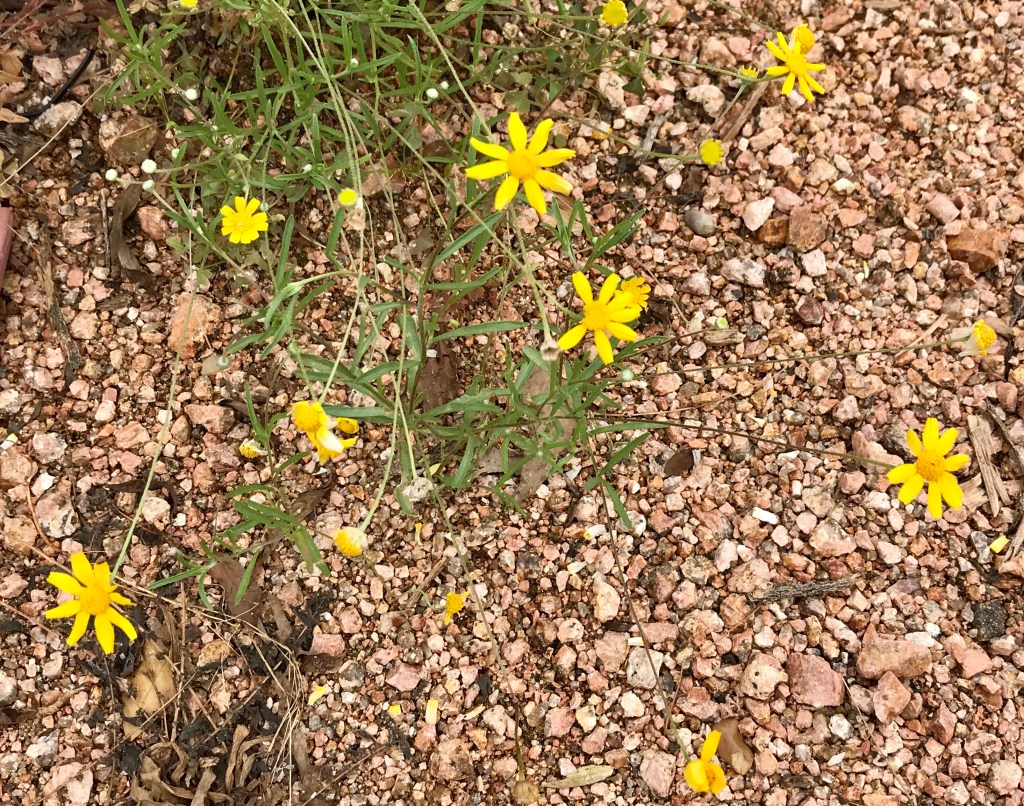
Tetraneuris linearifolia var. linearifolia (Slenderleaf bitterweed) (native, not cultivated)
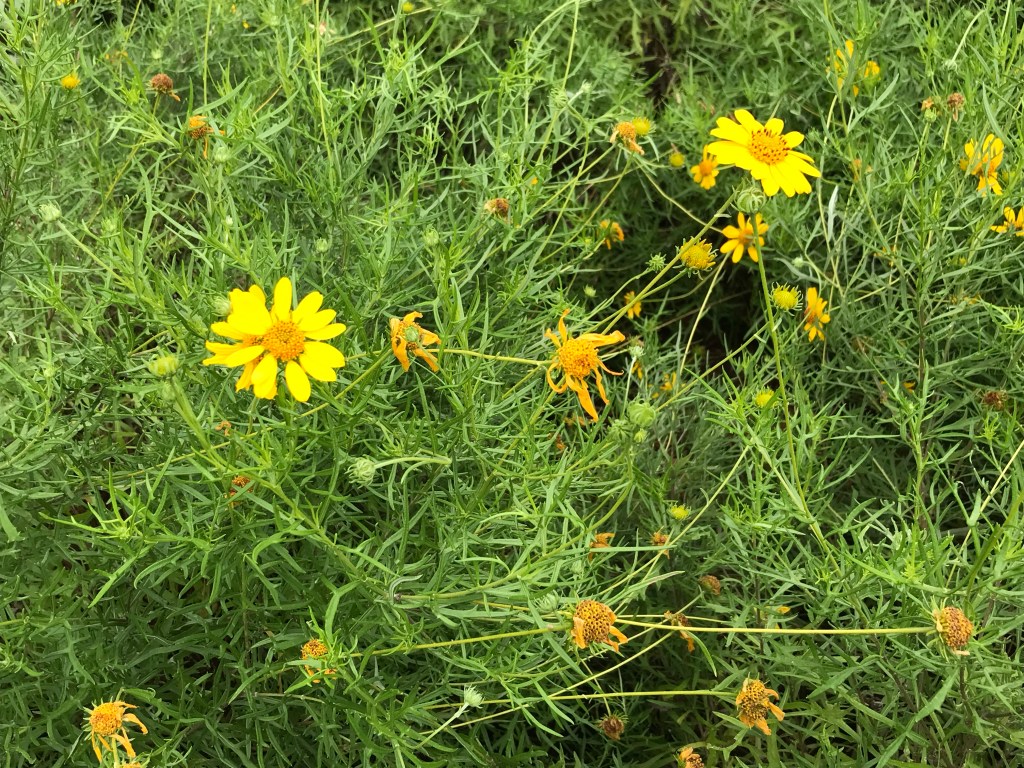
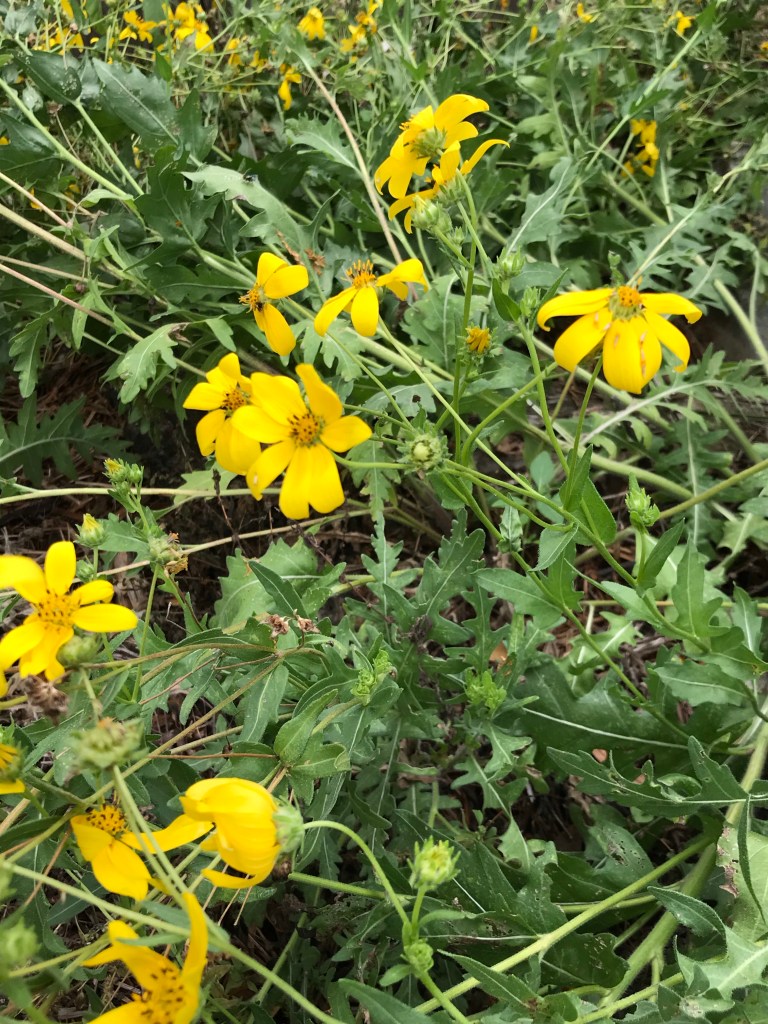
(Viguiera stenoloba) Skeleton-leaf Goldeneye (cultivated)
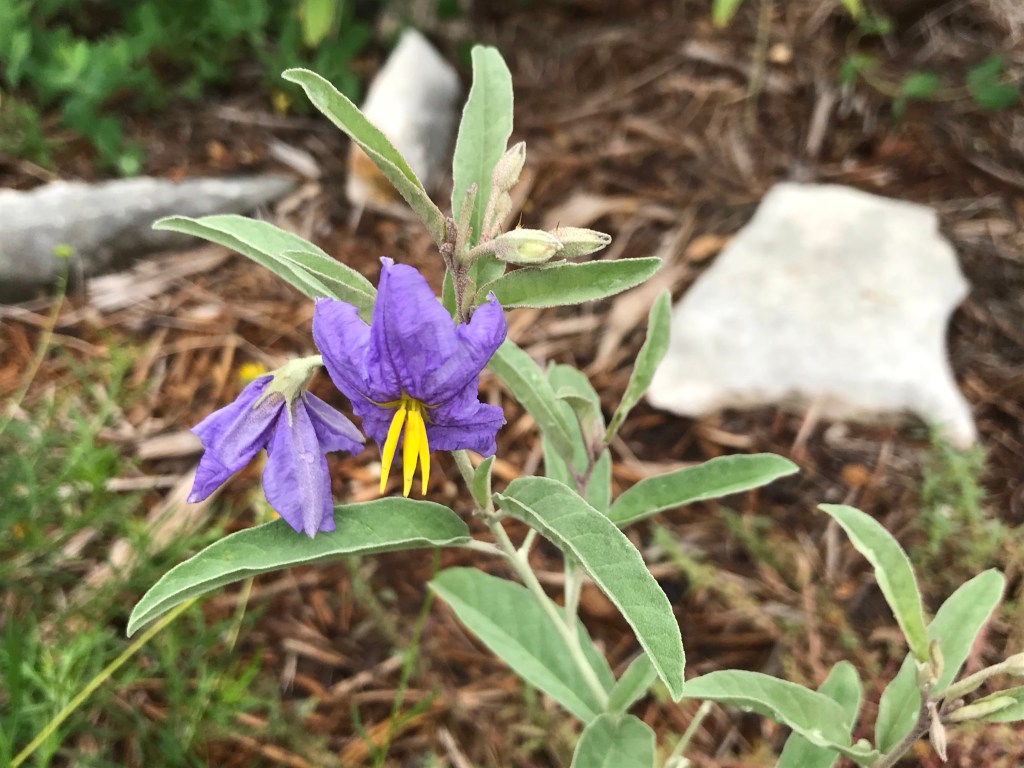
Solanum elaeagnifolium (Silverleaf nightshade) (native, not cultivated)
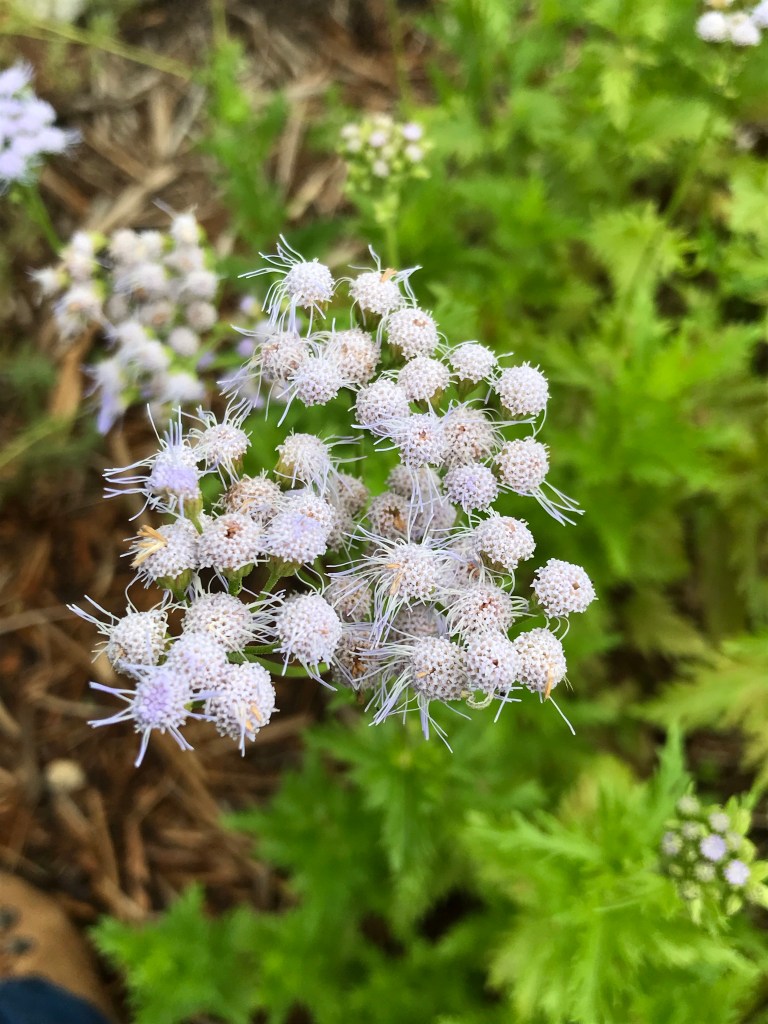
Conoclinium greggii (Gregg’s mistflower) (cultivated)
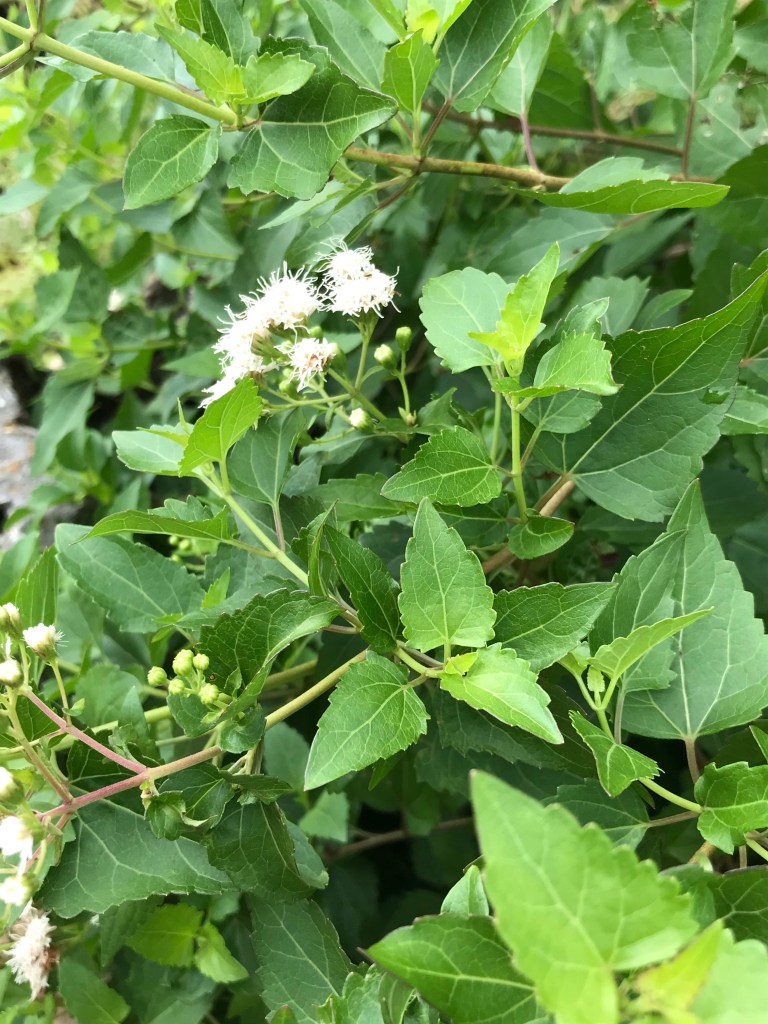
Ageratina havanensis (White mistflower, White boneset) (cultivated)
Viguiera stenoloba . (Skeleton-leaf goldeneye) (cultivated)
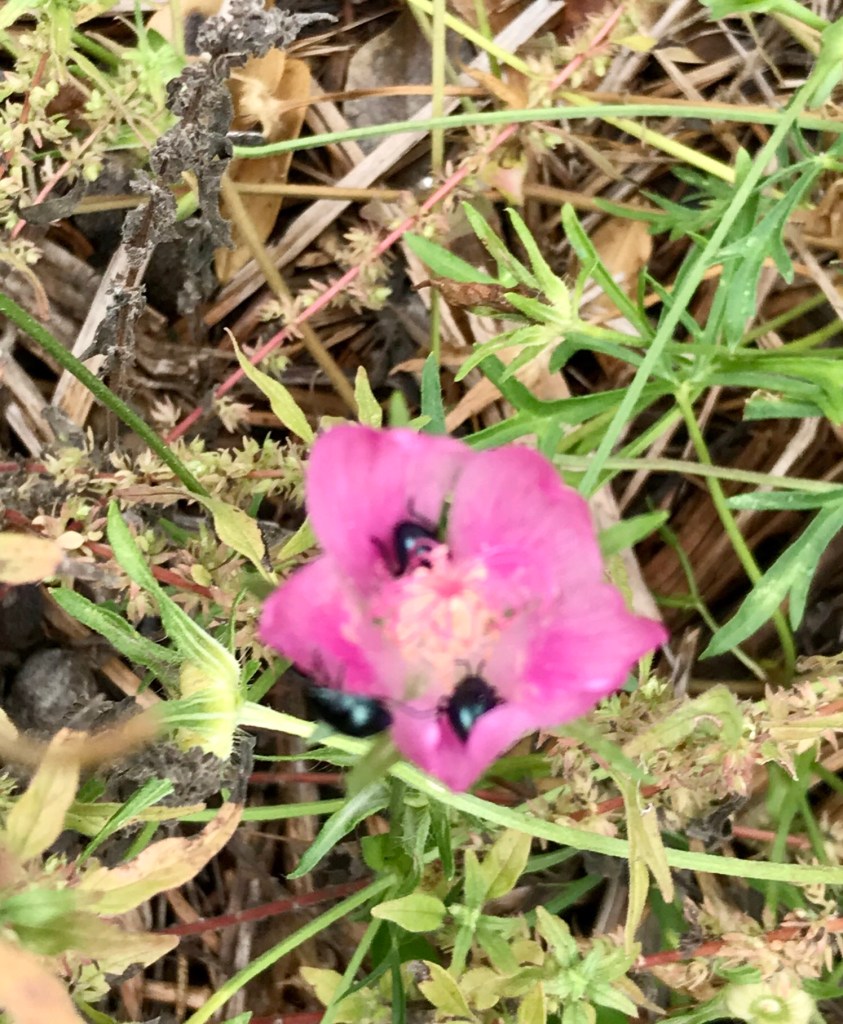
Callirhoe involucrata (Winecup, Purple Poppy Mallow)(cultivated)
Clematis texensis (Scarlet Clematis, Scarlet Leatherflower, Texas Clematis)(cultivated)
Opuntia sp. (Prickly pear)(cultivated, “spineless varietal)
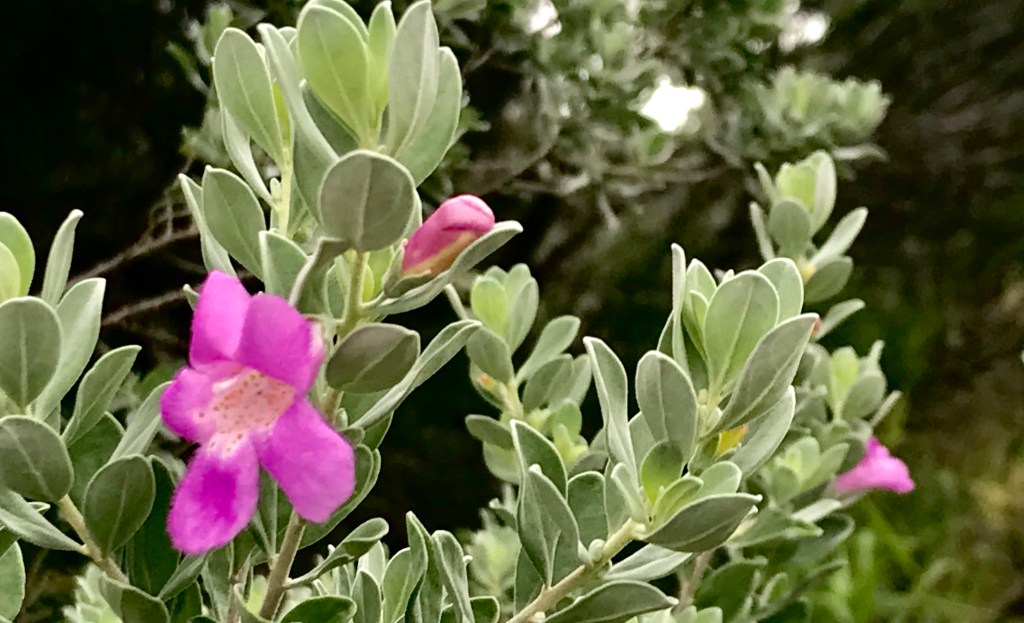
Luchophxllum frutescems (Cenizo, Purple sage, Trvas sage)(cultivated))
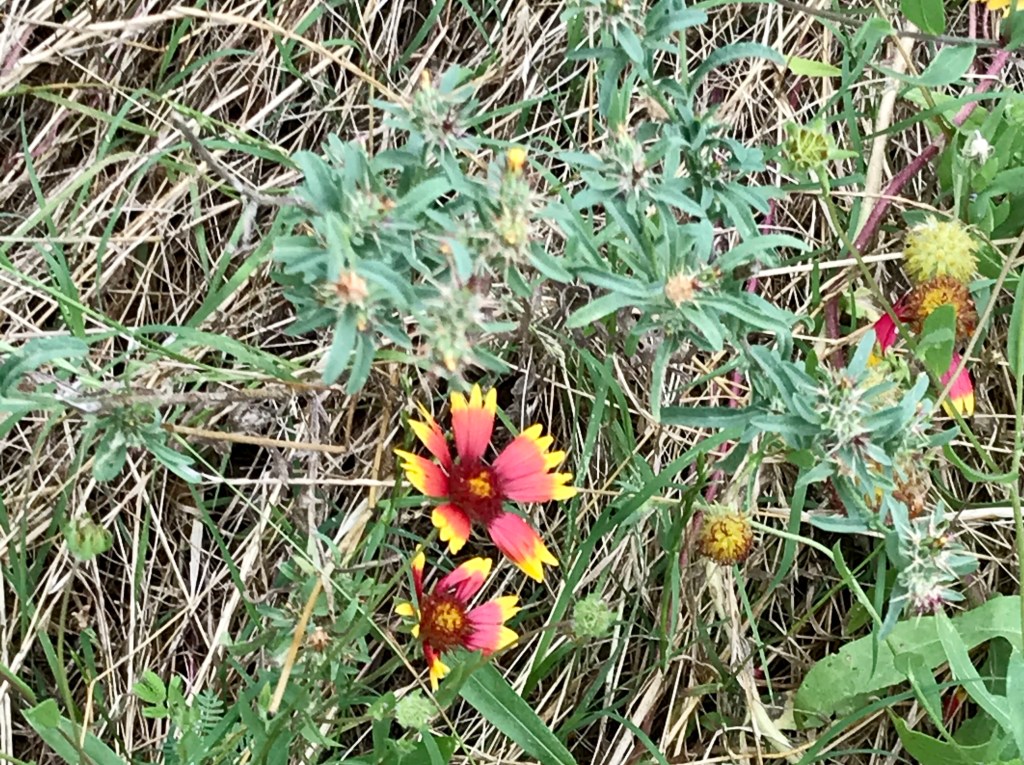
Gaillardia pulchella (Firewheel, Indian Blanket) (natiive, not cultivated)
Oenothera speciosa (Pink Evening Primrose, Pink Ladies) (native, not cultivated)
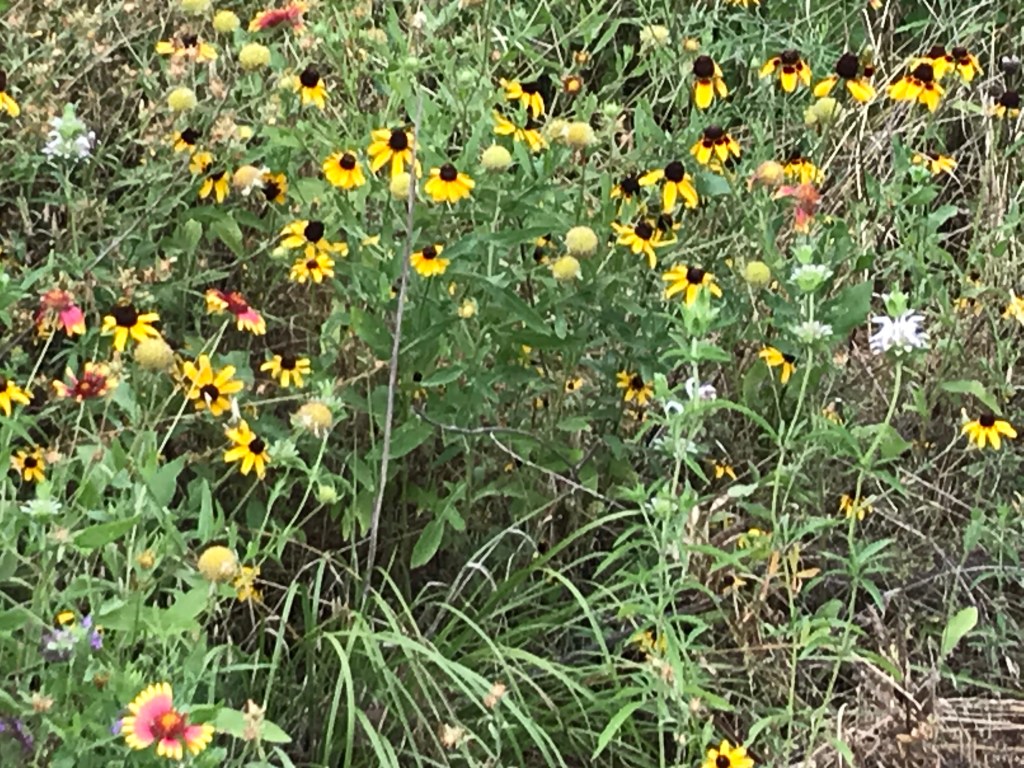
A variety of native plants (mostly)
Glandularia bipinnatifida (Dakota Mock Vervain, Prairie verbena) (native, not cultivated)
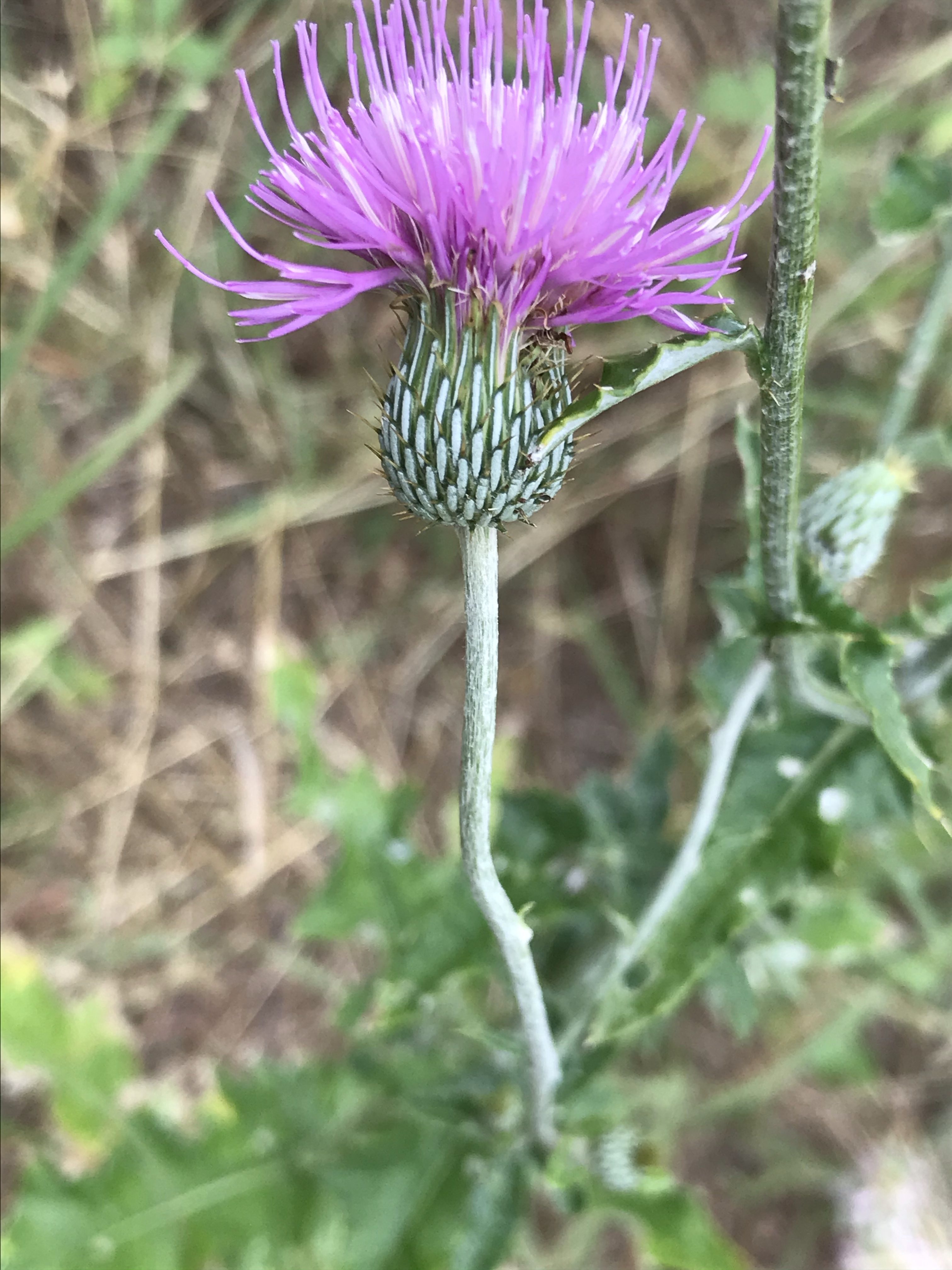
Cirsium texanum (Texas Thistle) (native, not cultivated)
Gaillardia pulchella (Indian Blanket) including recessive gene lacking red pigment, “Sunwheel” (native, not cultivated)
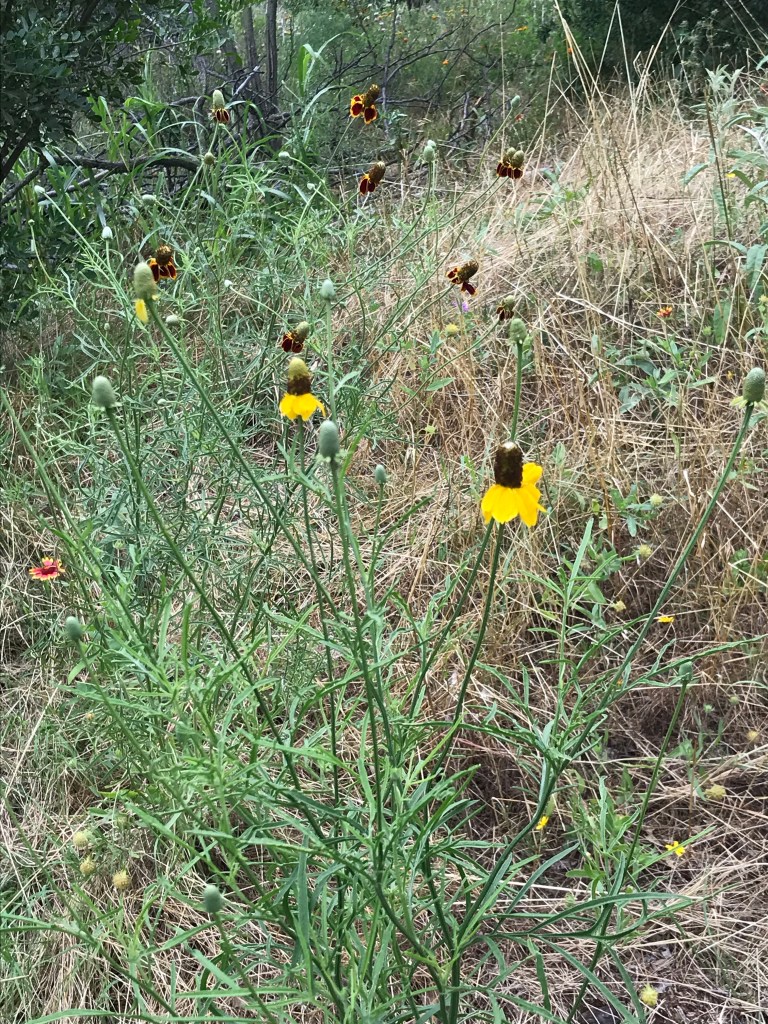
Ratibida columnifera (Prairie Coneflower, Mexican Hat)(native, not cultivated)

Endemic in a time of a pandemic

2020_04_10_Clematis_texensis_1521

Clematis texensis – Scarlet Leatherflower

I just realized that there is an analogy between the pandemic coronavirus now causing troubles throughout the planet’s human organizations and the title and subtitle of this blog  – “Return To The Natives – Native Plants Are The Answer.”

C. texensis is endemic to the Texas Hill Country, or the Edwards Plateau, although because of the scarlet flowers, it has been exported to other locations for cultivation. However, it doesn’t seem to be an aggressive plant, so most places outside of Texas where it is found are probably in containers, where they are tended carefully by loving horticulturists.

The example shown above is a next door neighbor example of this phenomenon: Although it it is in Williamson County, TX, it was introduced and is under cultivation. I don’t know of any locations where it is growing in Williamson County without having been introduced by humans. But – it is native to Texas, and to neighboring counties, and who knows? – there might be some undiscovered instances of this species in the Balcones Canyon National Wildlife Refuge.

Unlike some other plants, like Poison Ivy, Malta Star Thistle, Perennial Rye, and Bur Clover, which are aggressive and spread rapidly when they are introduced to an area through human intervention, often by poor mowing practices, this one is unlikely to dominate your garden. But with the right conditions and in the right place, it can and will flourish in Central Texas.

More detailed information on Clematis texensis can be found at Studies on the Vascular Plants of Williamson County, Texas. If that is too much detail for you, there’s always the Native Plant Information Network (NPIN) database at the Lady Bird Johnson Wildflower Center

The analogy mentioned above?

The pandemic virus is like an exotic plant that is introduced to areas where it doesn’t belong – and spreads, unchecked, unless we take quick action to recognize the problem and isolate, treat, and follow up on contacts, to eradicate and mitigate the adverse effects. The same analogy applies to invasive animals, whether Zebra mussels in the lakes of the South, or pythons in the Florida Everglades. It’s hard to get the genie back in the bottle, or to get everything back inside Pandora’s box.

Stay home. Practice good hygiene, whether traveling or working with plants. The only thing that can prevent pandemics is you, to borrow a slogan from a well known fire prevention campaign.

Plant and grow things that are native to the area in which you live – practice proper hygiene when traveling from place to place, being careful not to spread seeds through carelessness, and if you gotta mow, mow only at the right time and the right places that need mowing for the primary reason of safety. Bermuda grass is hard to eradicate once it has spread, and viruses are hard to kill but easily spread through careless hygiene practices.

Don’t “stop to smell the roses” – Learn about the plants that are native to your area, and take the time to enjoy them and their relationships with the wildlife, butterflies, and native bees that are in your six feet of separation.

###