January 2022: different state, same natives, other different plants

Raccoon

In January 2022, made my first trip out of state of TX to sometime sunny North Central Florida. since the pandemic. Checked the CDC Covid alert, and found that all of the counties we would be going to were rated at the highest level as a hot spot. So it was like going from the frying pan into the fire. Fortunately we had our HazMat gear on hand, and managed to go to and fro without (apparently) contracting any viral infections, according to the Covid-19 15 minute results tests.

After landing in Florida, saw some species familiar in central Texas. Also saw a few that were not familiar.

2022-01-15-003574

Mistletoe, a parasite in Texas, also thrives in Florida.
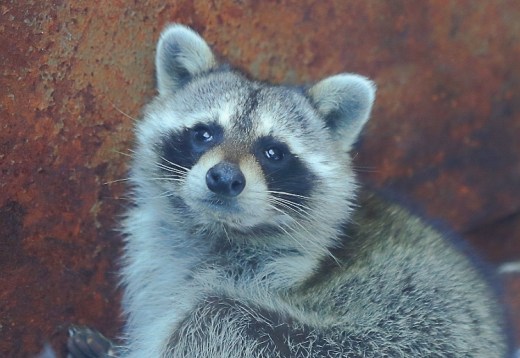
2022-01-17-003660-raccoon

This little critter was pointed out to me by a gentleman in a parking lot. Apparently It had been looking for tasty morsels in the large garbage bins, and was unable to get out on its own. Hopefully, someone gave him or her a ramp  to get out of the bin before the next garbage pickup.

2022-01-17-003640

I believe that this was a Yaupon Holly, or a cultivated variation thereof, as it was in the same parking lot as the raccoon. Could have been Ilex decidua, and just not dropped its leaves yet, due to a shorter Fall and Winter in Florida (if there is one). As a cultivated/planted plant, I didn’t bother to check it in iNaturalist.org.
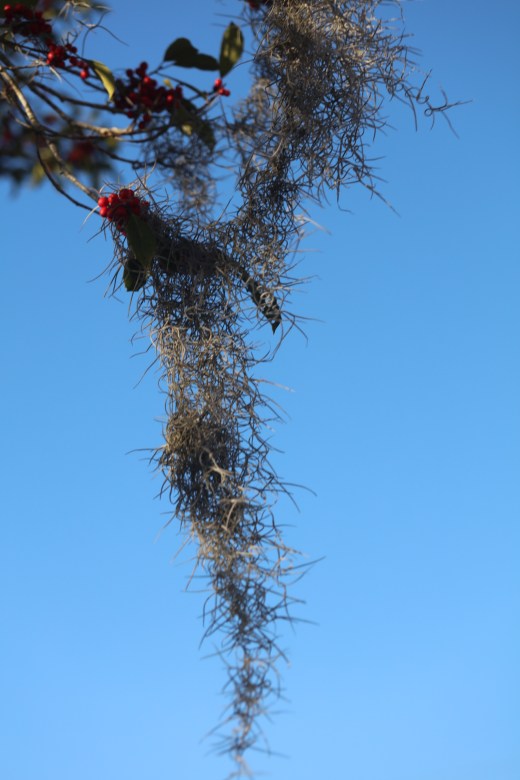
2022-01-17-003643

Spanish Moss

I suppose there is Spanish Moss in abundance in South and Gulf Coast Texas, but what we see here is mostly Ball Moss. So this was a distinctive and omnipresent reminder that we weren’t in the Greater Austin Metro Area anymore. (Of course, there were lots of Southern Oaks present, from which the Spanish Moss was hanging. We have them here, though other oak species are more common in Central TX.

A new one to me was this interesting little reddish plant. common name Tassel Plant. After encountering this one in the motel parking lot, I began to notice them all over Gainesville. An exotic or introduced plant.

Found in many places in the Gainesville area. An exotic or introduced plant

Tassel Plant

Finally, a fern which I had not yet known the name of A fern with the aptly descriptive common name of “Fishbone Fern.” This was shot in the jungle-like surroundings of Bivens Arm Nature Park on the South side of Gainesville, just north of Paynes Prairie. This photo  (below) was chosen because it demonstrates the leaf pattern that gives the fern its name.
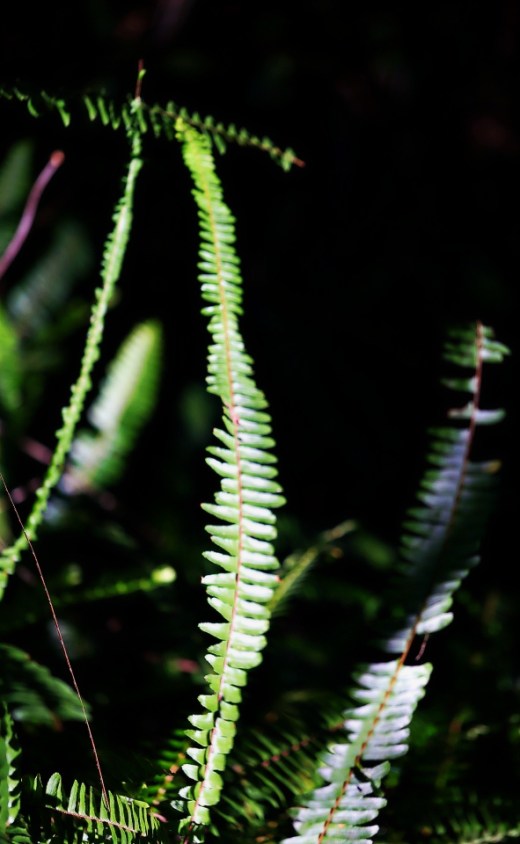
2022-01-18-003708-fishbonefern

Though it was nice to go “home”again, it was also nice to get back “home” again.

###

#nativeplants #Texas #Florida #GainesvilleFlorida

What’s in bloom in December?

Just a look at the most recent shots:

Taken on December 1, 2021. Since March 27, I have seen and photographed at least one Monarch Butterfly in each of the following months in 2021. And that just doesn’t seem right…

Old man’s beard

Last September, the bulldozers came and razed a 19 acre plot of land that was for sale. Along with it went any number of wildflowers, including a healthy stand of Old Man’s Beard, aka Texas Virgin’s Bower, and other native and a few invasive plants.

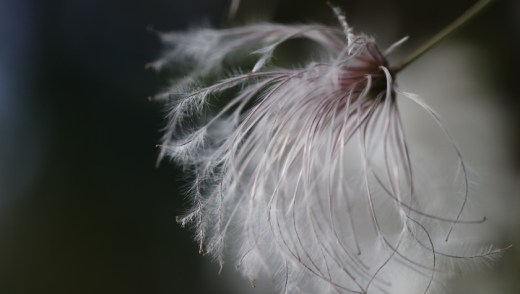
recently I came upon a female C. drummondii wending its way through some planted holly (most likely a non-native variety), catching the November sun in feathery achenes. 

And we have some losers…

Proboscidea louisianica - Ram's Horn, Devil's Claw

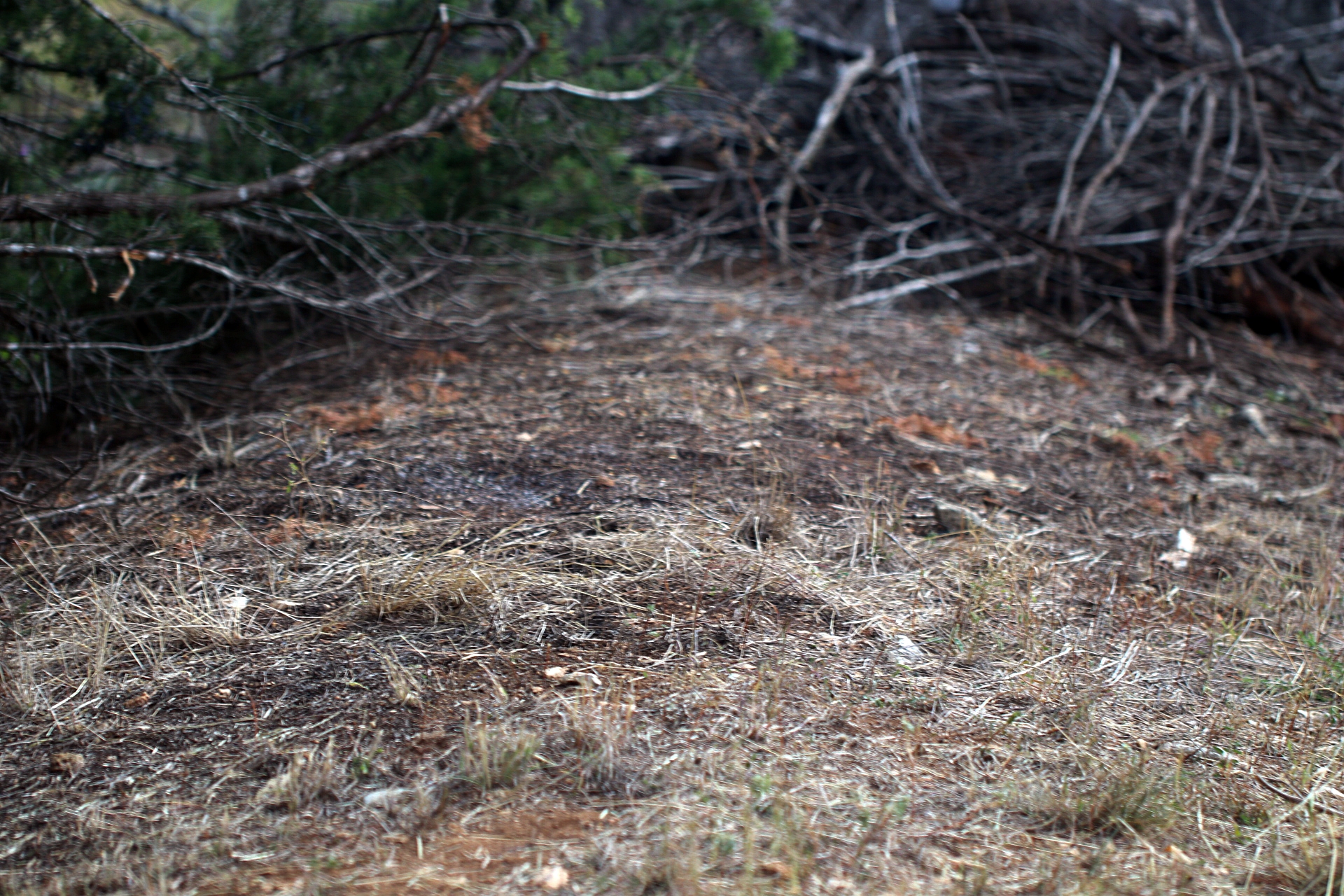
Not so long ago, (November 10th 2020) I went out to the backyard and looked over the fence to find that the mowers had once again been through the berm ( the area between the houses and the greenbelt/protected zone that prevents (one hopes) undesirable materials (such as pesticides) from draining into the cavern which houses an endangered species.

Here’s what I observed:

2020-11-10-3715

2020-11-10-3711

“Scalping” of the berm in several places. The berm is slightly sloped, so as one drives over the top from either side, it is hard to avoid scalping unless the blades of the mower are set to the seven inches which the Texas Department of Transportation specifies in its 2018 Roadside Vegetation Management Manual for rural areas and five inches in urban areas (Chapter 2, page 17). The reasoning is this: low cutting is undesirable because it:

  • stresses the vegetation, especially in dry, hot conditions, resulting in loss of desirable vegetative cover,
  • deprives wildlife of cover,
  • and the lack of leaves above the ground reduces the ability of the plants to develop roots below the ground, resulting in susceptibility to things like
    • erosion,
    • loss of native plant cover, and
    • vulnerability to invasive plant species which can crowd out native species because they have no natural enemies or symbiotic fauna species ( which might depend on them for survival).

Earlier posts on this blog have documented

  • Mowing on wet ground after a rain (Chapter 2, page 16)
  • Mowing down stands of wildflowers still in bloom, (Chapter 1, page 8), and
  • invasive species that were most likely introduced by failure to follow safe hygiene (Special Provision 730-003, which requires pressure washing before and after equipment enters and leaves an area).

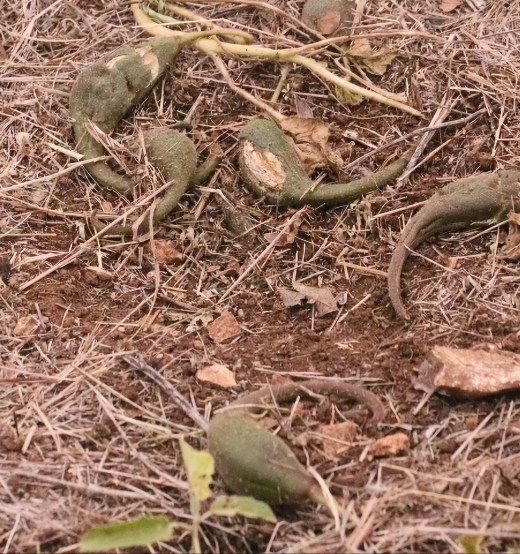
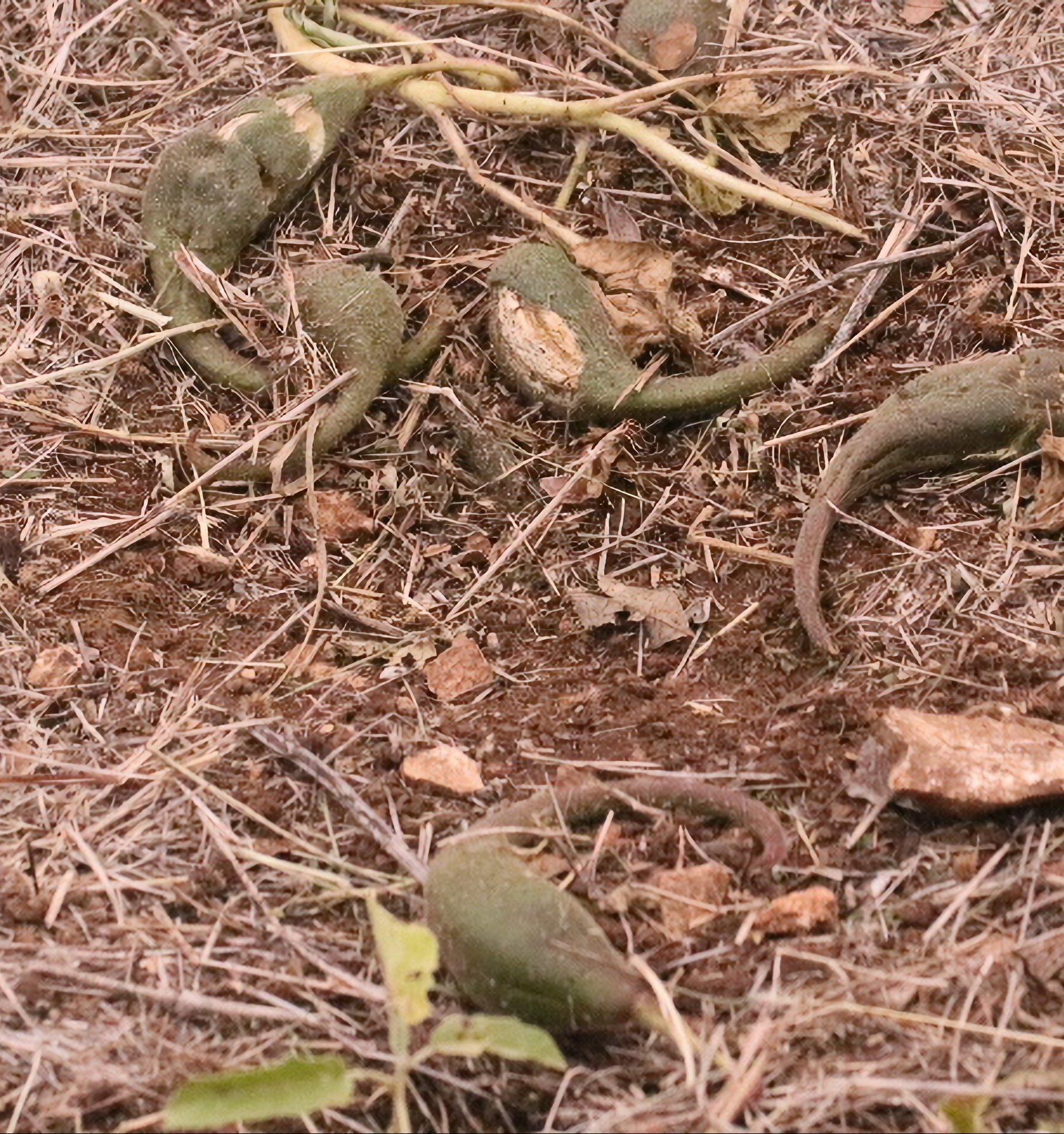
The November mowing was no exception, although it was done on dry soil, before a predicted rainfall the following week. But no plants below the height of three inches was spared. Although this Proboscidea louisianica was no longer in bloom, it had not completely set seed, as evident in these still green fruits. The mower had no sympathy for this Devil’s Claw.

Proboscidea louisianica - Ram's Horn, Devil's Claw

Proboscidea louisianica – Ram’s Horn, Devil’s Claw

One of my favorite Korean drama series, “Romance Is A Bonus Book” has a scene in which the CEO of the book publishing company says “You don’t need a botanist to mow the lawn.”

I’m beginning to think that you DO need a botanist, if not to mow the lawn, to tell the mowers When to mow, Where to mow, What to mow, How to mow, and Why to mow or not mow, so that the person Who does the mowing understands what he or she is doing, and can take pride in a job well done. The supervisors of the people who have mowed the berm between my house and the greenbelt, as well as other locations, based on the evidence I see, do not know, or have not trained their employees well.

Every time I see a roadside scalped, or steep sloped ditch mowed when it should have been planted with appropriate native plants, I wonder how long humans have before they realize that they are not the only species on this planet, and start to act as intelligently as they seem to think they are, “the most intelligent creatures on Earth.”

What was blooming (or not) 25 May 2020

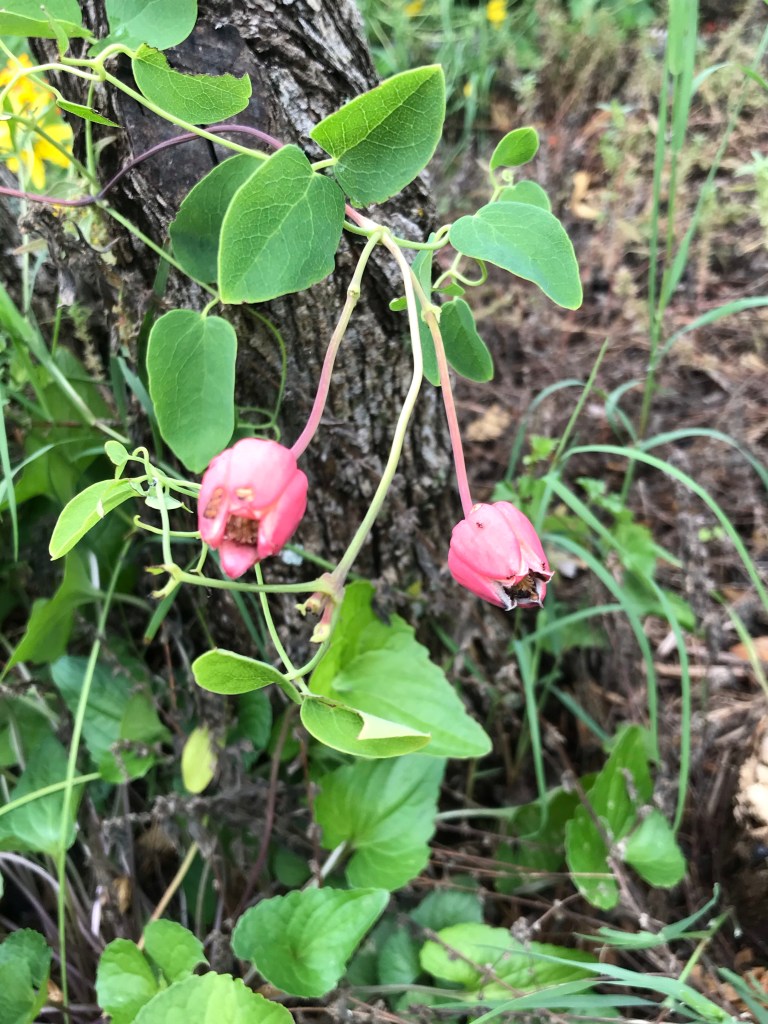
Clematis pitcheri (Purple leather flower) (cultivated)

(Posted about a year ago – edited to add the names of the plants), Went out in the yard and beyond today and captured a few items of interest. Didn’t go into the front yard because it was getting close to dinnertime.

Lantana urticoides (Texas Lantana)
Salvia farinacea (Mealy blue sage)(cultivated)
Symphyotrichum oblongifolium (Fall aster or Aromatic aster) (cultivated)
Merremia dissecta. (Alamo vine)(cultivated)(escaped from cultivation)
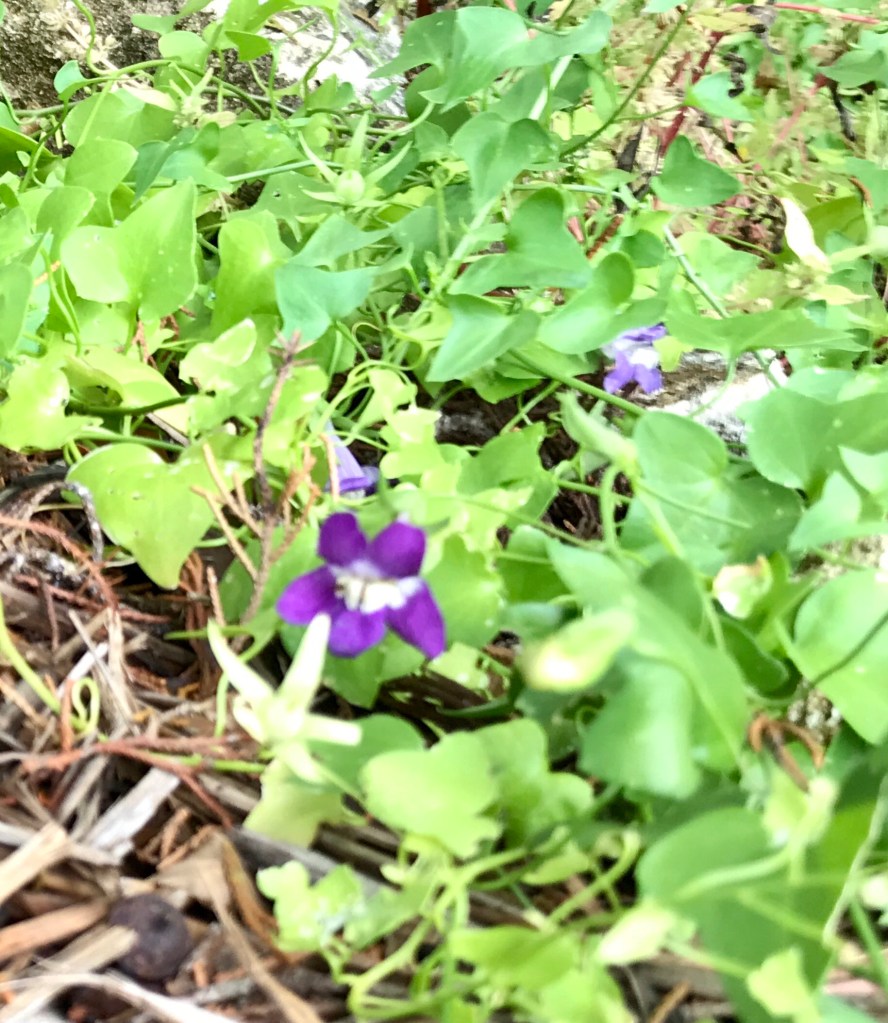
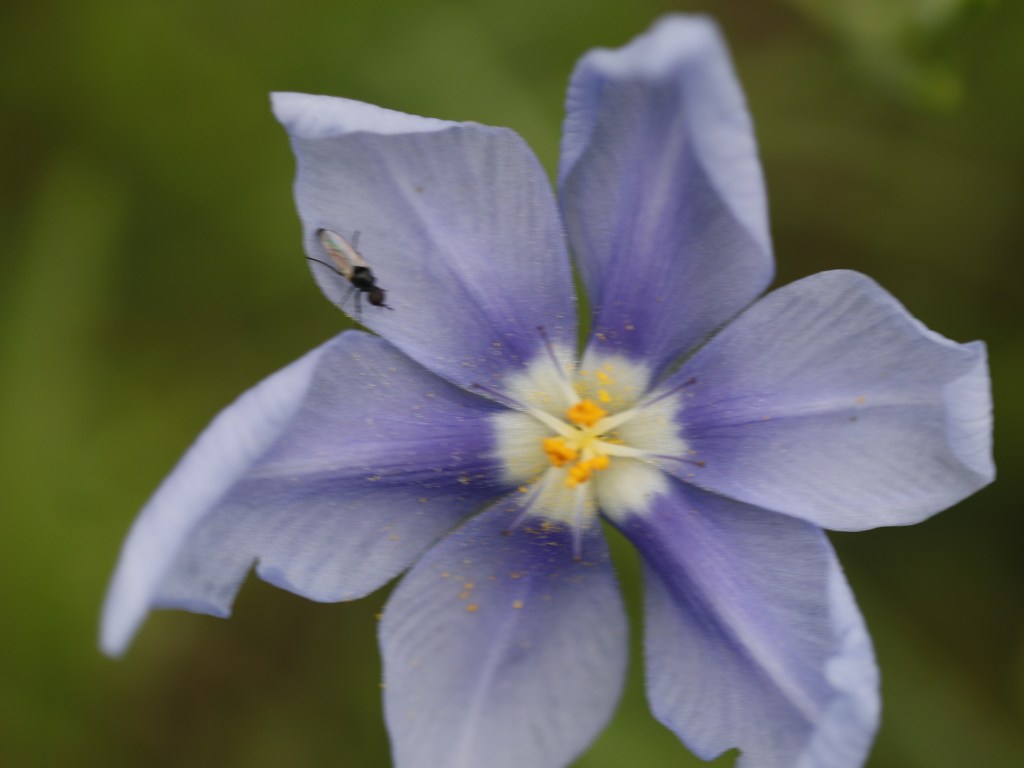
(Maurandella antirrhiniflora) (Roving sailor or Snapdragon vine) (native, not cultivated)
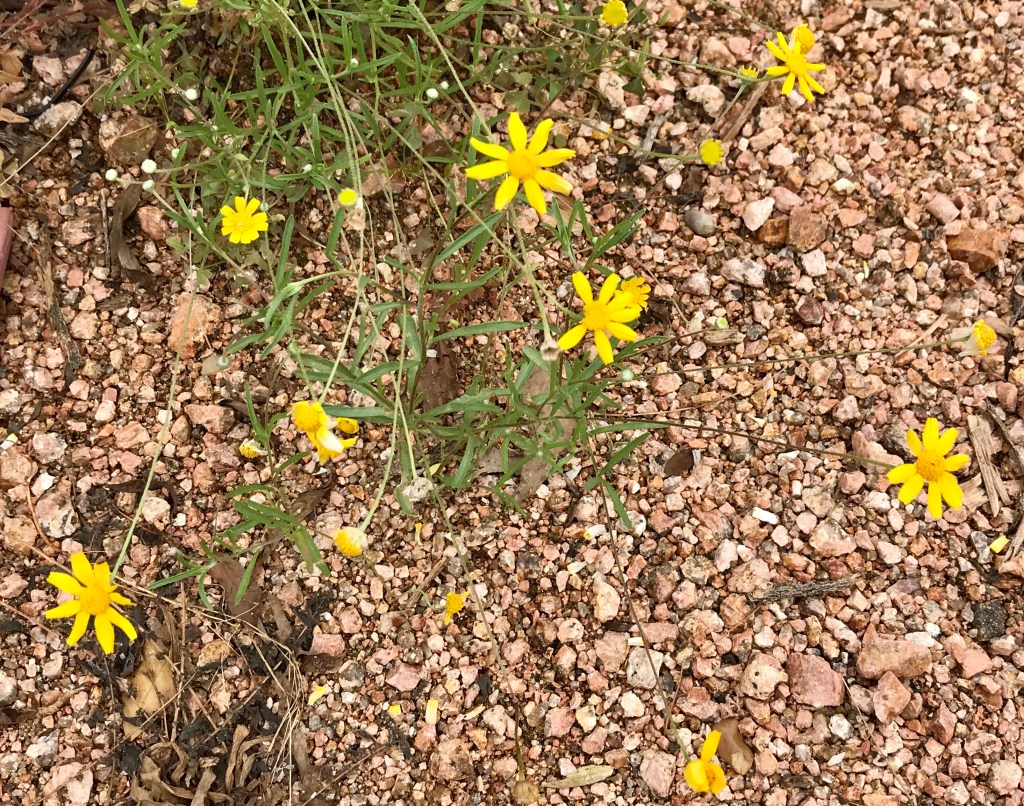
Tetraneuris linearifolia var. linearifolia (Slenderleaf bitterweed) (native, not cultivated)
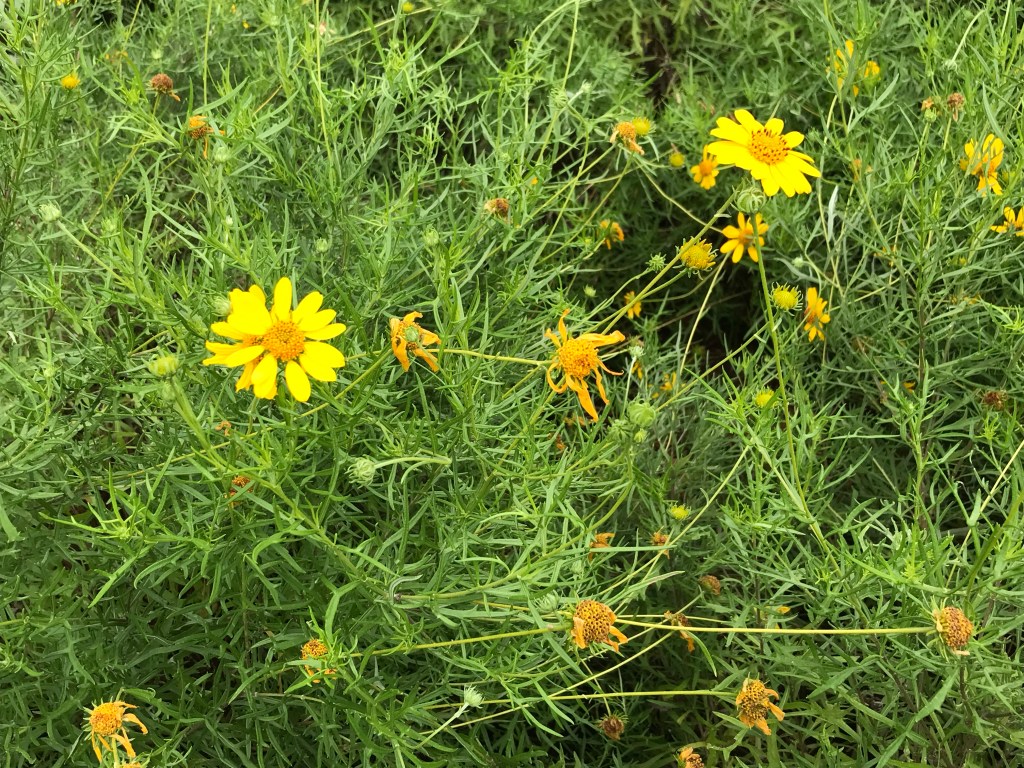
(Viguiera stenoloba) Skeleton-leaf Goldeneye (cultivated)
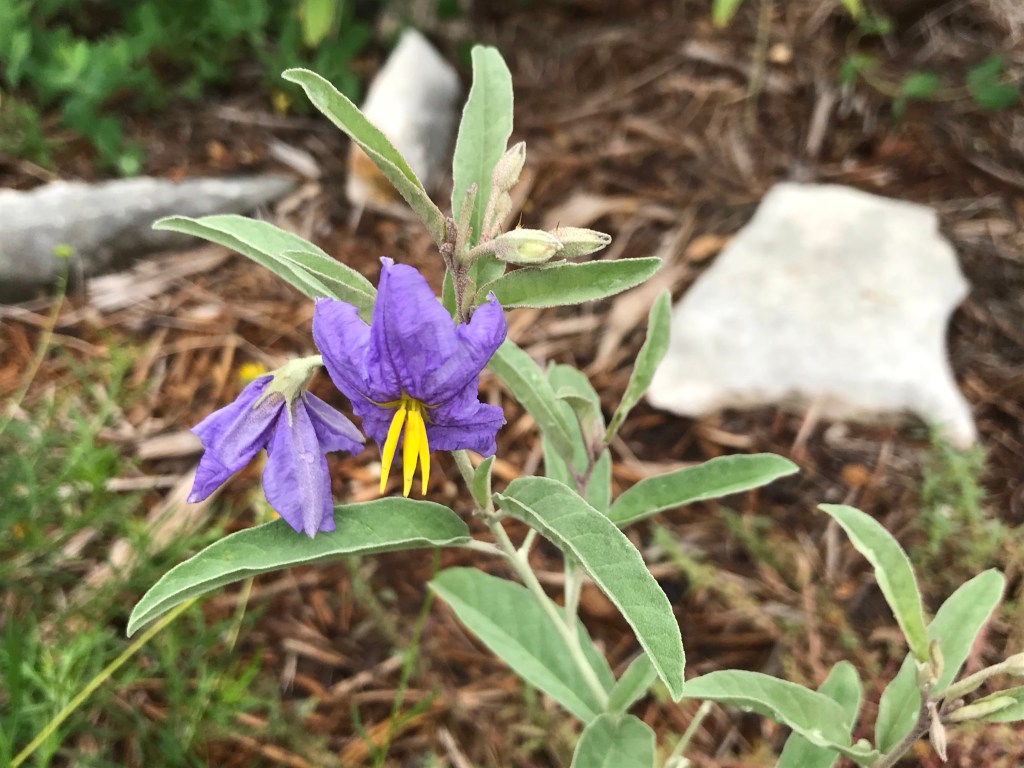
Solanum elaeagnifolium (Silverleaf nightshade) (native, not cultivated)
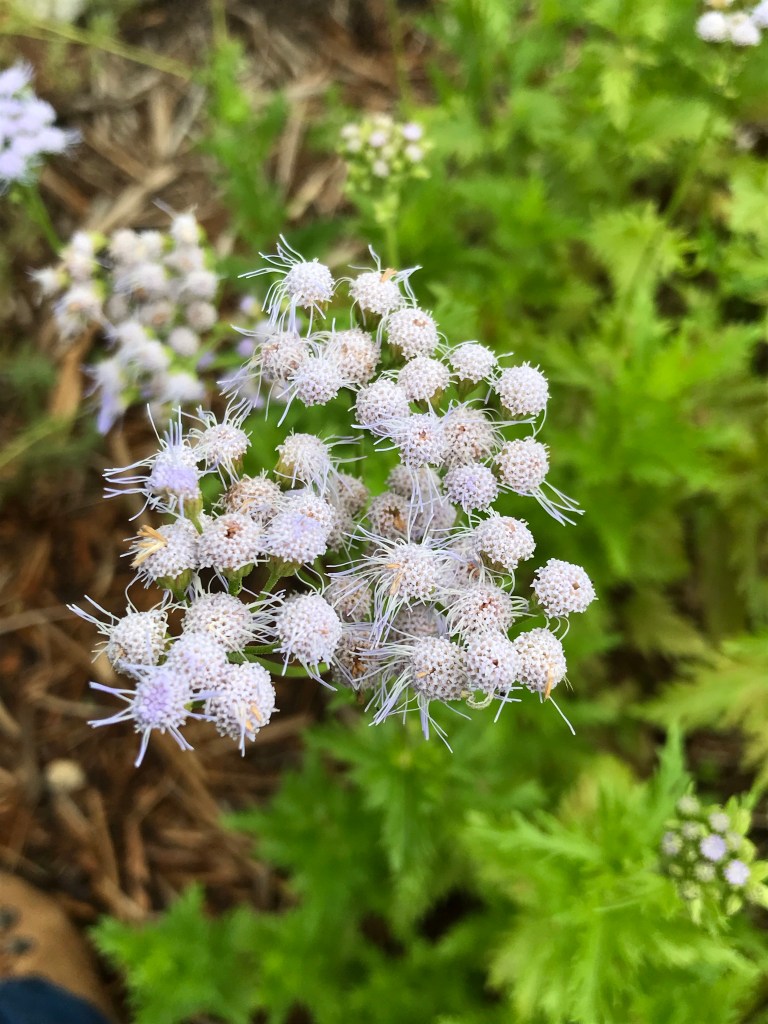
Conoclinium greggii (Gregg’s mistflower) (cultivated)
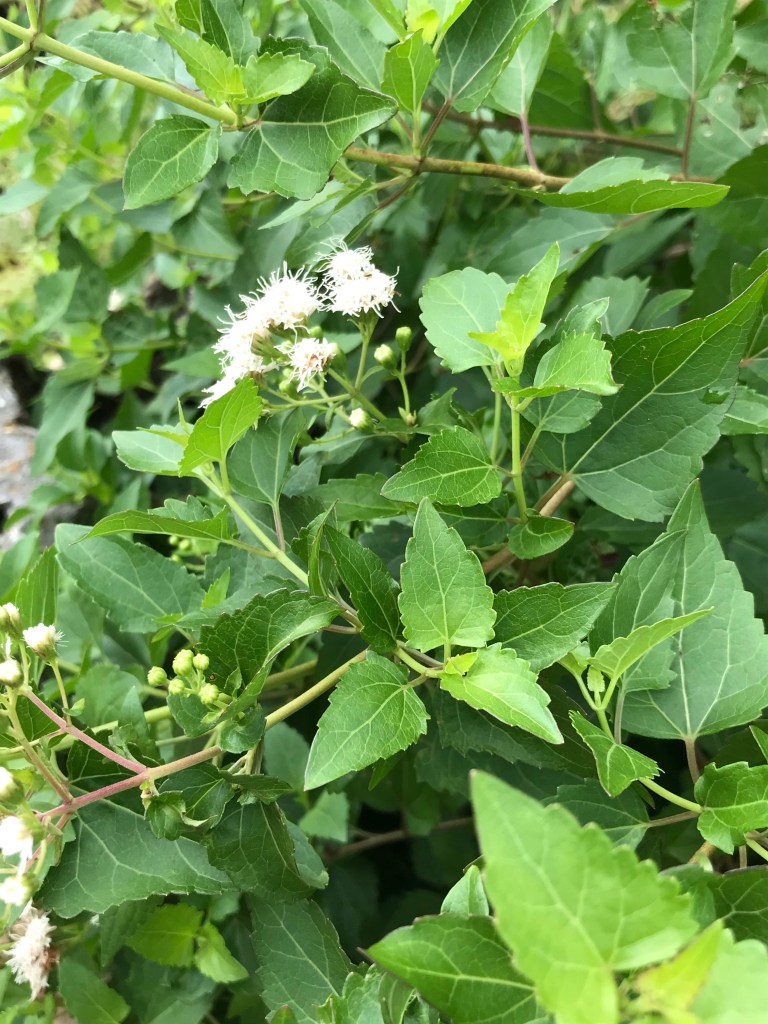
Ageratina havanensis (White mistflower, White boneset) (cultivated)
Viguiera stenoloba . (Skeleton-leaf goldeneye) (cultivated)
Callirhoe involucrata (Winecup, Purple Poppy Mallow)(cultivated)
Clematis texensis (Scarlet Clematis, Scarlet Leatherflower, Texas Clematis)(cultivated)
Opuntia sp. (Prickly pear)(cultivated, “spineless varietal)
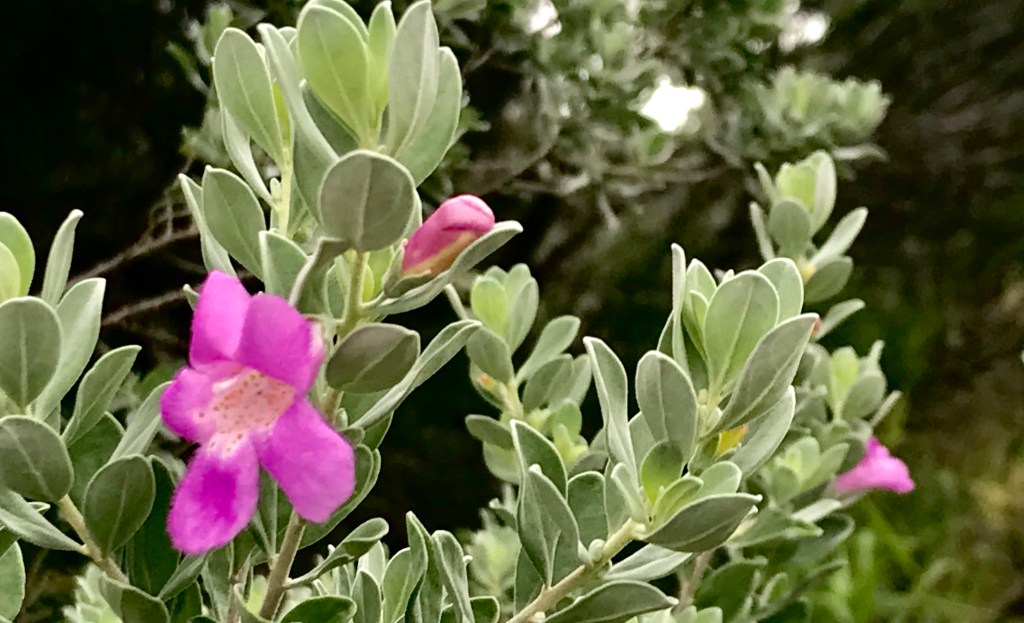
Luchophxllum frutescems (Cenizo, Purple sage, Trvas sage)(cultivated))
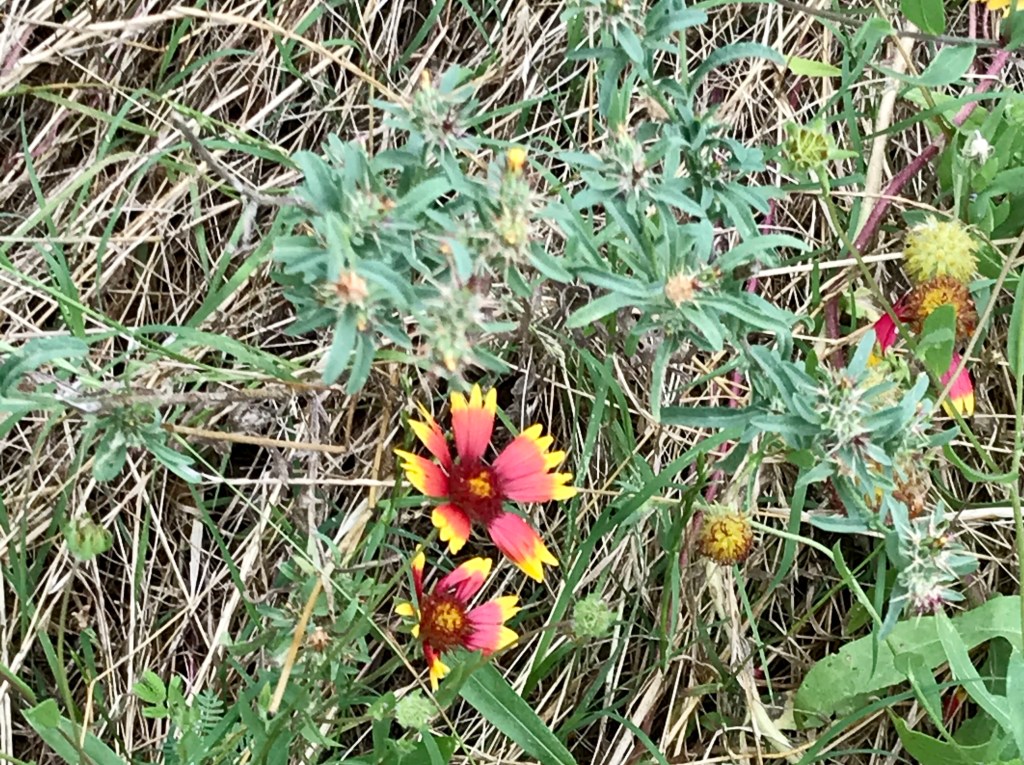
Gaillardia pulchella (Firewheel, Indian Blanket) (natiive, not cultivated)
Oenothera speciosa (Pink Evening Primrose, Pink Ladies) (native, not cultivated)
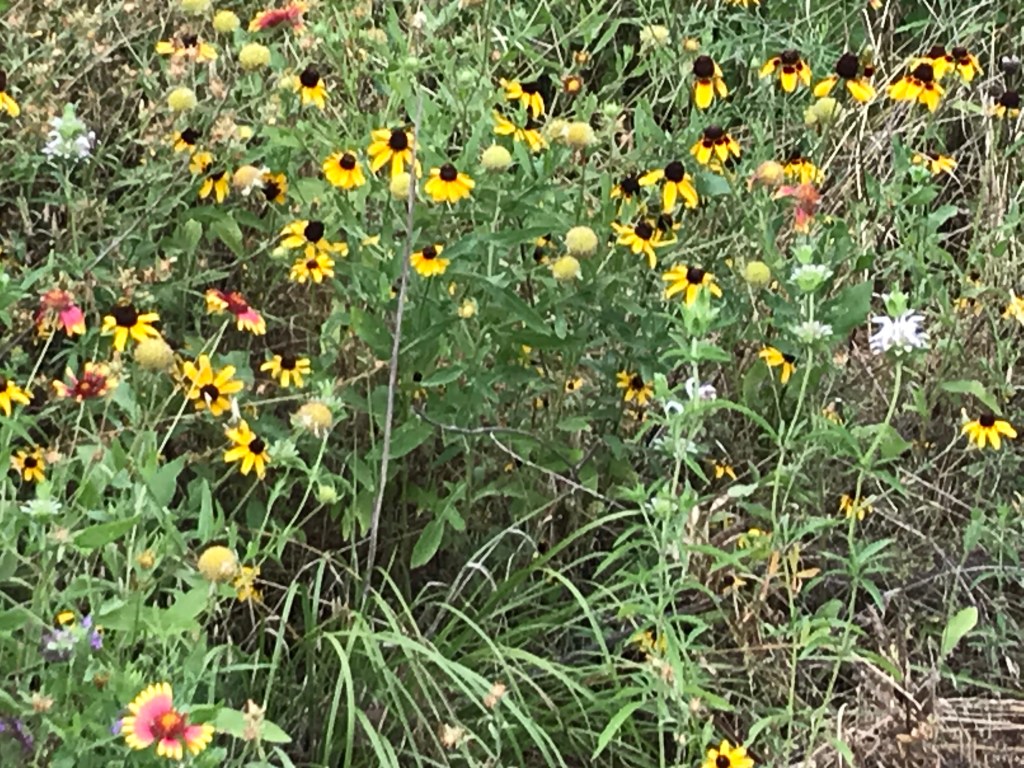
A variety of native plants (mostly)
Glandularia bipinnatifida (Dakota Mock Vervain, Prairie verbena) (native, not cultivated)
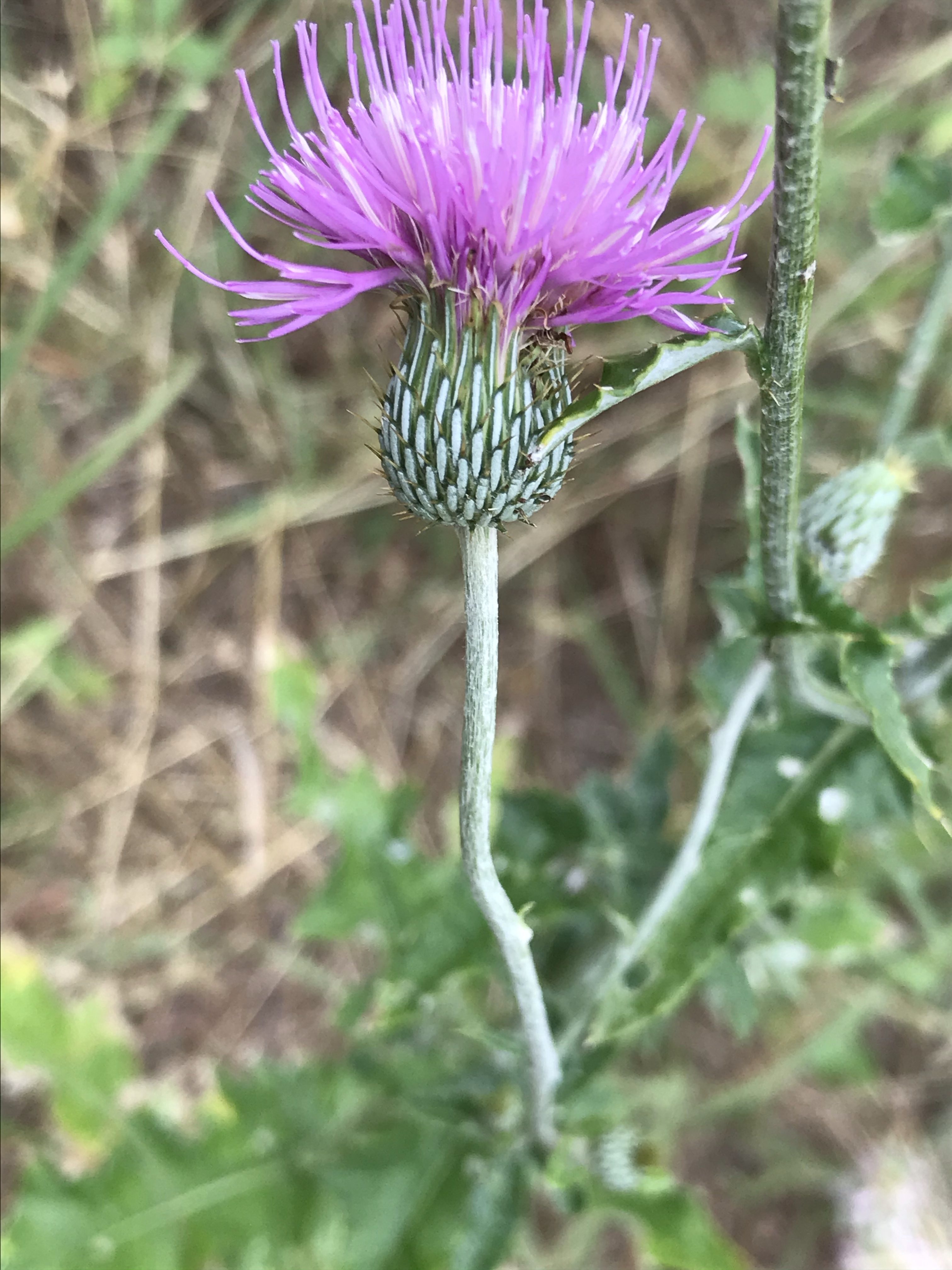
Cirsium texanum (Texas Thistle) (native, not cultivated)
Gaillardia pulchella (Indian Blanket) including recessive gene lacking red pigment, “Sunwheel” (native, not cultivated)
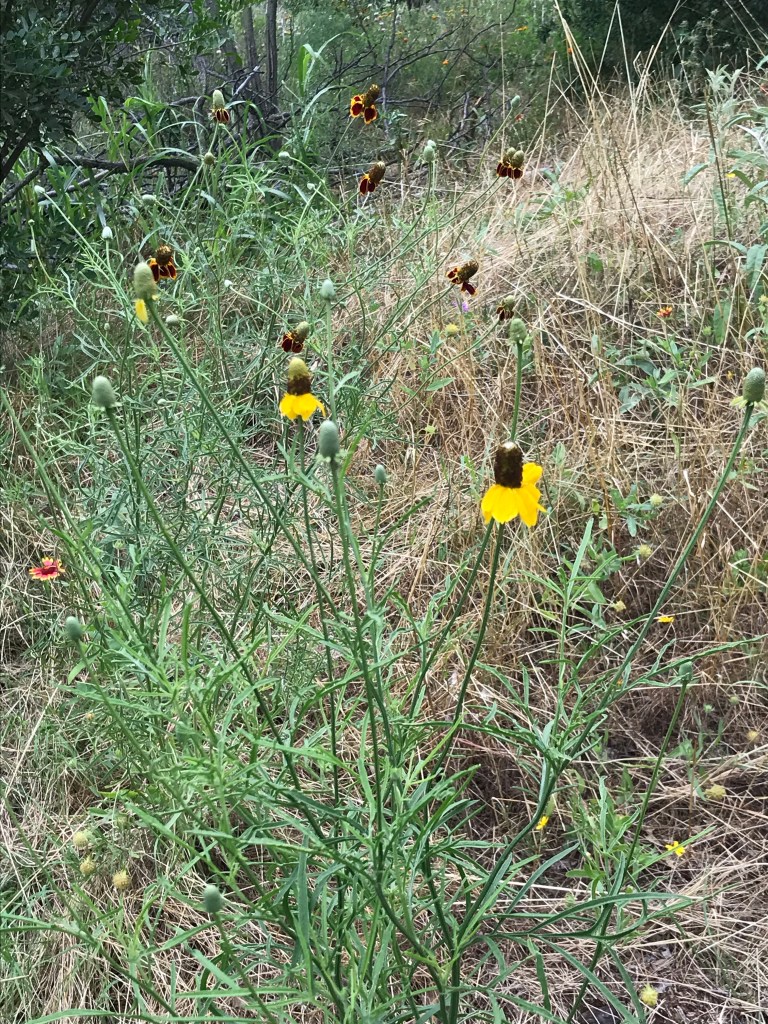
Ratibida columnifera (Prairie Coneflower, Mexican Hat)(native, not cultivated)

Return of the purple leather flower

_MG_08451024jpg

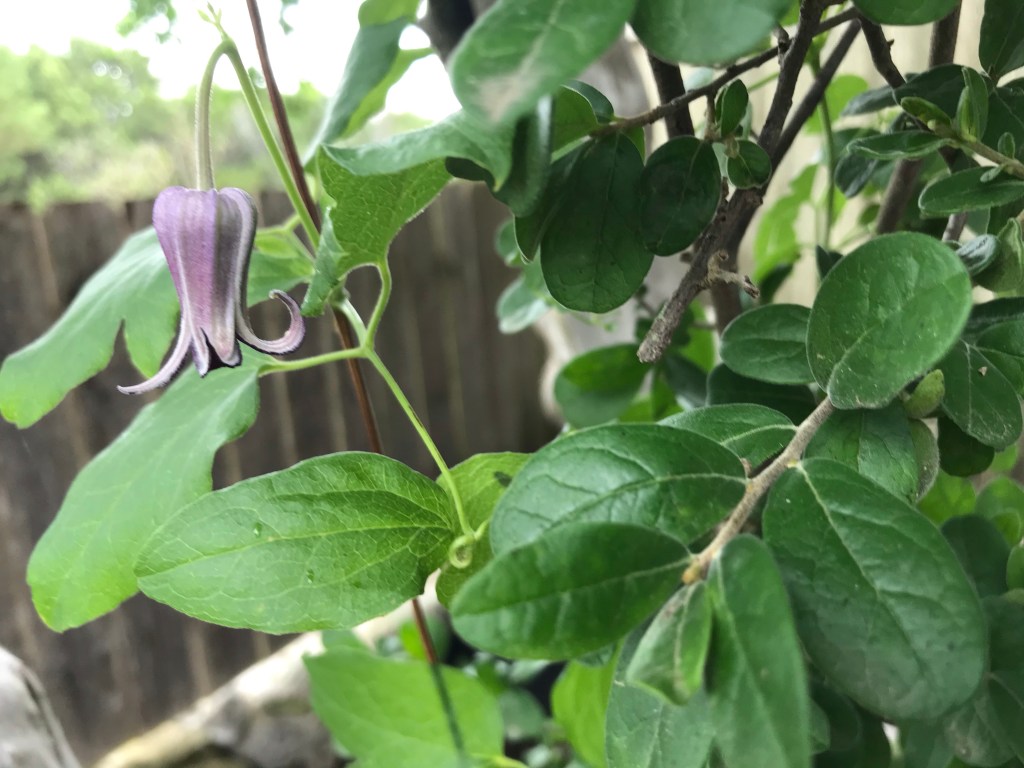
Clematis pitcheri – Purple leather flower

Back in the corner of our tiny lot, next to the compost bins and under the Diospyros texana, is a gallant vine that until now has shown no intentions of putting out any flowers.

Yesterday was the first day a bud showed up, so maybe it will get some followups as it matures, or other flowers come out. The Texas persimmon mentioned by its scientific name above provides the majority of the foliage in the photo above. but the Clematis leaves can be seen, they’re just much larger and out of focus.

Yesterday, while sitting on the back porch/deck, a titmouse came up to the trellis and started poking its head about. As I fumbled with my camera, I was able to get about four poorly focused or poorly framed shots, so my best guess is that it was a tufted and not aa black crested titmouse. As I tried to follow it around the yard after it left the deck, I took several shots of dubious quality. I was surprised to find that instead of the aforementioned bird, the next best shot was of a Carolina chickadee. Naturally, after the initial excitement of tiny birds flitting about the yard, I was left standing holding the camera without any feathered bipeds in sight, though I could still hear them singing – mostly a mockingbird.

Which I guess is why I mostly stick to plant photos – at least they stand still, more or less, except when the wind blows, or even breathes a whisper across them.

A small gift after clearing away invasive plants

20200520_190727

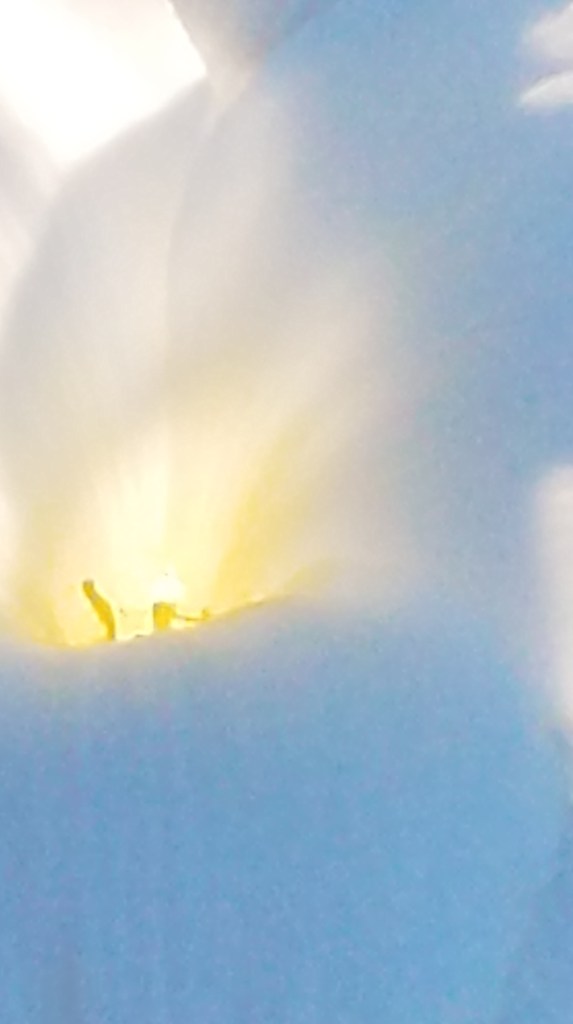
Cooperia pedunculata syn. Zephyranthes drummondii – Rain Lily

Thanks to some poor hygiene and poor knowledge regarding mowing ( or not mowing) next to a greenbelt, the berm behind my house and the neighboring greenbelt which has a cavern populated by endangered insects, has become overrun with Lolium perenne (annual ryegrass, winter ryegrass), Centaurea melitensis (Malta star thistle), and Bromus japonica (Japanese brome), to name the three worst offenders.

This February I wrote to both my HOA and my Municipal Utility District to report the failure of their mowers to follow the guidelines established in 2013 and 2018 by the Texas Department of Transportation on mowing of roadside vegetation, and vegetation adjacent to natural preserves.

Thankfully, the berm has not been mowed since early February, and I have been able to put in an hour or two, mostly on days following Spring rains, to fill about ten 42 gallon bags with the offending weeds. Although the natural covering of Gaillardia pulchella (Firewheel, Indian Blanket) and Ratibida columnifera (Prairie coneflower, Mexican hat) is greatly reduced at present, and I know that I will have to maintain vigilance and start pulling invasive weeds and grasses earlier next year, I did receive a small reward this past Wednesday.

As I was about to enter the berm to take a photograph of this Rain lily (Cooperia pedunculata, syn. Zephyranthes drummondii),  I noticed a small movement. It turned out to be an Eastern cottontail rabbit, munching on the plants in the berm. We both stood still for a few moments while I took some photos with my Android, it then hopped into the greenbelt and the cover of brush.

Then I went in, took a few shots of the Rain lily that would have been blocked from the sunlight by the ryegrass that I had removed, and caught the above photo of the light from the sunset shining through to backlight its stamens.

A small reward, perhaps, but a big warm feeling…

20200520_19073520200520_190755

For a fully detailed botanical description see: Studies on the Vascular Plants of Williamson County, Texas

###

Endemic in a time of a pandemic

2020_04_10_Clematis_texensis_1521

Clematis texensis – Scarlet Leatherflower

I just realized that there is an analogy between the pandemic coronavirus now causing troubles throughout the planet’s human organizations and the title and subtitle of this blog  – “Return To The Natives – Native Plants Are The Answer.”

C. texensis is endemic to the Texas Hill Country, or the Edwards Plateau, although because of the scarlet flowers, it has been exported to other locations for cultivation. However, it doesn’t seem to be an aggressive plant, so most places outside of Texas where it is found are probably in containers, where they are tended carefully by loving horticulturists.

The example shown above is a next door neighbor example of this phenomenon: Although it it is in Williamson County, TX, it was introduced and is under cultivation. I don’t know of any locations where it is growing in Williamson County without having been introduced by humans. But – it is native to Texas, and to neighboring counties, and who knows? – there might be some undiscovered instances of this species in the Balcones Canyon National Wildlife Refuge.

Unlike some other plants, like Poison Ivy, Malta Star Thistle, Perennial Rye, and Bur Clover, which are aggressive and spread rapidly when they are introduced to an area through human intervention, often by poor mowing practices, this one is unlikely to dominate your garden. But with the right conditions and in the right place, it can and will flourish in Central Texas.

More detailed information on Clematis texensis can be found at Studies on the Vascular Plants of Williamson County, Texas. If that is too much detail for you, there’s always the Native Plant Information Network (NPIN) database at the Lady Bird Johnson Wildflower Center

The analogy mentioned above?

The pandemic virus is like an exotic plant that is introduced to areas where it doesn’t belong – and spreads, unchecked, unless we take quick action to recognize the problem and isolate, treat, and follow up on contacts, to eradicate and mitigate the adverse effects. The same analogy applies to invasive animals, whether Zebra mussels in the lakes of the South, or pythons in the Florida Everglades. It’s hard to get the genie back in the bottle, or to get everything back inside Pandora’s box.

Stay home. Practice good hygiene, whether traveling or working with plants. The only thing that can prevent pandemics is you, to borrow a slogan from a well known fire prevention campaign.

Plant and grow things that are native to the area in which you live – practice proper hygiene when traveling from place to place, being careful not to spread seeds through carelessness, and if you gotta mow, mow only at the right time and the right places that need mowing for the primary reason of safety. Bermuda grass is hard to eradicate once it has spread, and viruses are hard to kill but easily spread through careless hygiene practices.

Don’t “stop to smell the roses” – Learn about the plants that are native to your area, and take the time to enjoy them and their relationships with the wildlife, butterflies, and native bees that are in your six feet of separation.

###


Return of Return To The Natives

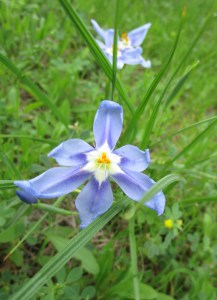
Well, folks, this site was left behind a few years ago, but from my overall WordPress traffic reports, it seems to be visited from time to time. Thus it seems that it might not be a bad idea to start updating it. Could be wrong of course, but here goes nothing: One of my favorite Texas native wildflowers, the Prairie Celestial.

Nemastylis geminiflora - Prairie Celestial

Nemastylis geminiflora – Prairie Celestial

These members of the Iris family bloom for approximately two weeks, beginning with somewhere near the Spring equinox, and ending around April 1st. This year, there was an early “scouting” expedition around the 13th-15th of March, then a gap, followed by the expected blooming around the 19th of March through April 1st, which appeared to have been the last of it. Then, around the 5th through the 10th of April, I discovered some more blooms, stragglers, as it were.

Each flower blooms for just one day, and they often appear in pairs, hence the species name geminiflora. Each plant, which is a deep seated bulb (and hard to dig up, even for scientific sampling), may have several flowers. Another common name is Pleat Leaf Lily, derived from the “pleats” in the leaves, as shown below.

You might also note the bur clover or yellow clover, an invasive weed that forms a carpet and crowds out native plants, especially when mowing is frequent and close to the ground, and mowers move between locations without pressure washing plant materials off the blades of their mowers.

Nemastylis geminiflora - Pleat Leaf Lily

Nemastylis geminiflora – Pleat Leaf Lily

Gaillardia aestivalis var aestivalis – Prairie Gaillardia

Gaillardia aestivalis var aestivalis - Prairie Gaillardia

Gaillardia aestivalis var aestivalis – Prairie Gaillardia


Although this Gaillardia is indeed a native to Texas, and was photographed next to Gaillardia pulchella, the familiar Indian Blanket or Firewheel, this particular specimen is located at the Cape Canaveral National Seashore. It is found mainly in the coastal states, in dry, sandy soils. So I would guess in Texas it would be familiar along the Gulf Coast, while this Florida native was next to the Atlantic Ocean.