Clematis and Milkweeds, welcome to the family…

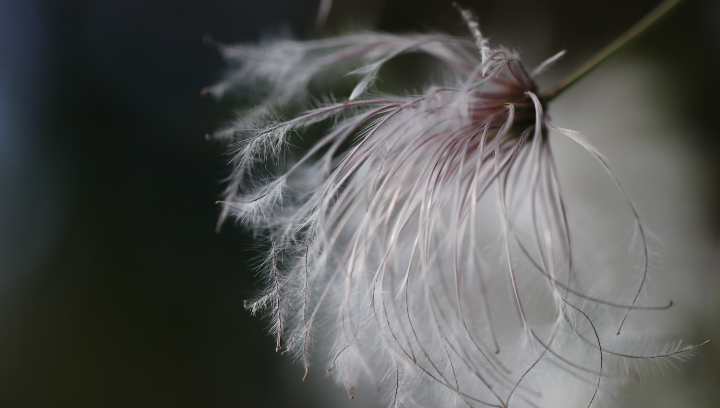
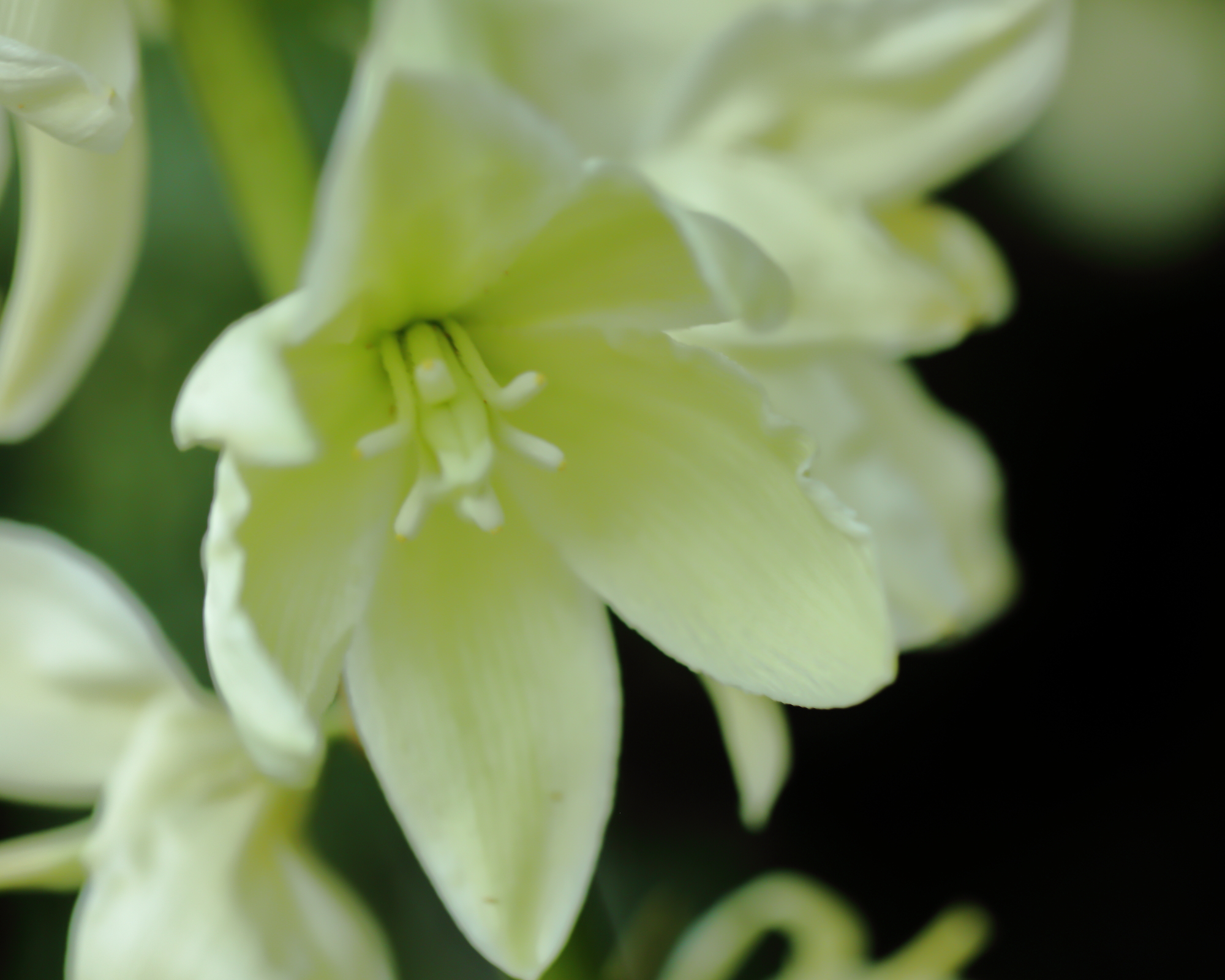
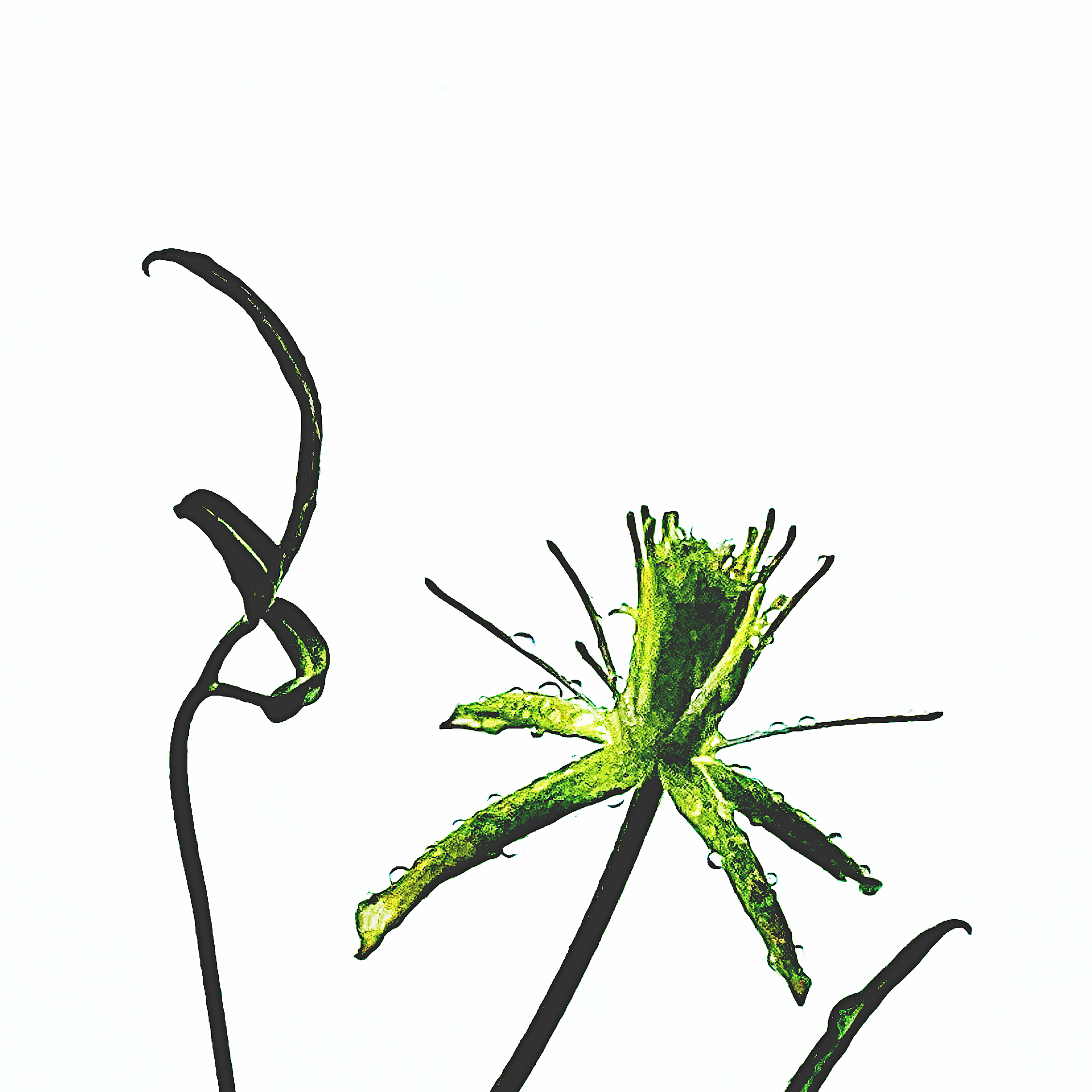
One of my favorite “flowers” is the female Clematis drummondii which is most noticeable in the late summer as the achenes turn into cascades of clouds that give it one of its common names, Old Man’s Beard. The actual flower is shown in the first photo following, the achenes in the other two:

Another favorite plant is Matelea reticulata, commonly known as Pearl Milkweed Vine, due to the “pearl” in the middle of its flower. It, too, is native to Central Texas, where I no longer reside, having “pulled up roots” to move a bit further to the North.

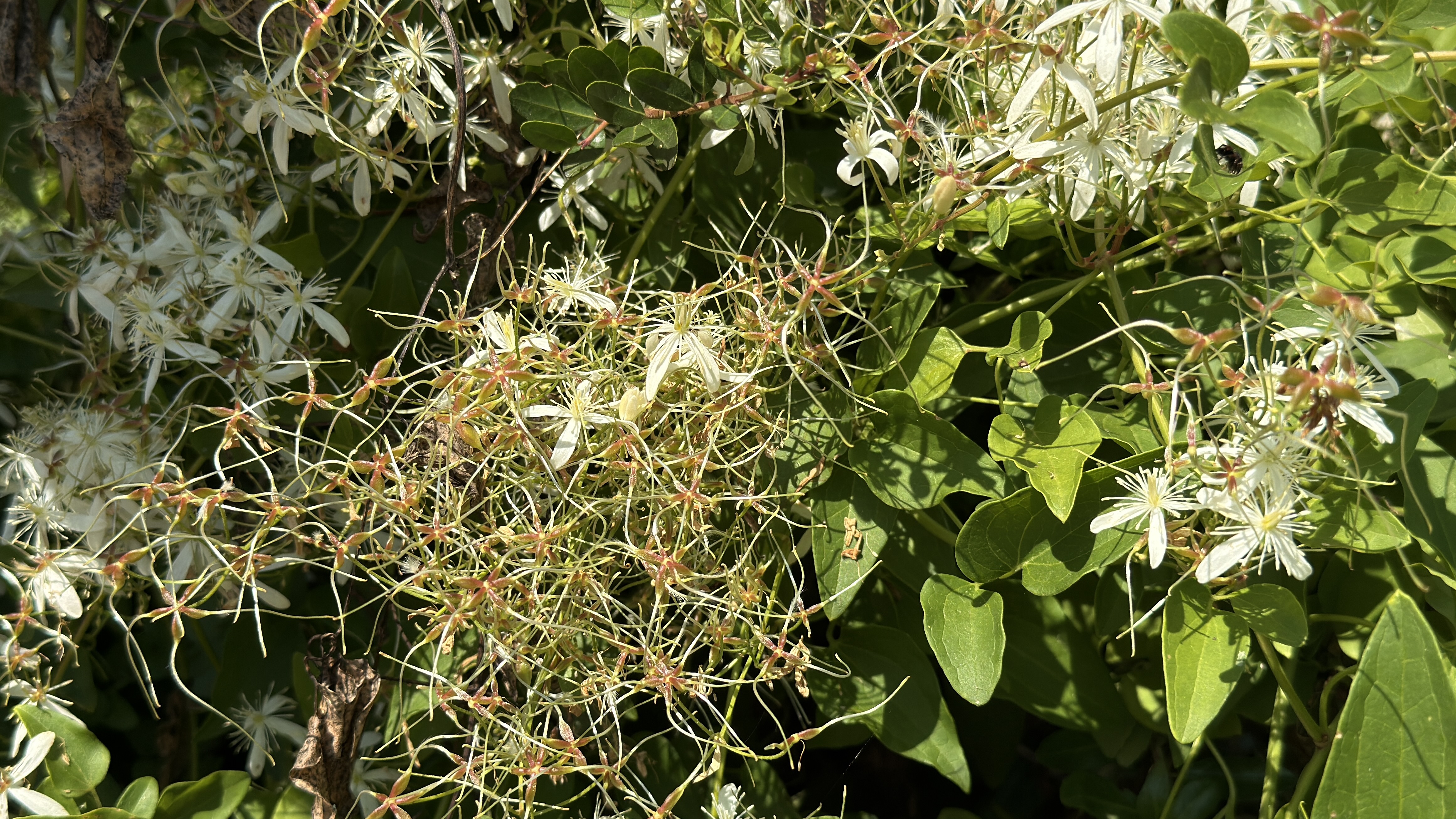
I was pleasantly surprised to find, recently, a different Clematis, native to Central Oklahoma. Clematis terniflora, or Autumn Clematis, as it’s commonly known, is smaller than its Texas cousin, but still provides striking clouds of white flowers and achenes along the roadsides and in ditches. In this case, the flowers provide the show, and the achenes are less showy than those of C. drummondii, as seen in the third photo following:
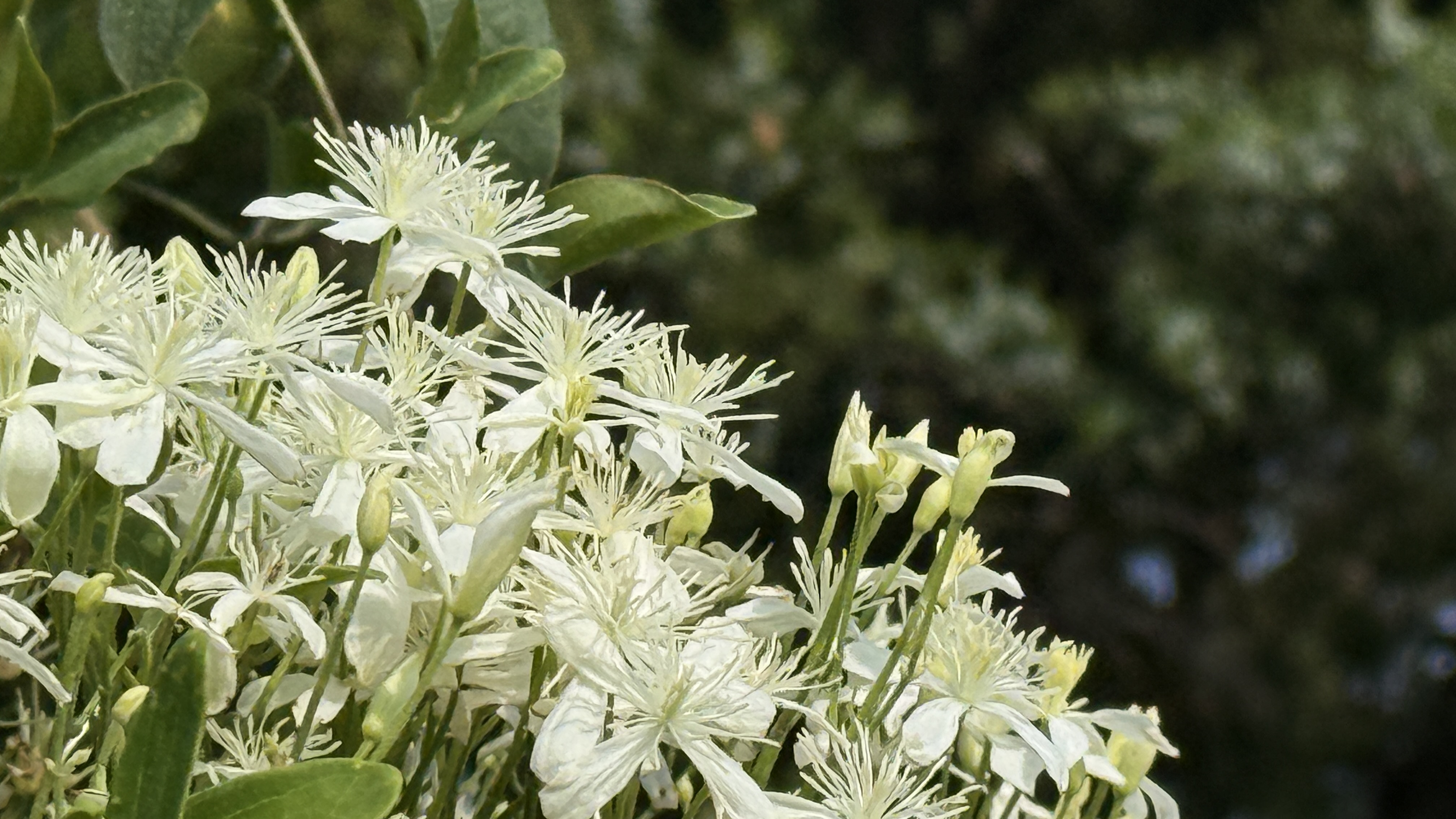
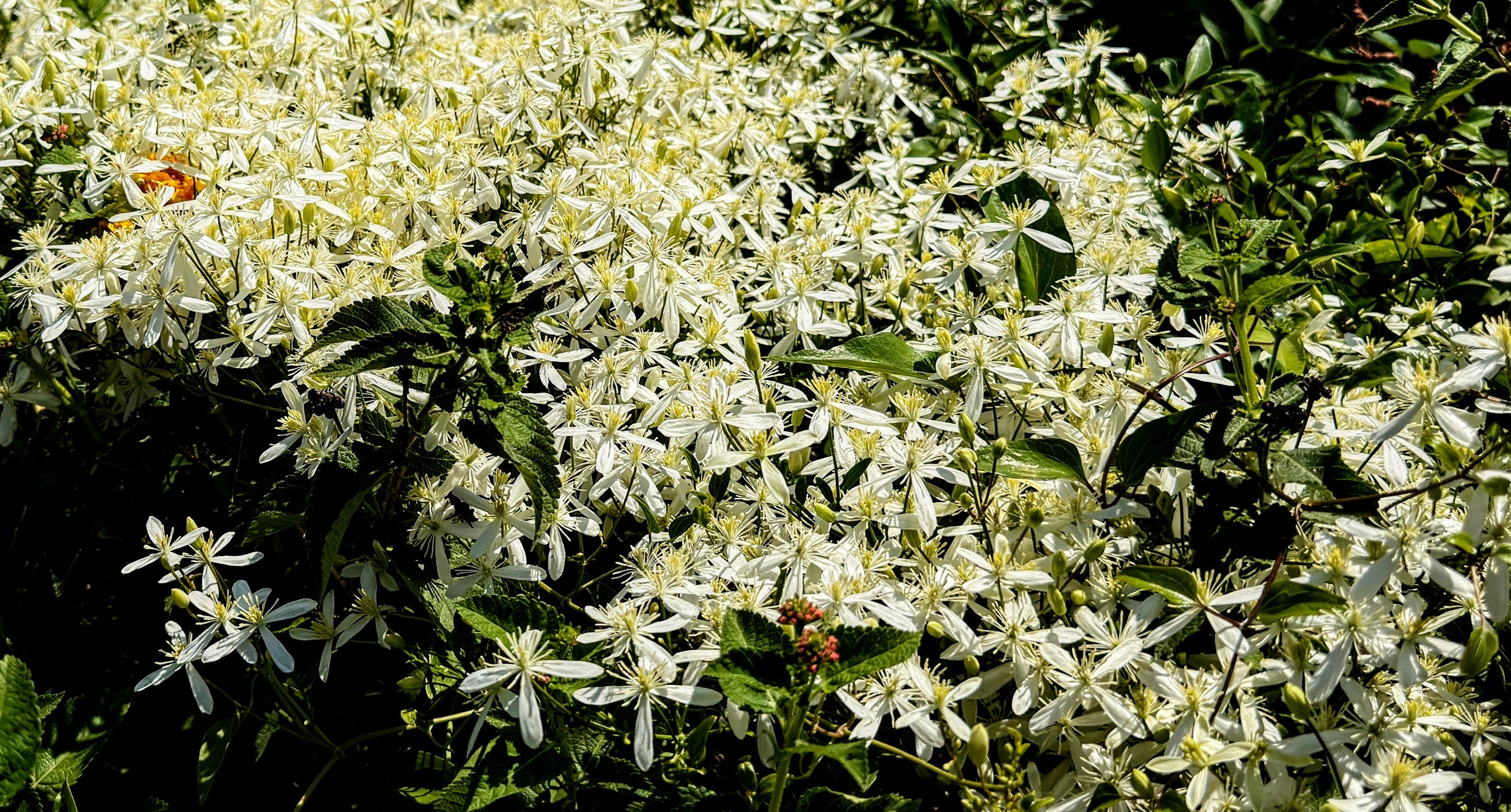
Cynanchum laeve, common name Honey Milkweed Vine, has been observed in several locations around here, notably near the airport and a few miles away. As suggested by the common name, the flowers give off a strong, sweet smell attractive to humans and pollinators alike.

While they’re not the same species one has become accustomed to, the “new” species are familiar enough to provide a sense of a welcoming environment.

###
It might as well be Spring… or Fall

The long dry Summer was followed by a few showers (about a week, and 6″ of the liquid stuff), and some more warm weather. Some plants, like the Clematis drummondii in the first few frames, decided it was a good time to put out new fowers, even though they had already gone through the yearly cycle of blooms, with the female plants putting out their achenes that have given the plant the common name of Old Man’s Beard.

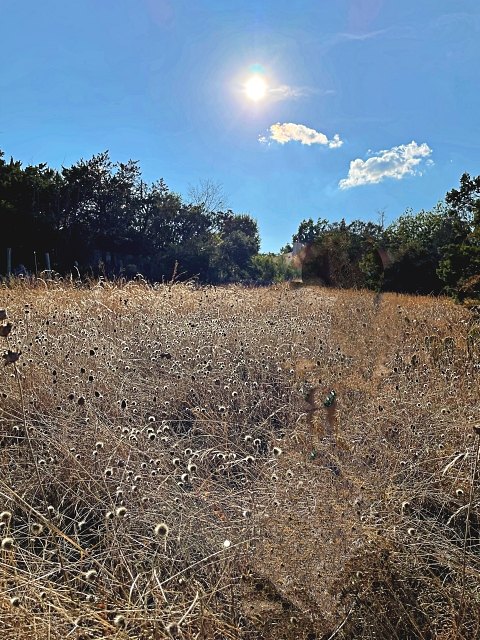
The vignetted shot towards the sun shows a Cedar Elm (Ulmus crassifolia) with some of its leaves already starting to turn to their Fall golden yellow color. In the tangled web of branches and vines are a few other species, difficult to identify in the photo.

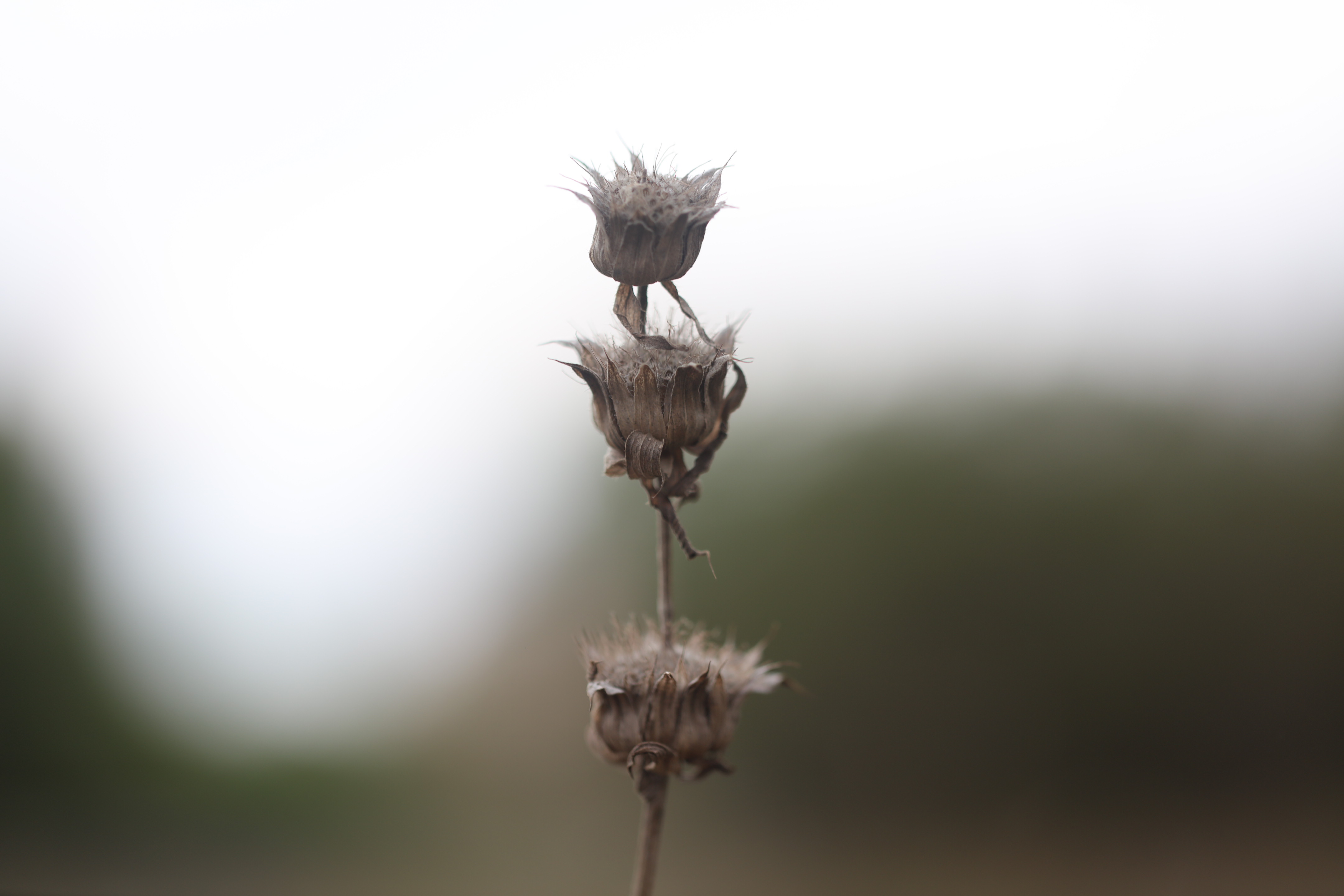
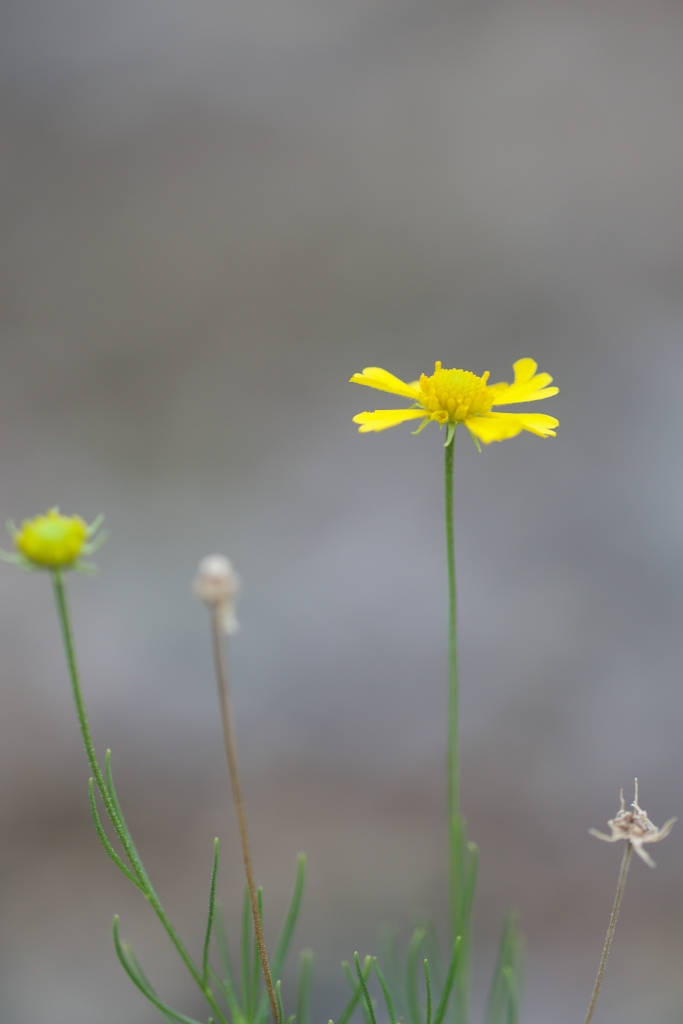
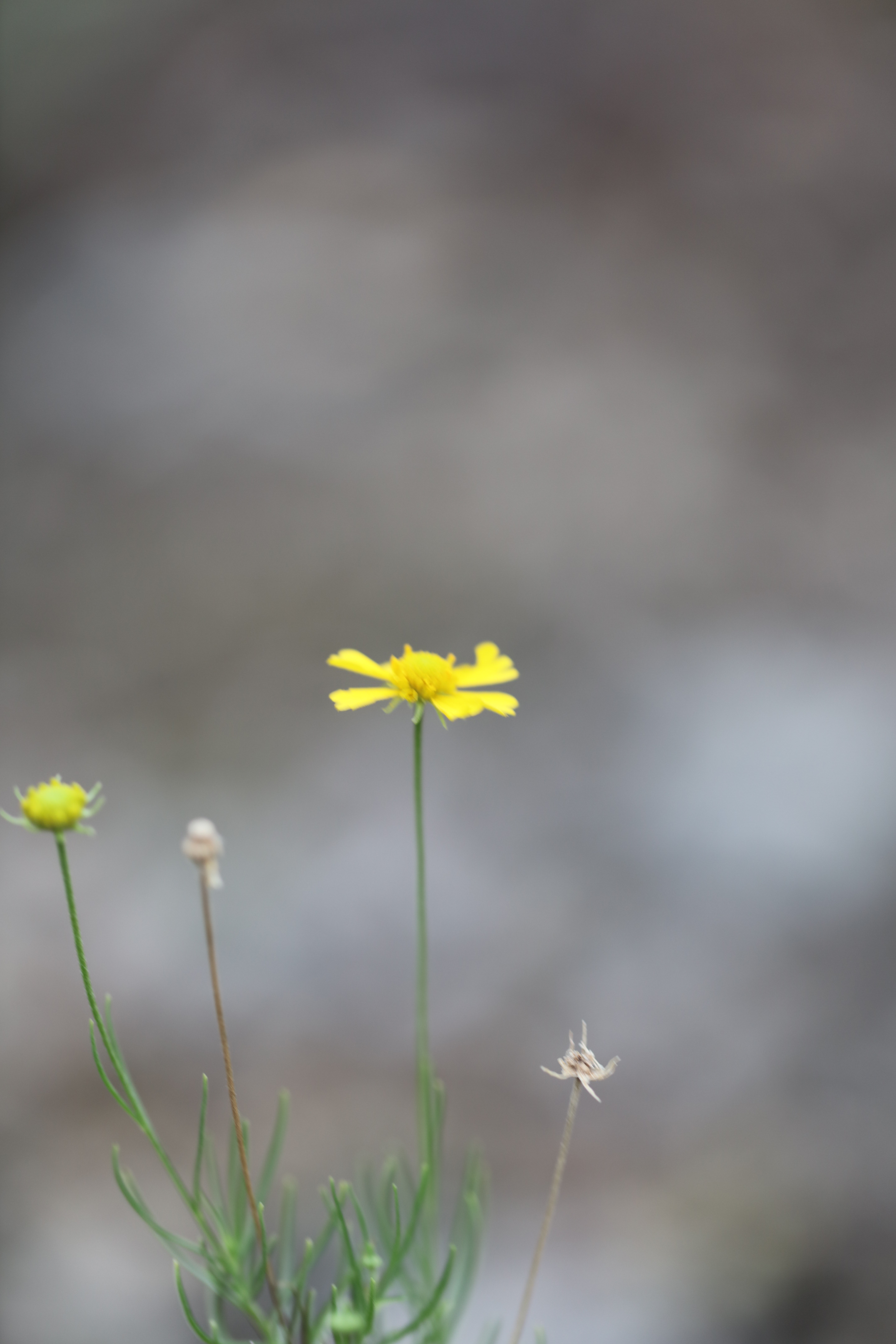
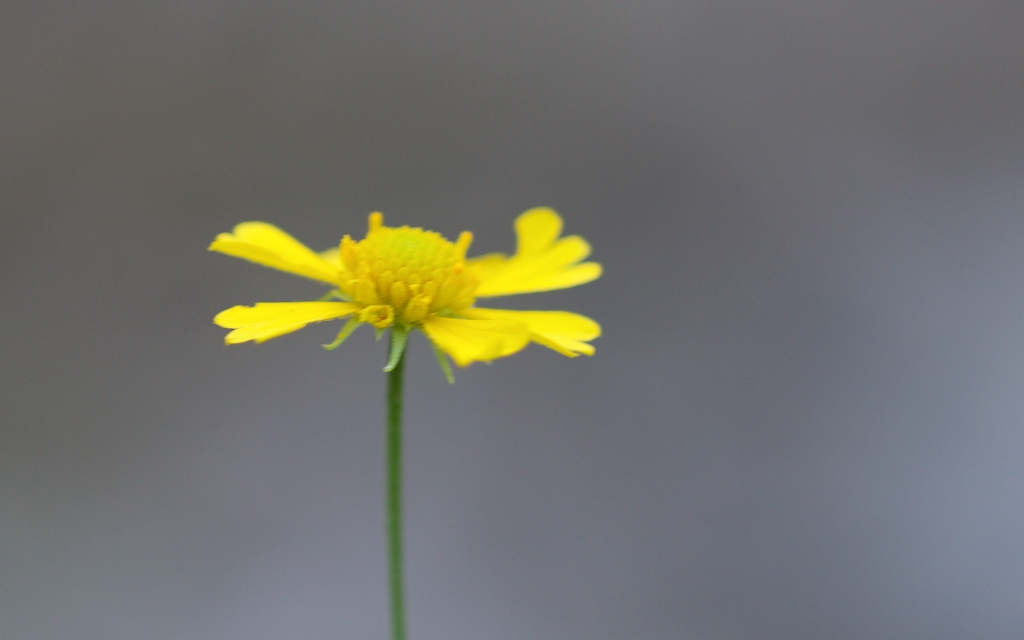
The bottom left shot shows the desiccated remains of a Monarda sp. (hard to tell them apart from just the skeletal remains). Meanwhile, in the lower right is Tetraneuris scaposa or Four-nerve daisy, a perennial that can bloom throughout all four seasons, given the right conditions.

And so it goes…

###


Recent blooms, both contained and wild

All the photos above were taken in September and October 2023, either in our yard or in the berm and greenbelt behind it. As one can tell, there was some rain during that time, enough to push up a few rain lilies, but not so much that most plants thrived.

###

Blooming in late May and Early June…

Here are a few of the flowers and other stuff I managed to capture on digital media recently.

Actually, there are a lot more items in bloom, but these were closest on hand. The front yard also has Four-nerve daisies, Wright’s skullcap, Autumn Sage, Simpson’s rosinweed, Turkscaps, Engelmann daisies, Rock Rose, and White avens in bloom, besides those pictured below.

The South side of the house has Passiflora vines, copious amounts of Gulf Fritillary and other butterflies in varied stages of development, a Texas lantana, a Datura , lots of Blue Curls, a couple of White mistflowers (not blooming until the Fall), Clematis texensis and drummondii, some Asclepias plants for the Monarchs, and that pretty much covers what’s on bloom in June.

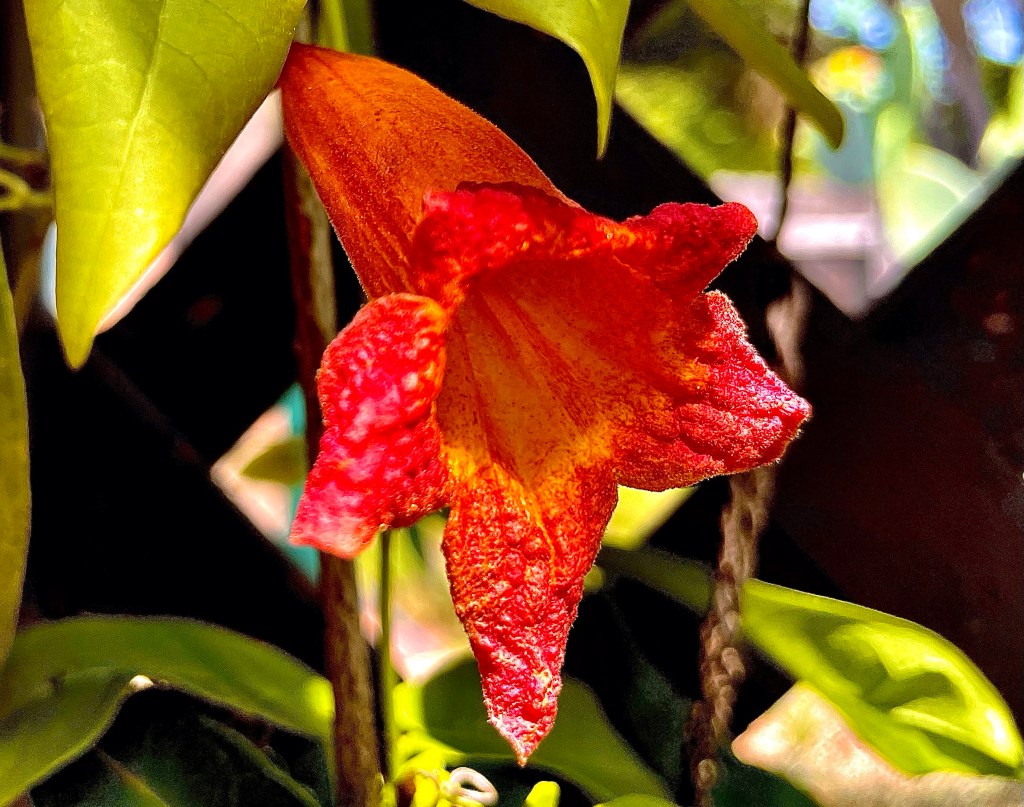
Bignonia capreolata (Crossvine), slightly past its glory

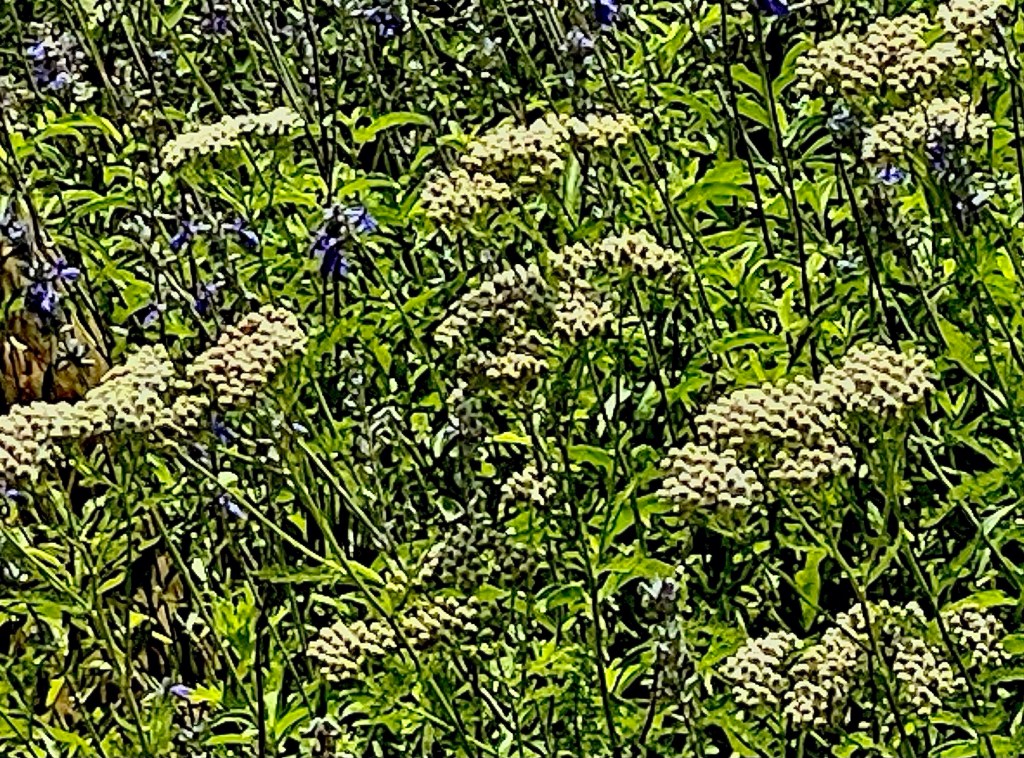
(Achillea millifolium) Milfoil

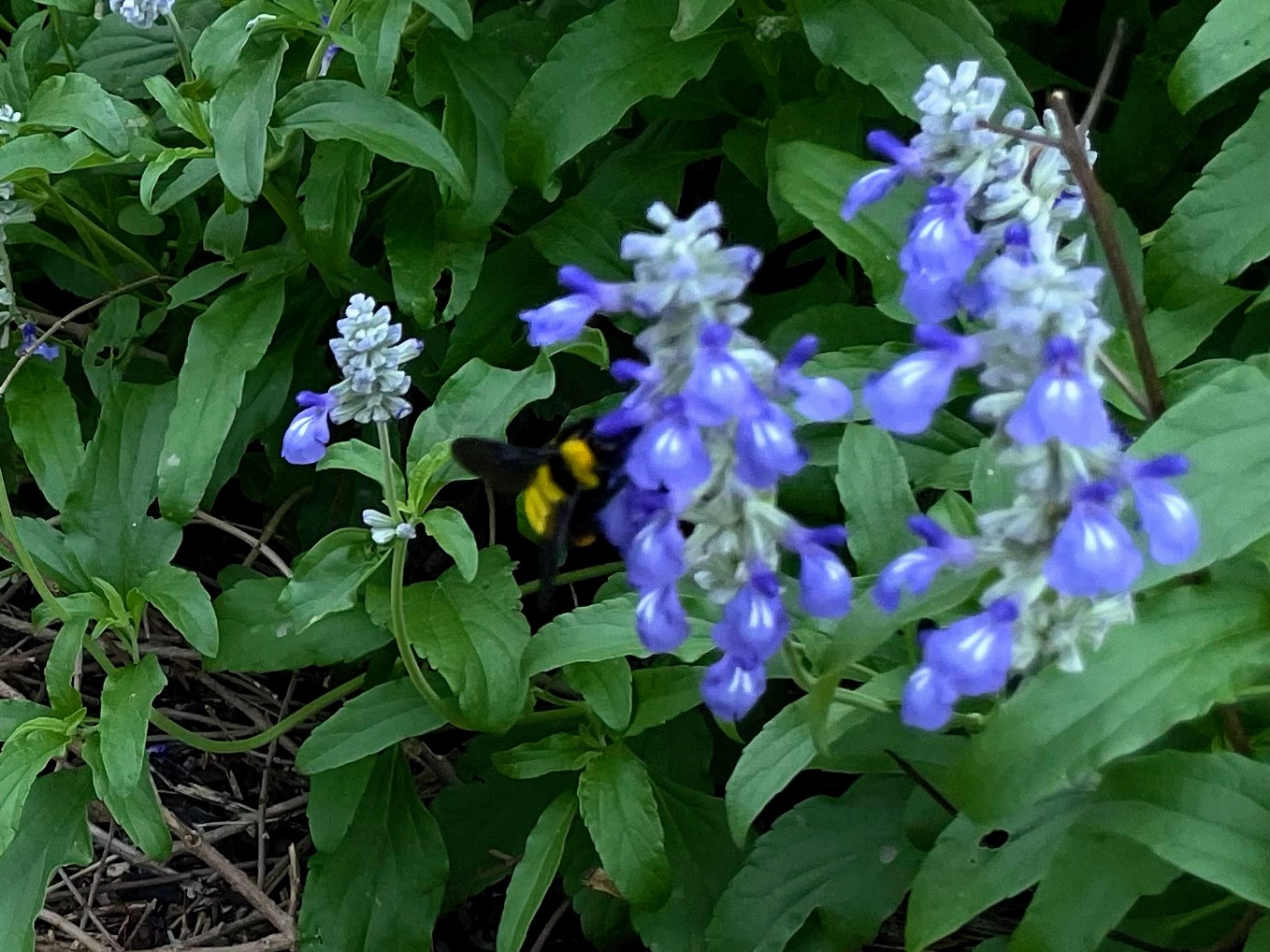
(Salvia farinacea) Mealy blue sage
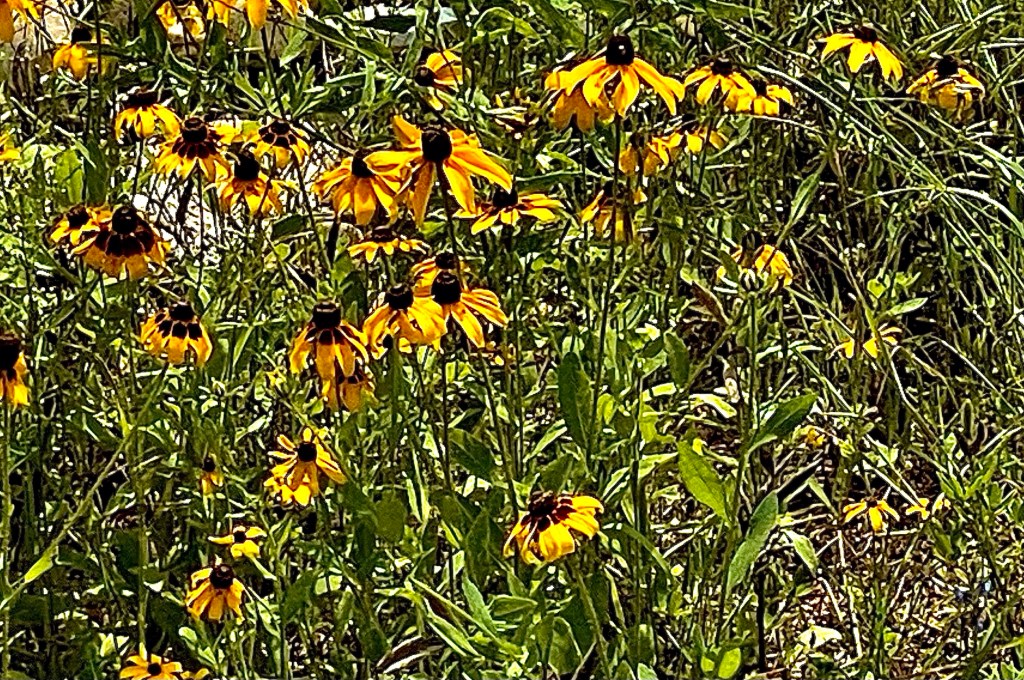
Rudbeckia hirta – Brown eyed Susans

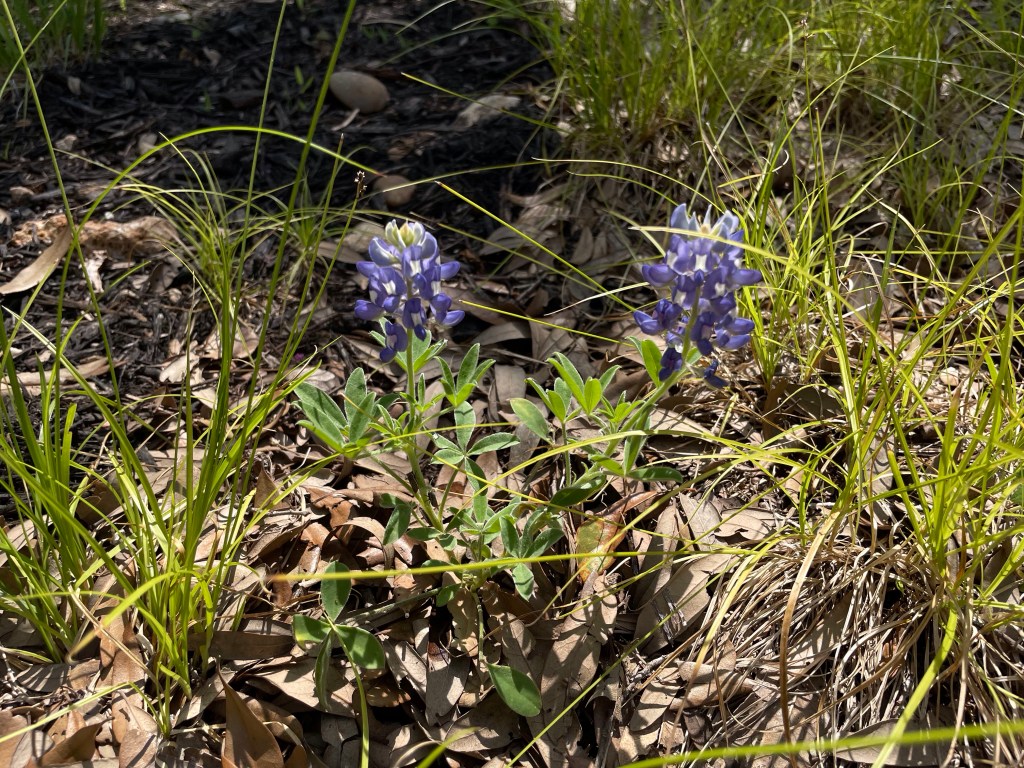
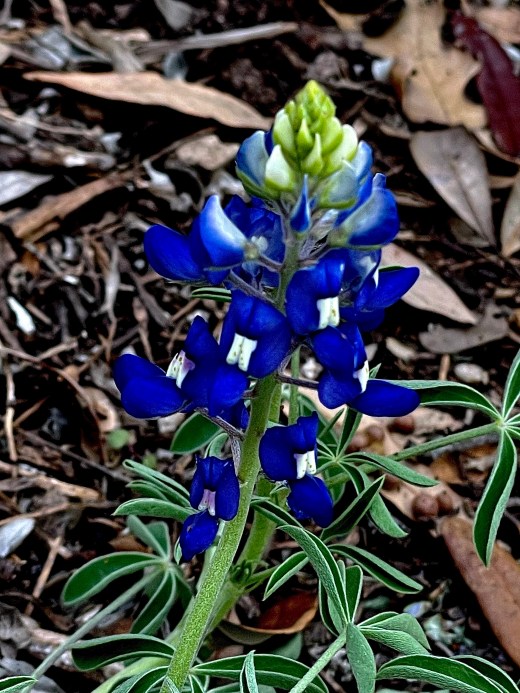
A surprise on June 1st – two baby Bluebonnets (Lupinus Texensis) blooming in the front yard!

From my Nextdoor neighborhood group:

https://nextdoor.com/embed/sxW7MxB4bd-p

Okay, laziness is the mother of invention, so I’m trying to hit two birds with one stone, so to speak. The above is a link to my Nextdoor post this morning showing a few species of plants and animals related to Central Texas.

You might notice that the group there is also named Return To The Natives/Native Plants Are The Answer. If you think that’s a coincidence, you’d be wrong.

In praise of Tetraneuris scaposa

Last post was nearly 6 months ago, after having gotten elected to my subdivision’s Home Owners Association (HOA). Fortunately for me, the new President has an excellent leadership style and a sense of humor – he’s commented a few times on my lack of love for Crape Myrtle (aka Crepe Myrtle) (Lagerstroemia spp.), and I have made a gavel from the remains of a few branches which had the misfortune of hanging over my property. (I have four longer pieces which I hope will become walking sticks or canes).

But I digress. This year Central Texas faced a drought throughout the Spring and Summer. Then, throughout November, we’ve had plenty of rain to raise our hopes for an abundant crop of wildflowers in the Spring. With the warmest December day we’ve ever had (82º F) this week, however, we should be cautious in making predictions.

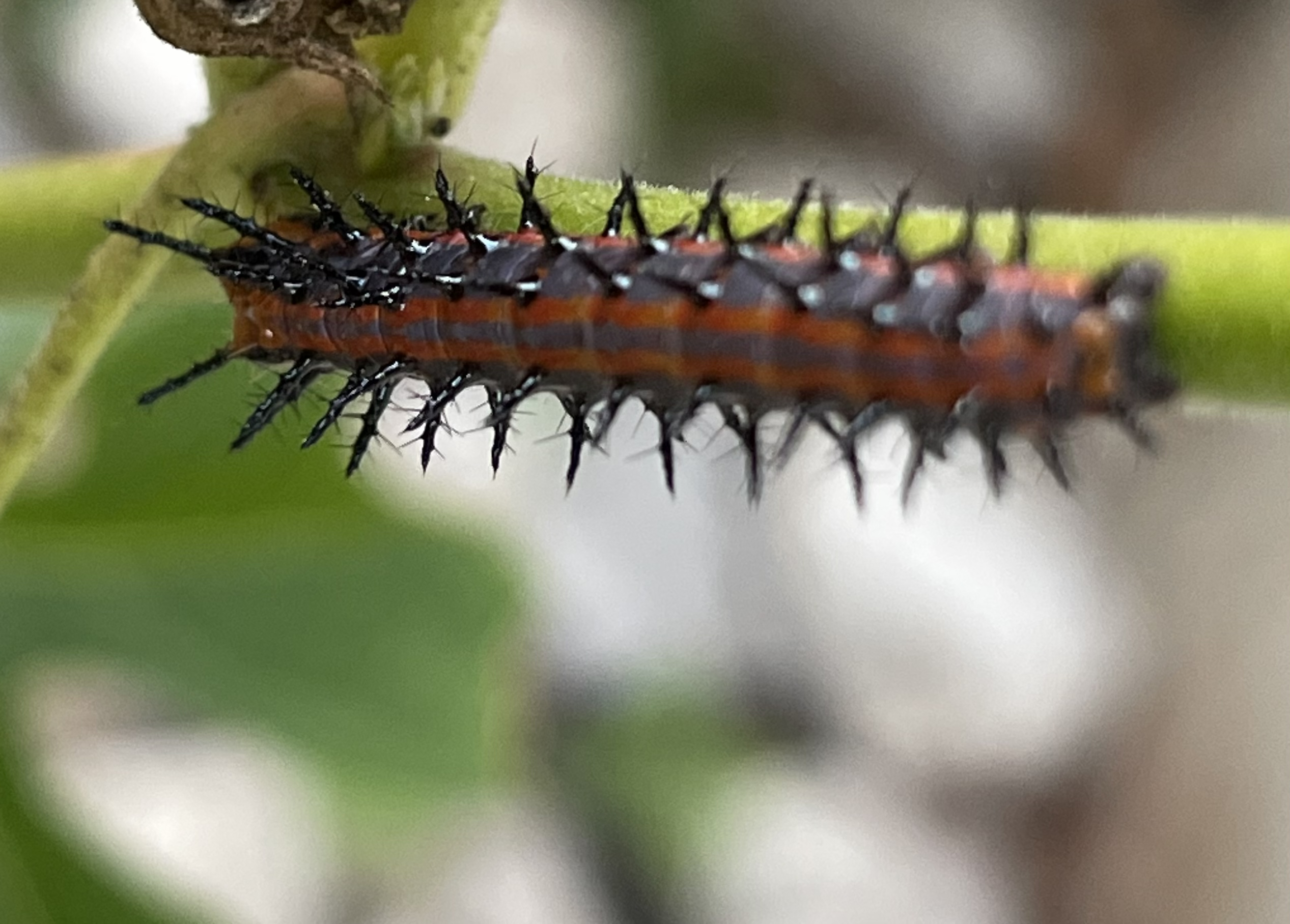
So, recently, I’ve stepped outside and found Gulf Fritillary caterpillars still on green Passiflora leaves (photo 1), and further below, bunches of yellow Tetraneuris scaposa flowers taking advantage of the extended growing season.

Gulf Fritillary caterpillar( Dione vanillae) Photo taken December 2, 2022

Photo taken December 2, 2022 of caterpillar.

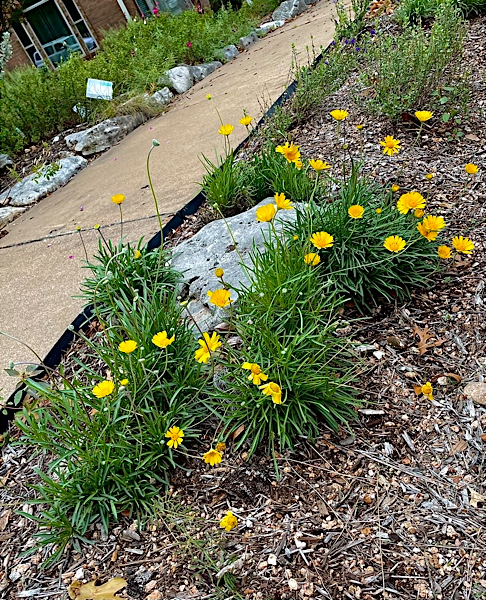
Four Nerve Daisies (Tetraneuris scaposa)  (photo 2) planted in the “nuisance strip” between the sidewalk and the curb; blooms are still going strong into December.

However, Tetraneuris scaposa can and will bloom throughout the year, here in Central Texas.Four Nerve Daisies Conditions have to be right, of course. They bear up to the heat of 100º F summers, but do need some water. And, as always, rain water seems to be the best for promoting growth in these and in BlackFoot Daisies (Melampodium leucanthum) of which I recently added a small plant and which has responded well to the recent rains.
###

On hiatus again…

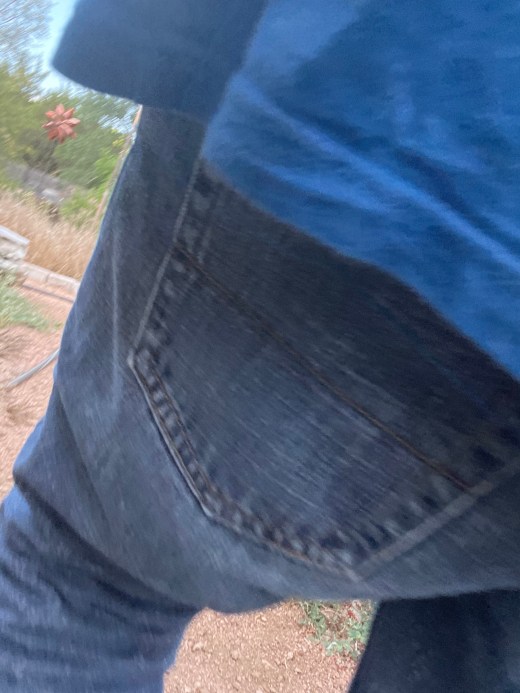
unintended selfie

Seems that I went and got elected to my HOA board, which will require me to cut back or off on certain activities until my 3 year term is up, or I have to resign for any of a number of possible reasons that one might imagine. (Health is the most likely culprit). I might post on an even more irregular basis – maybe some of the stuff I do for my HOA, if it proves to be of value.

Therefore, I am once again abandoning this blog, although if you’ve seen one year’s worth of photos here, you’ve probably seen most of what there is to see within 1/2 mile of my home, or in my yard.

I will be posting directly to the Williamson County chapter of the Native Plant Society of Texas (NPSOT-Wilco) Facebook page from time to time.

Hopefully, I can help to improve my community by ensuring that the virtues and benefits of native plants are more than the appeal of  cheap prices and easy availability of common exotics.

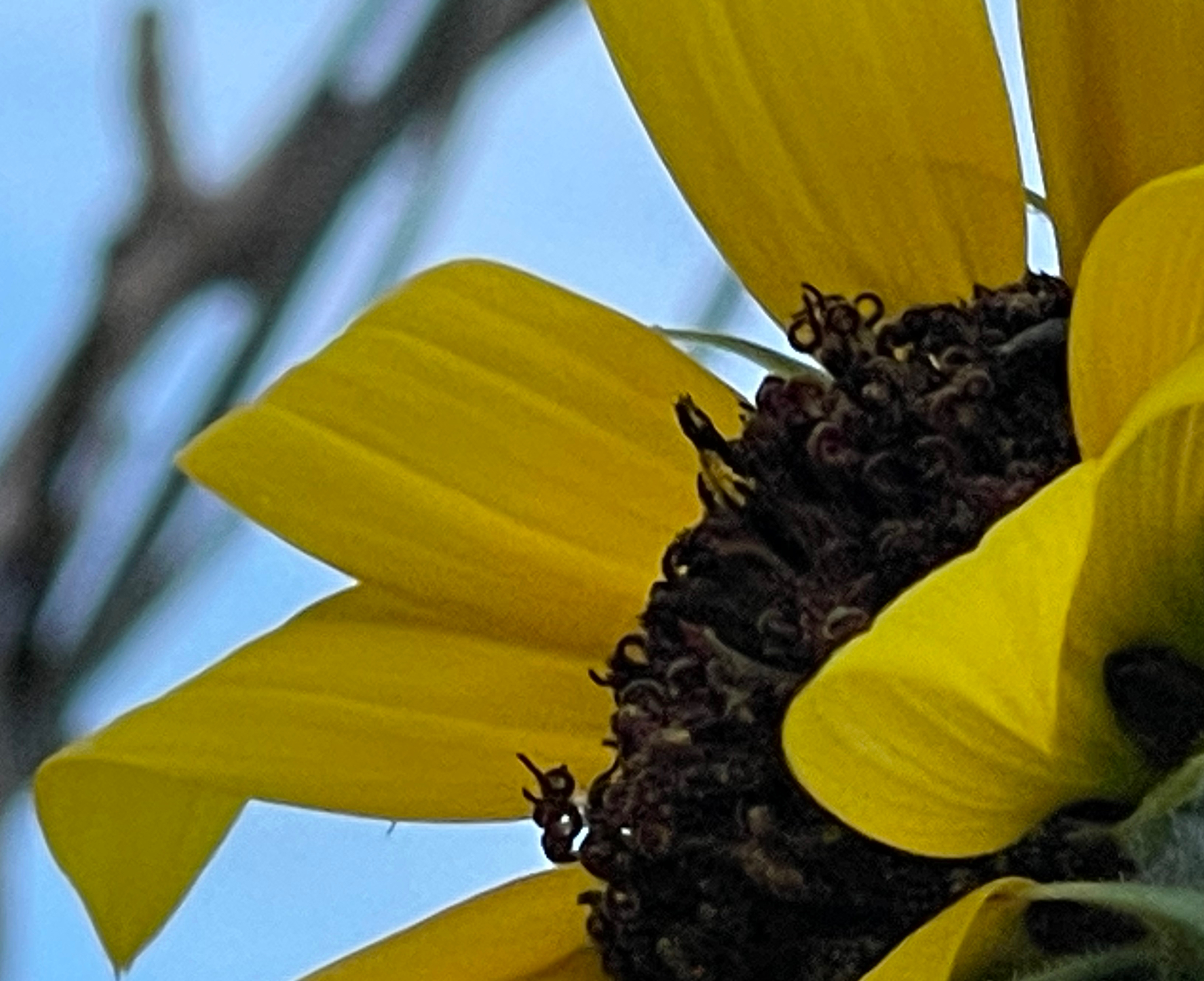
So, as parting photos, I present one taken recently by my smartphone when I wasn’t trying to take a photo (above), and another of a volunteer in my backyard (below).

Maximilian Sunflower

Maximilian Sunflower

###

Back in my own backyard…

Early June 2022 and the heat is in the “triple digits”as the meteorologists like to say in TV-land. or 39 ° Celsius, as we were told we would have converted to 50 or more years ago. Either system, hot to humans is hot.

But to native plants that evolved in Central Texas for more years than Crepe Myrtle has been here, even these signs of Global Warming haven’t phased them. (Granted, I do some supplemental watering, especially of small trees for the first few years, but other plants like Passiflora incarnata grow like “weeds”).

I’ll  let the plants speak for themselves:

Those are just the photos I took on June 8, 2022, mostly in my yard. The Rain Lilies were just past the back fence (the ones in my yard had bloomed and gone to seed after the previous week’s mild spattering of rain drops).

###

On the road again…

This past Saturday (May 29, 2022), I went out of the house for a change, on a field trip with the Williamson County Chapter of the Native Plant Society of Texas (NPSOT-Wilco), at the Southwest Williamson County Regional Park (SWCRP). The field trip consisted of walking along the Jim Rodgers Nature Trail, 1.75 miles long, I’m told.

I managed to arrive late, but soon caught up with the group. (Usually I arrive a week early, having managed to forget the actual date and time).

Then I managed to continually fall behind and catch up, working up a sweat. Because this was an evening field trip on a fairly even path (it does need mulching to give it a little more comfort underfoot), the pace of the hike was a little closer to a real hike than the usual NPSOT or Texas Master Naturalists’ walk in the woods – where it often takes an hour to go half a mile down the trail – if that much. And yet, I was able to get some interesting shots of some of the native plants and wildflowers.

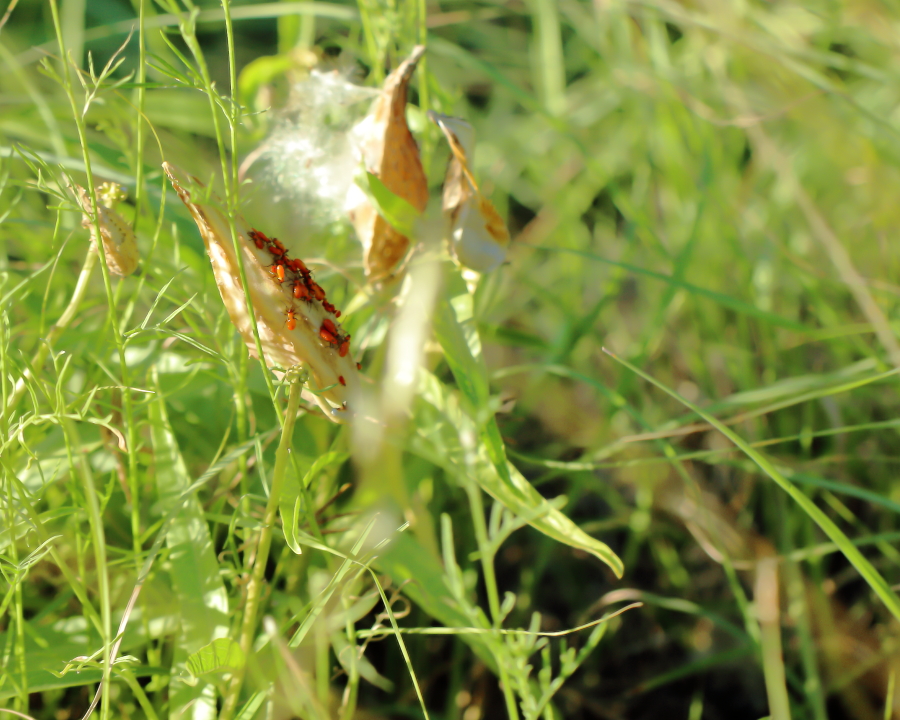
Asclepias asperula (Antelope Horns) milkweed seed pods ripened.

Asclepias asperula (Antelope Horns) milkweed, seed pods ripened.

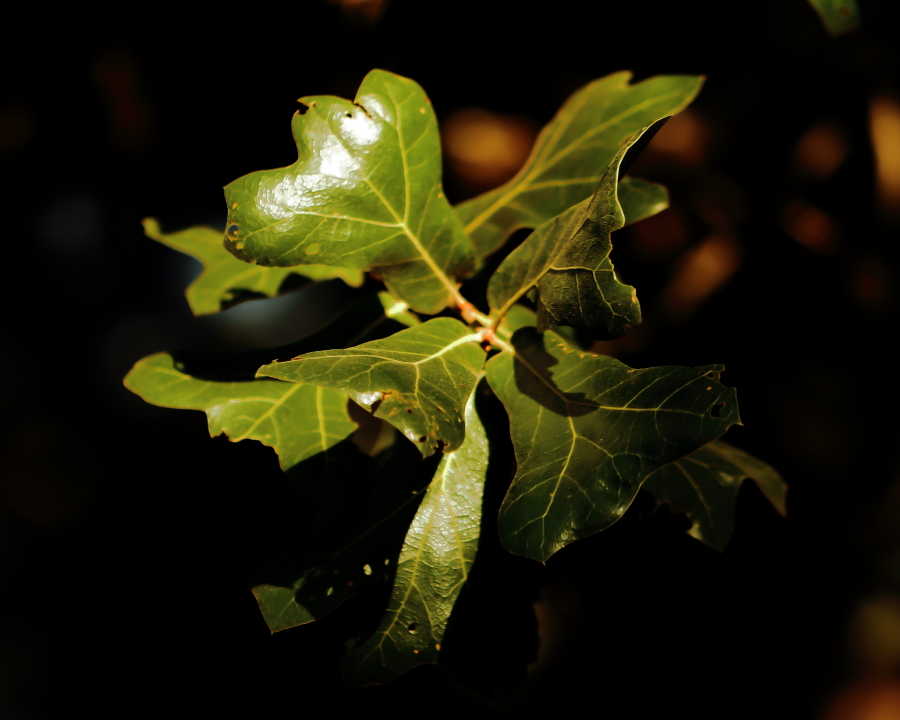
Quercas marilandis (Blackjack Oak) has distinctive "duckfoot"shaped leaves.

Quercus marilandica (Blackjack Oak) has distinctive “duckfoot”shaped leaves.

2022-05-29-006703

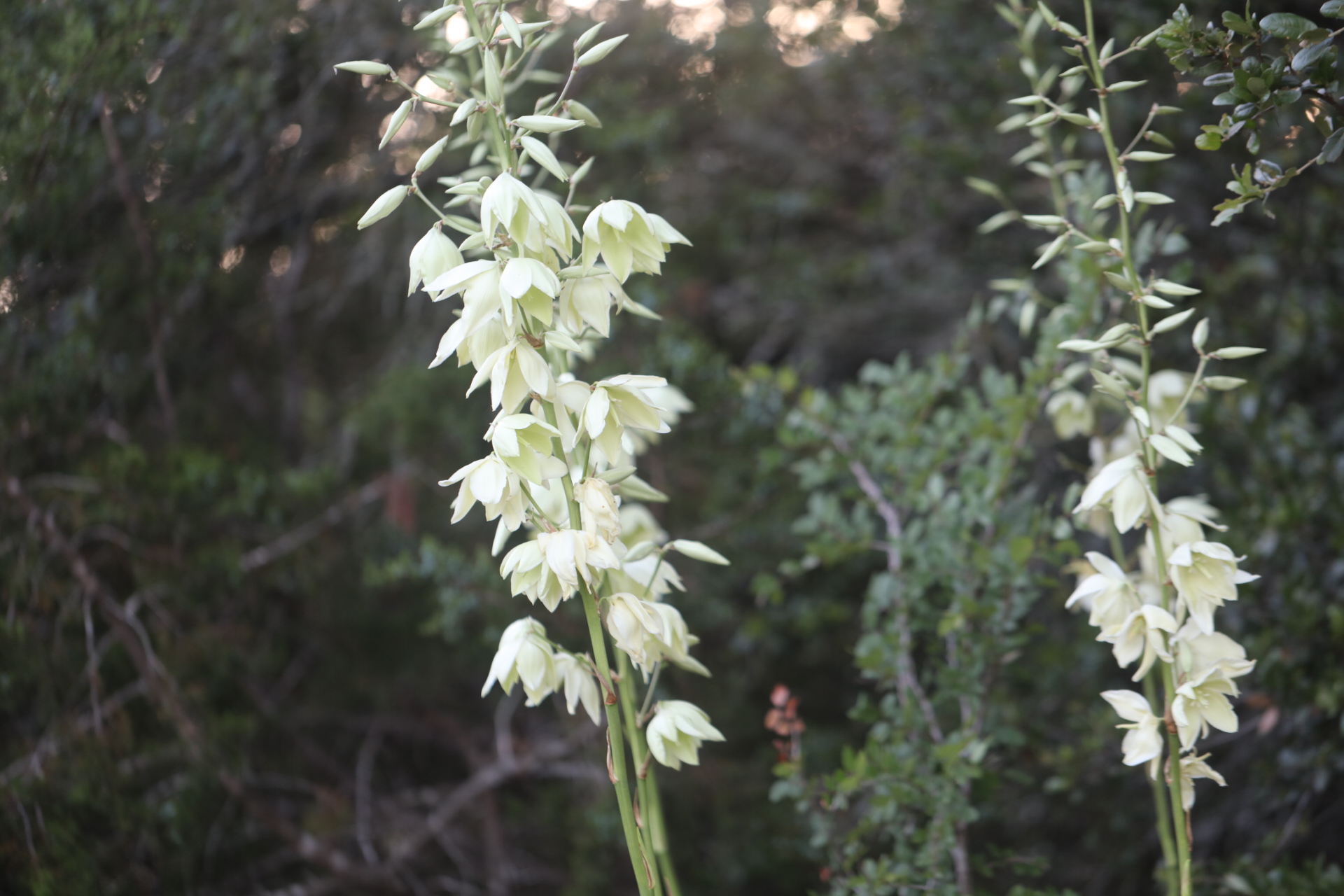
Yucca rupicola (Twist-Leaf Yucca) was in bloom

2022-05-29-006697-Yucca-rupicola

Yucca rupicola flower detail

2022-05-29-006695-Prosopis glandulosa

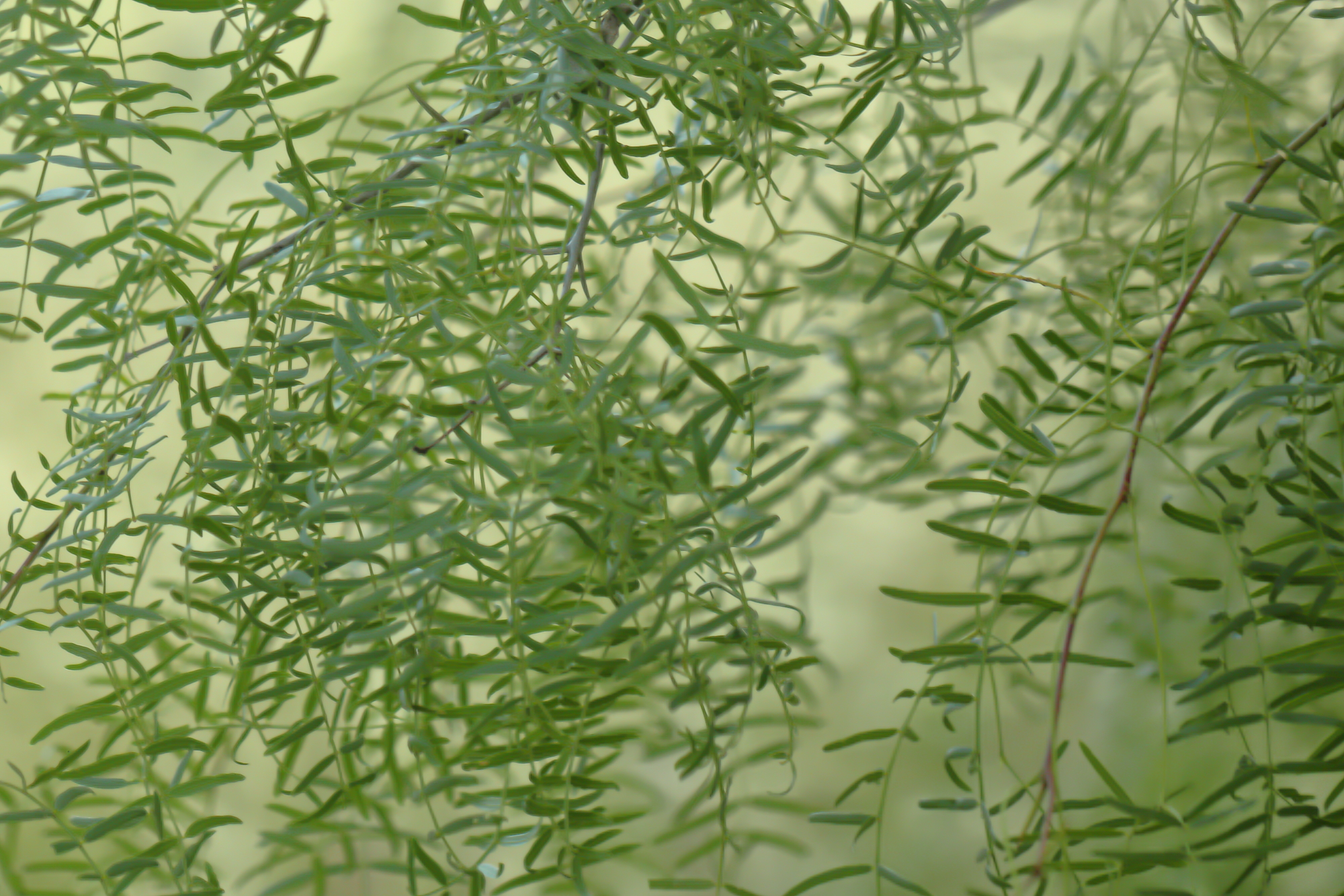
Prosopis glandulosa (Honey Mesquite)

2022-05-29-006714

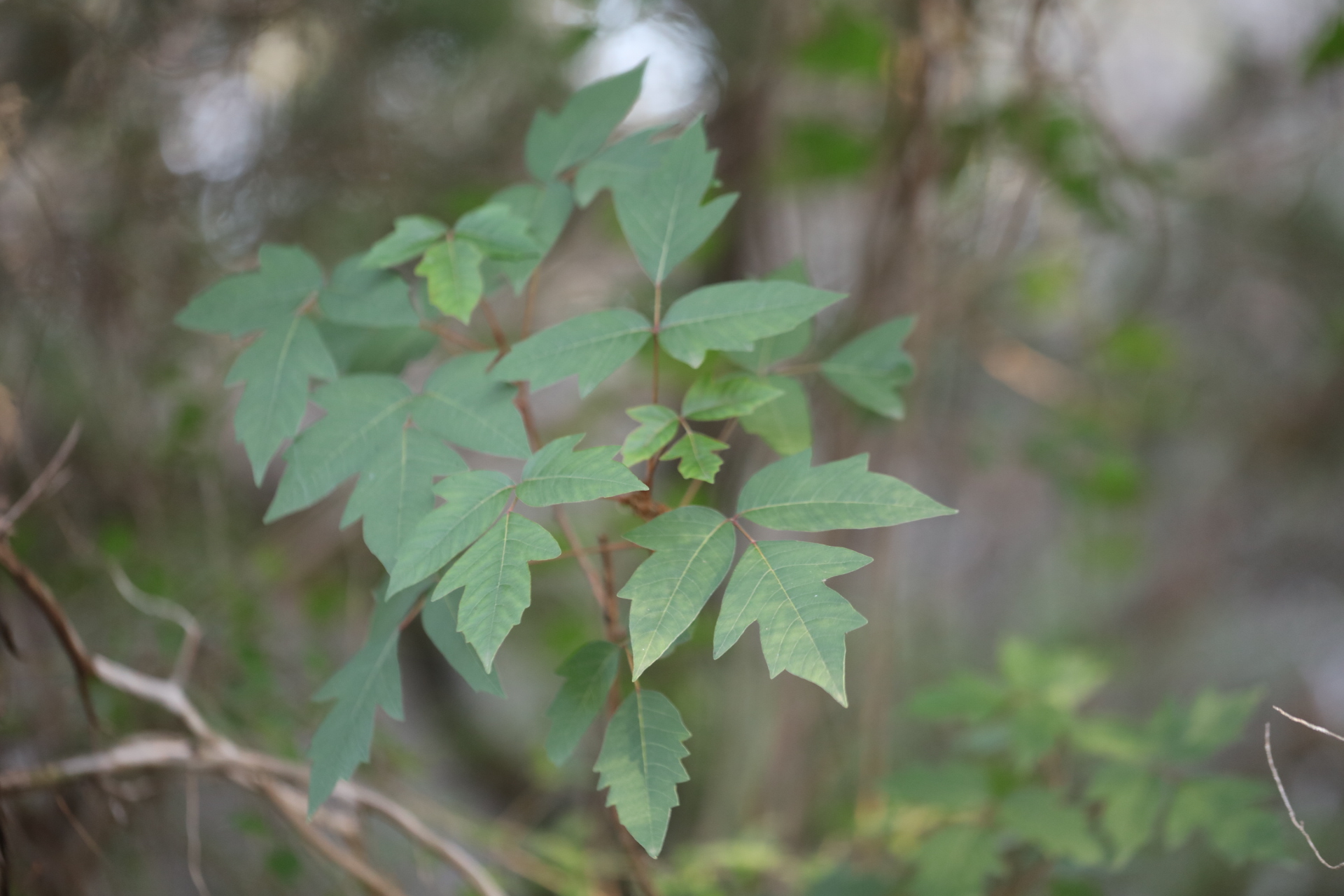
Toxicodendron radicans (Poison Ivy)

2022-05-29-006704

Pearl Milkweed vine seed pod

###

Lack of April Showers… doesn’t faze native wildflowers

Rock Rose (Pavonia lasiopetala)

Well, the month of April is nearly over.

Here in Central Texas, the Golden Groundsel (Packera obvata) have already gone to seed, and the state flower, the Texas Bluebonnet (Lupinus texensis) is still in bloom, but many have started to go to seed.

My Milkweeds are coming up and thriving, but no blooms yet. Four Nerve Daisies (Tetraneuris scaposa)continue to push out blossoms. False Foxglove (Penstemon cobea) and Brazos Penstemon (Penstemon tenuis )are blooming..

The Mealy Blue Sage  (Salvia farinacea) are bouncing up and are in bloom in the backyard. The inconspicuous Purple Milkweed (Matalea biflora ) has bloomed, and the Purple Passion Flower (Passiflora incarnata) vines nearby, have bloomed.

Lyre-Leaf Sage (Salvia lyrata )and Missouri Violets are in bloom lining the front yard stone walkway.

And the Scarlet LeatherFlower (Clematis texensis ), which is endemic to the Edwards Plateau, has also put out several flowers. The Coral Yucca (Hesperaloe parviflora) flowers are starting to open. And a few white wine cups (Callirhoe involucrata var. lineariloba) that I had rescued from a construction culvert on Old Chisholm Trail in Round Rock are in bloom, with their white petals and faint purple lines. They are endemic to just a few counties in Texas, and the Williamson County chapter of the Native Plant Society of Texas has adopted the name “Williamson County Winecup” for this species.

Finally, let’s hear it for the  red, white and blue blooms.

Rose Pavonia (Pavonia lasiopetala) (more hot pink than red) Autumn Sage (Salvia greggii)(both red and white, and Blue-eyed Grass (Sisyrinchium pruinosum) are all in evidence.

I don’t need any more evidence to arrive at my verdict.

Native plants are the answer.