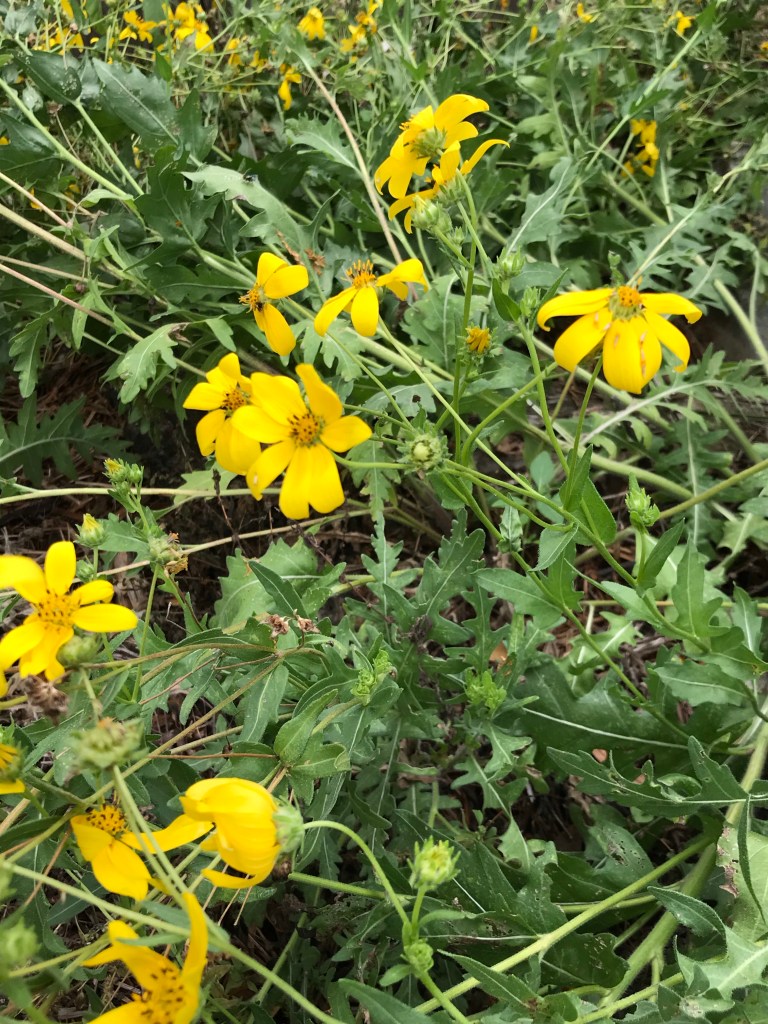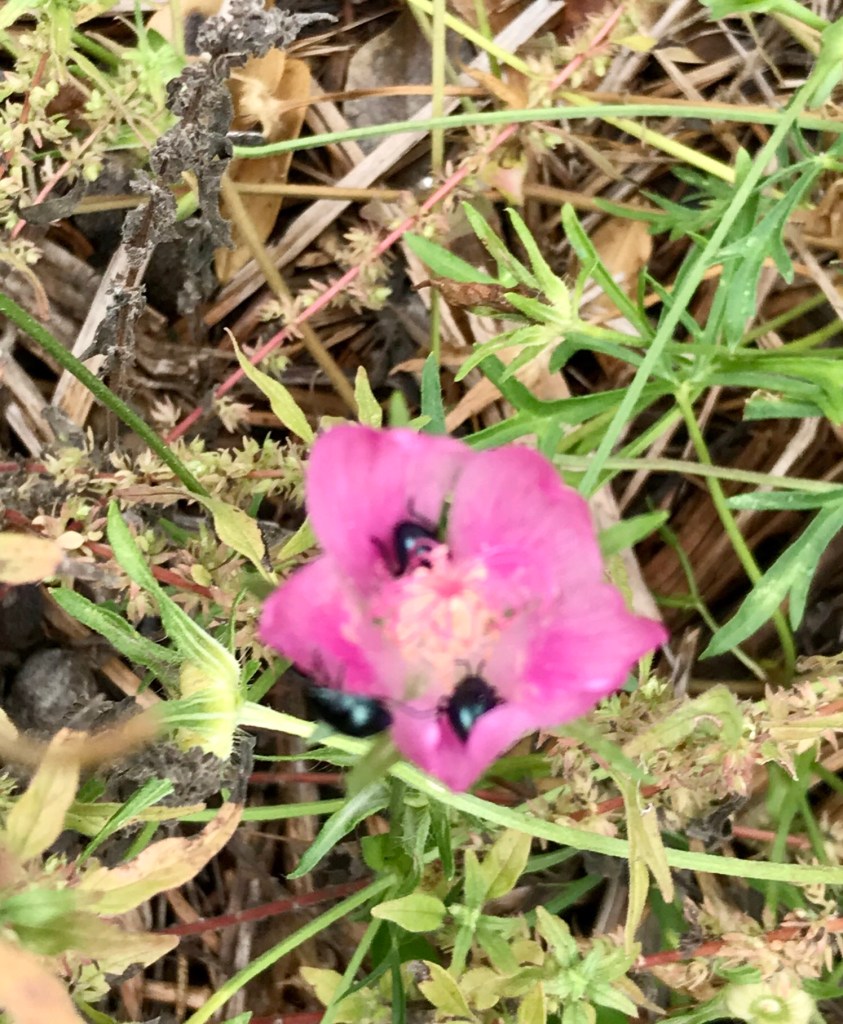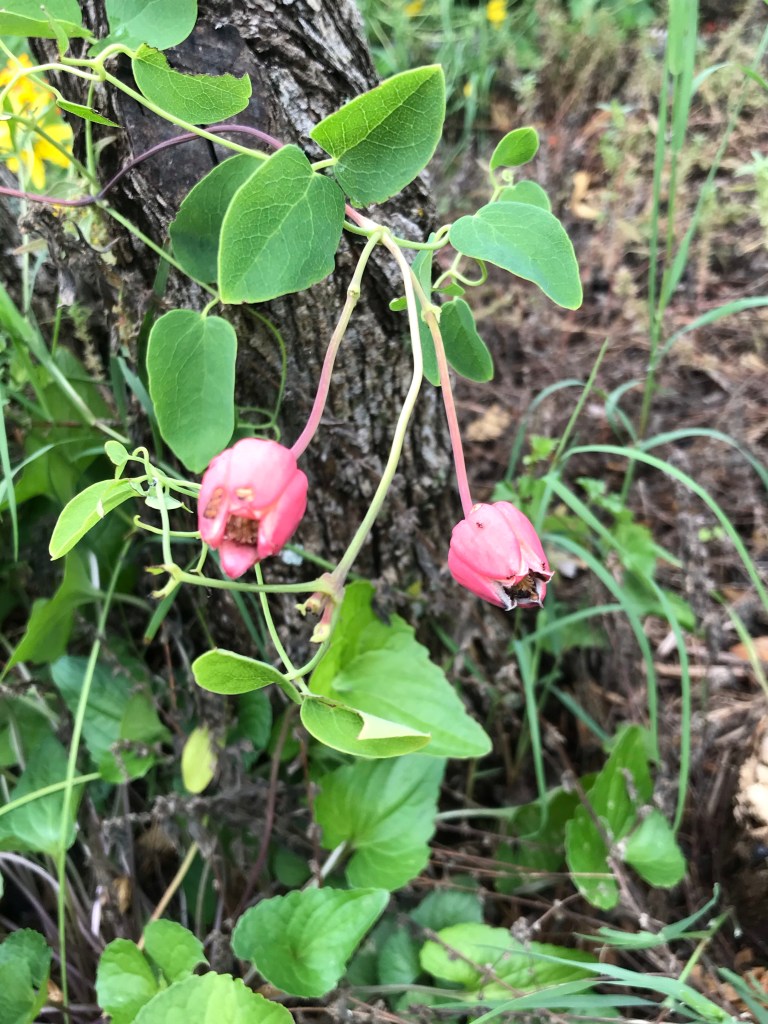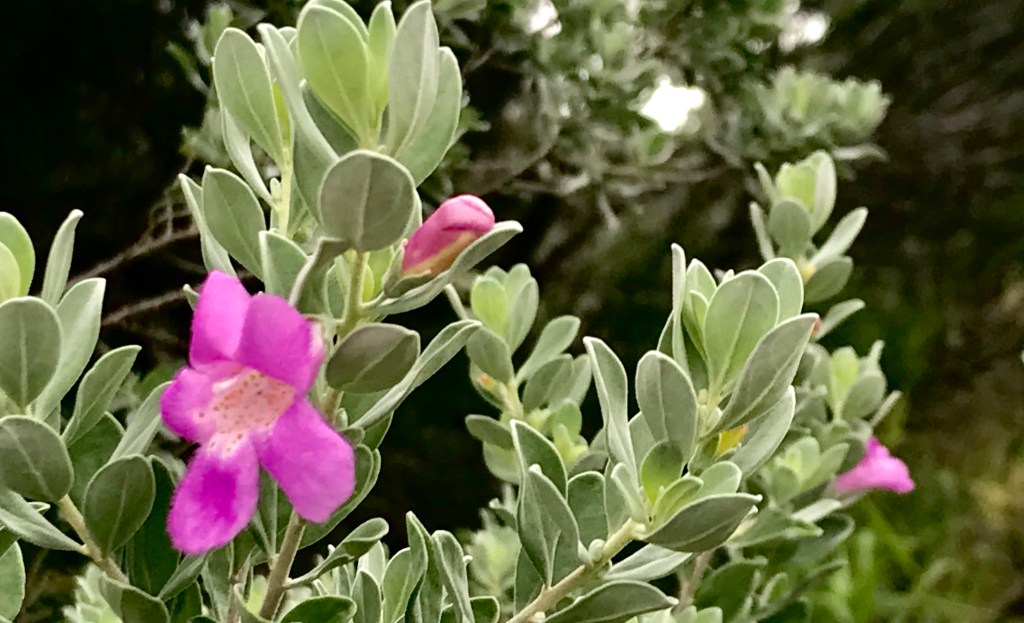
It might as well be Spring… or Fall

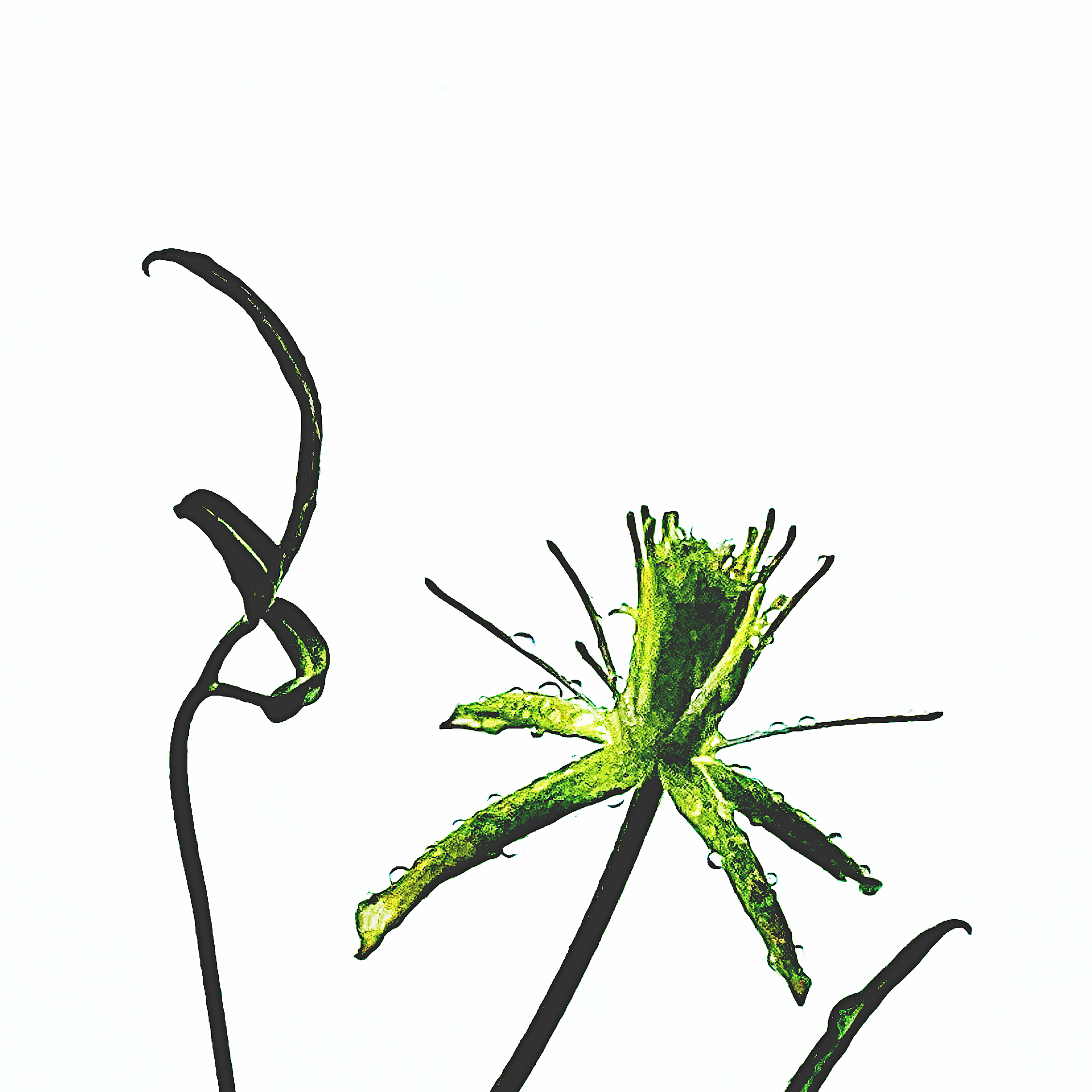
The long dry Summer was followed by a few showers (about a week, and 6″ of the liquid stuff), and some more warm weather. Some plants, like the Clematis drummondii in the first few frames, decided it was a good time to put out new fowers, even though they had already gone through the yearly cycle of blooms, with the female plants putting out their achenes that have given the plant the common name of Old Man’s Beard.

The vignetted shot towards the sun shows a Cedar Elm (Ulmus crassifolia) with some of its leaves already starting to turn to their Fall golden yellow color. In the tangled web of branches and vines are a few other species, difficult to identify in the photo.

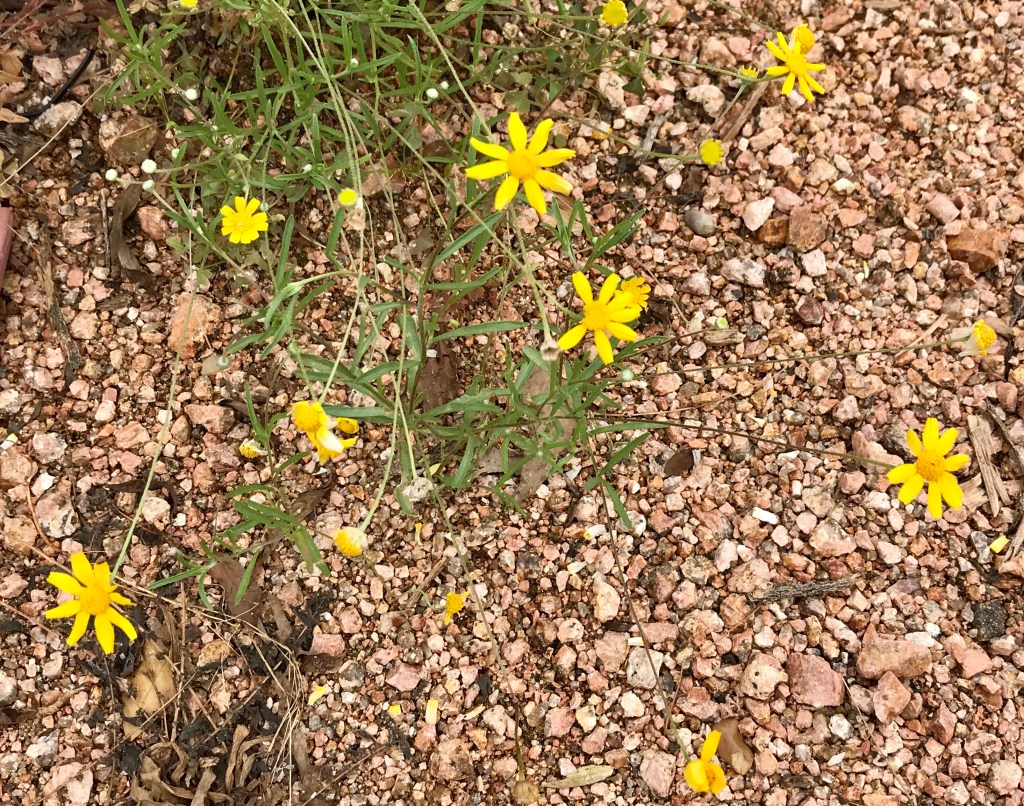
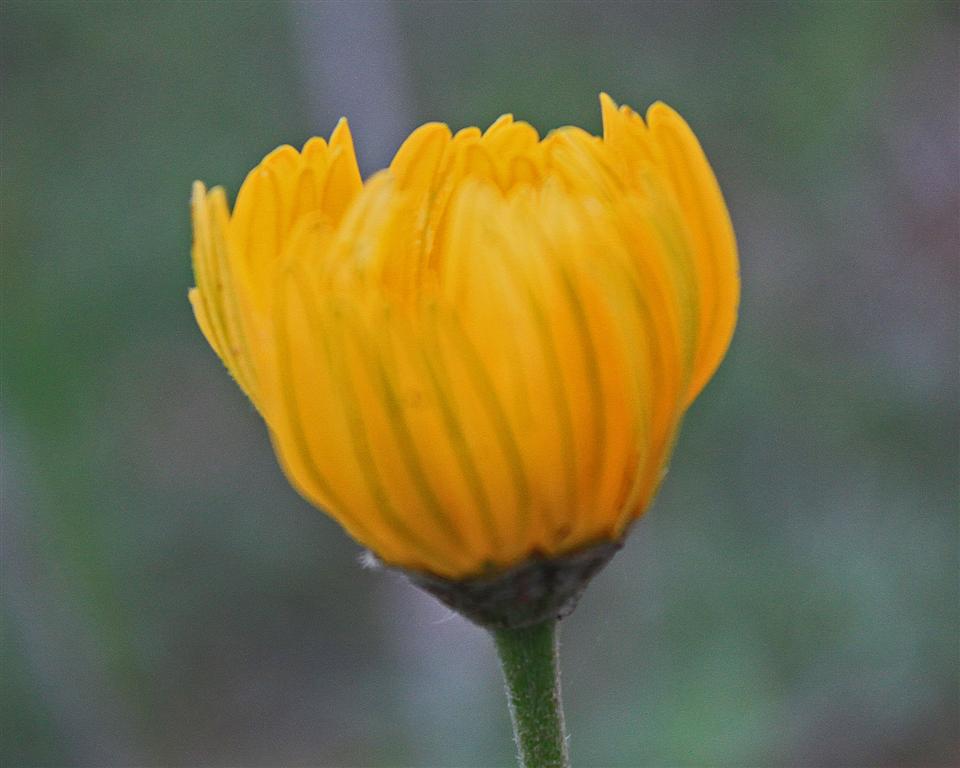
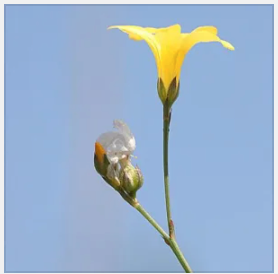
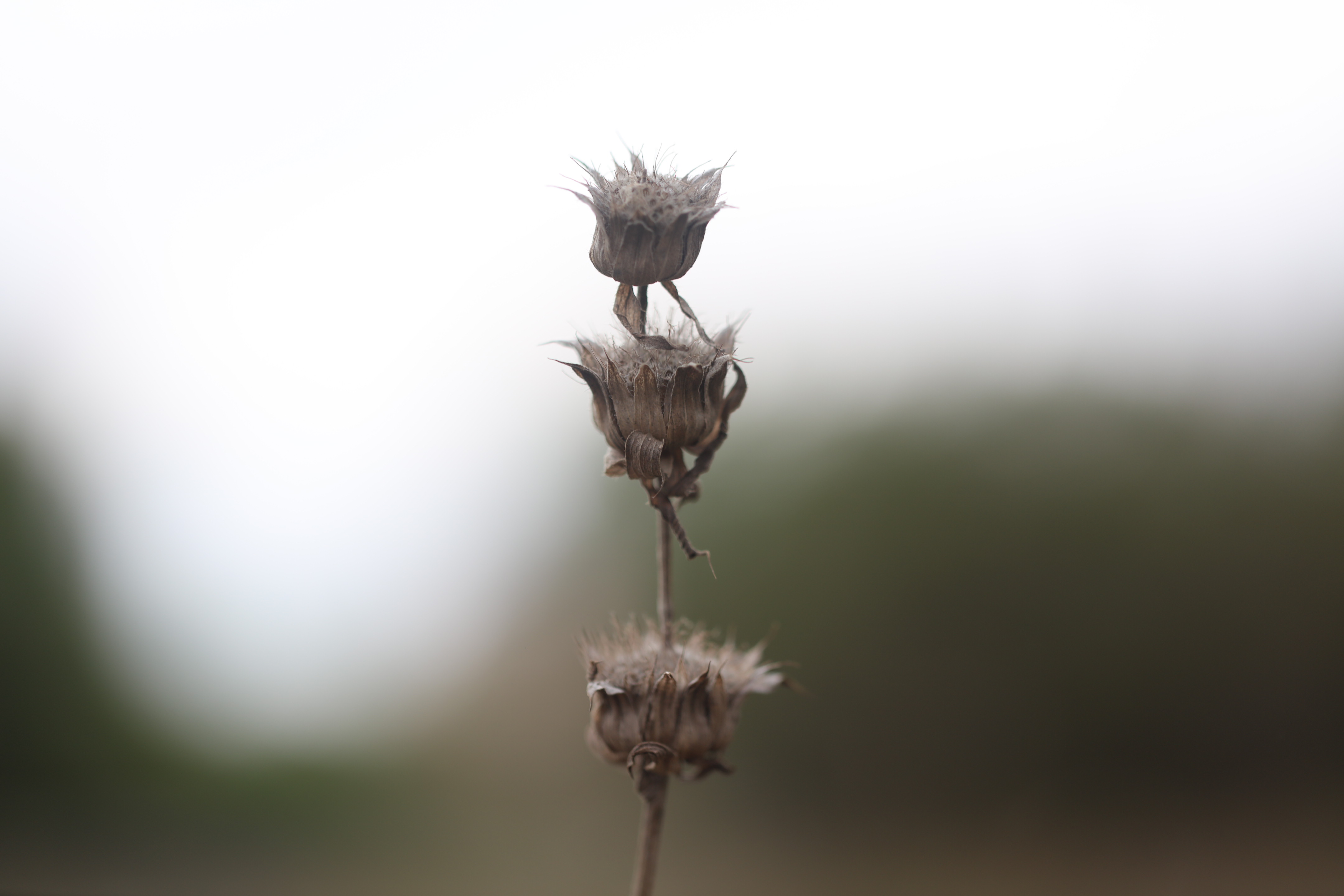
The bottom left shot shows the desiccated remains of a Monarda sp. (hard to tell them apart from just the skeletal remains). Meanwhile, in the lower right is Tetraneuris scaposa or Four-nerve daisy, a perennial that can bloom throughout all four seasons, given the right conditions.

And so it goes…

###
 

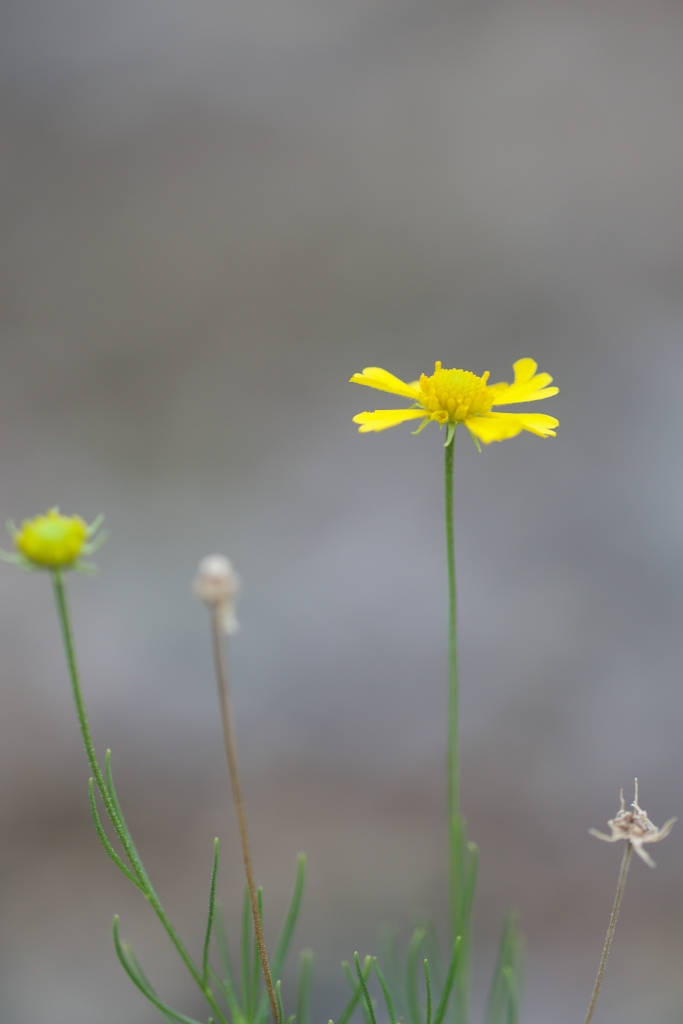
In praise of Tetraneuris scaposa

Last post was nearly 6 months ago, after having gotten elected to my subdivision’s Home Owners Association (HOA). Fortunately for me, the new President has an excellent leadership style and a sense of humor – he’s commented a few times on my lack of love for Crape Myrtle (aka Crepe Myrtle) (Lagerstroemia spp.), and I have made a gavel from the remains of a few branches which had the misfortune of hanging over my property. (I have four longer pieces which I hope will become walking sticks or canes).

But I digress. This year Central Texas faced a drought throughout the Spring and Summer. Then, throughout November, we’ve had plenty of rain to raise our hopes for an abundant crop of wildflowers in the Spring. With the warmest December day we’ve ever had (82º F) this week, however, we should be cautious in making predictions.

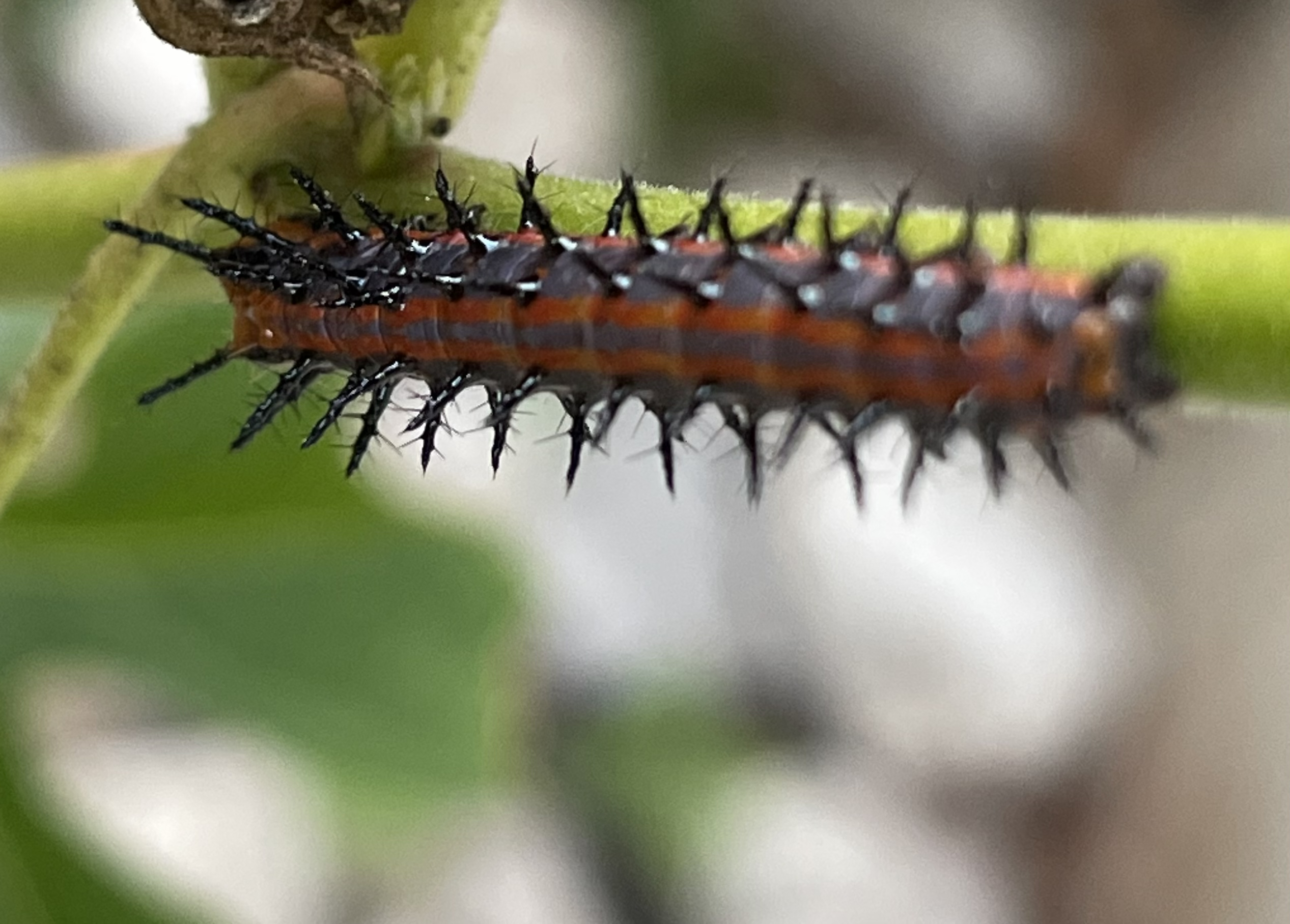
So, recently, I’ve stepped outside and found Gulf Fritillary caterpillars still on green Passiflora leaves (photo 1), and further below, bunches of yellow Tetraneuris scaposa flowers taking advantage of the extended growing season.

Gulf Fritillary caterpillar( Dione vanillae) Photo taken December 2, 2022

Photo taken December 2, 2022 of caterpillar.

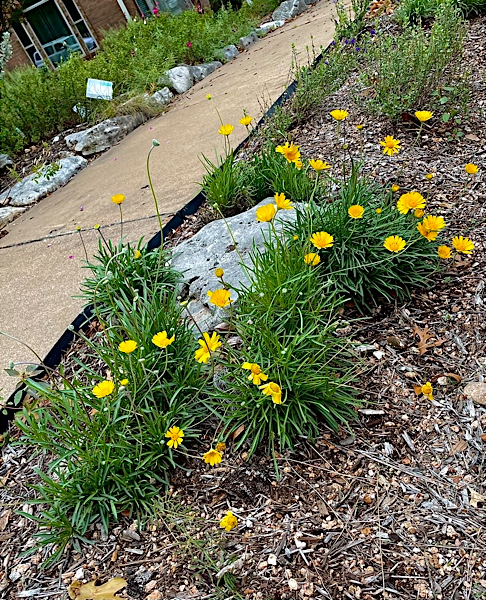
Four Nerve Daisies (Tetraneuris scaposa)  (photo 2) planted in the “nuisance strip” between the sidewalk and the curb; blooms are still going strong into December.

However, Tetraneuris scaposa can and will bloom throughout the year, here in Central Texas.Four Nerve Daisies Conditions have to be right, of course. They bear up to the heat of 100º F summers, but do need some water. And, as always, rain water seems to be the best for promoting growth in these and in BlackFoot Daisies (Melampodium leucanthum) of which I recently added a small plant and which has responded well to the recent rains.
###

What was blooming (or not) 25 May 2020

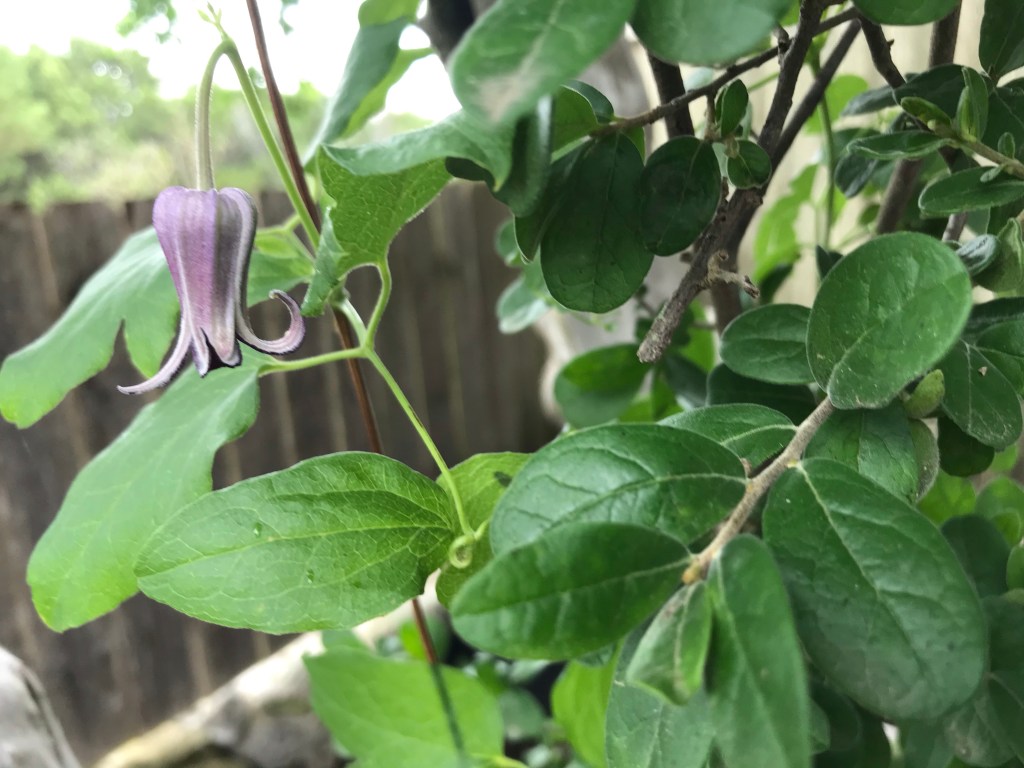
Clematis pitcheri (Purple leather flower) (cultivated)

(Posted about a year ago – edited to add the names of the plants), Went out in the yard and beyond today and captured a few items of interest. Didn’t go into the front yard because it was getting close to dinnertime.

Lantana urticoides (Texas Lantana)
Salvia farinacea (Mealy blue sage)(cultivated)
Symphyotrichum oblongifolium (Fall aster or Aromatic aster) (cultivated)
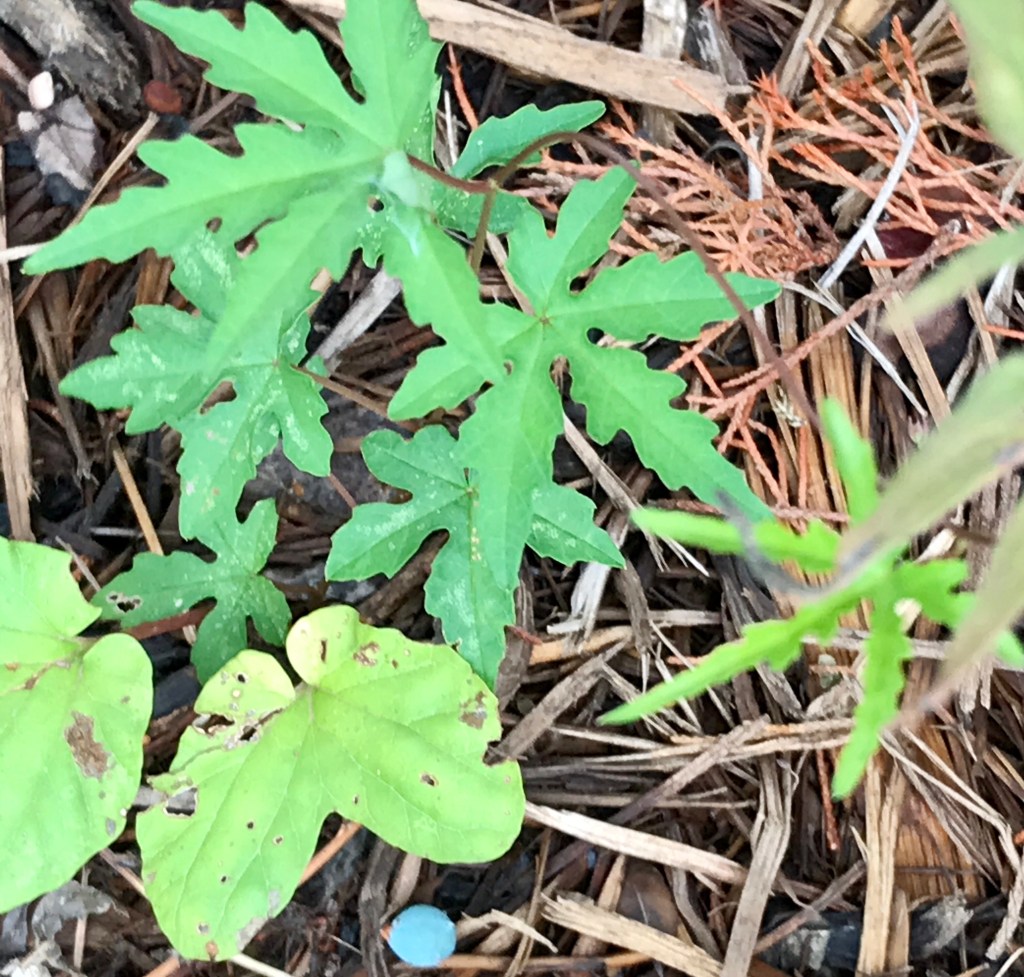
Merremia dissecta. (Alamo vine)(cultivated)(escaped from cultivation)
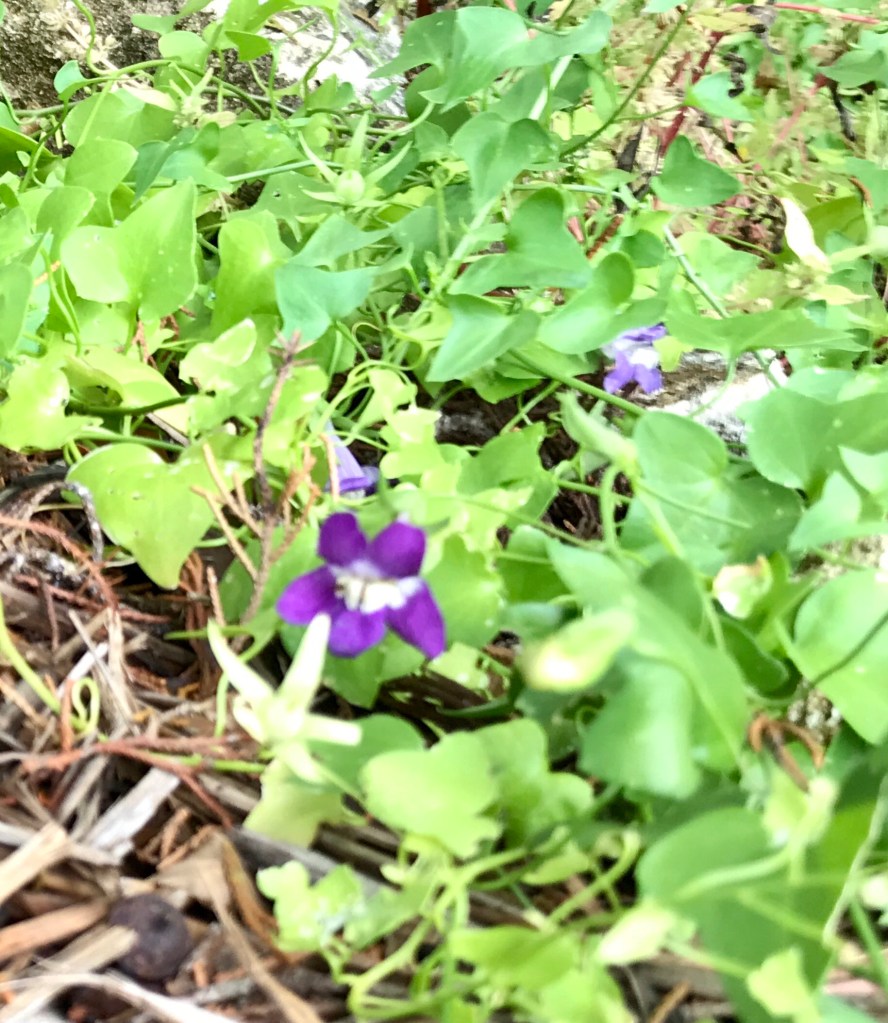
(Maurandella antirrhiniflora) (Roving sailor or Snapdragon vine) (native, not cultivated)
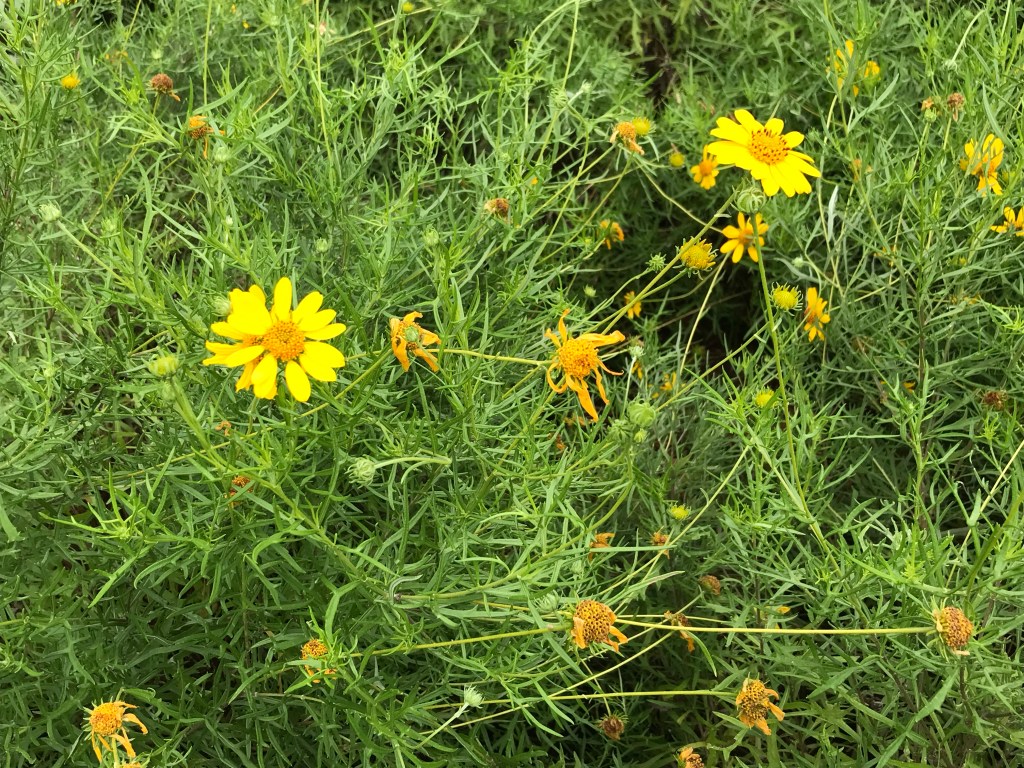
Tetraneuris linearifolia var. linearifolia (Slenderleaf bitterweed) (native, not cultivated)
(Viguiera stenoloba) Skeleton-leaf Goldeneye (cultivated)
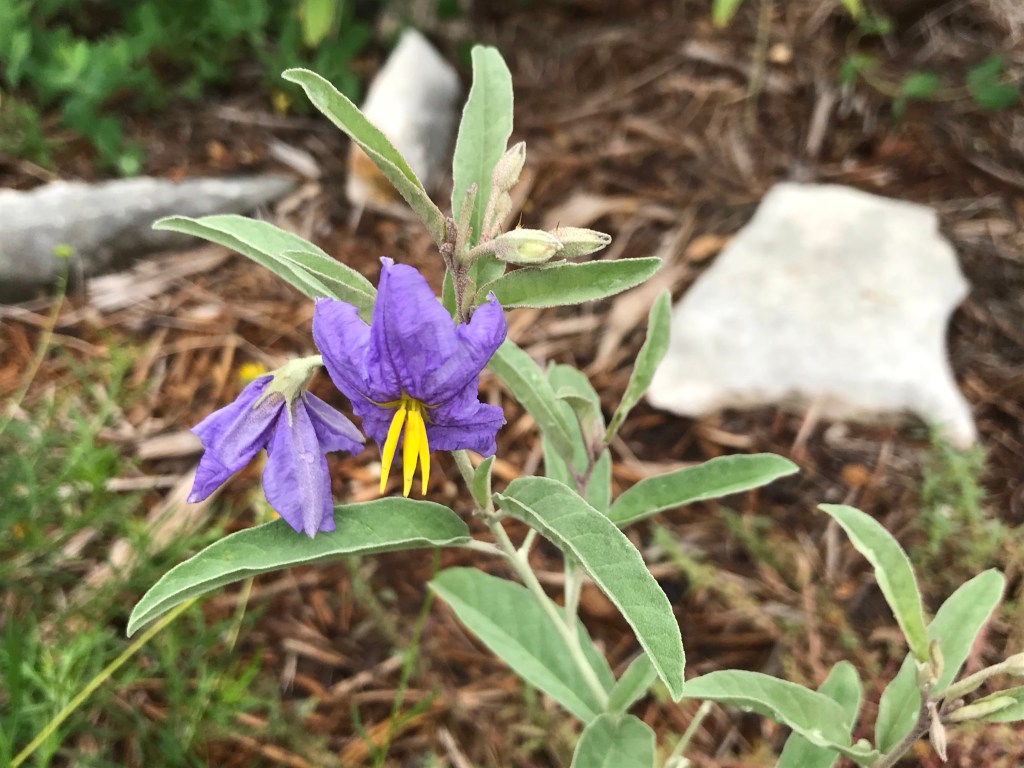
Solanum elaeagnifolium (Silverleaf nightshade) (native, not cultivated)
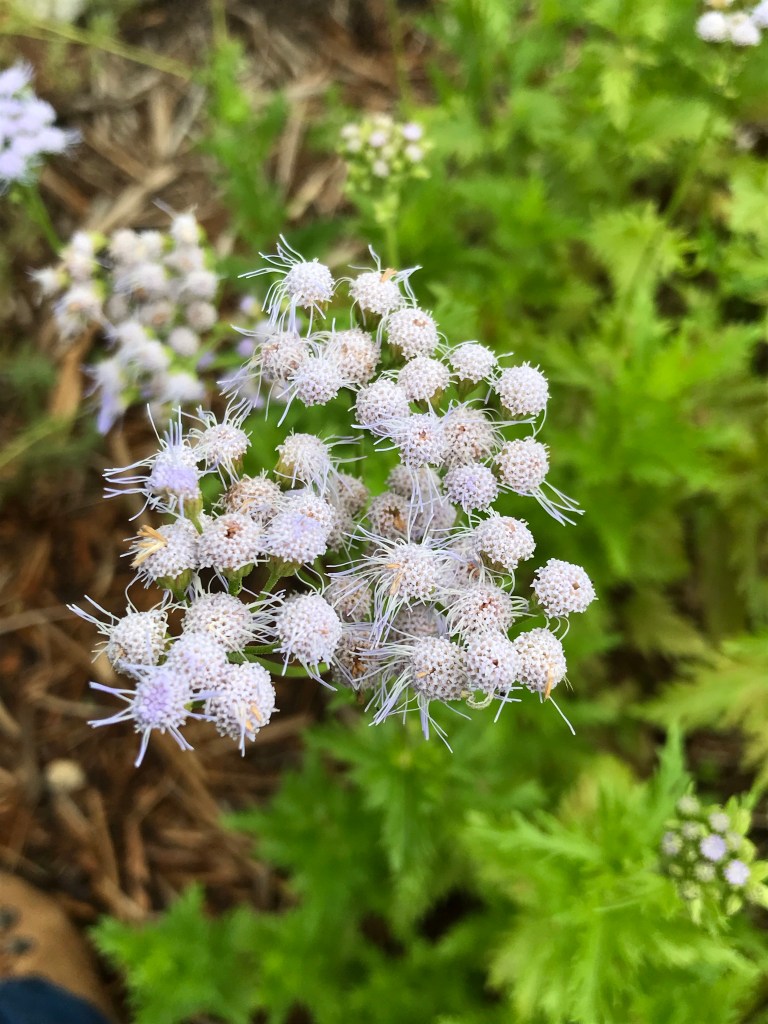
Conoclinium greggii (Gregg’s mistflower) (cultivated)
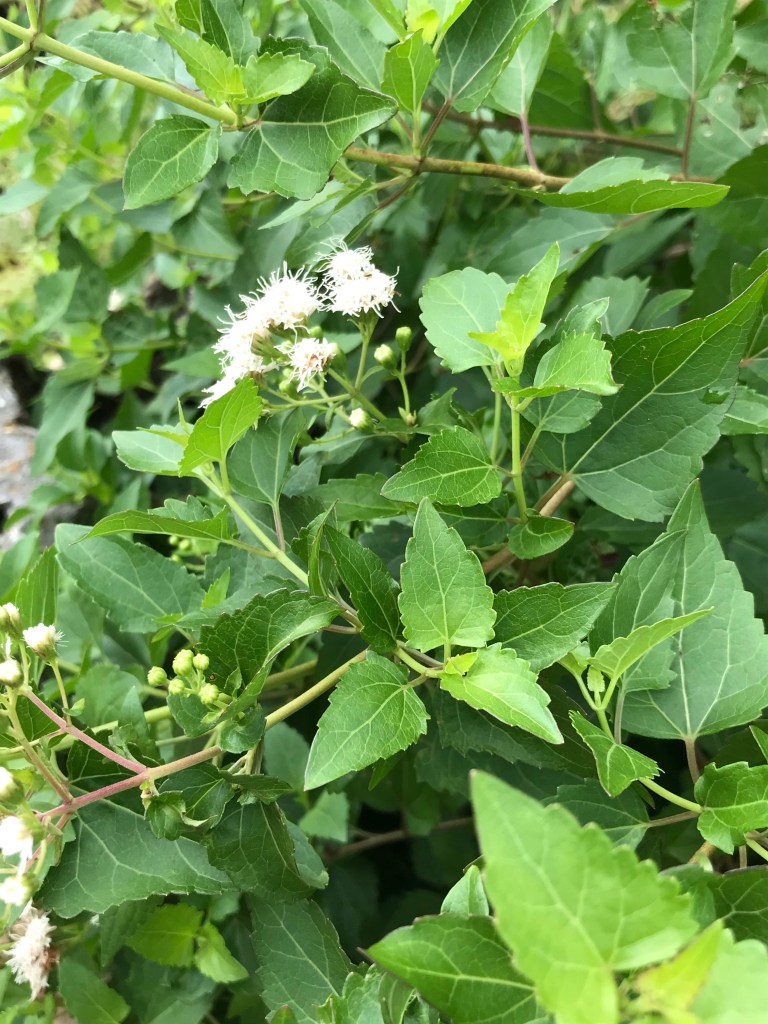
Ageratina havanensis (White mistflower, White boneset) (cultivated)
Viguiera stenoloba . (Skeleton-leaf goldeneye) (cultivated)
Callirhoe involucrata (Winecup, Purple Poppy Mallow)(cultivated)
Clematis texensis (Scarlet Clematis, Scarlet Leatherflower, Texas Clematis)(cultivated)
Opuntia sp. (Prickly pear)(cultivated, “spineless varietal)
Luchophxllum frutescems (Cenizo, Purple sage, Trvas sage)(cultivated))
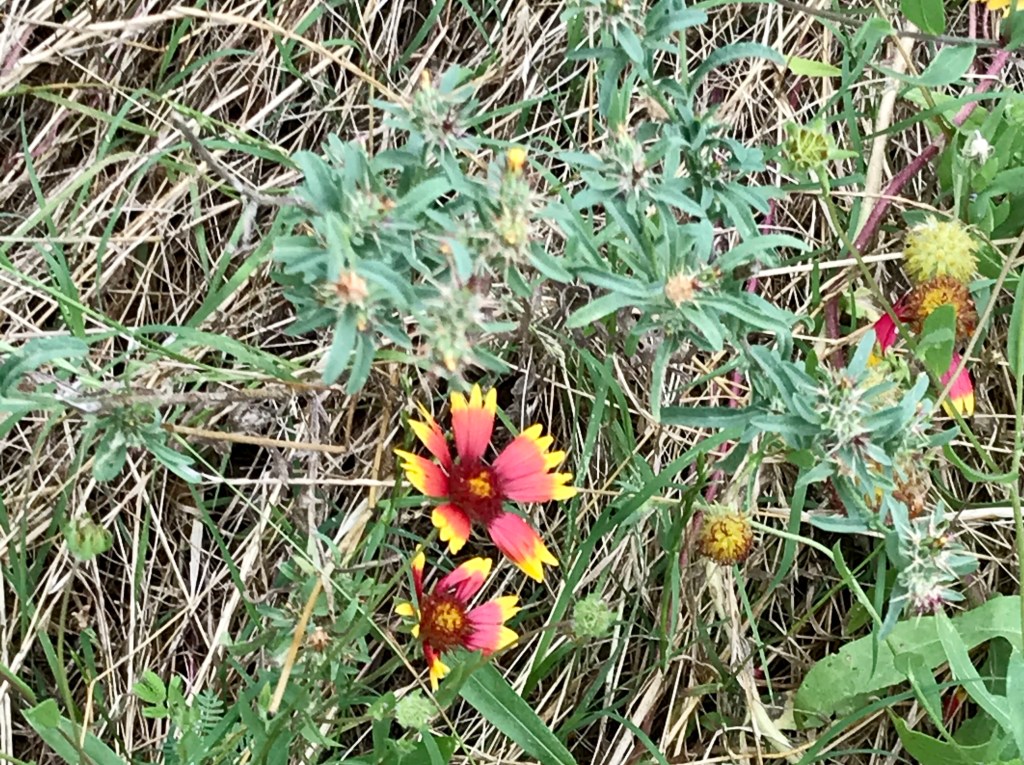
Gaillardia pulchella (Firewheel, Indian Blanket) (natiive, not cultivated)
Oenothera speciosa (Pink Evening Primrose, Pink Ladies) (native, not cultivated)
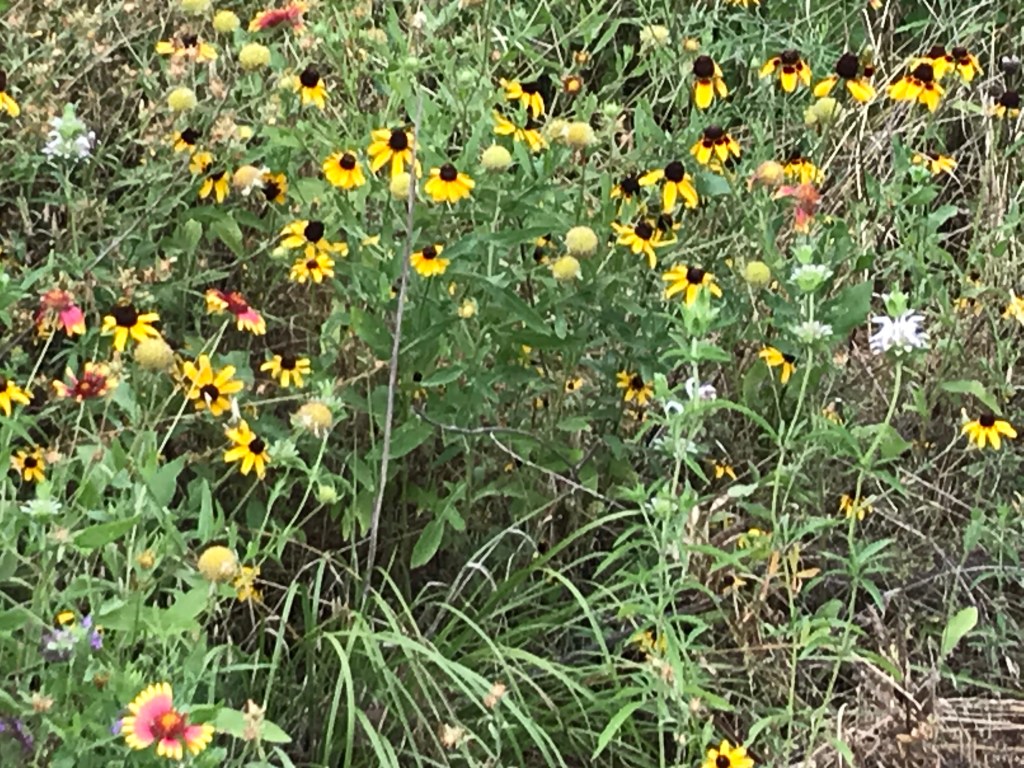
A variety of native plants (mostly)
Glandularia bipinnatifida (Dakota Mock Vervain, Prairie verbena) (native, not cultivated)
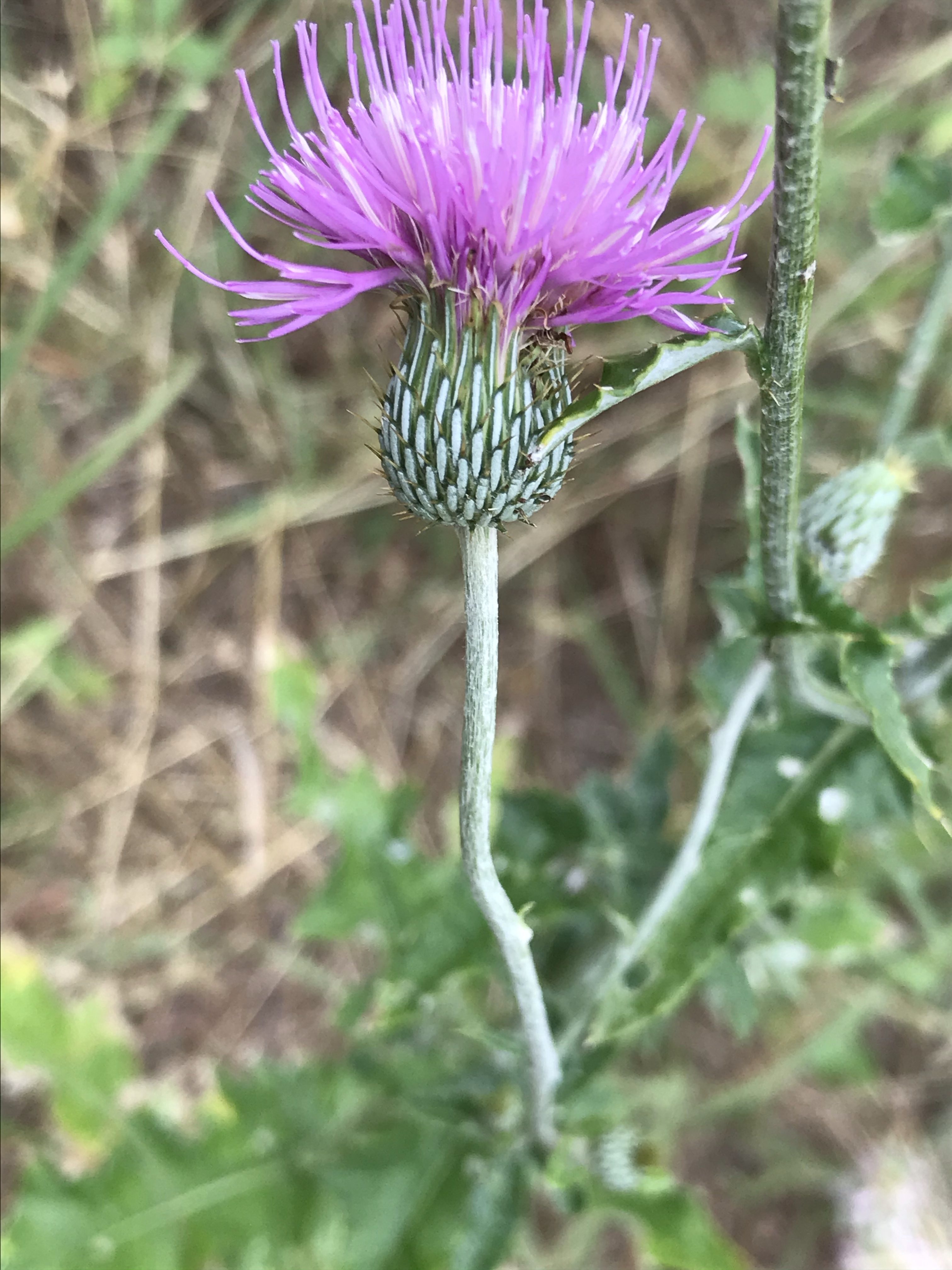
Cirsium texanum (Texas Thistle) (native, not cultivated)
Gaillardia pulchella (Indian Blanket) including recessive gene lacking red pigment, “Sunwheel” (native, not cultivated)
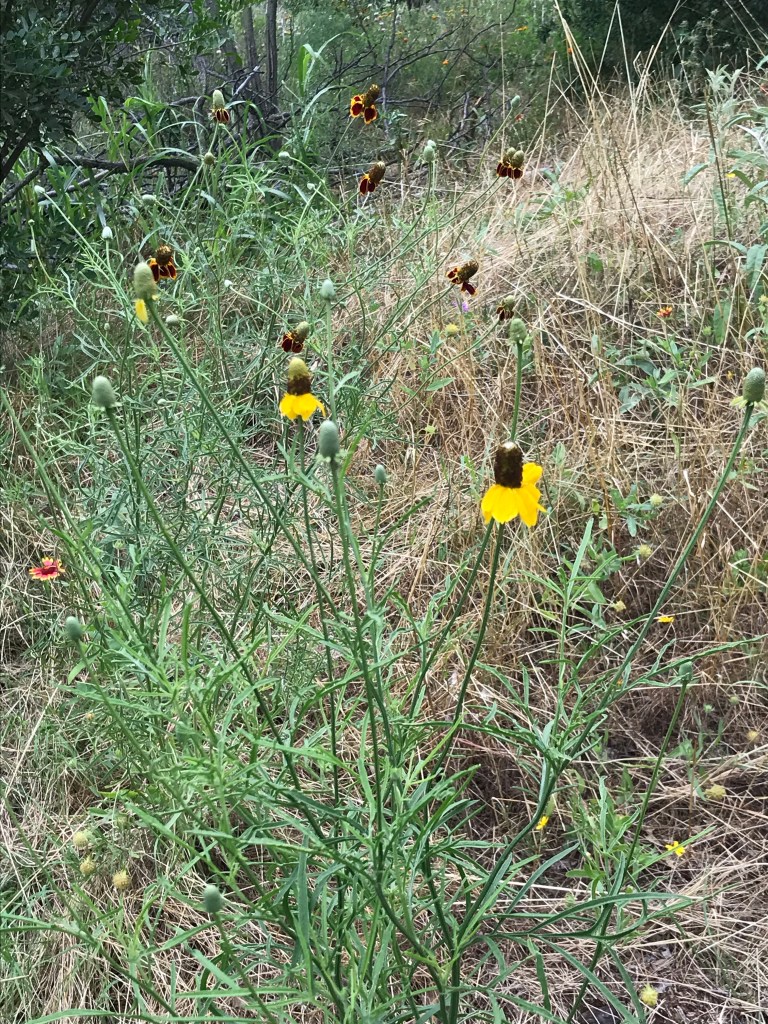
Ratibida columnifera (Prairie Coneflower, Mexican Hat)(native, not cultivated)