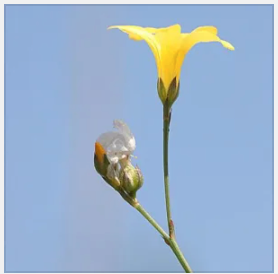
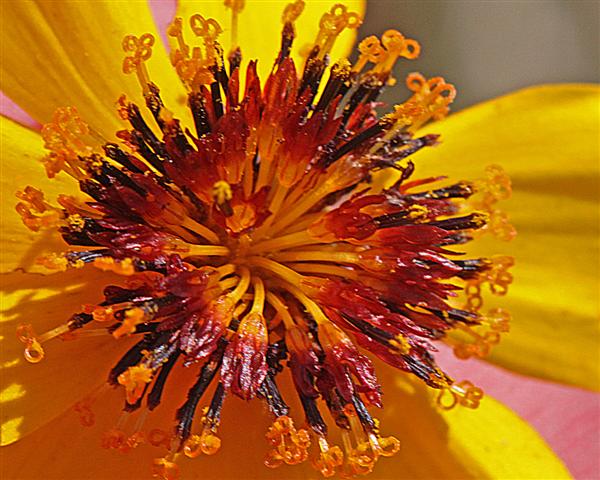
There are several different species within the Thelesperma Genus, and this is most definitely one of them. Which one, though, can be difficult to say for sure, since this is so closeup that there is no way to judge the height of the flower, the shape of the leaves, etc. Perhaps it might help if the photographer kept better notes while in the field… Compounding the problem is that several different species share the common names Greenthread and Navajo Tea, which is why Greenthread was used in the title. It’s probably one of the common names of this Thelesperma.
Tag Archives: native plants
Monarda citriodora – Purple Horsemint
The individual flowers also remind one of the Charles Munch painting The Scream, according to some folks I know. Look as hard as I can, I still don’t see it. It attracts bees and butterflies and is a common sight throughout the hill country. This specimen was photographed back in May during the NPSOT field trip.
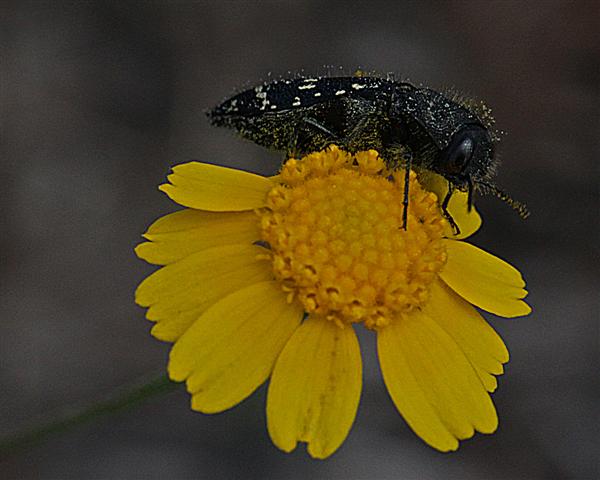
possibly Yellow Bitterweed – Helenium Amarum
“Possibly” because the identification was made in the field and I haven’t gotten a sure ID since returning home…It seems to me that th Helenium Amarum has only 8 petals and that this one in the picture has at least 9 I can count. I haven’t even tried to identify the bug yet. It does look as though it has been the target of a wasp which has laid eggs on it (those hairy looking things on its back). Insects don’t usually stay still for photo opportunities,
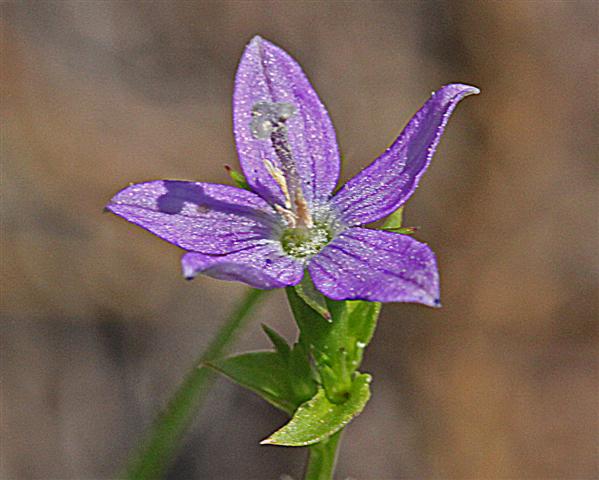
Western Venus’ Looking Glass – Triodanis coloradoensis
Here’s another one of those miniature beauties that you probably won’t see if you’re jogging or biking down the nature trail. That would be a shame, because this short 6″ to 2 foot high is arguably the most beautiful of the Triodanis genus. This was photographed along the Brushy Creek Regional Trail back in mid-May. If we hadn’t been in the company of a bunch of shoe-gazing native plant field trippers, we might never have seen it.
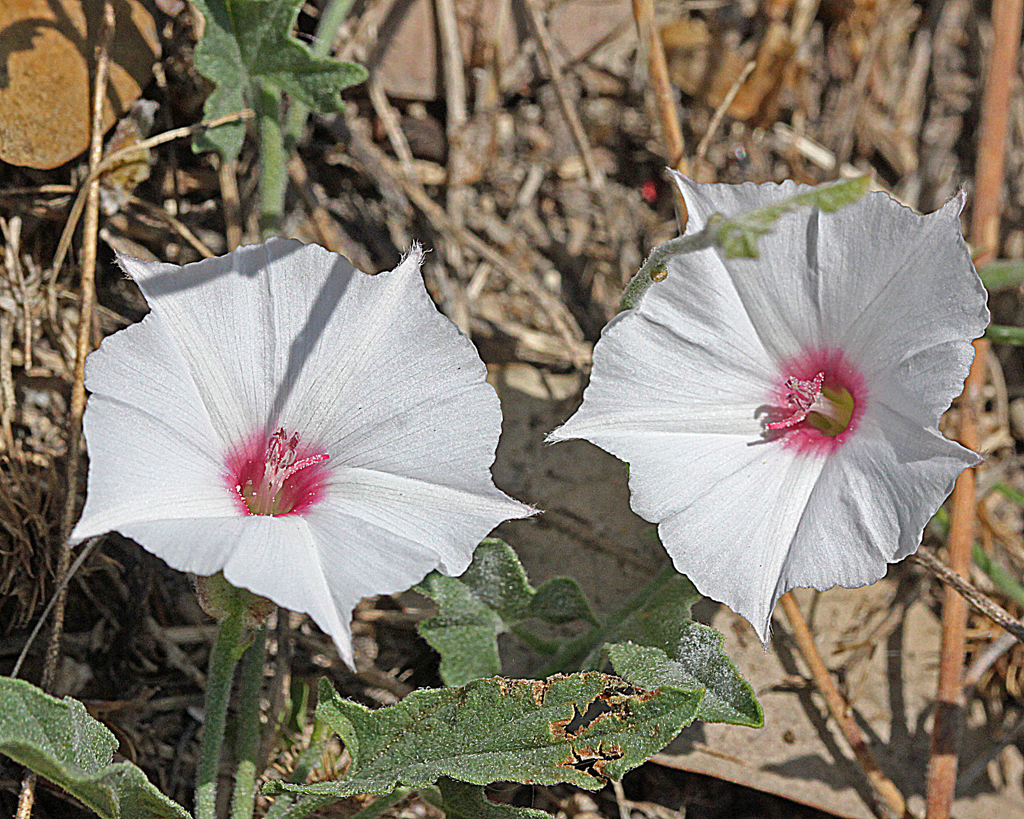
Convolvulus equitans – Texas Bindweed
Spotted this today in the Dessau Middle School parking lot while in between photo shooting assignments involving Lego Robotics pieces. A member of the Morning Glory family, this is a fairly small annual vine that usually prefers partial shade according to the Wildflower Center’s NPIN. Enquist’s Wildflowers of the Texas Hill Country refers to it as a perennial. Interesting. Usually found prostrate or climbing on short weeds in the fields, it is common in the Hill Country and is native throughout the Southwest to California, except for Nevada. It ventures eastward to Arkansas and Alabama, according to the USDA’s database. The pink or purple centered white flowers remind me of the much larger Alamo Vine Ipomoea pandurata
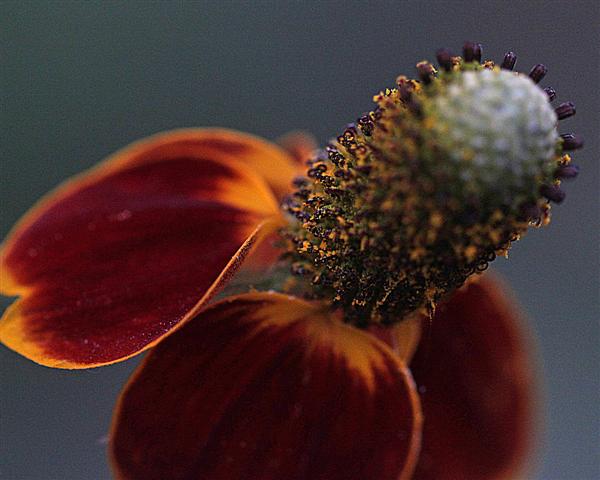
Mexican Hat – Ratibida columnaris
These are seen everyone in these parts about this time of year, with petal colors ranging from all yellow to red and yellow to almost all red. Also known as Prairie Coneflower and Thimbleflower. Rick Perry might know it by another name, now archaic, as if Mexican Hat wasn’t ethnically insensitive enough. Ratibida columnaris seems easy enough to remember. Florida State alumni might like the “Garnet and Gold” color combination, speaking of ethnically insensitive names…oh well, it’s really not an offensive flower, whatever you call it.
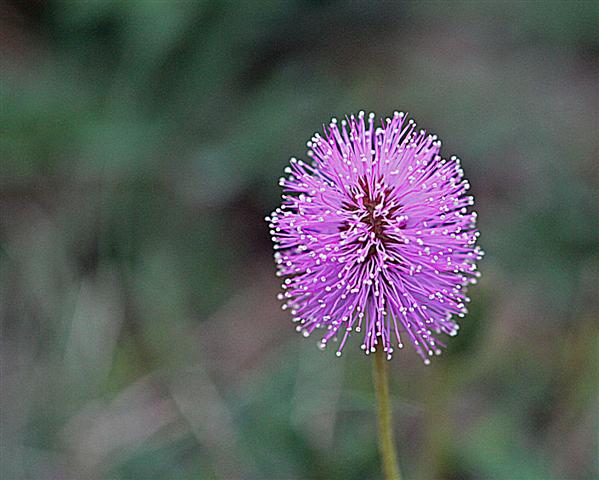
Sensitive Briar – Mimosa roemeriana
Here’s another plant that has changed scientific names while remaining with the common name. My older field guides say this is in the Schrankia genus, with several similar species (which are not listed in the guides, although one mentions that some folks think they’re all the same species). Meanwhile, the NPIN at the Wildflower Center, whose page was last updated in 2007, says this is Mimosa Roemeriana. Still a member of the Fabaceae or Pea family, though. Still, this persistent little weed makes for an interesting ground cover, although it does sprawl a bit. I’ve got in the space between the street curb and the sidewalk, and I think I will cultivate it rather than try to eradicate it, which hasn’t worked out in the past. And it does have those lovely little pink puffballs of flowers…
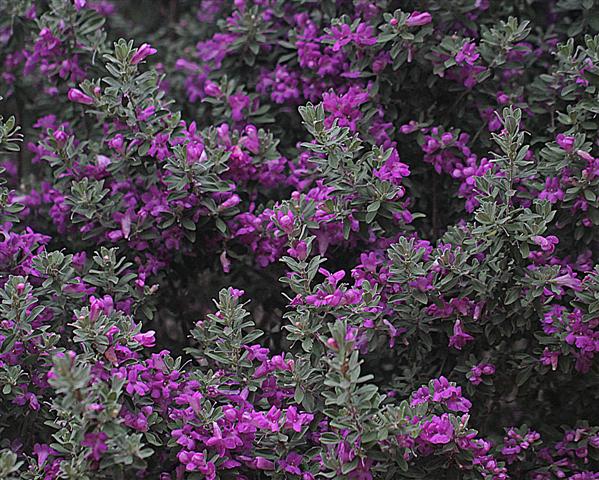
Cenizo – Leucophyllum frutescens
Also known as Barometer Bush because of its habit of blooming every time it rains or gets humid, these are putting on a show right now. Also known as Texas Sage, which can be confusing because there’s another commonly known Texas Sage which is a member of the Salvia genus and is an herb and not a shrub. Which is why we tend to call this Cenizo or Leucophyllum frutescens, just so we don’t get confused. A very easy to grow and useful shrub for the Central Texas yard or garden.
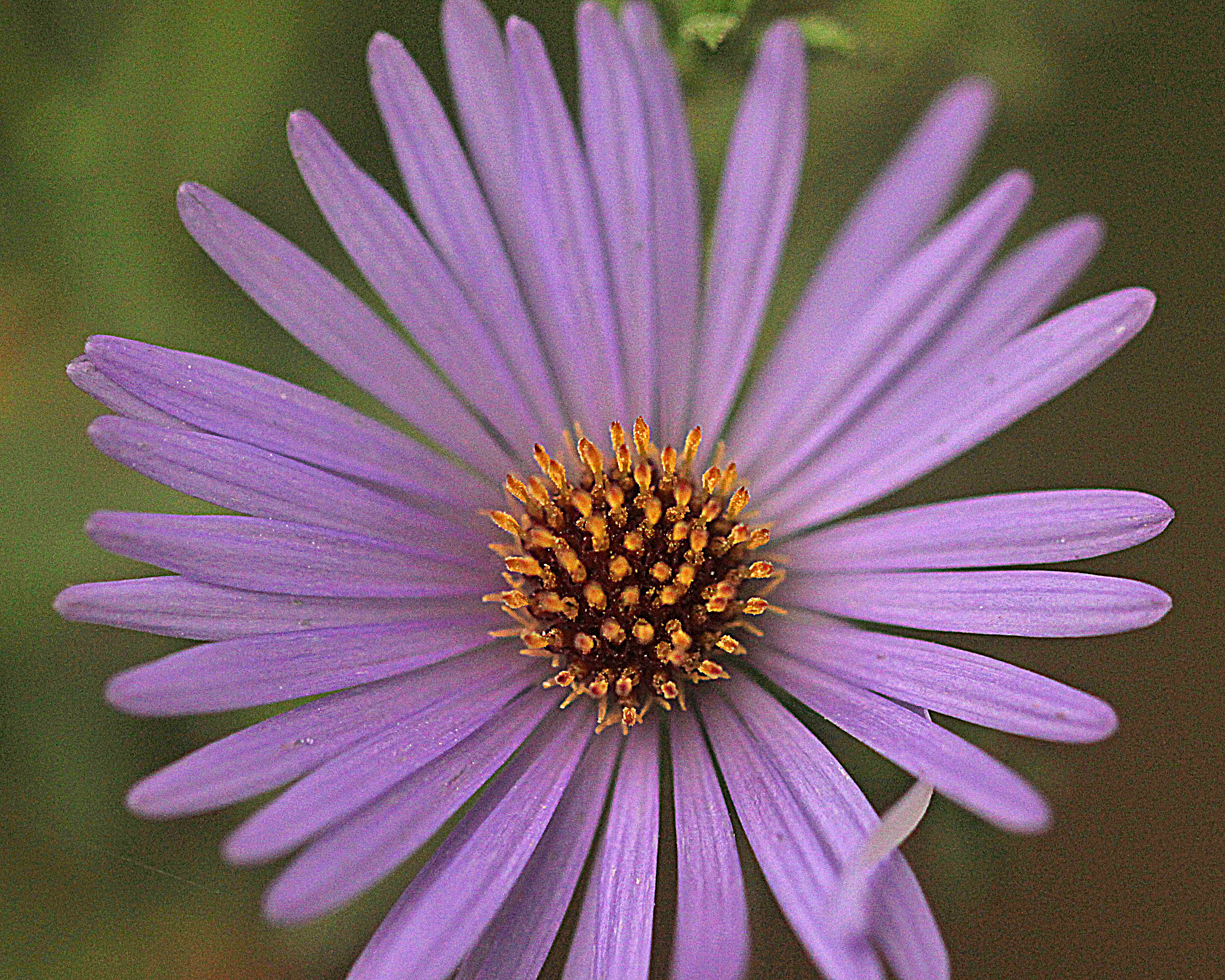
Fall Aster – Symphyotrichum oblongifolium
Late Spring is an odd time for a Fall Aster to be blooming, but this year has been an odd one for blooming flowers as they adjust to severe drought and a mild winter. Some folks refer to the plants as “confused” but they appear to be opportunistic – blooming and reproducing when the conditions seem favorable, whatever time of year it may be on the calendar.
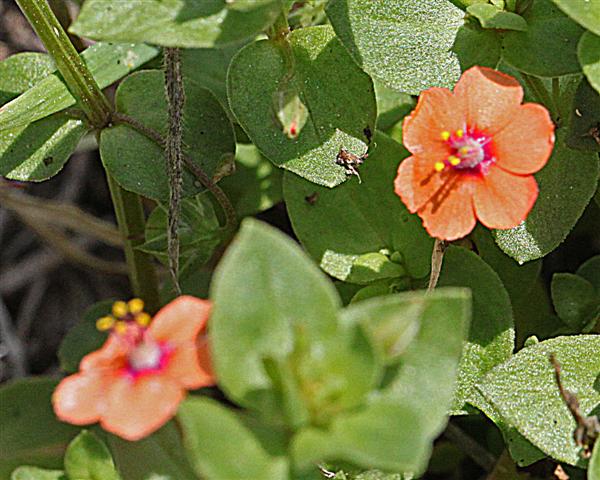
Scarlet Pimpernel – Anagallis arvensis
Fond of moisture, this little (6-9″) plant was found in a meadow near Brushy Creek in Williamson County. The flowers are small, less than half an inch across, so you’re unlikely to see them if you’re riding a bicycle down the regional trail or jogging. It takes a sharp-eyed group of native plant enthusiasts to spot them down under the gaillardia and other flowers.