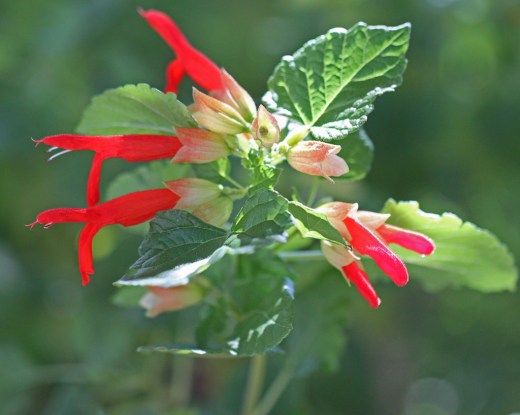
Salvia regla – Mountain Sage
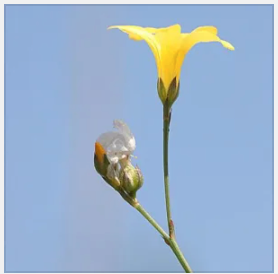
Salvia regla – Mountain Sage

Hylephila phyleus (male) – Fiery Skipper on Fall Aster
Here’s a busy little Fiery Skipper blending in with the similarly colored central flower blossoms of the fall aster. I’ve been busy resurrecting a different website and other such things and haven’t updated this site for some time.
Here’s another aster that has volunteered to appear in my yard and seems to be either a Prairie Fleabane out of season (not unheard of in this year of strangely out of season bloomers.) It looks to me to be a hierba del marrano or aster subulaus. The key identifier is the blush of purple … I seem to have noticed elsewhere that “baby’s breath” is another common name…
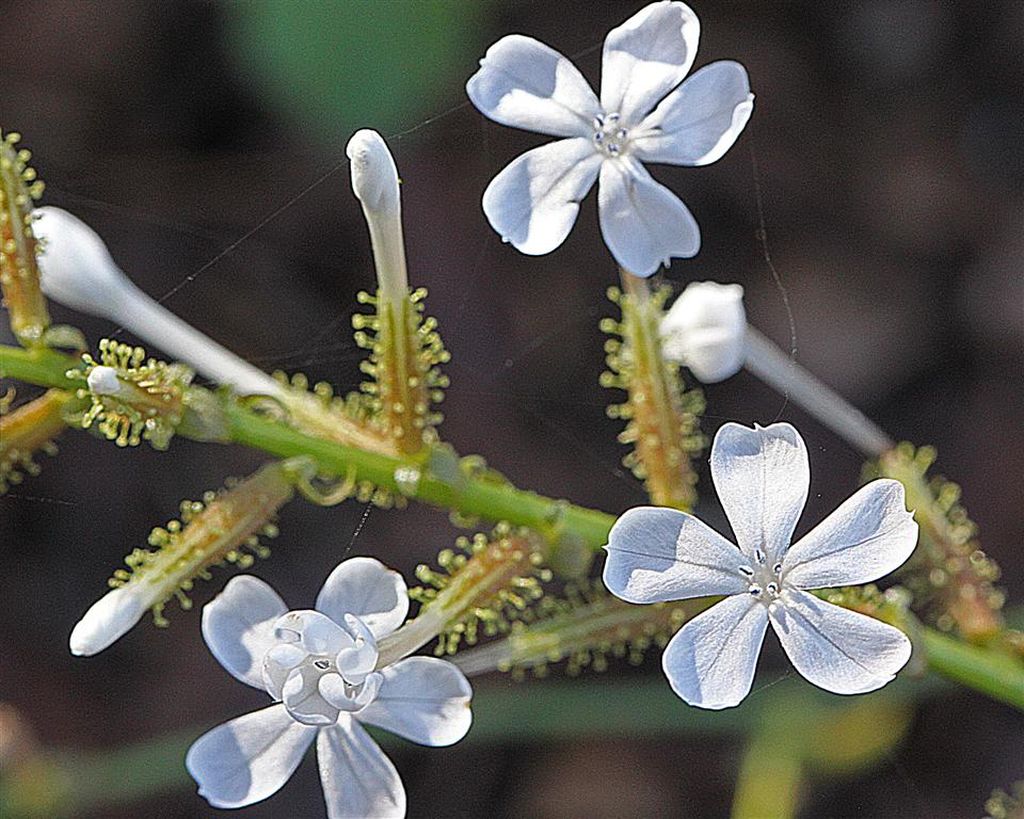
white flower 10-29-2012
And from October 29, and a trip to South Austin to the roadway around the Lady Bird Johnson Wildflower Center, comes this picture of an unidentified white flower that i haven’t been able to identify using the WFC’s online database. I’ve asked some folks but no one else seems to know either. I will be checking The Weeds OF The West and Toxic Plants Of Texas to see if there’s a match there…and the search for knowledge goes on.
And finally, since we are displaying our ignorance and searching for knowledge, here’s another unidentified flower from the roadside next to the closed on Mondays LBJ WFC – it does appear to be some sort of mallow to me, but so far no luck in figuring out each one. Oh well… tomorrow’s another day, or, based on the time zone in which this is being written, tomorrow is here, but the world is waiting for the sun to rise and I am waiting to sleep, perhaps to dream…
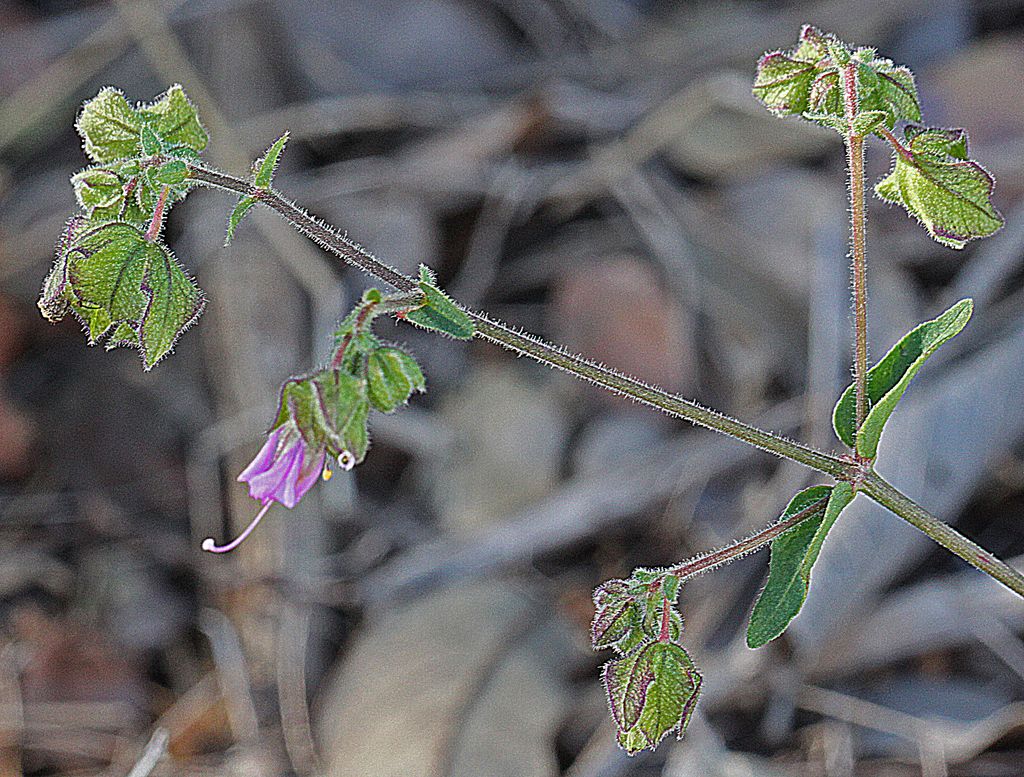
unknown flower at WFC

LILI Nothoscordum bivalve – Crow-Poison
The authorities have not yet reached a consensus whether this plant is toxic, either to humans or to crows, so they advise that you just don’t put this in your mouth. Or feed it to crows, I suppose.
Crow Poison can bloom early in the Spring, but as this shows, they can also bloom throughout the summer and well into fall. It is similar in size and shape to Allium Drummondii, Wild Garlic. Sight and Smell are the two senses that help to differentiate the two – Wild Garlic has a purple tint to its white flowers, and it smells like onion.
Here you can see the umbel of Crow Poison, with a couple of buds in the process still of opening. Elsewhere you can see an excellent photo by Joseph Marcus with the Lady Bird Johnson Wildflower Center in Austin, Tx (http://www.wildflower.org/gallery/result.php?id_image=13203 ). September 22, 2014 – Note: the linked photo used to be here. It has been removed in order to avoid infringing on Mr. Marcus’ copyright as well as to abide by the NPIN terms of use.
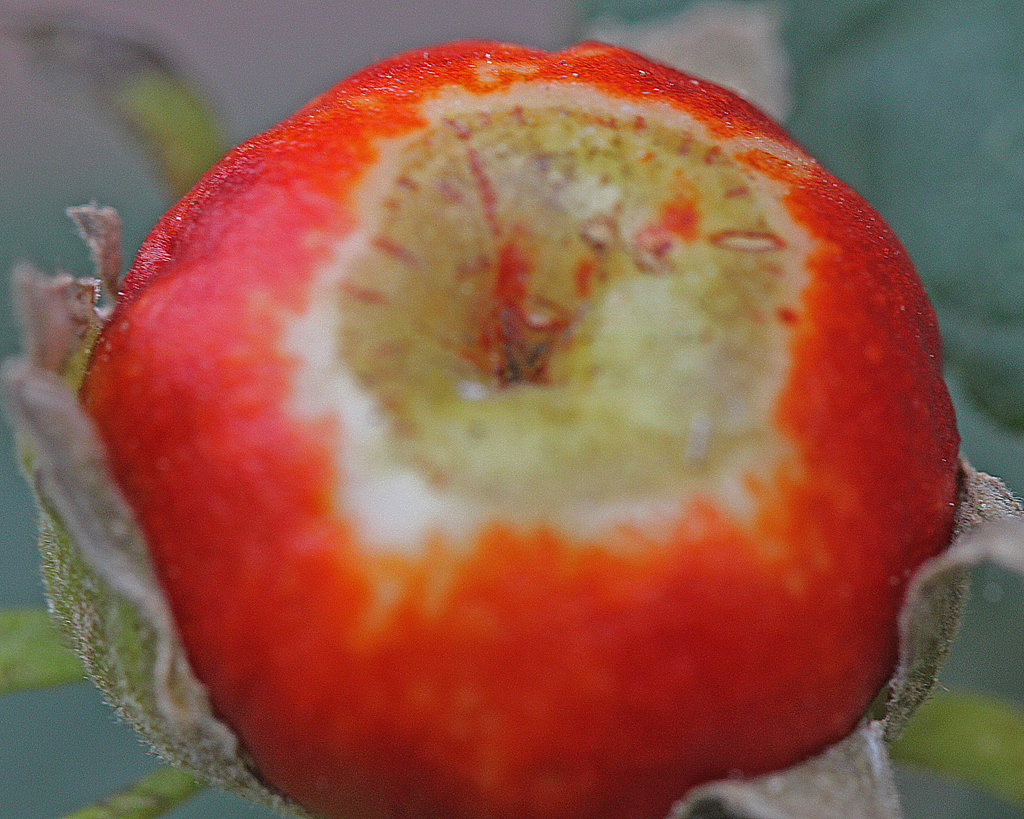
Malvavisus arboreus – Manzanilla
You might know this plant by the common name associated with its flower – Turks Cap. Today we see its edible fruit, with its obvious resemblance to a small apple, hence the common names Manzanilla and Mexican Apple. Manzanas of course, is Spanish for apples, and Manzanilla literally meaning “little apple” in translation.
The fruit is edible – I went back to look for this one a few days later and couldn’t find it. I assume it was eaten by a critter of some sort.
This illustrates some of the disadvantages of using common names for describing plants as well as some of the advantages of native plants in landscaping. The Malvaviscus arboreus provides nectar to hummingbirds and butterflies and other wildlife during its flowering stage, and fruit for wildlife after the bloom has gone. Having evolved in common with its habitat, it provides services to other living things that share that habitat. It’s deciduous, so it sheds its leaves which decompose into compost, enriching the soil if given the chance.
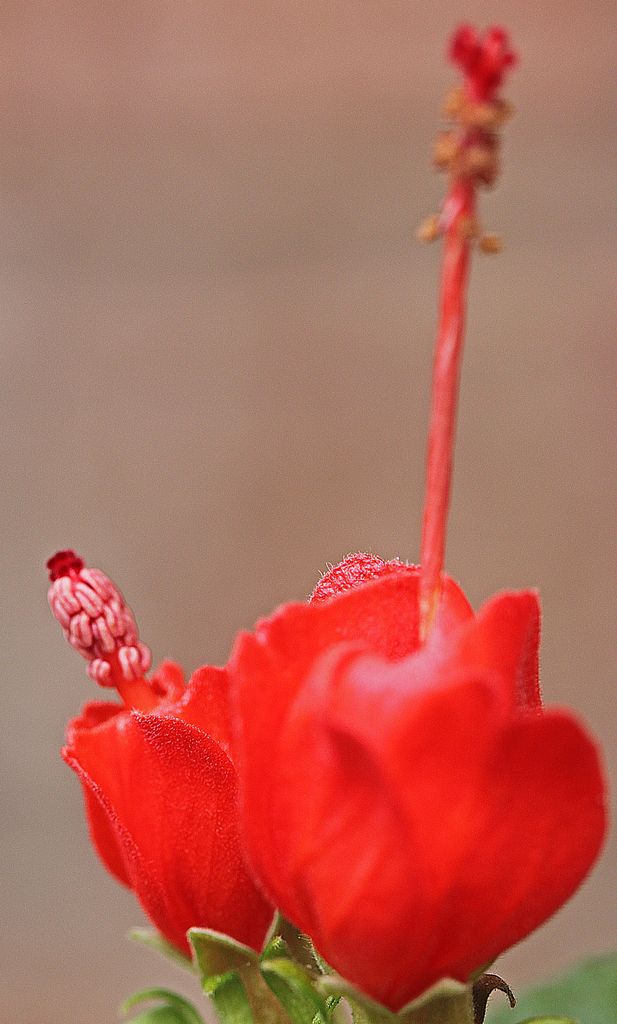
Malvaviscus arboreus – Turks Cap
It makes a good alternative to the exotic or alien Nandina which is ubiquitous in the nursery trade and has aggressively escaped into nature. Generally, folks advise cutting the dead wood back to about 1 foot somewhere around mid-February, but anytime after it drops its leaves is fine and should keep HOAs from finding fault with your native plantings.
It is shade tolerant as well as drought resistant, and also comes in a white-flowered variation.

Gaillardia aestivalis var aestivalis – Prairie Gaillardia
Although this Gaillardia is indeed a native to Texas, and was photographed next to Gaillardia pulchella, the familiar Indian Blanket or Firewheel, this particular specimen is located at the Cape Canaveral National Seashore. It is found mainly in the coastal states, in dry, sandy soils. So I would guess in Texas it would be familiar along the Gulf Coast, while this Florida native was next to the Atlantic Ocean.
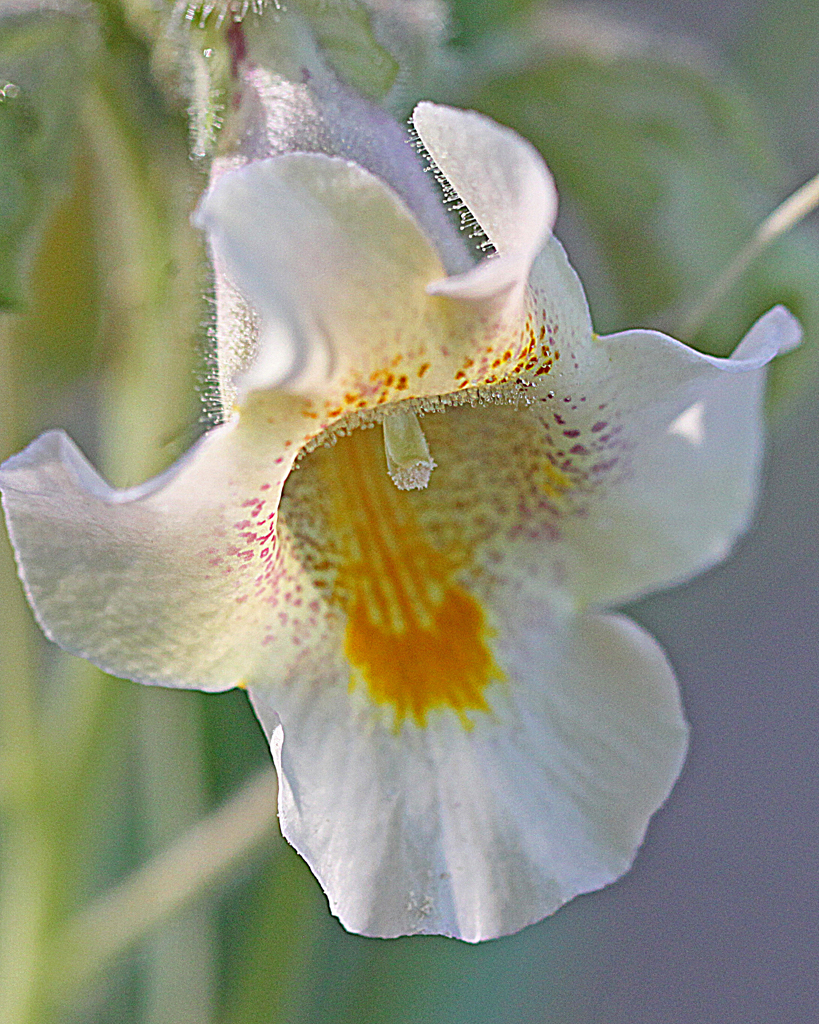
Proboscidea louisianica – Devil’s Claw
Can’t tell you how pleased I am that this plant, which has popped up in the greenbelt behiind the fence, is a native rather than an exotic or invasive. According to Enquist, this is an occasional plant of roadsides and wastes., common only in Mason County. The seeds apparently attach themselves to bypassing animals, thus spreading and propagating the species. Apparently the seed pods were used for food by various native tribes of the Southwest, as well as plant fibers which were used for weaving. The plant has a rather strong unpleasant odor, which means that the photograph is more pleasant than the taking of the photograph. Ajilvsgi recommends it for the xeriscape garden, if there is room. It blooms from June to September, usually only a few flowers at a time.
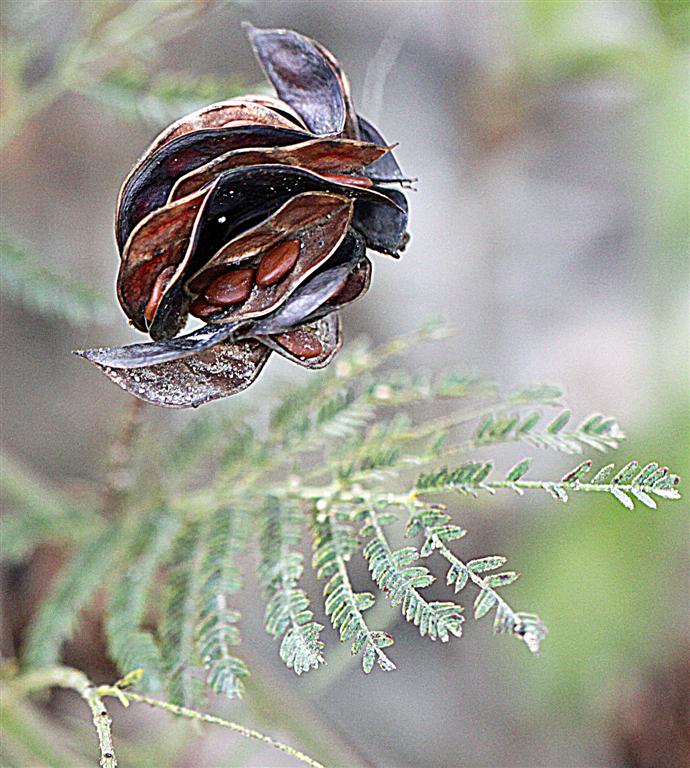
Desmanthus illinoensis – Illinonis Bundleflower
Another shot from Lake Granger/Taylor Park back in mid-July, this time from the shoreline, of the seedpod of the Illinois Bundleflower.
Since the Desmanthus illinoensis usually blooms in May and June, we saw none of the little creamy white flowers, and the seed pods had already turned from green to black. The leaves have been described as almost fernlike – decide for yourself. Together, they are a distinctive combination that should be easy to recognize in the field.

Convolvulus equitans – Texas Bindweed
Back to flowering plants, this time a small vine that grows close to the ground and has fairly small flowers which are less than a inch and a half across, if that much. A member of the Morning Glory family, it resembles other members of the family. Its leaves are distinctive as seen in this photo just above the blossom. It likes partial shade and is in general easy to overlook.
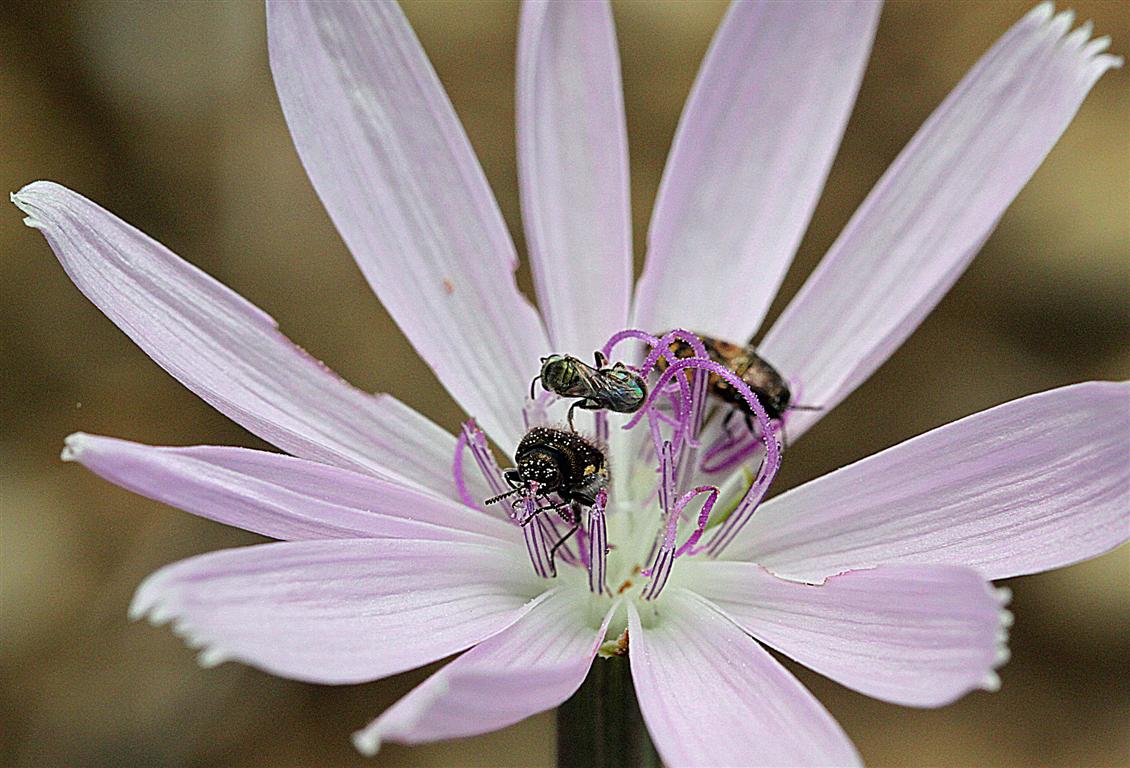
Lygodesmia texana – Skeleton-Plant
The Skeleton Plant gets its common name from the fact that it has little in the way of foliage, so its stem appears to be the bones of a skeleton-plant. Or so one would guess. This particular shot includes three – count em, three – different types of insects clustered about the flower. Usually one has trouble getting one insect to stay still long enough to get a shot of it, but these three amigos went about their business with no apparent concern for each others’ presence on the same blossom. It usually blooms throughout the Spring and Summer (April through August), so at least that part of the picture is nothing unusual. This flower is a bit on the pale side, since the flowers usually range from Rose to Lavender in hue, and are often quite saturated as far as color goes. On the other hand, it has attracted three different potential pollinators (one assumes the insects might provide this service), so who are we to criticize?
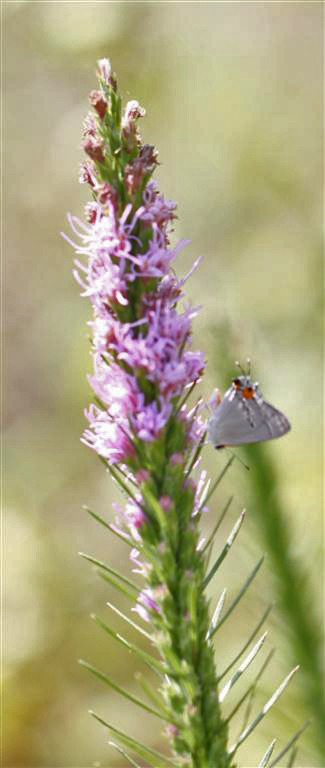
Liatris with hairstreak
Here we have a Gray Hairstreak Strymon melinus perched on the blooms of Liatris mucronata aka Gayfeather. The Gray Hairstreak covers much of North America and as far south as Venezuela. It is distinguished by the red spot on its hindwing. One interesting thing about this butterfly is that it bobs its hindquarters up and down while the head remains fairly still, sucking nectar from the flowers. Click on the image anf look closely at the larger image with more detail and you’ll see what I am talking about. This picture was taken July14 at Taylor Park near Lake Granger and shows one of the few Liatris that were actually blooming at the time.
 bob's brain: living well with a movement disorder and other comorbidities