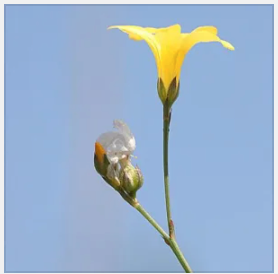
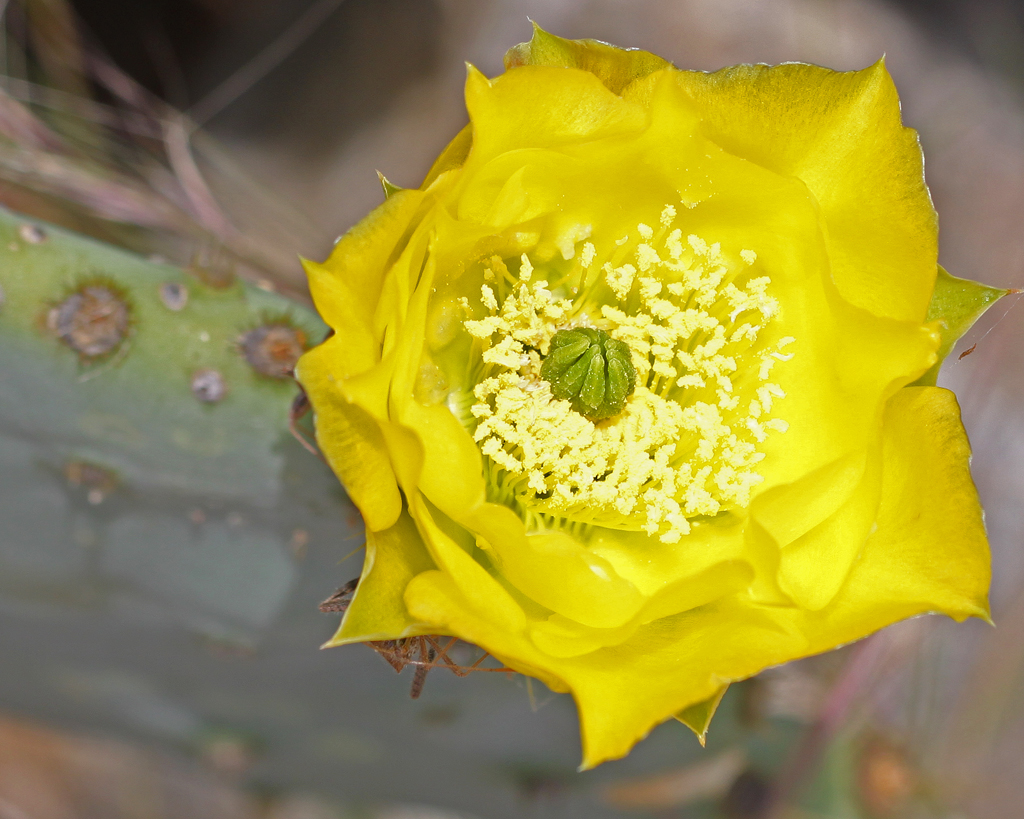
Caught this bloom today at the Wildflower Center south of Austin. The Prickley Pear Cacti behind my house don’t seem to be in any hurry to bloom, or I’d have taken a picture of one of them instead. Prickley Pear is almost ubiquitous in these parts – they’re what’s left after folks let cattle and goats overgraze their land in order to get the agricultural use tax rate. The “tunas” (fruit) of this cactus is edible, as are the pads, once the spines are removed. They call them nopalitas and you can search Google to find recipes, products and such.
Tag Archives: native plants
Pavonia lasiopetala – Rock Rose
Also known as Rose Pavonia, Rose Mallow, and simply Pavonia, this small shrub is a member of the Mallow family. It blooms from April through November, and got started blooming a little earlier this year in March. Its pink flowers remind you of Hibiscus, but unlike its cousin the Swamp Rose Mallow (found in swamps and ditches), this is found in rocky areas (thus the monicker “Rock Rose”) and slopes in woodlands and at the edge of thickets.
Also known by the scientific name of Pavonia wrightii, Rock Rose is a perennial shrub, with oblong alternating leaves, as seen here. It is drought tolerant and cold tolerant, and can handle full sun to partial shade conditions. It attracts butterflies, moths, and hummingbirds and is a good choice for a perennial garden, providing blooms throughout the summer.
Say It Ain’t So, Joe!
From Mr Smarty Plants:
TUESDAY – MARCH 19, 2013
From:Buda, TX
Region: Southwest
Topic:Problem Plants, Turf
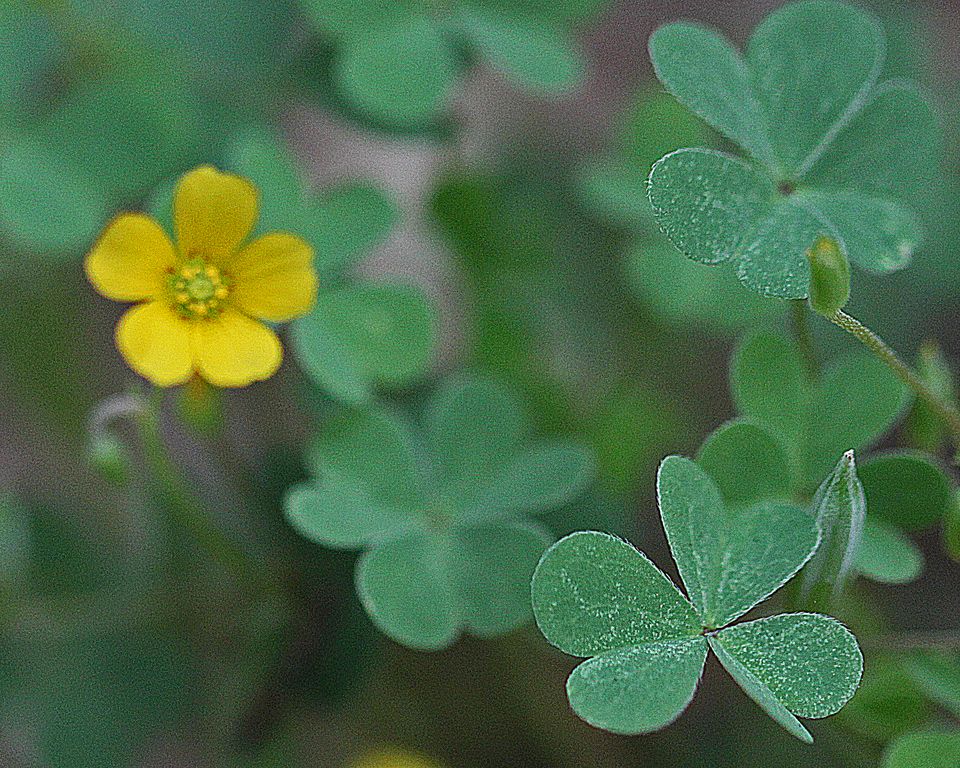
Title: How to control Yellow Woodsorrel in Habiturf?
Answered by: Joe MarcusQUESTION:
Last year we planted Habiturf in our front lawn and prepared the ground as directed with organic compost. This year we have an infestation of low growing yellow oxalis which we believe came in with the compost as we have not had this before. What do you recommend as a control? as weeding will not get all of it and the areas are large. We are considering using an herbicide knowing it will knock out our grass but then we will reseed.
ANSWER:
Yellow Wood Sorrel, Oxalis stricta, and Slender Yellow Wood Sorrel, Oxalis dillenii, both North American natives, are often unwanted visitors in lawns, especially newly-establish or unhealthy lawns. As your lawn matures and develops a denser stand of grass, broadleaf weeds like Wood Sorrel will be less of an issue. Promoting healthy grass growth will eventually pay off in reduced weed infestation.
There are broadleaf herbicides labeled for use on oxalis. These chemicals are specific to dicot weeds and will not kill grasses and other monocots if used properly. We take neither a pro nor con stance on garden chemicals, but only urge those choosing to use them to do so in a manner that is safest for them and the environment and to strictly adhere to label directions.
Other than hand weeding, we know of no effective organic control for Oxalis species.
In the words of Lennon & McCartney, how about “Let it be”?
This is a golden opportunity to change from turf to wildflowers.
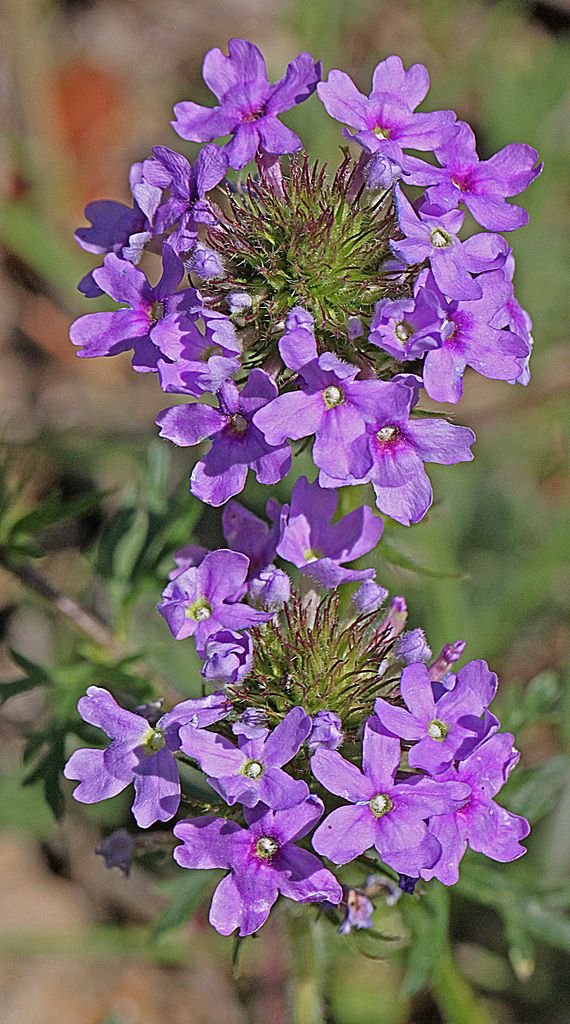
Glandularia bipinnatifida – Prairie Verbena
Also known as Dakota Mock Vervain, these low-lying forbs start blooming in March and continue through December. They are attractive to butterflies as well as people, and are drought tolerant. Appropriate in the wildflower meadow as well as butterfly or ornamental garden.
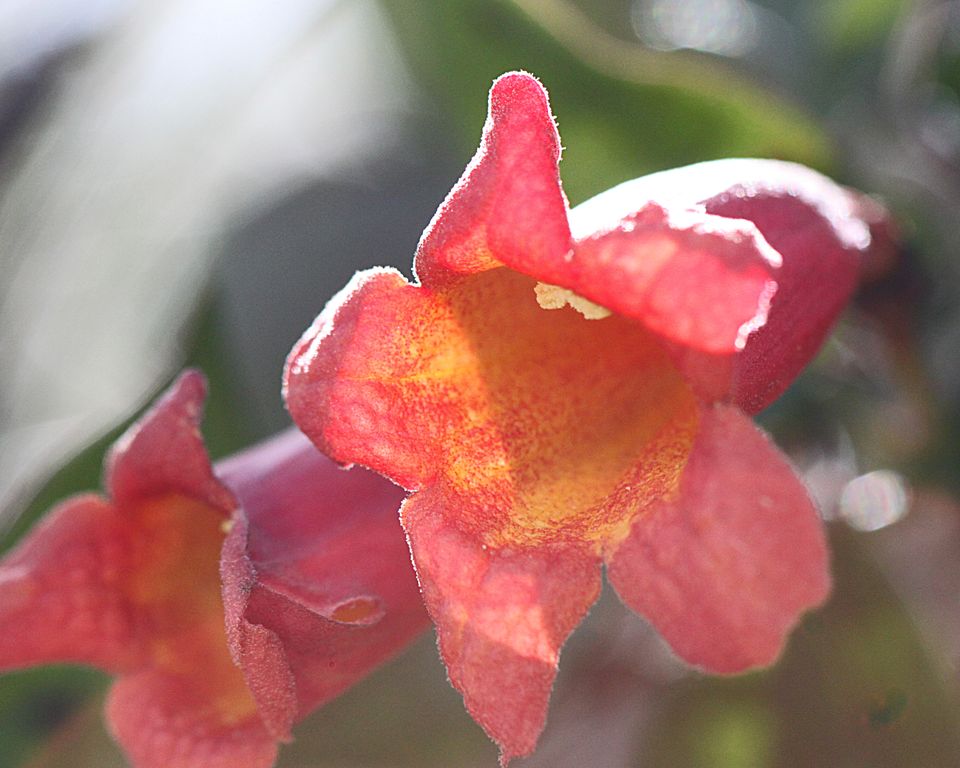
Bignonia capreolata – Crossvine
The Crossvine is blooming, draped across the Eastern Redbud, and it seems to be handling the drought with less stress than the Redbud. The blooming period is from March through May. It attracts hummingbirds (if there happen to be any in the suburban desert) and butterflies that feed on the nectar. Which reminds me – I saw my first Monarch Butterfly (Danaus plexippus) of the season over the weekend (Saturday to be exact). Oddly enough, it was feeding on the Texas Mountain Laurel Sophora secundiflora, but apparently not long enough for me to grab the camera, Also spotted a couple of Red Admiral (Vanessa atalanta) butterflies yesterday and did grab my camera, but the creature wouldn’t settle down long enough for me to get a shot. So here’s the Bignonia capreolata instead.
Bouteloua gracilis – blue grama
Blue Grama is a drought resistant native turfgrass that can be grown from seed. It can easily be mistaken for Bouteloua hirsuta Hairy Grama if one doesn’t know that Hairy Grama has a “spike” or pointy end to its seedhead. The Blue Grama pictured above is spikeless or pointless, as it were. And the picture above doesn’t quite show a seedhead, since the florets are in bloom. The picture above was taken next to the Bluebonnet in the previous post, in the little patch of grass between the curb and the sidewalk.
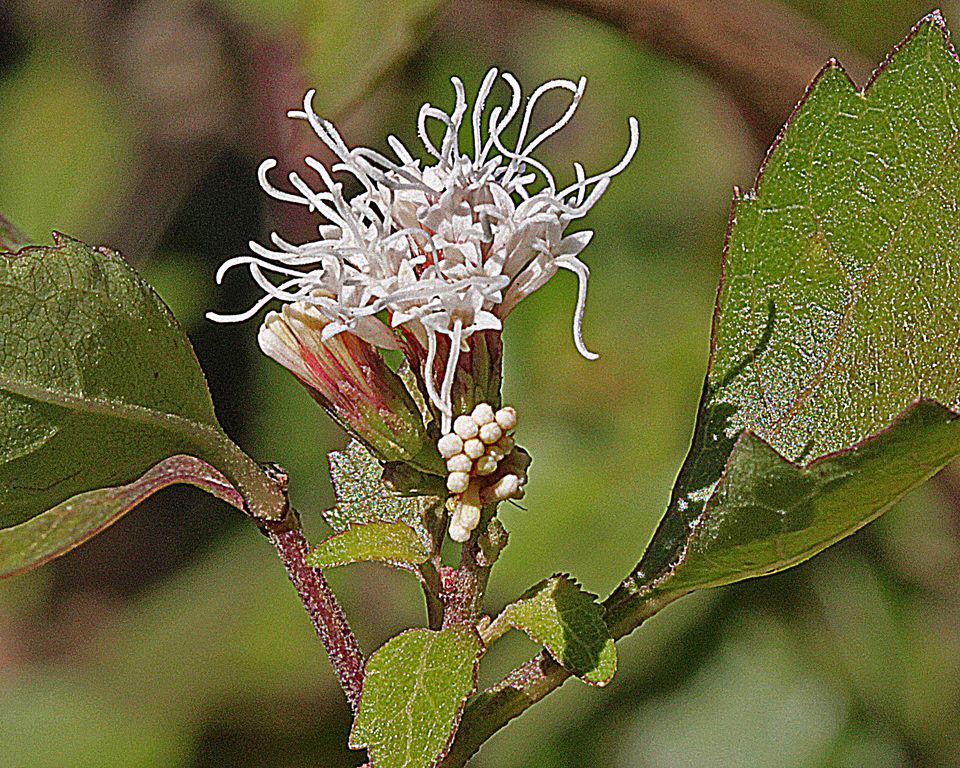
Ageratina havanensis – White Mistflower
Krameria lanceolata – Rattany
Krameria is a low lying plant with fairly small but striking flowers, as can be seen here, with a little bit of the foliage in evidence behind it. The leaves are thin and almost spike-like, hence the lanceolata portion of its name and both the stem and the leaves are a bit hirsute including the seed, seen in the lower left of this photo. The bright reddish things that bring it to your attention are actually sepals, while the actual petals are the small things in the center with the green and red mixed coloration.
Off with the Old, In with the New
Here’s an empty cicada shell still hanging on an Ashe Juniper Juniperus ashei, or Cedar, as it is known commonly in these parts. It is perhaps symbolic of the first blog post of the new year that it features an artifiact of a fauna that has shed its old skin to emerge with a fresh new exoskeleton. Perhaps. Or it could be that I simply meant to choose a different picture and accidentally ( or subconsciously) chose this one instead. Could be.
One could try to figure out what it all means, or one could simply take a deep breah, and, in the words of Paul McCartney, let it be…
Phyciodes phaon – Phaon Crescent on Ageratina havanensis – White Mistflower

Phyciodes phaon – Phaon Crescent on Ageratina havanensis – White Mistflower