Some research that might be of interest…

My Google Scholar alert feed tossed a couple of items my way  that might be of interest. They are in PDF format, so you can read them online or download them for future reference:

Tricky partners: native plants show stronger interaction preferences than their exotic counterparts.

Citation: Coux, C., I. Donoso, J. M. Tylianakis, D. Garcı´a, D. Martı´nez, D. M. Dehling, and D. B. Stouffer. 2021. Tricky partners: native plants show stronger interaction preferences than their exotic counterparts Ecology 102(2):e03239. 10.1002/ecy.3239

Main takeaway (my interpretation): Increasing presence of exotic plants may put rare native plants at higher risk of extinction.

(Caveat: my browser says the site is not secure. However, I have several security programs that (hopefully) would mitigate. the risks).

That being said, the article is from a group of scientists from New Zealand, Germany and Spain who looked into the interactions that native and exotic plant species had with other plant species.

Exotic species interact with many partners with which they have not coevolved, and it remains unclear whether this systematically influences the strength of neutral processes on interactions, and how these interaction-level differences scale up to entire networks. To fill this gap, we compared interactions between plants and frugivorous birds at nine forest sites in New Zealand varying in the relative abundance and composition of native and exotic species, with independently sampled data on bird and plant abundances from the same sites

The results found that native plants’ interactions with birds were both more positive (preference for) and negative (avoidance of). Their analysis suggests that the blending of species communities through dispersal of exotics into native plant communities might result in an increase of neutral interactions between birds and native plants or exotic plants.

This could make rare species more vulnerable to this loss of selectivity and to greater randomness in the identity of their interaction partner.

So there’s another argument for getting rid of invasives.

Moving right along, here comes

Where Have the Native Grasses Gone: What a LongTerm Repeat Study Can Tell Us about California’s Native Prairie Landscapes

…found that native grass cover decreased dramatically (especially on the valley floor), exotic grass cover fluctuated widely over time, while both native and exotic forb cover increased over time. The findings support the notion that prior grazing management practices may have supported the former stands of Stipa pulchra.

… Several trends became apparent when the data from the three periods are viewed together. Both native and exotic forbs increased between each data collection. There were consistently more native forbs than exotic ones and native grasses decreased in cover. Though exotic grasses fluctuated, they always made up a greater amount of cover than their native counterparts. Lastly, cover of bare ground fluctuated and shrubs declined. The Fisher’s Exact test of the increases and decreases of forb and grass cover across quadrats from 1981 to 2015 had a p-value of 0.00012 indicating that we can reject the null hypothesis of independence…

… native bunchgrasses have declined dramatically since the end of the ranching era. Simultaneously, native forbs have increased (at least temporarily), especially on the valley floor. Our findings also suggest that the historical ranching practices in LJV likely supported the excellent stands of Stipa observed in the valley prior to release from grazing. These findings are in agreement with those of previous long-term studies in other parts of California that also found a decline in Stipa cover on lands released from grazing. (emphasis added).

If one were to generalize the conclusions of this study to Texas, where this writer resides, I would say that the presence of large stands of Prickly Pear (Opuntia sp.). and Texas Cedars (Juniperus ashei) as the dominant species in large parts of Central Texas is probably due to past practices of overgrazing, similar to the presence of the native bunchgrasses in California has been attributed to the previous grazing practices in the study cited above.

However, I do not believe that the answer to the problem is to bulldoze the soil away and to cover the land with non-permeable surfaces like buildings and asphalt parking lots.  One can develop land while leaving large portions of native plant species intact, and without replacing them with crappy myrtles and Nandina plants.

postscript:

One of the references used in the article on California grasses was California’s Fading Wildflowers  by Richard A. Minnich. The table of contents and lists of illustrations and tables and preface are available for open access, but the book itself costs a hefty $128.00.  Another reference was Terrestrial Vegetation of California. California Native Plant Society Special Publication Number 9 (pp. 733–760). Sacramento, California., which is not on the web.

###
In the heat of the summer

I seem to suffer from Gilligan’s Syndrome – what starts out as a five minute walk outside to water the plants in their containers that I am hoping will hold on until cooler weather comes (September? October?) turns into an hour or more photo safari. Sometimes I go beyond the confines of my yard, sometimes not.

Ruellia nudiflora, for instance, has suddenly been blooming like crazy. A Passiflora incarnata volunteer popped up in the mulched bed across from the Passiflora lutea and Passiflora suberosa, and started putting out blooms. The Malvaviscus arboreus var. drummondii continue to bloom, as do the Salvia greggii, Lantana urticoides, Scutellarria wrightii, Salvia farinacea, and Conoclinium greggii. In the “nursery,” several Asclepias milkweeds have bloomed or budded, along with Tetraneuris scaposa. In the gravel pathway, I had to (reluctantly) trim the Boerhavia coccinea back to allow human passage. The Fallugia paradoxa has put out a few blooms and plumes, and the Pavonia lasiopetala has been a pleasant surprise with its hibiscus-like pink blossoms.

We have Liatris punctata still in bloom, Melampodium leucanthum, Asclepias texana, and a native grass that I have been calling “Indian Grass,” (turns out that is the common name for Sorghum nutans. The Aloysia gratissima has attracted pollinators, as has the Anisacanthus quadrifidus, and behind the fence, the Proboscidea louisianica or “Devil’s Claw,” has held out with a bloom or two. The Glandularia bipinnatifida has come up in various spots, too low for the mowers’ blades most of the time. As can be seen in some of the photos, these native plants of Texas, most of which are not receiving any supplemental watering, provide food for Bumblebees, butterflies, and even hummingbirds, lizards, and wasps. I even went out and over the course of several days, harvested enough Diospyros texana fruit to make a Texas Persimmon Loaf. The slide show that follows includes photos taken the week of August 10 – 16, 2020

This slideshow requires JavaScript.

A mid-Summer’s nightmare

I have seen the best plants of my eco-region driven into ghettos of greenbelts, invaded by non-native plants, poisoned with herbicides…

I see public areas, along roadways and in park areas, mowed so low that the grass is turning brown and burnt by the sun, despite sprinklers and watering, and occasional rains brought on from sub-tropical weather disturbances in the Gulf of Mexico.

I see the berm behind my house, where a stand of wildflowers in bloom had been cut down in late May while the ground was still wet, and where the native Silver Bluestem grass, which had once dominated the berm, had returned, mowed down in late July, parched and sere under the August sun. Because the contracts signed say they have to mow a certain number of times within certain calendar limits.

I have written emails to my HOA and the Municipal Utility District, and received no response. If a tree falls in the forest, or a native plant goes extinct or disappears from a region because of destruction of habitat, does it make a sound if there are no humans to hear it cry out?

And yet, life goes on.

I have seen the Clematis drummondii, with their achenes in showy white plumes, and must make a note to get out of the house for a photo safari soon, while this year’s show is still on. I have seen the Passiflora  vines and the Gulf Fritillary butterflies in their back and forth movements between fertilization, egg-laying, larvae consuming the plant, and adult butterflies dancing about. I have seen the native plants in my yard, both those intentionally planted, and those volunteers who have been recognized and protected, thrive or at least survive.

And I have seen the birds drinking from the water fountain, having been provided with plants that provide food (and insects that thrive and provide food as well), shelter, and a place to build their homes. I have seen the hummingbirds zooming about, grabbing sips of nectar from the salvias, the Texas Red Mallows, and the Flame Acanthus (though this year, I’m afraid I haven’t quick enough to focus and click on the camera quickly enough to capture one in mid-flight.

And as the globe warms, I wonder what changes I’ll be seeing in the plants that thrive in this area, and whether enough humans will start to think outside the box of “that’s the way we’ve always done it,” or “that’s the I’ve always heard it should be,” to make a dent in the greenhouse we are living in.

But enough of that. Time for some photos – some OK, some not so great, but the subject matter supersedes this one’s talents:

Oops! They did it again.

As in, “They mowed the berm between the greenbelt and the houses when it didn’t need mowing.” (See slideshow at the end of the post).

I had just gotten back inside the house, after taking some photos of plants in my yard, and had gone out into the berm, to document the healthy growth of Silver Bluestem that had risen up after the most recent massacre at the end of May. While not as thick as one might wish, it was good to know that my removal of the Perennial Rye and Malta Star Thistle had allowed the native grass to come back.

Looking on the bright side, it appeared that the mower’s blades had been set at a higher level than before. Whether they pressure washed the blades before mowing, I don’t know. Since I have not received the courtesy of a reply to my emails in February and June,  I don’t know. And the Johnson Grass, which I’ve been pulling out or removing the inflorescences from so they don’t go to seed, were mowed down, leaving the Poison Ivy more or less intact, so that it will be easier to go out and apply an herbicide to eradicate. And at least they mowed while the ground was dry.

So while I am still not happy with the apparent frequency of scheduled mowing, it seems that my attempts to enlighten and educate those responsible has made a small dent. Persistence will tell the tale.

What was blooming (or not) 25 May 2020

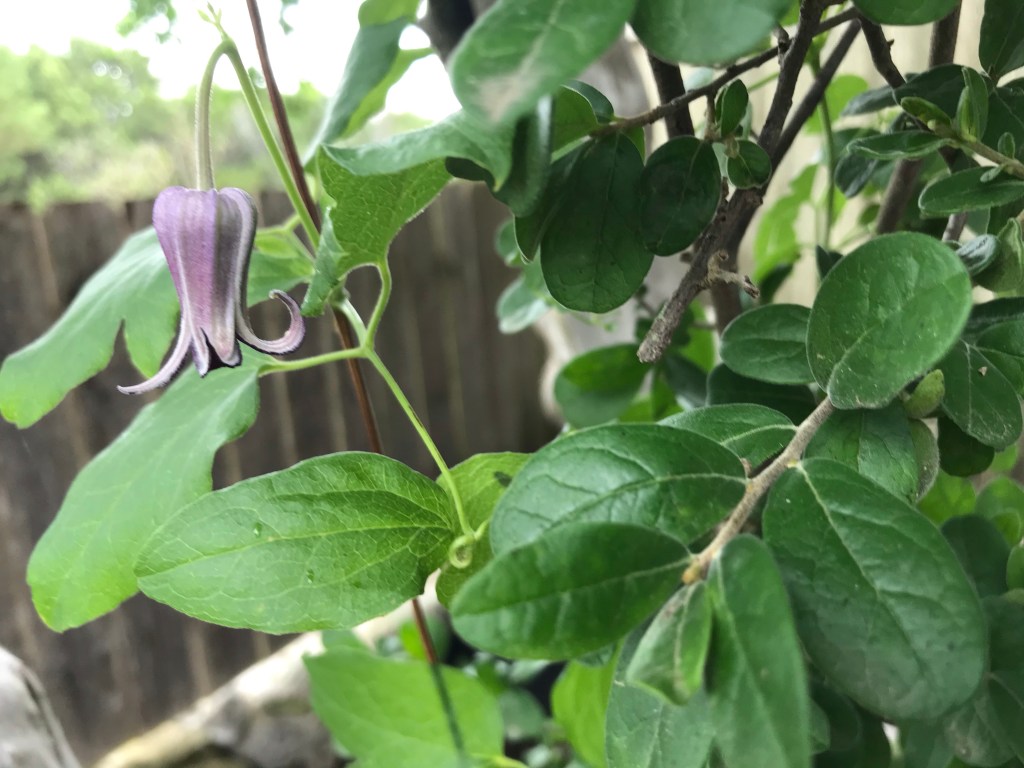
Clematis pitcheri (Purple leather flower) (cultivated)

(Posted about a year ago – edited to add the names of the plants), Went out in the yard and beyond today and captured a few items of interest. Didn’t go into the front yard because it was getting close to dinnertime.

Lantana urticoides (Texas Lantana)
Salvia farinacea (Mealy blue sage)(cultivated)
Symphyotrichum oblongifolium (Fall aster or Aromatic aster) (cultivated)
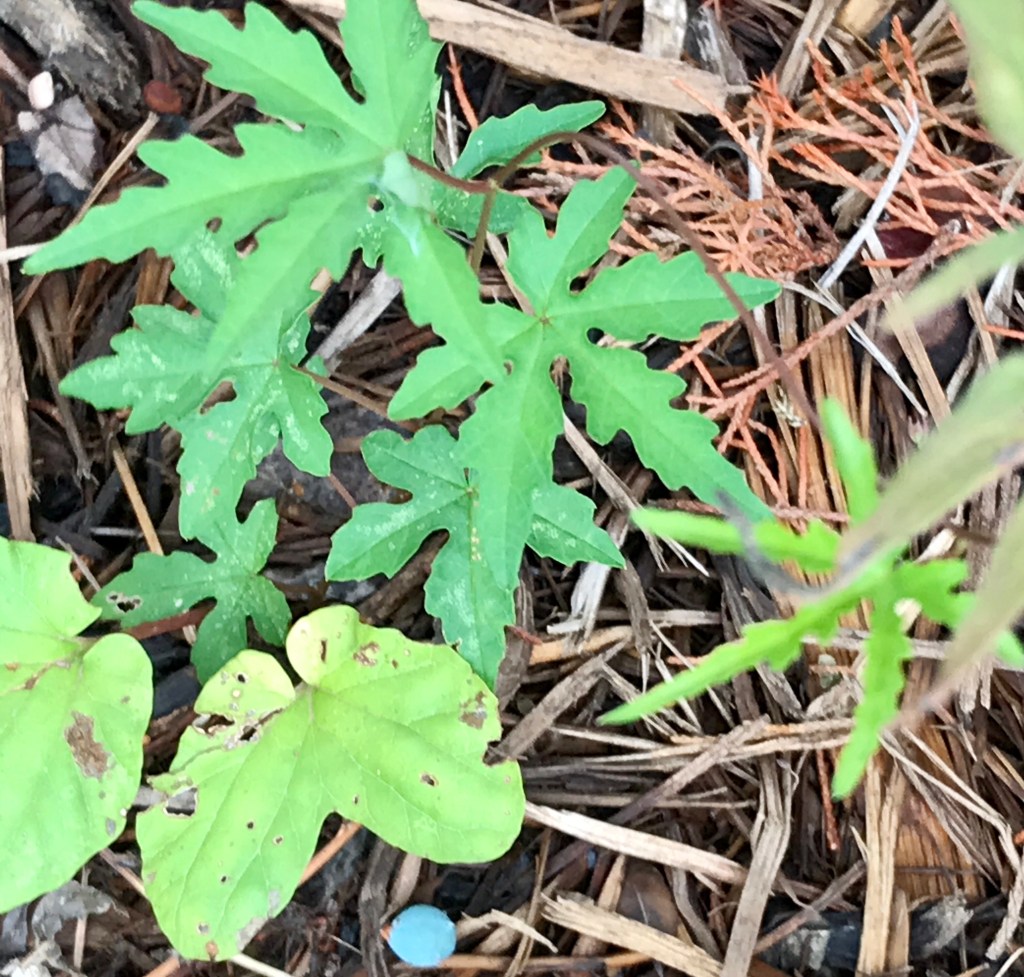
Merremia dissecta. (Alamo vine)(cultivated)(escaped from cultivation)
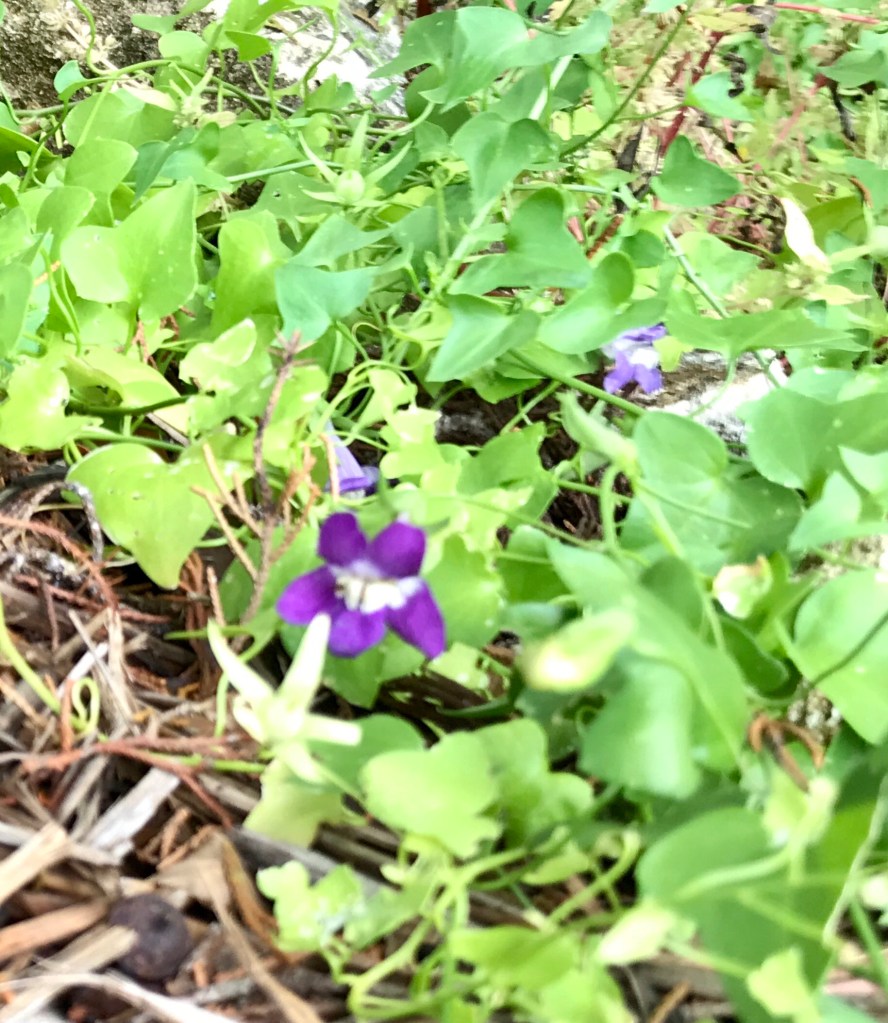
(Maurandella antirrhiniflora) (Roving sailor or Snapdragon vine) (native, not cultivated)
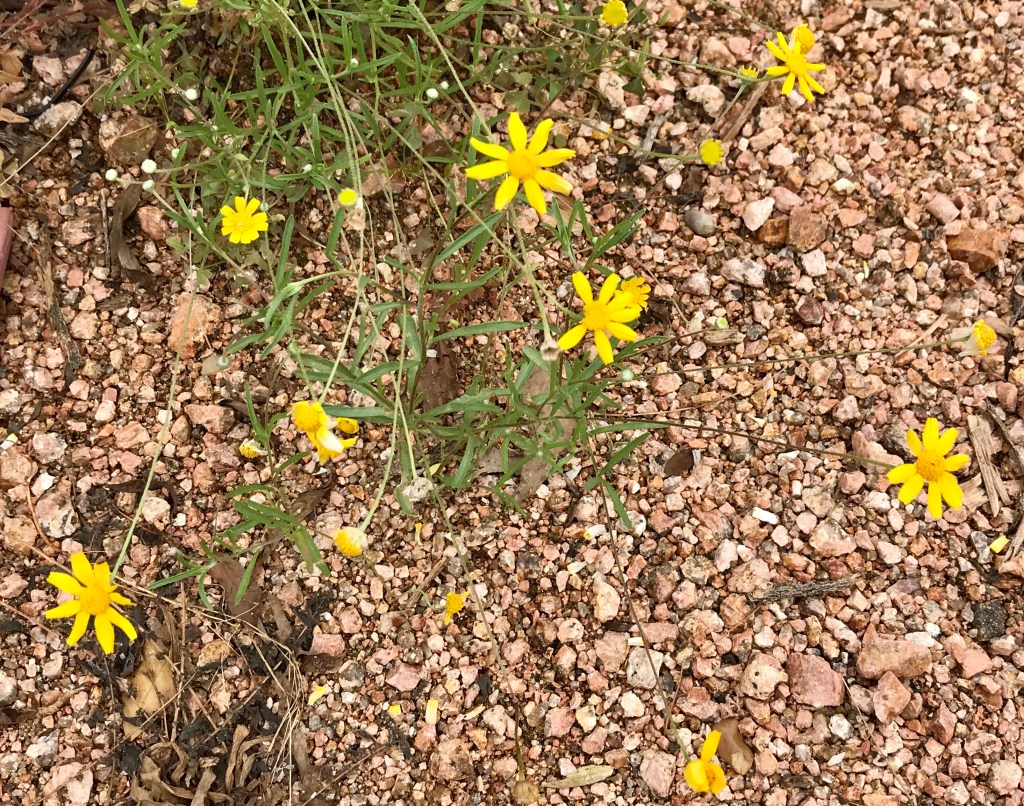
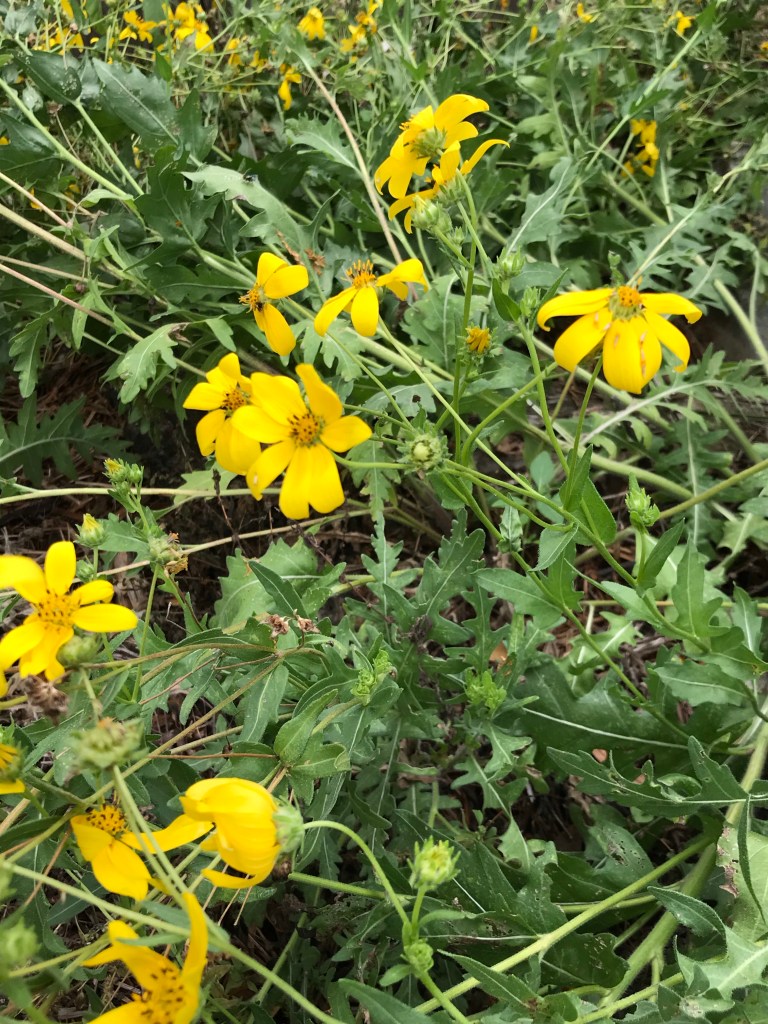
Tetraneuris linearifolia var. linearifolia (Slenderleaf bitterweed) (native, not cultivated)
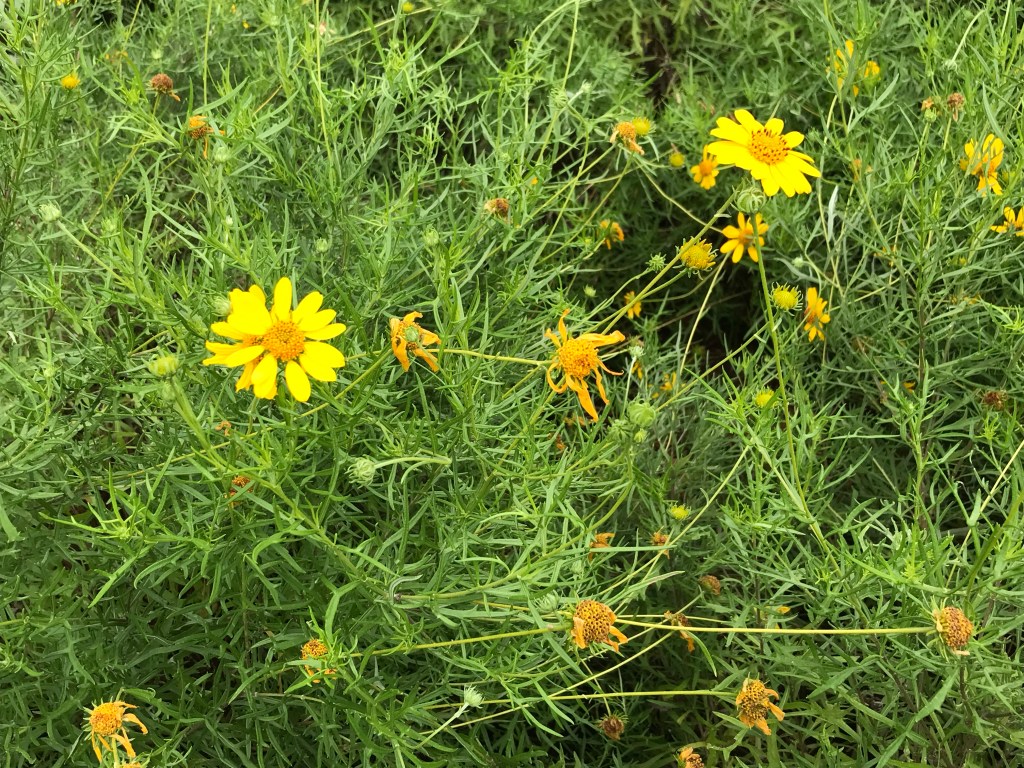
(Viguiera stenoloba) Skeleton-leaf Goldeneye (cultivated)
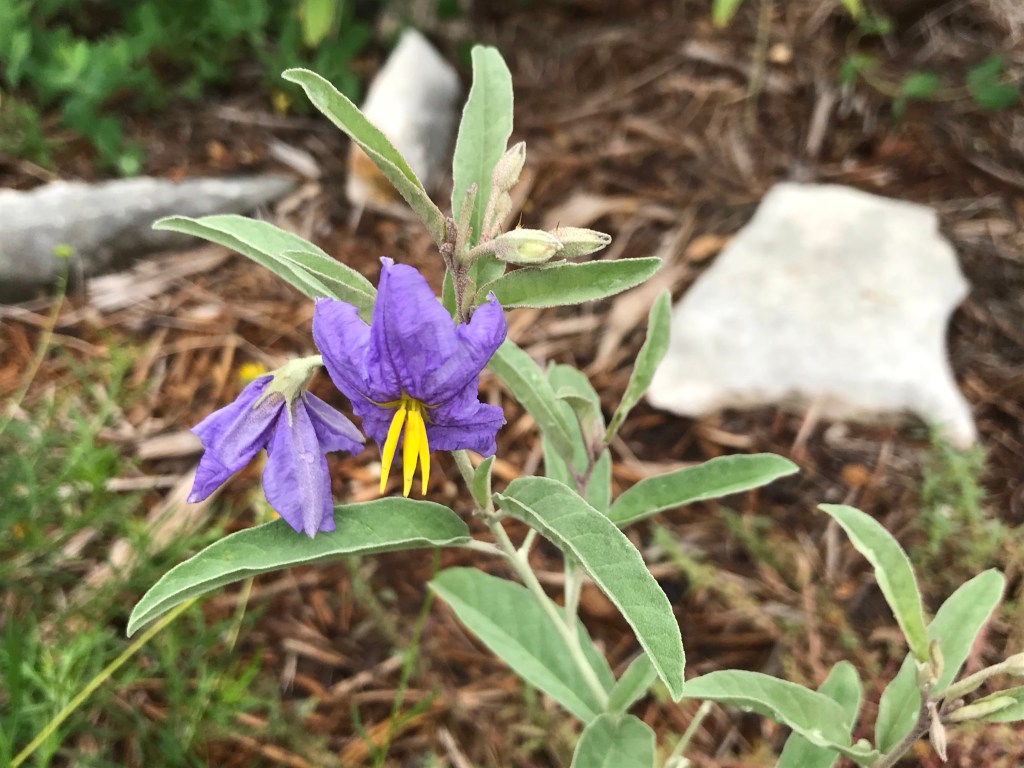
Solanum elaeagnifolium (Silverleaf nightshade) (native, not cultivated)
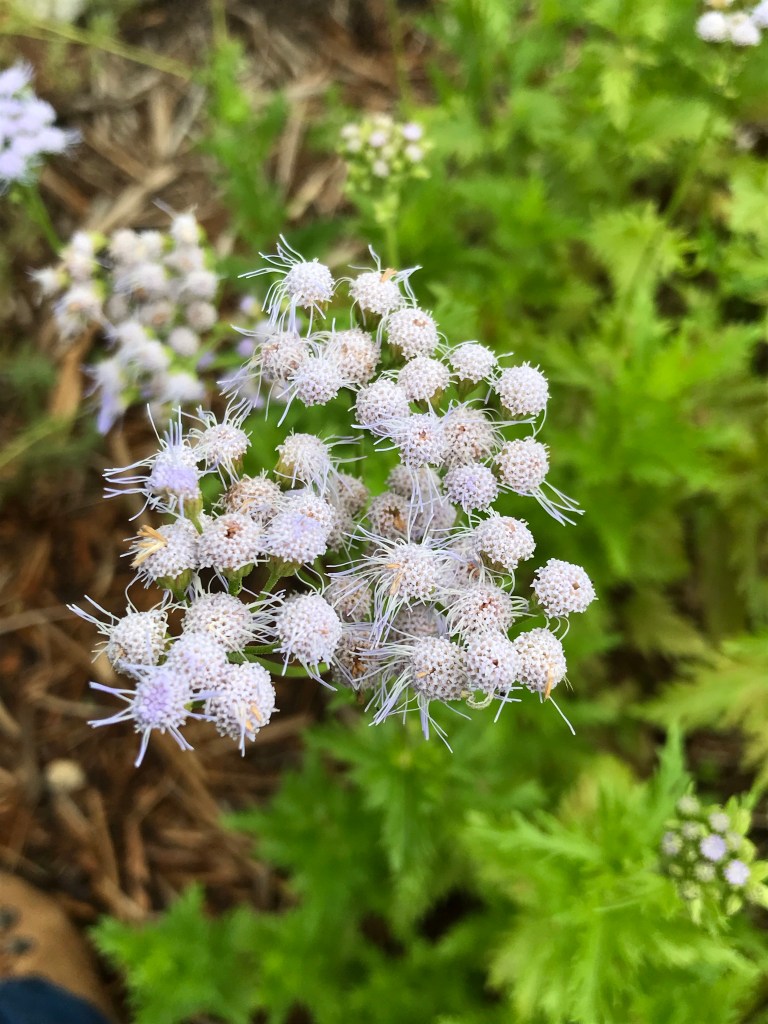
Conoclinium greggii (Gregg’s mistflower) (cultivated)
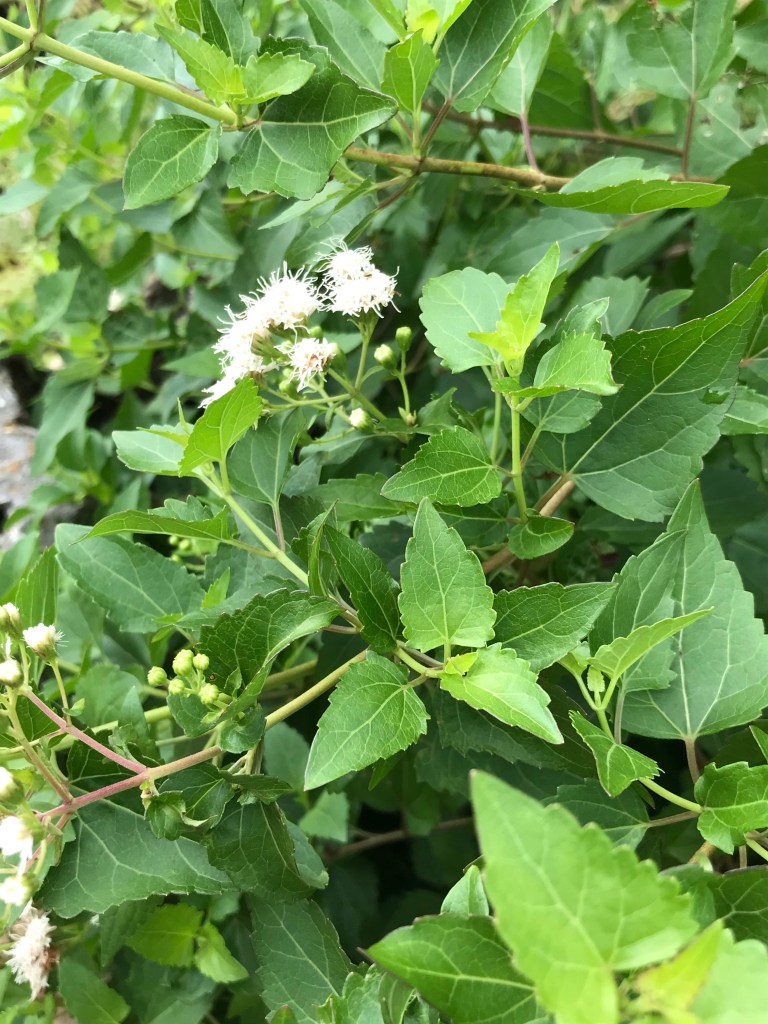
Ageratina havanensis (White mistflower, White boneset) (cultivated)
Viguiera stenoloba . (Skeleton-leaf goldeneye) (cultivated)
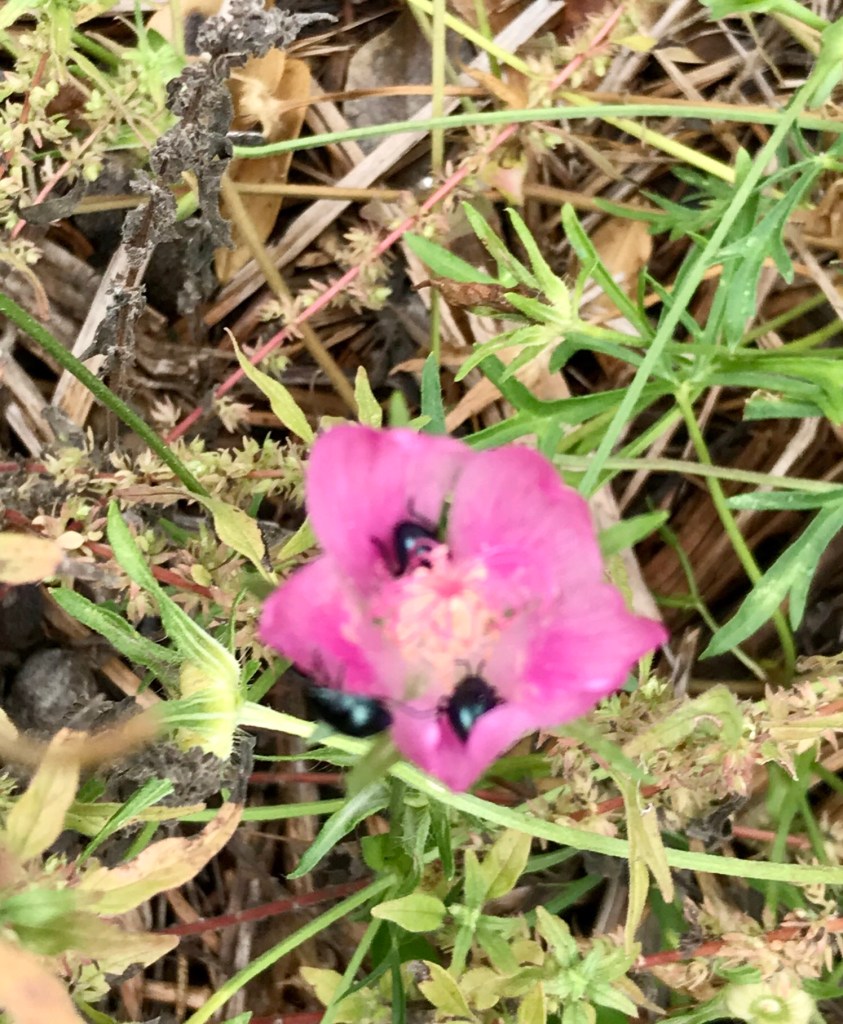
Callirhoe involucrata (Winecup, Purple Poppy Mallow)(cultivated)
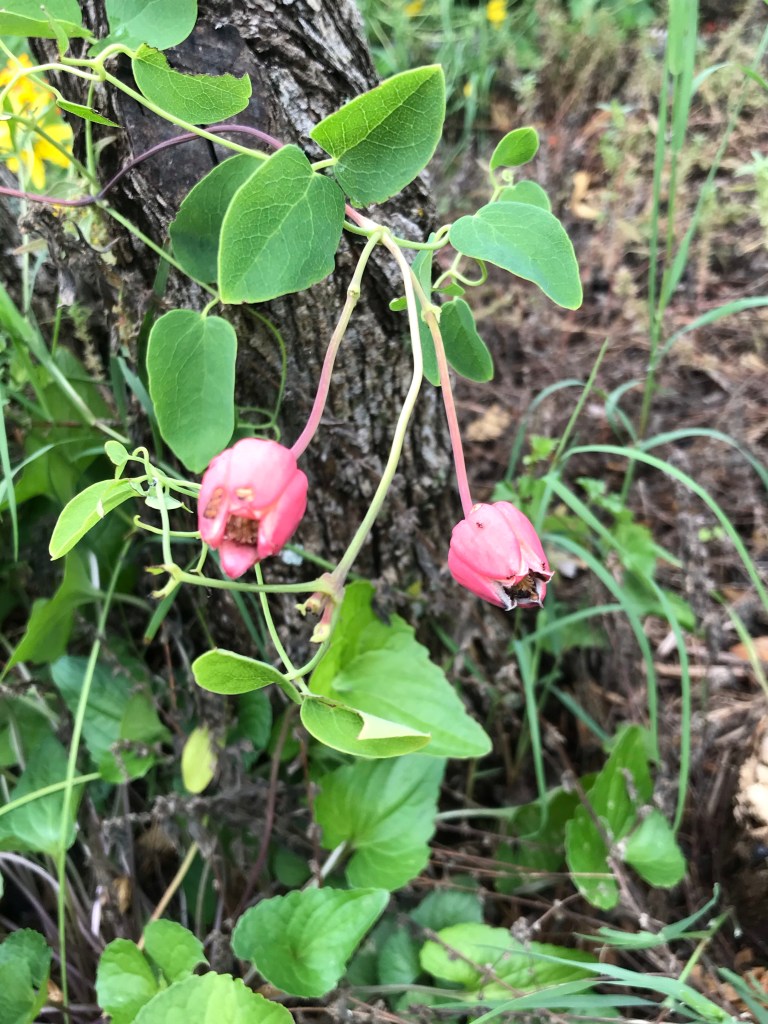
Clematis texensis (Scarlet Clematis, Scarlet Leatherflower, Texas Clematis)(cultivated)
Opuntia sp. (Prickly pear)(cultivated, “spineless varietal)
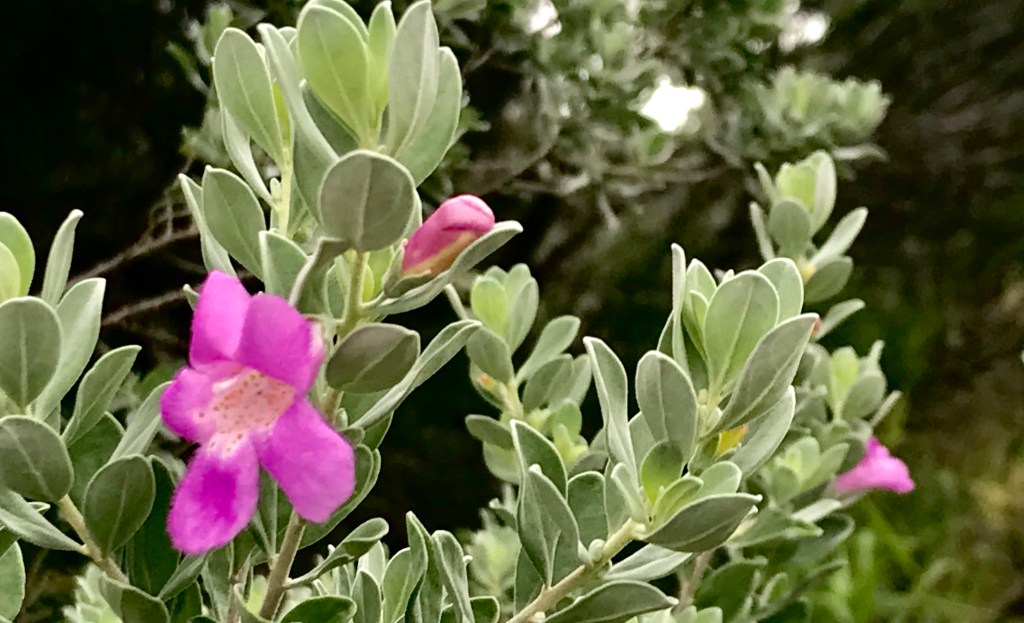
Luchophxllum frutescems (Cenizo, Purple sage, Trvas sage)(cultivated))
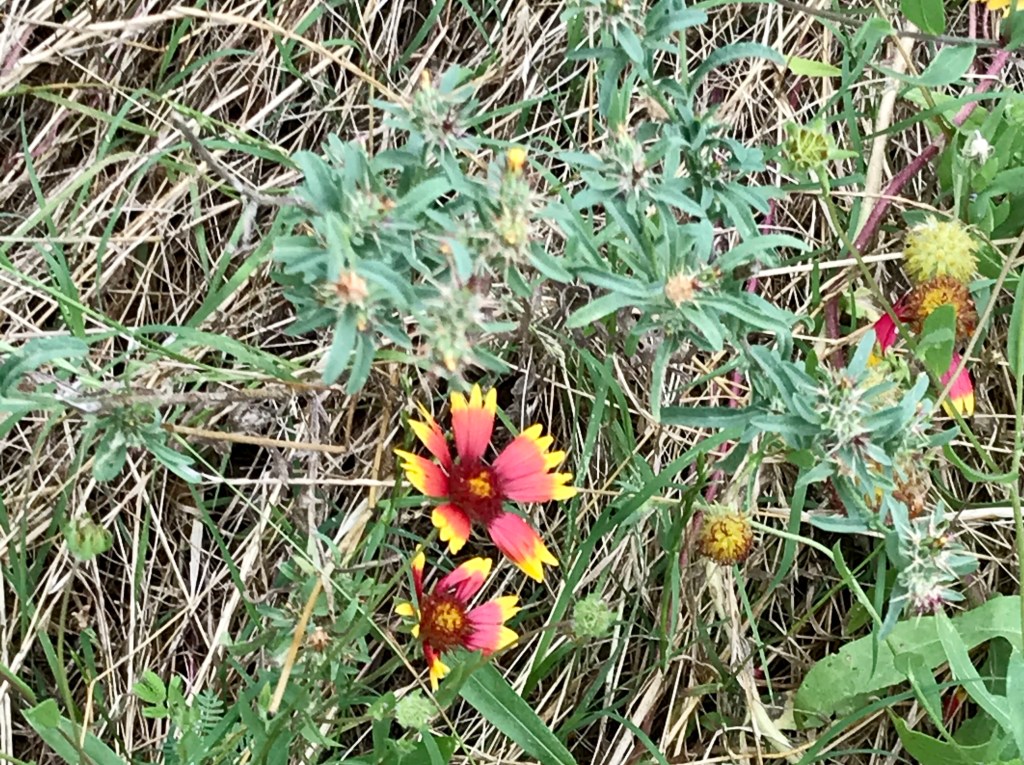
Gaillardia pulchella (Firewheel, Indian Blanket) (natiive, not cultivated)
Oenothera speciosa (Pink Evening Primrose, Pink Ladies) (native, not cultivated)
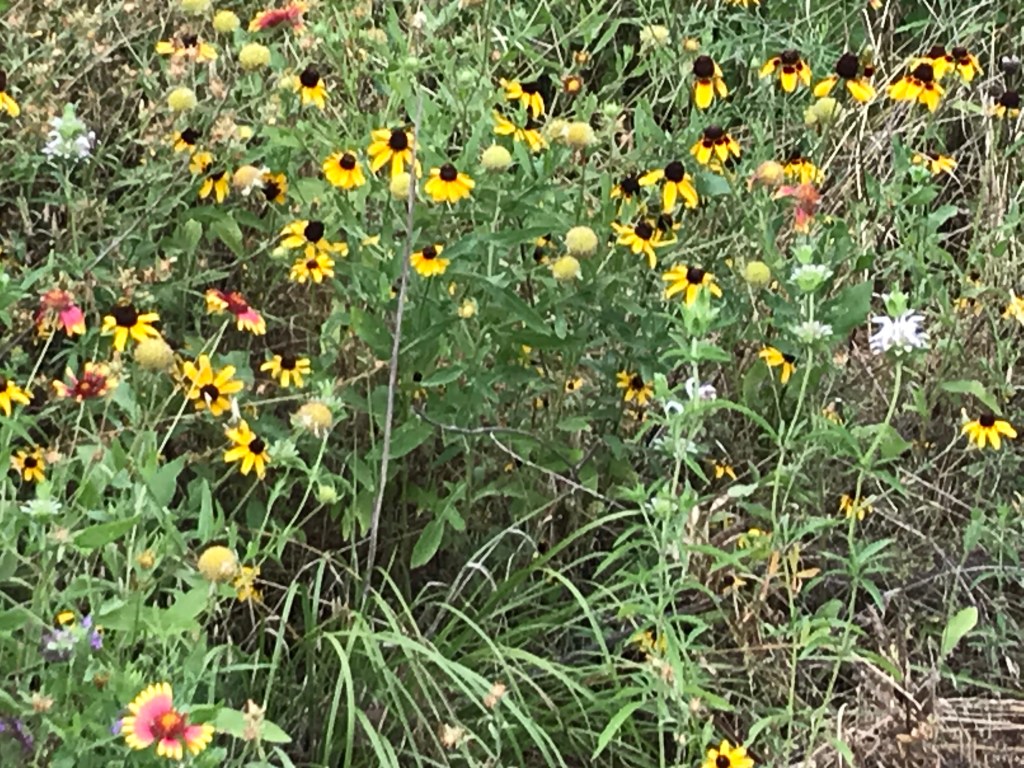
A variety of native plants (mostly)
Glandularia bipinnatifida (Dakota Mock Vervain, Prairie verbena) (native, not cultivated)
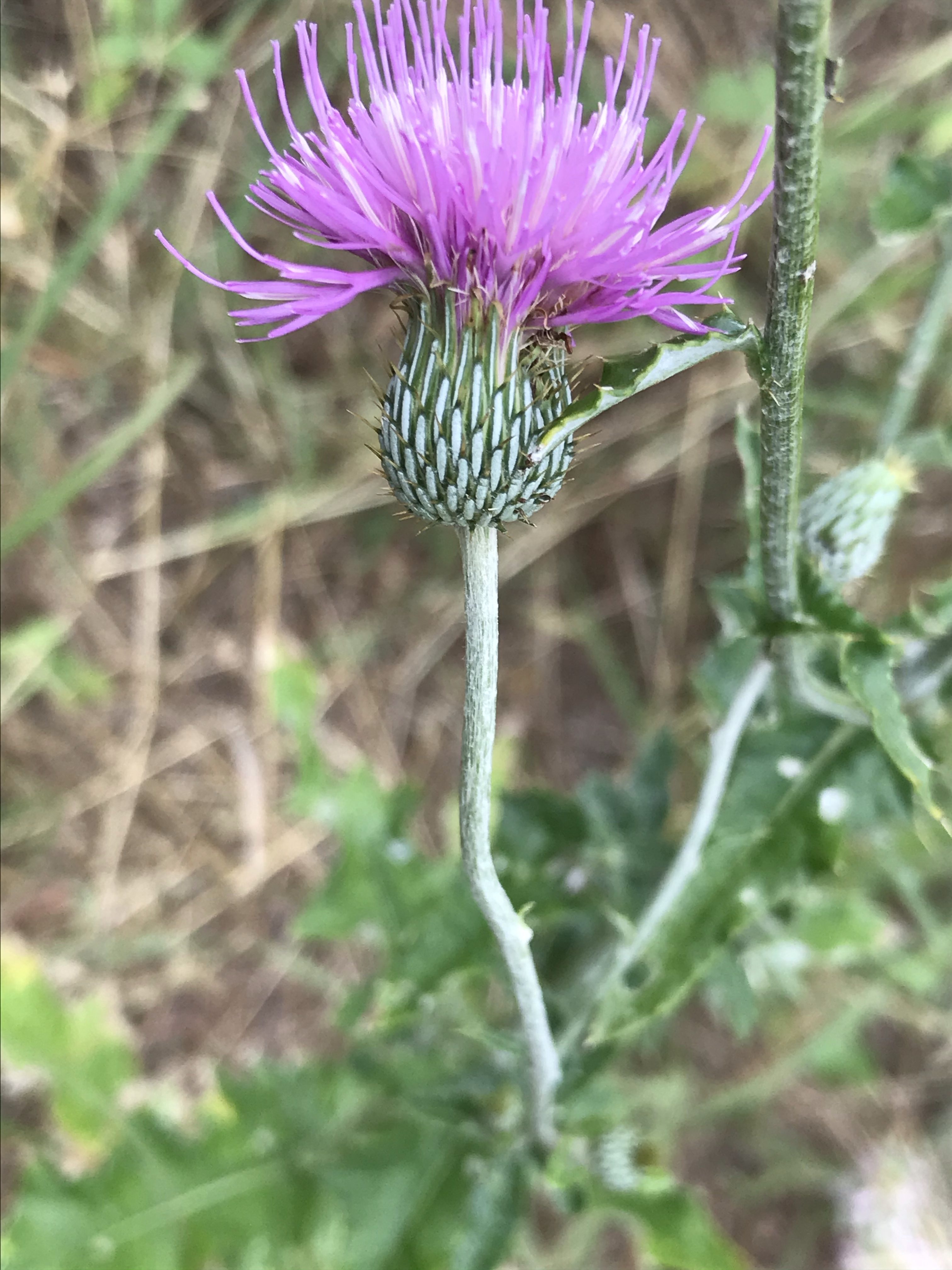
Cirsium texanum (Texas Thistle) (native, not cultivated)
Gaillardia pulchella (Indian Blanket) including recessive gene lacking red pigment, “Sunwheel” (native, not cultivated)
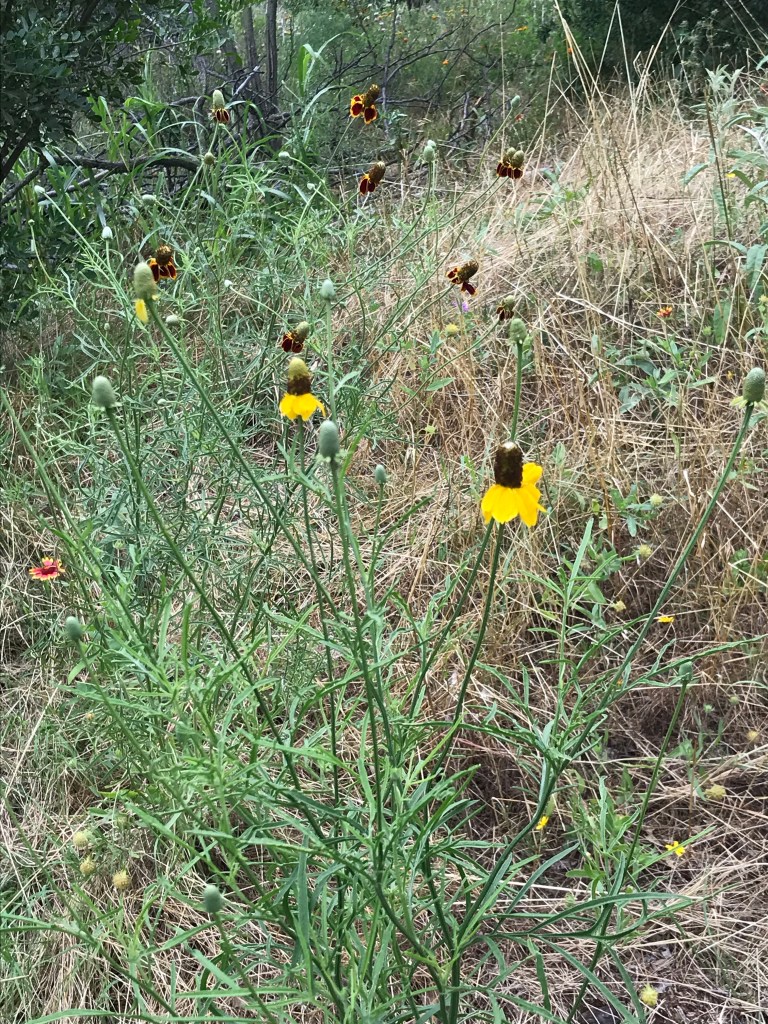
Ratibida columnifera (Prairie Coneflower, Mexican Hat)(native, not cultivated)

Return of the purple leather flower

_MG_08451024jpg

Clematis pitcheri – Purple leather flower

Back in the corner of our tiny lot, next to the compost bins and under the Diospyros texana, is a gallant vine that until now has shown no intentions of putting out any flowers.

Yesterday was the first day a bud showed up, so maybe it will get some followups as it matures, or other flowers come out. The Texas persimmon mentioned by its scientific name above provides the majority of the foliage in the photo above. but the Clematis leaves can be seen, they’re just much larger and out of focus.

Yesterday, while sitting on the back porch/deck, a titmouse came up to the trellis and started poking its head about. As I fumbled with my camera, I was able to get about four poorly focused or poorly framed shots, so my best guess is that it was a tufted and not aa black crested titmouse. As I tried to follow it around the yard after it left the deck, I took several shots of dubious quality. I was surprised to find that instead of the aforementioned bird, the next best shot was of a Carolina chickadee. Naturally, after the initial excitement of tiny birds flitting about the yard, I was left standing holding the camera without any feathered bipeds in sight, though I could still hear them singing – mostly a mockingbird.

Which I guess is why I mostly stick to plant photos – at least they stand still, more or less, except when the wind blows, or even breathes a whisper across them.

A small gift after clearing away invasive plants

20200520_190727

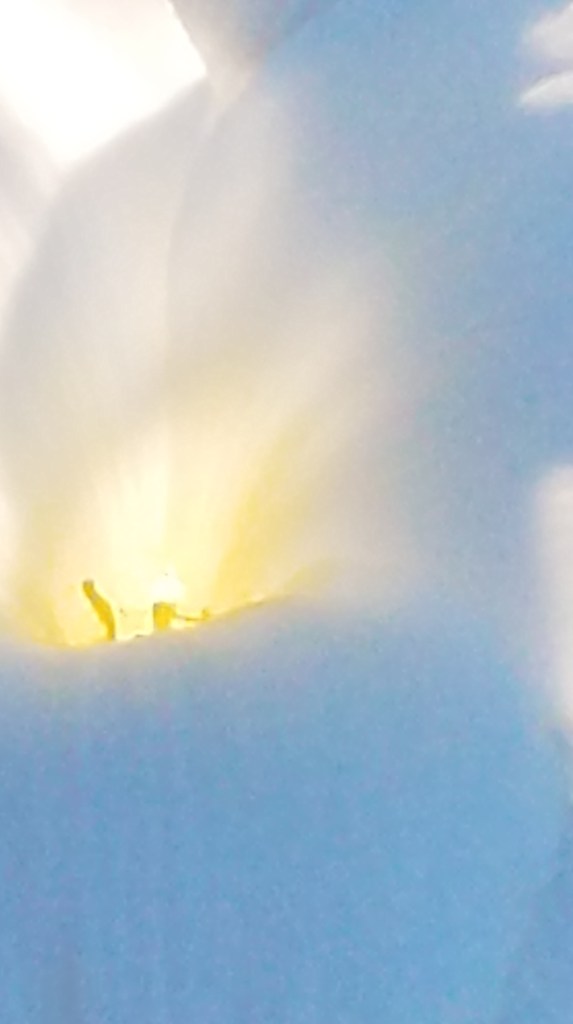
Cooperia pedunculata syn. Zephyranthes drummondii – Rain Lily

Thanks to some poor hygiene and poor knowledge regarding mowing ( or not mowing) next to a greenbelt, the berm behind my house and the neighboring greenbelt which has a cavern populated by endangered insects, has become overrun with Lolium perenne (annual ryegrass, winter ryegrass), Centaurea melitensis (Malta star thistle), and Bromus japonica (Japanese brome), to name the three worst offenders.

This February I wrote to both my HOA and my Municipal Utility District to report the failure of their mowers to follow the guidelines established in 2013 and 2018 by the Texas Department of Transportation on mowing of roadside vegetation, and vegetation adjacent to natural preserves.

Thankfully, the berm has not been mowed since early February, and I have been able to put in an hour or two, mostly on days following Spring rains, to fill about ten 42 gallon bags with the offending weeds. Although the natural covering of Gaillardia pulchella (Firewheel, Indian Blanket) and Ratibida columnifera (Prairie coneflower, Mexican hat) is greatly reduced at present, and I know that I will have to maintain vigilance and start pulling invasive weeds and grasses earlier next year, I did receive a small reward this past Wednesday.

As I was about to enter the berm to take a photograph of this Rain lily (Cooperia pedunculata, syn. Zephyranthes drummondii),  I noticed a small movement. It turned out to be an Eastern cottontail rabbit, munching on the plants in the berm. We both stood still for a few moments while I took some photos with my Android, it then hopped into the greenbelt and the cover of brush.

Then I went in, took a few shots of the Rain lily that would have been blocked from the sunlight by the ryegrass that I had removed, and caught the above photo of the light from the sunset shining through to backlight its stamens.

A small reward, perhaps, but a big warm feeling…

20200520_19073520200520_190755

For a fully detailed botanical description see: Studies on the Vascular Plants of Williamson County, Texas

###

Return of Return To The Natives

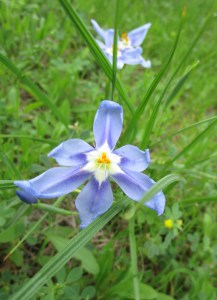
Well, folks, this site was left behind a few years ago, but from my overall WordPress traffic reports, it seems to be visited from time to time. Thus it seems that it might not be a bad idea to start updating it. Could be wrong of course, but here goes nothing: One of my favorite Texas native wildflowers, the Prairie Celestial.

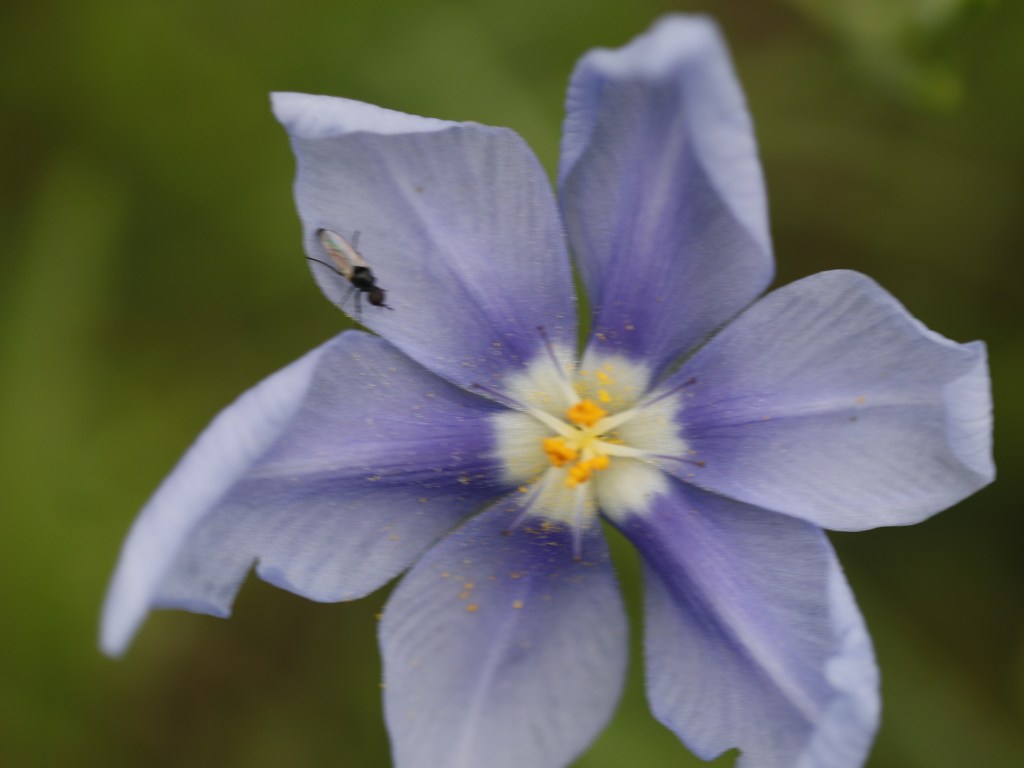
Nemastylis geminiflora - Prairie Celestial

Nemastylis geminiflora – Prairie Celestial

These members of the Iris family bloom for approximately two weeks, beginning with somewhere near the Spring equinox, and ending around April 1st. This year, there was an early “scouting” expedition around the 13th-15th of March, then a gap, followed by the expected blooming around the 19th of March through April 1st, which appeared to have been the last of it. Then, around the 5th through the 10th of April, I discovered some more blooms, stragglers, as it were.

Each flower blooms for just one day, and they often appear in pairs, hence the species name geminiflora. Each plant, which is a deep seated bulb (and hard to dig up, even for scientific sampling), may have several flowers. Another common name is Pleat Leaf Lily, derived from the “pleats” in the leaves, as shown below.

You might also note the bur clover or yellow clover, an invasive weed that forms a carpet and crowds out native plants, especially when mowing is frequent and close to the ground, and mowers move between locations without pressure washing plant materials off the blades of their mowers.

Nemastylis geminiflora - Pleat Leaf Lily

Nemastylis geminiflora – Pleat Leaf Lily

Ratibida columnifera- Mexican Hat

Ratibida columnifera- Mexican Hat

Ratibida columnifera- Mexican Hat

Also known as Prairie Coneflower,  this perennial also comes with yellow petals instead of the orange, brown, and yellow petals shown here.  In their native environment, they can form large colonies, sometimes interspersed with similarly colored Gaillardia pulchella Firewheel. Whether seen singly or en masse, it is singularly and strikingly sttractive. It is drought tolerant and can grow in a wide variety of soil types.

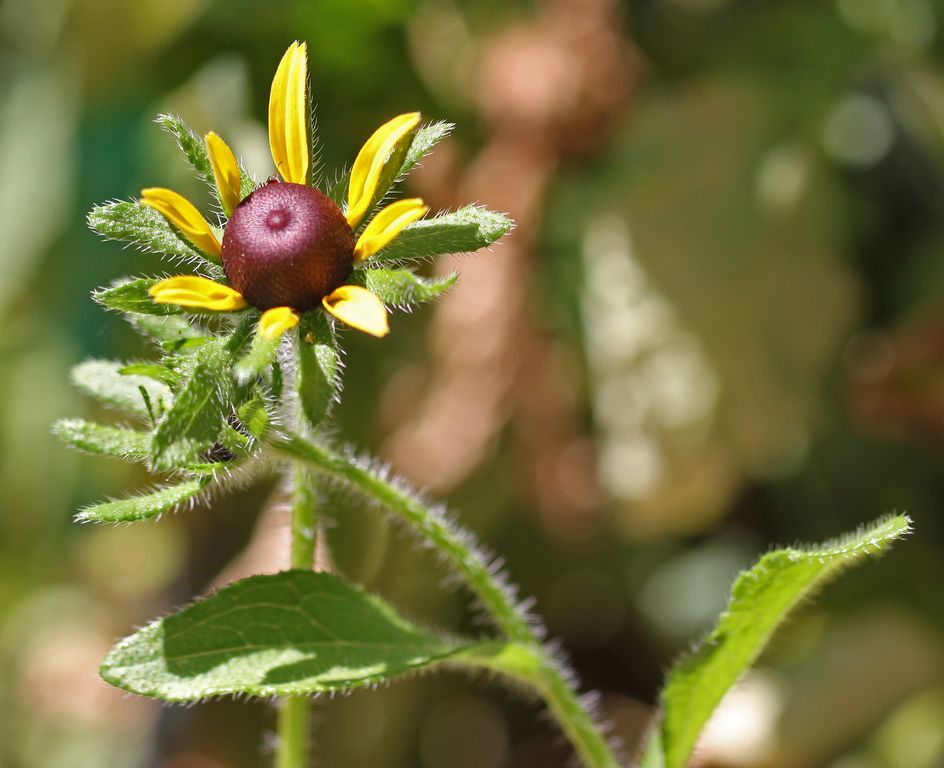
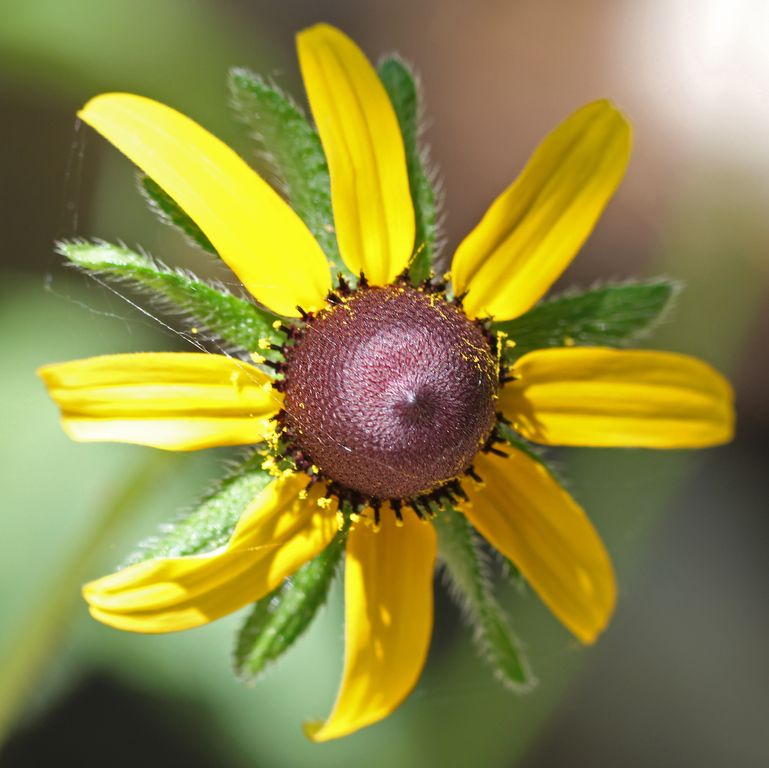
Rudbeckia hirta – Blackeyed Susan

Rudbeckia hirta - Blackeyed Susan

Rudbeckia hirta – Blackeyed Susan

Two of these wildflowers have shown up in my garden this year, most likely sown by birds. Not surprising, since it is one of the most widespread native plants in North America, native across Canada and the U.S. westward to New Mexico. It can grow in many light conditions, from sun to shade, but apparently doesn’t like calcareous or alkaline soils. It propagates itself easily by reseeding and can become aggressive if not faced with competition. It also has been widely used for medicinal as well as aesthetic purposes. What’s not to like about this cheery ornamental? For more information and links to more information than you can imagine, check out the entry at the NPIN plants database.

Rudbeckia hirta - Blackeyed Susan

Rudbeckia hirta – Blackeyed Susan