Creating Art with Musk Thistle: Van Gogh Inspired Filters

Or rather, the same photo done in more ways than one…

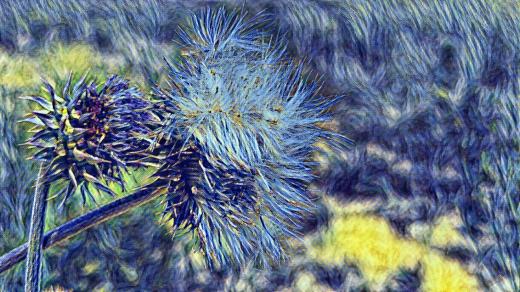
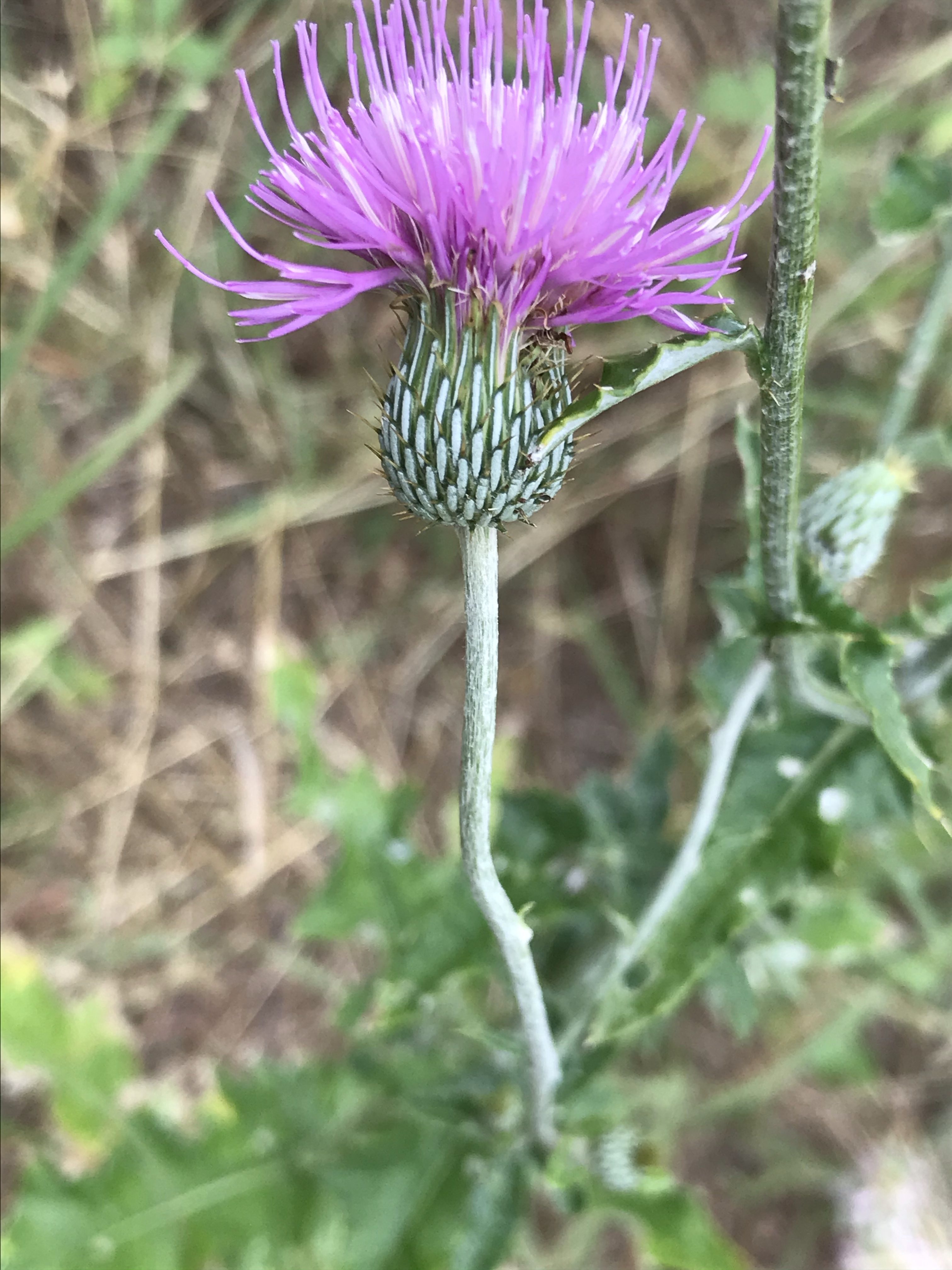
Musk Thistle (Carduus nutans) is an invasive plant native to Europe, Central  Asia, and North Africa. In the photo above we see on the left a flower getting ready to bloom, and behind it a bloom already ggone to seed. The yellow in the background are either Coreopsis or Brown Eyed Susans, or both, out of the depth of field.


The second version was created using a “psychedelic” set of filters.

The third attempts to recreate Vincent Van Gogh’s general style – again, using software filters.

The third variation (and fourth version of the same photo), also uses a Van Gogh approach, this time using a filter that attempts to imitate his Starry Night painting.

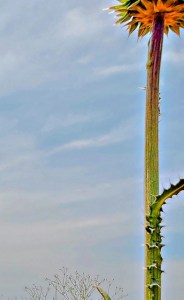
And finally, a “normal” shot accentuating the height of the stem as seen from below. If these photos have pricked your interest about Carduus nutans, you can click on the preceding link to check out the Wikipedia page for more information.

###

What was blooming (or not) 25 May 2020

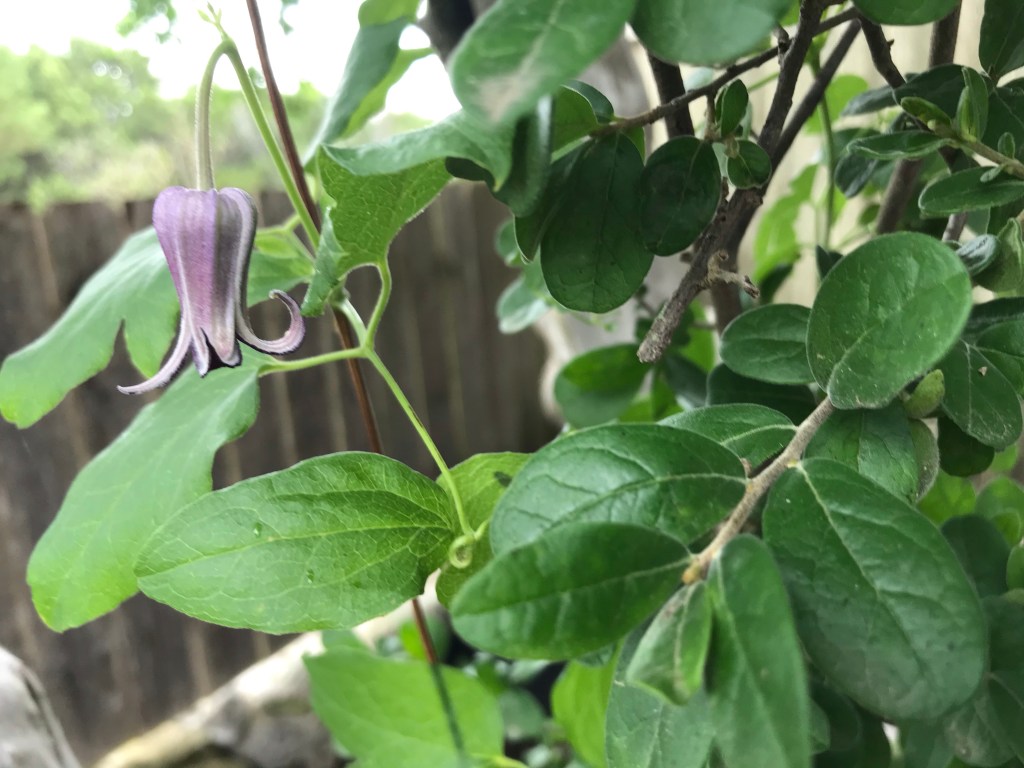
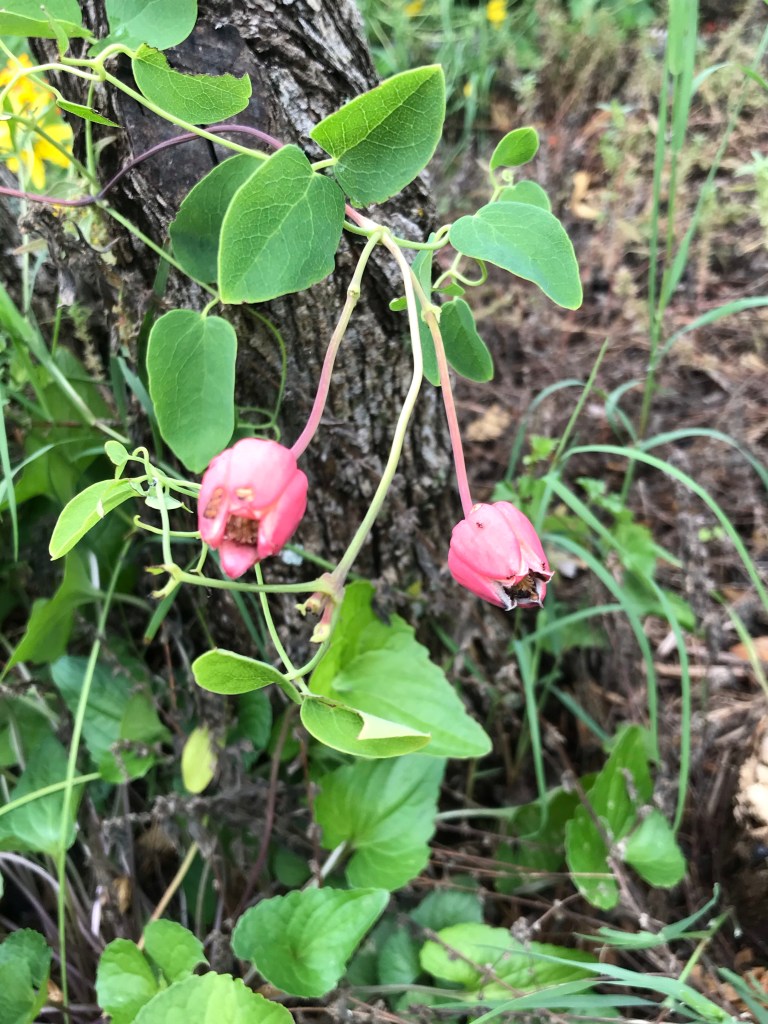
Clematis pitcheri (Purple leather flower) (cultivated)

(Posted about a year ago – edited to add the names of the plants), Went out in the yard and beyond today and captured a few items of interest. Didn’t go into the front yard because it was getting close to dinnertime.

Lantana urticoides (Texas Lantana)
Salvia farinacea (Mealy blue sage)(cultivated)
Symphyotrichum oblongifolium (Fall aster or Aromatic aster) (cultivated)
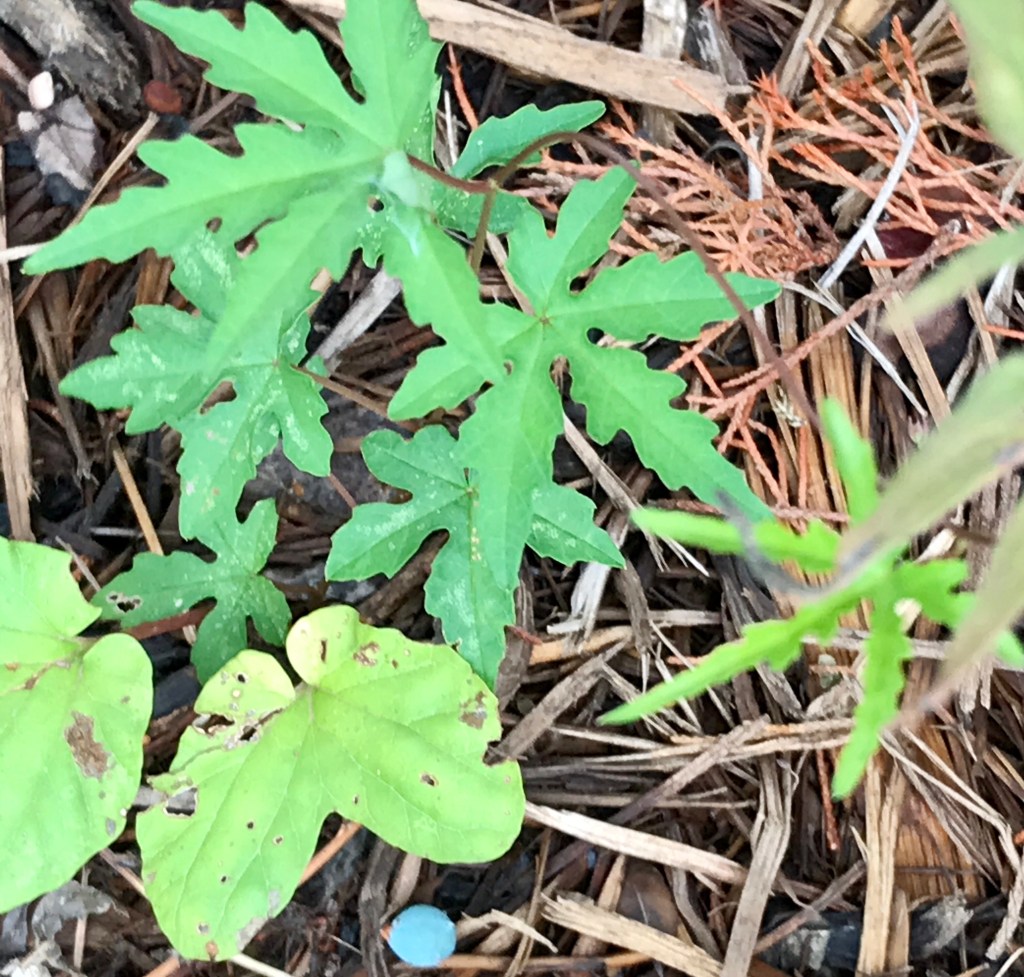
Merremia dissecta. (Alamo vine)(cultivated)(escaped from cultivation)
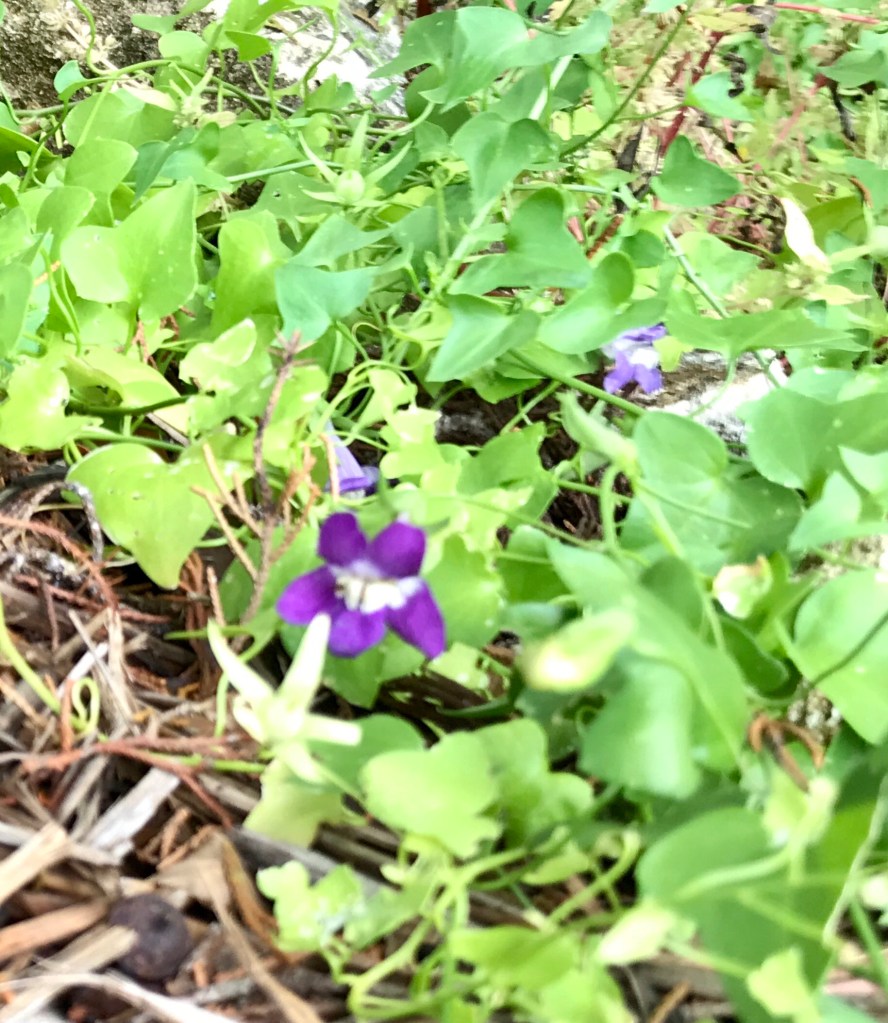
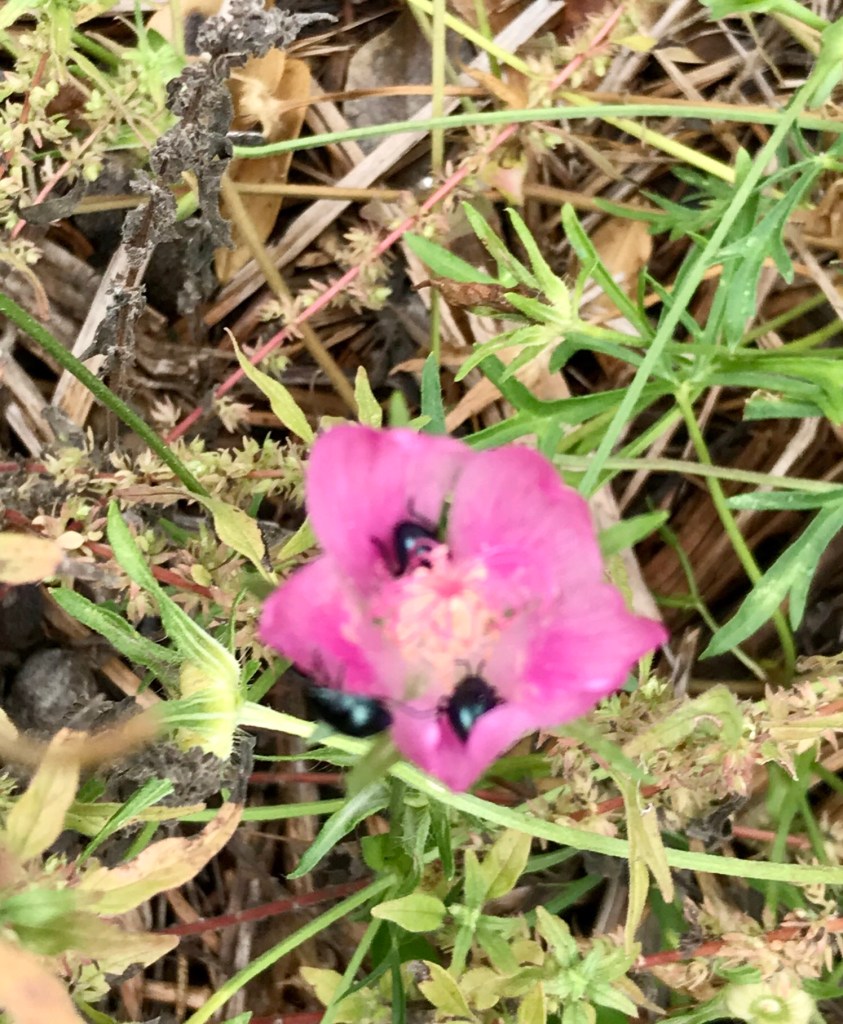
(Maurandella antirrhiniflora) (Roving sailor or Snapdragon vine) (native, not cultivated)
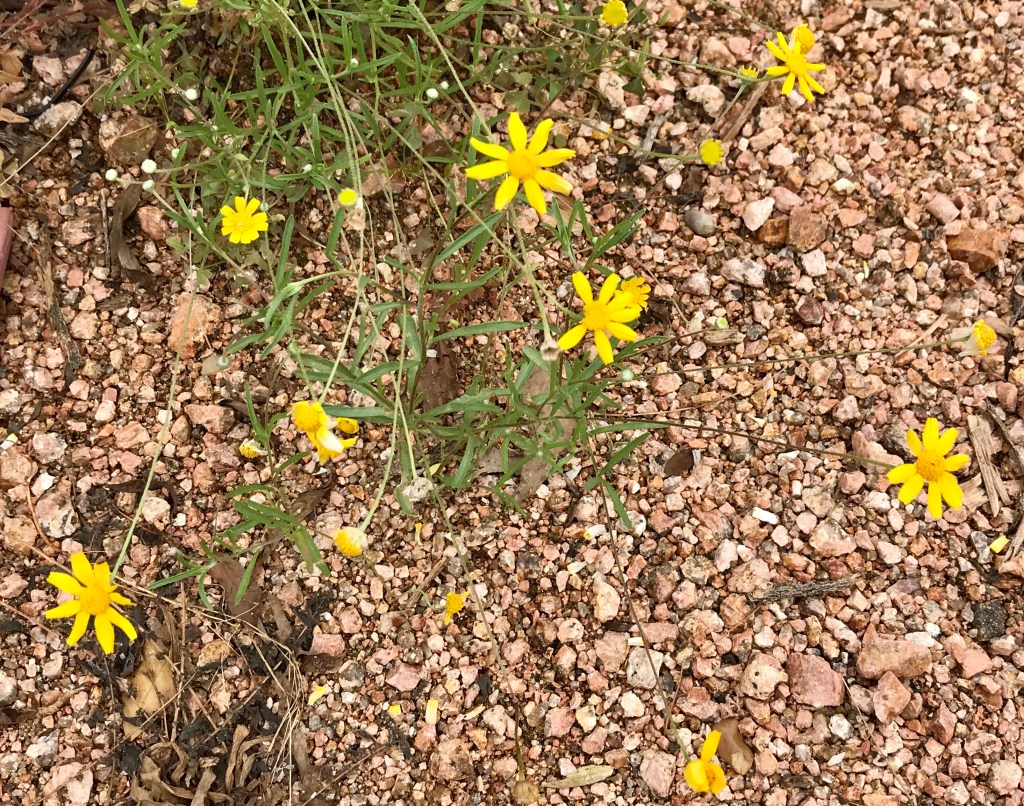
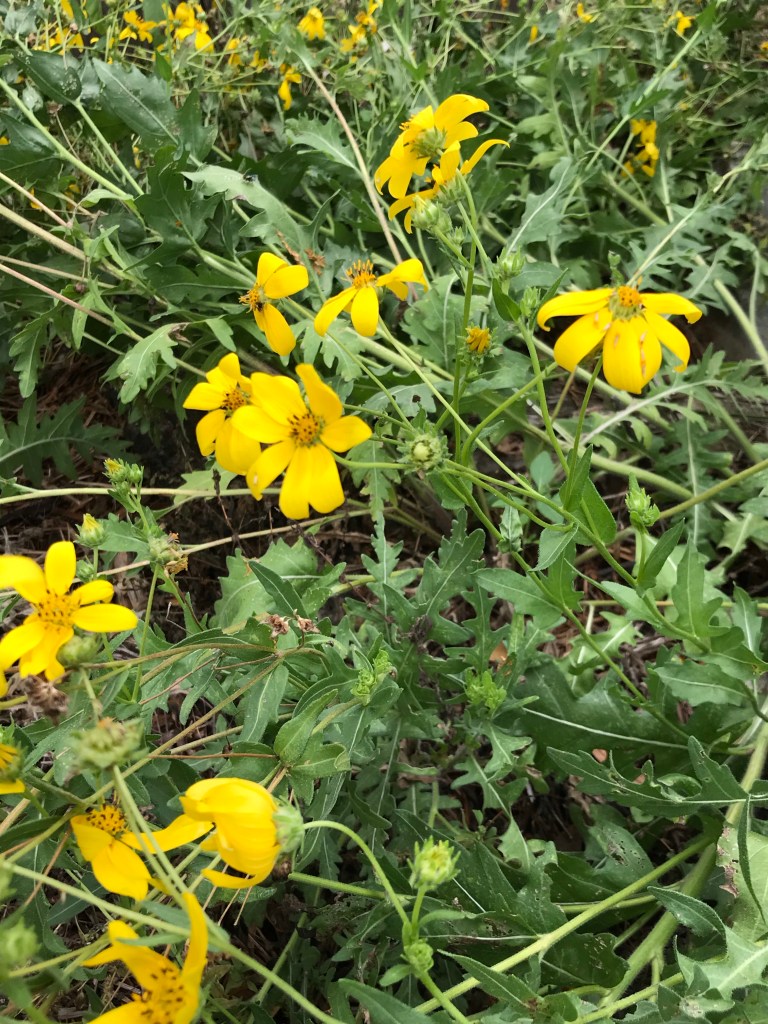
Tetraneuris linearifolia var. linearifolia (Slenderleaf bitterweed) (native, not cultivated)
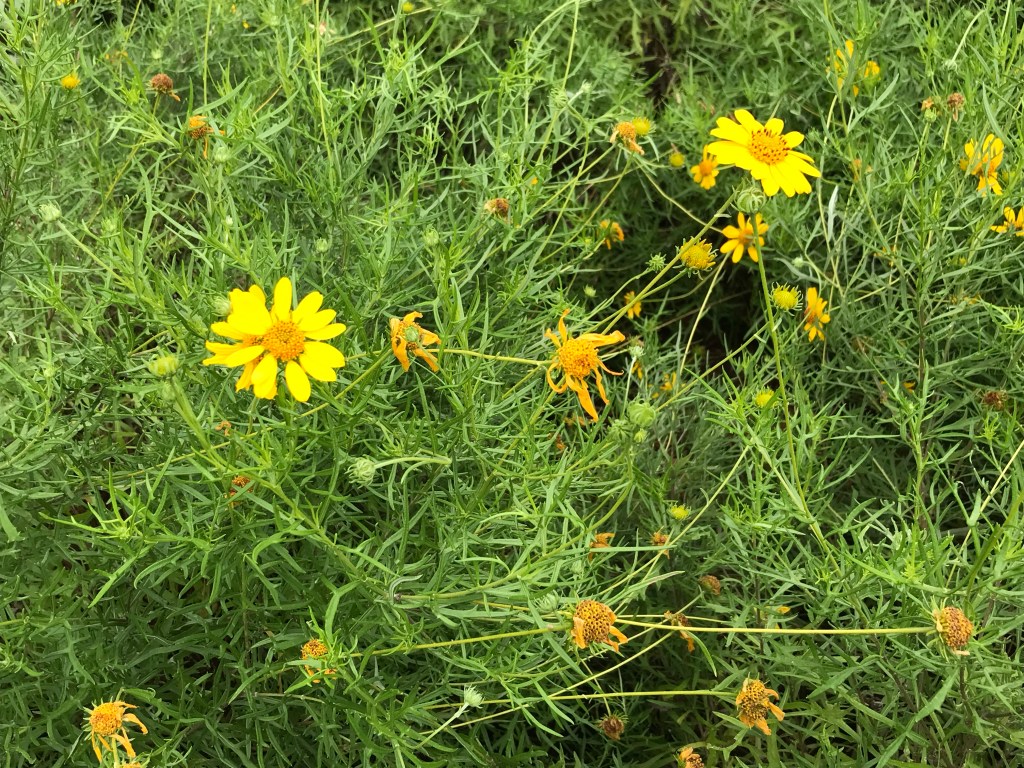
(Viguiera stenoloba) Skeleton-leaf Goldeneye (cultivated)
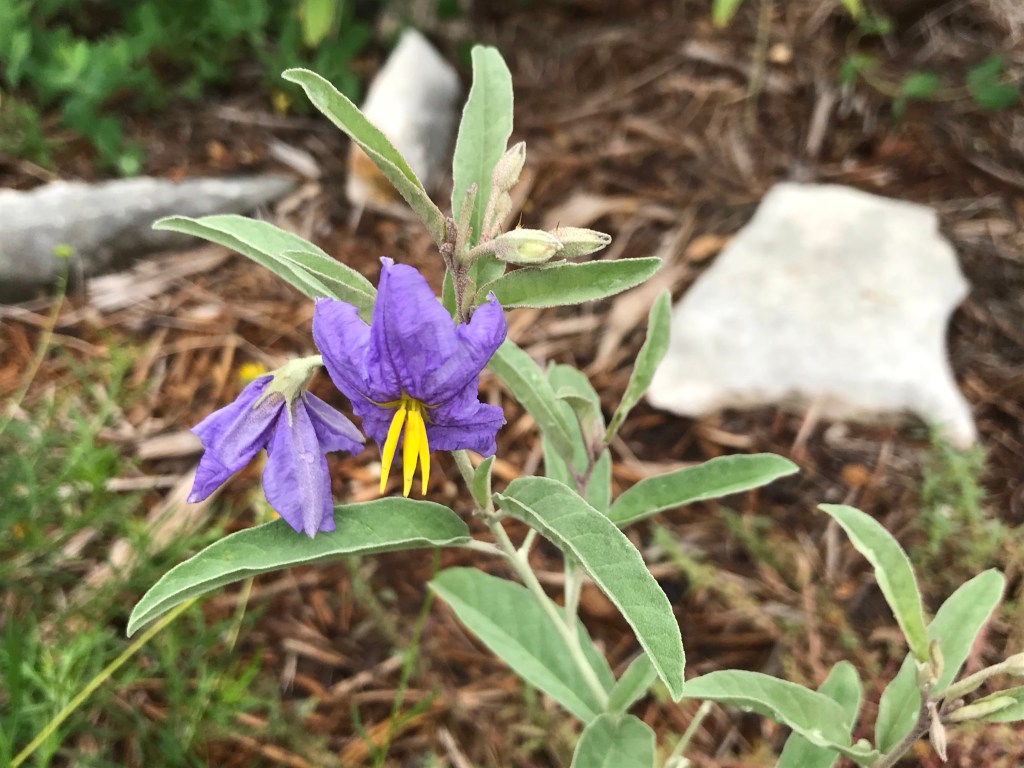
Solanum elaeagnifolium (Silverleaf nightshade) (native, not cultivated)
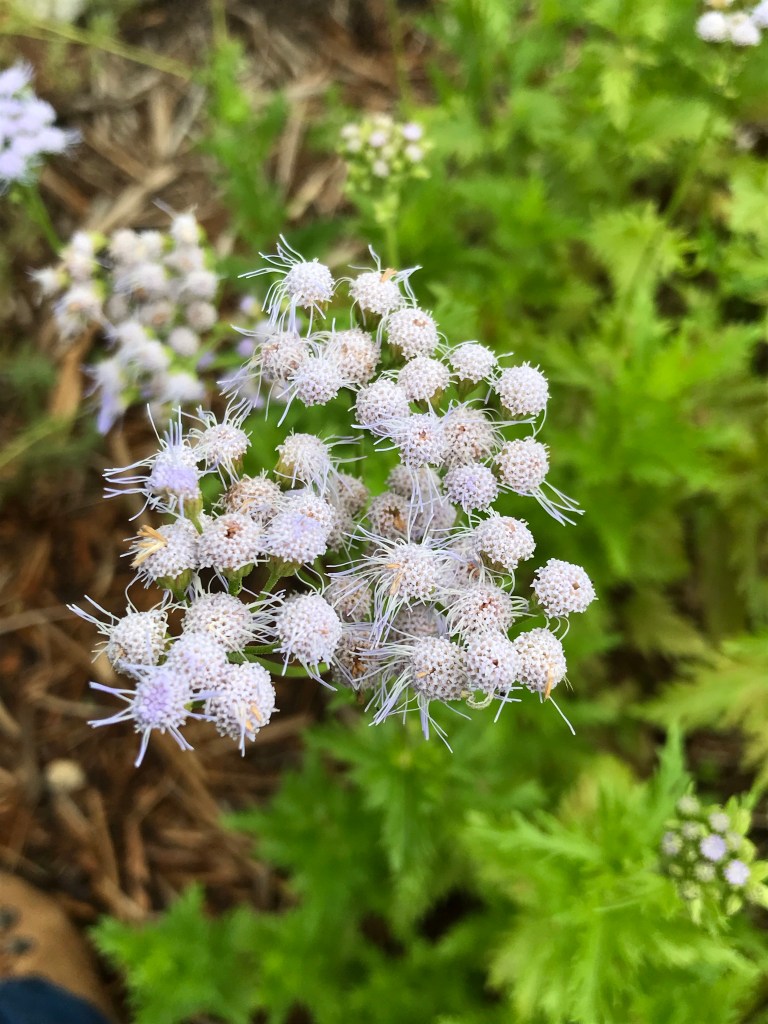
Conoclinium greggii (Gregg’s mistflower) (cultivated)
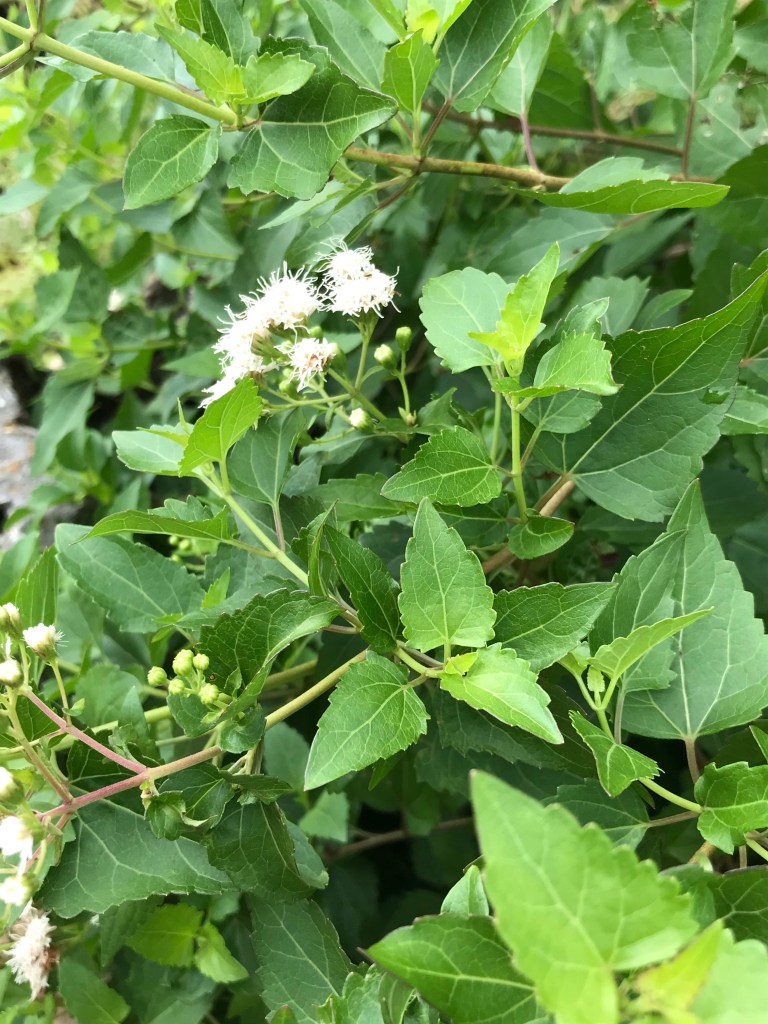
Ageratina havanensis (White mistflower, White boneset) (cultivated)
Viguiera stenoloba . (Skeleton-leaf goldeneye) (cultivated)
Callirhoe involucrata (Winecup, Purple Poppy Mallow)(cultivated)
Clematis texensis (Scarlet Clematis, Scarlet Leatherflower, Texas Clematis)(cultivated)
Opuntia sp. (Prickly pear)(cultivated, “spineless varietal)
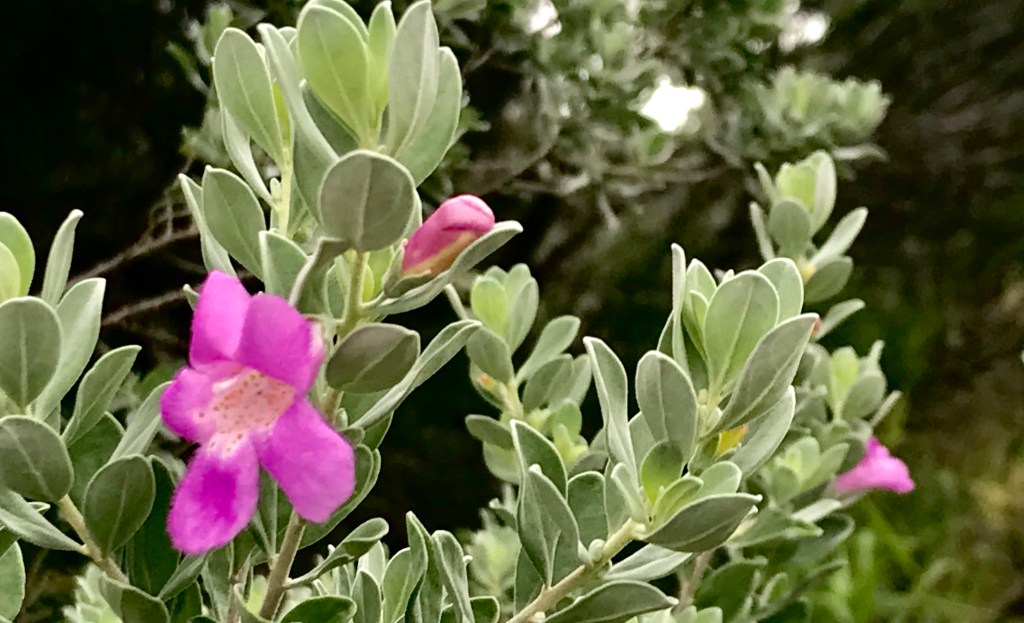
Luchophxllum frutescems (Cenizo, Purple sage, Trvas sage)(cultivated))
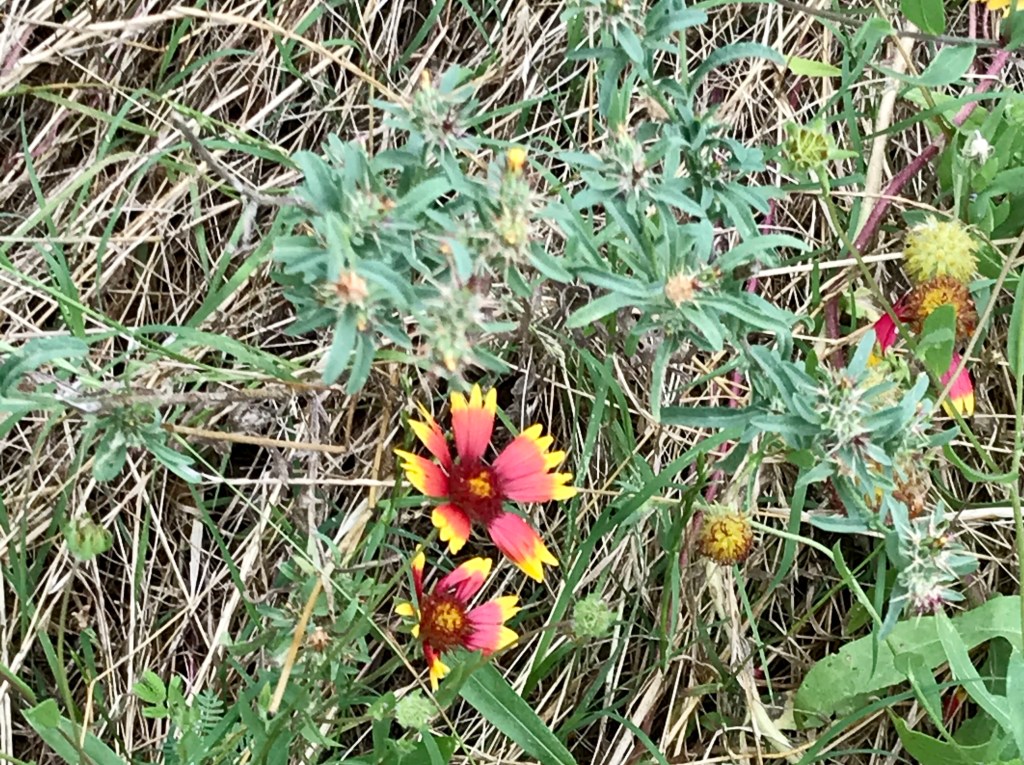
Gaillardia pulchella (Firewheel, Indian Blanket) (natiive, not cultivated)
Oenothera speciosa (Pink Evening Primrose, Pink Ladies) (native, not cultivated)
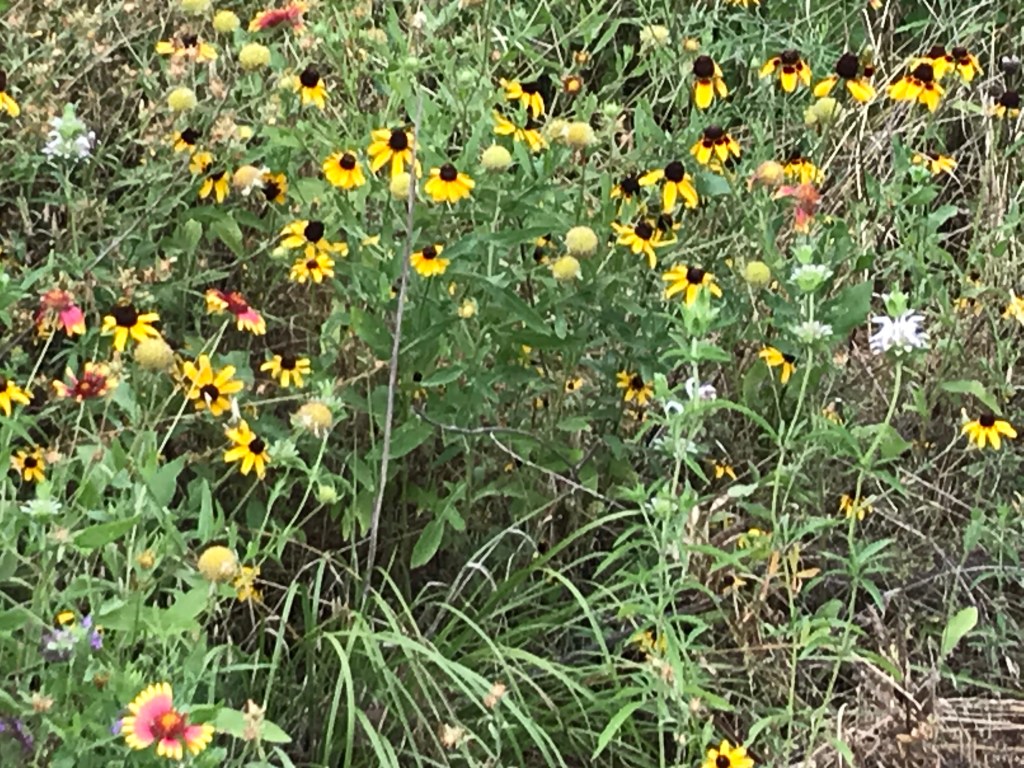
A variety of native plants (mostly)
Glandularia bipinnatifida (Dakota Mock Vervain, Prairie verbena) (native, not cultivated)
Cirsium texanum (Texas Thistle) (native, not cultivated)
Gaillardia pulchella (Indian Blanket) including recessive gene lacking red pigment, “Sunwheel” (native, not cultivated)
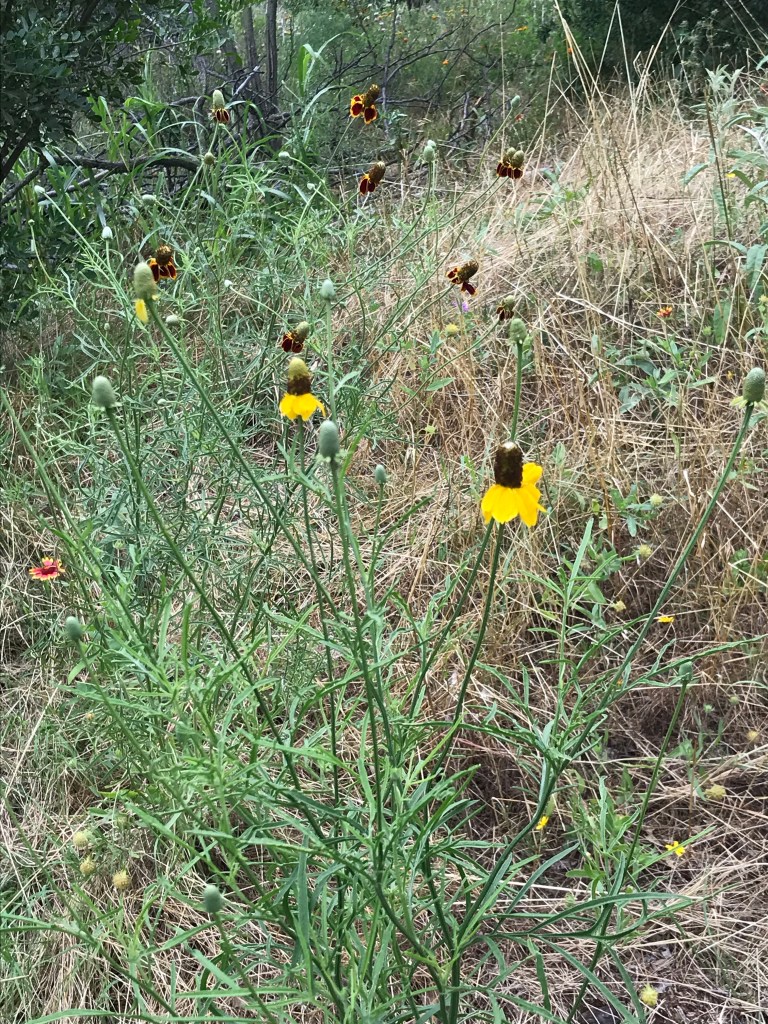
Ratibida columnifera (Prairie Coneflower, Mexican Hat)(native, not cultivated)

A small gift after clearing away invasive plants

20200520_190727

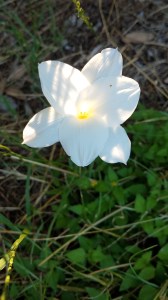
Cooperia pedunculata syn. Zephyranthes drummondii – Rain Lily

Thanks to some poor hygiene and poor knowledge regarding mowing ( or not mowing) next to a greenbelt, the berm behind my house and the neighboring greenbelt which has a cavern populated by endangered insects, has become overrun with Lolium perenne (annual ryegrass, winter ryegrass), Centaurea melitensis (Malta star thistle), and Bromus japonica (Japanese brome), to name the three worst offenders.

This February I wrote to both my HOA and my Municipal Utility District to report the failure of their mowers to follow the guidelines established in 2013 and 2018 by the Texas Department of Transportation on mowing of roadside vegetation, and vegetation adjacent to natural preserves.

Thankfully, the berm has not been mowed since early February, and I have been able to put in an hour or two, mostly on days following Spring rains, to fill about ten 42 gallon bags with the offending weeds. Although the natural covering of Gaillardia pulchella (Firewheel, Indian Blanket) and Ratibida columnifera (Prairie coneflower, Mexican hat) is greatly reduced at present, and I know that I will have to maintain vigilance and start pulling invasive weeds and grasses earlier next year, I did receive a small reward this past Wednesday.

As I was about to enter the berm to take a photograph of this Rain lily (Cooperia pedunculata, syn. Zephyranthes drummondii),  I noticed a small movement. It turned out to be an Eastern cottontail rabbit, munching on the plants in the berm. We both stood still for a few moments while I took some photos with my Android, it then hopped into the greenbelt and the cover of brush.

Then I went in, took a few shots of the Rain lily that would have been blocked from the sunlight by the ryegrass that I had removed, and caught the above photo of the light from the sunset shining through to backlight its stamens.

A small reward, perhaps, but a big warm feeling…
20200520_19073520200520_190755

For a fully detailed botanical description see: Studies on the Vascular Plants of Williamson County, Texas

###
Return of Return To The Natives

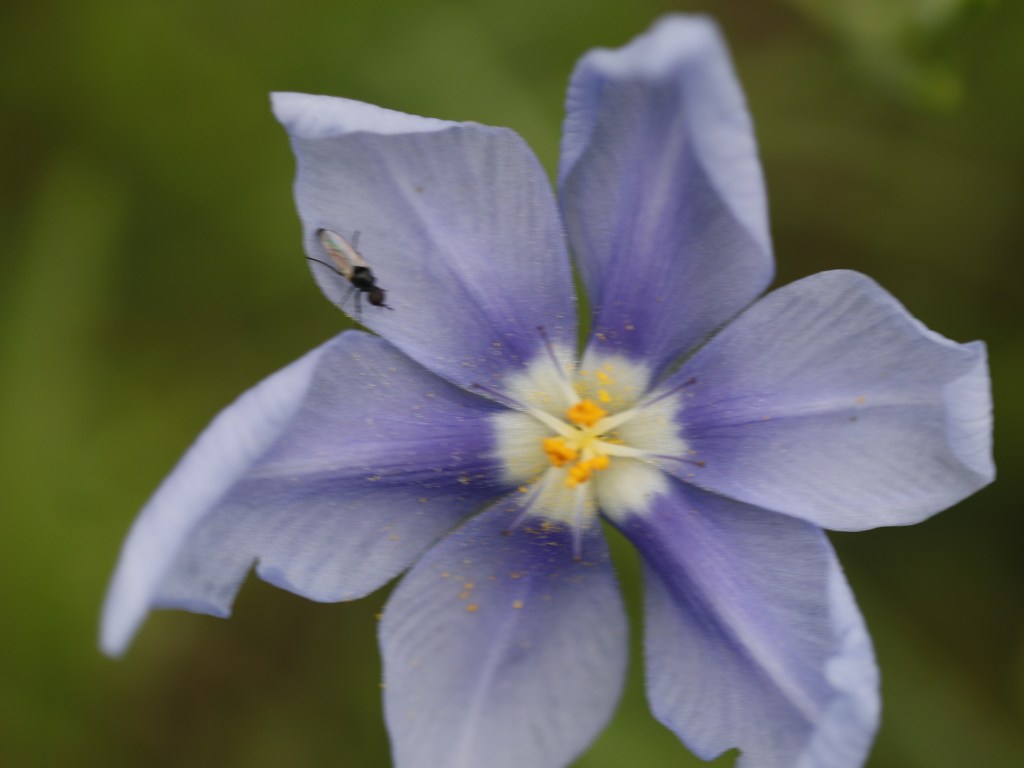
Well, folks, this site was left behind a few years ago, but from my overall WordPress traffic reports, it seems to be visited from time to time. Thus it seems that it might not be a bad idea to start updating it. Could be wrong of course, but here goes nothing: One of my favorite Texas native wildflowers, the Prairie Celestial.

Nemastylis geminiflora - Prairie Celestial

Nemastylis geminiflora – Prairie Celestial

These members of the Iris family bloom for approximately two weeks, beginning with somewhere near the Spring equinox, and ending around April 1st. This year, there was an early “scouting” expedition around the 13th-15th of March, then a gap, followed by the expected blooming around the 19th of March through April 1st, which appeared to have been the last of it. Then, around the 5th through the 10th of April, I discovered some more blooms, stragglers, as it were.

Each flower blooms for just one day, and they often appear in pairs, hence the species name geminiflora. Each plant, which is a deep seated bulb (and hard to dig up, even for scientific sampling), may have several flowers. Another common name is Pleat Leaf Lily, derived from the “pleats” in the leaves, as shown below.

You might also note the bur clover or yellow clover, an invasive weed that forms a carpet and crowds out native plants, especially when mowing is frequent and close to the ground, and mowers move between locations without pressure washing plant materials off the blades of their mowers.

Nemastylis geminiflora - Pleat Leaf Lily

Nemastylis geminiflora – Pleat Leaf Lily

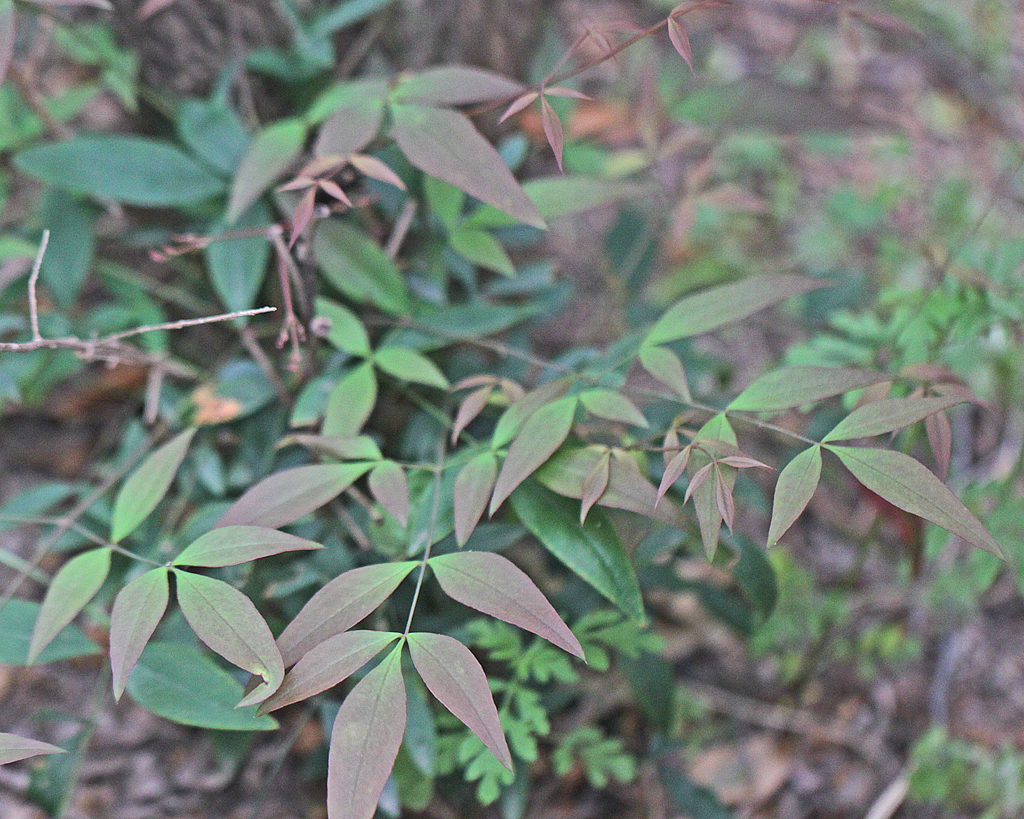
Intruder Alert

Nandina domestica - Heavenly Bamboo

Nandina domestica – Heavenly Bamboo

Imagine my disappointment when I stepped outside and glanced down at the the foot of a Leucophylum frutescans Cenizo bush and saw this too familiar sight. Tomorrow I will dig it up and throw it in the trash and bid it good riddance. Unfortunately, I can’t go into my neighbors’ yard and remove the plants which may have been the source of the seed dispersed by birds which resulted in this invasive species specimen.

If you see any of these, or have any in your yard, I hope you’ll do the same.