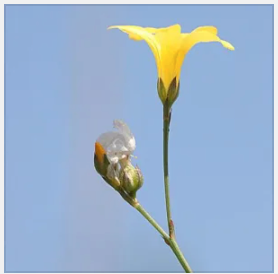
It’s been nearly a third of a year since I last posted on this site. Advancing years, physical therapy, adjusting to changes in medications and dealing with sleep disorders has kept this off my list of priorities.
So, instead of getting into a list of what has or hasn’t happened during the hiatus, today we’ll look at today and yesterday, as Oklahoma and much of the nation is experiencing a winter storm.
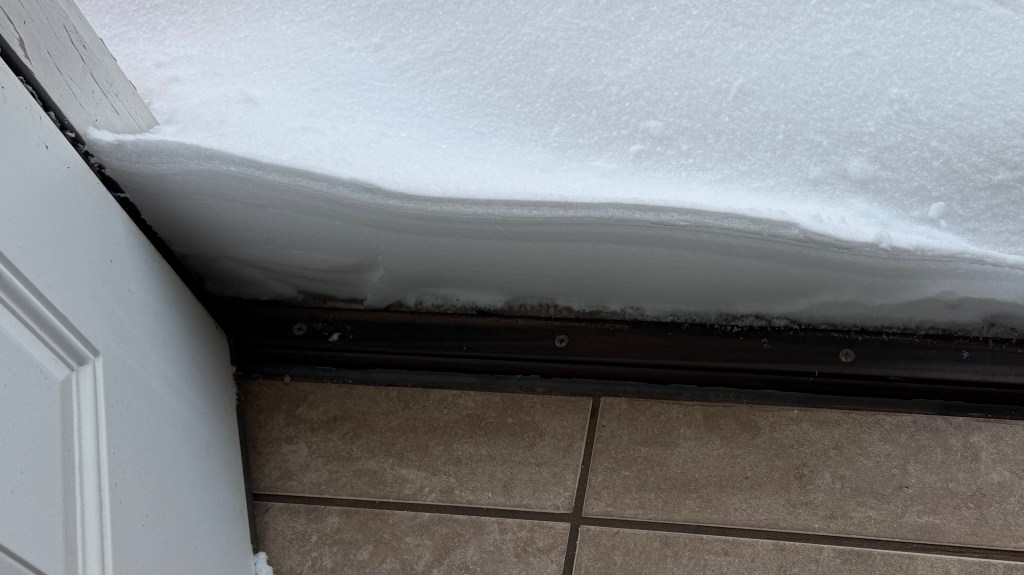
This angular composition is the result opening the kitchen door. Interesting (to me, anyway) are the layers of the snow drift against the door, somewhat analogous to the rings of a tree. As can be seen, we had at least an initial overnight snowfall, followed by three snowfalls of lesser duration or intensity.
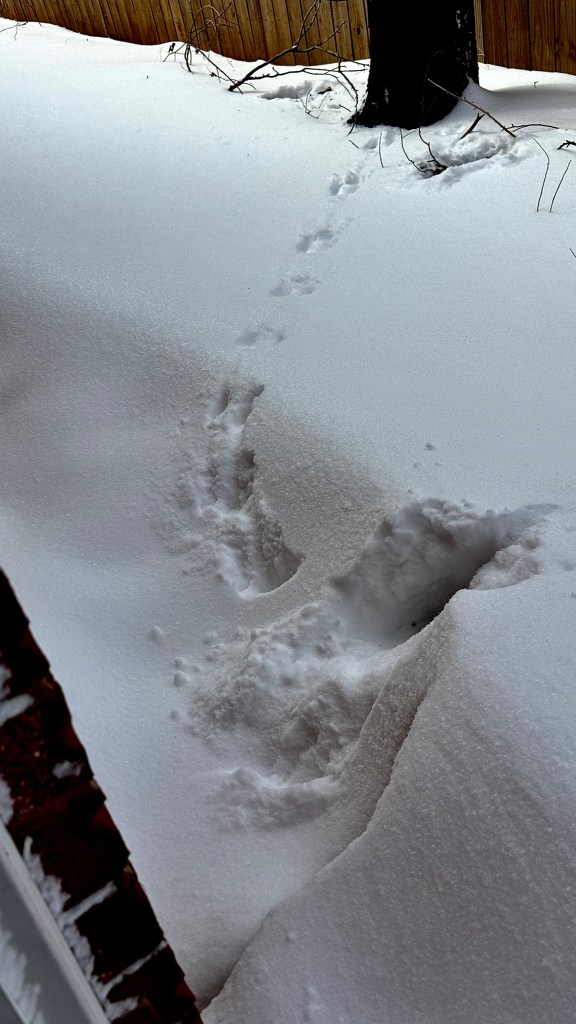
Raising our sights up a little, tracks of an unobserved critter are seen between a tree tentatively identified as Cedar Elm (Ulmus crassifolia). The critter leaving tracks is probably either an Eastern Fox Squirrel (Sciurus niger) or Eastern Gray Squirrel (Sciurus carolinensis). Because the Fox squirrel is adaptable to a variety of habitats and is listed as the most common species of squirrel in Oklahoma, it seems these are likely the tracks of a Fox squirrel. The Gray is smaller and prefers densely wooded forests, according to the OSU Gray and Fox Squirrels fact sheet.
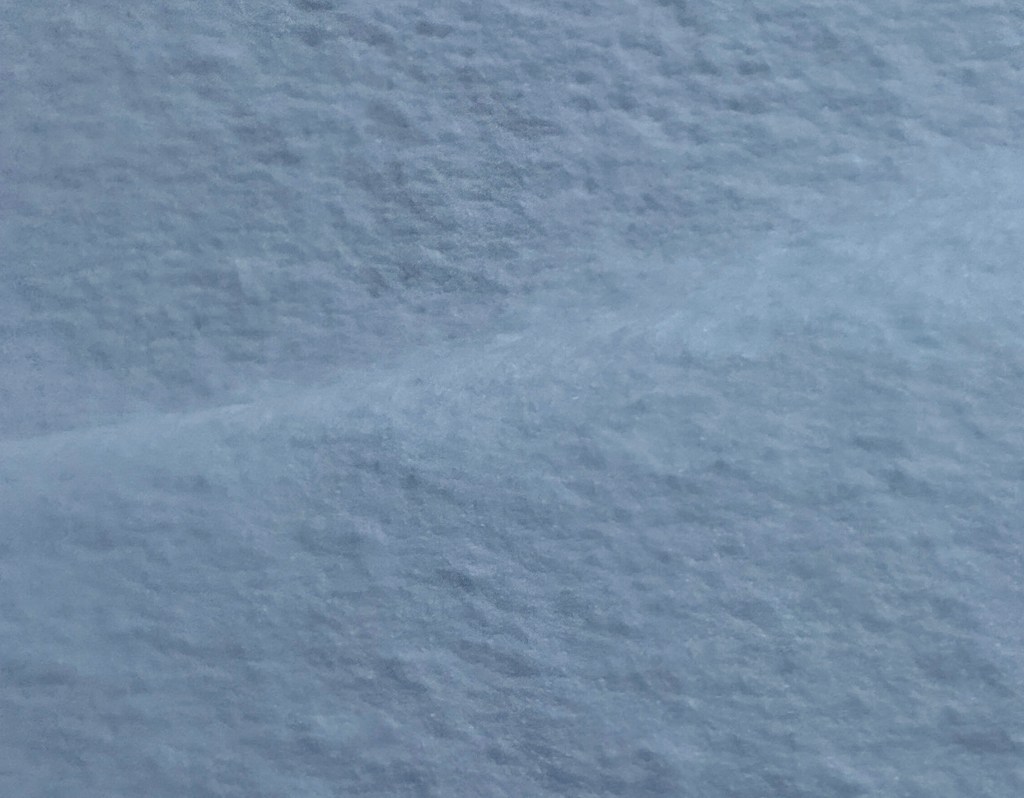
Finally, a look out the front door and the texture of snow with a slight line of demarcation between the sidewalk and the minimal porch, providing an illusion of the overcast clouds in the sky.
And if you didn’t catch the allusion in the title…


 bob's brain: living well with a movement disorder and other comorbidities