A Good ole Boy a’Dancin an’ a’Prancin’ Again

This just came in: A physiotherapist in Oklahoma has discovered gait training with the use of favorite music and posted the anecdotal results as a video on Facebook. I remember my first experience with Dance for Parkinson’s  and how it got me swinging my arms to the rhythm. Recently found that Walk Like A Man reminds me to get my shoulders back and my head up, instead of stooping over like Quasimodo. (YouTube of WLAM below).

Someone needs to put together a playlist on YouTube of Gait Training For Parkinson’s videos and songs. Who will beat me to it? Bueller? Bueller?

###

To dance beneath the diamond sky


2014-08-16-rjk-to-dance-beneath-the-diamond-sky-clematis-drummondii-img_0567

To dance beneath the diamond sky“. photo of Clematis drummondii by Robert Kamper. All rights reserved.


Something not really research related: An article in the St. Paul – Minneapolis ParkBugle about a Women’s Drumming Center. But for anyone dealing with stress, the quotes from teachers and students speak volumes about the power of community and rhythms.  People with Parkinson’s could do worse than follow this lead. ( I happen to have a warm-up protocol for a Parkinson’s music group I was in that begins with beating a drum and progresses to call and responses rhythms, much like this group).

Over at University of Michigan’s blog, Victor Kartch reports on anecdotal and scientific evidence on the uses of music as medicine in his January 11, 2017, Health Yourself column. He does list some references, as well as listing some of the conditions for which music has been used as therapy with positive results. Slight quibble: music therapy is used here in a very broad and loosely defined sense, which does not bother me, but might be viewed negatively by professionals in the business of music therapy, where a stricter definition of music therapy as a specific prescription for a specific symptom or condition might be considered the norm.

The Journal of the American Medical Association (JAMA) has an article titled “Move your arm like a swan” reporting on Dance for PD  and the “demedicalization” (my spell checker doesn’t think that’s a word) of Parkinson’s. The full article is free and there is also a link to download a copy of the article in PDF.  A related article on a Google Glass app that uses augmented reality is also linked to, is available for free, and has a link to download the full article in PDF. It’s like Christmas in January!


Not just a “last resort”- Deep Brain Stimulation (DBS) works for early stages of PD symptoms, too.

Science marches on. Researchers found evidence that DBS is helpful in early stages of PDS, not just in later stages. Benefits extend for at least 5 years:

BALTIMORE — Patients with Parkinson’s disease treated with deep-brain stimulation (DBS) in the early stage of disease show significant improvements in motor skills extending out to 5 years of follow-up, offering encouraging, though preliminary, evidence that the known benefits seen in advanced and midstage disease could also apply to earlier stages.

“We found that not only is DBS combined with medicine better than medicine alone, but we have this longitudinal data showing a sustained benefit for 5 years,” senior author David Charles, MD, professor and vice-chairman of neurology and chief medical officer of the Vanderbilt Neuroscience Institute at Vanderbilt University Medical Center, in Nashville, Tennessee, told Medscape Medical News.

“Even with these small numbers of patients, the separation favoring DBS is dramatic, so this is very encouraging,” he said.

The PDF copy of the research paper referenced in the above news article can be found at this link:
###

Early diagnosis and treatment of Parkinson’s – review and recommendations

The London School of Economics and Political Science recently released a report on the “Value of Early Diagnosis and Treatment in Parkinson’s Disease”, a literature review of recent studies with recommendations for action. It can be downloaded at http://www.braincouncil.eu/wp-content/uploads/2016/11/Parkinson-report-2016-1.pdf 
On a broader view of PD,  here’s a link to a page that has links to just about everything Parkinson’s – The National Institutes of Health (NIH) U.S. National Library of Medicine (NLM) Medline Plus topic page on Parkinson’s Disease.

Queen of the blue mistflowers

Gregg’s mistflower (Conoclinium greggii)

It has been a while since I posted anything on this blog, and so now we can compute just how long “a while” is.

Of course, this picture was taken several months earlier when I was fooling around with a different camera and lens, and trying to transfer learning between one of two systems (in alphabetical order: Canon and Nikon) without recourse to written instruction. This picture appeared on at least one Native Plant Society of Texas blog, and reappears in these pages because it is quicker and easier than processing some other photo.

Sad to say, the result shown here was probably more a matter of luck than transfer of skill. But it is skill in choosing native plants appropriate to the region that results in the Queen (Danaus gilippus) and Monarch (Danaus plexippus) butterflies that have been seen recently. I did manage to get a shot of the Monarch, but haven’t gone after the Queens yet – it has been windy, and they rarely stay still for long. Why a Monarch is in my neck of the woods in mid-July seems to be one of those outliers to the norm mysteries for which the answer may never be known for sure.

Float like a bumble bee

2014-08-16-rjk-salvia-farinacea-and-bumblebee

Note: This has been sitting around the drafts folder for quite a while – thought I would simply put it out there as is.

A rolling stone gathers no moss… But it’s the roving bee that brings home the honey, according to Muhammad Ali (to the best of my memory, although I can’t cite the original source for the quote), arguably the most recognizable celebrity with Parkinson’s Disease, next to Michael J Fox.

The wife cut down the Salvia farinacea for the winter, as all the old flowers seem to have been spent (most of them at least) and I spose the possibility of new blooms before the first frost kept me from staying her hand. Continue reading

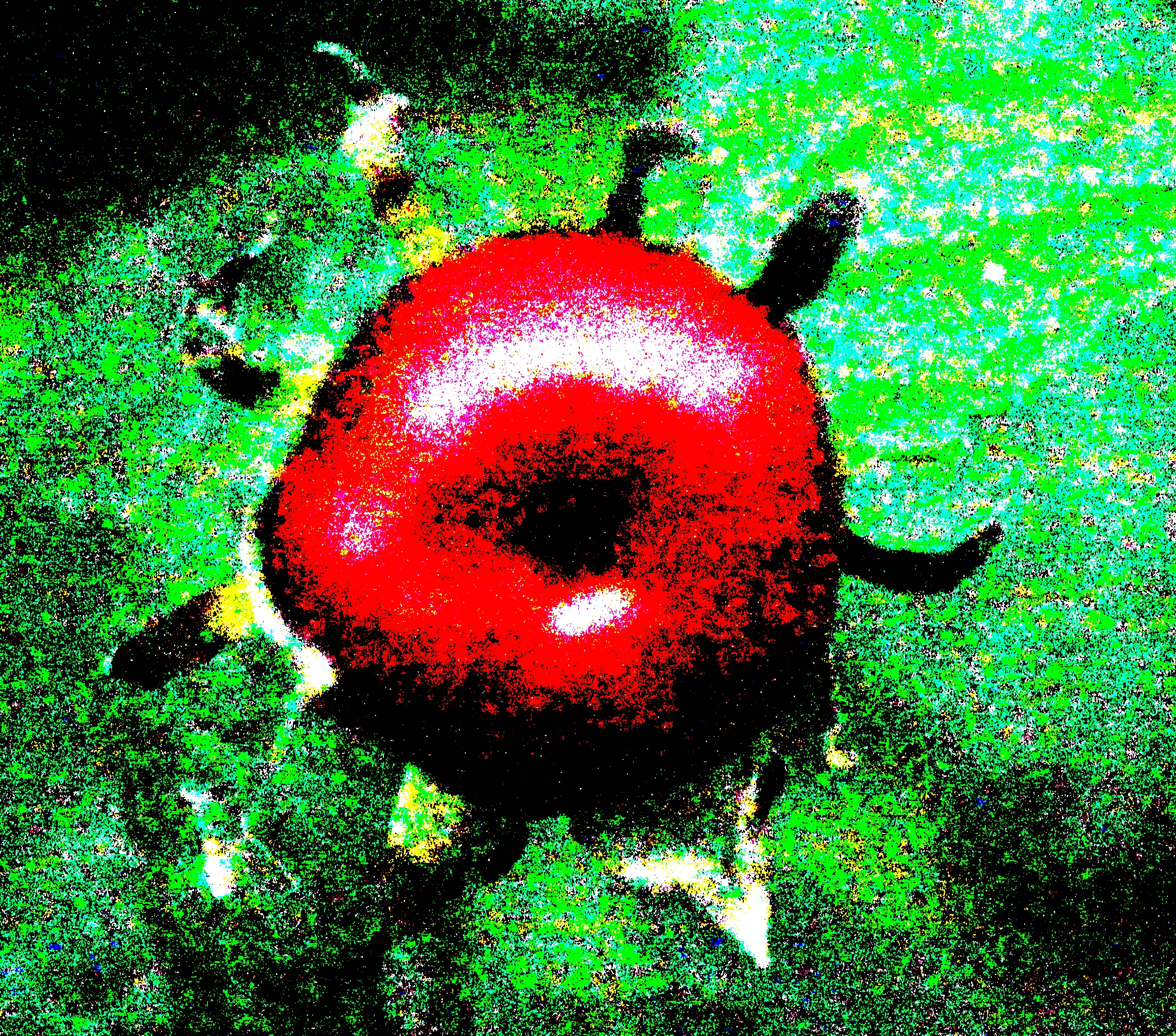
Mexican Apple (Malvaviscus arboreus var. drummondii)

Manzanilla (Malvaviscus arboreus var. drummondii)

Manzanilla (Malvaviscus arboreus var. drummondii)

Here’s an old favorite, though this is the “fruit” and not the blossom. We’ve been told that the flowers are edible and actually more tasty than the fruit, which tastes somewhat like an apple, which it resembles in form and color, though much smaller in size.

As a member of the Mallow (Malvaceae) family, it is cousin to the Hibiscus. The native range is throughout the Southeast United States, from North Carolina westward to Texas, with the exceptions of Tennessee and Oklahoma. For more information and pictures, visit a post on the Native Plant Society of Texas on the Texas Mallow (One of several appellations of this variety of Malvaviscus).


Yes, to dance beneath the diamond sky

With one hand waving free, silhouetted by the sea, circled by the circus sands. . . and wondering how many lines  can I  quote without having to pay Mr. Dylan some royalties?

Clematis drummondii - Old man's beard

Clematis drummondii – Old man’s beard

…Well, if you got to have earworms running through your head, this is as fine as they come, and if you hear vague traces of music in your head when looking at pictures like this, consider yourself lucky.

I think I will be titling more of these posts after lines from poems, songs, plays, novels, or whatever else comes to mind. It seems right, feels right, and sounds right, and three rights never made a wrong,

Hey, mister cameraman, come take a shot of me…(okay, now I’m just being silly).

And so it goes – Asclepias tuberosa and friends

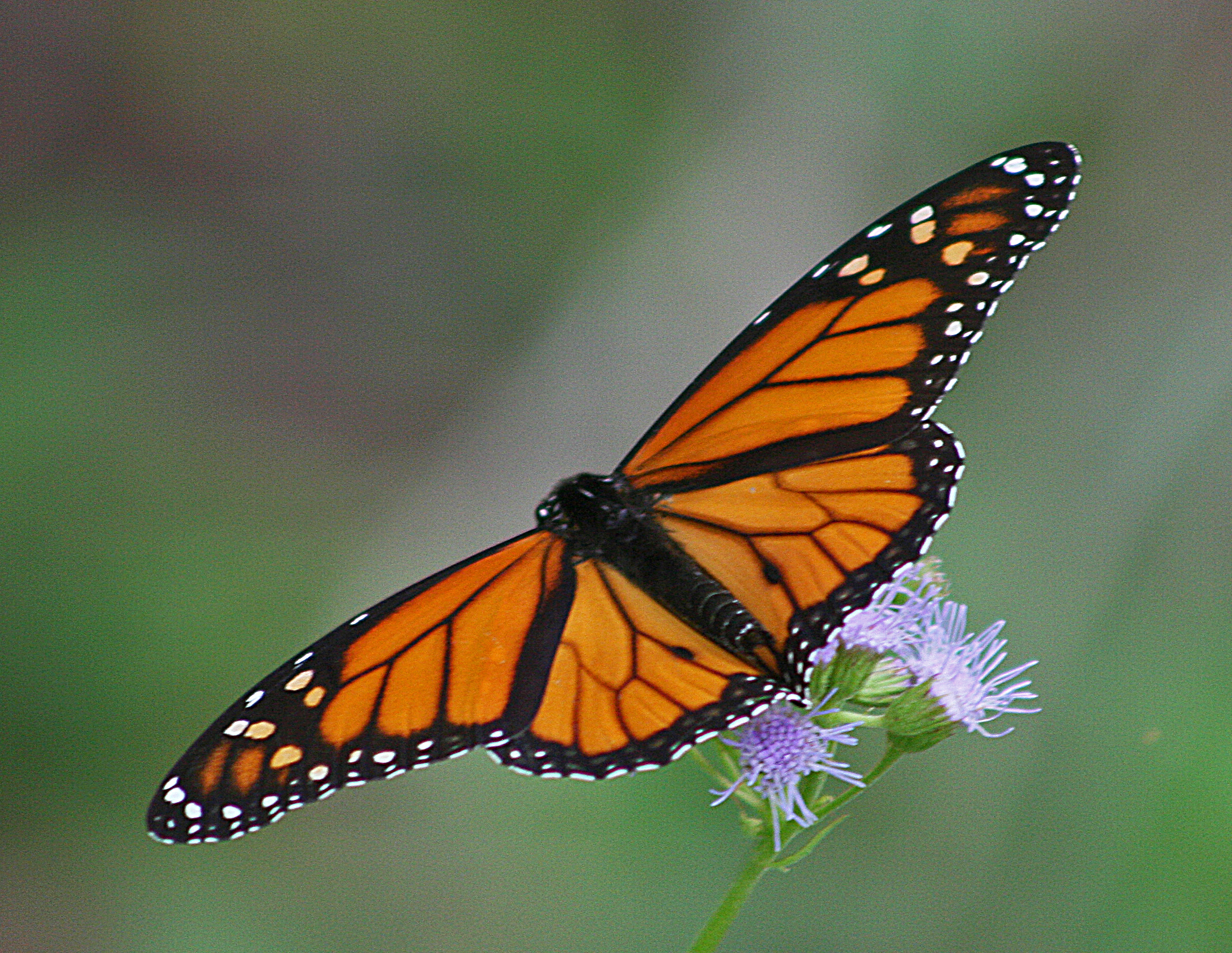
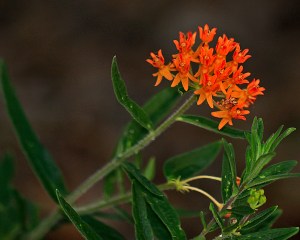
Asclepias tuberosaThis is the native milkweed that the Monarch butterflies use as a food source in both the larval and adult stages, though in the larval stage it consumes the leaves, and in the adult phase it consumes only the nectar, but may leave behind little eggs that hatch into caterpillars.

The nursery trade typically only has Asclepias curassavica, commonly known as Tropical milkweed, which can be distinguished from tuberosa by the colors of its flowers, which include both red and orange.Monarch butterfly

I was at a local demonstration garden near where I live, and observed a large number of plants that were definitely yellow, along with a few that were the red and orange  A. curassavica species. They even had a few Monarchs visiting, although the southbound butterflies have been few and far between so far this season.
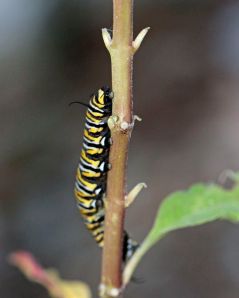
Larva - Danaus plexippus (Monarch)

Larva – Danaus plexippus (Monarch)

This past Friday, October 3, 2014, I found four Monarch larvae on the milkweeds in my front yard. In the cool of Saturday morning, I located one still on the milkweeds and one on a nearby rock, slowly moving towards some groundcover under the oak tree. Later that afternoon, someone came by who has been actively nurturing the caterpillars, and we found just one, on a milkweed, that was transplanted to their yard a few miles north.

And so it goes. Imagine how many more Monarchs would be around if large chemical companies had to include some sort of environmental impact statement in their marketing, such as :

For a Few Dollars More – improves crop yield by selectively killing native plants that are essential to the survival of certain insect species, including the Monarch Butterfly (Danaus plexippus).

Extinction Is Forever – The life of an insect may span less than a year, but the extinction of a species may echo through the years. Who knows what pests you may unleash by using a pesticide to upset the natural balance of your local ecosystems? Who cares as long as we get a positive growth in this year’s balance on the bottom line? Let the next generation of scientists and economists figure out the true costs of our actions today.

“And so it goes.”  (I think Kurt Vonnegutt said that fisrt.)

###
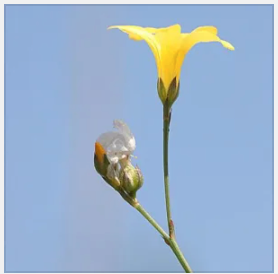
The force that through the green fuse drives the flower . . .

Lygodesmia texana - Texas skeleton-plant

Lygodesmia texana – Texas skeleton-plant

Just as the name of this blog might remind you of Thomas Hardy’s novel The Return of the Native, perhaps the title to this post will remind you of the poem by Dylan. Dylan Thomas, of course. Or the photo might remind you of the title of the poem. One could also think of an oak tree as a slow explosion, with its mushroom cap shaped crown. But enough said. Click on the photo for a larger picture and meditate on the photo and the title together.