leaves and flower
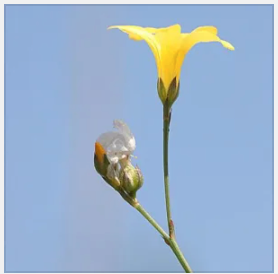
leaves and flower

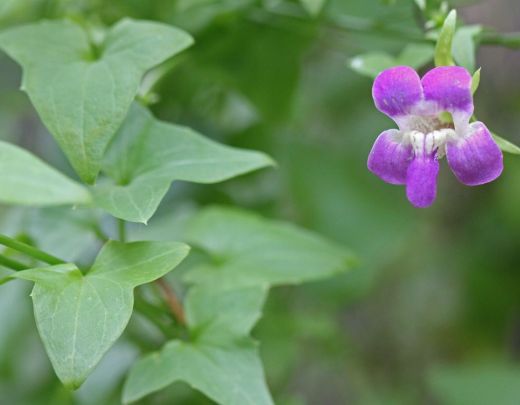
Penstemon tenuis – Brazos Penstemon
Peucetia viridans, the green lynx spider, hangs out on one of the purple, bell-shaped blossoms of the Brazos or Gulf Coast Penstemon. The flowers grow on spikes reaching a mere foot to foot and a half in height. They thrive in moist soil and sun and partial shade, in both clay and sandy loam soils. Native to Texas, Louisiana, Arkansas and Mississippi, it can handle poor drainage. A good choice for a perennial garden, it can easily reseed itself and spread through the garden. It is attractive to hummingbirds and nectar feeding insects, which apparently also attracts predators like the spider shown above. Also known as Sharp sepal Beardtongue, the blooms begin in March and continue through June.

Pavonia lasiopetala – Rock Rose
Also known as Rose Pavonia, Rose Mallow, and simply Pavonia, this small shrub is a member of the Mallow family. It blooms from April through November, and got started blooming a little earlier this year in March. Its pink flowers remind you of Hibiscus, but unlike its cousin the Swamp Rose Mallow (found in swamps and ditches), this is found in rocky areas (thus the monicker “Rock Rose”) and slopes in woodlands and at the edge of thickets.
Also known by the scientific name of Pavonia wrightii, Rock Rose is a perennial shrub, with oblong alternating leaves, as seen here. It is drought tolerant and cold tolerant, and can handle full sun to partial shade conditions. It attracts butterflies, moths, and hummingbirds and is a good choice for a perennial garden, providing blooms throughout the summer.
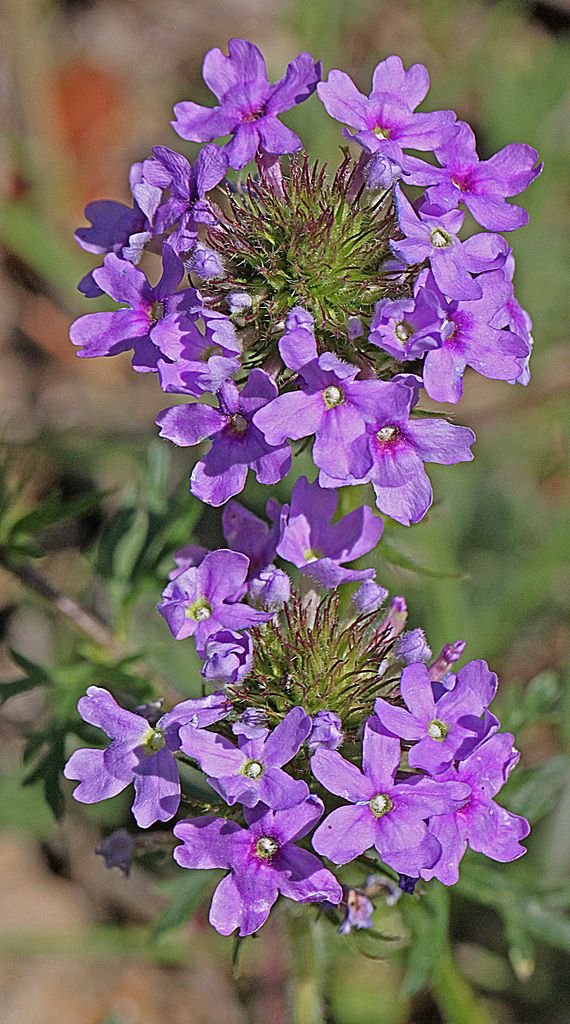
Glandularia bipinnatifida – Prairie Verbena
Also known as Dakota Mock Vervain, these low-lying forbs start blooming in March and continue through December. They are attractive to butterflies as well as people, and are drought tolerant. Appropriate in the wildflower meadow as well as butterfly or ornamental garden.
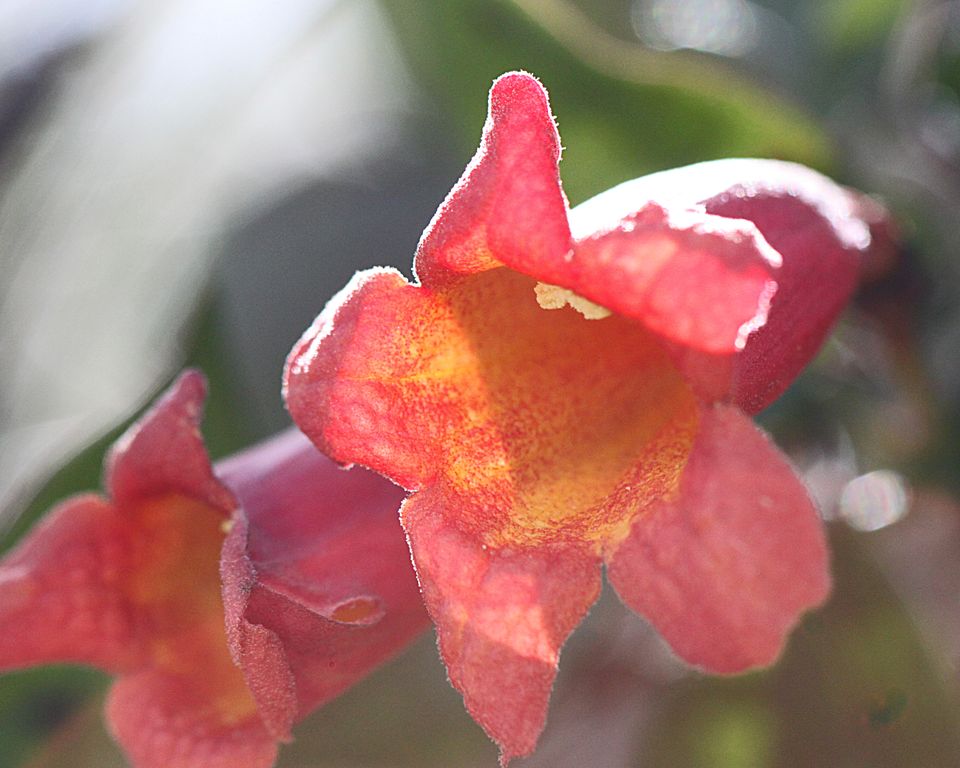
Bignonia capreolata – Crossvine
The Crossvine is blooming, draped across the Eastern Redbud, and it seems to be handling the drought with less stress than the Redbud. The blooming period is from March through May. It attracts hummingbirds (if there happen to be any in the suburban desert) and butterflies that feed on the nectar. Which reminds me – I saw my first Monarch Butterfly (Danaus plexippus) of the season over the weekend (Saturday to be exact). Oddly enough, it was feeding on the Texas Mountain Laurel Sophora secundiflora, but apparently not long enough for me to grab the camera, Also spotted a couple of Red Admiral (Vanessa atalanta) butterflies yesterday and did grab my camera, but the creature wouldn’t settle down long enough for me to get a shot. So here’s the Bignonia capreolata instead.
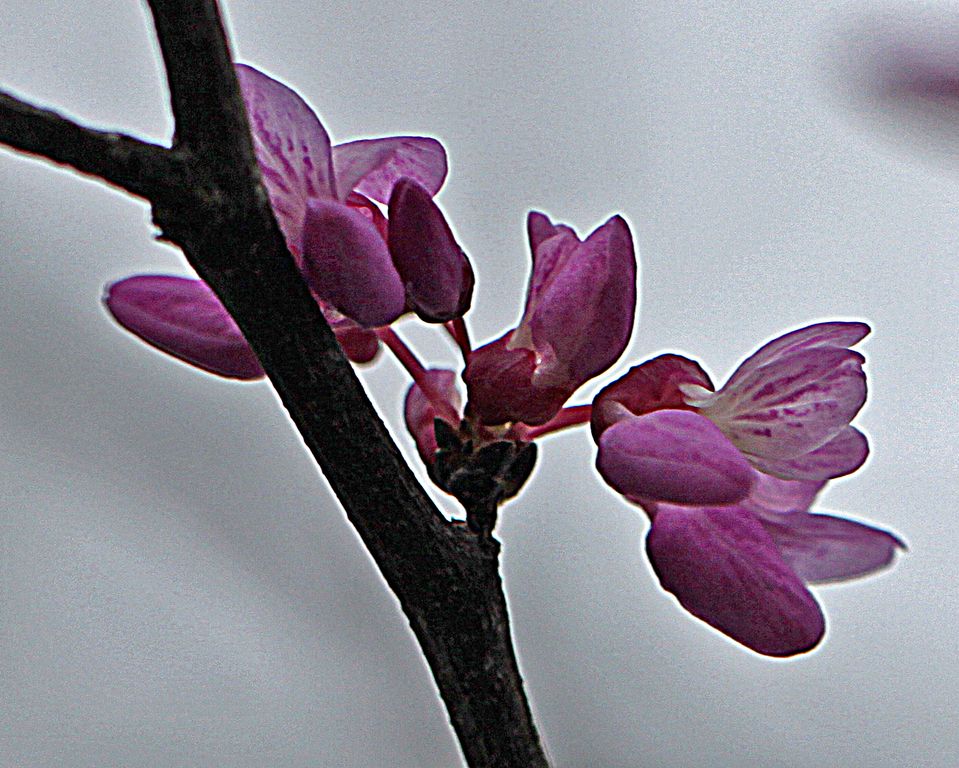
Redbud – Cercis canadensis
Normal bloom season for the Eastern Redbud is March through May. These buds popped up on 10 February, about three weeks ahead of schedule. Central Texas is about the westernmost part of the range for var. canadensis, where it is replaced by two smaller varieties, var. texensis and var. mexicana , which are also both native to Texas. As you can see here, the flowers appear on the bare branches, while the glossy leaves follow later. Need one add that it is deciduous?
The flowers and leaves apparently are edible, and the twigs have been used to create a yellow dye by boiling in water. The Eastern variety requires more water than the Texas or Mexican varieties, but even it is drought tolerant. It thrives in partial to full shade. and are good in wooded areas. In the past, I have observed an early migrating Monarch Butterfly attracted to the flowers, which in general provide nectar to nectar feeding insects. In North Carolina, I have heard these referred to as “weed trees” and considered a nuisance.
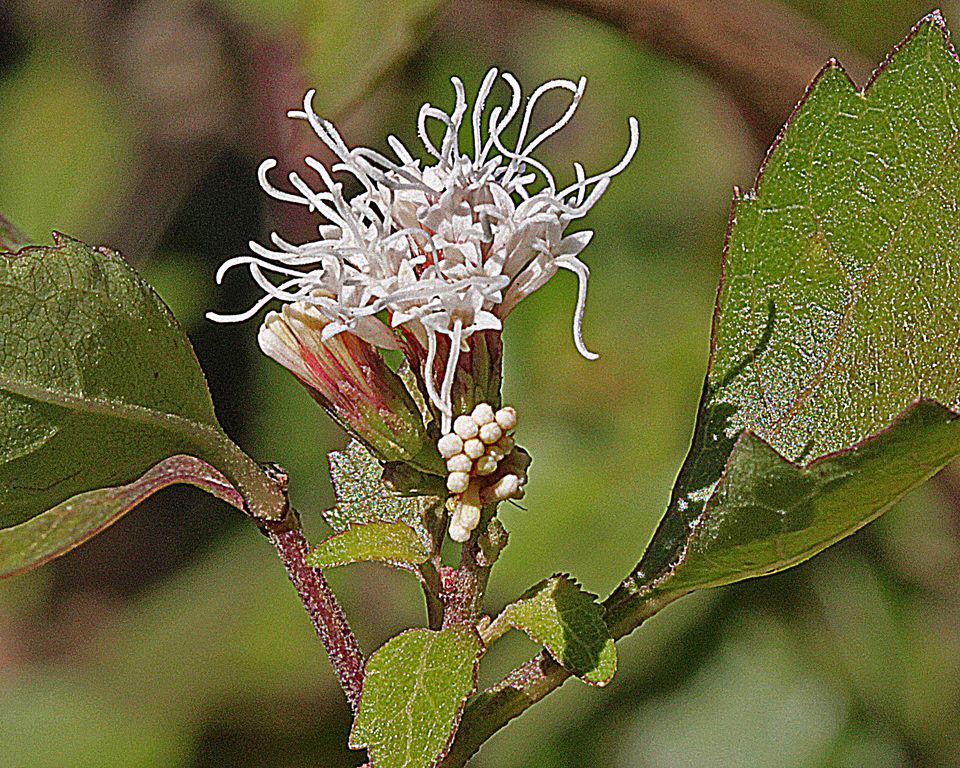
Ageratina havanensis – White Mistflower
or Shrubby Boneset, or Havana Snakeroot, or any number of common names…Still producing blooms in February, somewhat outside of its “normal” span…
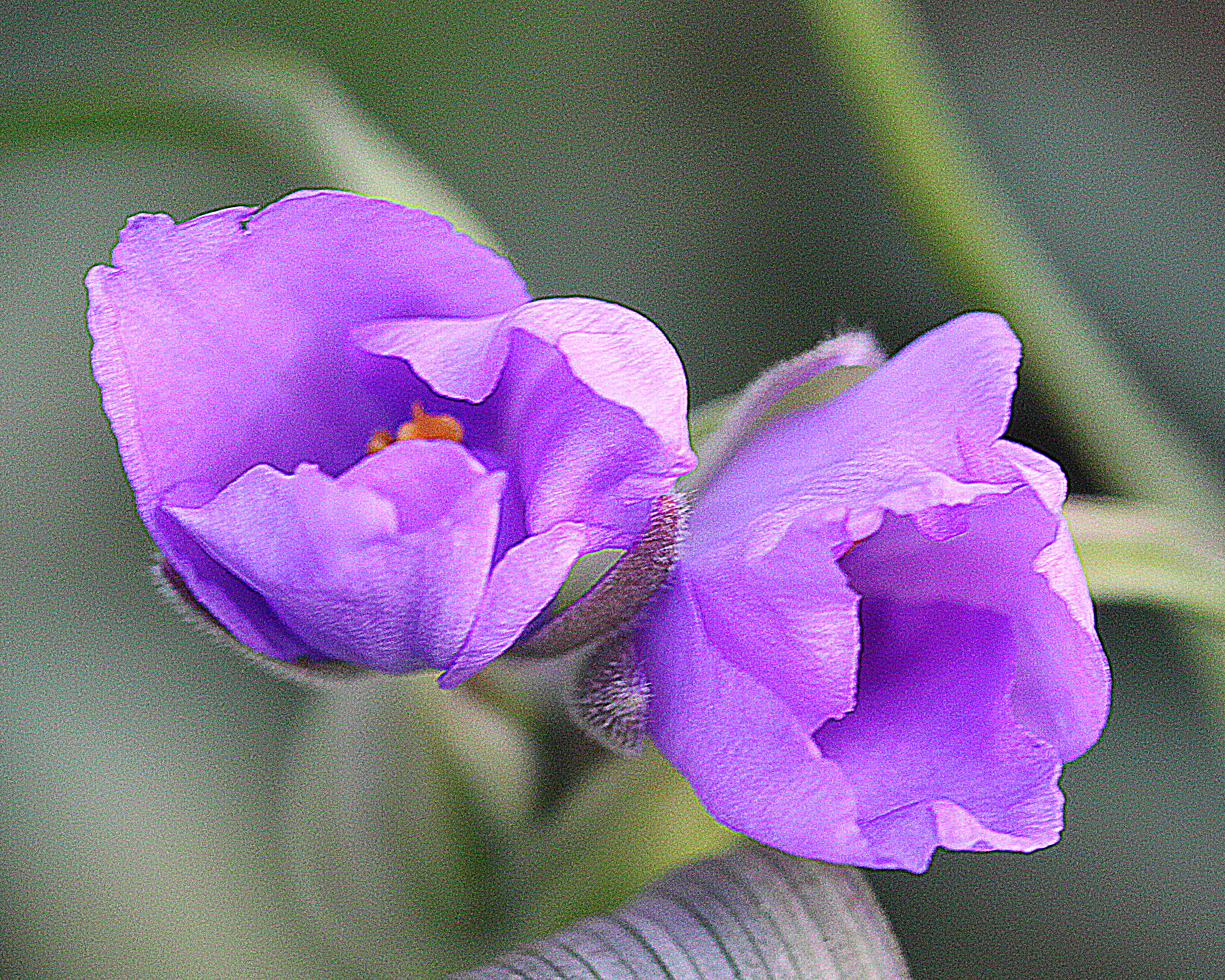
Tradescentia sp – Spiderwort
Here it is February 3, and the temperatures are reaching 70 degrees F. The Spiderworts are already starting to bloom, even though their usual bloom starts in March and lasts through April. Will have to keep track of how long they stay in bloom. These are planted as a companion to Turk’s Cap – Malvaviscus arboreus var. drummondii which typically bloom from May through November. The leaves drop in the winter and generally the plants are trimmed to about 1 foot from the ground around mid-February. This year the winter has been so mild that the wood has not been killed down to the roots as it often is. Call it climate change or call it global warming, but the plants are responding to their environment. And the Spiderworts are starting to bloom.

Krameria lanceolata – rattany
Krameria is a low lying plant with fairly small but striking flowers, as can be seen here, with a little bit of the foliage in evidence behind it. The leaves are thin and almost spike-like, hence the lanceolata portion of its name and both the stem and the leaves are a bit hirsute including the seed, seen in the lower left of this photo. The bright reddish things that bring it to your attention are actually sepals, while the actual petals are the small things in the center with the green and red mixed coloration.
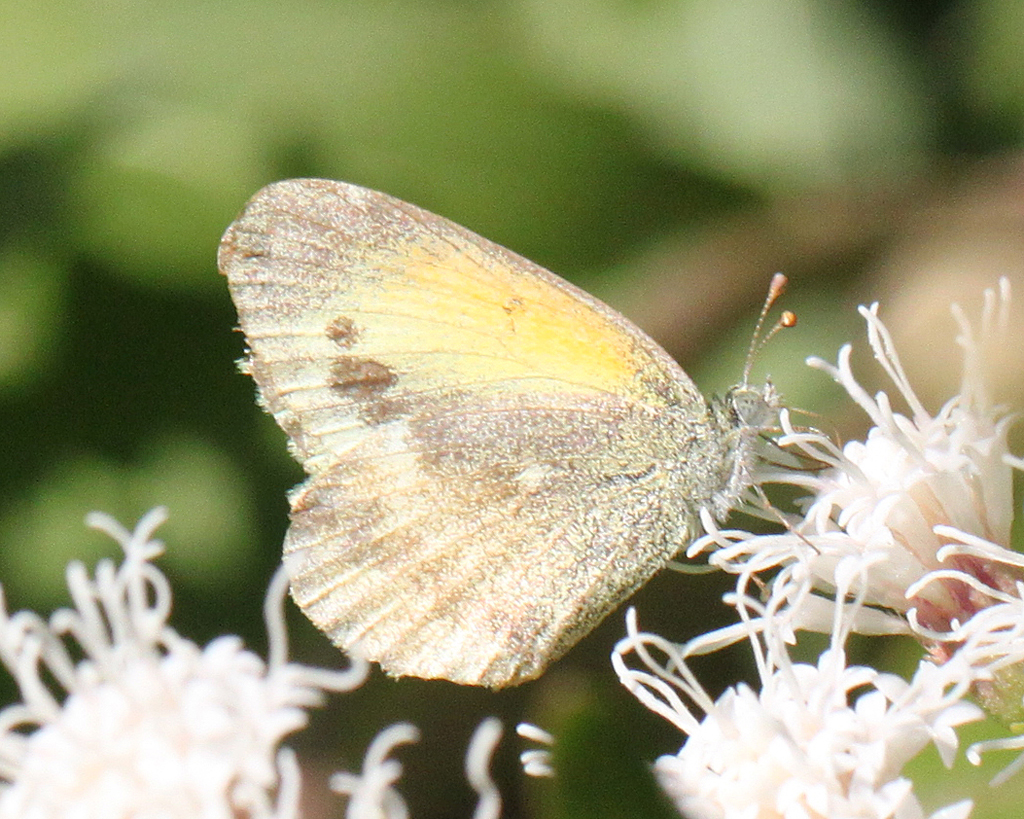
daintily sipping nectar from Ageratina havanensis...
 bob's brain: living well with a movement disorder and other comorbidities