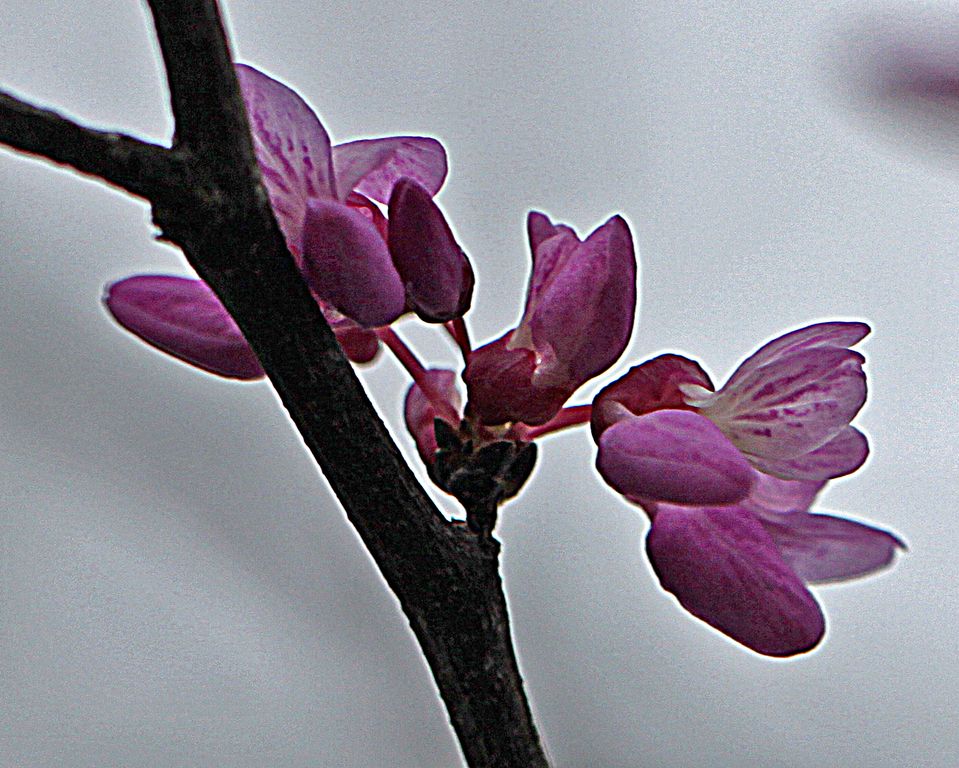
Redbud – Cercis canadensis

Redbud - Cercis canadensis

Redbud – Cercis canadensis

Normal bloom season for the Eastern Redbud is March through May. These buds popped up on 10 February, about three weeks ahead of schedule. Central Texas is about the westernmost part of the range for var. canadensis, where it is replaced by two smaller varieties, var. texensis and  var. mexicana , which are also both native to Texas. As you can see here, the flowers appear on the bare branches, while the glossy leaves follow later. Need one add that it is deciduous?

The flowers and leaves apparently are edible, and the twigs have been used to  create a yellow dye by boiling in water.  The Eastern variety requires more water than the Texas or Mexican varieties, but even it is drought tolerant. It thrives in partial to full shade. and are good in wooded areas.  In the past, I have observed an early migrating Monarch Butterfly attracted to the flowers, which in general  provide nectar to nectar feeding insects.  In North Carolina, I have heard these referred to as “weed trees” and considered a nuisance.
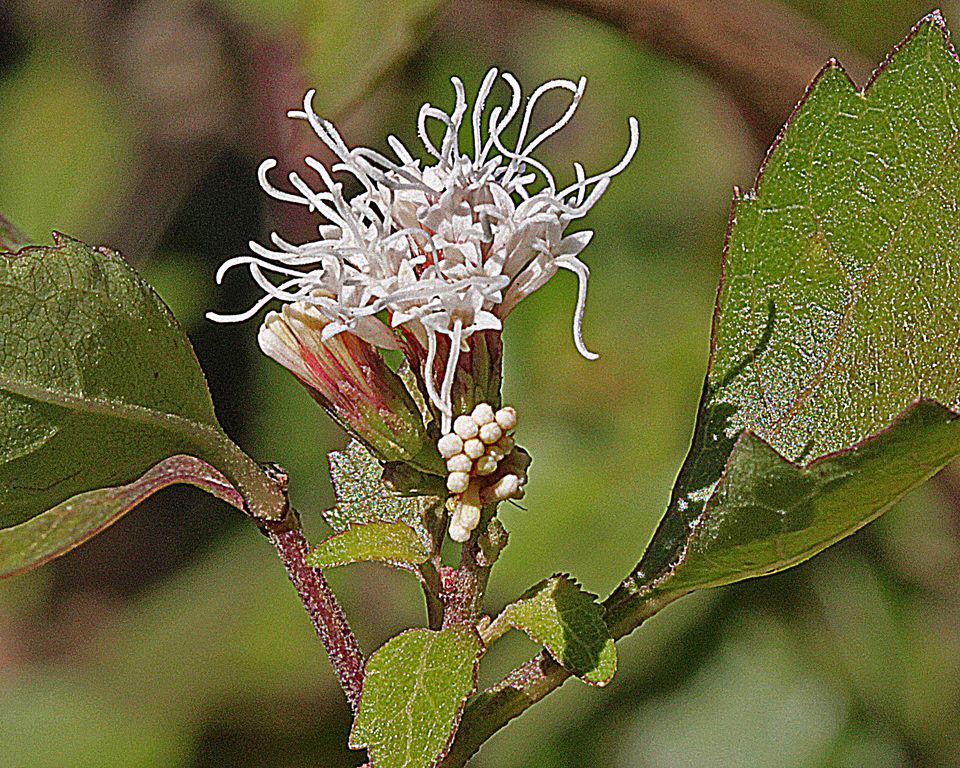
Tradescentia sp – Spiderwort

Tradescentia sp - Spiderwort

Tradescentia sp – Spiderwort

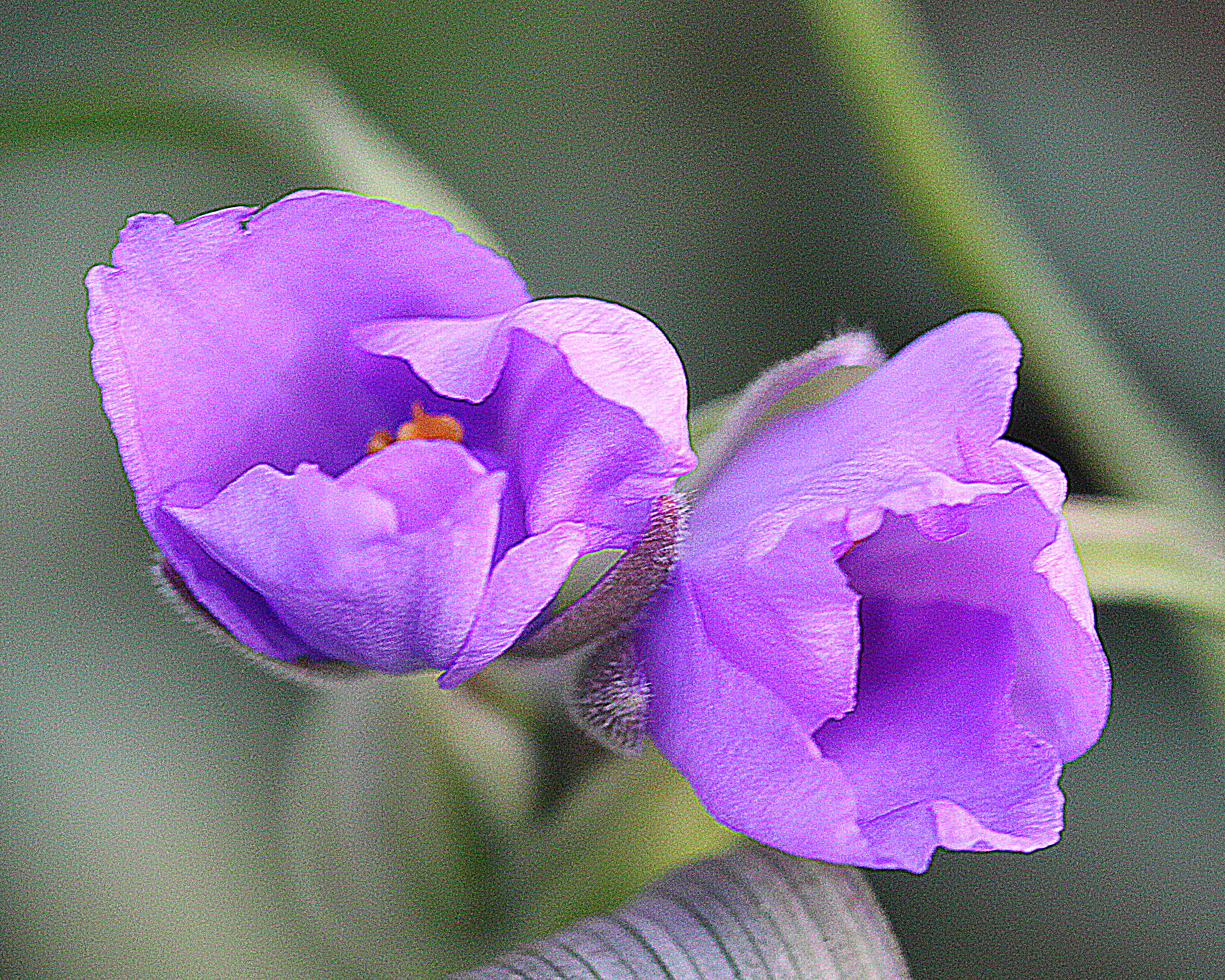
Here it is February 3, and the temperatures are reaching 70 degrees F. The Spiderworts are already starting to bloom, even though their usual bloom starts in March and lasts through April.   Will have to keep track of how long they stay in bloom. These are planted as a companion to Turk’s Cap – Malvaviscus arboreus var. drummondii which typically bloom from May through November. The leaves drop in the winter and generally the plants are trimmed to about 1 foot from the ground around mid-February. This year the winter has been so mild that the wood has not been killed down to the roots as it often is.  Call it climate change or call it global warming, but the plants are responding to their environment. And the Spiderworts are starting to bloom.

Eryngium leavenworthii – Eryngo

Eryngium leavenworthii  - Eryngo

Eryngium leavenworthii – Eryngo

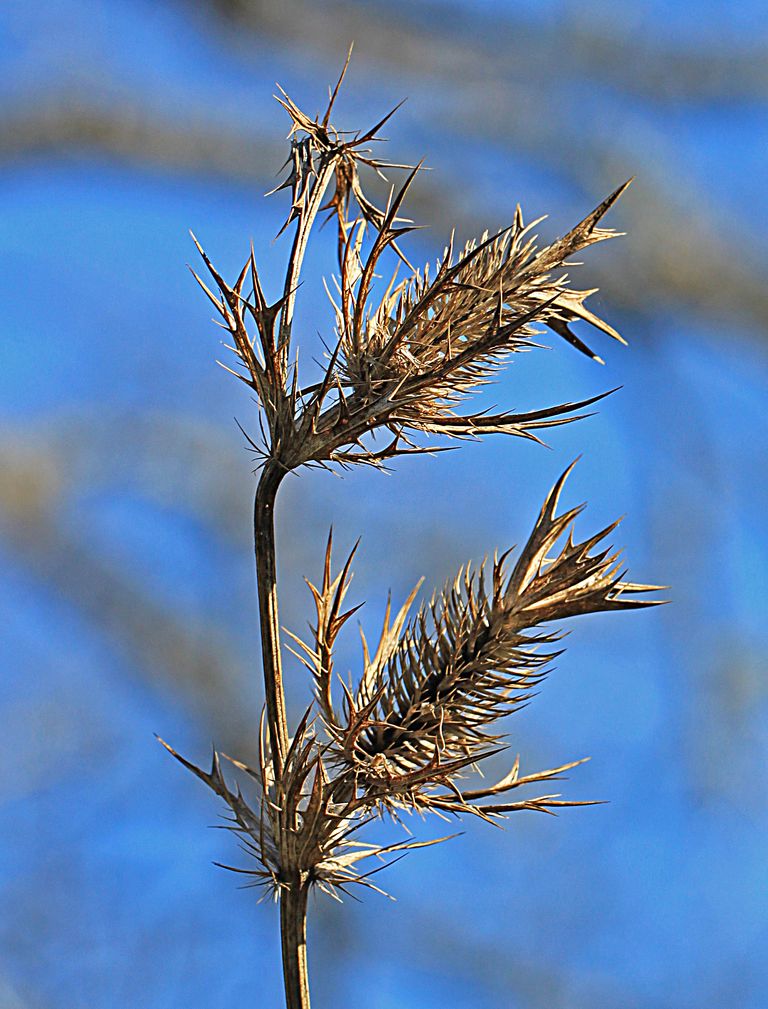
This is one time of the year that you might find the skeletons of the annual herbaceous plant Leavenworth’s Eryngo with their unique pineapple-shaped flowerheads. With their spiked leaves and bristly appearance, you might think them to be among the thistles, but actually they are related to carrots. Although lacking in the rich purple hues of its growing season, the bare remains have their own sort of beauty.

Krameria lanceolata – Rattany

IMG_4639 Krameria lanceolata - rattany

Krameria lanceolata – rattany


Krameria is a low lying plant with fairly small but striking flowers, as can be seen here, with a little bit of the foliage in evidence behind it. The leaves are thin and almost spike-like, hence the lanceolata portion of its name and both the stem and the leaves are a bit hirsute including the seed, seen in the lower left of this photo. The bright reddish things that bring it to your attention are actually sepals, while the actual petals are the small things in the center with the green and red mixed coloration.

Pavonia lasiopetala – Rose Pavonia

Pavonia lasiopetala - rose pavonia

Pavonia lasiopetala – rose pavonia

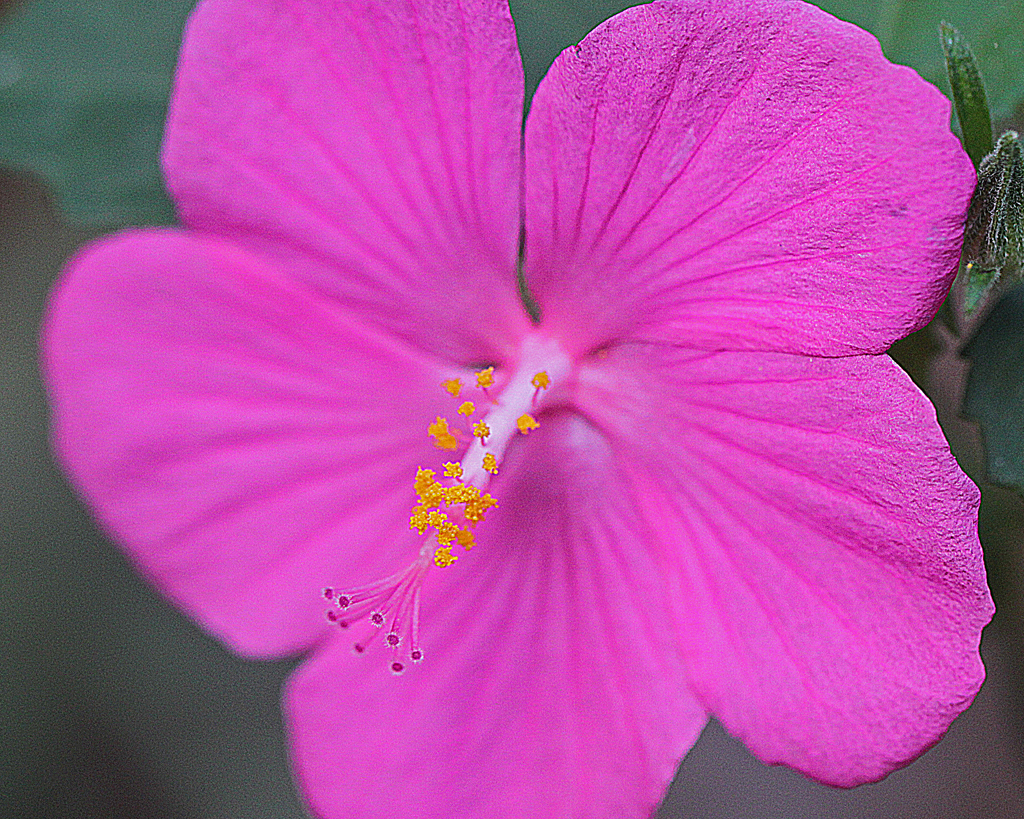
Also known as Rock Rose and Rose Mallow, this Texas Native is an excellent alternative to hybrid roses and the like. It doesn’t require a lot  of care and feeding, is resistant to bugs and moderately unpalatable to deer. I’ve noticed deer coming off the greenbelt lately to nibble on the acorns inside the subdivision where I live – but none in my yard of native plants bordered by salvias in the front.  It is native to the Edwards Plateau, and prefers dry limestone soil locations, so this will grow best in the area of Williamson County that is west of Interstate 35.

It blooms from April through November, which is another of my criteria for choosing plants for my yard – they should be perennials and bloom for a long period of time – not just seasonal but cross-seasons.

And having come from Florida originally, I do enjoy that it so resembles a Hibiscus, as does the Turks Cap, another of my long blooming summertime favorites.

Nothoscordum bivalve – Crow Poison

LILI Nothoscordum bivalve - Crow-Poison

LILI Nothoscordum bivalve – Crow-Poison

The authorities have not yet reached a consensus whether this plant is toxic, either to humans or to crows, so they advise that you just don’t put this in your mouth. Or feed it to crows, I suppose.

Crow Poison can bloom early in the Spring, but as this shows, they can also bloom throughout the summer and well into fall. It is similar in size and shape to Allium Drummondii, Wild Garlic. Sight and Smell are the two senses that help to differentiate the two – Wild Garlic has a purple tint to its white flowers, and it smells like onion.


Here you can see the umbel of Crow Poison, with a couple of buds in the process still of opening. Elsewhere you can see an excellent photo by Joseph Marcus with the Lady Bird Johnson Wildflower Center in Austin, Tx (http://www.wildflower.org/gallery/result.php?id_image=13203 ). September 22, 2014 –  Note: the linked photo used to be here. It has been removed in order to avoid infringing on Mr. Marcus’ copyright as well as to abide by the NPIN terms of use.

Fruit of Malvaviscus arboreus – Manzanilla

Malvavisus arboreus - Manzanilla

Malvavisus arboreus – Manzanilla


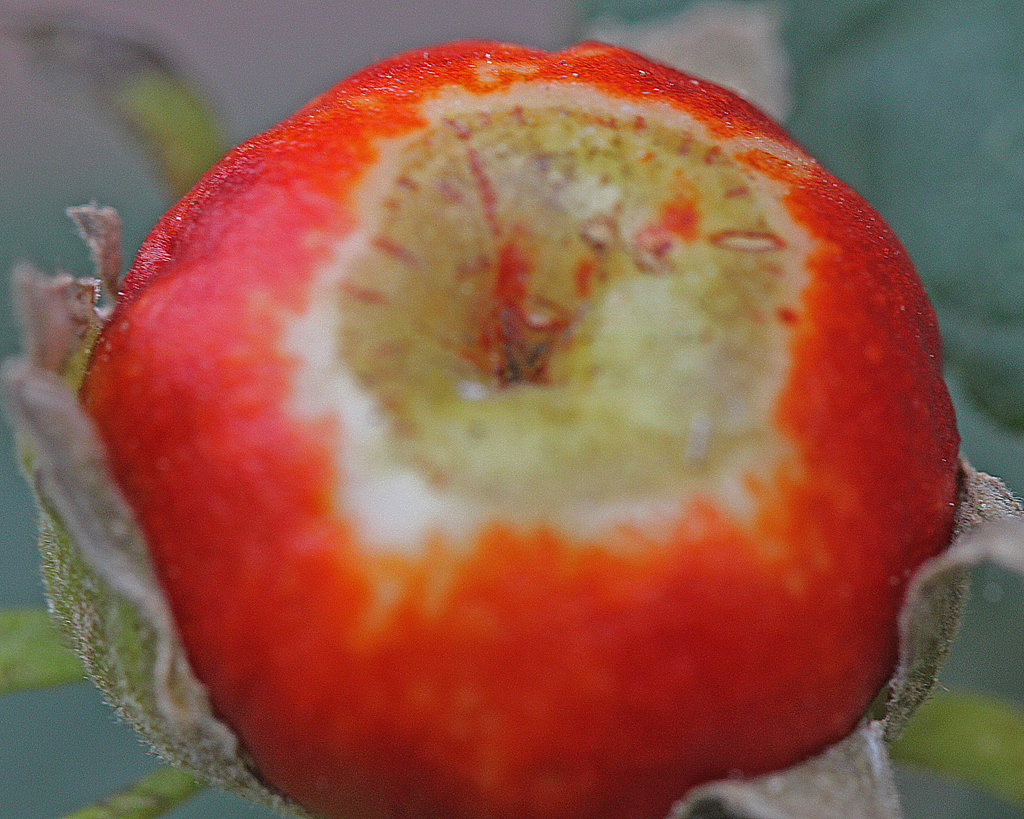
You might know this plant by the common name associated with its flower – Turks Cap.  Today we see its edible fruit, with its obvious resemblance to a small apple, hence the common names Manzanilla and Mexican Apple.  Manzanas of course, is Spanish for apples, and Manzanilla literally meaning “little apple” in translation.

The fruit is edible – I went back to look for this one a few days later and couldn’t find it. I assume it was eaten by a critter of some sort.

This illustrates some of the disadvantages of using common names for describing plants as well as some of the advantages of native plants in landscaping. The Malvaviscus arboreus provides nectar to hummingbirds and butterflies and other wildlife during its flowering stage, and fruit for wildlife after the bloom has gone. Having evolved in common with its habitat, it provides services to other living things that share that habitat.  It’s deciduous, so it sheds its leaves which decompose into compost, enriching the soil if given the chance.

Malvaviscus arboreus - Turks Cap

Malvaviscus arboreus – Turks Cap

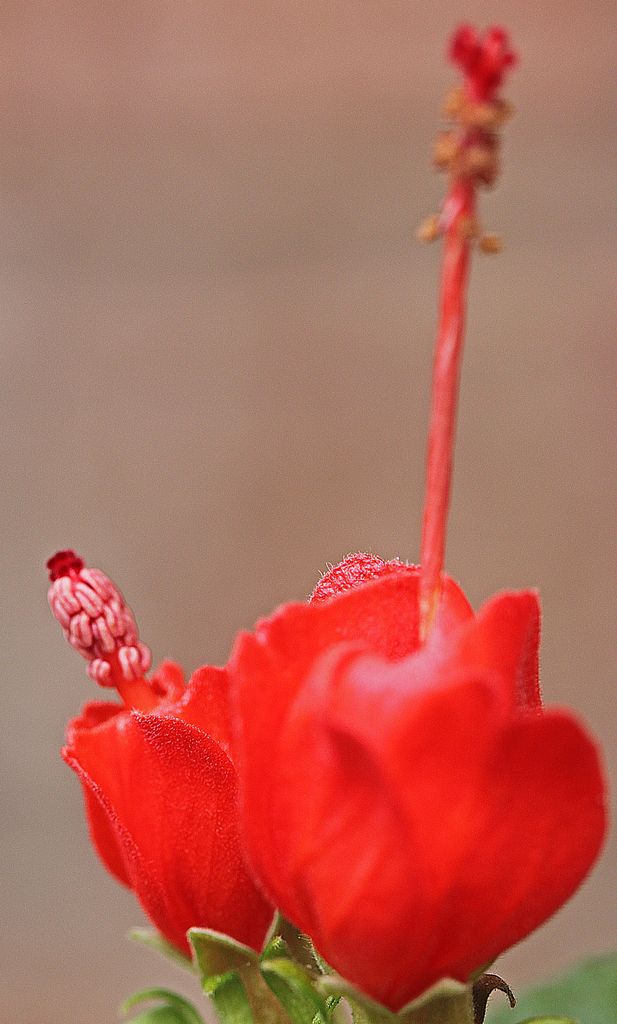
It makes a good alternative to the exotic or alien Nandina which is ubiquitous in the nursery trade and has aggressively escaped into nature. Generally, folks advise cutting the dead wood back to about 1 foot somewhere around mid-February, but anytime after it drops its leaves is fine and should keep HOAs from finding fault with your native plantings.

It is shade tolerant as well as drought resistant, and also comes in a white-flowered variation.