Clematis drummondii – Old Man’s Beard

Clematis drummondi  - Old Man's Beard

Clematis drummondii – Old Man’s Beard

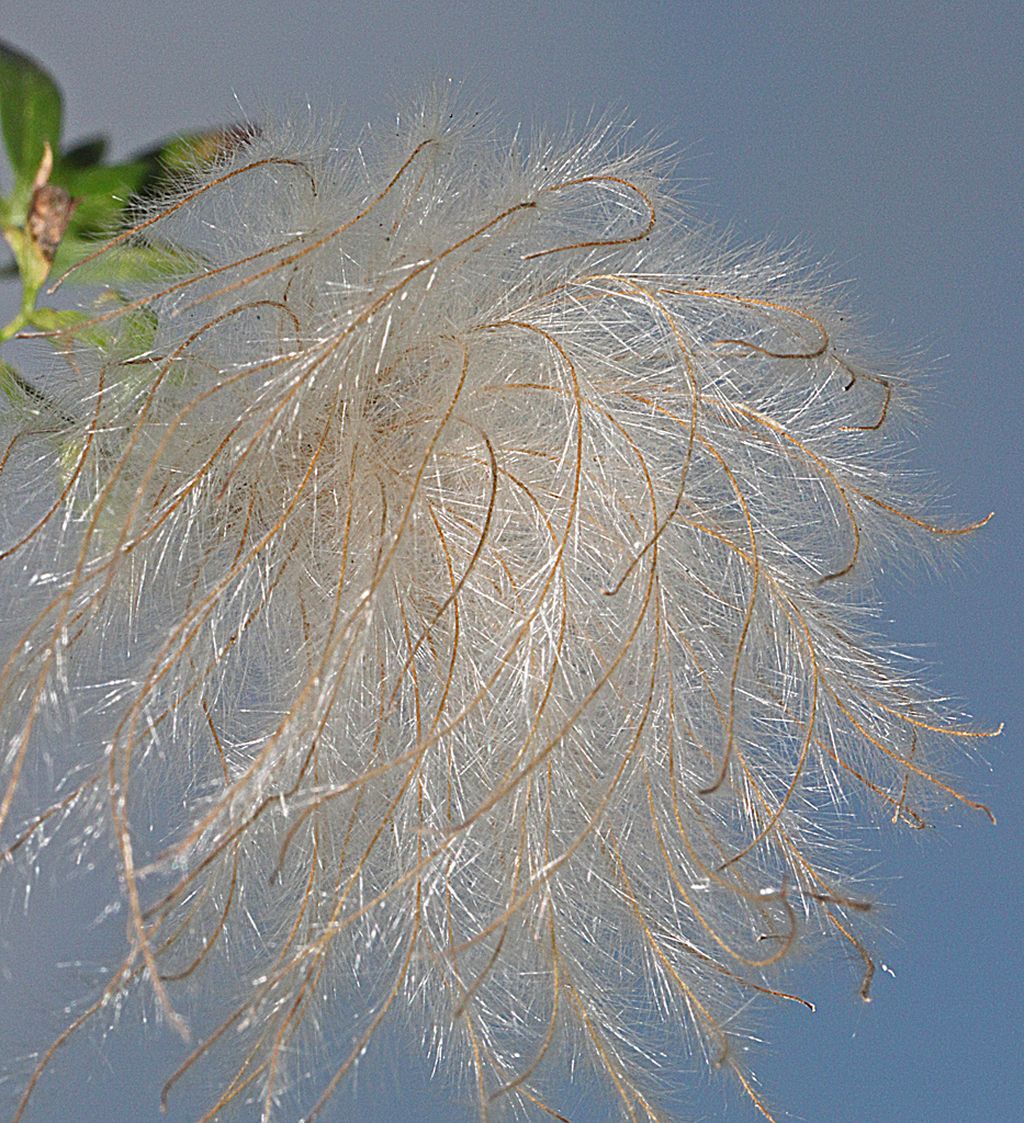
Here is a flower that appears in the fall as a bunch of wispy cotton balls hanging over bushes and trailing all over the place. It’s fairly obvious how it gets the common name Old Man’s Beard, with its flowing white tresses of feathery seedheads. I have a slightly darker version of this photo against the sky. which remind me of something like spiders from Mars. Fortunately, lighten up the shadows and lo and behold, we have downy feathers.
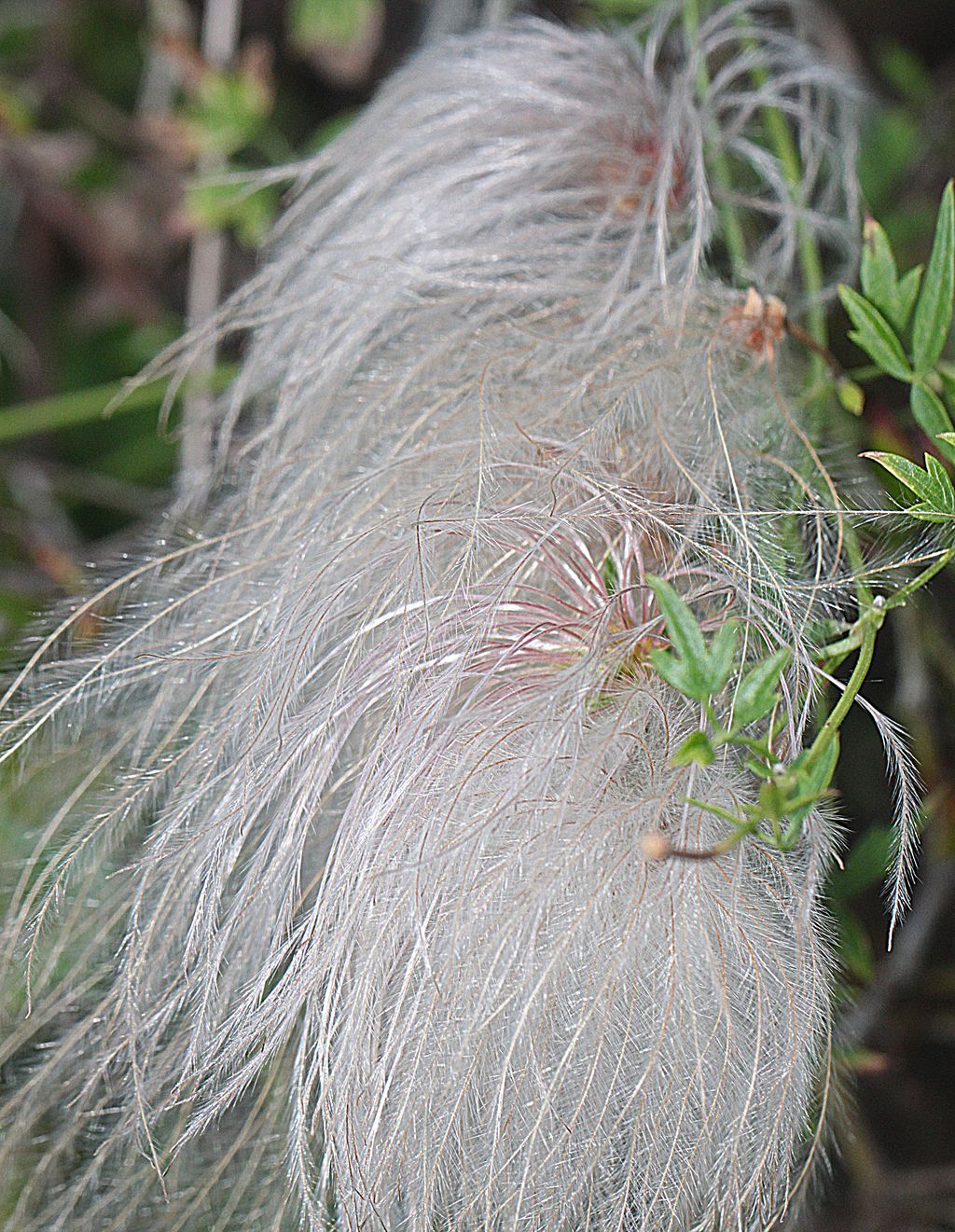
Clematis drummondi - Old Man's Beard

Clematis drummondii – Old Man’s Beard

Here’s a different angle, looking like a side view of ZZ Top.  Not so feathery from this POV, a little grizzly perhaps. note: I just looked this up on the WFC’s NPIN and found out that drummondii is spelled with two i’s. Also that it’s called Texas Virgin’s Bower

Aster oblongifolium hosting fiery nectar feeder

Hylephila phyleus (male) - Fiery Skipper on Fall Aster

Hylephila phyleus (male) – Fiery Skipper on Fall Aster

Here’s a busy little Fiery Skipper blending in with the similarly colored central flower blossoms of the fall aster. I’ve been busy resurrecting a different website and other such things and haven’t updated this site for some time.

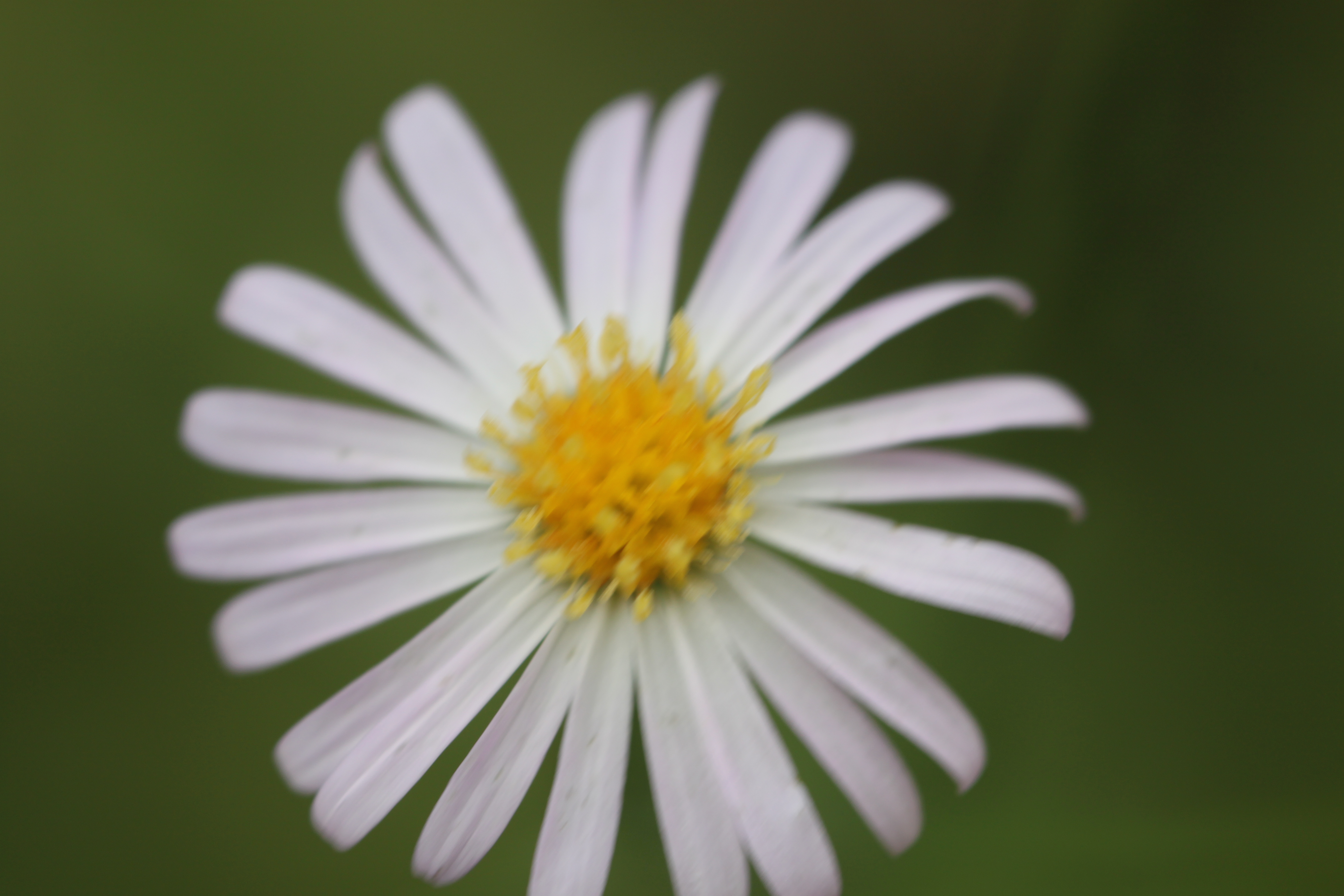
Here’s another aster that has volunteered to appear in  my yard and seems to be either a Prairie Fleabane out of season (not unheard of in this year of strangely out of season bloomers.)  It looks to me to be a hierba del marranoAster subulatus possibly  or aster subulaus. The key identifier is the blush of purple … I seem to have noticed elsewhere that “baby’s breath” is another common name…

white flower 10-29-2012

white flower 10-29-2012

Aster subulatus possibly

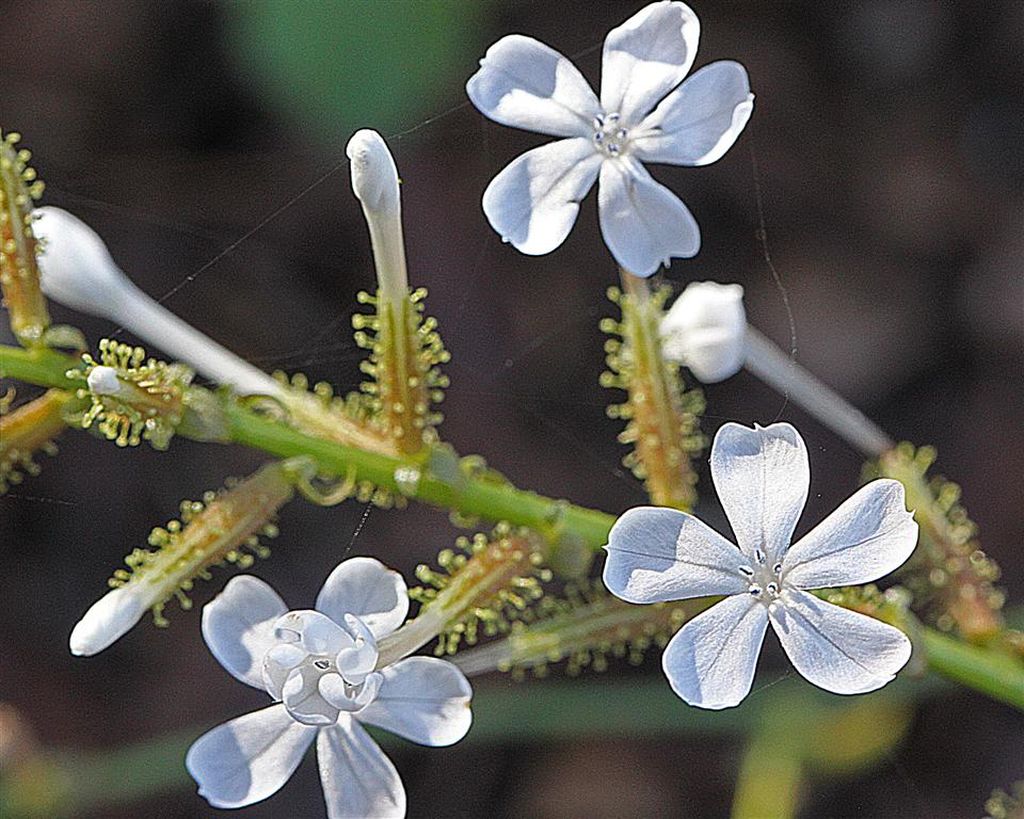
And from October 29, and a trip to South Austin to the roadway around the Lady Bird Johnson Wildflower Center, comes this picture of an  unidentified white flower that  i haven’t been  able to identify using the WFC’s online database. I’ve asked some folks but no one else seems to know either. I will be checking The Weeds OF The West and Toxic Plants Of Texas to see if there’s a match there…and the search for knowledge goes on.

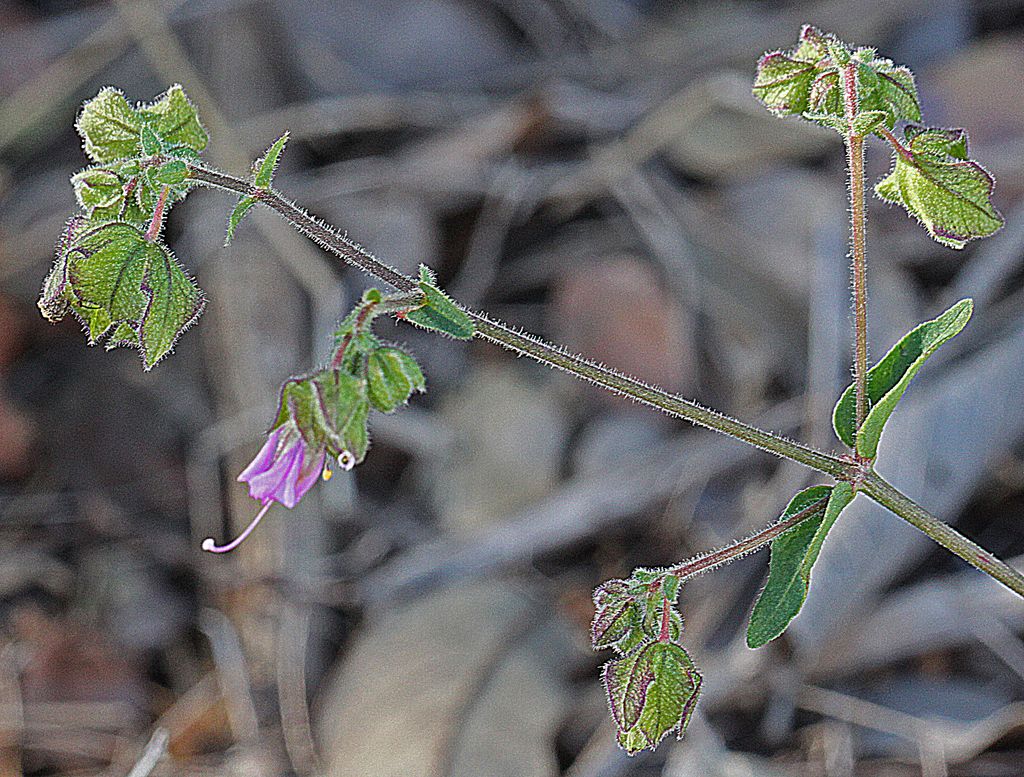
And finally, since we are displaying our ignorance and searching for knowledge, here’s another unidentified flower from the roadside next to the closed on Mondays LBJ WFC – it does appear to be some sort of mallow to me, but so far no luck in figuring out each one. Oh well… tomorrow’s another day, or, based on the time zone in which this is being written, tomorrow is here, but the world is waiting for the sun to rise and I am waiting to sleep, perhaps to dream…

unknown flower at WFC

unknown flower at WFC

Symphyotrichum subulatum – Hierba del Marrano

Symphyotricum subulatum - Hierba del Marrano

Symphyotricum subulatum – Hierba del Marrano


This flower can easily be mistaken for Prairie Fleabane. The main difference is the bloom period, which is July to November according to Enquist for this plant and February to May for Prairie Fleabane. In my yard it has appeared along the edge of a mass planting of Salvia farinacea which accounts for the wet,low place context in which it is usually found. Nursery grown fleabane is probably available at the Wildflower Center annual Fall Sale which ends today (October 14).    

Desmanthus illinoensis – Illinois Bundleflower

Desmanthus illinoensis - Illinonis Bundleflower

Desmanthus illinoensis – Illinonis Bundleflower


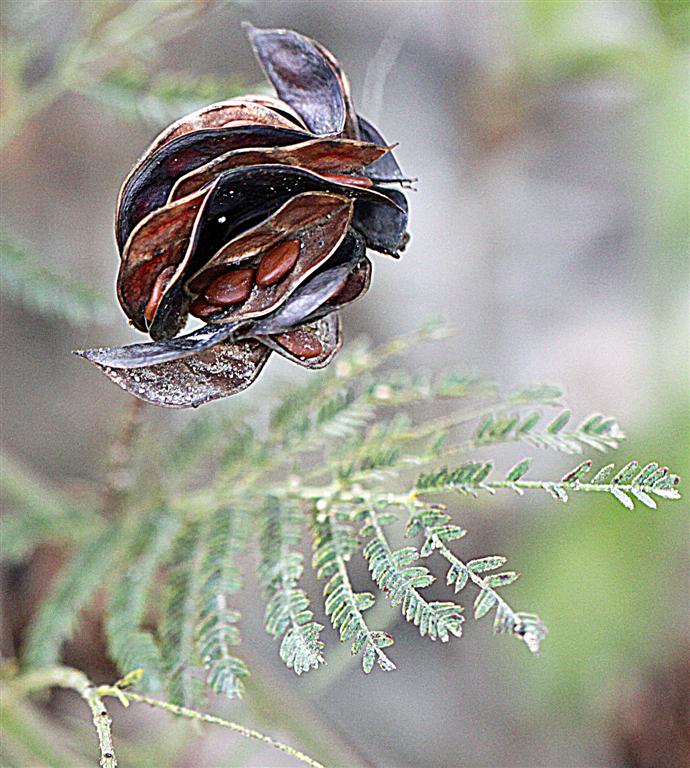
Another shot from Lake Granger/Taylor Park back in mid-July, this time from the shoreline, of the seedpod of the Illinois Bundleflower.

Since the Desmanthus illinoensis usually blooms in May and June, we saw none of the little creamy white flowers, and the seed pods had already turned from green to black.  The leaves have been described as almost fernlike – decide for yourself. Together, they  are a distinctive combination that should be easy to recognize in the field.

Convolvulus equitans – Texas Bindweed

Convolvulus equitans - Texas Bindweed

Convolvulus equitans – Texas Bindweed

Back to flowering plants, this time a small vine that grows close to the ground and has fairly small flowers which are less than a inch and a half  across, if that much. A member of the Morning Glory family, it resembles other members of the family.  Its leaves are distinctive as seen in this photo just above the blossom. It likes partial shade and is in general easy to overlook.

Danaus plexippus – Monarch Butterfly

Danaus plexippus - Monarch

Danaus plexippus – Monarch Butterfly

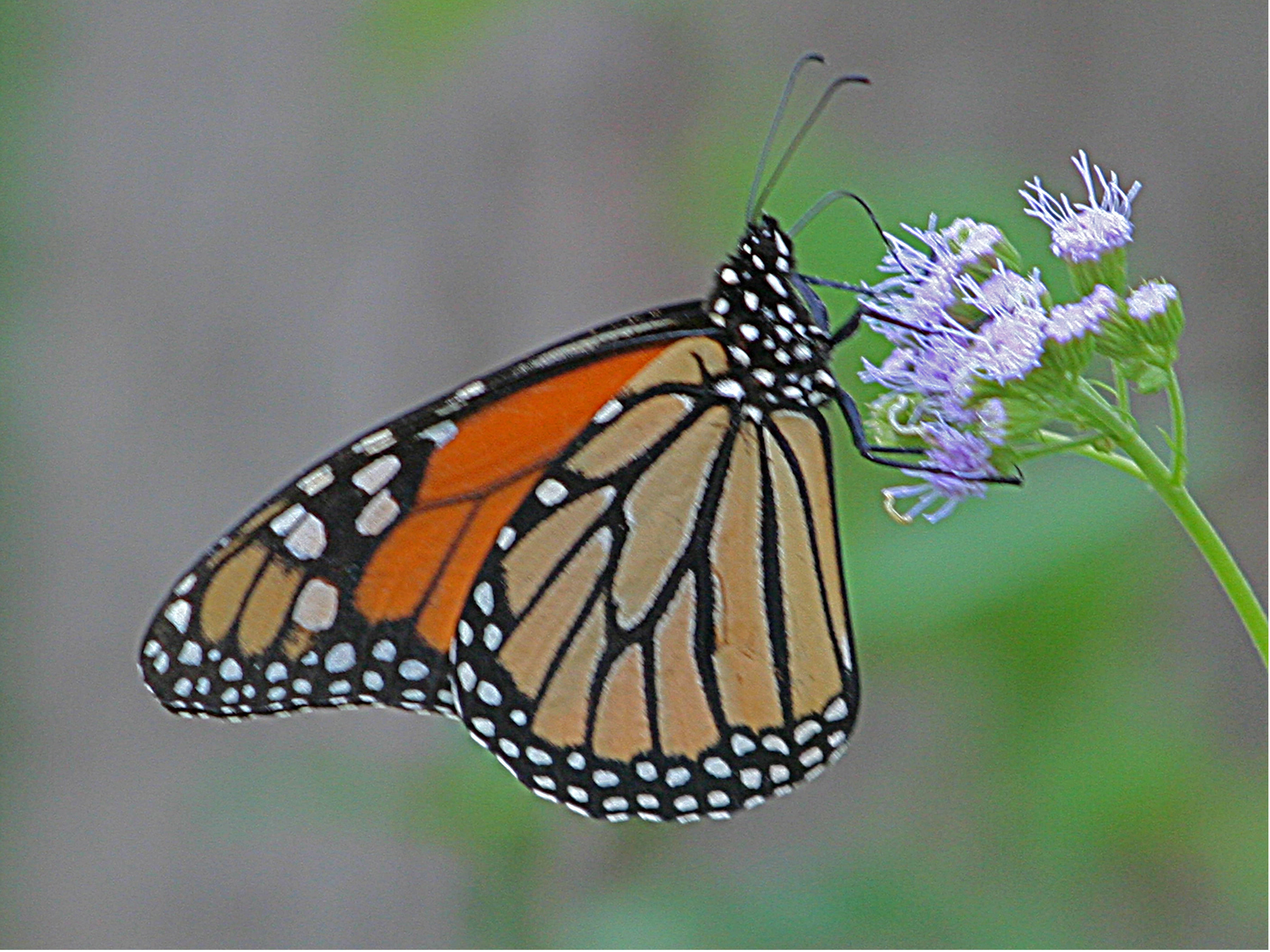
After posting photos of  Monarch mimic Viceroy Butterfly and the Queen Butterfly, it seems only appropriate to post the iconic Monarch Butterfly. if only to distinguish among them.

In Central Texas, both Monarchs and Queens can be found hovering over and feeding on Gregg Mistflower Conoclinium Greggii, shown here alongside the Monarch.  Of course, while Queen can be found here in the middle of July and August,  Monarchs tend to hang in Ohio and Canada until maybe September and October. This particular photo was taken in May a few years ago, probably a second generation new hatched, as Monarchs tend to clear out of Central Texas by May.

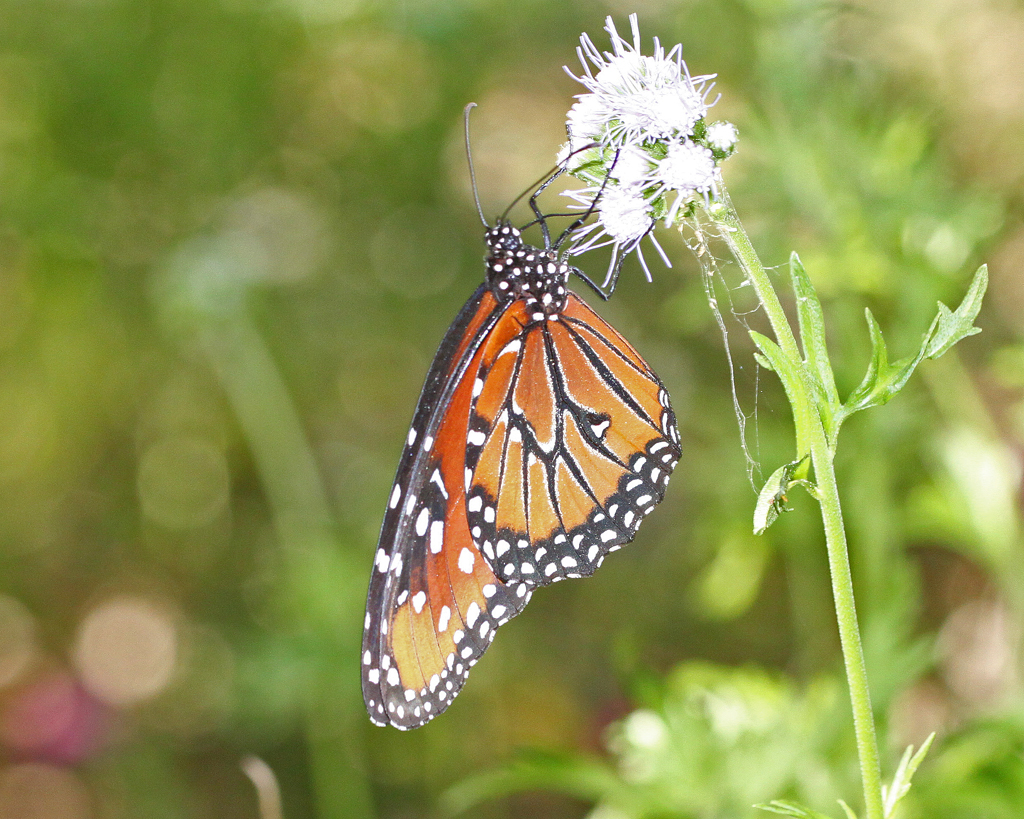
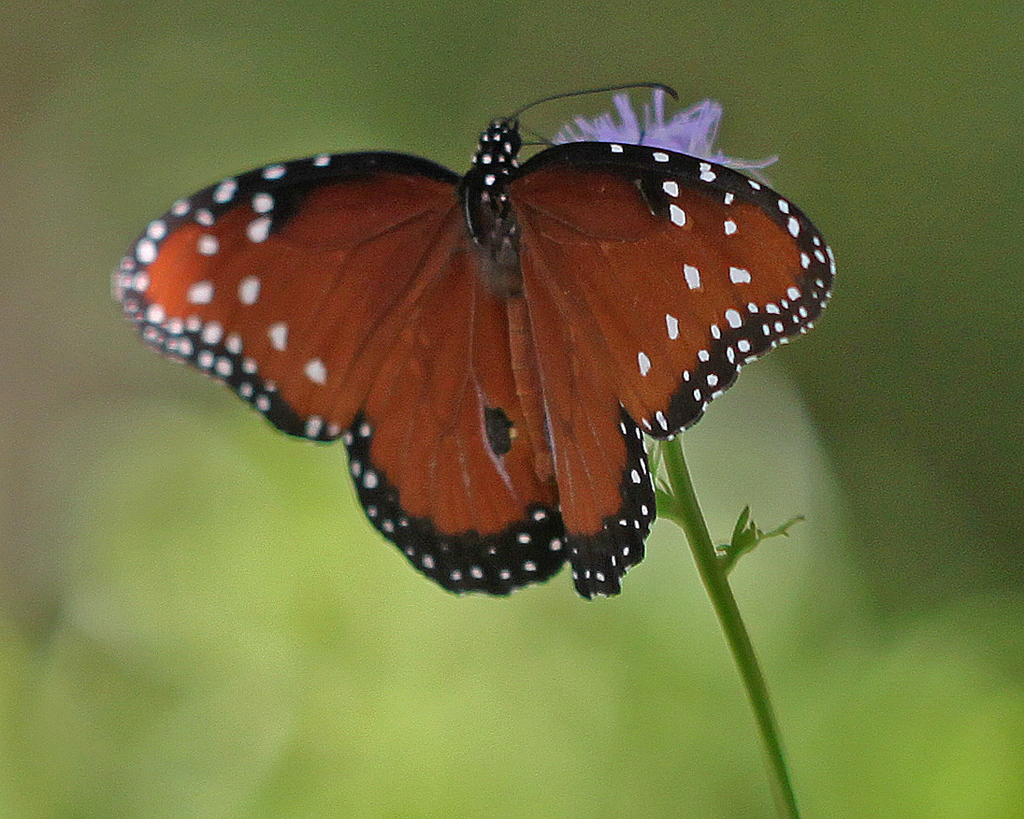
Around October, it would be helpful to be able to distinguish between the Monarch and the Queen. One thing is size – Monarchs tend to be larger.  With folded wings, the Monarch has a much lighter orange on its hindwing, while the Queen’s orange is much more saturated. On the upper wing,  the Monarch continues the “stained-glass” like pattern of black lines separating panels of orange, while the Queen has no lines. When the wings are opened, the Queen lacks any lines, with a solid orange, while the Monarch has the same pattern on both sides of its wings. And of course, the Viceroy has the horizontal line across the hindwing and is smaller than the monarch.

Queen Butterfly – Danaus gilippus

Queen Butterfly - Danaus gillippus

Queen Butterfly – Danaus gillippus

In contrast  to the Viceroy Butterfly that was shot 2 weeks ago, this Queen Butterfly was located in my front yard just  morning. You can see in this view the loose arrangement of white dots across the top of the wing and the lack of the horizontal black line across the hindwing. It isn’t very noticeable, but part of the “black spot” on the lower wing can be seen with a white dot in the middle of it.

The black spotwhich is more vixible in this other picture with spread wings, is used to attract members of the oppsoite sex.   Note also that when it spreads its wings out that the inner side of the wing doesn’t have the mosaic-like   “staned glass” effect of the outer wings disappears.

Queen Butterfly- Danaus gilippus

Queen Butterfly- Danaus gilippus

Viceroy Butterfly – Limenitis archippus

Viceroy Butterfly - Limenitis archippus

Viceroy Butterfly – Limenitis archippus

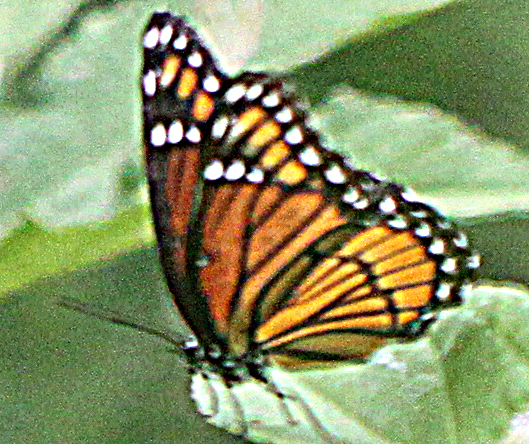
The first tip-off that this might not be a Monarch Butterfly was the size – it wasn’t nearly as large as a Monarch usually is. And it wasn’t a Queen – they have a looser arrangement of spots and a dark spot near the tail. The clincher was the black line  crossing the hind wing in the lower right hand corner of the picture. Sure enough, a Viceroy! Though not an endangered species, they are not seen nearly as often as the Monarch and Queen. And another thing, Monarchs are not seen in Williamson County in mid-July… In fact, the Butterflies and Moths of North America website at http://www.butterfliesandmoths.org/checklists?species_type=All&tid=3013 doesn’t even list the Viceroy among the confirmed sightings for Williamson County. Quite the feather in the cap for our little field trip party. Too bad I didn’t have a telephoto lens with me at the time…

Lygodesmia texana – Skeleton-Plant

Lygodesmia texana - Skeleton-Plant

Lygodesmia texana – Skeleton-Plant

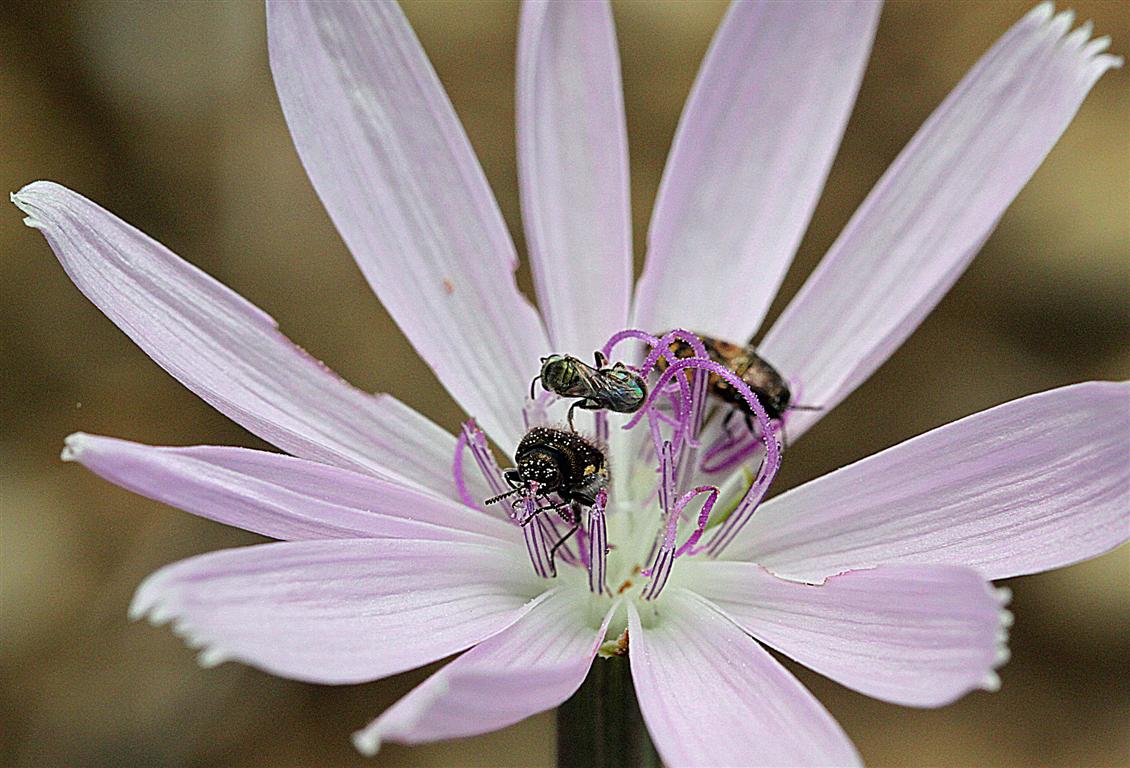
The Skeleton Plant gets its common name from the fact that it has little in the way of foliage, so its stem appears to be the bones of a skeleton-plant. Or so one would guess. This particular shot includes three – count em, three – different types of insects clustered about the flower.  Usually one has trouble getting one insect to stay still long enough to get a shot of it, but these three amigos went about their business with no apparent concern for each others’ presence on the same blossom. It usually blooms throughout the Spring and Summer (April through August), so at least that part of the picture is nothing unusual. This flower is a bit on the pale side, since the flowers usually range from Rose to Lavender in hue, and are often quite saturated as far as color goes. On the other hand, it has attracted three different potential pollinators (one assumes the insects might provide this service), so who are we to criticize?

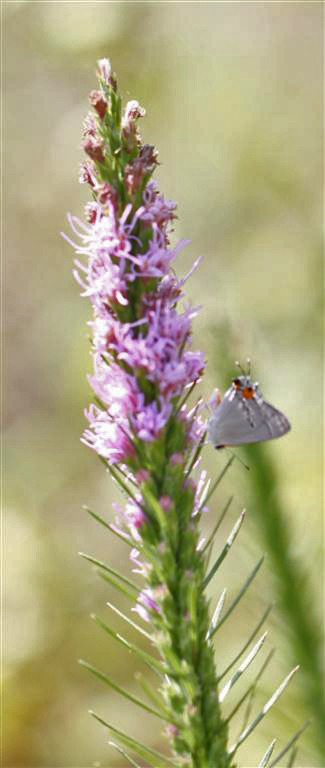
Liatris mucronata with Strymon melinus

Liatris with hairstreak

Liatris with hairstreak

Here we have a Gray Hairstreak Strymon melinus perched on the blooms of Liatris mucronata aka Gayfeather.  The Gray Hairstreak covers much of North America and as far south as Venezuela. It is distinguished by the red spot on its hindwing. One interesting thing about this butterfly is that it bobs its hindquarters up and down while the head remains fairly still, sucking nectar from the flowers. Click on the image anf look closely at the larger image with more detail and you’ll see what I am talking about. This picture was taken July14 at Taylor Park near Lake Granger and shows one of the few Liatris that were actually blooming at the time.