Dance, Dance, Dance

As in All I Wanna Do is post some links to research on Dance and effects on PD symptoms and other related aspects of being a living human being on the face of the planet Earth. As I was going through these, some of the titles looked familiar. If so, no biggie – if I posted the links before, and am being repetitious, “I blame it on the Parkinson’s”©. And repetition is useful in learning.

de Almeida HS, Porto F, Porretti M, Lopes G, Fiorot D, Bunn PDS, da Silva EB. Effect of Dance on Postural Control in People with Parkinson’s Disease: A Meta-Analysis Review. J Aging Phys Act. 2021 Feb 1;29(1):130-141. doi: 10.1123/japa.2019-0255. Epub 2020 Jul 31. PMID: 32736345.

 The statistically significant results of this meta-analysis indicate that dance can improve postural control in people with PD in a short period of time and therefore contribute to the prevention of falls.

Hackney ME, Earhart GM. Effects of dance on balance and gait in severe Parkinson disease: a case study. Disabil Rehabil. 2010;32(8):679-84. doi: 10.3109/09638280903247905. PMID: 20205582; PMCID: PMC2837534.

Twenty partnered tango lessons improved balance, endurance, balance confidence, and quality of life in a participant with severe PD. This is the first report of the use of dance as rehabilitation for an individual with advanced disease who primarily used a wheelchair for transportation.

Zhen, K., Zhang, S., Tao, X. et al. A systematic review and meta-analysis on effects of aerobic exercise in people with Parkinson’s disease. npj Parkinsons Dis. 8, 146 (2022). https://doi.org/10.1038/s41531-022-00418-4

Karpodini CC, Dinas PC, Angelopoulou E, Wyon MA, Haas AN, Bougiesi M, Papageorgiou SG and Koutedakis Y (2022) Rhythmic cueing, dance, resistance training, and Parkinson’s disease: A systematic review and meta-analysis. Front.Neurol.13:875178.doi:10.3389/fneur.2022.875178

Rhythmic cueing, dance, or RT positively affect the examined outcomes, with rhythmic cueing to be associated with three outcomes (Gait, Stride, and UPDRS-III), dance with three outcomes (TUG, Stride, and UPDRS-III), and RT with two outcomes (TUG and PDQ-39). Subgroup analyses confirmed the beneficial effects of these forms of exercise. Clinicians should entertain the idea of more holistic exercise protocols aiming at improving PD manifestations.

Overall, the reviewed evidence demonstrated that dance can improve motor impairments, specifically balance and motor symptom severity in individuals with mild to moderate PD, and that more research is needed to determine its effects on non-motor symptoms and QOL

Ismail, S.R., Lee, S.W.H., Merom, D. et al. Evidence of disease severity, cognitive and physical outcomes of dance interventions for persons with Parkinson’s Disease: a systematic review and meta-analysis. BMC Geriatr 21, 503 (2021). https://doi.org/10.1186/s12877-021-02446-w

Although certainty of evidence was low, our review suggests that dance intervention modestly reduced motor disease severity and improved certain aspects of balance, while there is insufficient evidence on all other outcomes. The wide variety of dance intervention types and outcome assessed diluted the strength of the evidence base on the effectiveness of dance in people with PD.

It is getting close to my bedtime, so let me just leave a few titles as links in order to expedite this.

Dance for Chronic Pain Conditions: A Systematic Review

Dance for neuroplasticity: A descriptive systematic review

Physiotherapy management of Parkinson’s disease

and now it’s waay past my meds time, and my errors have increased, so time to put this blog post to bed.

###

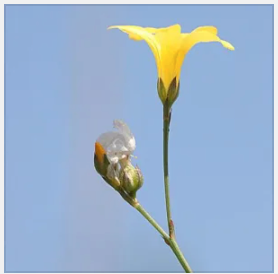
Agalinis species found on my way to cast my ballot . . .

Agalinis strictifolia

November 2nd, 2021, was a primary election day where I live. I decided to carry my camera in order to get some better photos of the first species shown below. Good enough for positive identification, if nothing else. On the other side of the draw, along the actual hike and dog walk bathroom trail, found a different set of Agalinis species. Plus other stuff, which I might post later. The Agalinis species are also known by the common name of “False Foxgloves” due to their resemblance to the “True” Foxgloves, one might suppose.

Agalinis in bloom and gone to seed on Election day:

Agalinis heterophylla

Agalinis heterophylla

and, not so far away,  Agalinis strictifolia:

Agalinis strictifolia

Agalinis sstrictifolia

I had a difficult time making the correct identification,  but thanks to the good-hearted folks on iNaturalist.org. I was able to get through my confusion and agree to the IDs they made from my numerous photos. Next year, I won’t wait until November to look for these. And hopefully, will be able to identify which Agalinis is which, using the field guides and other materials available.

###

Don’t stop moving to the music

Neither of these articles addesses Parkinson’s Disease, buut what the heck, I’ll report on them anyway.

music therapy in the schools

Basically, the abstract says that music therapists in the schools do a lot of good for a lot of kids.

and another abstract, this one about dance:

Effect of dance therapies on motor-cognitive dual-task performance in middle-aged and older adults: a systematic review and meta-analysis

Purpose: To systematically review the effectiveness of dance-based programs to improve motor-cognitive dual-task performance in middle-aged and older adults.

Materials and methods: Five scientific databases were selected Ninety-one articles were found in the electronic databases. Fourteen articles fulfilled all inclusion and exclusion criteria…

Results: All the studies had an acceptable methodological quality. Dance-based interventions had a duration of 8–52 weeks, 1–3 sessions per week, with sessions lasting 40–90 min. According to the overall effect size, dance-based interventions significantly improved dual-task performance (−0.48 with a 95% confidence interval from −0.88 to −0.08).

Conclusions: Dance-based intervention programs may be effective at improving the performance on motor-cognitive dual-task in middle-aged and older adults. Apart from the effects on the cognitive Time Up and Go test, dance interventions may also improve speed walking with a cognitive task. All these conclusions must be taken with caution due to the heterogeneity and the small number of articles. Future research can be developed to increase the knowledge on these issues.

Alvaro Murillo-Garcia, Santos Villafaina, Daniel Collado-Mateo, Juan Luis Leon-Llamas & Narcis Gusi (2020) Effect of dance therapies on motor-cognitive dual-task performance in middle-aged and older adults: a systematic review and meta-analysis, Disability and Rehabilitation, DOI: 10.1080/09638288.2020.1735537

A study on the feasibility of high intensity interval training for PD people

High Intensity Interval Training was conducted at a European gym called Speedflex, and one of the researchers was a former employee of the company. However, they do seem to have tried to be transparent and the company did not have any input or control over the design.

High-intensity interval training in people with Parkinson’s disease: A randomised, controlled feasibility trial

No significant improvements in cardiac output, cognitive function or quality of life were seen

  • High-intensity interval training appears to be feasible and acceptable in people with early to mid-stage Parkinson’s disease
  • Patient were able to consistently exercise at greater than 85% of their maximal heart rate across the 12 week intervention
  • Significant improvements in cardiorespiratory fitness were seen across the intervention period


back to square one

Basic clinical features do not predict dopamine transporterbinding in idiopathic REM behavior disorder 

REM sleep behavior disorder (RBD) is strongly associated with development of Parkinson’s Disease and otherα-synuclein-relateddisorders. Dopamine transporter (DAT) binding deficit predicts conversion toα-synuclein-related disorders in individuals with RBD.In turn, identifying which individuals with RBD have the highest likelihood of having abnormal DAT binding would be useful. Theobjective of this analysis was to examine if there are basic clinical predictors of DAT deficit in RBD. Participants referred for inclusionin the RBD cohort of the Parkinson Progression Markers Initiative were included. Assessments at the screening visit including DATSPECT imaging, physical examination, cognitive function screen, and questionnaire-based non-motor assessment. The group withDAT binding deficit (n=49) was compared to those without (n=26). There were no significant differences in demographic orclinical features between the two groups. When recruiting RBD cohorts enriched for high risk of neurodegenerative disorders, ourdata support the need for objective biomarker assessments.npj Parkinson’s Disease (2019) 5:2 ; https://doi.org/10.1038/s41531-018-0073-

A few good links

Biorxiv .    

Biorix is an open access repository for pre-print articles, hosted by the Cold Spring Harbor Laboratory  The above link is a search for articles related to parkinson’s Disease, but there are many other fields covered. Their motto or subtitle is “Advancing the frontiers of biology through research & education.”

The Science of Parkinson’s blog

The Science of Parkinson’s is a blog run by a fellow named Simon who likes to include interesting graphics with his posts.. Also has a Facebook page, where mainly  posts link to the blog entries a they come out Facebook page

PubMed  

PubMed comprises more than 28 million citations for biomedical literature from MEDLINE, life science journals, and online books. Citations may include links to full-text content from PubMed Central and publisher web sites. If you like to read the full articles and not just the abstracts, this is the place to go: PubMed Help on getting journal articles. 

Or if you’re as lazy as I am, just choose the Open Access and last 10 years filters.

Music Training and PD

A Rationale for Muusic Training To Enhance Executive Function in Parkinson’s Disease: An Overview of the Problem

From the abstract:: “Deficits in executive functions (e.g., attention, processing speed) in patients with PD result in gait interference, deficits in emotional processing, loss of functional capacity (e.g., intellectual activity, social participation), and reduced quality of life. ” (for people with Parkinson’s Disease.

The authors note that music listening interventions can help with gait and freezing, but that the effecct of actual musical training on executive functions mentioned above is unknown.

“In piano training, fine motor finger movements activate the cerebellum and supplementary motor areas (SMA) , thereby exercising the CTC network. We hypothesize that exercising the CTC network through music training will contribute to enhanced executive functions. Previous research suggested that music training enhances cognitive performance (i.e., working memory and processing speed) in healthy adults and adults with cognitive impairments. ”

” Previous research suggested that music training enhances cognitive performance (i.e., working memory and processing speed) in healthy adults and adults with cognitive impairments. This review and rationale provides support for the use of music training to enhance cognitive outcomes in patients with Parkinson’s Disease (PD).”

The evidence revewed in the article “presents a compelling case for music training to improve executive functioning for adults with PD.

“First, music training activates the cerebellar-thalamocortical network (CTC) network providing a rerouting to activate executive functions through fine motor activity .”

The authors “hypothesize that exercising the CTC network through music training will contribute to enhanced cognitive performance.

The Movement Disorder Society (MDS) values the identification and intervention of cognitive impairment in adults with PD, and sees it as part of essential care—a need yet to be met.”

“Cognitive interventions that include repeated practice exercising the CTC network through sensorimotor integration may assist patients with PD. While research has shown that music training enhances cognitive performance (i.e., working memory and processing speed) in healthy older adults, there is a need to extend the benefits of music training to patients with PD.”

Please excuse me, time for my keyboard practice.

So now we begin again.

This blog has been on hiatus for nearly a year, bu I have some fairly decent excuses – a recurring case pf cystitis, a bunion that  was attempted by one surgeon, then after six months, found out the real reason my foot was still swollen was that the screws holding the plate waer too long and were causing irritation of the next metatarsal – so it has been 8 going on 9 months of limited mobility and limited opportunity to hit all buy the highest priorities.

Like getting to the bathroom before it’s too late, shaving and bathing every couple of days, getting dressed, getting undressed, and th elike. Slow but independent mostly.

I have started writing an essay on Moses Maimnides’ A guife for the Perplexed and willinclude it here when it is more orless complete. Basically henotes the four types of perfection that humans seek: material goods, physical perfection, social ethics, and seeking truth, or knowledge. I address these in more detail in the essay, but the bottom linr id hid: We need enough material possessions to be sa independent as possible for as long as possile, we need to stay active and physically fit enugh that we don’t cause  medical issues,  we should be ethical in our dealings with others, and we should seek the truth, which ti me means using the scientific mehtod to determine which treatments work best for which patients, what causes different illnesses, and how “fuzzy” logic might help us to get closer to the truth in some cases than strict categorical thinking..

Maimonides clearly though that he last of these was the “highest” form of perfectiontobe sough sfter, while I argue that a balanceamongst allfour of these elements is best.

That will come later. For I havemiles to go befoe I go to sleep and will not go gently into that good night anytime soon, to plagiarize a couple of famous dead poets..

Music research: a scale to get beyond the non-musician/musician binary classification

This is just a reference to an article and its abstract, nothing more, nothing less.

Multidimensional measurement of exposure to music in childhood: Beyond the musician/non-musician dichotomy

Hugo Cogo-MoreiraAlexandra Lamont


Abstract

Much research in music psychology characterizes the music background of its participants in a dichotomous manner, labeling participants as “musicians” and “non-musicians” or professionals and non-professionals. However, this terminology is inconsistent from study to study, and even more sophisticated measures fail to accurately represent music experiences; moreover, there is no standardized measure suitable for use with younger participants. This article presents a new measure, the Exposure to Music in Childhood Inventory, for capturing the amount and type of exposure to music activities suitable for use with children. Children from public and private school, aged 5 to 13 years old (N = 1006; M = 8.36 years old, SD = 1.5 years) completed the inventory, and through a combination of exploratory and confirmatory factor analysis a two-factor solution was obtained. The first factor includes personal music listening activities, home musical environment and the influence of television and the internet; the second reflects more social, active and public elements of music-making, playing an instrument and performing. This scale is suitable for use in a wide range of future research to more accurately assess the kinds of music activities children have access to in a dimensional way, which can have a bearing on their understanding of music.


What are we going to do tonight, Brain?

Same thing we do every night, Pinkie – SING!!!

Okay, if you caught the reference to Pinkie and the Brain, you probably already like to do stuff that stimulates the neurons with witty references to arcane bits of history, pop culture, and the like. So you won’t be terribly disappointed if I caper about with just a few links to reports on and research on how singing benefits the brain and the lives of those who sing.

http://newsvote.bbc.co.uk/mpapps/pagetools/print/news.bbc.co.uk/2/hi/health/4448634.stm

How singing makes you happy  (summary article and its sources below:

Can Music provoke involuntary body responses?  Now I’ve heard everything – using music to provoke salivation!