Clematis and Milkweeds, welcome to the family…

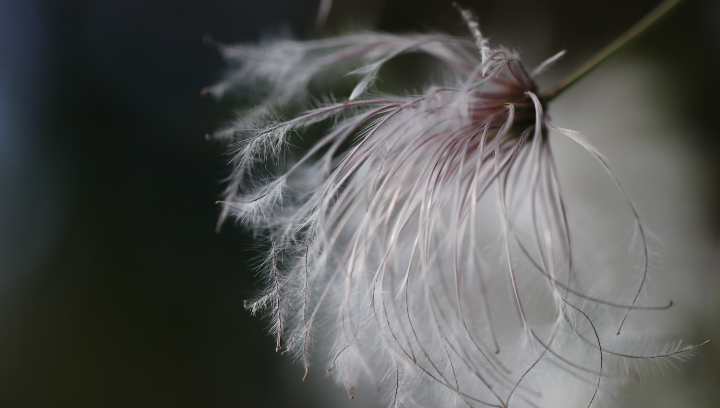
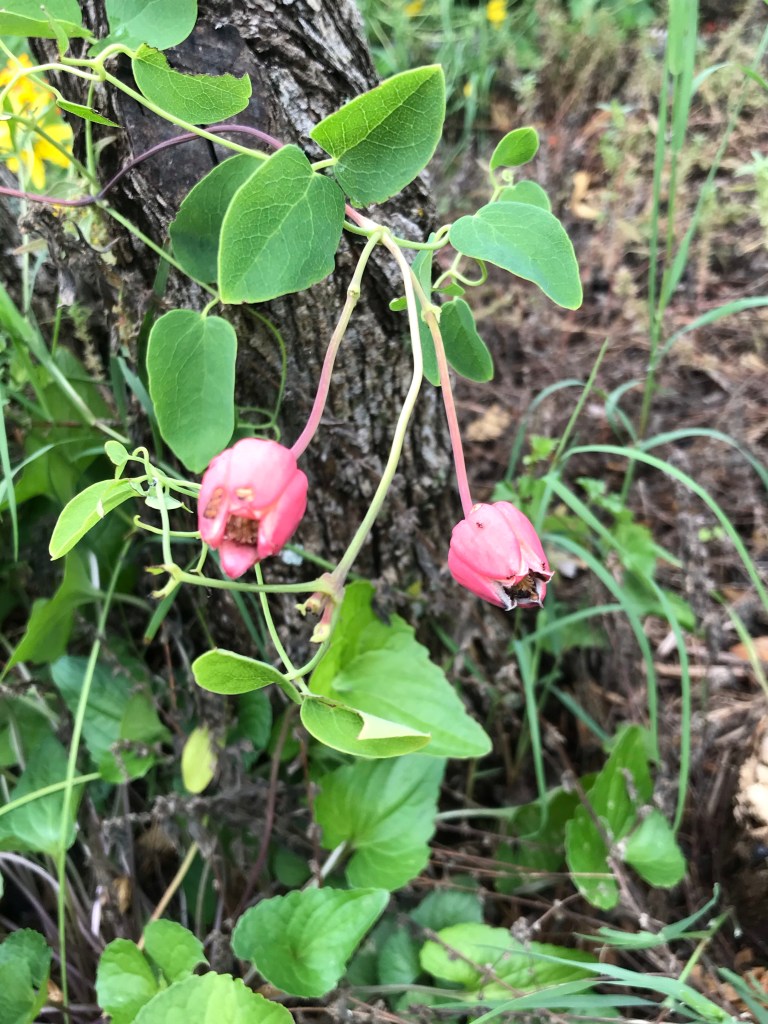
One of my favorite “flowers” is the female Clematis drummondii which is most noticeable in the late summer as the achenes turn into cascades of clouds that give it one of its common names, Old Man’s Beard. The actual flower is shown in the first photo following, the achenes in the other two:

Another favorite plant is Matelea reticulata, commonly known as Pearl Milkweed Vine, due to the “pearl” in the middle of its flower. It, too, is native to Central Texas, where I no longer reside, having “pulled up roots” to move a bit further to the North.

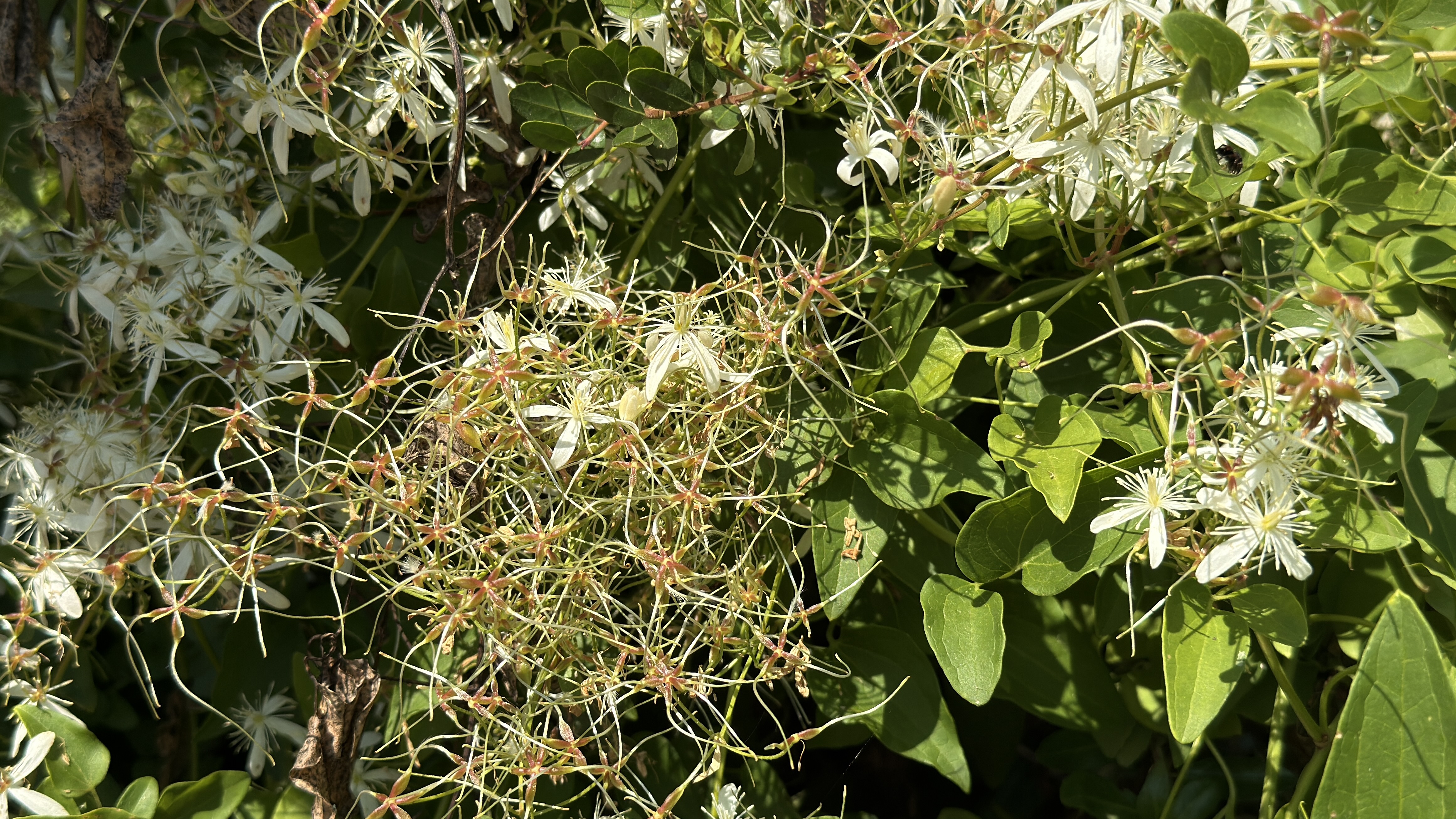
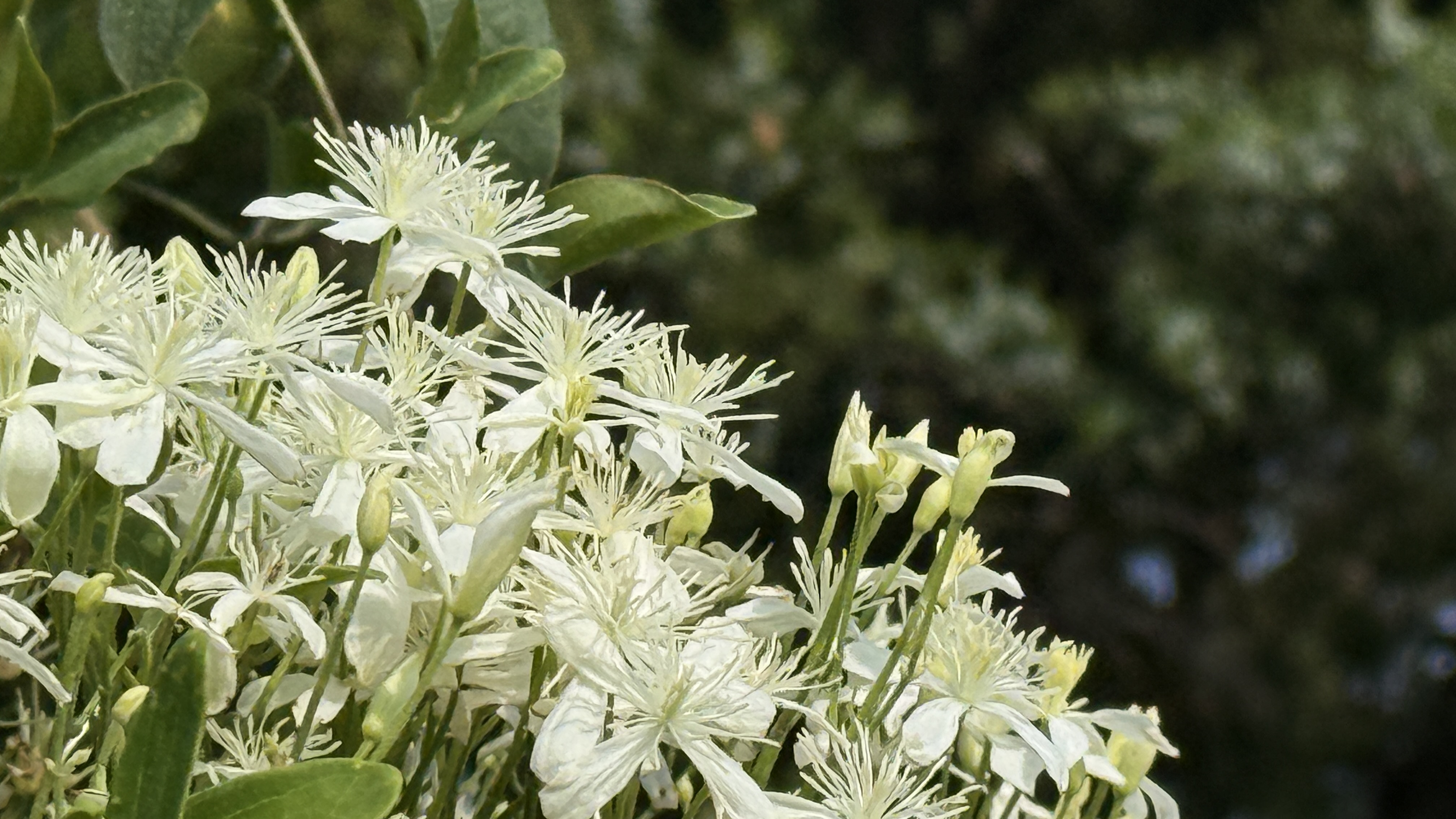
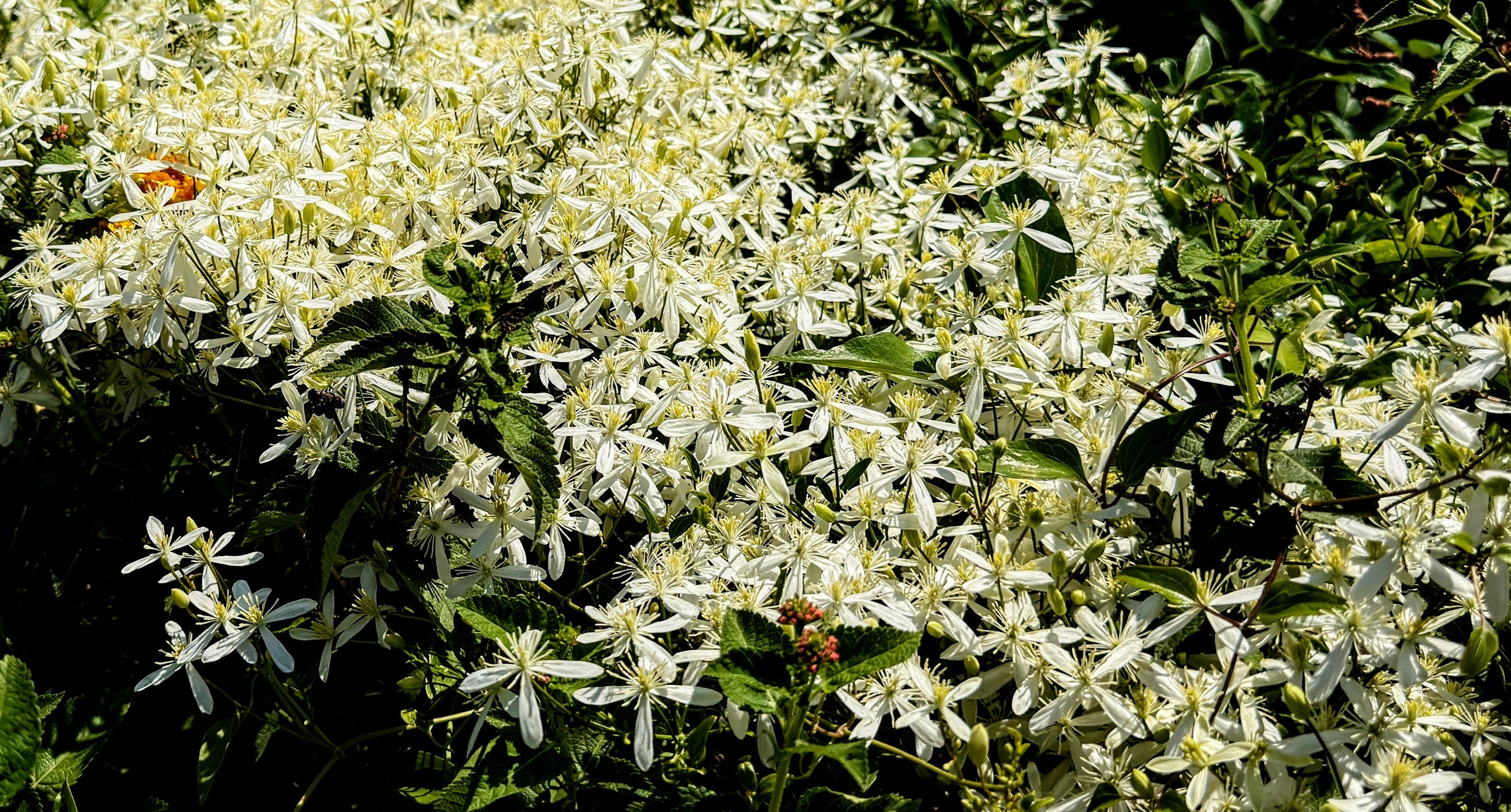
I was pleasantly surprised to find, recently, a different Clematis, native to Central Oklahoma. Clematis terniflora, or Autumn Clematis, as it’s commonly known, is smaller than its Texas cousin, but still provides striking clouds of white flowers and achenes along the roadsides and in ditches. In this case, the flowers provide the show, and the achenes are less showy than those of C. drummondii, as seen in the third photo following:
Cynanchum laeve, common name Honey Milkweed Vine, has been observed in several locations around here, notably near the airport and a few miles away. As suggested by the common name, the flowers give off a strong, sweet smell attractive to humans and pollinators alike.

While they’re not the same species one has become accustomed to, the “new” species are familiar enough to provide a sense of a welcoming environment.

###
Recent blooms, both contained and wild

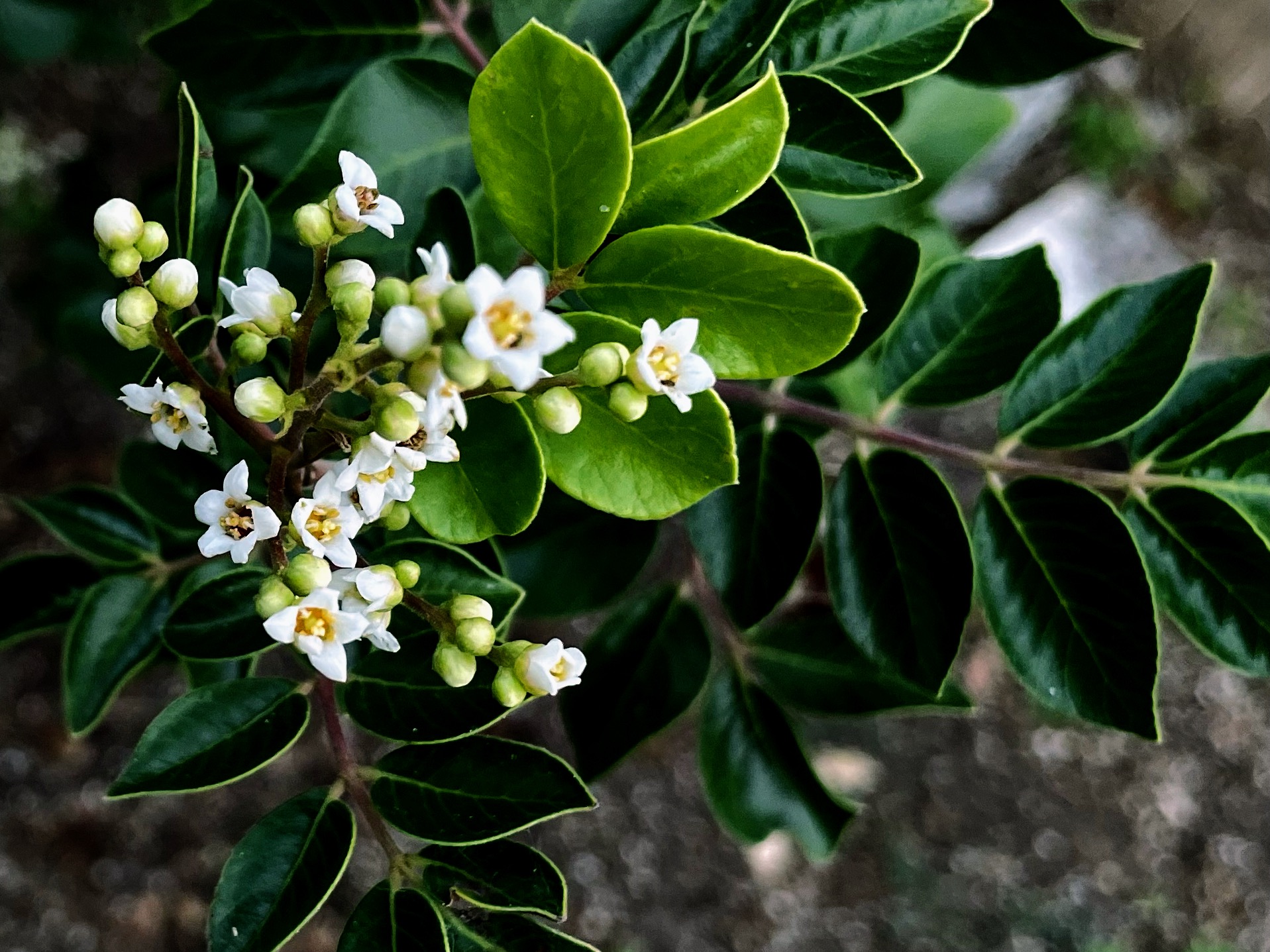
All the photos above were taken in September and October 2023, either in our yard or in the berm and greenbelt behind it. As one can tell, there was some rain during that time, enough to push up a few rain lilies, but not so much that most plants thrived.

###
Back in my own backyard…

Early June 2022 and the heat is in the “triple digits”as the meteorologists like to say in TV-land. or 39 ° Celsius, as we were told we would have converted to 50 or more years ago. Either system, hot to humans is hot.

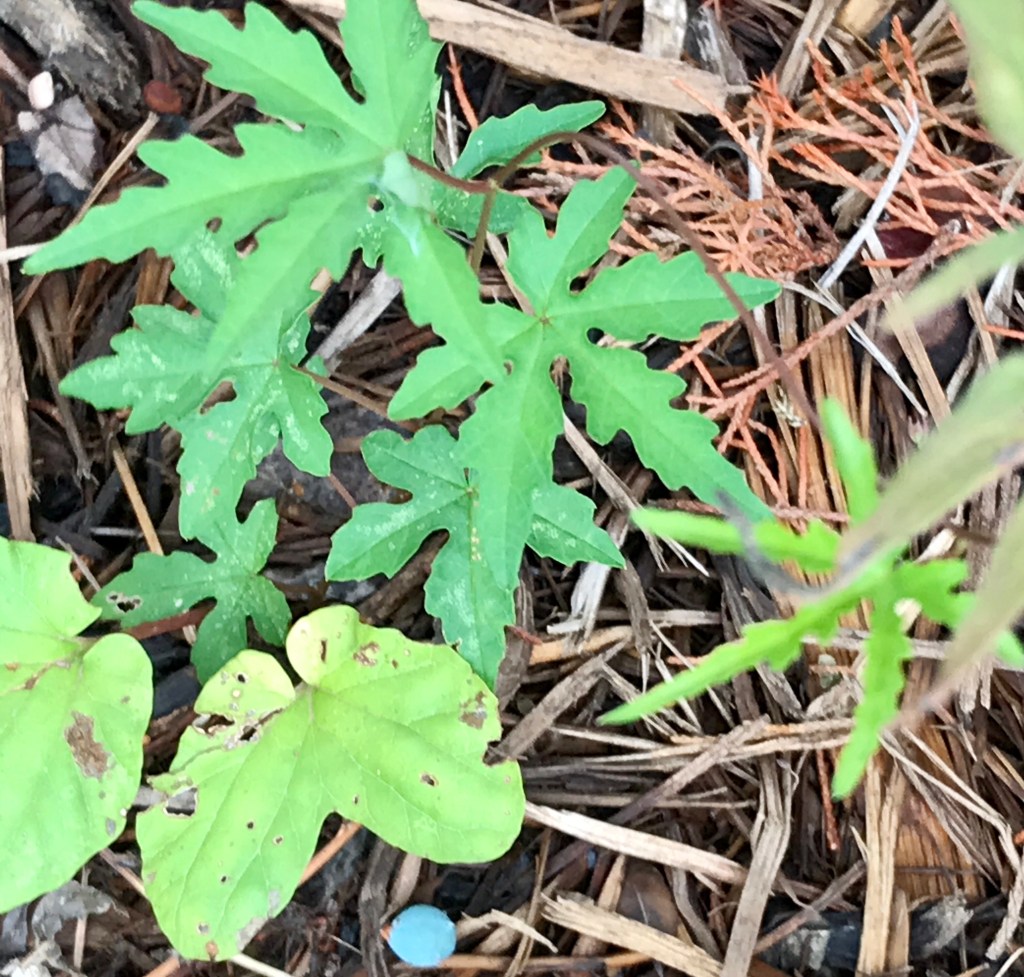
But to native plants that evolved in Central Texas for more years than Crepe Myrtle has been here, even these signs of Global Warming haven’t phased them. (Granted, I do some supplemental watering, especially of small trees for the first few years, but other plants like Passiflora incarnata grow like “weeds”).

I’ll  let the plants speak for themselves:

Those are just the photos I took on June 8, 2022, mostly in my yard. The Rain Lilies were just past the back fence (the ones in my yard had bloomed and gone to seed after the previous week’s mild spattering of rain drops).

###
What’s in bloom in December?

Just a look at the most recent shots:

Taken on December 1, 2021. Since March 27, I have seen and photographed at least one Monarch Butterfly in each of the following months in 2021. And that just doesn’t seem right…

Loss of roadside vegetation

My previous post mentioned a September set of observations – unfortunately, the observations were not posted to this blog but on Facebook. Sad to say, the situation has gotten worse – Although the native (mostly) plants  were left alone while in bloom in September, the blooms had disappeared a few. months later, and this first week of March 2021, I observed that the plants, for the most part, appeared to have been removed.  Thanks to the ongoing pandemic and my age, I try not to go out too often. but will have to go out and see if any Winecups are in evidence (there was at least one rosette in the video). Maybe take a few home to ensure the preservation of the species. The folks running City Hall don’t seem to care about preserving native plants… as far as I can tell. Oh well. Watch it and weep.

The irony of the last few slides are that they show the invasive Crepe Myrtle and Heavenly Bamboo or Nandina, used as landscaping in the property just south of. the one now being bulldozed for a parking lot and who knows what kind of business. I suspect that a similar lack of consideration for native plants, birds, and other wildlife will guide the development of this property.

#RoundRock #OldChisholmTrail #NativePlants #HabitatDestruction

Native plants are the answer…

Maybe it’s just me, but it seems to me that there are far too many crepe myrtles (Lagerstroemia sp.) in use for the good of the planet, especially for the good of wildlife in the United States.

The same could be said of other exotic plants, such as Privet or Ligustrum (Ligustrum sp.), Heavenly Bamboo (Nandina domestica),   Chinaberry (Melia azedarach), and others. Even plants native to one area might become invasive if introduced and allowed to spread in another ecoregion.

Best advice, of course, is to plant plants that are native to your ecoregion. And with Climate Change (or Climate Chaos, which seems to be a more accurate description), even plants native to one’s ecoregion might be getting squeezed out or moving further north, or moving higher up, or retreating into ecological niches (if they haven’t been paved over or bulldozed into oblivion).

img_0413

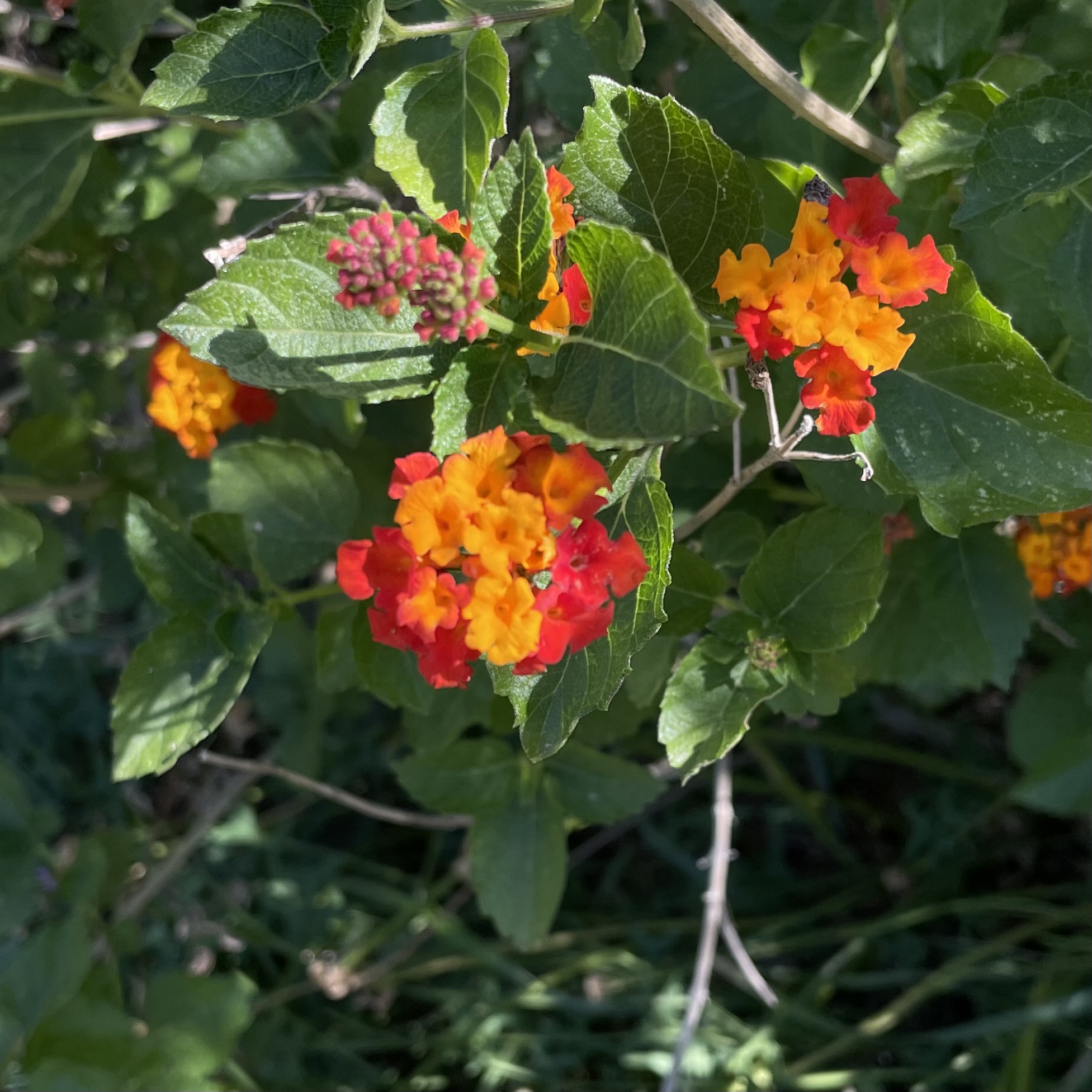
Texas Lantana (Lantana urticoides)

Take, for instance, Texas Lantana (Lantana urticoides) which can often be found, even in the “big box” stores. However, its cousin Lantana camara which is similar but has different colored flowers and somewhat different leaf texture (I am told) can also be found in those same stores which don’t offer plants grown only in the local region. So it shouldn’t have surprised me when I found several of the L. camara in the greenbelt this past fall, growing right beside what I took to be L. urticoides. And while trying to get photos of a stand of native Solidago sp., (aka Goldenrod), I chanced upon a young Chinaberry (Melia azedarach) sapling. Nearby there are several invasive Chinese pistache (Pistacia chinensis). And that’s just directly behind my house and/or my neighbors’ houses.

This, in a greenbelt that is protected because there is a cavern underneath it within which live one or two endangered species.

The conclusion is the title to this post.

PLANT GRASSES, FLOWERS, SHRUBS AND TREES THAT ARE NATIVE TO THE AREA IN WHICH YOU LIVE. NOTHING ELSE.

If you want a Crepe Myrtle in your yard, then move to Southeast Asia, or wherever it is that they’re from. And take the big-box store nurseries with you. Please. Thank you.

p.s. drove past the construction site where I had taken photos on September 23, 2020, and it appears that most of the native plants have been the subject of “brush clearing.” Don’t know for sure. Didn’t stop and inspect. Would think the Winecups might be in bloom, either now or soon.

###.

Gone to seed, fruits, or berries, mostly…

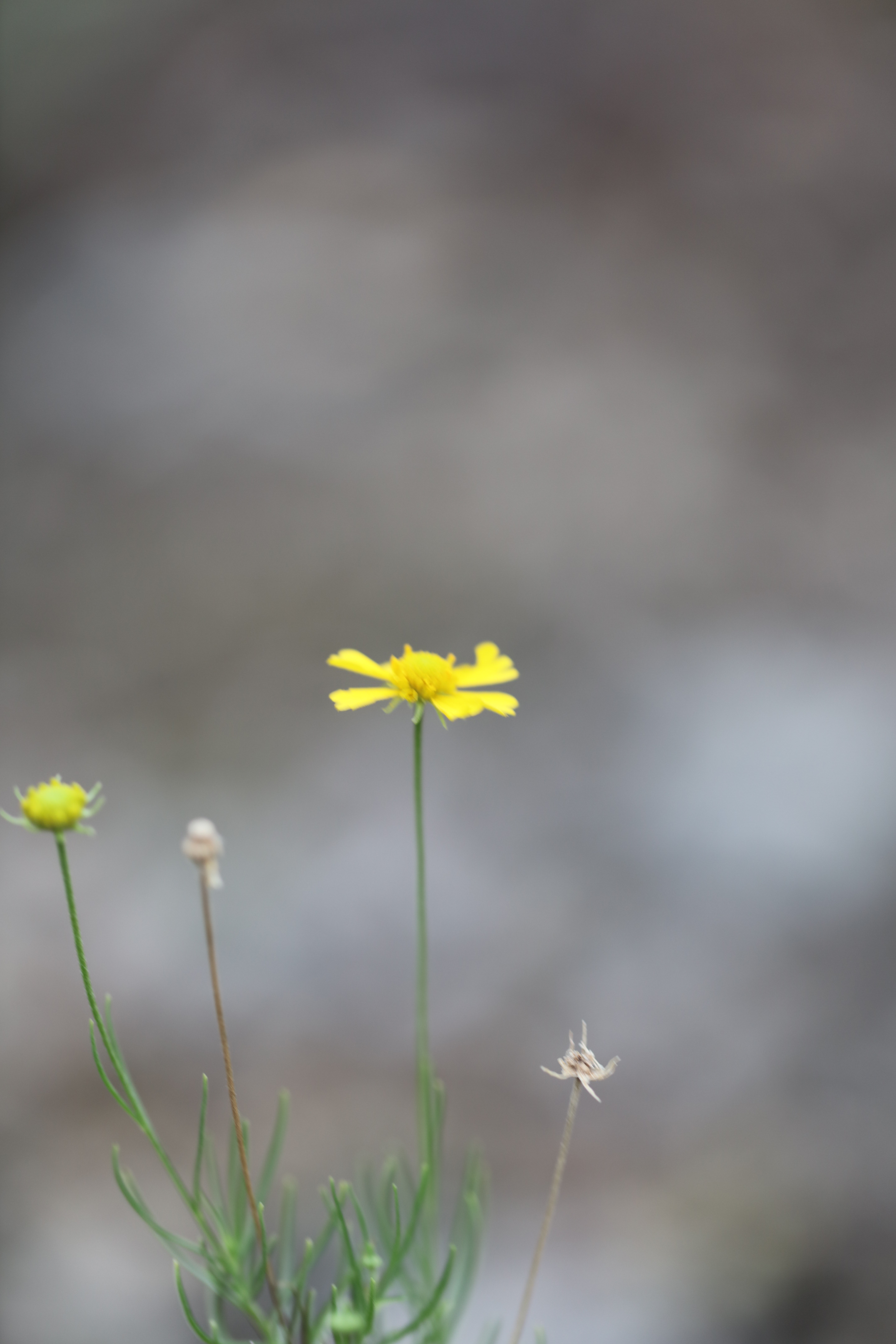
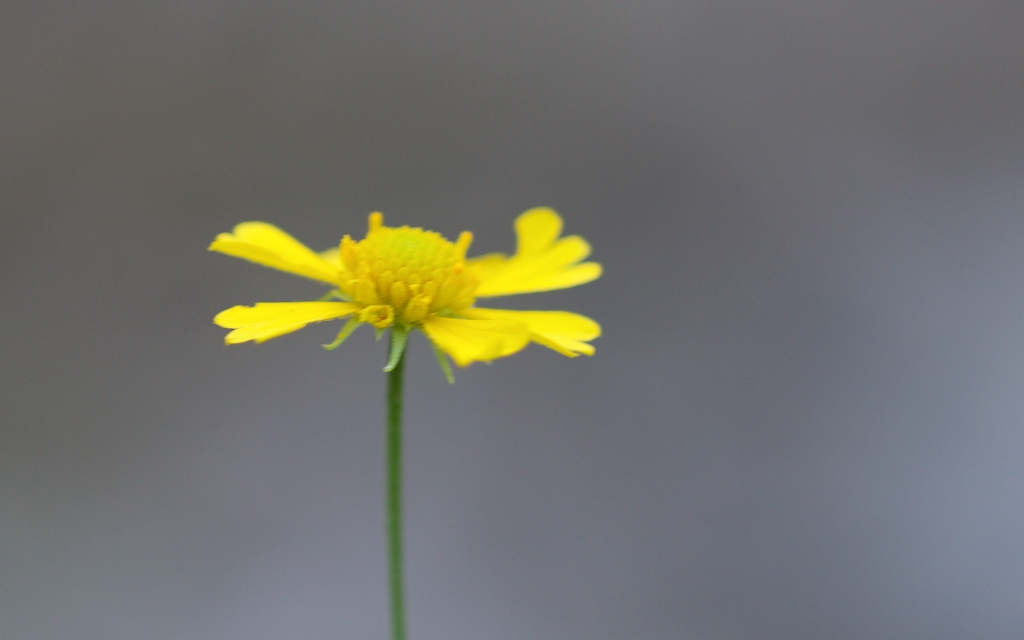
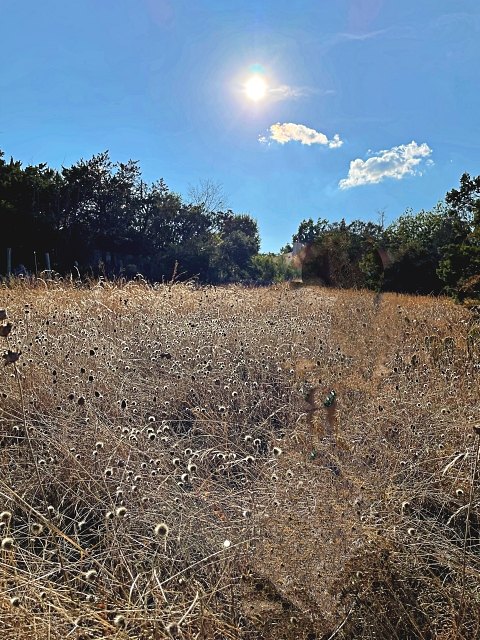
Took a walk out in the woods, in the middle of the summer, to see if the Phemeranthus calycinus aka Rock Pink, might be in bloom, since we had had several days of rain prior. No such luck. There had been at least 20 specimens in the immediate area about four years ago, and earlier this year I found one in bloom, but even the Bitterweed (Helenium amarum) seemed to be scorched, for the most part, although I did take a photo of one that wasn’t, and some grasses. (For an article describing the flower I was looking for, and some photos, see Stalking the ephemeral Rock-Pink).

The area I’ve dubbed “Lace Cactus Lane” because of its concentration of Echinocereus species, was in fairly decent condition. And a pass through the area I call “Vine Street” revealed some Pearl Milkweed Vine (Matelea reticulata) pods dried and open, as well as some Carolina Snailseed (Cocculus carolinus), starting to put out its berries. Of course, there was the usual Poison Ivy (Toxicodendron radicans), Virginia Creeper (Parthenocissus quinquefolia ) and Sevenleaf Creeper (Parthenocissus heptophylla). And I took a few shots of the Bearded Swallow-Wort vine (Cynanchum barbigerum) just to illustrate the way it braids itself along whatever is supporting it.

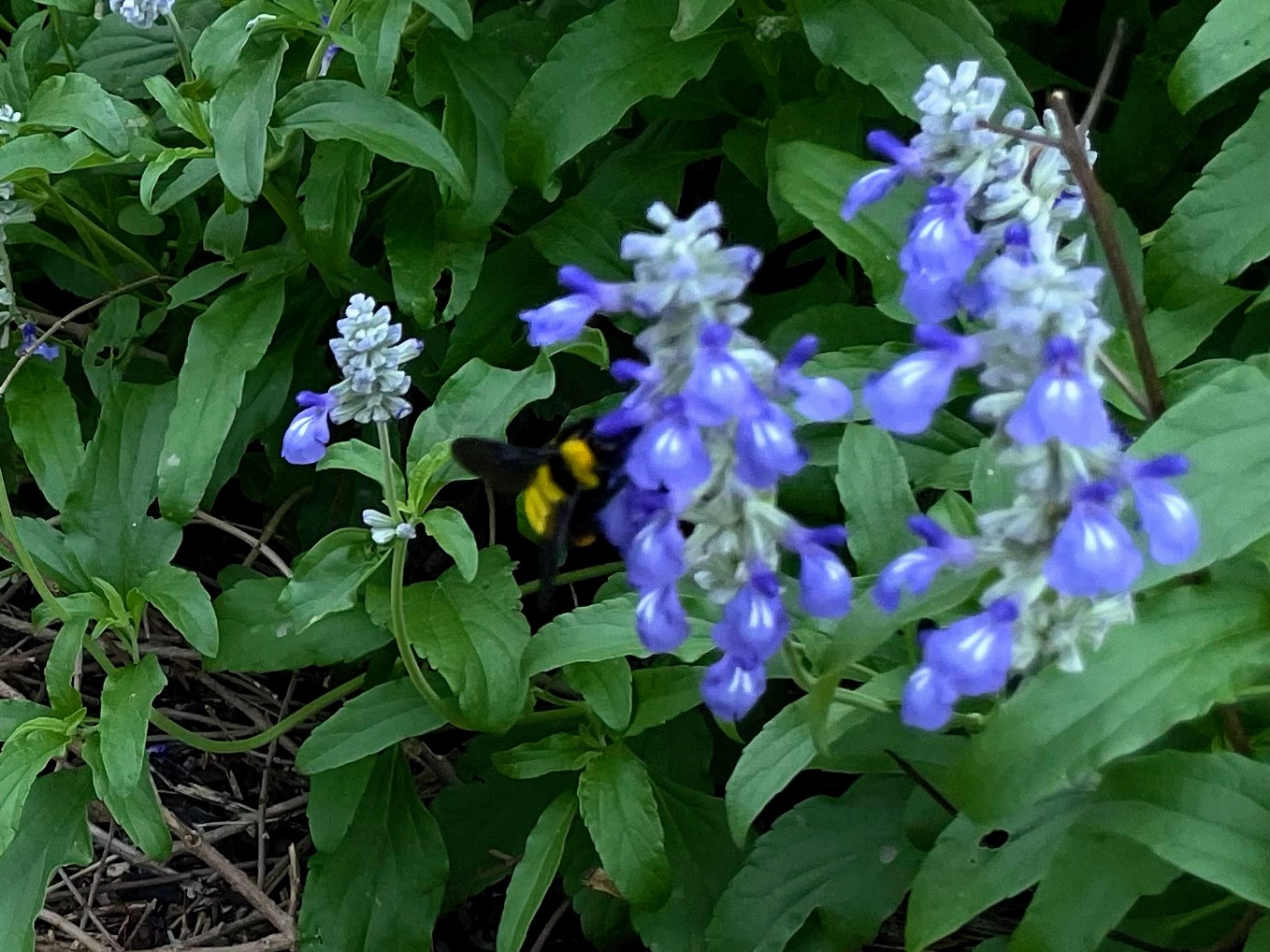
A bit closer to home, Butterflyweed (Asclepias tuberosa) were in bloom,  as were Texas Lantana (Lantana urticoides) , Apache Plume (Fallugia paradoxa), Gregg’s Mistflower (Conoclinium greggii), Mealy Blue Sage (Salvia farinacea), Skeleton-leaf Golden-eye (Viguiera stenoloba),  Four-nerve daisies (Tetraneuris sp.), Flame acanthus  (Anisacanthus quadrifidus), Autumn Sage (Salvia greggii), and Manzanilla (better known by the name Turk’s Cap, and rarely called Texas Red Mallow)(Malvaviscus arboreus var. drummondii). Even the Wild petunia (Ruellia nudiflora) has been putting out blooms lately, and the Yellow Passion Flower (Passiflora lutea) seems to have just recently finished its latest cycle.

Which leads to a mention of the life cycle of the Gulf Fritillary (Agraulis vanillae) butterflies, which have tried their best but haven’t succeeded in stripping the Passiflora vines completely this year. Given that it is safe to speculate that the suburban subdivision where I reside has little habitat for these beautiful pollinators, one can only hope that my little nursery is keeping the local population going.

A mid-Summer’s nightmare

I have seen the best plants of my eco-region driven into ghettos of greenbelts, invaded by non-native plants, poisoned with herbicides…

I see public areas, along roadways and in park areas, mowed so low that the grass is turning brown and burnt by the sun, despite sprinklers and watering, and occasional rains brought on from sub-tropical weather disturbances in the Gulf of Mexico.

I see the berm behind my house, where a stand of wildflowers in bloom had been cut down in late May while the ground was still wet, and where the native Silver Bluestem grass, which had once dominated the berm, had returned, mowed down in late July, parched and sere under the August sun. Because the contracts signed say they have to mow a certain number of times within certain calendar limits.

I have written emails to my HOA and the Municipal Utility District, and received no response. If a tree falls in the forest, or a native plant goes extinct or disappears from a region because of destruction of habitat, does it make a sound if there are no humans to hear it cry out?

And yet, life goes on.

I have seen the Clematis drummondii, with their achenes in showy white plumes, and must make a note to get out of the house for a photo safari soon, while this year’s show is still on. I have seen the Passiflora  vines and the Gulf Fritillary butterflies in their back and forth movements between fertilization, egg-laying, larvae consuming the plant, and adult butterflies dancing about. I have seen the native plants in my yard, both those intentionally planted, and those volunteers who have been recognized and protected, thrive or at least survive.

And I have seen the birds drinking from the water fountain, having been provided with plants that provide food (and insects that thrive and provide food as well), shelter, and a place to build their homes. I have seen the hummingbirds zooming about, grabbing sips of nectar from the salvias, the Texas Red Mallows, and the Flame Acanthus (though this year, I’m afraid I haven’t quick enough to focus and click on the camera quickly enough to capture one in mid-flight.

And as the globe warms, I wonder what changes I’ll be seeing in the plants that thrive in this area, and whether enough humans will start to think outside the box of “that’s the way we’ve always done it,” or “that’s the I’ve always heard it should be,” to make a dent in the greenhouse we are living in.

But enough of that. Time for some photos – some OK, some not so great, but the subject matter supersedes this one’s talents:

What’s blooming in Central Texas?

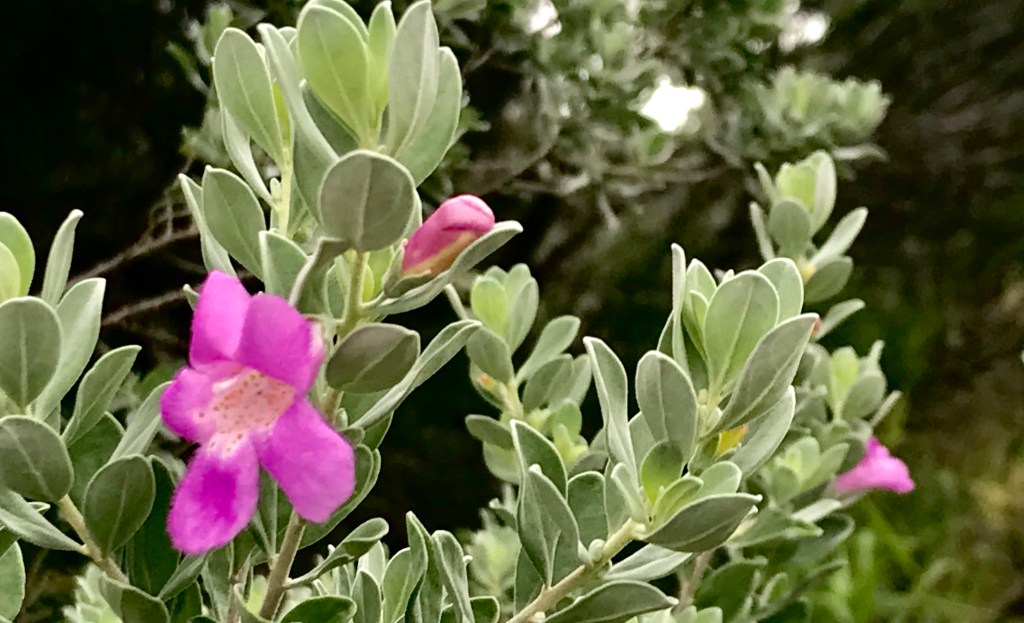
What, indeed? I’m happy to say I’ve seen a hummingbird buzzing around the Turk’s caps (Malvaviscus arboreus var. drummondii), the Tetraneuris scaposa as well as the T. scaposa var. linearifolia are in bloom, although the ones in the “nuisance strip are less lively than the ones in the one gallon pots ready to augment them. The Blackfoot Daisies (Melampodium leucanthum) are blooming, and the Cenizo or Texas Sage (Leucophyllum frutescens) bloomed for a little while, but have faded as the temperatures get into the 100s and the air has dried up. Datura (Datura wrightii) have been putting out their Angel Trumpets at night. Devil’s Claw (Proboscidea louisianica) are coming up behind the fence, along with plenty of Silverleaf nightshade (Solanum  elaeangifolium). Here are some of those mentioned, and maybe some not.

What was blooming (or not) 25 May 2020

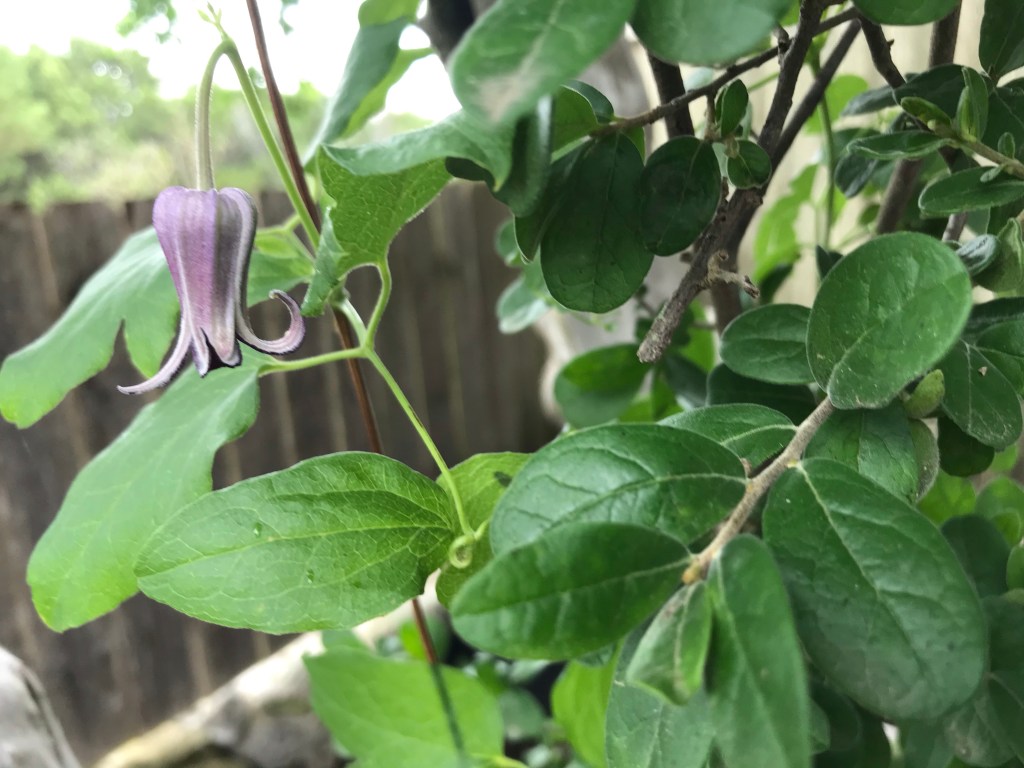
Clematis pitcheri (Purple leather flower) (cultivated)

(Posted about a year ago – edited to add the names of the plants), Went out in the yard and beyond today and captured a few items of interest. Didn’t go into the front yard because it was getting close to dinnertime.

Lantana urticoides (Texas Lantana)
Salvia farinacea (Mealy blue sage)(cultivated)
Symphyotrichum oblongifolium (Fall aster or Aromatic aster) (cultivated)
Merremia dissecta. (Alamo vine)(cultivated)(escaped from cultivation)
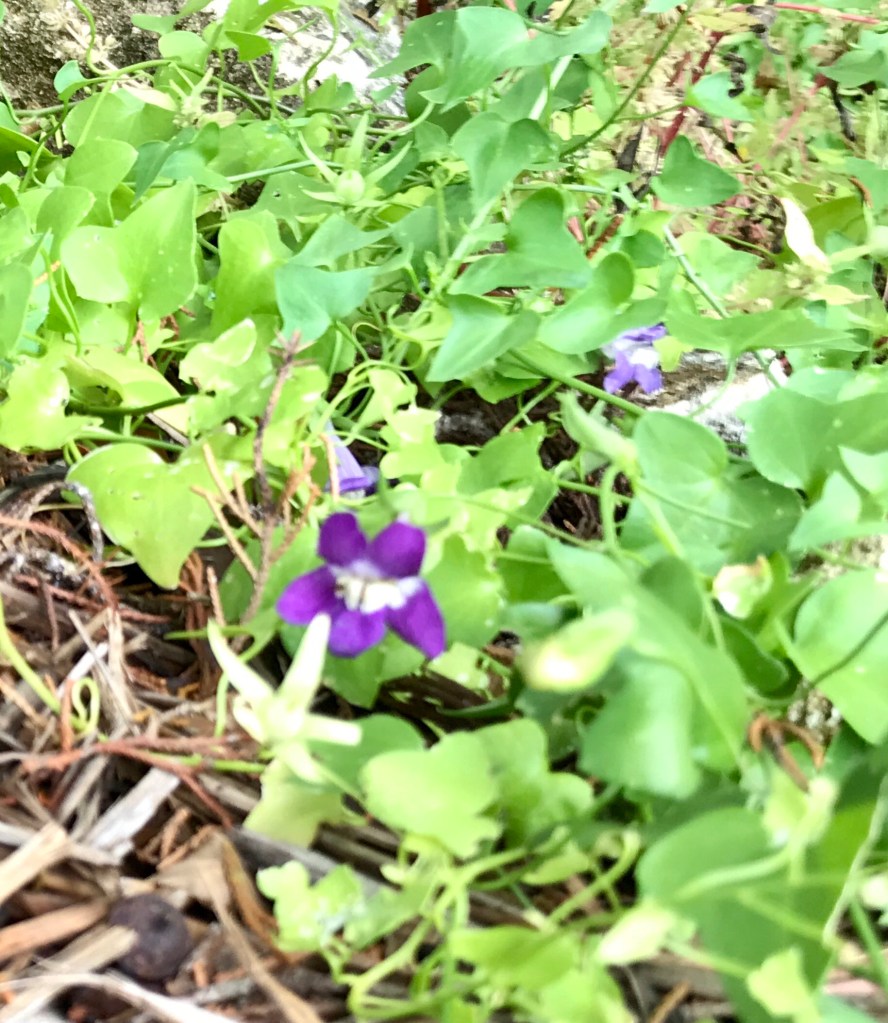
(Maurandella antirrhiniflora) (Roving sailor or Snapdragon vine) (native, not cultivated)
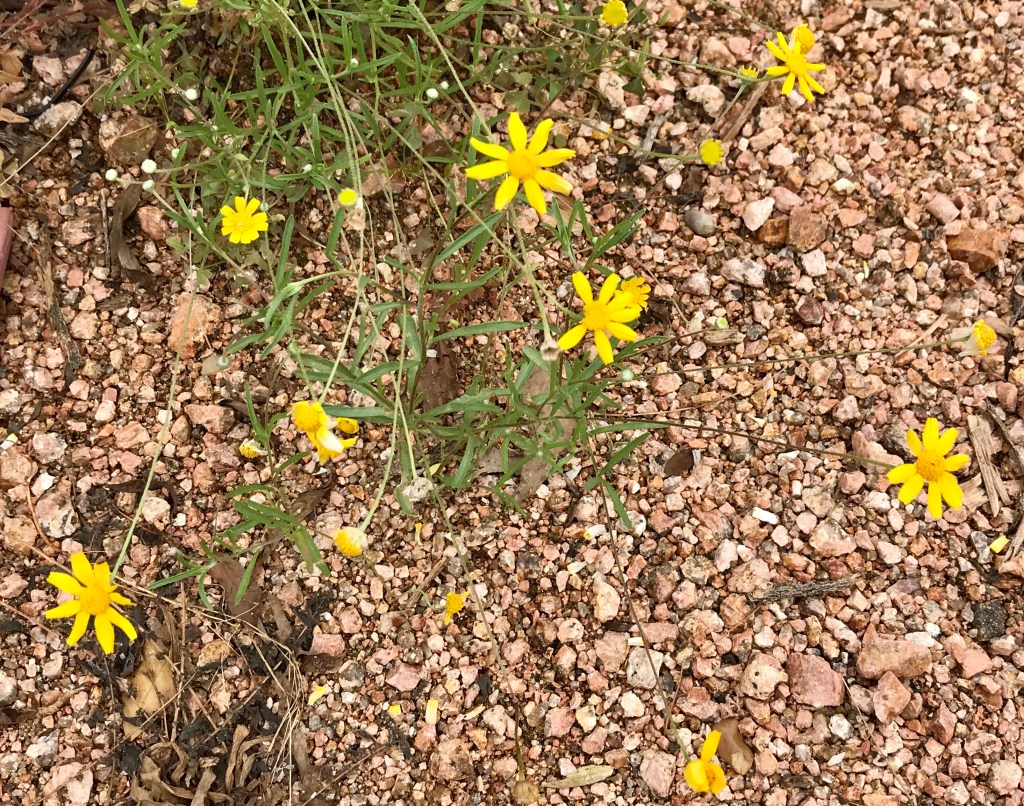
Tetraneuris linearifolia var. linearifolia (Slenderleaf bitterweed) (native, not cultivated)
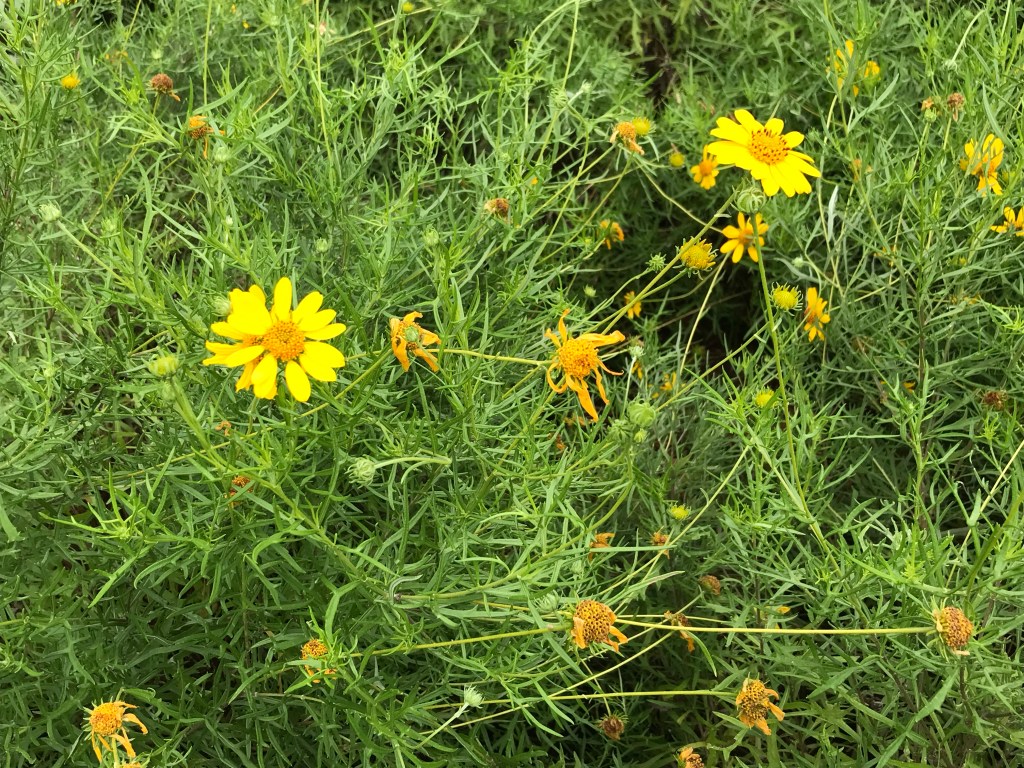
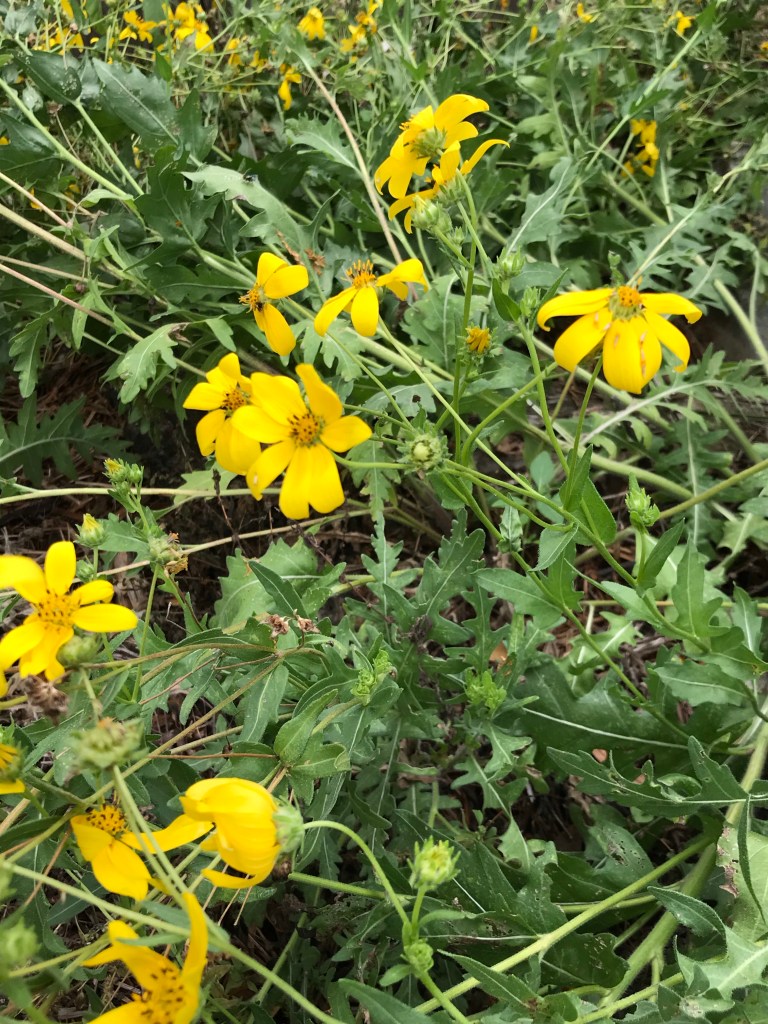
(Viguiera stenoloba) Skeleton-leaf Goldeneye (cultivated)
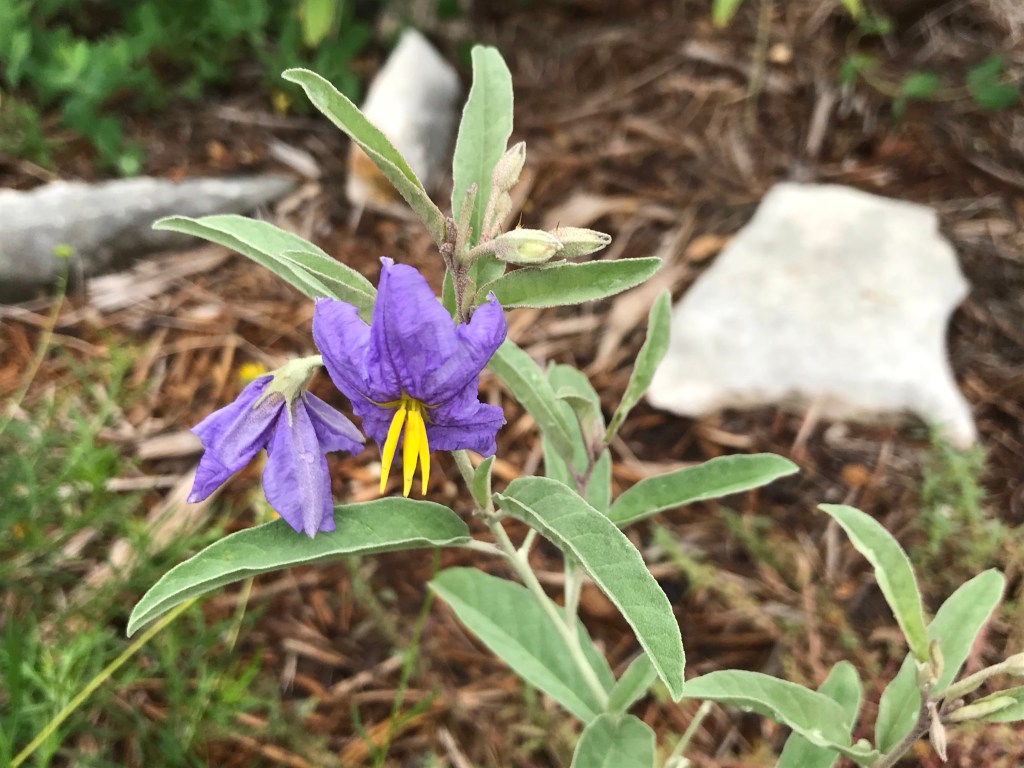
Solanum elaeagnifolium (Silverleaf nightshade) (native, not cultivated)
Conoclinium greggii (Gregg’s mistflower) (cultivated)
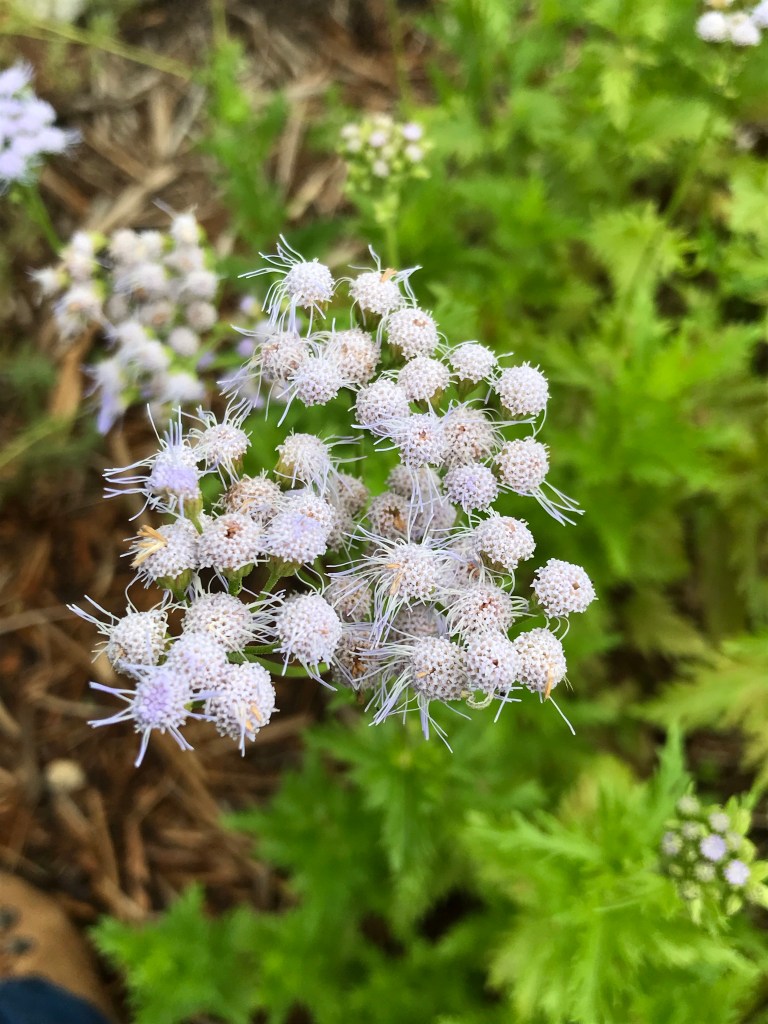
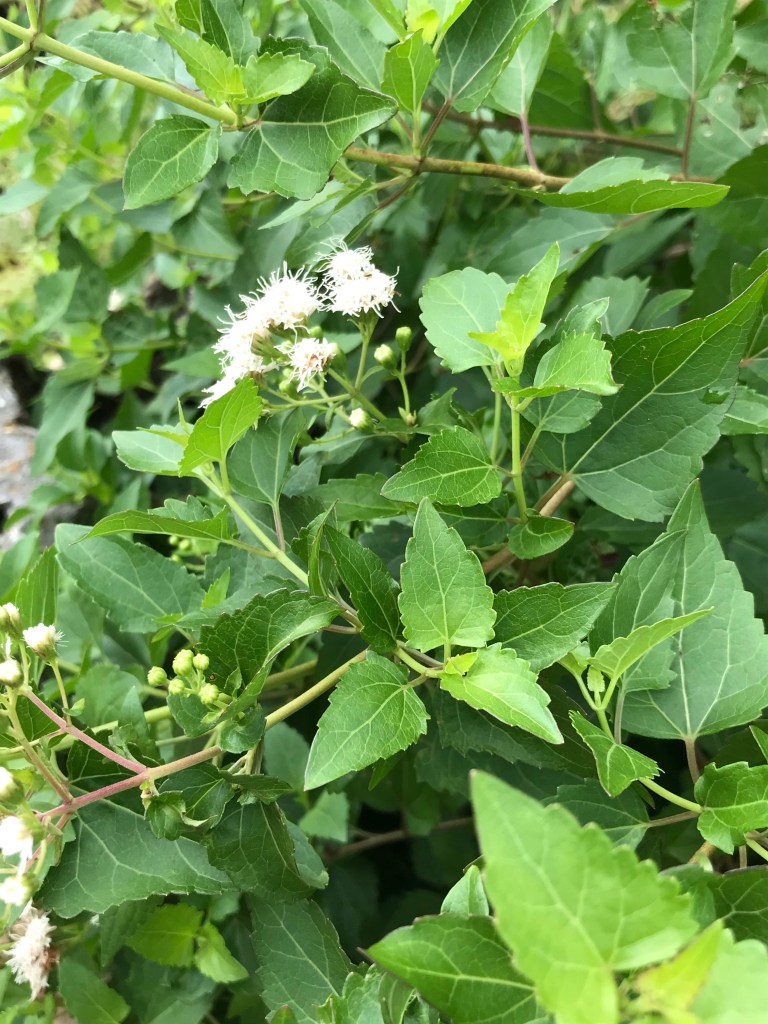
Ageratina havanensis (White mistflower, White boneset) (cultivated)
Viguiera stenoloba . (Skeleton-leaf goldeneye) (cultivated)
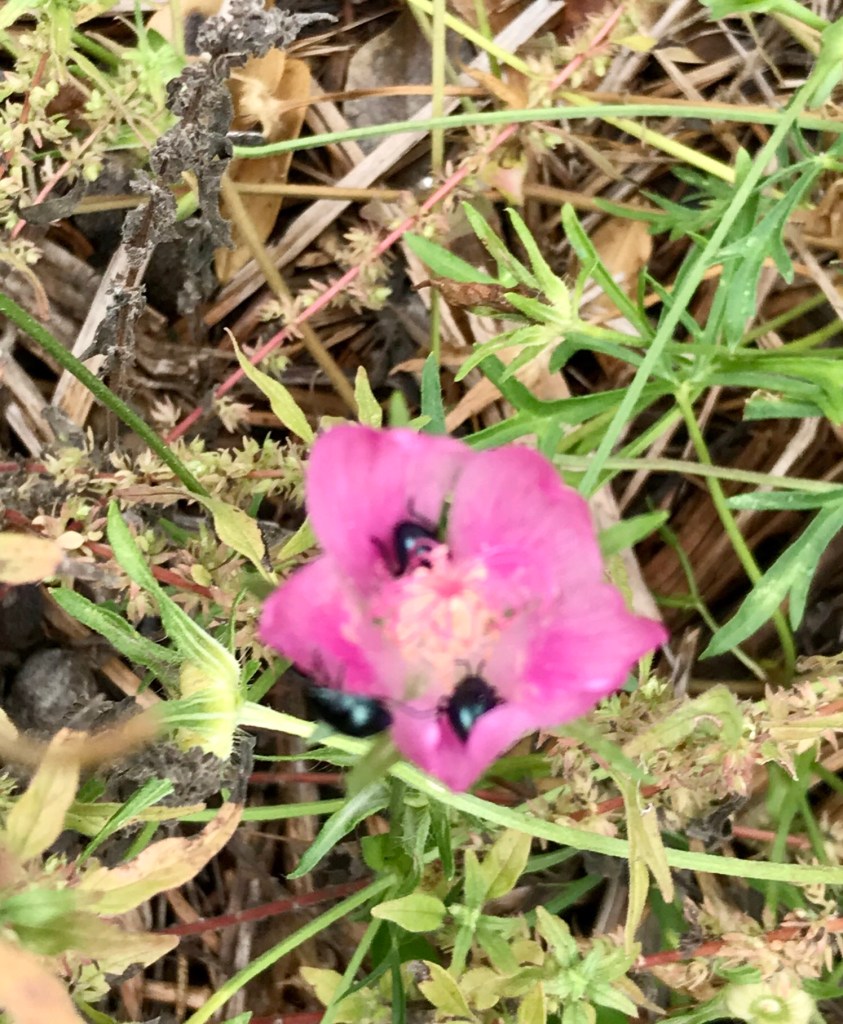
Callirhoe involucrata (Winecup, Purple Poppy Mallow)(cultivated)
Clematis texensis (Scarlet Clematis, Scarlet Leatherflower, Texas Clematis)(cultivated)
Opuntia sp. (Prickly pear)(cultivated, “spineless varietal)
Luchophxllum frutescems (Cenizo, Purple sage, Trvas sage)(cultivated))
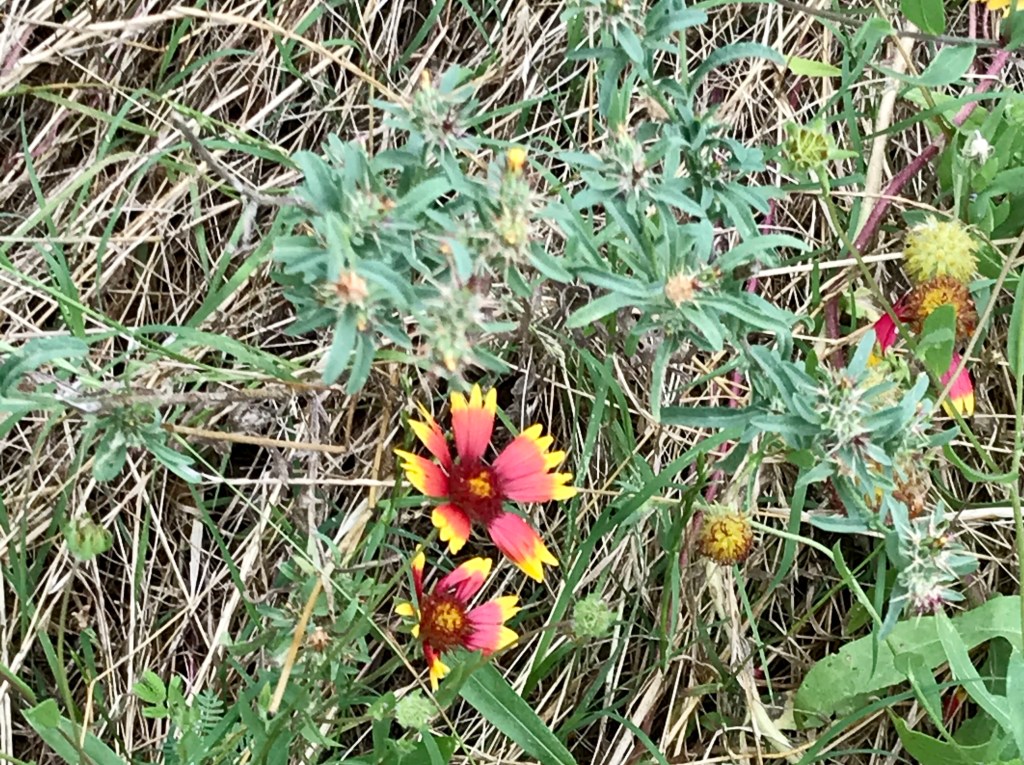
Gaillardia pulchella (Firewheel, Indian Blanket) (natiive, not cultivated)
Oenothera speciosa (Pink Evening Primrose, Pink Ladies) (native, not cultivated)
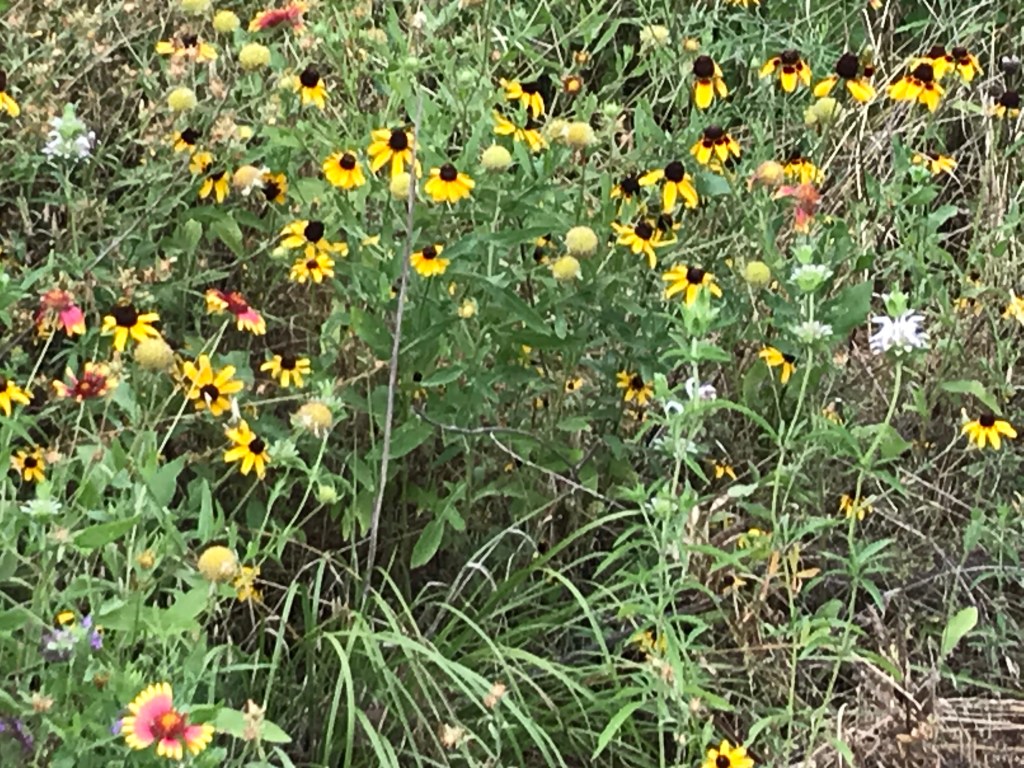
A variety of native plants (mostly)
Glandularia bipinnatifida (Dakota Mock Vervain, Prairie verbena) (native, not cultivated)
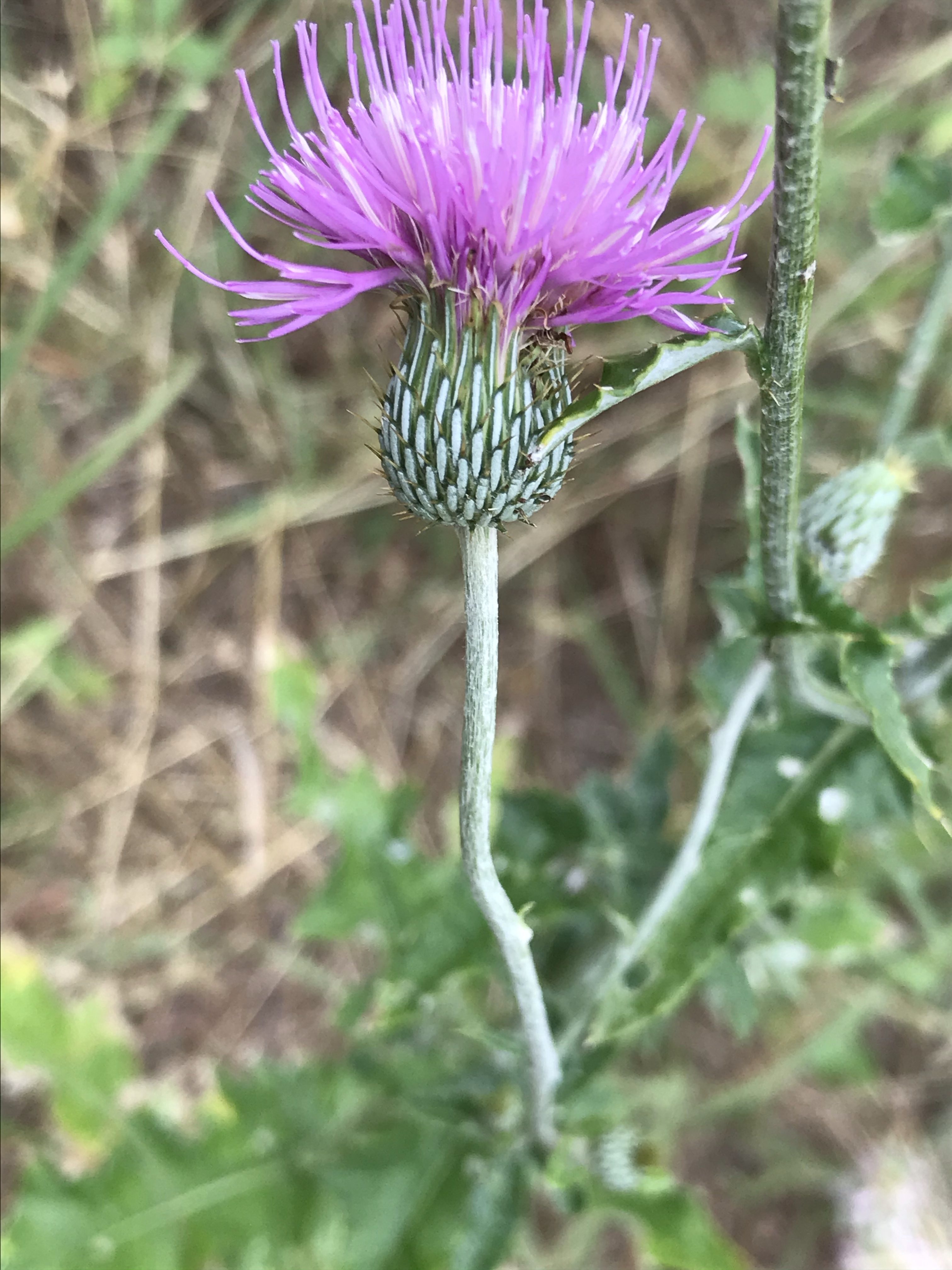
Cirsium texanum (Texas Thistle) (native, not cultivated)
Gaillardia pulchella (Indian Blanket) including recessive gene lacking red pigment, “Sunwheel” (native, not cultivated)
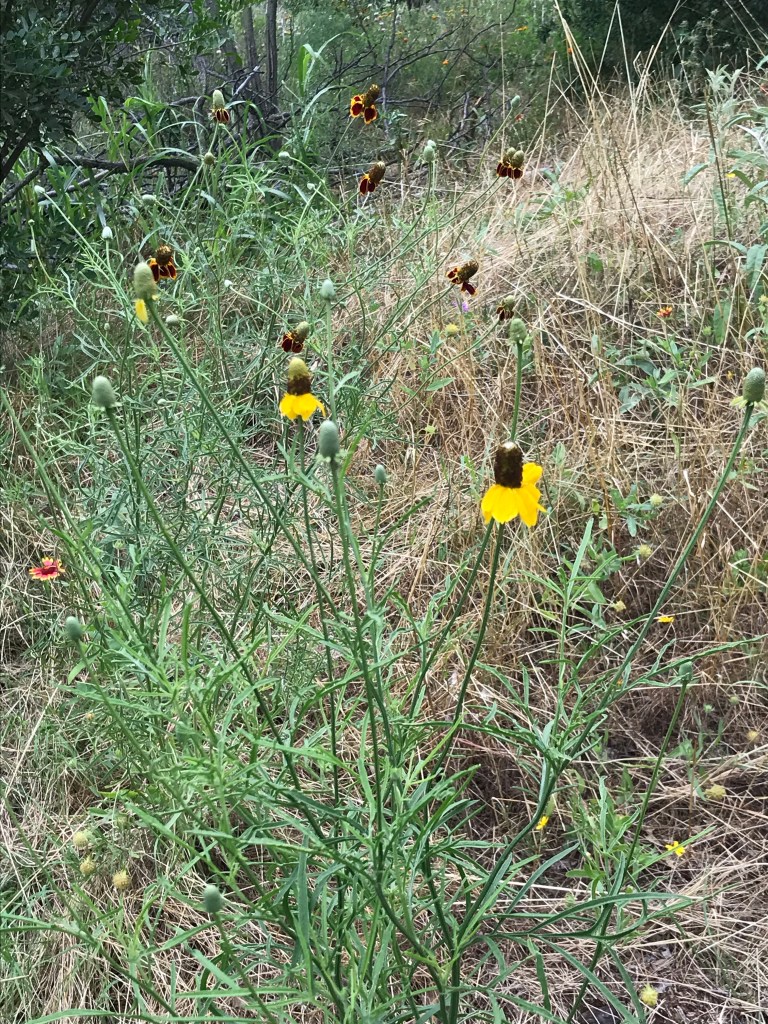
Ratibida columnifera (Prairie Coneflower, Mexican Hat)(native, not cultivated)