Me and My PD – Misdiagnosis and Confirmation Bias

Non-Artificial Intelligence Summary: The author reveals that he was misdiagnosed with Parkinson’s Disease (PD) over 13 years ago, after initially seeking treatment for Essential Tremors (ET). The article concludes with a link to an open access article on Six Myths and Misconceptions about Essential Tremor.

_________________________

Over the summer of 2025, I’ve been undergoing review of my movement disorders, with a reduction in medications as well as no clinical observation of Parkinson’s Disease (PD) symptoms.

Some thirteen or so years ago, after a neurologist or nurse practitioner observed some slight rigidity, providing enough symptoms to make a clinical diagnosis, an old high school girlfriend called to express some concern and to wish me the best. Apparently, she was under the misconception that PD was equivalent to a slow death. Glad to say she must be mighty disappointed after all these years.

I had essential tremors (ET) from my teen years, in addition to several other prodromal conditions or symptoms relating to PD. In 2010 the ET had become somewhat disabling, and after many months of unsuccessful treatment for ET, I opted for Deep Brain Stimulation (DBS), which apparently had a great success rate with ET. However, in order to rule out PD, several months of tests were undergone, with the eventual three of four of the cardinal signs being observed. DBS was scheduled less than two months later. Seven years later, due to a lack of progressive neurological deterioration, a DAT Scan was ordered, with an interpretation that I apparently did have some form of parkinsonism. Apparently, the original diagnosis of PD was premature and made under the influence of confirmation bias. Or, to paraphrase Paul Simon, a person sees what they want to see and disregards the possibility of other underlying causes for a barely detectable symptom.

Finally, after moving to a different state and establishing care with a Movement Disorder Specialist, who conducted their own evaluation on and off PD medications, the original problem (ET) which brought me to a neurologist in 2010, was confirmed. The process of titrating off medications continues.

Naturally, I have been delving into the National Institutes of Health open access in order to learn more about what has been called “familial tremors” and “benign tremors” in the past.

One thing I have learned is the diagnosis of ET and PD can be difficult, due to many overlapping symptoms or conditions, they are linked genetically for some ET cases, and much of the material on PD doesn’t even investigate whether the two conditions are concurrent.

So another reason for me to go on living: educate and advocate for people who may or may not have a diagnosis appropriate to their condition.

We’ll start here, with a recent article on Six Myths and Misconceptions about Essential Tremor.

Me and My PD – 14 Sept 2024

It’s been said that if you’ve met one person with Parkinson’s Disease (PD), then you’ve met one person with PD.

Today I saw a news segment about a guy who plays trombone, and how he had experienced a deterioration in his ability to play in the previous year. He was diagnosed with Essential Tremors (ET), also known as familial tremors or benign tremors. The point of the story was that he had opted for Deep Brain Stimulation (DBS), during which the patient is awake (at least part of the time), and that he played trombone during the operation.

I hope his physician got the diagnosis correct. As noted earlier in this blog, et-pd-is-there-is-or-is-there-aint-a-connection, a research paper was published that established a link between ET and PD: “LINGO1 rs9652490 is associated with essential tremor and Parkinson disease.” Having had essential tremors since my teenage years, I checked my DNA analysis and discovered that I did have that specific variation on the LINGO1 gene. As I’ve often remarked about PD research, this would have been good information to know 50 years ago.

I did remark a couple of times to my Movement Disorders Specialist’s team that I regretted not having asked to play the saxophone or guitar during my own DBS operation. To their credit, they attempted to fine tune my settings, but either due to lack of practice or progression of PD symptoms, I was not able to recover the picking and strumming skills I had back in 1997. And so it goes.

These days, I try to play on my keyboard as often as I can, but any attempt to follow an instructional program, or parse out simple pieces written for instruction (e.g., Bach’s selections from the notebook for Anna Magdalena, Bela Bartok’s pieces for children), soon devolve into loose jams on simple chord progressions, or attempts to recall, remember, and play some of my own simple songs with a minimum of egregious errors.

But I have promises to keep and chores to do before I sleep, so I will just end this with a selection from 1997, when I could play a little bit (self-taught). Unlike many of my songs, this one was not influenced by Bob Dylan.

You’re A Mystery To Me

#Essentialtremors #Parkinsonsdisease #music #DBS #idiopathic

###

ET & PD – is there is or is there ain’t a connection?

As a person who has had essential tremors ever since his teenage years, and a person who was diagnosed with Parkinson’s disease at the average onset age of 62 years, it was with great interest that the author reviewed the abstracts and full text open access PubMedCenter articles available on the topic.

The author can recall others (medical professionals included) who did not observe tremors, although this subject could feel the tremors within, during teenage years. During undergraduate studies, he once was told that his initial impression on a fellow college student looking to sublet a room was that of a “speed freak” (methamphetamine abuser to those unfamiliar with the term). At age 28, his future wife remarked on his trembling hands as he reached out to touch her cheek in a moment of intimacy. And at age 60, following several recurring episodes of depression and increasing tremors, he was treated for essential tremors for almost two years, beginning in 2010. Then, after having opted for Deep Brain Stimulation (DBS), and undergoing further testing for several months, a third symptom, rigidity, one of the four cardinal symptoms of PD, was observed, allowing the Movement Disorder Specialist to finally make a diagnosis of PD. Mind you, the four cardinal symptoms required to make the call haven’t changed since 1817, when James Parkinson published his Essay On The Shaking Palsy. In case you don’t  already know, they are Tremors, Postural Instability, Bradykinesia, and Rigidity.

On the other hand, it was only in 2009 that the study “LINGO1 rs9652490 is associated with essential tremor and Parkinson disease” came out online and published in print a few months later in 2010.  In which year, the observant reader will notice, was when this author began receiving treatments for essential tremors, finally diagnosed in late 2011 as Parkinson’s.

After a few articles reported similar results, a few negative results were reported, in part by one group of desk jockeys who conducted a meta-review and concluded that there was NO association between ET and PD.  On looking just briefly at the abstracts, one can see that those that found a positive connection and those that found no connection were looking at different populations. The positive association came from a European background, and those with no association came from a Chinese population sample.  Mix them all together and you get mixed results, which doesn’t mean that a person with a half European background (like myself) with this specific variation doesn’t have an increased risk of developing ET (P = 0.014) and Parkinson’s(P = 0.0003), as reported in the article noted above.

So who should I believe? A study that involved a sample in which the participants were similar in ethnic/DNA background to mine? Or a meta-review which concludes that the null hypothesis is true? Or my own brain and body, which began exhibiting strong tremors back in late teens to early twenties? And which became so severe by age 60  that I couldn’t carry a cup of coffee from the kitchen to the living room without going into extreme oscillations?

Those were rhetorical questions, by the way.

References:

Jiménez-Jiménez FJ, García-Martín E, Lorenzo-Betancor O, Pastor P, Alonso-Navarro H, Agúndez JA. LINGO1 and risk for essential tremor: results of a meta-analysis of rs9652490 and rs11856808. J Neurol Sci. 2012 Jun 15;317(1-2):52-7. doi: 10.1016/j.jns.2012.02.030. Epub 2012 Mar 17. PMID: 22425540.

Agúndez JA, Lorenzo-Betancor O, Pastor P, García-Martín E, Luengo A, Alonso-Navarro H, Jiménez-Jiménez FJ. LINGO1 rs9652490 and rs11856808 are not associated with the risk of Parkinson’s disease: results of a meta-analysis. Parkinsonism Relat Disord. 2012 Jun;18(5):657-9. doi: 10.1016/j.parkreldis.2011.09.005. Epub 2011 Sep 28. PMID: 21955595.

Lorenzo-Betancor O, Samaranch L, García-Martín E, Cervantes S, Agúndez JA, Jiménez-Jiménez FJ, Alonso-Navarro H, Luengo A, Coria F, Lorenzo E, Irigoyen J, Pastor P; Iberian Parkinson’s Disease Genetics Study Group Researchers. LINGO1 gene analysis in Parkinson’s disease phenotypes. Mov Disord. 2011 Mar;26(4):722-7. doi: 10.1002/mds.23452. Epub 2011 Jan 4. PMID: 21506150.

Wu YW, Rong TY, Li HH, Xiao Q, Fei QZ, Tan EK, Ding JQ, Chen SD. Analysis of Lingo1 variant in sporadic and familial essential tremor among Asians. Acta Neurol Scand. 2011 Oct;124(4):264-8. doi: 10.1111/j.1600-0404.2010.01466.x. Epub 2010 Dec 15. PMID: 21158743.

Zuo X, Jiang H, Guo JF, Yu RH, Sun QY, Hu L, Wang L, Yao LY, Shen L, Pan Q, Yan XX, Xia K, Tang BS. Screening for two SNPs of LINGO1 gene in patients with essential tremor or sporadic Parkinson’s disease in Chinese population. Neurosci Lett. 2010 Sep 6;481(2):69-72. doi: 10.1016/j.neulet.2010.06.041. Epub 2010 Jun 19. PMID: 20600614.

Clark LN, Park N, Kisselev S, Rios E, Lee JH, Louis ED. Replication of the LINGO1 gene association with essential tremor in a North American population. Eur J Hum Genet. 2010 Jul;18(7):838-43. doi: 10.1038/ejhg.2010.27. Epub 2010 Apr 7. PMID: 20372186; PMCID: PMC2987362.

Nica AC, Montgomery SB, Dimas AS, Stranger BE, Beazley C, Barroso I, Dermitzakis ET. Candidate causal regulatory effects by integration of expression QTLs with complex trait genetic associations. PLoS Genet. 2010 Apr 1;6(4):e1000895. doi: 10.1371/journal.pgen.1000895. PMID: 20369022; PMCID: PMC2848550.

Vilariño-Güell C, Wider C, Ross OA, Jasinska-Myga B, Kachergus J, Cobb SA, Soto-Ortolaza AI, Behrouz B, Heckman MG, Diehl NN, Testa CM, Wszolek ZK, Uitti RJ, Jankovic J, Louis ED, Clark LN, Rajput A, Farrer MJ. LINGO1 and LINGO2 variants are associated with essential tremor and Parkinson disease. Neurogenetics. 2010 Oct;11(4):401-8. doi: 10.1007/s10048-010-0241-x. Epub 2010 Apr 6. PMID: 20369371; PMCID: PMC3930084.

Wu Y, Wang X, Xu W, Liu W, Fang F, Ding J, Song Y, Chen S. Genetic variation in LINGO-1 (rs9652490) and risk of Parkinson’s disease: twelve studies and a meta-analysis. Neurosci Lett. 2012 Jul 26;522(1):67-72. doi: 10.1016/j.neulet.2012.06.018. Epub 2012 Jun 15. PMID: 22710005.

Jasinska-Myga B, Wider C. Genetics of essential tremor. Parkinsonism Relat Disord. 2012 Jan;18 Suppl 1:S138-9. doi: 10.1016/S1353-8020(11)70043-8. PMID: 22166413.

Bourassa CV, Rivière JB, Dion PA, Bernard G, Diab S, Panisset M, Chouinard S, Dupré N, Fournier H, Raelson J, Belouchi M, Rouleau GA. LINGO1 variants in the French-Canadian population. PLoS One. 2011 Jan 11;6(1):e16254. doi: 10.1371/journal.pone.0016254. PMID: 21264305; PMCID: PMC3019170.

Guo Y, Jankovic J, Song Z, Yang H, Zheng W, Le W, Tang X, Deng X, Yang Y, Deng S, Luo Z, Deng H. LINGO1 rs9652490 variant in Parkinson disease patients. Neurosci Lett. 2011 Jan 7;487(2):174-6. doi: 10.1016/j.neulet.2010.10.016. Epub 2010 Oct 15. PMID: 20951767.

Thier S, Lorenz D, Nothnagel M, Stevanin G, Dürr A, Nebel A, Schreiber S, Kuhlenbäumer G, Deuschl G, Klebe S. LINGO1 polymorphisms are associated with essential tremor in Europeans. Mov Disord. 2010 Apr 30;25(6):717-23. doi: 10.1002/mds.22887. PMID: 20310002.

Vilariño-Güell C, Ross OA, Wider C, Jasinska-Myga B, Cobb SA, Soto-Ortolaza AI, Kachergus JM, Keeling BH, Dachsel JC, Melrose HL, Behrouz B, Wszolek ZK, Uitti RJ, Aasly JO, Rajput A, Farrer MJ. LINGO1 rs9652490 is associated with essential tremor and Parkinson disease. Parkinsonism Relat Disord. 2010 Feb;16(2):109-11. doi: 10.1016/j.parkreldis.2009.08.006. Epub 2009 Aug 31. PMID: 19720553; PMCID: PMC2844122.

Deng H, Gu S, Jankovic J. LINGO1 variants in essential tremor and Parkinson’s disease. Acta Neurol Scand. 2012 Jan;125(1):1-7. doi: 10.1111/j.1600-0404.2011.01516.x. Epub 2011 Apr 7. PMID: 21470193.

Zimprich A. Genetics of Parkinson’s disease and essential tremor. Curr Opin Neurol. 2011 Aug;24(4):318-23. doi: 10.1097/WCO.0b013e3283484b87. PMID: 21734494.

Like Puzzles? You’ll love Parkinson’s

It’s been said that if you’ve met one person with Parkinson’s Disease (PD), then you’ve met one person with PD. This week I met another person with PD, who said the same thing.  The implication is that PD is different for everyone who has it (or any other form of parkinsonism, as the terminology goes). As stated by one of the contributing authors:

The truth is that every person living with PD has a unique expression of the dysfunction and precise balance of factors contributing to this idiosyncratic disease journey.

Today, we look at and try to communicate in  “normal”  language the following open access article. To read the original, just click on the link at the bottom of this post.

Different pieces of the same puzzle: a multifaceted perspective on the complex biological basis of Parkinson’s disease.

As noted in the abstract:

Notably, … growing recognition that the definition of PD as a single disease should be reconsidered, perhaps each with its own unique pathobiology and treatment regimen.
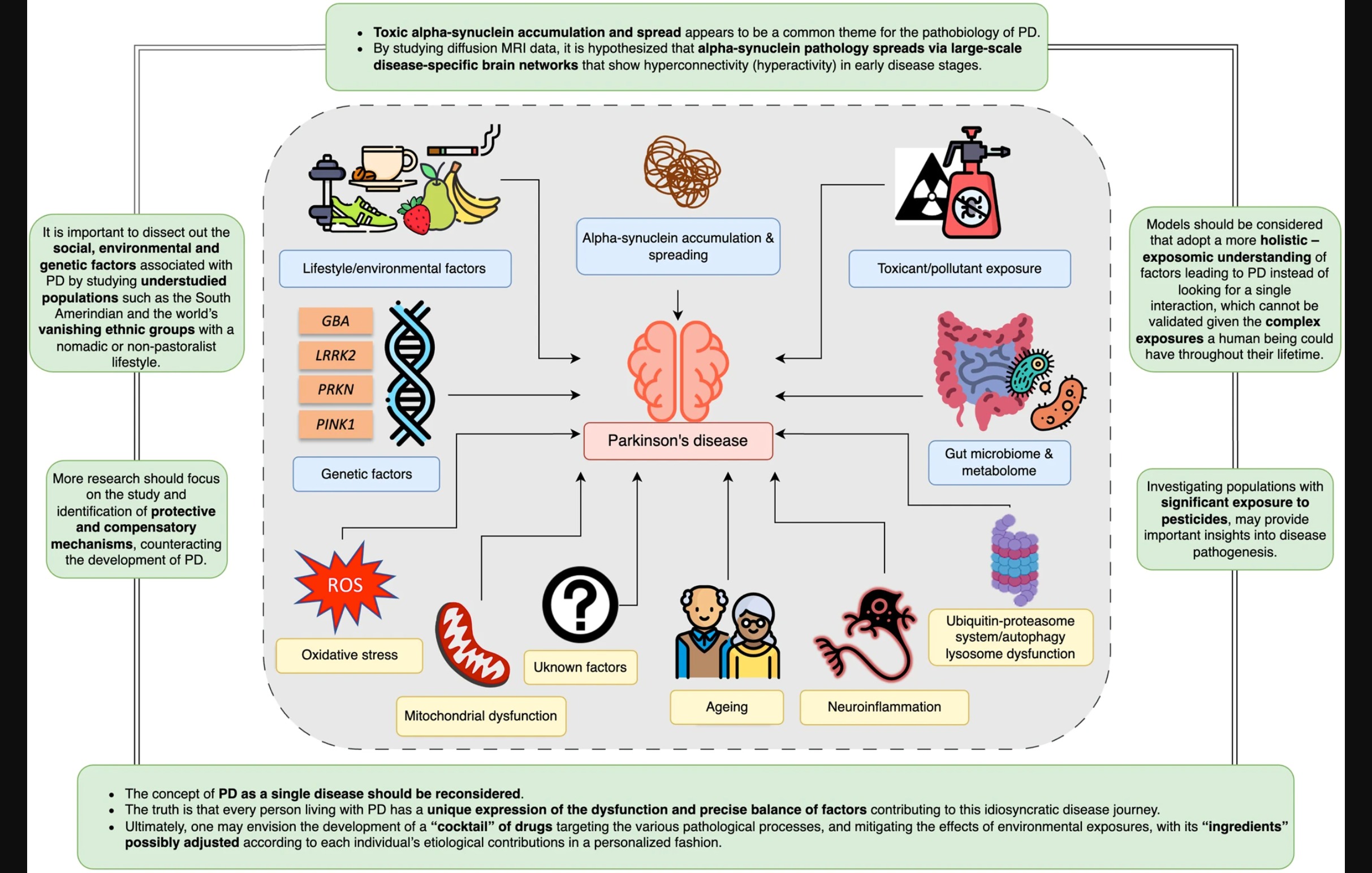
PD as complex- 41531_2023_535_Fig1_HTML.png (2075×1374) - media.springernature.com

Figure 1: Illustration from the article

Gene Genie

Pathological variations in a couple of different genes or enzymes ( PRKN, PINK1) are the strongest predictors of the disease. On the other hand, variations in other specific genes or enzymes (such as GBA and LRRK2) greatly increase an individual’s risk, and current research studies are looking into trying to tease out environmental factors, lifestyle behaviors or changes that might modify the course or severity of PD.

Down at the cellular level of our bodies, two other pathologies impact the progression of this neurodegenerative disease. One is the aggregation of alpha-synuclein proteins, the other is mitochondrial dysfunction, where the alpha-synuclein proteins fail to get cleared out and eventually result in apoptosis, or cell death. Part of this may be due to the aging process, but the occurrence of early onset PD should make us wary of the simplistic notion that PD symptoms are “just a sign of getting older.” The aggregation of alpha-synuclein proteins may be due to various reasons, such as over-production, while the end result is the same: mitochondrial dysfunction, leading to increased neurodegeneration.

LRRK2-ing around

Since its discovery in the early 2000s, the LRRK2 gene and leucine rich repeat kinase 2 enzyme have been repeatedly associated with the risk for PD.

Despite the fact that there have been no formal epidemiologic studies, and figures cited in the literature are mostly from clinical reports, LRRK2 dysfunctional mutations appear to confer the highest risk of PD. LRRK2 coding substitutions tend to be population specific: Basques,  North African Berbers, Ashkenazi Jews, and South Eastern Asia. Why these mutations (or variations) seem to provide an evolutionary advantage, allowing them to be passed on to future generations, is unknown.

Since PD is a multifactorial disease, the article proposes that animal models of the disease should also include factors such as genetic variations, environmental toxins, neurons, and the immune system, in order to find out where the biological intersections are.

Toxin exposure

Genetic risk factors, along with other factors, including toxins (including pesticides), are believed to have a cumulative impact on the brain, resulting in alpha-synuclein protein accumulation, low-grade inflammation, and the eventual apoptosis of dopaminergic neurons. These hypotheses are based on research data from high income countries. Two Sub Saharan African tribes, which have a nomadic or partly nomadic lifestyle, have virtually no exposure to pesticides, and no reported cases of parkinsonism. The author of this section suggests that “absence of” studies might be as important as “presence of” studies, in the search for causes of PD.

The genetic predisposition for PD may account for only 1/3 of the risk for PD.

…there is strong evidence to implicate pesticides as a significant environmental factor associated with the disease, especially paraquat, rotenone, and organochlorines

Although scientific research has shown its risks, paraquat is still widely used (and has not banned in the USA, although book bans seem to be popular. I have yet to hear of a book that caused PD).  Loose regulation of pesticides in Latin America seems highly correlated with the occurrence of PD compared to other countries,where paraquat is either restricted or banned. Studies comparing PD in populations where paraquat is restricted or banned vs. those in which its use is more loosely regulated, including longitudinal studies from conception to  end of life, are suggested. Finding biomarkers of chronic or long term exposure to such pesticides which might help predict risk of PD could be one goal of such studies. 

Toxic Hoarders: Accumulation of alpha-synuclein

Misfolded alpha-synuclein is the primary constituent of Lewy bodies, as was discovered over two decades ago. Further, variants in the alpha-synuclein gene (SNCA) were found to cause familial PD, linking genetics to PD for the first time. Since then, research has shown that it can also cause neurodegeneration and leads to apoptosis of mitochondria, and then on to the death of dopaminergic cells.

It is thought that abnormal alpha-synuclein s generated in the intestinal tract, where it causes inflammation and then can spread to the brain through the vagus nerve or other pathways.

Recent research has found the CHCHD2 gene as a cause for hereditary PD. This gene is localized to mitochondria, and animal model studies have show an increase in alpha synuclein in the brain. Whether alpha-synuclein damages mitochondria or mitochondrial dysfunction results in accumulation of misfolded alpha-synuclein is yet to be figured out.

Whether PD is body-first or brain-first in terms of pathogenesis is no longer a tenable position. Over the last 15 years, it has been recognized that “PD” should refer to “Parkinson’s Diseases,” which include a variety of factors, including genetic,  pesticides exposures, pollutants, exercise, diet, viral infection, head trauma, and inflammatory diseases, all of which interact to affect the progression of the symptoms.

Complexity, multiplicity and interactivity

Until recently, much of PD research has assumed that PD is a single disease; more recently, it has been accepted by many as a systemic disease with multiple effects on various systems instead of a localized neurological disorder. 

One of the authors of this article proposes a “threshold model” in which the different triggers work independently or simultaneously to build up stress on the various systems until reaching a a damage threshold, after which the initial stage(s) of the disease are developed.

We understand now that the disease initiation process is not following a single model. So, in one case, a pathogenic gene variant could interact with different environmental factors causing the disease (gene-environment interaction). In another case, different genetic variants could interact to cause the disease (gene–gene interaction), or different pollutants can interact to lead to the disease (environment-environment interaction). This can be even extended to involve more factors e.g., social stressors, metabolic diseases, etc. This model could allow us to adopt a more holistic – exposure over lifetime understanding of factors leading to PD instead of looking for a single interaction, which cannot be validated given the complex exposures a human being could have throughout their lifetime.

On the other hand, given that there is evidence that implicates both genetic and environmental factors in the occurrence and progression of PD, there are commonalities:

  1. PD is progressive and degenerative.
  2. PD includes the change of “normal” processes past a tipping point, to spiral downward into cellular degeneration. This includes factors such as inflammation, abnormal protein aggregation, and metabolic imbalance. Where it begins and the individual’s initial cause may well differ from person to person. 
  3. The disease(s) are triggered many years before symptoms of Parkinsonism become obvious.

Another contributor to this article emphasized protective and preventive factors such as

anti-inflammatory agents, antioxidants, calcium channel agonists, inhibitors of alpha-synuclein aggregation, neurotrophic factors and protective lifestyle factors, such as coffee drinking.

Reference is made to a Mountain Range model for PD, in which the genetic risk is considered as different “basecamps” at the valley at the foot of the mountain range, and the various risk factors or protective factors interact with the genetic risk to impact onset age, rapidity of progression, etc. Pie Charts at the basecamps indicate these risks and protective factors, and boxes along the paths or trails represent potential biomarkers. The height of the mountains within the range represent how rapidly the disease progresses.
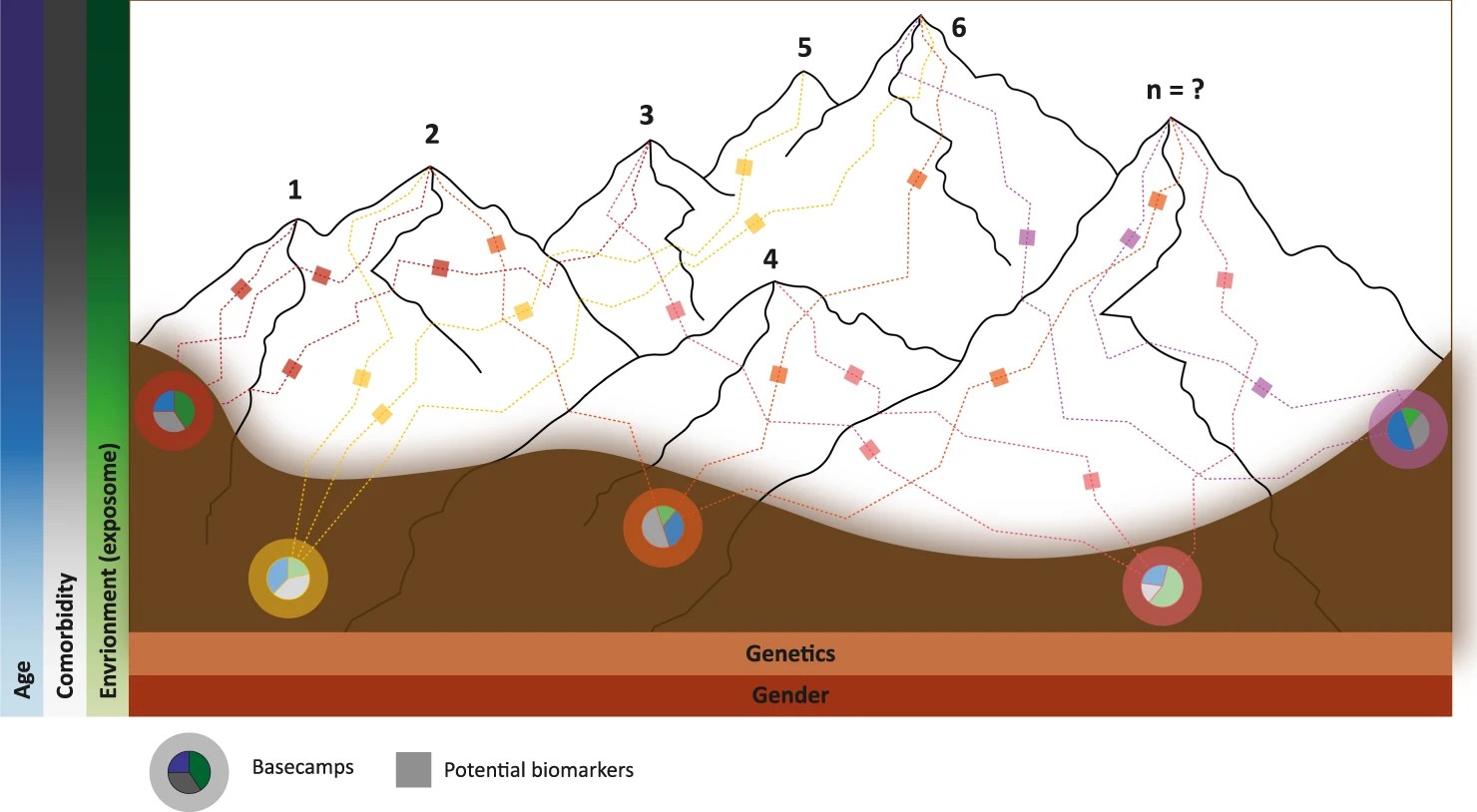
41531_2022_307_fig1_html

Figure 2. The Mountain Range model. (This figure is from Farrow, S.L., Cooper, A.A. & O’Sullivan, J.M. Redefining the hypotheses driving Parkinson’s diseases research. npj Parkinsons Dis. 8, 45 (2022). https://doi.org/10.1038/s41531-022-00307-w, which is an open access  article ).

The microbiome-gut-brain-axis

It has been suggested that the disease originates in the gut biome, while theopposite theory that it originates in the brain and spreads to the gut microbiome also has support. It appears that it is possible that both explanations may be true, depending on the individual. As noted at the beginning, each case of Parkinson’s is different, to a certain extent Recent studies have indicated that once the process has begun, it may spread bi-directionally.

Loss of bacteria producing neuroprotective molecules such as short-chain fatty acids (a lack of which are linked to constipation, gut barrier dysfunction and inflammation, early symptoms related to PD). Corroborating these  human observations, animal models suggest that gut microbiome can contribute to PD onset. Definitive proof that they are causative will require large-scale longitudinal  studies with multiple samples to determine the role of gut microbial changes in PD. Studies that factor in caffeine intake, cigarette smoking, pesticides and other toxins that affect PD risk impact the gut microbiome are also needed.

In the future, a better understanding of modifiable factors and events operating along the microbiome-gut-brain axis may open up new ways to prevent or change the course of PD.

combo: socio-bio-enviro factors

In 2017, the economic burden of PD only in the USA was $51.9 billion USD. (And that was before COVID and subsequent inflation). 

Chile over the last 10 years, epidemiological and demographic data has been used to generate a publicly accessible resource: a nationwide de-identified individual-level electronic health record database. In addition, medical research can access clinical statistics from the Ministry of Health through the Department of Health Statistics and Information (DHSI) and to environmental factor exposure data (i.e., registry of contaminants by geographic districts) through the Ministry of Environment and others. A population of more than 37,000 PD cases over the last 20 years have been identified, mainly in overpopulated or industrialized regions. This shows how environmental factors (pesticides, pollution) influence the pathology of PD. Regional disease prevalence, progression, comorbidities, mortality, social factors, and economic burden can be inferred from the data involved in PD progression. Together, the social, biological, and environmental factors may help to explain why every person with PD has, for the most part, a unique experience and journey.

In conclusion:

Over 200 years after James Parkinson wrote his essay on The Shaking Palsy, we still do not have an answer to the question: What causes Parkinson’s Disease(s)? We can assume with confidence that the cause(s) of the disorder are multifactorial. Because individuals differ in genetics, environment and lifestyle, PD is different for and in each person with PD.


###

Note: The source materials for this blog post were published as Open Access under a Creative Commons license, which can be found at the links above and below. This writer has modified and paraphrased much of the wording from the  original article, hopefully to make it more accessible to folks with PD but neither an M.D. or PhD. after their name. Any misinterpretation of the original article is solely due to my own shortcomings (I blame it on the Parkinson’s©).  I omitted the concluding statement that suggested that since all the contributing authors were either M.D.s or Phd.s, or both, that there might be some biases in their viewpoints. I did notice that lifestyle was listed as a possible factor, but that exercise and dance were not specifically called out.

For anyone who wants to read the entire article, here’s the citation and link.

https://Müller-Nedebock, A.C., Dekker, M.C.J., Farrer, M.J. et al. Different pieces of the same puzzle: a multifaceted perspective on the complex biological basis of Parkinson’s disease. npj Parkinsons Dis. 9, 110 (2023)

###

Moses Maimonides, James Parkinson, and me

Subscribe to continue reading

Subscribe to get access to the rest of this post and other subscriber-only content.

Low cholesterol levels – could be a biomarker for PD?

A couple of articles that look at cholesterol levels and PD.

Fu X, Wang Y, He X, Li H, Liu H, Zhang X. A systematic review and meta-analysis of serum cholesterol and triglyceride levels in patients with Parkinson’s disease. Lipids Health Dis. 2020 May 19;19(1):97. doi: 10.1186/s12944-020-01284-w. PMID: 32430016; PMCID: PMC7236933.

The results suggested that elevated serum levels of triglycerides (TG), low density cholesterol (LDL) and total cholesterol (TC) may be protective factors for the pathogenesis of PD.

And here’s another meta analysis that bottom lines the results in the title:

Hong X, Guo W, Li S. Lower Blood Lipid Level Is Associated with the Occurrence of Parkinson’s Disease: A Meta-Analysis and Systematic Review. Int J Clin Pract. 2022 Jun 9;2022:9773038. doi: 10.1155/2022/9773038. PMID: 35801143; PMCID: PMC9203242.

This meta review  looked at

  • total cholesterol (TC),
  • triglycerides (TG),
  • high-density lipoprotein cholesterol (HDL-C), and
  • low-density lipoprotein cholesterol (LDL-C).

Fifteen cohort studies with 9740 participants, including 2032 PD patients and 7708 controls were analyzed, and the analysis found that lipid levels in the PD patients was significantly lower than that of healthy controls. So dyslipidemia might have a predictive value.

As a Person With PD (PwP), this sort of information could have been useful, say, oh, between 50 or 60 years ago. Of course, it would have taken general practitioners with a broad knowledge of factors affecting the prodromal symptoms and signs of PD to pick up on it. (And that information wasn’t available at that time).

As it so happened, I had essential tremors, and could feel resting tremors oscillating away, even though they were not visible to the human eye. And other prodromal symptoms were present, too, and at an early age. Fortunately, I did not have the LRRK or PARK gene variations that cause early onset PD that can not be denied (Michael J. Fox’s case comes to mind). Unfortunately, my particular set of symptoms did not result in an actual diagnosis of PD until after I had been retired early due to one of my other prodromal symptoms (MDD) put me on disability leave for over 9 months, and I was unable to hold down a steady job for a couple of years.  Fortunately, the Social Security Administration provided me with retroactive disability benefits to the day following the date the insurance company gave up on trying to recoup their losses by representing my case to the OASDI. Fortunately, I have been able to find folks who have supported me through the years, intellectually and socially, as my continuing journey with PD has become a larger part of my life.

Perhaps the future of medicine lies in something like the application of IBM’s Big Blue computer (or other advanced Artificial Intelligence systems) to assimilating the huge (not just big) data residing in the NIH and other medical libraries, so that correlations among various signs could be identified and point to diagnostic criteria and effective treatment modalities, so that until there is a cure for Parkinson’s (and other diseases), we can do what we can to identify the probability of an eventual diagnosis (provided decent medical information and observations) and then to  defer or delay and to mitigate the symptoms.

And until then, I will do my best to forgive those who have caused me harm, whether through omission or commission, while asking forgiveness of those against whom I have “trespassed,” to use the word in the KJV.

(Didn’t mean to take an ethical/religious tangent at the end, but there it is. I’ve said too much, I haven’t said enough… I was sentenced to twenty years of boredom, for trying to change the system from within…[insert your favorite poplar song phrase here]).

###

Exercise & Sleep disorders and Parkinson’s – Oh my!

My first draft of this got lost in the computer (Thanks, all you coders who think you know how to create intuitive, ease to use interfaces). So here’s another attempt to get stuff from one location to another. We’ll see how it it goes…

A while back I posted a Powerpoint presentation on research on music, dance, and singing, which cited a review in the Movement Disorders Society (2018, I believe), in which the conclusion was that exercise did not affect Parkinson’s Disease (PD) symptoms. Since then, there have been many more studies on the effects of different modalities of exercise. In this first article, a meta review of publications, found that exercise is good for you if have PD.

Yang Y, Wang G, Zhang S, et al. Efficacy and evaluation of therapeutic exercises on adults with Parkinson’s disease: a systematic review and network meta-analysis. BMC Geriatrics. 2022 Oct;22(1):813. DOI: 10.1186/s12877-022-03510-9. PMID: 36271367; PMCID: PMC9587576.

The purpose of the review was to compare and rank the types of exercise that improve PD symptoms by quantifying information from randomised controlled trials.  Out of 10,474 citations, 250 studies were included involving 13,011 participants. The results (drumroll, please):

  • Power training (PT) had the best benefits for motor symptoms
  • Body weight support treadmill training showed the best improvement in balance, gait velocity  and walking distance
  • Robotic assisted gait training had the most benefits for freezing of gait
  • Dance showed the best benefits for depression
  • Only Yoga significantly reduced anxiety symptom compared with controls
  • Only resistance training significantly enhanced sleep quality and cognition
  • Physical Therapy showed the best results for muscle strength
  • Five types of therapy showed improvement in concerns about falling versus control groups.

If interested, the full free text is available at the linked citation above. Other reviews have shown different results. Best recommendation is to find a variety of exercises that you enjoy, and do them as often as you can. But don’t try so hard that you wind up hurting yourself.

The second meta review alluded to in the title has to do with sleep disorders.

Xu Z, Anderson KN, Pavese N. Longitudinal Studies of Sleep Disturbances in Parkinson’s Disease. Current Neurology and Neuroscience Reports. 2022 Oct;22(10):635-655. DOI: 10.1007/s11910-022-01223-5. PMID: 36018498; PMCID: PMC9617954.

Fifty-three longitudinal studies of sleep in PD were identified, which included:

  • Excessive daytime sleepiness,
  • Insomnia,
  • Obstructive sleep apnea,
  • Rapid eye movement sleep behavior disorder (RBD),
  • Restless legs syndrome, and
  • Shift work disorder were studied in addition to other studies that had focused on either multiple sleep disorders or broadly on sleep disorders as a whole.

RBD is now considered an established prodromal feature of PD, but other sleep disorders do not clearly increase risk of subsequent PD.

I’ll throw in one last citation. Not just because it plays on the title to one of Bob Dylan’s songs, but also because it is one of many nutritional supplements prescribed to aid in cleaning out neural cell debris in (where else?) Bob’s Brain:

Kalyanaraman B. NAC, NAC, Knockin’ on Heaven’s door: Interpreting the mechanism of action of N-acetylcysteine in tumor and immune cells. Redox Biology. 2022 Oct;57:102497. DOI: 10.1016/j.redox.2022.102497. PMID: 36242913; PMCID: PMC9563555. 

and that ends this day.

Prodromal symptoms, Parkinson’s Disease (PD), and that old song and dance…

Here’s a few studies that came up in my news feed from  PubMed Central (PMC) or elsewhere for articles recently published on the topics in which I’m interested – namely, prodromal symptoms related to PD, the relationship of REM sleep disorder and depression to PD, and, of course, the use of singing and dance therapies as complementary approaches to dealing with the symptoms of PD.

Prevalence and duration of non-motor symptoms in prodromal Parkinson’s disease

The prevalence and duration of non-motor symptoms (NMS) in prodromal Parkinson’s disease (PD) has not been extensively studied. The aim of this study was to determine the prevalence and duration of prodromal NMS (pNMS) in a cohort of patients with recently diagnosed PD.

…subtracted the duration of the presence of each individual NMS reported from the duration of the earliest motor symptom. NMS whose duration preceded the duration of motor symptoms were considered a pNMS. Individual pNMS were then grouped into relevant pNMS clusters based on the NMSQuest domains. Motor subtypes were defined as tremor dominant, postural instability gait difficulty (PIGD) and indeterminate type according to the Movement Disorder Society Unified Parkinson’s Disease Rating Scale revision.

Results: Prodromal NMS were experienced by 90.3% of patients with PD. … males reporting more sexual dysfunction, forgetfulness and dream re-enactment, whereas females reported more unexplained weight change and anxiety. There was a significant association between any prodromal gastrointestinal symptoms and urinary symptoms  and the PIGD phenotype.[n.b.: phenotype includes inherent traits or characteristics that are observable]. [Emphases added].

Citation:  Durcan R, Wiblin L, Lawson RA, Khoo TK, Yarnall AJ, Duncan GW, Brooks DJ, Pavese N, Burn DJ; ICICLE-PD Study Group. Prevalence and duration of non-motor symptoms in prodromal Parkinson’s disease. Eur J Neurol. 2019 Jul;26(7):979-985. doi: 10.1111/ene.13919. Epub 2019 Mar 1. PMID: 30706593; PMCID: PMC6563450.

Associations of Sleep Disorders With Depressive Symptoms in Early and Prodromal Parkinson’s Disease

Purpose: To explore the effect of sleep disorders, including the probable rapid eye movement (REM) sleep behavior disorder (pRBD) and the daytime sleepiness, on depressive symptoms in patients with early and prodromal PD.

5-year follow-up study showed that sleep disorders, including pRBD and daytime sleepiness, were associated with the increased depressive-related score in individuals with early and prodromal PD.

Conclusion:Sleep disorders, including pRBD and daytime sleepiness, are associated with depression at baseline and longitudinally, …  partially mediated by the autonomic dysfunction in early and prodromal PD, …  implication that sleep management is of great value for disease surveillance.

Citation: Ma J, Dou K, Liu R, Liao Y, Yuan Z, Xie A. Associations of Sleep Disorders With Depressive Symptoms in Early and Prodromal Parkinson’s Disease. Front Aging Neurosci. 2022 Jun 10;14:898149. doi: 10.3389/fnagi.2022.898149. PMID: 35754965; PMCID: PMC9226450.

Group therapeutic singing improves clinical motor scores in persons with Parkinson’s disease

Abstract
Background Previous reports suggest that group therapeutic singing (GTS) may have a positive effect on motor symptoms in persons with Parkinson’s disease (PD).

Objective To determine the effect of a single session of GTS on clinical motor symptoms.

Methods Clinical motor symptom assessment was completed immediately before and after 1 hour of GTS in 18 participants.

Results A significant decrease in average scores for gait and posture and tremor, but not speech and facial expression or bradykinesia was revealed.

Conclusion These results support the notion that GTS is a beneficial adjuvant therapy for persons with PD that warrants further research.

Citation: Stegemoller E, Forsyth E, Patel B, et al. Group therapeutic singing improves clinical motor scores in persons with Parkinson’s disease BMJ Neurology Open 2022;4:e000286. doi: 10.1136/bmjno-2022-000286