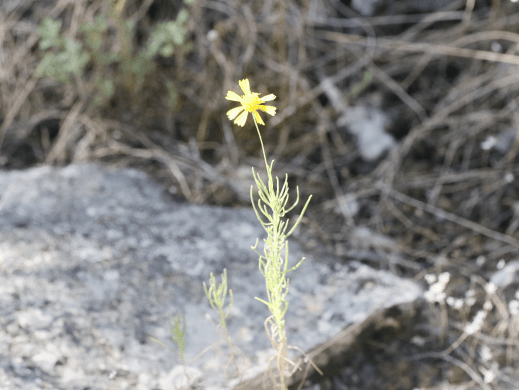
From my Nextdoor neighborhood group:

https://nextdoor.com/embed/sxW7MxB4bd-p

Okay, laziness is the mother of invention, so I’m trying to hit two birds with one stone, so to speak. The above is a link to my Nextdoor post this morning showing a few species of plants and animals related to Central Texas.

You might notice that the group there is also named Return To The Natives/Native Plants Are The Answer. If you think that’s a coincidence, you’d be wrong.

What’s in bloom in December?

Just a look at the most recent shots:

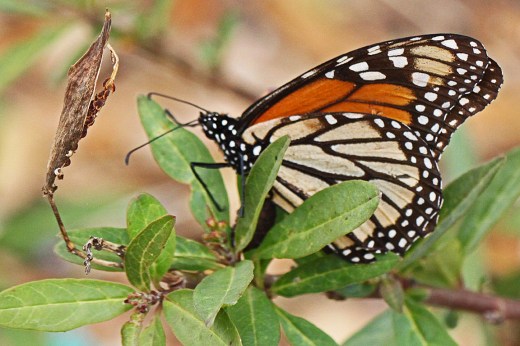
Taken on December 1, 2021. Since March 27, I have seen and photographed at least one Monarch Butterfly in each of the following months in 2021. And that just doesn’t seem right…

A possible explanation to Monarchs’ dallying around Texas this year

This article came up in my newsfeed recently,.

It suggests  why some Monarch butterflies seem to be hanging around Texas this year – the popularity of Tropical milkweed (Asclepias curassavica). The article further goes on to explain that

” Tropical milkweed becomes a problem when planted in temperate areas where it does not die back in winter. A protozoan parasite of monarch butterflies, Ophryocystis elektroscirrha or OE for short, can travel with monarchs visiting the plants and become deposited on leaves. When caterpillars hatch and start eating the plant, they ingest the OE. High OE levels in adult monarchs have been linked to lower migration success in the eastern monarch population, as well as reductions in body mass, lifespan, mating success, and flight ability.”

Milkweeds native to the region die back after blooming, and with them, the OE. Thus each new flight of Monarchs gets to lay their eggs on new, uninfected milkweeds.

Interestingly, the article was written over three years ago…

Tropical Milkweed is a No-Grow – by the Xerxes Society

On the other hand, I have now seen and photographed Monarchs in my backyard from late March through November . I went to vote  on Tuesday, November ,2, and  observed more than a few Monarch butterflies, both in the greenbelt and in the demonstration garden. Sadly,  many of the flowers being used didn’t appear to be natives.  I also noticed that the milkweeds at the community center garden appear to be Tropical milkweed. (They have yellow flowers instead of orange flowers).

Some plants and wildlife in October:

Monarchs and Queens

Danaus plexippus - Monarch

This year has been a strange one for Monarchs in my backyard.

Usually I just get a few Monarchs passing through in the Spring and Fall Monarch migrations. My geographic location is on the Southern edge of the pathway usually taken as the Monarchs pass from Mexico into Texas, mostly between Del rio and Eagle Pass, and then spreading out in a pie wedge or fan shaped flight plan spread across the US Midwest and up to the Northeast US and even into Canada.

This year, I have seen at least one Monarch every month since March 27, through September 1st, though I wasn’t able to capture photographs of all of them. It appears that the Monarchs have either been staying around the neighborhood, or they lay some eggs, head on their way, and the newly hatched adults do a little egg laying before heading up North as well.

It is difficult to say which is the case.But I can show you some of them: (Click on the thumbnail for a larger view).

We’ll see how many come through the yard in September and October.

###

The native Texas April yard/garden…

IF you live in Central Texas, of course. While many plants (including some native plants) are still trying to recover from what I have heard called Winter Storm Uri, which lasted for about ten days back in mid-February, 2021, most of the plants native to this region of Texas are coming back strong, or putting out blooms already.

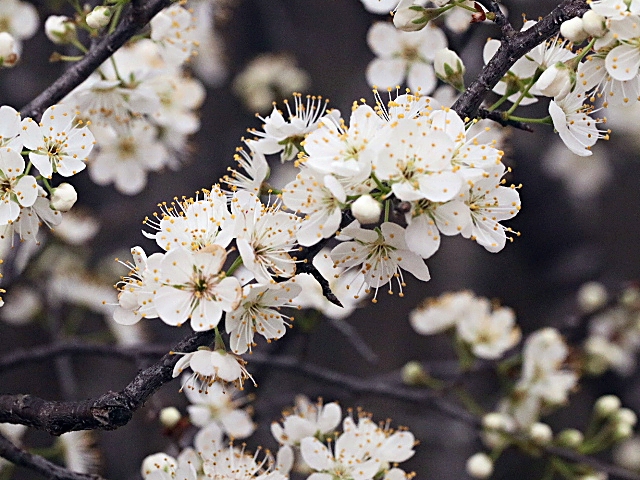
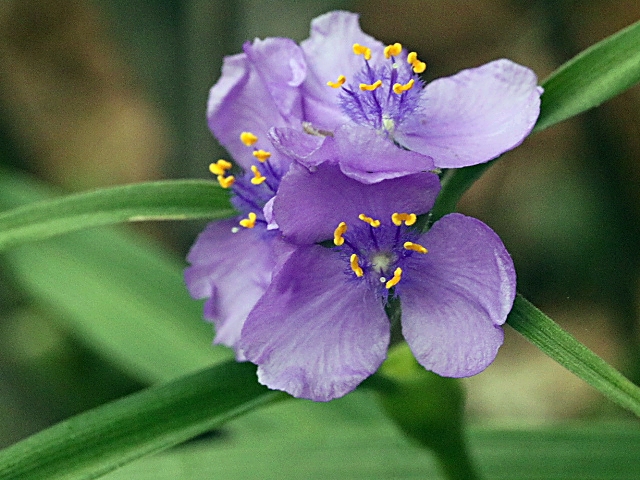
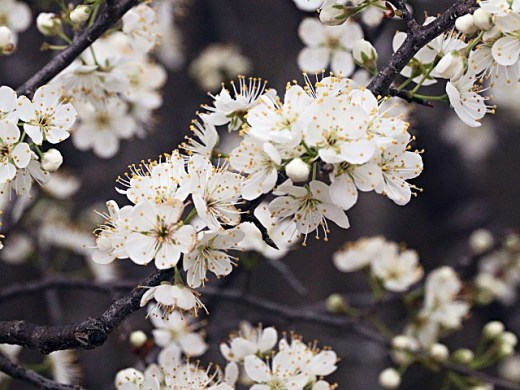
Mexican Plum (Prunus mexicana) has already flowered and started putting out leaves. Giant Spiderwort (Tradescantia gigantea) has for the most part finished with its most robust blooms, but there are still a few left. (Both of these photos were taken March 16, 2021).

.Prunus mexicana - Mexican PlumTradescantia gigantea

A little over two weeks later, things are really starting to perk up in the yard.

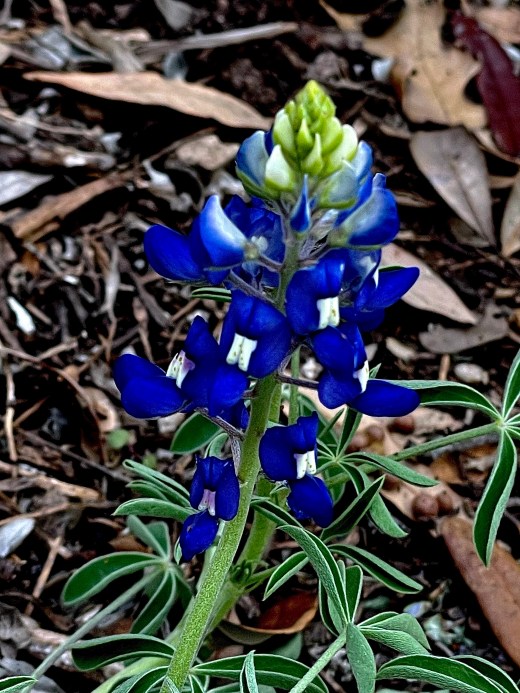
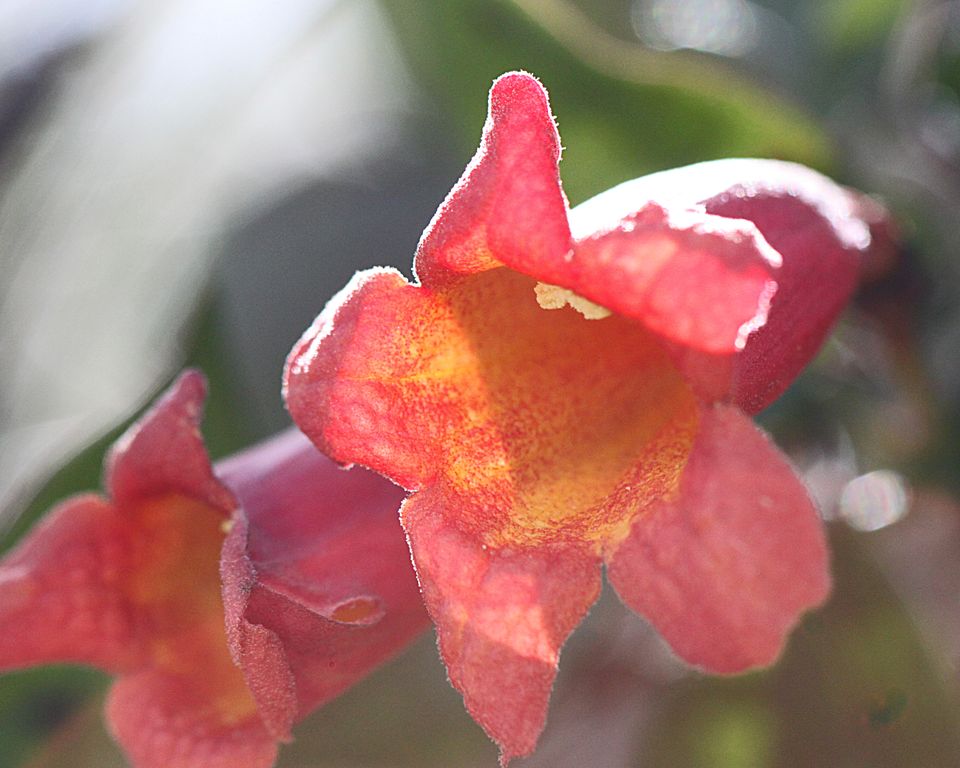
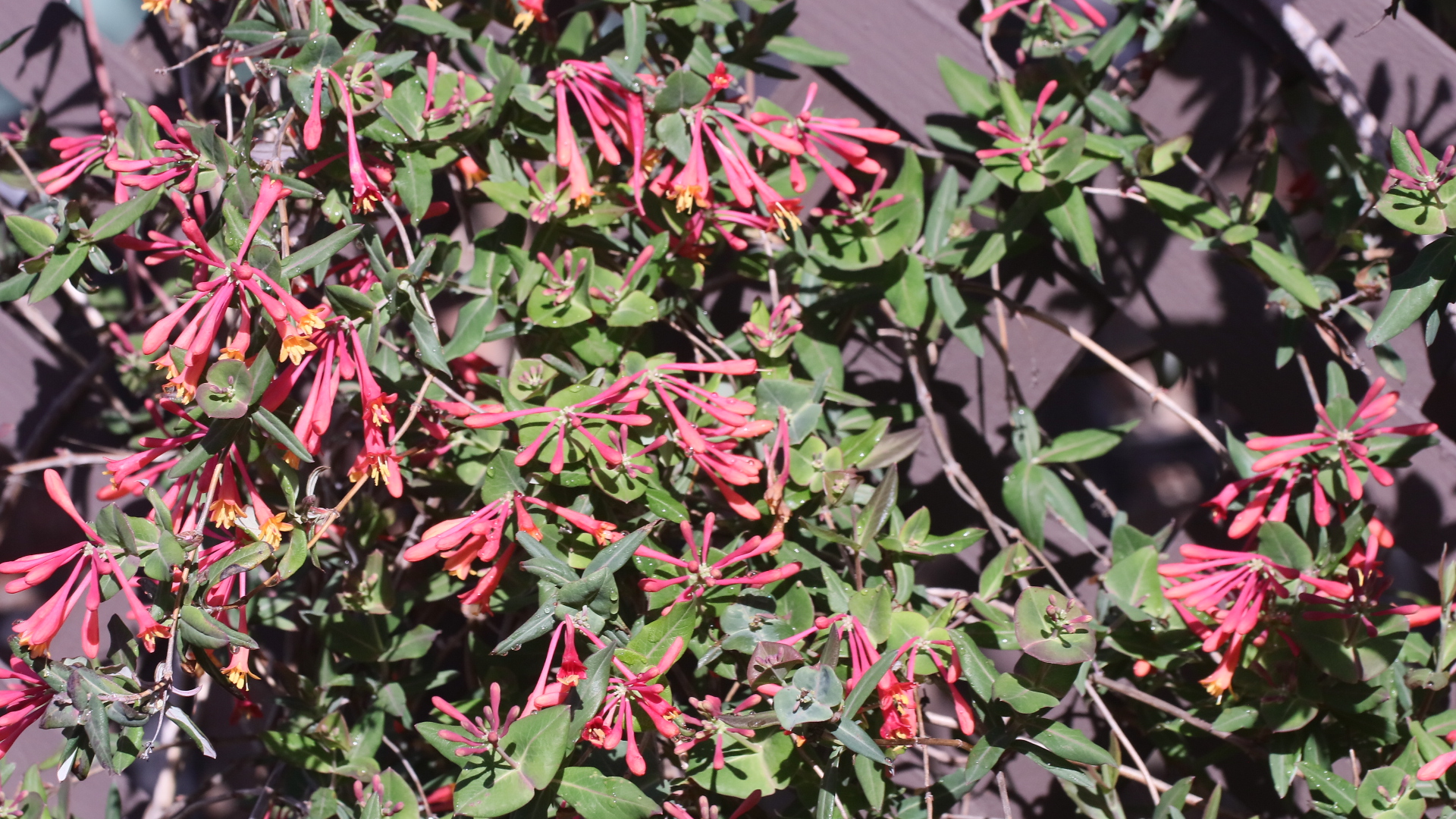
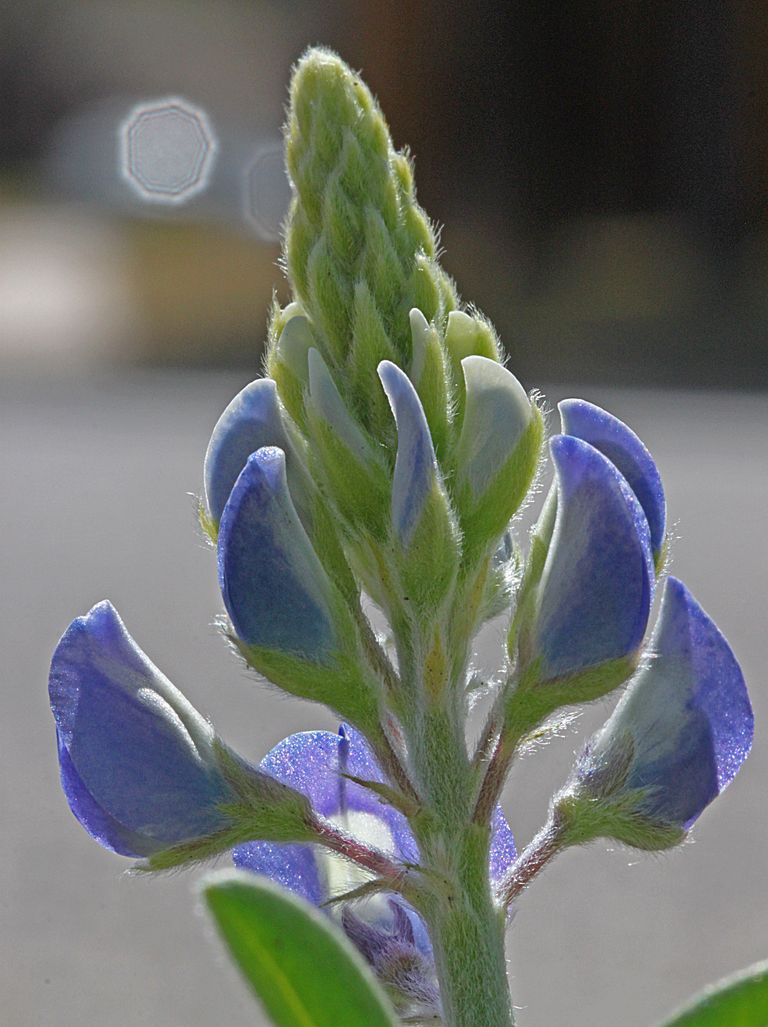
Bignonia capreolata - Crossvine Coral Honeysuckle (Lonicera sempervirens) Lupinus texensis - Texas Bluebonnet Crossvine (Bignonia capreolata), for instance, and Coral Honeysuckle (Lonicera sempervirens) which are both favored by Hummingbirds are blooming in profusion, as are the Texas Bluebonnets (Lupinus texensis).

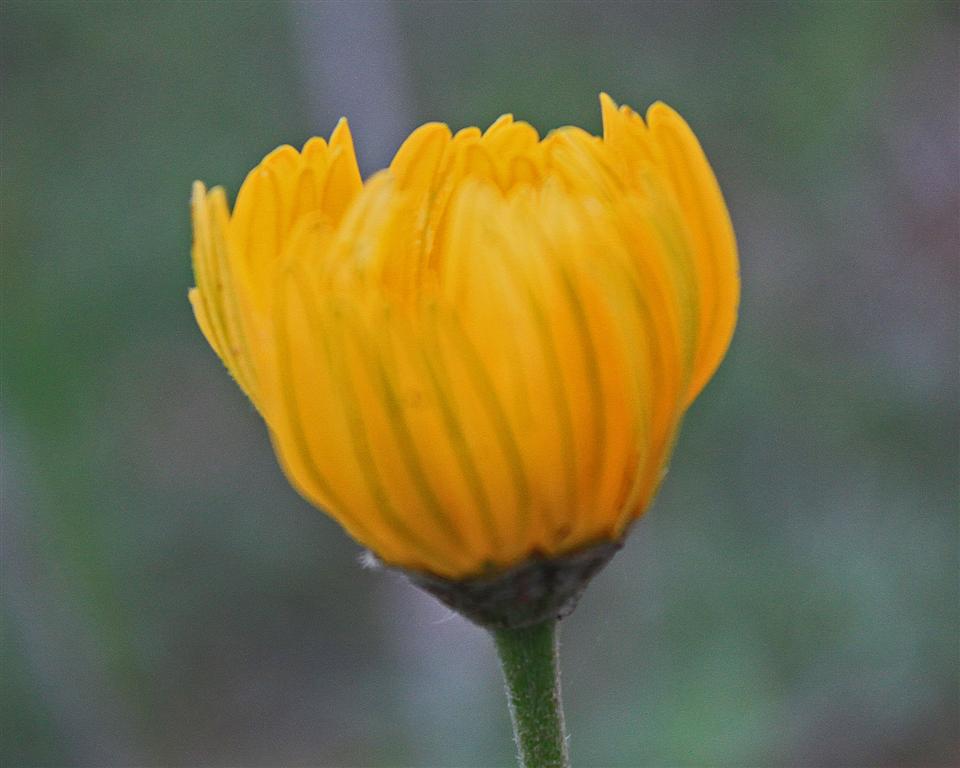
And then there are the Tetraneuris scaposa.which will bloom all year round if you let them, or keep on trimming off the deadheads, so that they can. These are perennials, but short lived, so after a few years you might have to replace them – or they might have spread and created new copies on their own.

Tetraneuris scaposa - Four Nerve Daisy

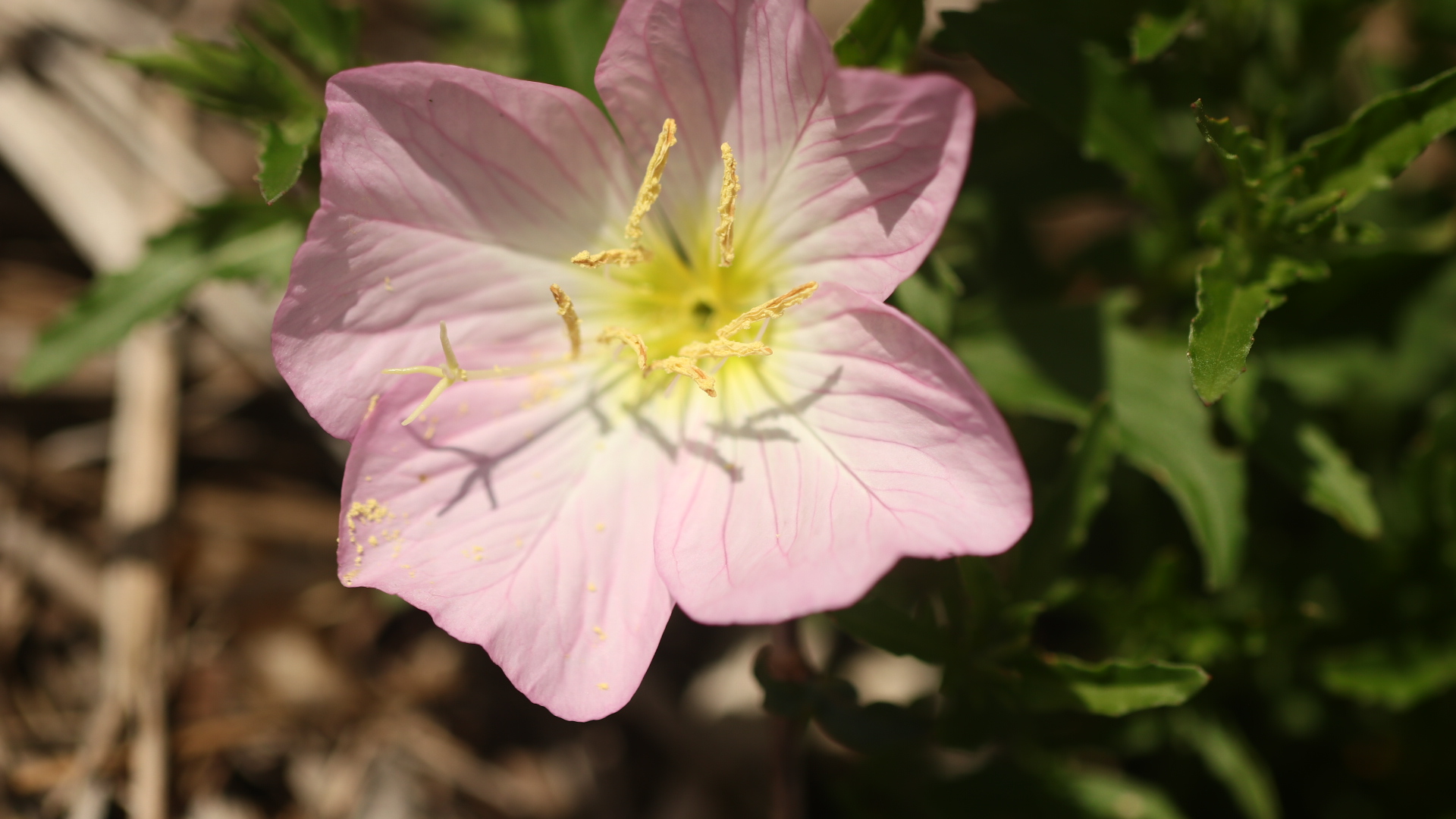
Oenothera speciosa - "Pink Ladies"

Oenothera speciosa – “Pink Ladies”

And, just to get this out there, Oenothera speciosa, known as Pink Primroses or Pink Ladies, are blooming currently. I have seen some popping up in neighbors’ yards that are otherwise mowed too short and devoid of any other native Texas plants. But thankfully, they haven’t mowed down the Pink Ladies. 

I will mention, but not add photos of Blue eyed grass, Cobea and Gulf Penstemons,  Mealy Blue Sage, Wright’s Skullcap, and a few others. The month of April is nearly over, The US Senate has unanimously voted to name April 2021 as National Native Plant Month, and there are invasive plants in my backyard and. beyond that need to be cut down before they go to seed. Oh, and the Rain Lilies have started popping up, finally after several days of light rain.

Hasta luego.

Return of the Celestials (or, A Day In The Life)

Fully open early in the day Nemastylis geminiflora

 I had been looking for Nemastylis geminiflora, commonly known as Celestials, among other names, since the middle of March. On March 23, 2021, I saw the first bloom or two. On the 24th, nothing blooming. Even went out later in the afternoon to see if anything had come up after the earlier jaunt, but still nothing new to show.

Note: I once contacted a seed source company to enquire if they had any seeds or bulbs for this plant. They indicated that they had a small amount sometime in the past, but they had quickly sold out. IF you have a large colony on your property, you might consider checking with a reputable native seed source to see how one might go about collecting seeds. I do not recommend trying to dig them up. They have bulbs which are buried deep in the soil which here in Central Texas is very rocky. Please refer to the Native Plant Society of Texas’s policy on the “taking” of plants.

First of all, what to look for?
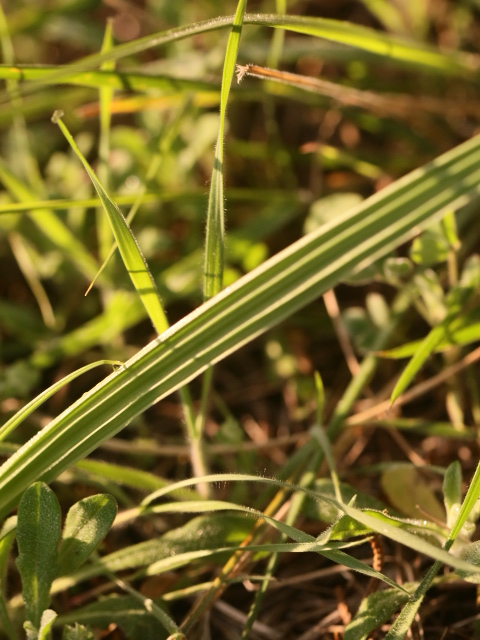
Pleatleaf Lily, one of the common names of N. geminiflora, comes from the distinctive shape of its leaves

Pleatleaf Lily, one of the common names of N. geminiflora, comes from the distinctive shape of its leaves.

Somewhere around midwinter the plant starts sending up a leaf or two. This inferred from the apparently chopped off tips of some of the leaves, following a presumed mowing. and probable weed-eater-ing of the berm, probably in January, which kept the berm shorn to less than 3 inches in height and scalped to bare soil in several places (but that’s a different post). Or maybe it was deer browse or rabbit nibbles.

In Central Texas, somewhere around mid-March, I am now beginning to scout out the individual plants, supposedly so I can find them later. In 2017 and 2020, I photographed plants in bloom around the 15 or 16th of the month, but most years they have appeared right about the Spring Equinox. Last year, the first plants appeared around the 15th-17th of March, then no blooms until around the 27th-29th. Then nothing, until I stumbled across a few around April 10th.This year, 2021, the first blooms did not appear until the 23rd, and these two or three seem to have been early bloomers. The majority of the plants in the area in which I am familiar were still just pleated leaves.

Eventually one will observe the stems with the pre-blossoms (for want of the correct botanical term) coming up, and from that, if one is lucky, the unfurled blossom in the early morning hours. 
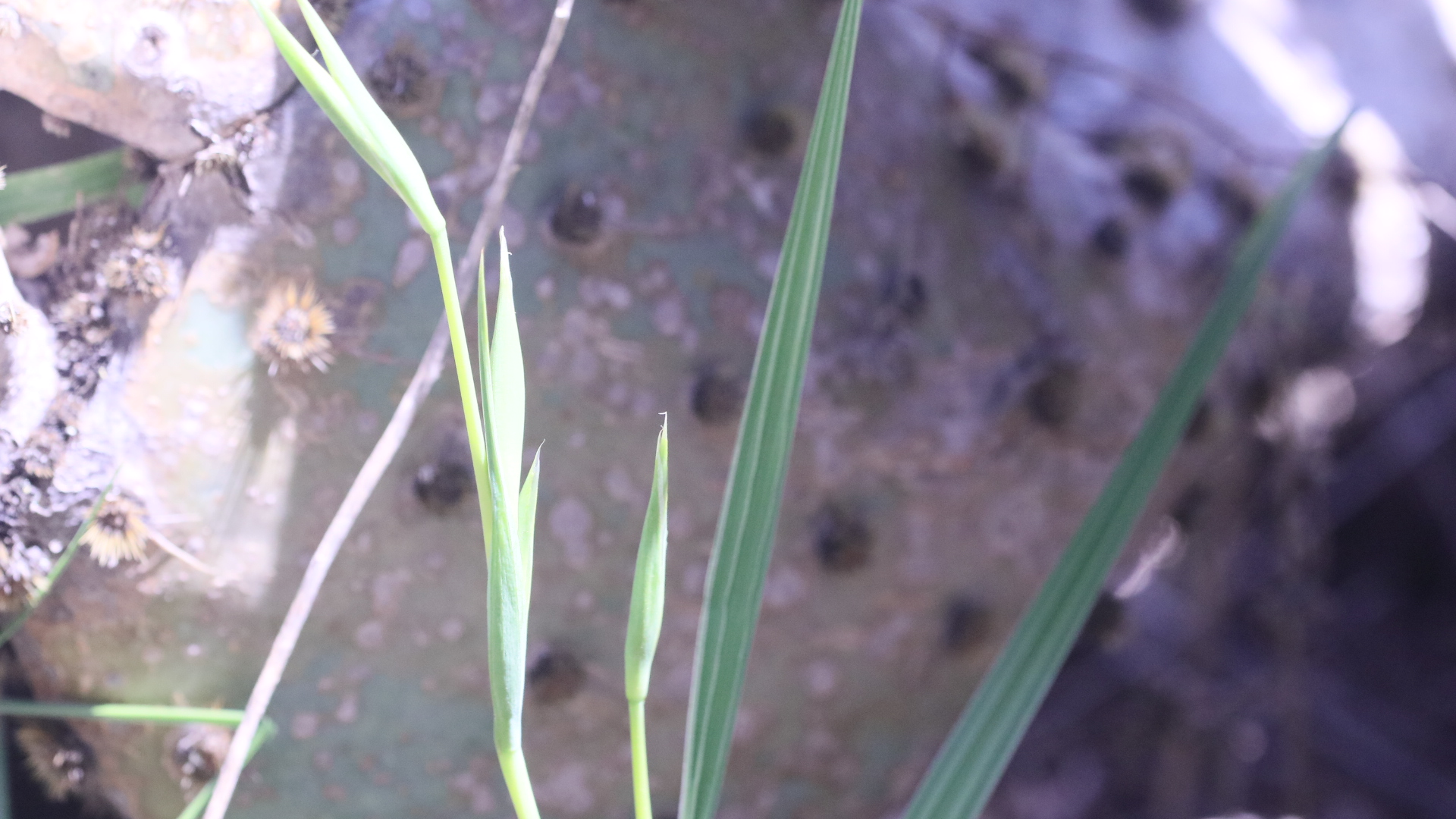
Celestial before blooms open (leaves to the right, stems with unopened inflorescences on the left)
Celestial before blooms open (leaves to the right, stems with unopened inflorescences on the left)

Inflorescence, still unfurled

Inflorescence, still unfurled

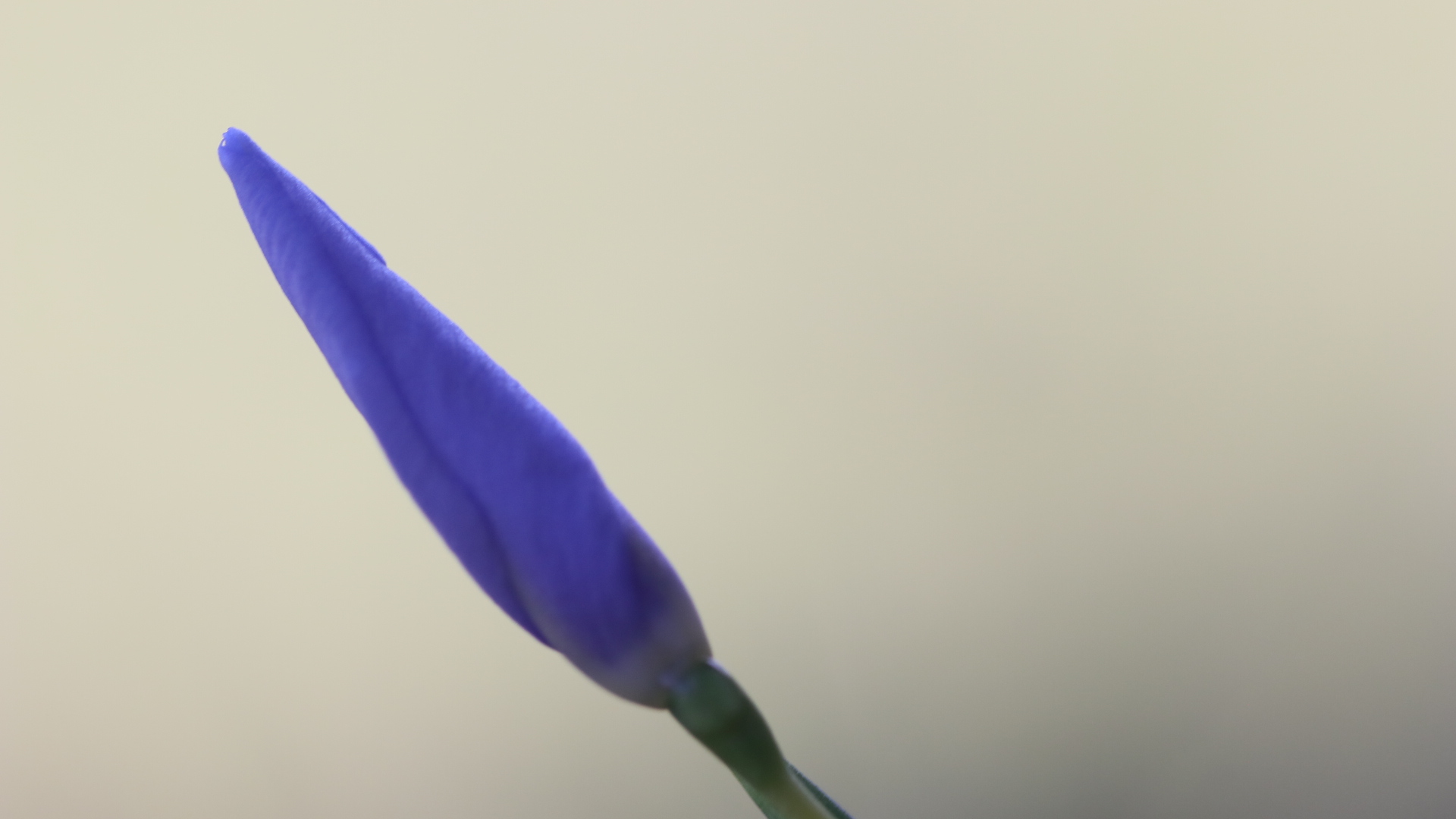
Then, usually the day before or earlier in the morning that the inflorescence fully extends, you’ll see a purple or bluish “flag,” not yet unfurled. 
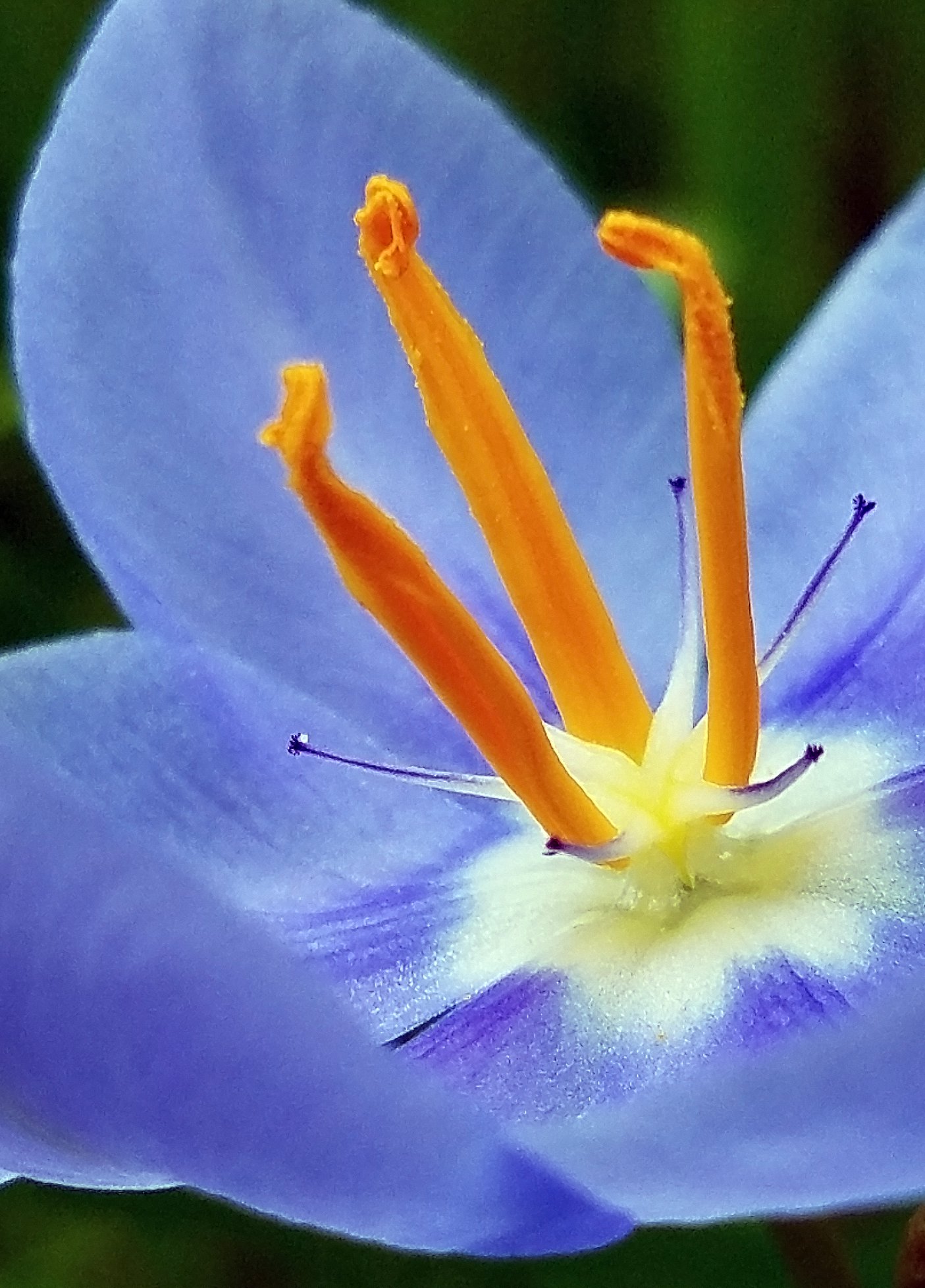
Fully open early in the day Nemastylis geminiflora

Fully open early in a day in the life of a Nemastylis geminiflora.

Either the next day or later the same day, depending upon the sort of day it is (cloudy days they seem to remain closed until after noon. Sunny days they seem to open earlier).

Later in the day, the three tall yellow stamens will have curled up and descended/curled up towards the six stigma spread out at the bottom of the flower as show below. This particular photo taken around 2:30 PM CDT, on a fairly sunny day this March 27th or 28th.

Stamens curled up as a pollinator of undetermined species is busy at work in mid afternoon.
Stamens curled up as a pollinator of undetermined species is busy at work in mid afternoon.

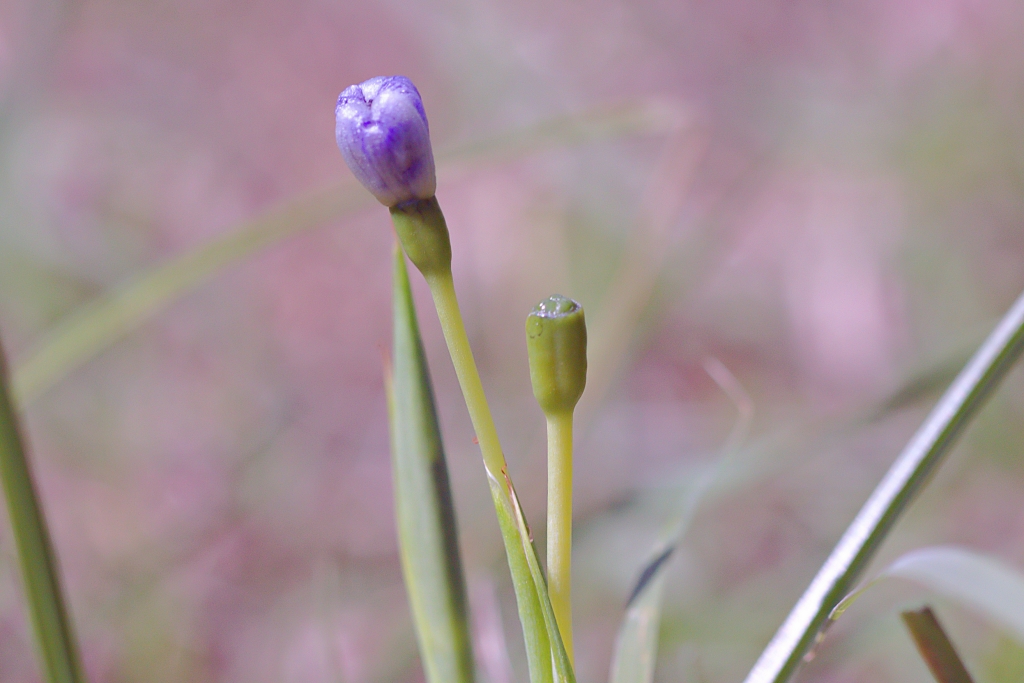
Tomorrow, and tomorrow... the petals have folded, and then the fruit begins to form, as seen left to right.

Yesterday, today, and tomorrow… the tepals have folded, and then the fruit begins to form, as seen left to right.

Although each flower blooms for a single day, a plant may have several flowers. Above, you can see what looks like a potential inflorescence to the left, either today or yesterday’s flower folded in on itself in the center, and to the right, the immature fruit which will eventual mature and provide seeds for future generations. When dry, they dehisc, popping out the small black seeds into the near vicinity.

So: That’s the life cycle of. the Nemastylis geminiflora, which usually blooms for a few short weeks from around the Vernal Equinox until the beginning of April – although sometimes it will fool you as I was last year when I chanced upon some late bloomers around the 10th of April. (I know, the Beatles’ song “Fool On The Hill” comes to mind – if not yours, in my mind, and “In My Life” at least).

Two takeaways:

  1. Do not pick the flowers – this prevents them from going to seed and producing new flowers for the next year. 
  2. Do not try to dig them up. Although they are called Prairie Celestials, the soil in which these are found is rocky and the bulbs are buried deep below the surface, so any attempt to dig them up will likely as not result in damaging the stem or the bulb, thus rendering such efforts useless.

 And a third:

Do get out to a local park or trail where native plants have not been discouraged by putting green level mowing practices, and take a leisurely walk (wearing a face mask, and maintaining a safe social distance). Even if you don’t see any Celestials, you just might see some other native plants and wildflowers. (In Central Texas, they were a little late in their blooming, so maybe they will extend it a little further into April. Who knows? Plants apparently don’t read field guides or any other books, so they don’t seem to follow the “rules” all the time).

###
Blooming March 16, 2021, ’round Round Rock, TX

Prunus mexicana - Mexican Plum

Took a walk outside this morning in search of one particular species, which hasn’t shown up yet, but found these, some planted, some occurring naturally:

Prunus mexicana - Mexican Plum

Mexican Plum started blooming a day or so ago. Noticeably absent so far has been a proliferation of pollinators.

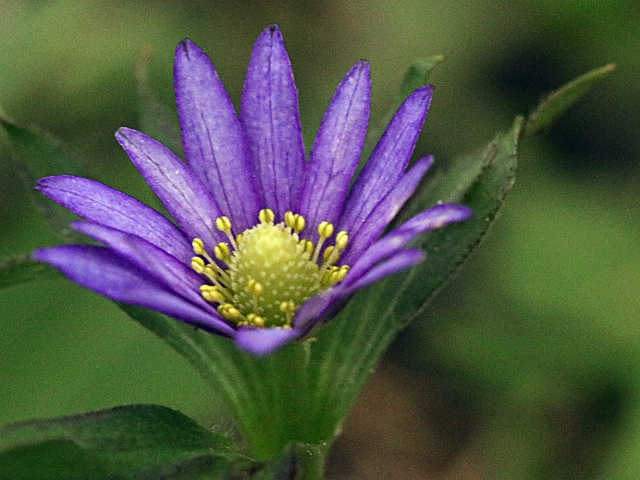
Anemone berlandieri

Anemone berlandieri – also known as Ten Petal Anemone, Berlandier’s Anemone, and Windflower

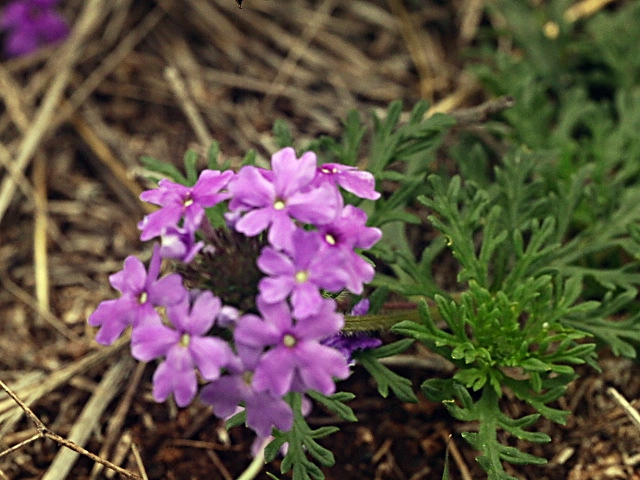
Glandularia bipinnatifida var. bipinnatifida

Glandularia bipinnatifida var. bipinnatifida, also known as Dakota Vervain, Prairie Verbena, among others

Tradescantia gigantea

Tradescantia gigantea – also known as Giant Spiderwort, is a good companion planting for Turkscaps (Malvaviscus arboreus var. drummondii), since the low grass-like mounds of the spiderwort remain green throughout the year, and start to bloom in lat February or early March, after the Texas Red Mallow (another common name) have dropped their leaves (and in the home garden, are ready to be trimmed back). Spiderwort is an aggressive spreader, Turkscap not so much: both can handle partly shady to shady environments. Both attract a variety of pollinators.

#RoundRockTX #CentralTexas #WhatsInBloom #NativePlantsOfTexas

Gone to seed, fruits, or berries, mostly…

Took a walk out in the woods, in the middle of the summer, to see if the Phemeranthus calycinus aka Rock Pink, might be in bloom, since we had had several days of rain prior. No such luck. There had been at least 20 specimens in the immediate area about four years ago, and earlier this year I found one in bloom, but even the Bitterweed (Helenium amarum) seemed to be scorched, for the most part, although I did take a photo of one that wasn’t, and some grasses. (For an article describing the flower I was looking for, and some photos, see Stalking the ephemeral Rock-Pink).

The area I’ve dubbed “Lace Cactus Lane” because of its concentration of Echinocereus species, was in fairly decent condition. And a pass through the area I call “Vine Street” revealed some Pearl Milkweed Vine (Matelea reticulata) pods dried and open, as well as some Carolina Snailseed (Cocculus carolinus), starting to put out its berries. Of course, there was the usual Poison Ivy (Toxicodendron radicans), Virginia Creeper (Parthenocissus quinquefolia ) and Sevenleaf Creeper (Parthenocissus heptophylla). And I took a few shots of the Bearded Swallow-Wort vine (Cynanchum barbigerum) just to illustrate the way it braids itself along whatever is supporting it.

A bit closer to home, Butterflyweed (Asclepias tuberosa) were in bloom,  as were Texas Lantana (Lantana urticoides) , Apache Plume (Fallugia paradoxa), Gregg’s Mistflower (Conoclinium greggii), Mealy Blue Sage (Salvia farinacea), Skeleton-leaf Golden-eye (Viguiera stenoloba),  Four-nerve daisies (Tetraneuris sp.), Flame acanthus  (Anisacanthus quadrifidus), Autumn Sage (Salvia greggii), and Manzanilla (better known by the name Turk’s Cap, and rarely called Texas Red Mallow)(Malvaviscus arboreus var. drummondii). Even the Wild petunia (Ruellia nudiflora) has been putting out blooms lately, and the Yellow Passion Flower (Passiflora lutea) seems to have just recently finished its latest cycle.

Which leads to a mention of the life cycle of the Gulf Fritillary (Agraulis vanillae) butterflies, which have tried their best but haven’t succeeded in stripping the Passiflora vines completely this year. Given that it is safe to speculate that the suburban subdivision where I reside has little habitat for these beautiful pollinators, one can only hope that my little nursery is keeping the local population going.

In the heat of the summer

I seem to suffer from Gilligan’s Syndrome – what starts out as a five minute walk outside to water the plants in their containers that I am hoping will hold on until cooler weather comes (September? October?) turns into an hour or more photo safari. Sometimes I go beyond the confines of my yard, sometimes not.

Ruellia nudiflora, for instance, has suddenly been blooming like crazy. A Passiflora incarnata volunteer popped up in the mulched bed across from the Passiflora lutea and Passiflora suberosa, and started putting out blooms. The Malvaviscus arboreus var. drummondii continue to bloom, as do the Salvia greggii, Lantana urticoides, Scutellarria wrightii, Salvia farinacea, and Conoclinium greggii. In the “nursery,” several Asclepias milkweeds have bloomed or budded, along with Tetraneuris scaposa. In the gravel pathway, I had to (reluctantly) trim the Boerhavia coccinea back to allow human passage. The Fallugia paradoxa has put out a few blooms and plumes, and the Pavonia lasiopetala has been a pleasant surprise with its hibiscus-like pink blossoms.

We have Liatris punctata still in bloom, Melampodium leucanthum, Asclepias texana, and a native grass that I have been calling “Indian Grass,” (turns out that is the common name for Sorghum nutans. The Aloysia gratissima has attracted pollinators, as has the Anisacanthus quadrifidus, and behind the fence, the Proboscidea louisianica or “Devil’s Claw,” has held out with a bloom or two. The Glandularia bipinnatifida has come up in various spots, too low for the mowers’ blades most of the time. As can be seen in some of the photos, these native plants of Texas, most of which are not receiving any supplemental watering, provide food for Bumblebees, butterflies, and even hummingbirds, lizards, and wasps. I even went out and over the course of several days, harvested enough Diospyros texana fruit to make a Texas Persimmon Loaf. The slide show that follows includes photos taken the week of August 10 – 16, 2020

This slideshow requires JavaScript.

What’s blooming in Central Texas?

What, indeed? I’m happy to say I’ve seen a hummingbird buzzing around the Turk’s caps (Malvaviscus arboreus var. drummondii), the Tetraneuris scaposa as well as the T. scaposa var. linearifolia are in bloom, although the ones in the “nuisance strip are less lively than the ones in the one gallon pots ready to augment them. The Blackfoot Daisies (Melampodium leucanthum) are blooming, and the Cenizo or Texas Sage (Leucophyllum frutescens) bloomed for a little while, but have faded as the temperatures get into the 100s and the air has dried up. Datura (Datura wrightii) have been putting out their Angel Trumpets at night. Devil’s Claw (Proboscidea louisianica) are coming up behind the fence, along with plenty of Silverleaf nightshade (Solanum  elaeangifolium). Here are some of those mentioned, and maybe some not.