Clematis and Milkweeds, welcome to the family…

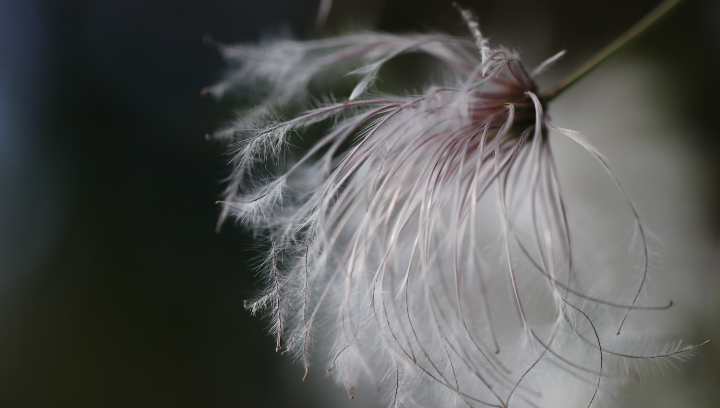
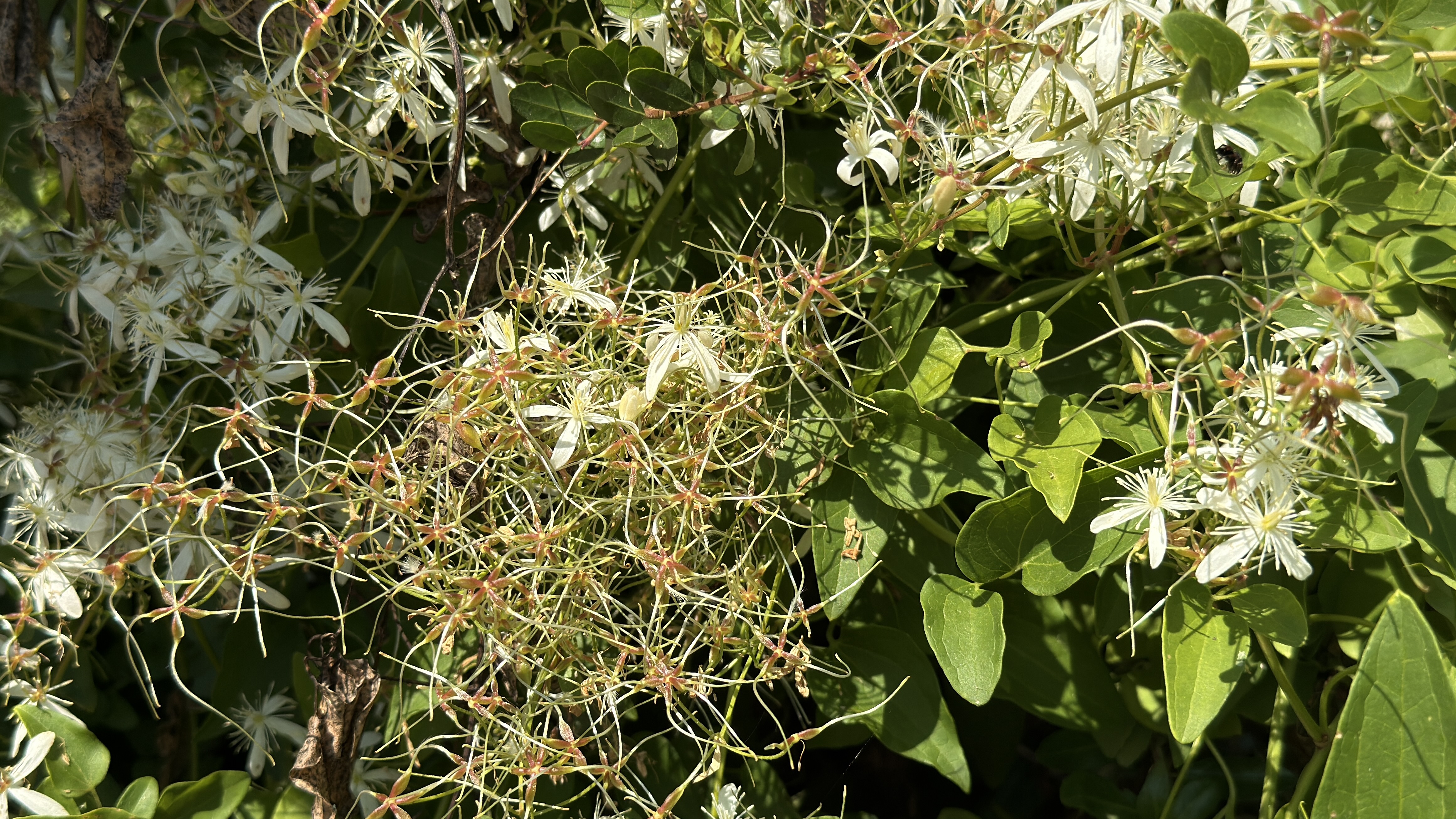
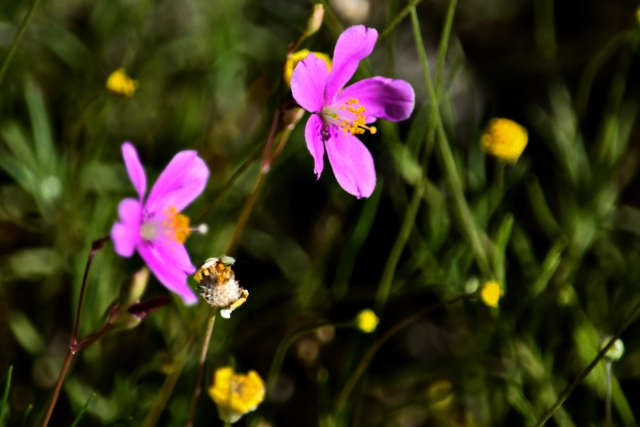
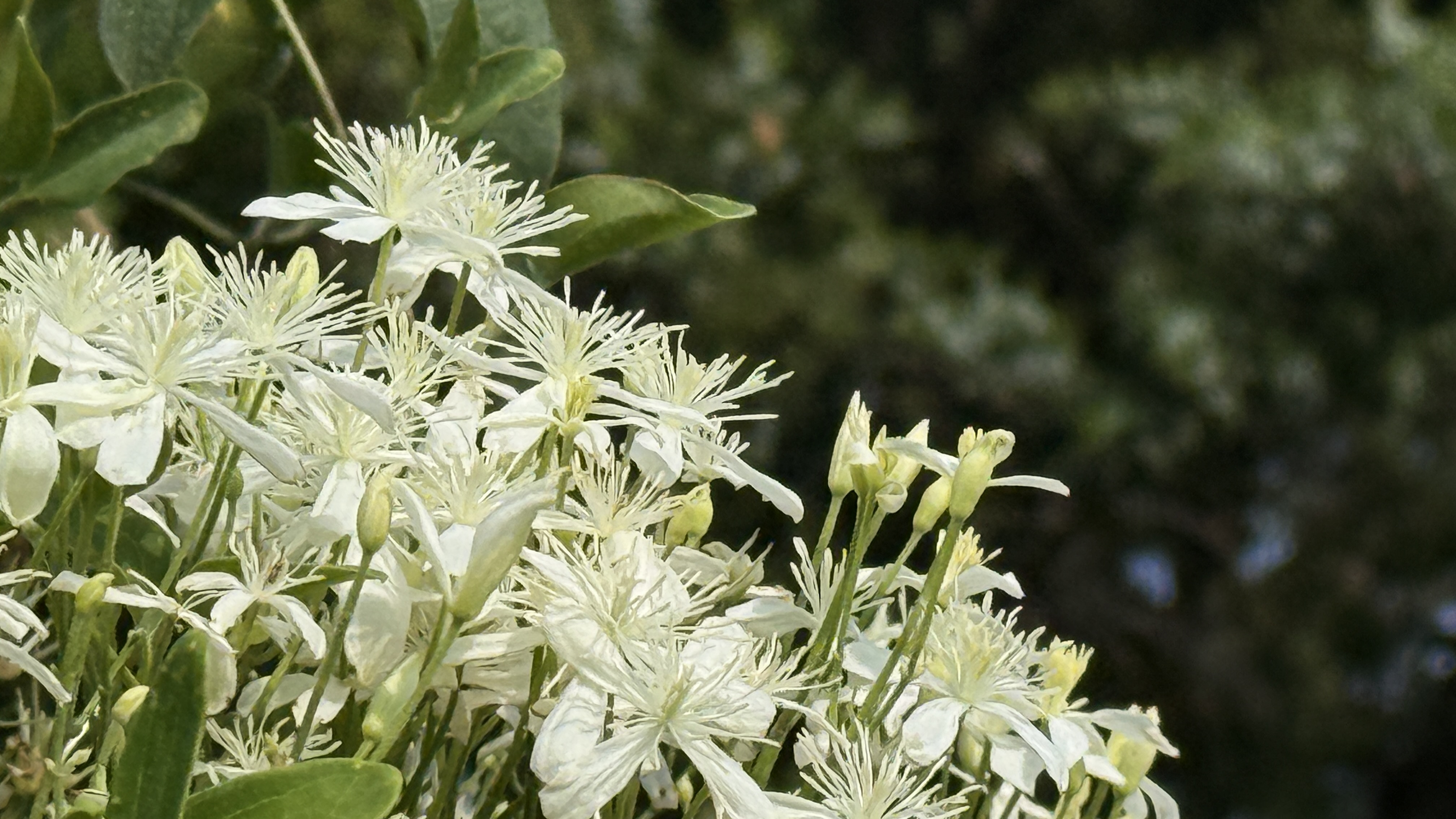
One of my favorite “flowers” is the female Clematis drummondii which is most noticeable in the late summer as the achenes turn into cascades of clouds that give it one of its common names, Old Man’s Beard. The actual flower is shown in the first photo following, the achenes in the other two:

Another favorite plant is Matelea reticulata, commonly known as Pearl Milkweed Vine, due to the “pearl” in the middle of its flower. It, too, is native to Central Texas, where I no longer reside, having “pulled up roots” to move a bit further to the North.

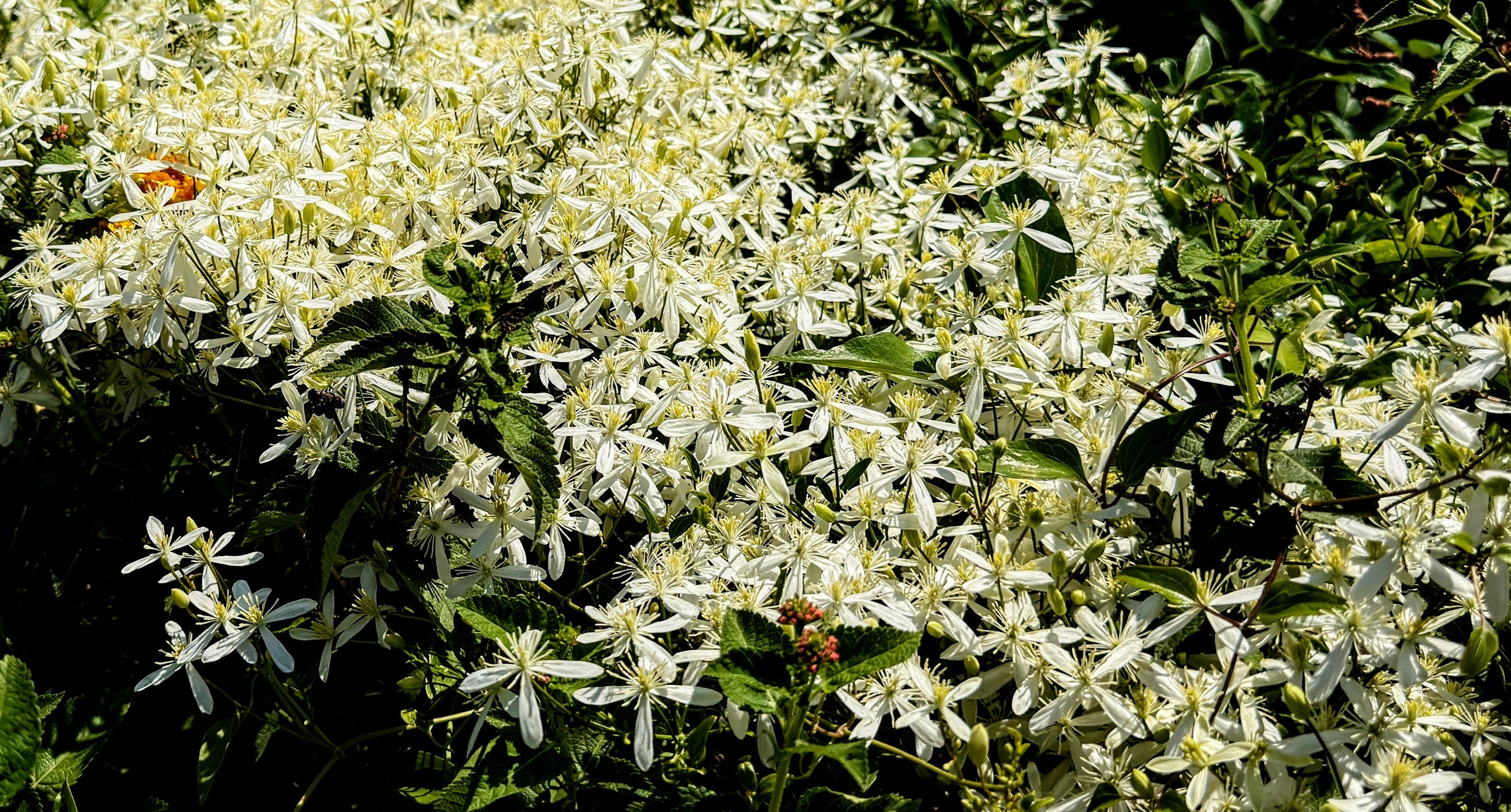
I was pleasantly surprised to find, recently, a different Clematis, native to Central Oklahoma. Clematis terniflora, or Autumn Clematis, as it’s commonly known, is smaller than its Texas cousin, but still provides striking clouds of white flowers and achenes along the roadsides and in ditches. In this case, the flowers provide the show, and the achenes are less showy than those of C. drummondii, as seen in the third photo following:
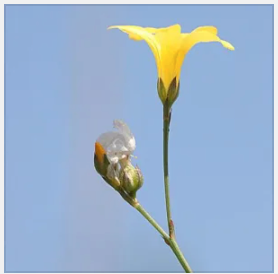
Cynanchum laeve, common name Honey Milkweed Vine, has been observed in several locations around here, notably near the airport and a few miles away. As suggested by the common name, the flowers give off a strong, sweet smell attractive to humans and pollinators alike.

While they’re not the same species one has become accustomed to, the “new” species are familiar enough to provide a sense of a welcoming environment.

###

Spring Photos of Three Oklahoma Tree Species

 A few photos from Bethel Acres in Central Oklahoma during. the Spring of 2025.

The first focuses on the long needles and early cones before they’ve matured. According to an Audubon Society Field Guide published in 1980, this species is native only to the Southeastern tip of Oklahoma. The Wildflower Center’s Native Plants database page, updated in 2022, repeats this information. The location where this photo was taken, of a tree distributed without human intervention, shows the effects of global warming in the extension of its range northward. (Assuming the species is identified correctly.)

LobLolly Pine
LobLolly Pine (Pinus taeda)


Next is what appears to be a Post Oak, with a three lobed leaf shape. The leaves are about 5 to 8 inches long, but shape and size are highly variable.

Post Oak (Quercus stellata)

Blackjack Oak (Quercus marilandica)

Finally, here’s a Blackjack Oak, which has much larger catkins than the Post Oak. The two different species are known to hybridize easily. Perhaps we will post some photos in the future. Observed what appeared to be a Post and a Blackjack oak, growing next to each other, and each showing leaves resembling the “template” form for both pf the species. The typical Blackjack Oak leaf has a “duck foot” shape, almost triangular, without any deep indents. The Post Oak, on the other hand, has a “head” lobe with two deep indents above and below what look like “arms,” tapering a little into the form of a (vaguely) human body.

But that’s a task for another day.

Where have all the (native) flowers gone?

Prosser, R.S., Brain, R.A. Where have all the flowers gone? A systematic evaluation of factors driving native terrestrial plant decline in North America. Environ Sci Pollut Res (2024). https://doi.org/10.1007/s11356-024-34349-9 

Prosser and Brain have done the research and  have come up with the following conclusions:

  • Habitat alteration and non-native species are the most important drivers of the decline in native terrestrial plant diversity in North America.
  • No listed species in the U.S. or Canada faced a singular threat. In the recovery plans for all listed species, several threats were identified as contributing to their risk of extirpation or extinction.
  • Pesticides, specifically herbicides, represent a micro-scale contributor to the decline of plant biodiversity in North America relative to other drivers.

(Note: the above three points are taken verbatim from text in the article, although they are not presented as bullets in the subject article. Emphasis using bold and italics has been added).

In their conclusion, they argue that pesticides and herbicides make an easy target for litigation, even though they contribute minimally to the extirpation or extinction of native plants .

On the other hand, Paraquat is an herbicide that not only has been banned in over 50 other nation-states, and has been linked as a probable cause of Parkinson’s Disease in the book Ending Parkinson’s Disease: A Prescription For Action  and in this February 2024 article on the EarthJustice website: This Weed Killer Is Linked to Parkinson’s. Why Isn’t It Banned Yet?

I would suggest that the authors of the article on causes contributing to reduction of native plant species are failing, in their words, to see the forest by focusing on the trees. I am a native plant advocate who also has Parkinson’s Disease. I don’t know whether I have been exposed to Paraquat in the past. Just because pesticides and herbicides are not a major factor in the reduction of native species doesn’t mean I should just ignore the bigger picture of the effect of herbicides like Paraquat on the species Homo sapiens, many of whom, including myself, have displaced other native occupants of this territory, like the Apaches, the Tonkawas, and other tribal groups who are members of the same Genus and species.

This post has covered most of my main interests: scientific research, Parkinson’s Disease, and native plants. All that’s missing is some music:

The Parkinson’s Anthem (We Ain’t Givin’ Up Hope)

#nativeplants  #research #parkinsonsdisease #advocacy

Resistance is futile…

Most folks will recall that line from various Star Trek encounters  with the Borg, as well as the following line “You will be assimilated.” Or was it the preceding line? Doesn’t matter, because the purpose of this post is to “announce” that my other WordPress blog, “Return To The Natives / Native Plants Are The Answer,” has been assimilated into “Bob’s Brain: Living Well With PD and Other Comorbidities.”

With the assimilation comes a couple of new categories in the menu: Native Plants, and Wildflowers. Here’s an example of what one might find under either of those categories.

2016-03-06-Rock-Pink-640pxlw

Rock Pink (Phemeranthus calycinus). The blooms are ephemeral, lasting only one day, although a single plant may have more than one bloom. They grow in limestone soils, in locations where waters flow after rains (in this part of the world). This was captured digitally following recent rains in early May, 2016. Their bloom period is from April through September, which is the latest month in the year that I’ve been able to photograph them.

Now I’ve assimilated the two, there’s only one blog to intermittently post articles about things that interest me. Reduces my guilt in half. Next step is to post the news on RTTN / NPATA with a link to Bob’s Brain, and then deleting the old blog. I’m a cyborg, having had DBS, so it should work out as well as the coders have allowed for such a smooth transition.

We’ll see what happens.

Live long and prosper.

###

Blooming in late May and Early June…

Here are a few of the flowers and other stuff I managed to capture on digital media recently.

Actually, there are a lot more items in bloom, but these were closest on hand. The front yard also has Four-nerve daisies, Wright’s skullcap, Autumn Sage, Simpson’s rosinweed, Turkscaps, Engelmann daisies, Rock Rose, and White avens in bloom, besides those pictured below.

The South side of the house has Passiflora vines, copious amounts of Gulf Fritillary and other butterflies in varied stages of development, a Texas lantana, a Datura , lots of Blue Curls, a couple of White mistflowers (not blooming until the Fall), Clematis texensis and drummondii, some Asclepias plants for the Monarchs, and that pretty much covers what’s on bloom in June.

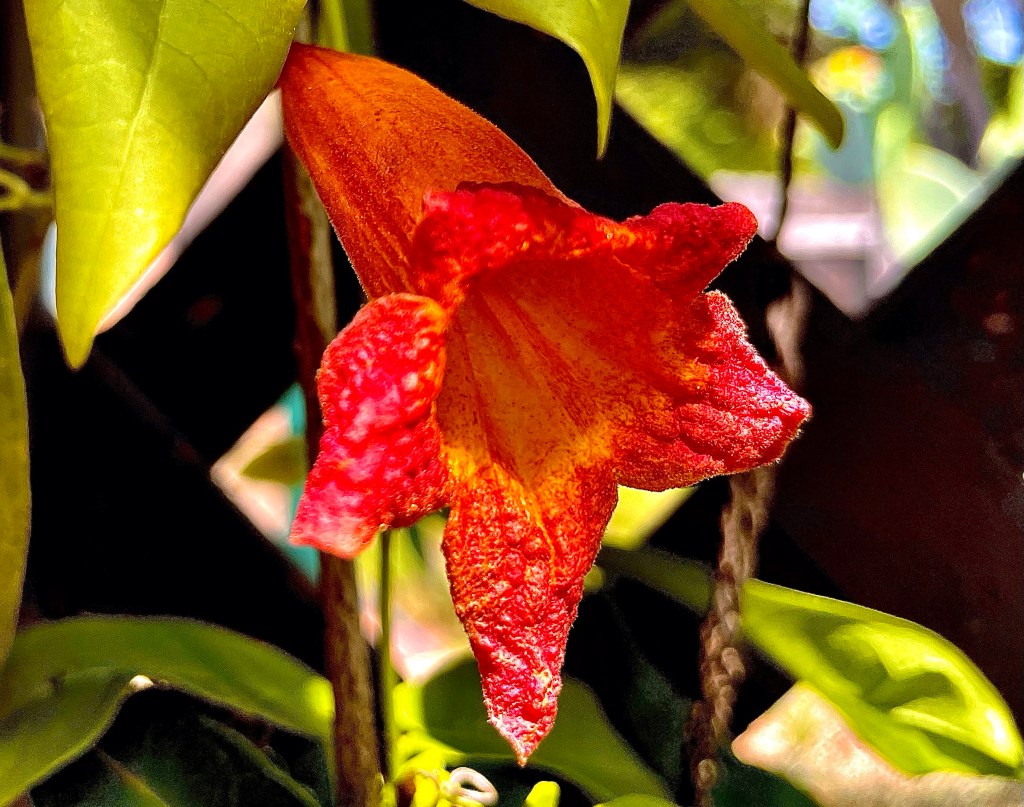
Bignonia capreolata (Crossvine), slightly past its glory

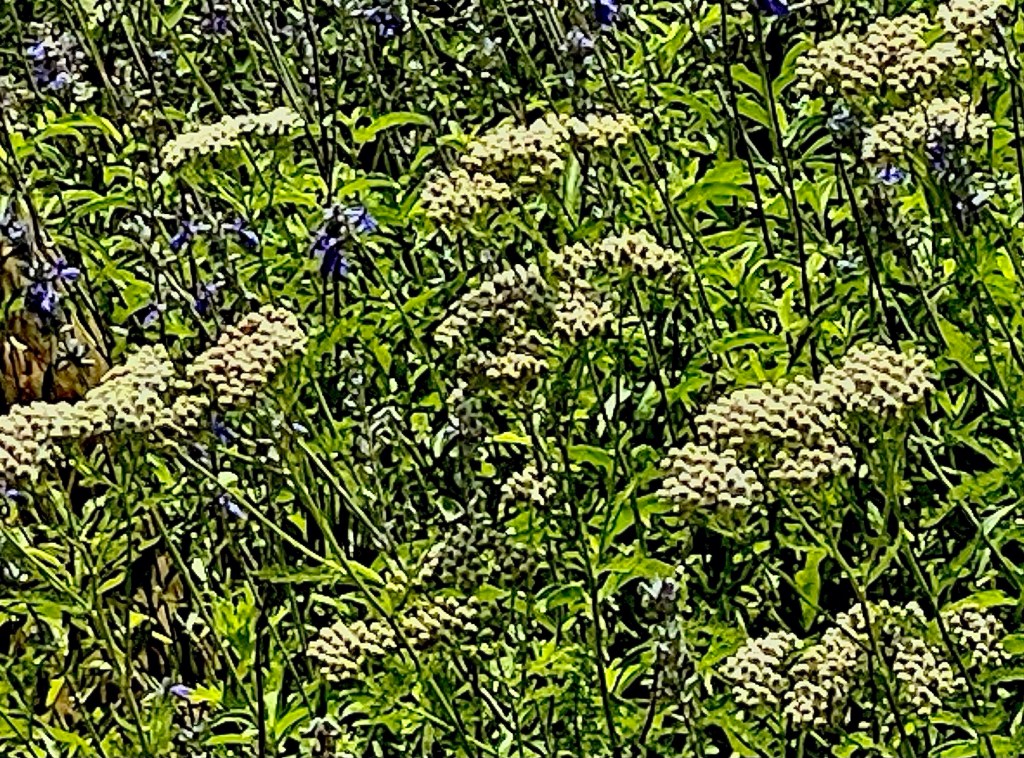
(Achillea millifolium) Milfoil

(Salvia farinacea) Mealy blue sage
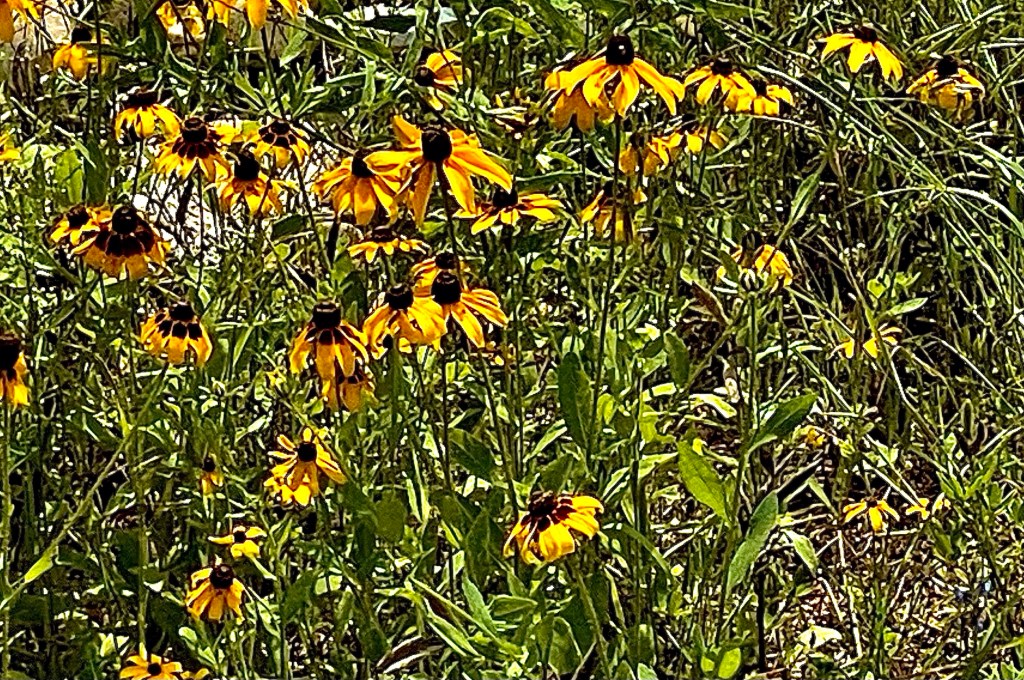
Rudbeckia hirta – Brown eyed Susans

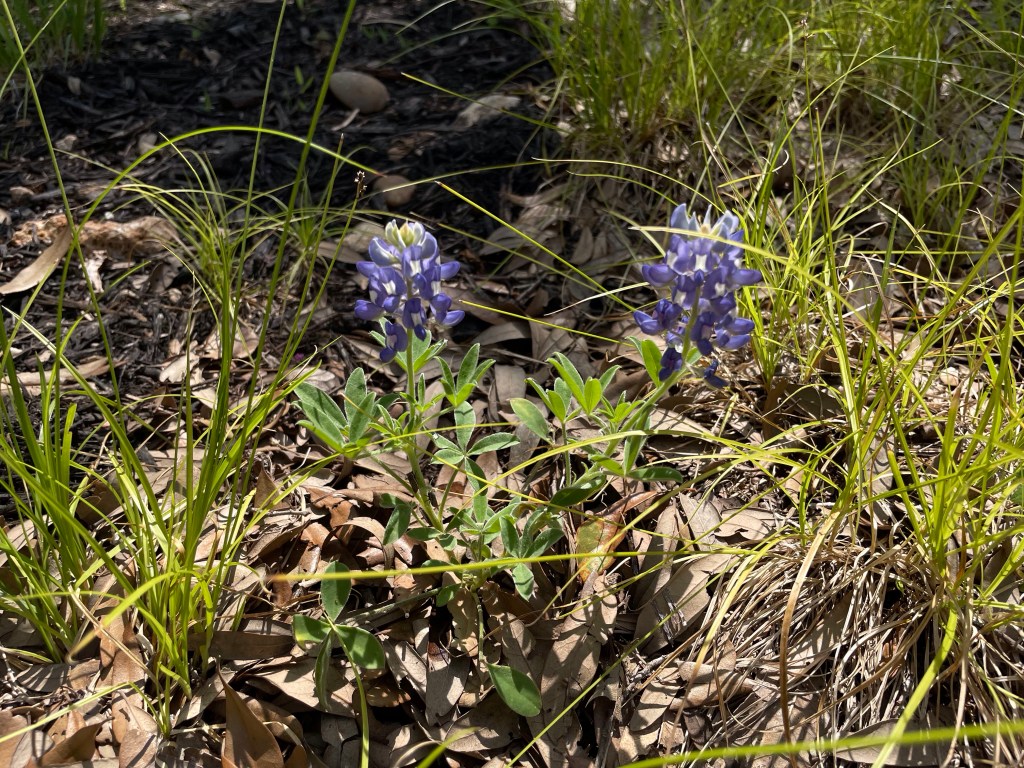
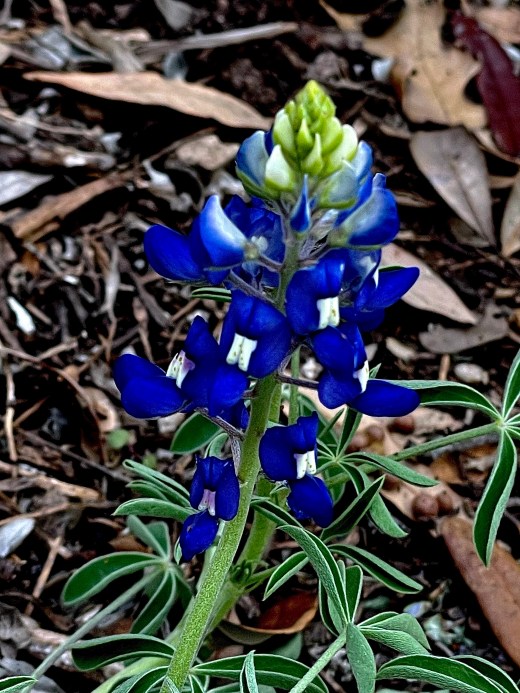
A surprise on June 1st – two baby Bluebonnets (Lupinus Texensis) blooming in the front yard!

From my Nextdoor neighborhood group:

https://nextdoor.com/embed/sxW7MxB4bd-p

Okay, laziness is the mother of invention, so I’m trying to hit two birds with one stone, so to speak. The above is a link to my Nextdoor post this morning showing a few species of plants and animals related to Central Texas.

You might notice that the group there is also named Return To The Natives/Native Plants Are The Answer. If you think that’s a coincidence, you’d be wrong.

What’s been blooming?

It has been a while since I have been able to venture far from my own yard, but here’s what I got to report, mostly from my front, side, and back yards:

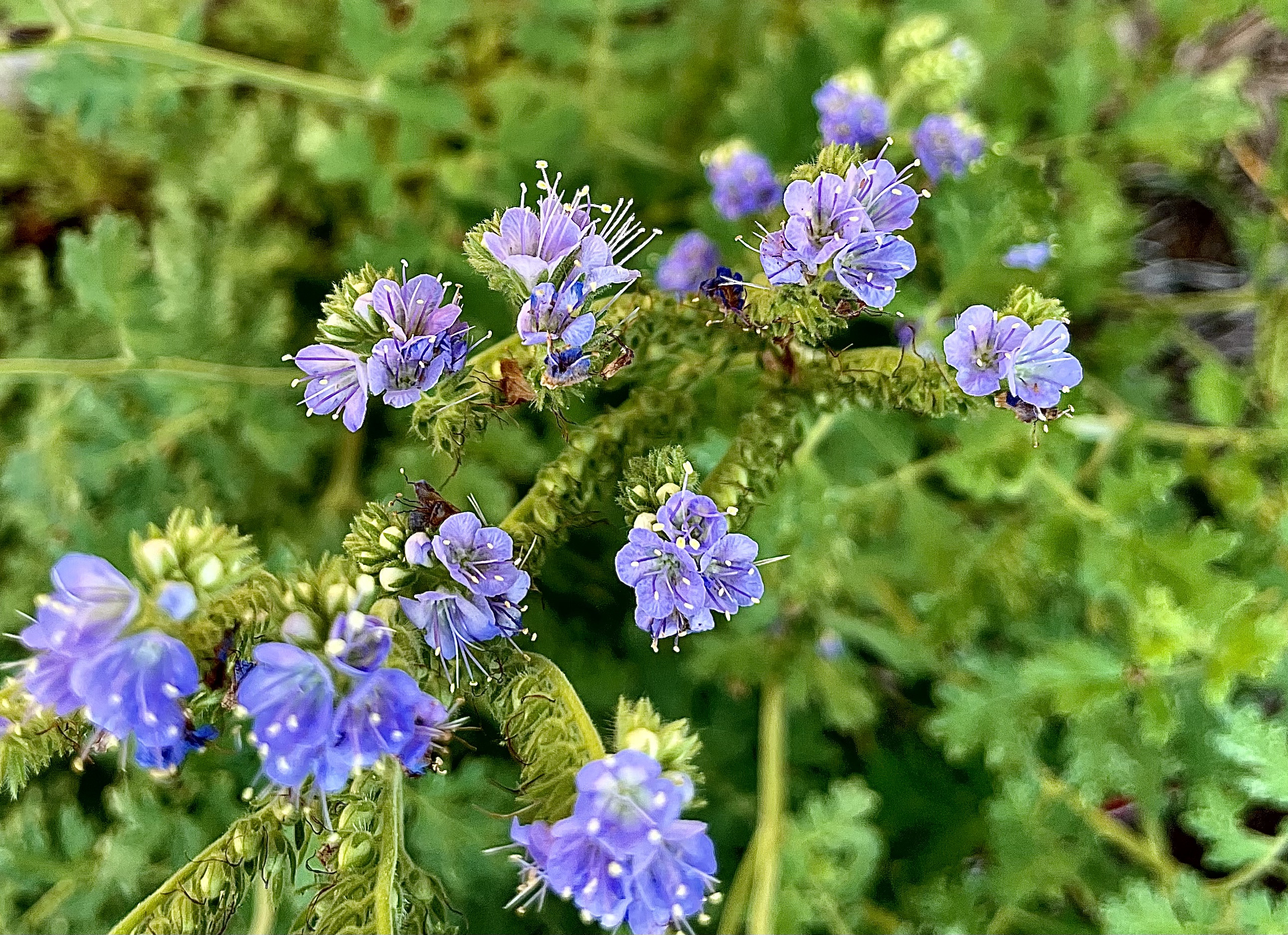
Phacelia congesta Blue Curls

Phacelia congesta – Blue Curls (These, like the Bluebonnets, are mostly gone to seed by now).

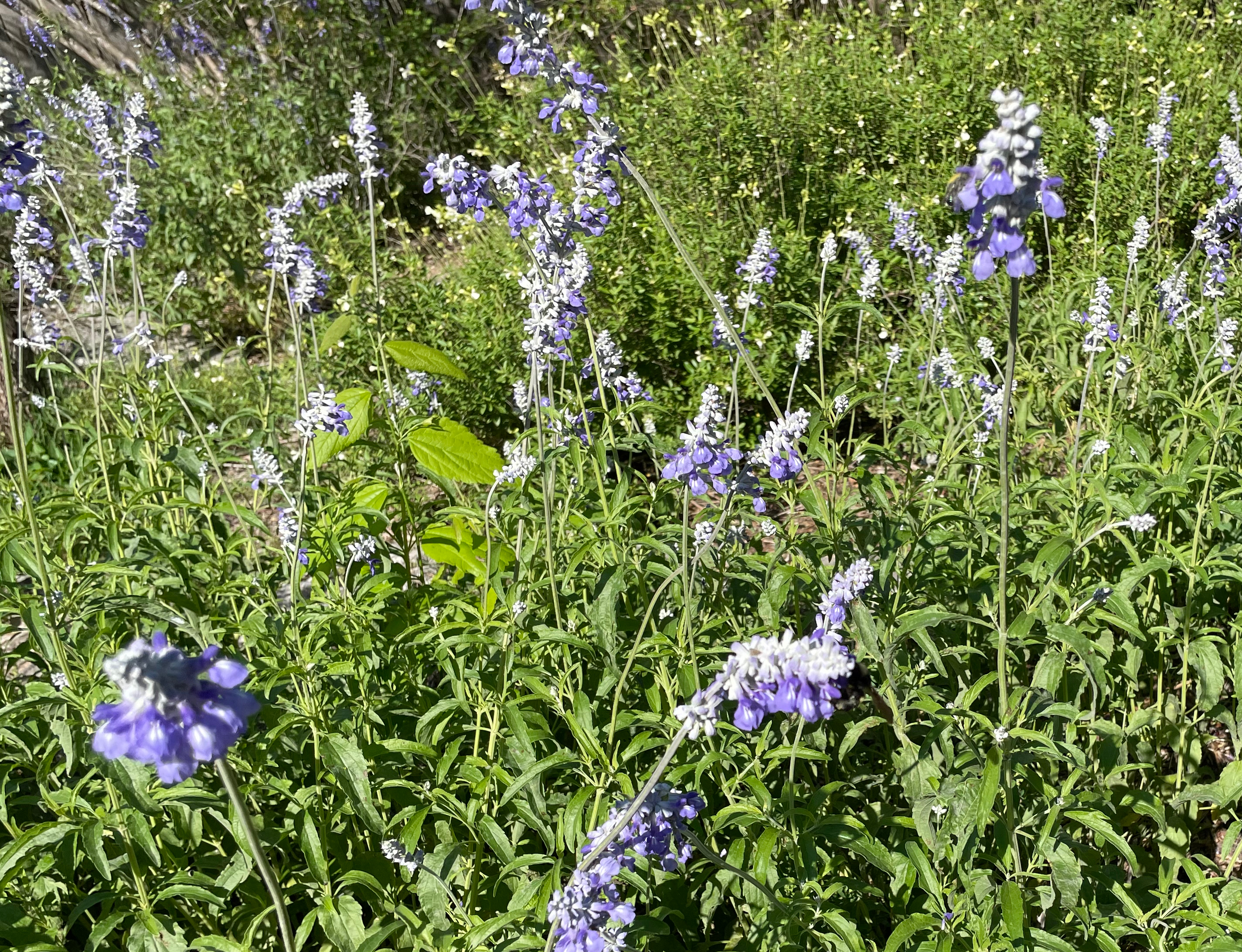
Salvia farinacea - Mealy Blue Sage

Salvia farinacea – Mealy Blue Sage *These will provide nectar to native Bumble Bees and other pollinators through the Spring, Summer, and into Autumn).

95205D00-11AA-43FF-85AA-744B3377AF42

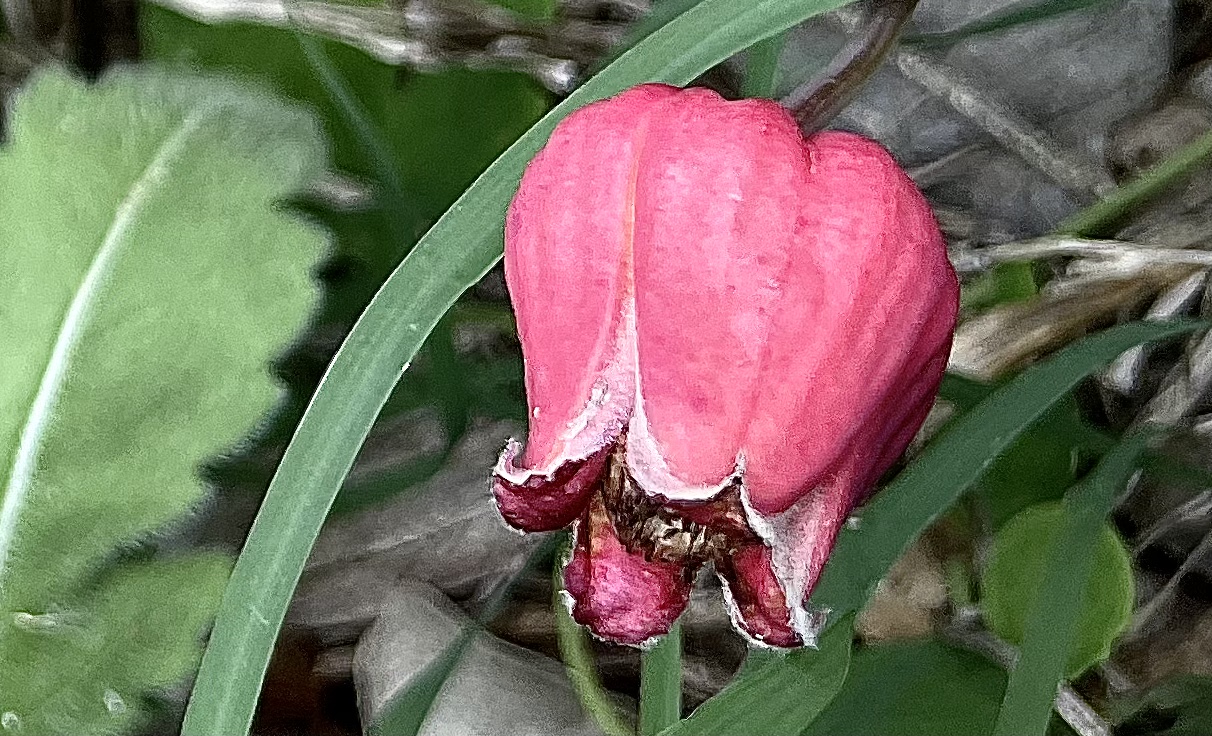
Clematis texensis – Scarlet leather flower (This plant is endemic to the Edwards Plateau region of Texas. This one is cultivated in its native ecoregion).

C70584BA-2D04-4BE7-9DA5-457C59D7F75F

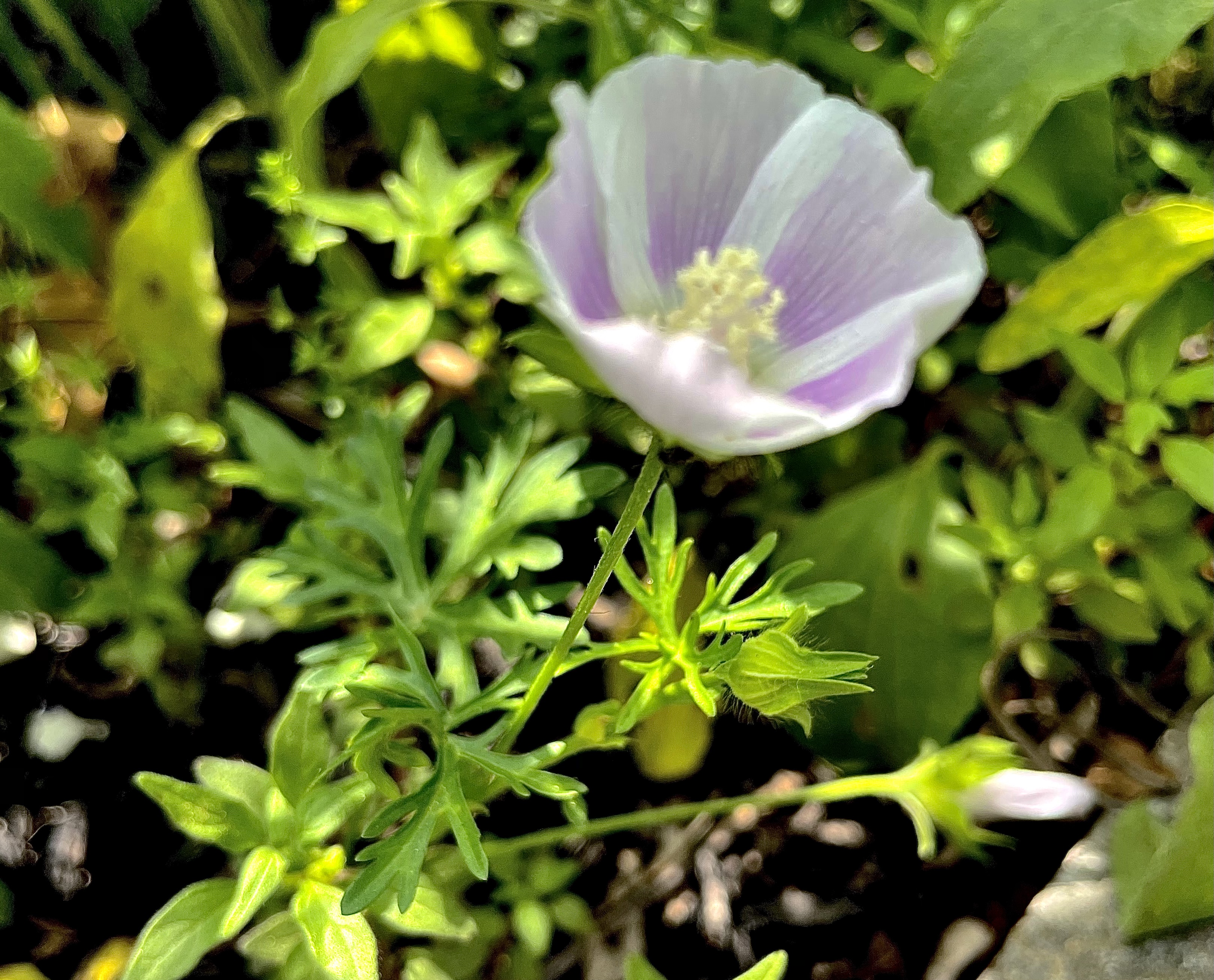
Callirhoe involucrata var. lineariloba – White winecup or “Williamson County Winecup” (Endemic to just a few counties in Texas, the Williamson County chapter of NPSOT has adopted it and given it their own   common name).

665B8C71-F74B-4BEC-95C0-C8202992C114

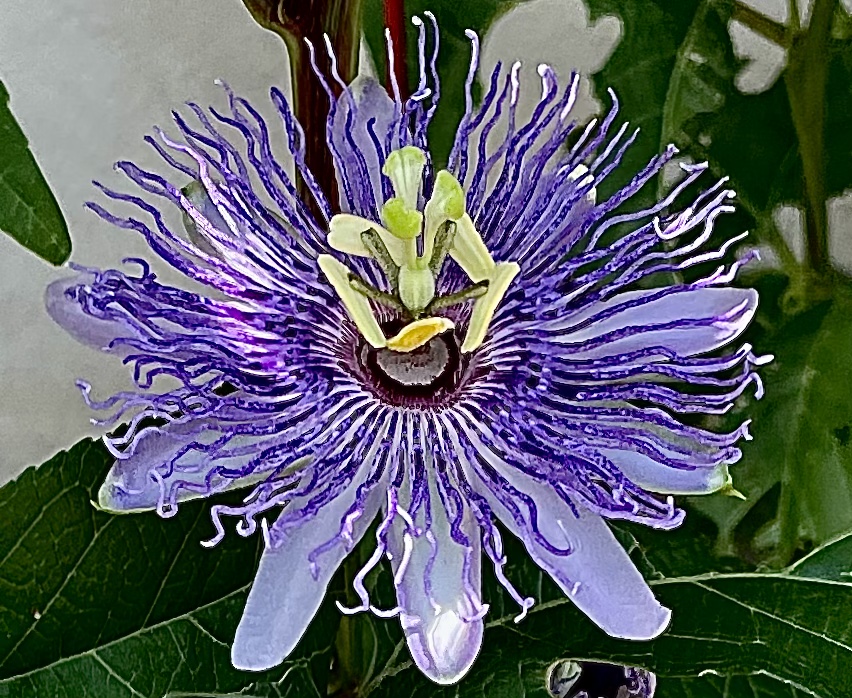
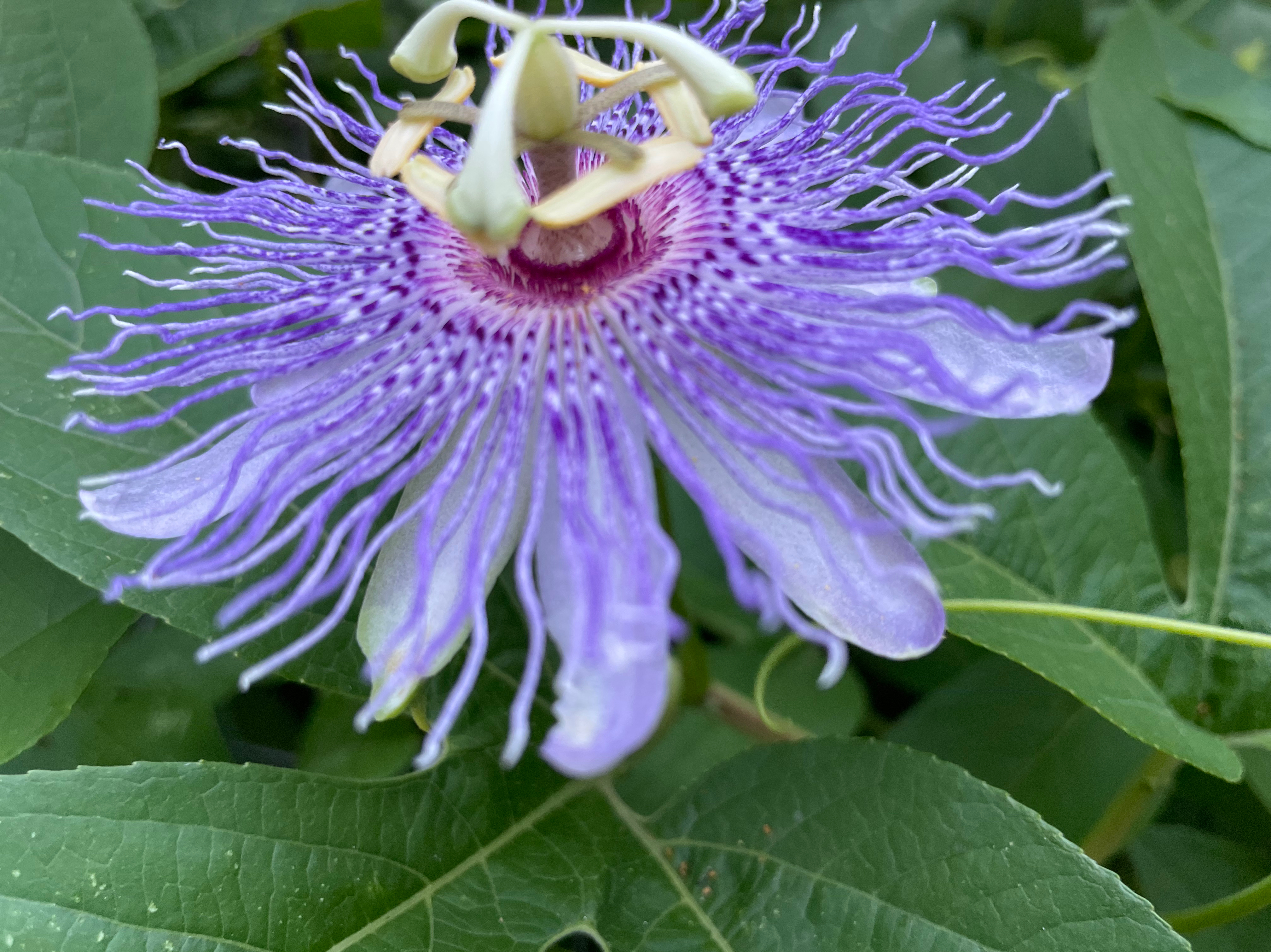
Passiflora incarnata – Purple passion flower (Like all Passiflora vines, this is home to and critical to the life cycle of Gulf and Variegated Fritillary butterflies) – (And it grows like a weed, so one can start with one and soon be giving them away as gifts with a little water and root stimulator).

“Vacant” lot - Antelope Horns galore

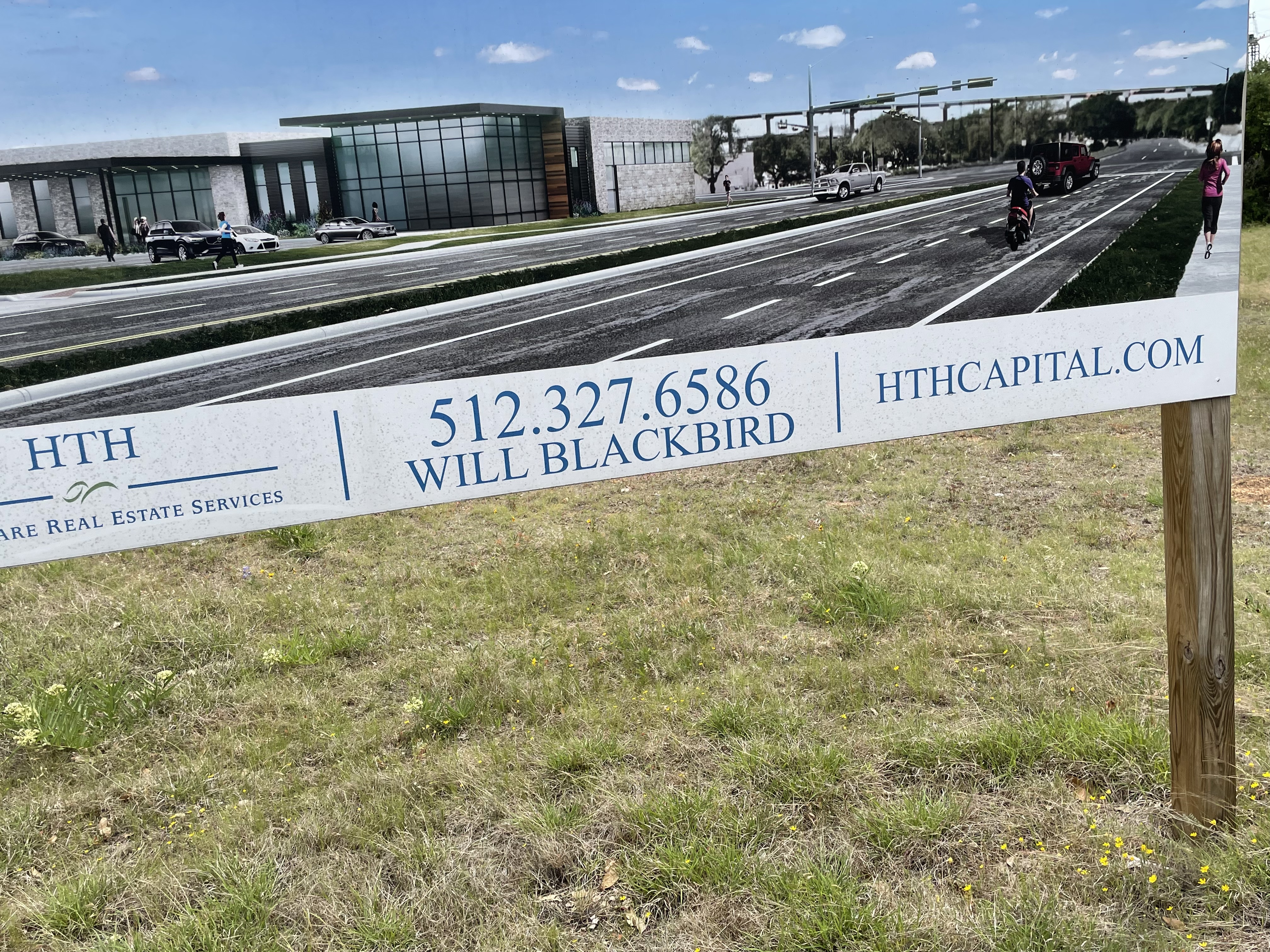
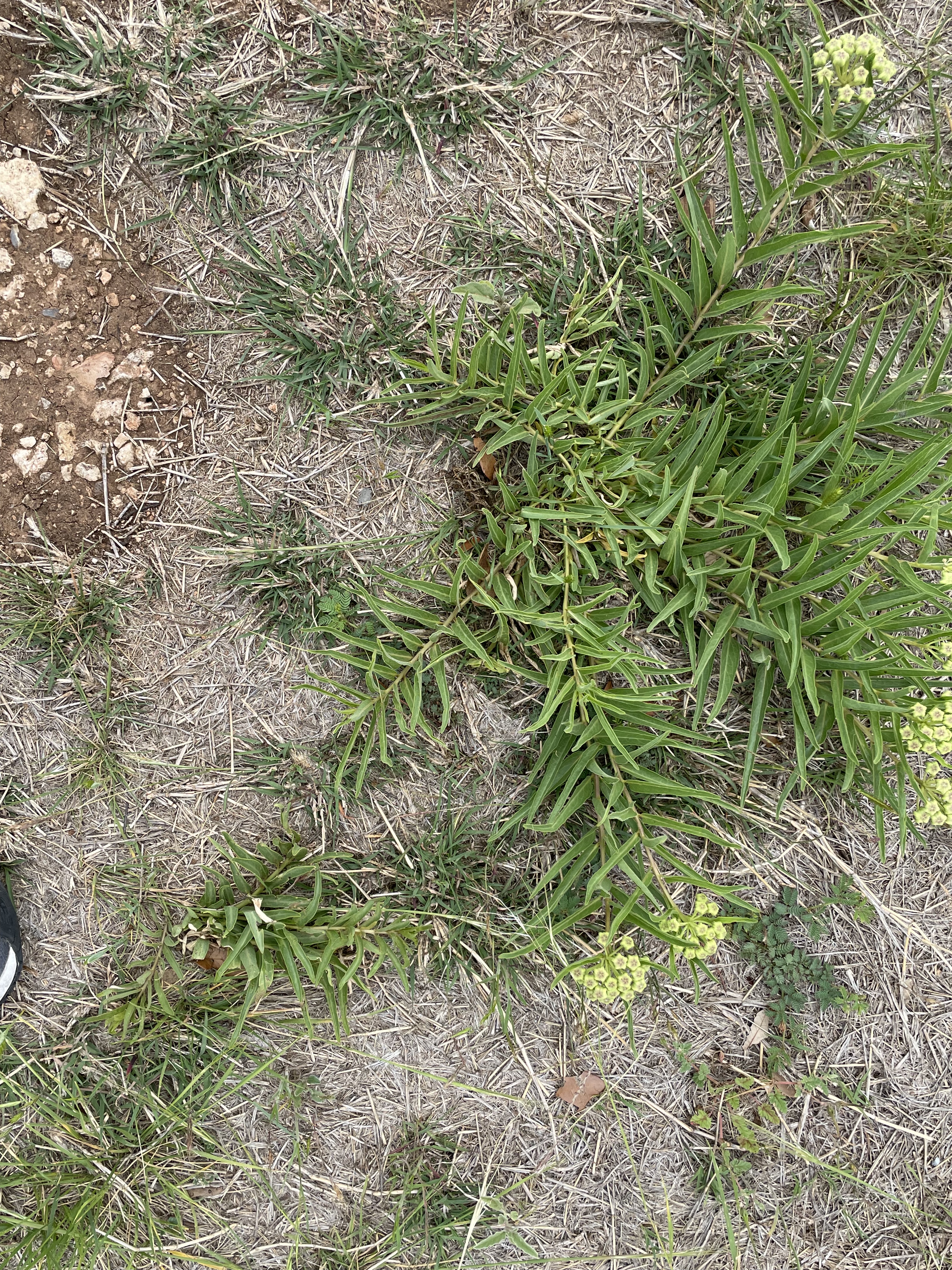
“Vacant” lot – Antelope Horns galore – The future home of a children’s hospital. I have contacted the Williamson County and Austin chapters of the Native Plant Society of Texas to ask that they make contact and request a plant rescue. These milkweeds have deep tap roots, so one hopes the developer and the hospital will see the benefits to the butterflies and to the good public relations from such an effort. Typically, the plants go to the city or county for use in future projects, with volunteers allowed to take about 10%. And there are a lot more native plants than just Antelope Horns out there. (Call the number on the billboard and let them know that you think a plant rescue before bulldozing the lot bare would be a good thing).

Asclepias asperula - Antelope Horns - one of the several milkweeds that Monarch butterflies need to survive.

Asclepias asperula – Antelope Horns – one of the several milkweeds that Monarch butterflies need to survive.

- Poverty Weed/Roosevelt Weed

Chilopsis linearis – Desert Willow – saw a hummingbird hovering around this one…

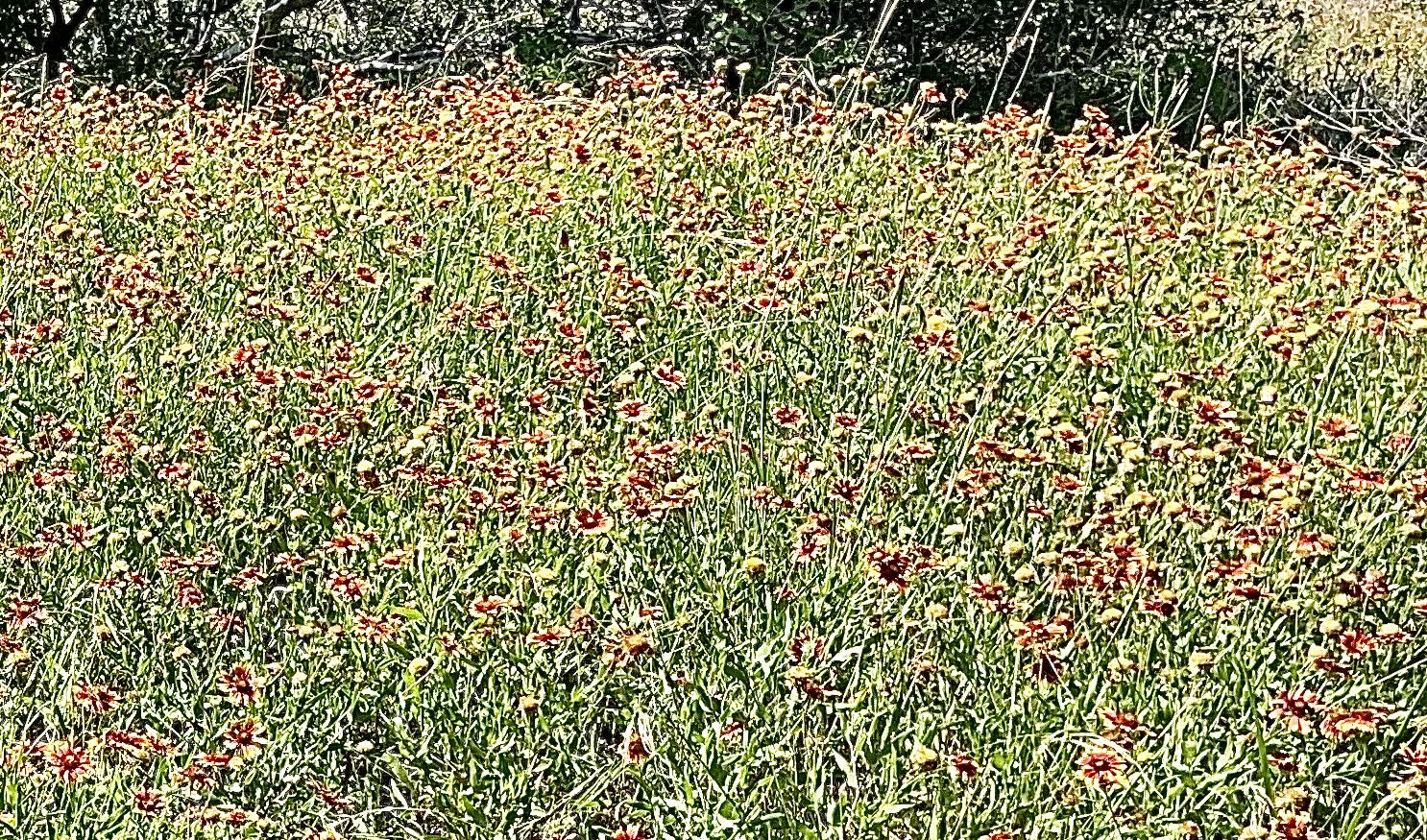
Gaillardia pulchella - Indian Blankets

Gaillardia pulchella – Indian Blankets – This the berm behind my house, after three years of removing invasive exotic grasses and Malta Star Thistle. Of course, most of the Gaillardia have gone to seed by now, and the Silver Bluestem, Mexican Hats/Prairie Coneflower will be blooming next, along with others.

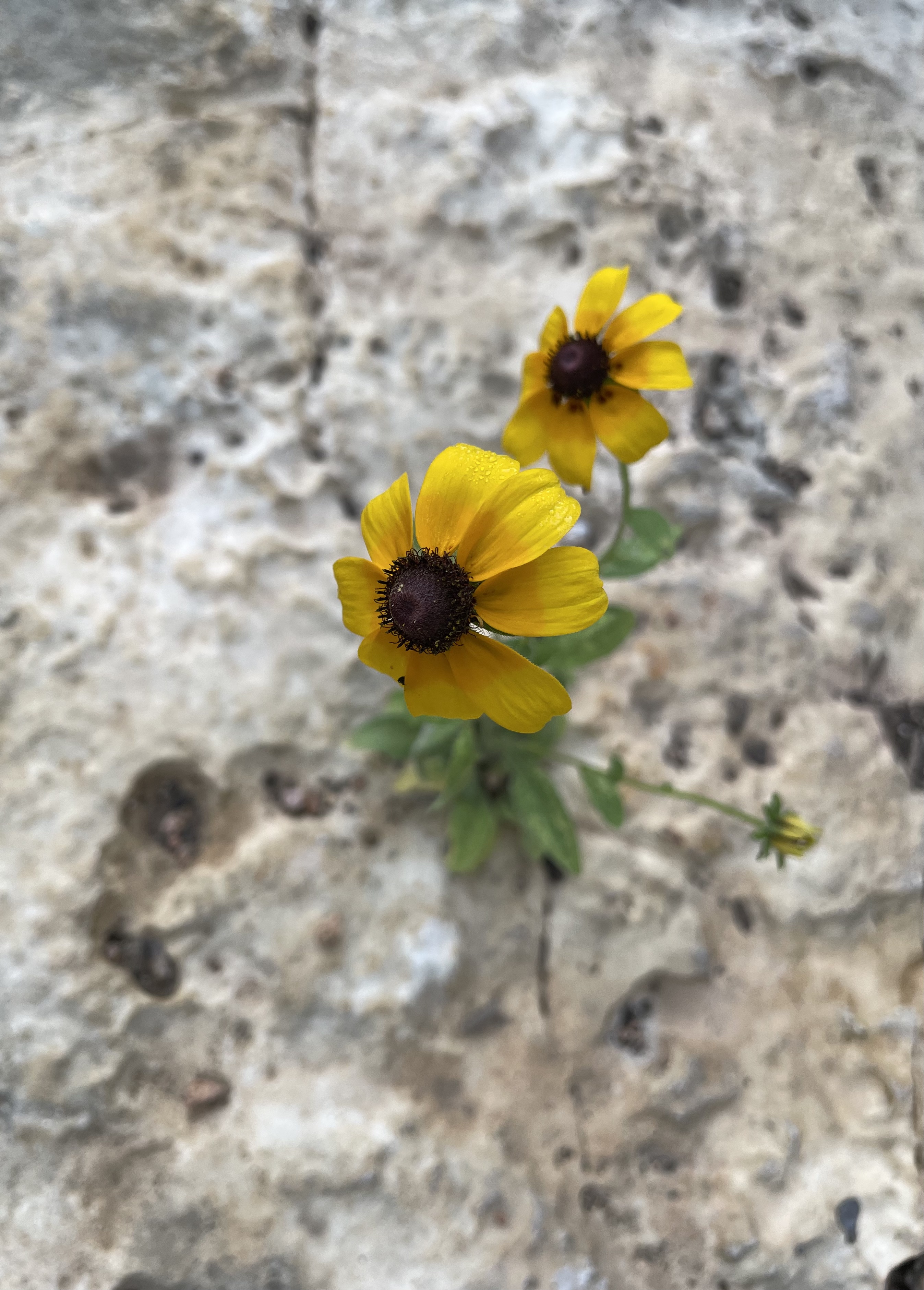
Rudbeckia hirta - Black (or Brown) Eyed Susan

Rudbeckia hirta – Black (or Brown) Eyed Susan  growing out of a crack in a limestone landscaping rock. Native plants are tough.

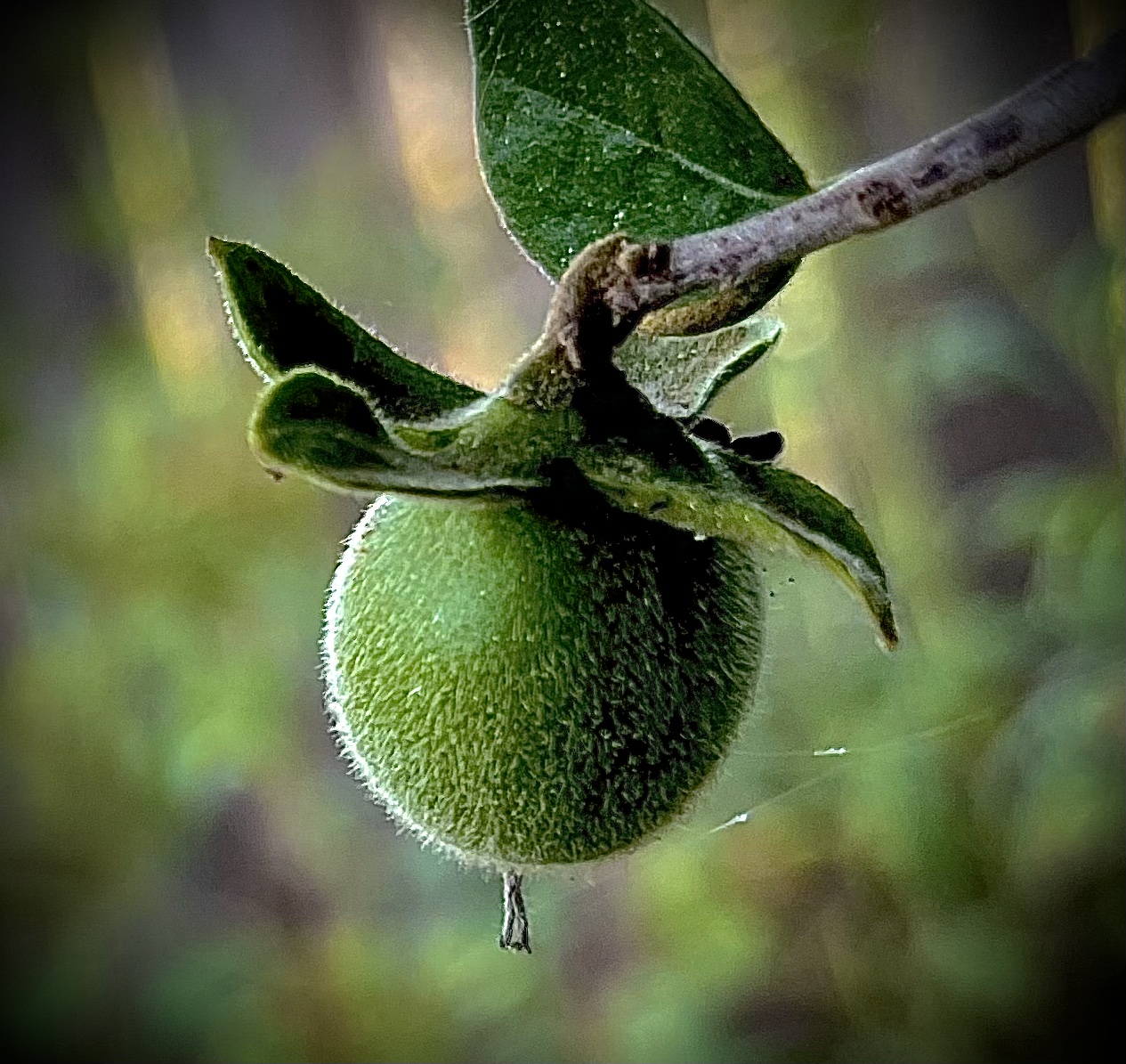
Diospyros texana - Texas Persimmon

Diospyros texana – Texas Persimmon. The fruit will eventually turn black and raccoons, among other wildlife, will take all the fruit if you’re too slow to gather enough for a tasty Texas Persimmon loaf.

Manfreda virginica - Texas False Aloe

Manfreda virginica – Texas False Aloe – Not actually native this far North, but it survived the Winter freezes of 2022, and with global warming,, its range may move further North anyway. Interesting stamens, and a flower that starts pale and turns red as it ages. I like it.

That’s all for this installment.

###

A possible explanation to Monarchs’ dallying around Texas this year

This article came up in my newsfeed recently,.

It suggests  why some Monarch butterflies seem to be hanging around Texas this year – the popularity of Tropical milkweed (Asclepias curassavica). The article further goes on to explain that

” Tropical milkweed becomes a problem when planted in temperate areas where it does not die back in winter. A protozoan parasite of monarch butterflies, Ophryocystis elektroscirrha or OE for short, can travel with monarchs visiting the plants and become deposited on leaves. When caterpillars hatch and start eating the plant, they ingest the OE. High OE levels in adult monarchs have been linked to lower migration success in the eastern monarch population, as well as reductions in body mass, lifespan, mating success, and flight ability.”

Milkweeds native to the region die back after blooming, and with them, the OE. Thus each new flight of Monarchs gets to lay their eggs on new, uninfected milkweeds.

Interestingly, the article was written over three years ago…

Tropical Milkweed is a No-Grow – by the Xerxes Society

On the other hand, I have now seen and photographed Monarchs in my backyard from late March through November . I went to vote  on Tuesday, November ,2, and  observed more than a few Monarch butterflies, both in the greenbelt and in the demonstration garden. Sadly,  many of the flowers being used didn’t appear to be natives.  I also noticed that the milkweeds at the community center garden appear to be Tropical milkweed. (They have yellow flowers instead of orange flowers).

Some plants and wildlife in October:

August: the heat goes on… But if you plant it, they will come.

But not as hot here in Central Texas as it is elsewhere, and not as hot as it has been in recent years, when there were streaks of thirty or forty days of 100 plus Fahrenheit weather. This year has been hot but humid – hey, the moisture from the melting ice caps has to go somewhere, right?

And yet, “Mother Nature” continues to give us native plants that thrive in whatever kind of weather and climate she gives us. Or we make for her, given that the current climate change is driven by the Industrial Revolution, which began some two hundred years or so past.

The Conoclinium greggii (Gregg’s Mistflower) will bring Queen and Monarch butterflies to your yard. It has been interesting to watch the Queens defend their territory against the one or two Monarchs that attempt to get a pheromone enhancing boost from the mistflowers.

 I’ve even seen a Gulf Fritillary take a break from the Passion Flowers and go after the mistflowers.(click on photos in the gallery to see them full size).

Well, this didn’t start out as an orange and black butterfly identification post, but that’s where it ended up, it seems. Go figure.

As you plant more native plants, you will find that you attract more native wildlife (and, hopefully ,fewer exotic or invasive fauna).

Sitting on the steps of the deck before dinner, as I took several of thee photos, the line from Ray Bolger’s character in The Wizard of Oz came to mind: “I could while away the hours, conversing with the flowers…”

###

All my weeds are wildflowers (I wish)

Passiflora incarnata/Ruellia nudiflora hybrid?

A couple of native plant species have begun to spread like weeds in the narrow area separating my subdivision plat from my neighbor’s house.

Passiflora incarnata, or Purple Passionflower, has sprung up where a corkscrew passionflower vine used to be, and through rhizomes has managed to propagate itself all along the Southern side of the house. I’ve done some pulling of the pups as the poke up through the mulch, and have been able to give away a few of them for others to try to get their own vines going.

The flowers of the Passion flower vine are about three inches in diameter, with the petals forming a wavy fringe. Stamens and stigmas also are striking in appearance as well. Several different types of butterflies use this as a larval host, most notably the Gulf Fritillary (Agraulis vanillae ) and Variegated Fritillary (Euptoieta  claudia ) butterflies. 

Passiflora icarnata infloresence, tri-lobed leaves, and tendril

Passiflora icarnata inflorescence, tri-lobed leaves, and tendril

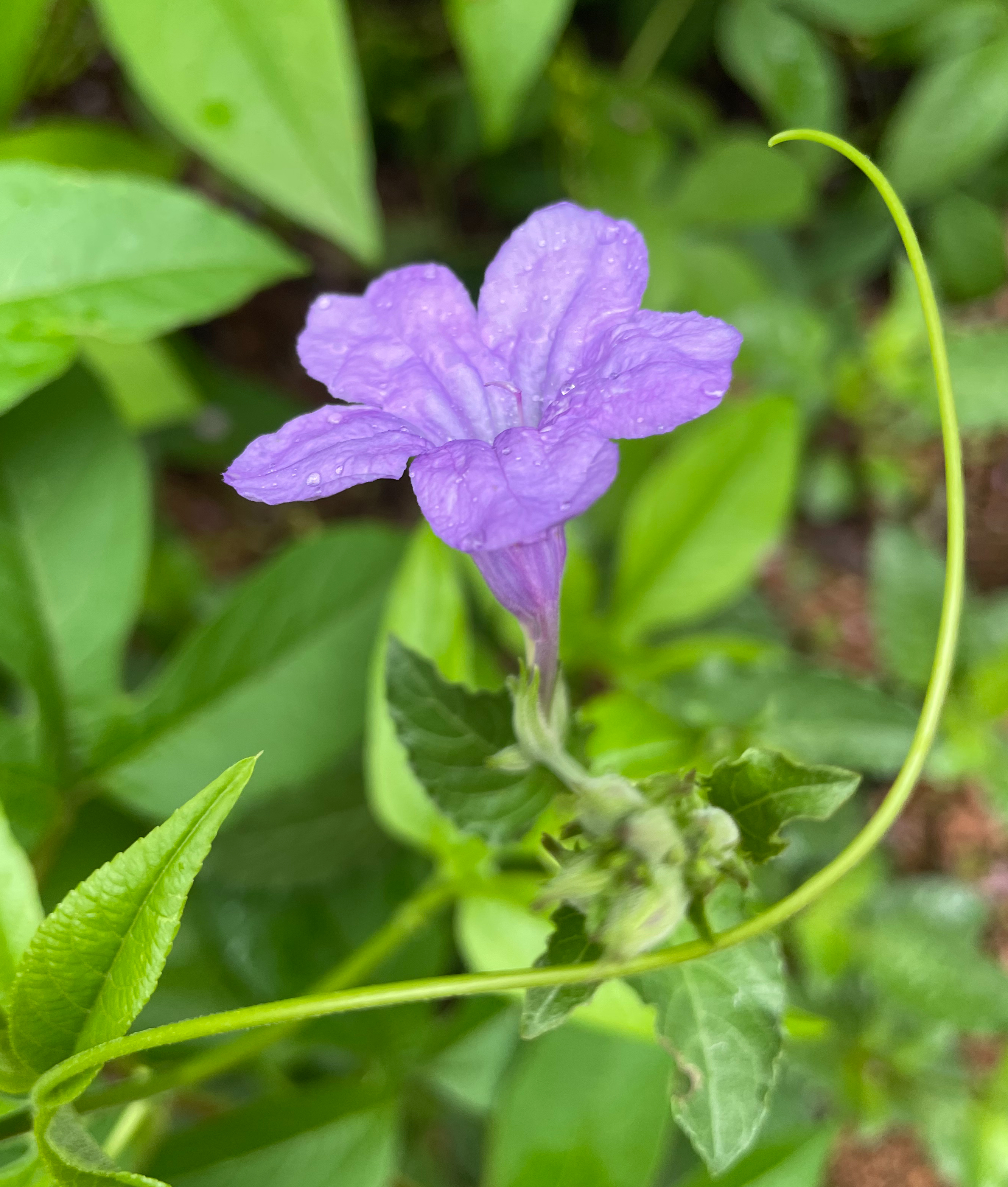
The Ruellia nudiflora, or Wild Petunia, also has a purple to lavender flower, but it is trumpet-shaped. And it’s not a vine, but a sub-shrub perennial . After having transplanted this volunteer several years ago, it has now decided to propagate itself, like a weed, in the mulched bed and in the gravel path. Although its inflorescences look much like those of the cultivated Petunia, it is in the Acanthus Family, while the cultivated Petunia is in the Potato Family. The blossoms open in the morning, falling off in the afternoon. Like several other of my favorite wildflowers, its flowers are ephemeral, lasting for just a day.

Ruellia nudiflora inflorescence, surrounded by Passiflora leaves and tendril

Ruellia nudiflora inflorescence, surrounded by Passiflora leaves and tendril

As if having to “weed” native species wasn’t bad enough, as one can see from the top photo in this post, it looks as though the two plants have begun to hybridize to form a new species. Fortunately, (or unfortunately), that’s not the case: A blossom from the Ruellia has been captured by a tendril from the Passiflora, making it look (almost) like it belongs to the vine. 

Not sure what I’d do if they actually did start to hybridize – probably get a botanist or two to take a closer look. And get a nursery to work with to develop and patent the new species. And sit back and watch the money roll in (ha!).

###