Just a look at the most recent shots:
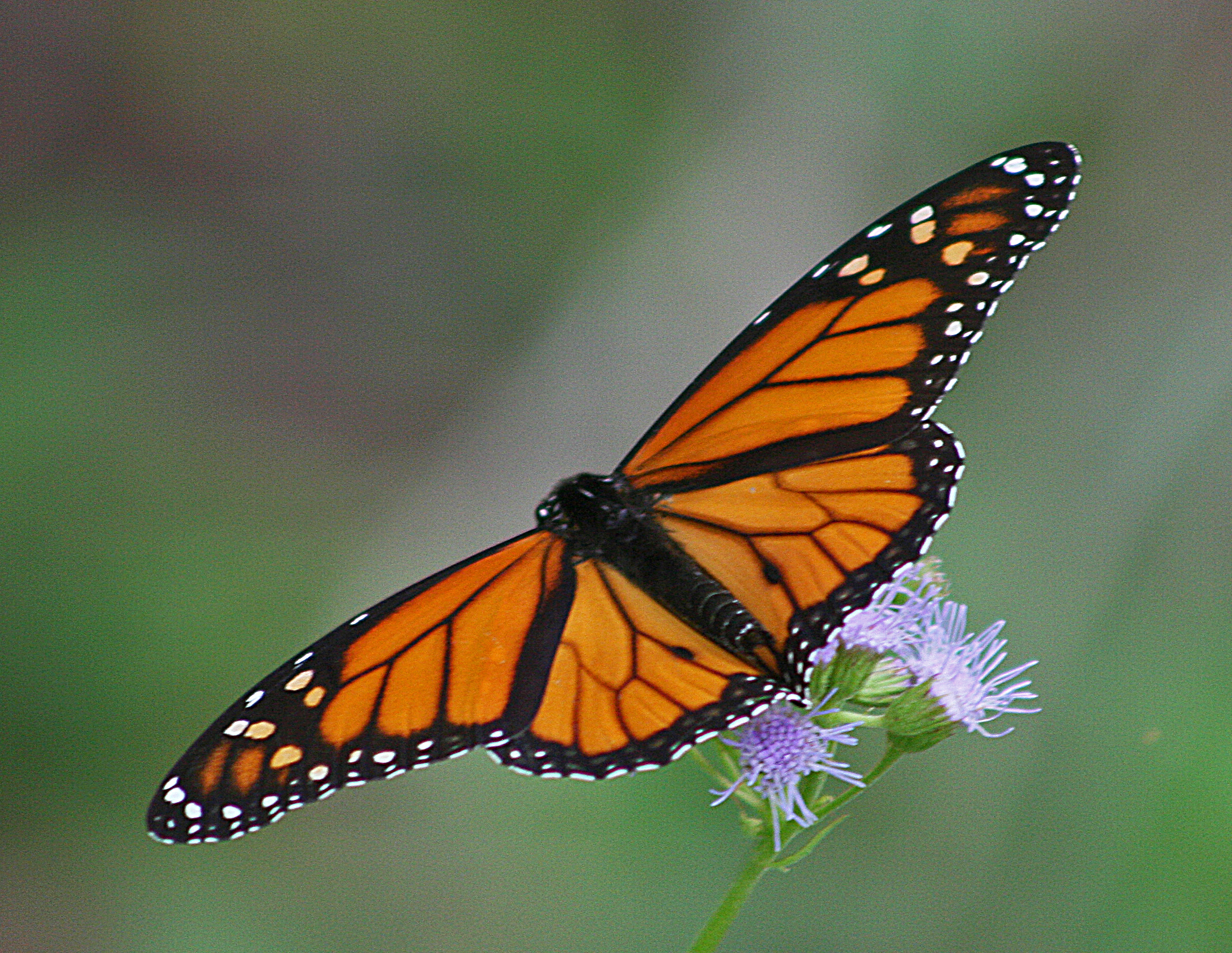
Taken on December 1, 2021. Since March 27, I have seen and photographed at least one Monarch Butterfly in each of the following months in 2021. And that just doesn’t seem right…
Just a look at the most recent shots:
Taken on December 1, 2021. Since March 27, I have seen and photographed at least one Monarch Butterfly in each of the following months in 2021. And that just doesn’t seem right…
But not as hot here in Central Texas as it is elsewhere, and not as hot as it has been in recent years, when there were streaks of thirty or forty days of 100 plus Fahrenheit weather. This year has been hot but humid – hey, the moisture from the melting ice caps has to go somewhere, right?
And yet, “Mother Nature” continues to give us native plants that thrive in whatever kind of weather and climate she gives us. Or we make for her, given that the current climate change is driven by the Industrial Revolution, which began some two hundred years or so past.
The Conoclinium greggii (Gregg’s Mistflower) will bring Queen and Monarch butterflies to your yard. It has been interesting to watch the Queens defend their territory against the one or two Monarchs that attempt to get a pheromone enhancing boost from the mistflowers.
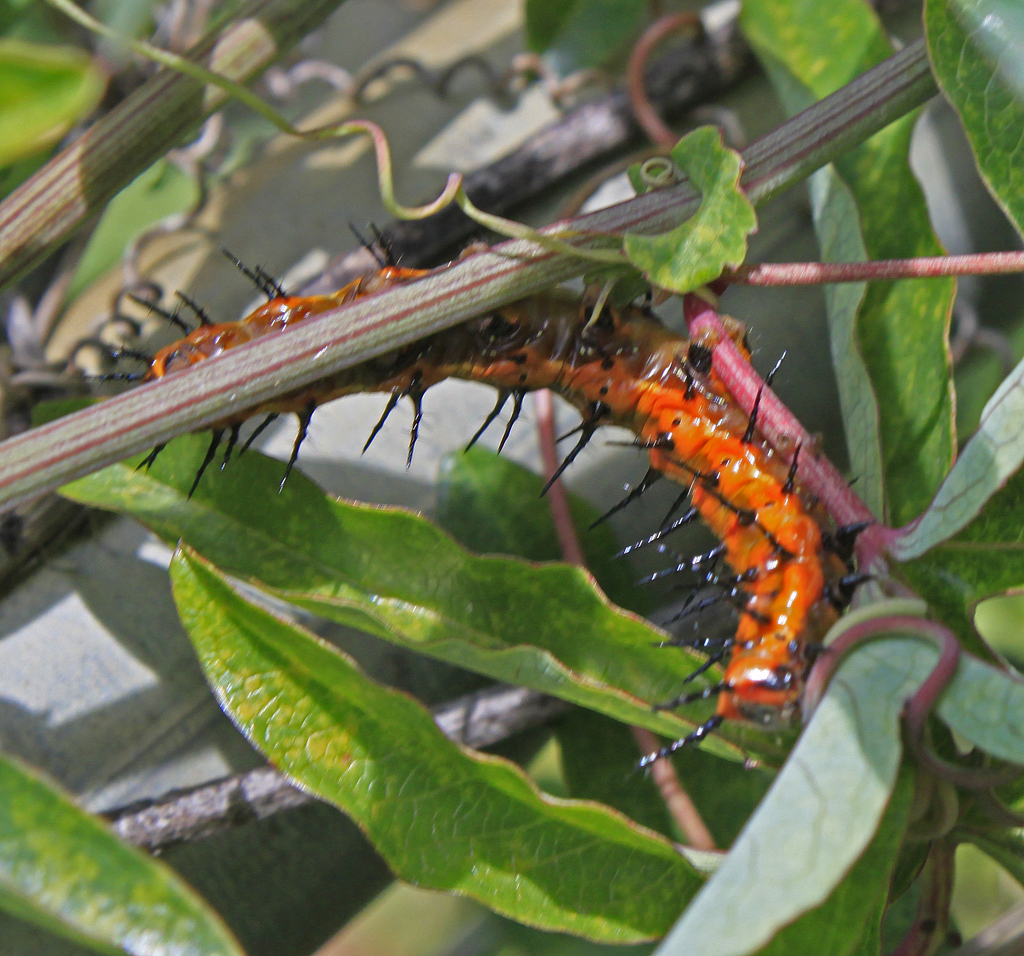
I’ve even seen a Gulf Fritillary take a break from the Passion Flowers and go after the mistflowers.(click on photos in the gallery to see them full size).
Well, this didn’t start out as an orange and black butterfly identification post, but that’s where it ended up, it seems. Go figure.
As you plant more native plants, you will find that you attract more native wildlife (and, hopefully ,fewer exotic or invasive fauna).
Sitting on the steps of the deck before dinner, as I took several of thee photos, the line from Ray Bolger’s character in The Wizard of Oz came to mind: “I could while away the hours, conversing with the flowers…”
###
IF you live in Central Texas, of course. While many plants (including some native plants) are still trying to recover from what I have heard called Winter Storm Uri, which lasted for about ten days back in mid-February, 2021, most of the plants native to this region of Texas are coming back strong, or putting out blooms already.
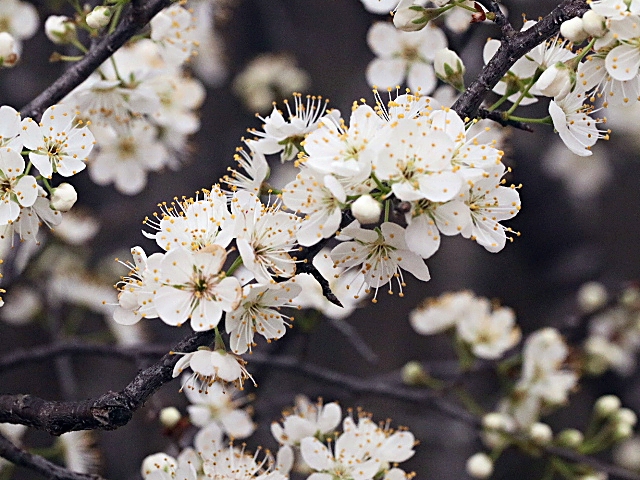
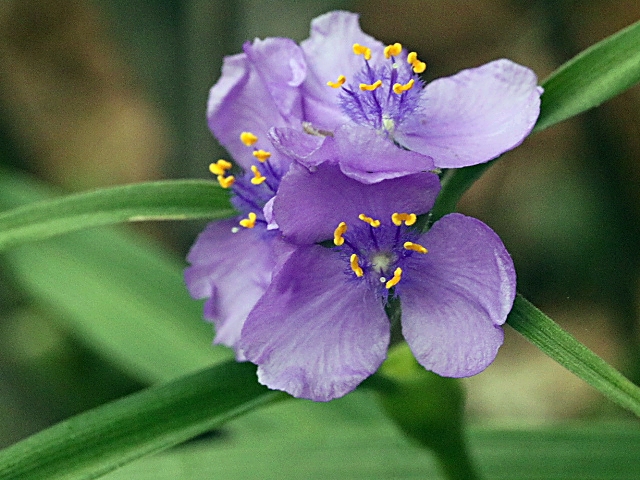
Mexican Plum (Prunus mexicana) has already flowered and started putting out leaves. Giant Spiderwort (Tradescantia gigantea) has for the most part finished with its most robust blooms, but there are still a few left. (Both of these photos were taken March 16, 2021).
.

A little over two weeks later, things are really starting to perk up in the yard.
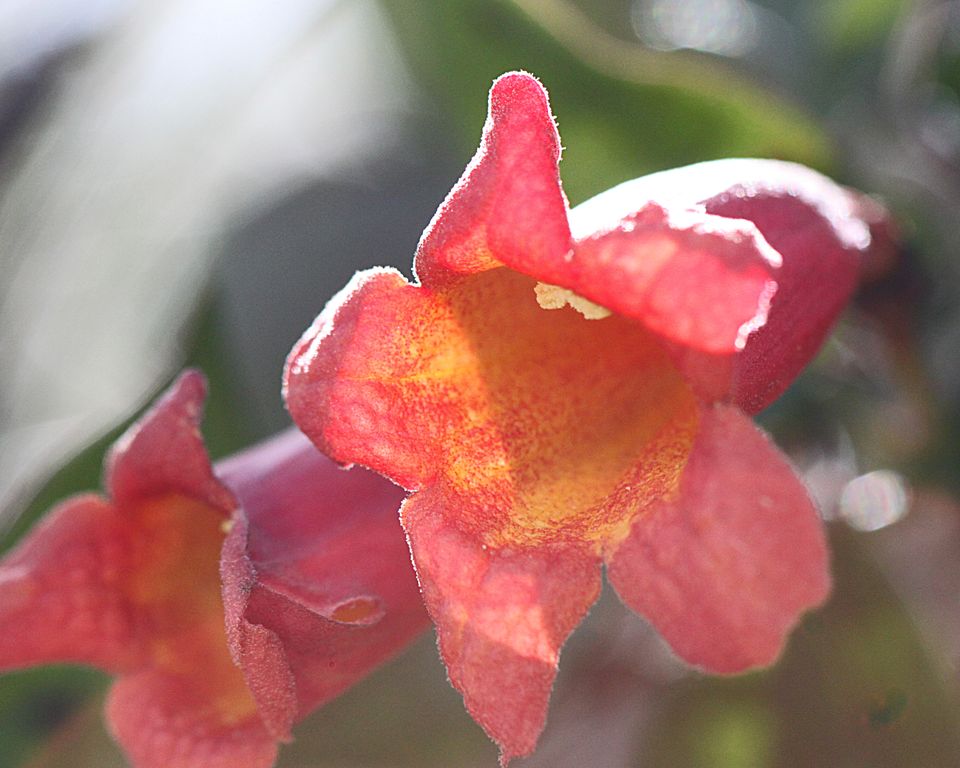
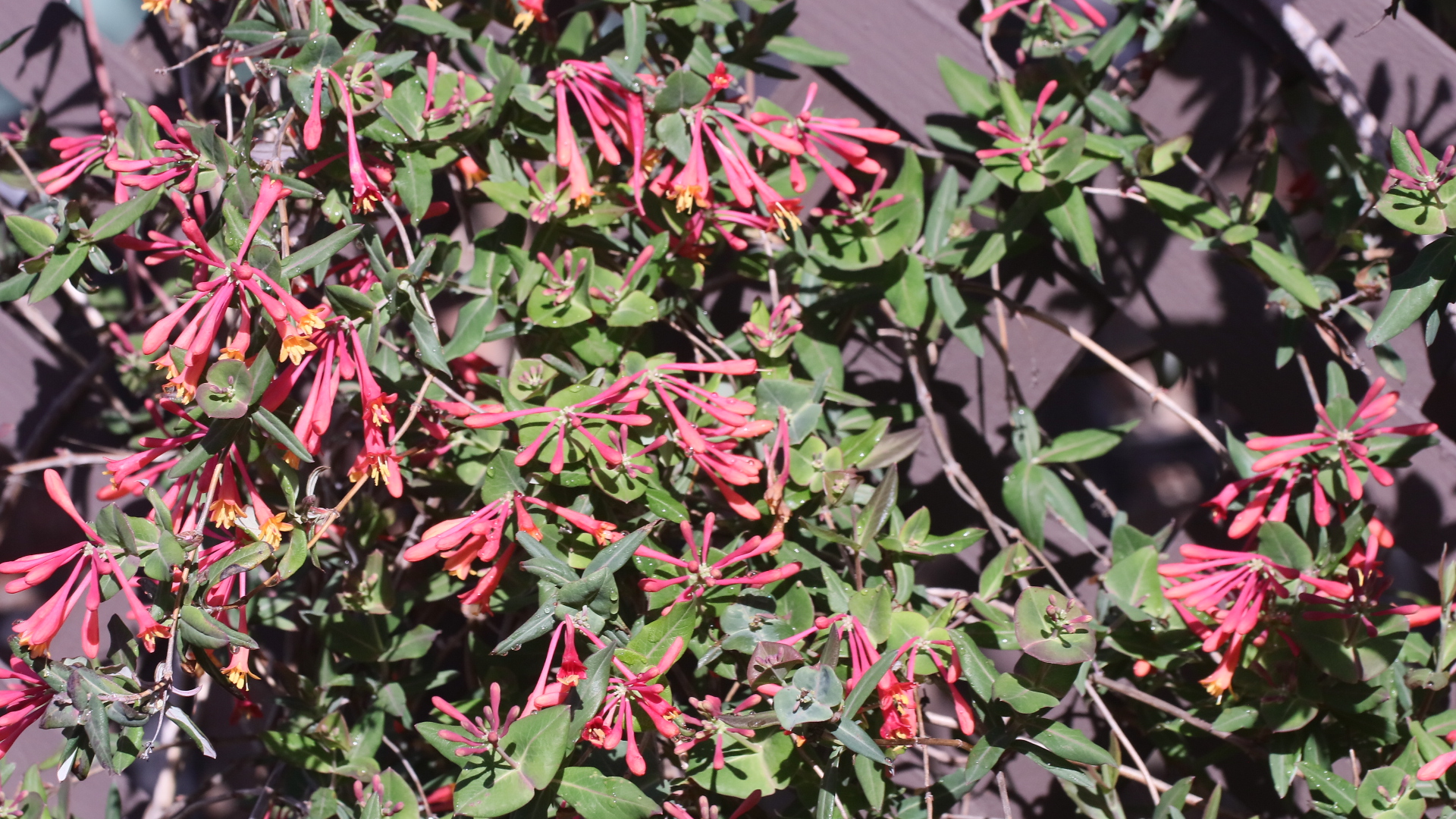
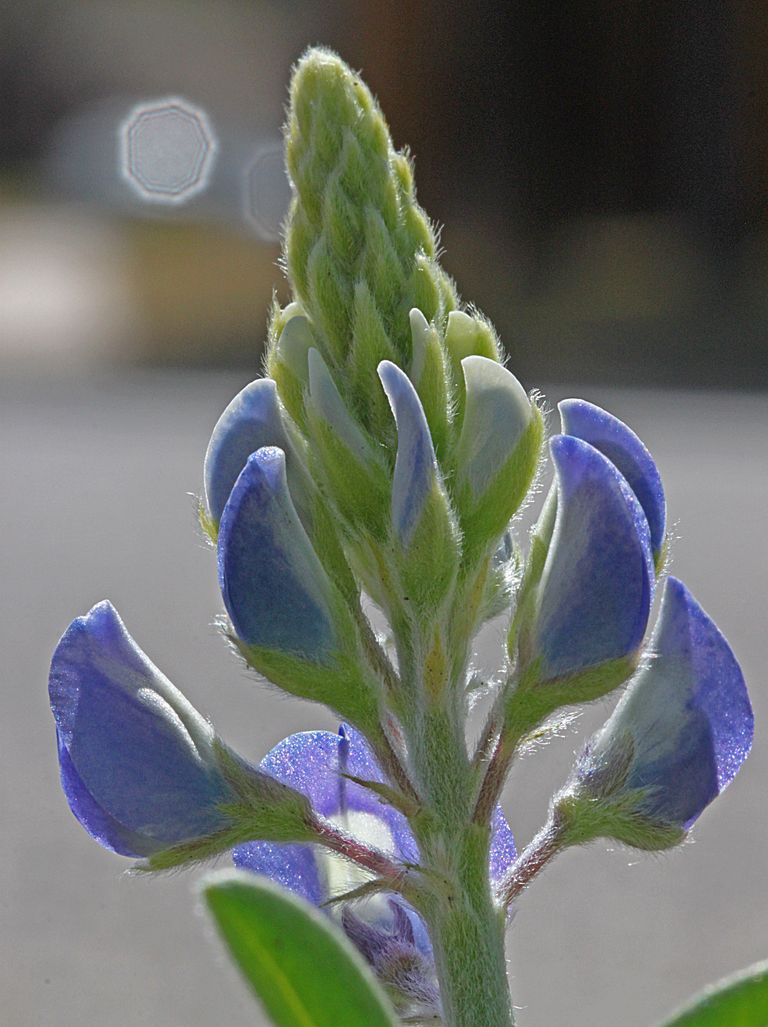
Crossvine (Bignonia capreolata), for instance, and Coral Honeysuckle (Lonicera sempervirens) which are both favored by Hummingbirds are blooming in profusion, as are the Texas Bluebonnets (Lupinus texensis).
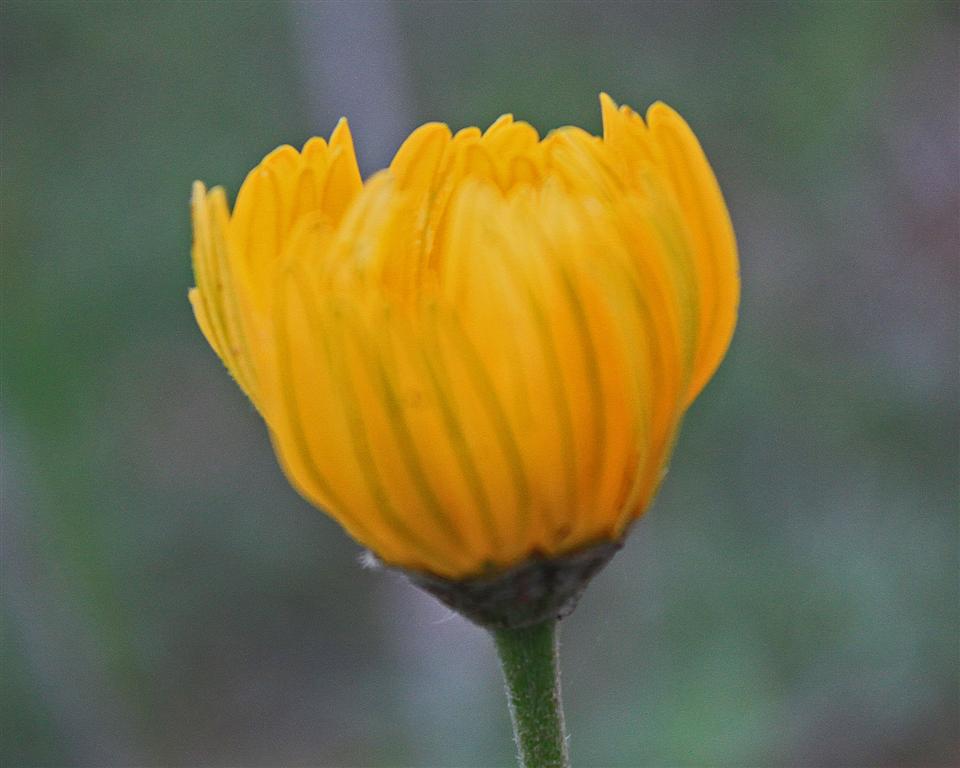
And then there are the Tetraneuris scaposa.which will bloom all year round if you let them, or keep on trimming off the deadheads, so that they can. These are perennials, but short lived, so after a few years you might have to replace them – or they might have spread and created new copies on their own.


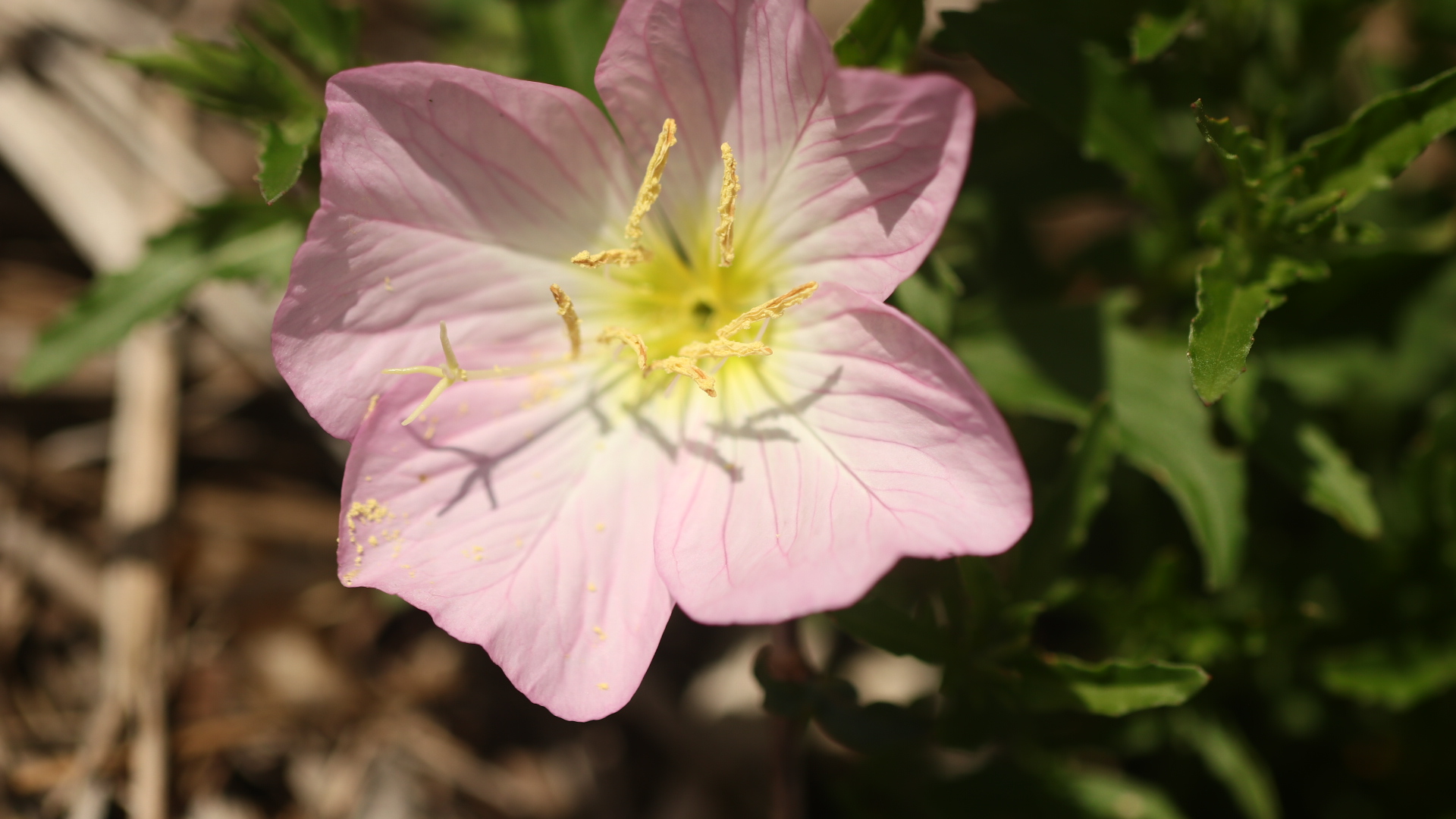
Oenothera speciosa – “Pink Ladies”
And, just to get this out there, Oenothera speciosa, known as Pink Primroses or Pink Ladies, are blooming currently. I have seen some popping up in neighbors’ yards that are otherwise mowed too short and devoid of any other native Texas plants. But thankfully, they haven’t mowed down the Pink Ladies.
I will mention, but not add photos of Blue eyed grass, Cobea and Gulf Penstemons, Mealy Blue Sage, Wright’s Skullcap, and a few others. The month of April is nearly over, The US Senate has unanimously voted to name April 2021 as National Native Plant Month, and there are invasive plants in my backyard and. beyond that need to be cut down before they go to seed. Oh, and the Rain Lilies have started popping up, finally after several days of light rain.
Hasta luego.
I seem to suffer from Gilligan’s Syndrome – what starts out as a five minute walk outside to water the plants in their containers that I am hoping will hold on until cooler weather comes (September? October?) turns into an hour or more photo safari. Sometimes I go beyond the confines of my yard, sometimes not.
Ruellia nudiflora, for instance, has suddenly been blooming like crazy. A Passiflora incarnata volunteer popped up in the mulched bed across from the Passiflora lutea and Passiflora suberosa, and started putting out blooms. The Malvaviscus arboreus var. drummondii continue to bloom, as do the Salvia greggii, Lantana urticoides, Scutellarria wrightii, Salvia farinacea, and Conoclinium greggii. In the “nursery,” several Asclepias milkweeds have bloomed or budded, along with Tetraneuris scaposa. In the gravel pathway, I had to (reluctantly) trim the Boerhavia coccinea back to allow human passage. The Fallugia paradoxa has put out a few blooms and plumes, and the Pavonia lasiopetala has been a pleasant surprise with its hibiscus-like pink blossoms.
We have Liatris punctata still in bloom, Melampodium leucanthum, Asclepias texana, and a native grass that I have been calling “Indian Grass,” (turns out that is the common name for Sorghum nutans. The Aloysia gratissima has attracted pollinators, as has the Anisacanthus quadrifidus, and behind the fence, the Proboscidea louisianica or “Devil’s Claw,” has held out with a bloom or two. The Glandularia bipinnatifida has come up in various spots, too low for the mowers’ blades most of the time. As can be seen in some of the photos, these native plants of Texas, most of which are not receiving any supplemental watering, provide food for Bumblebees, butterflies, and even hummingbirds, lizards, and wasps. I even went out and over the course of several days, harvested enough Diospyros texana fruit to make a Texas Persimmon Loaf. The slide show that follows includes photos taken the week of August 10 – 16, 2020
I have seen the best plants of my eco-region driven into ghettos of greenbelts, invaded by non-native plants, poisoned with herbicides…
I see public areas, along roadways and in park areas, mowed so low that the grass is turning brown and burnt by the sun, despite sprinklers and watering, and occasional rains brought on from sub-tropical weather disturbances in the Gulf of Mexico.
I see the berm behind my house, where a stand of wildflowers in bloom had been cut down in late May while the ground was still wet, and where the native Silver Bluestem grass, which had once dominated the berm, had returned, mowed down in late July, parched and sere under the August sun. Because the contracts signed say they have to mow a certain number of times within certain calendar limits.
I have written emails to my HOA and the Municipal Utility District, and received no response. If a tree falls in the forest, or a native plant goes extinct or disappears from a region because of destruction of habitat, does it make a sound if there are no humans to hear it cry out?
And yet, life goes on.
I have seen the Clematis drummondii, with their achenes in showy white plumes, and must make a note to get out of the house for a photo safari soon, while this year’s show is still on. I have seen the Passiflora vines and the Gulf Fritillary butterflies in their back and forth movements between fertilization, egg-laying, larvae consuming the plant, and adult butterflies dancing about. I have seen the native plants in my yard, both those intentionally planted, and those volunteers who have been recognized and protected, thrive or at least survive.
And I have seen the birds drinking from the water fountain, having been provided with plants that provide food (and insects that thrive and provide food as well), shelter, and a place to build their homes. I have seen the hummingbirds zooming about, grabbing sips of nectar from the salvias, the Texas Red Mallows, and the Flame Acanthus (though this year, I’m afraid I haven’t quick enough to focus and click on the camera quickly enough to capture one in mid-flight.
And as the globe warms, I wonder what changes I’ll be seeing in the plants that thrive in this area, and whether enough humans will start to think outside the box of “that’s the way we’ve always done it,” or “that’s the I’ve always heard it should be,” to make a dent in the greenhouse we are living in.
But enough of that. Time for some photos – some OK, some not so great, but the subject matter supersedes this one’s talents:
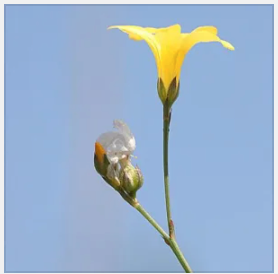
Gregg’s mistflower (Conoclinium greggii)
It has been a while since I posted anything on this blog, and so now we can compute just how long “a while” is.
Of course, this picture was taken several months earlier when I was fooling around with a different camera and lens, and trying to transfer learning between one of two systems (in alphabetical order: Canon and Nikon) without recourse to written instruction. This picture appeared on at least one Native Plant Society of Texas blog, and reappears in these pages because it is quicker and easier than processing some other photo.
Sad to say, the result shown here was probably more a matter of luck than transfer of skill. But it is skill in choosing native plants appropriate to the region that results in the Queen (Danaus gilippus) and Monarch (Danaus plexippus) butterflies that have been seen recently. I did manage to get a shot of the Monarch, but haven’t gone after the Queens yet – it has been windy, and they rarely stay still for long. Why a Monarch is in my neck of the woods in mid-July seems to be one of those outliers to the norm mysteries for which the answer may never be known for sure.
This is the native milkweed that the Monarch butterflies use as a food source in both the larval and adult stages, though in the larval stage it consumes the leaves, and in the adult phase it consumes only the nectar, but may leave behind little eggs that hatch into caterpillars.
The nursery trade typically only has Asclepias curassavica, commonly known as Tropical milkweed, which can be distinguished from tuberosa by the colors of its flowers, which include both red and orange.
I was at a local demonstration garden near where I live, and observed a large number of plants that were definitely yellow, along with a few that were the red and orange A. curassavica species. They even had a few Monarchs visiting, although the southbound butterflies have been few and far between so far this season.
This past Friday, October 3, 2014, I found four Monarch larvae on the milkweeds in my front yard. In the cool of Saturday morning, I located one still on the milkweeds and one on a nearby rock, slowly moving towards some groundcover under the oak tree. Later that afternoon, someone came by who has been actively nurturing the caterpillars, and we found just one, on a milkweed, that was transplanted to their yard a few miles north.
And so it goes. Imagine how many more Monarchs would be around if large chemical companies had to include some sort of environmental impact statement in their marketing, such as :
For a Few Dollars More – improves crop yield by selectively killing native plants that are essential to the survival of certain insect species, including the Monarch Butterfly (Danaus plexippus).
Extinction Is Forever – The life of an insect may span less than a year, but the extinction of a species may echo through the years. Who knows what pests you may unleash by using a pesticide to upset the natural balance of your local ecosystems? Who cares as long as we get a positive growth in this year’s balance on the bottom line? Let the next generation of scientists and economists figure out the true costs of our actions today.
“And so it goes.” (I think Kurt Vonnegutt said that fisrt.)
###
While the Gulf Fritillary, as the name implies, is native to the area surrounding the Gulf of Mexico, but its range actually extends far beyond that. It is found as far south as Argentina and as far north as San Fransisco, according to Wikipedia.
Here it is on one of the Passiflora vines, one which is not native to the part of Central Texas where I live. It seems that one cannot find locally native plants unless one digs them up, which can’t be both ethical and legal, or manages to find some that have gone to seed and from which a small taking of seed would not endanger reproduction in the natural state.
Here’s an empty cicada shell still hanging on an Ashe Juniper Juniperus ashei, or Cedar, as it is known commonly in these parts. It is perhaps symbolic of the first blog post of the new year that it features an artifiact of a fauna that has shed its old skin to emerge with a fresh new exoskeleton. Perhaps. Or it could be that I simply meant to choose a different picture and accidentally ( or subconsciously) chose this one instead. Could be.
One could try to figure out what it all means, or one could simply take a deep breah, and, in the words of Paul McCartney, let it be…