Music, music music (and exercise)

Dial the wayback machine to 2021, where this digital commons paper from Sacred Heart University on Influence and Effect of Music on Exercise  By Kendall Stewart appeared.

… Lack of adherence to exercise and physical activity, and related programs, is correlated with absence of motivation and enjoyment. Research has proven the presence of music, during physical activity, to be a strong motivator and linked to increased enjoyment, thus increasing exercise adherence. The purpose of this essay is to compile research in order to analyze and explain how the presence of music during physical activity increases mood and affective state of mind to bring about increased adherence and motivation as well as describe how individuals feel as though they are doing less work/exercising less when listening to music while being physically active. In addition, … examine the effect that different music genres, speeds, paces, and preferences have on exercise performance, enjoyment and adherence. (emphasis added).

Among the citations are:

de Dreu MJ, van der Wilk ASD, Poppe E, Kwakkel G, van Wegen EEH. Rehabilitation,
exercise therapy and music in patients with Parkinson’s disease: A meta-analysis of the
effects of music-based movement therapy on walking ability, balance and quality of life.
Parkinsonism & Related Disorders. 2012;18(Suppl 1):S114-S119. doi:10.1016/S1353-
8020(11)70036-0

which also refers to:

Goodwin VA, Richards SH, Taylor RS, Taylor AH, Campbell JL. The effectiveness of exercise interventions for people with Parkinson’s disease: a systematic review and meta-analysis. Mov Disord. 2008 Apr 15;23(5):631-40. doi: 10.1002/mds.21922. PMID: 18181210.

Evidence supported exercise as being beneficial with regards to physical functioning, health-related quality of life, strength, balance and gait speed for people with PD. There was insufficient evidence support or refute the value of exercise in reducing falls or depression.

On the topic of music and PD, we have:

Poliakoff, E., Bek, J., Phillips, M., Young, W. R., & Rose, D. C. (2023). Vividness and Use of Imagery Related to Music and Movement in People with Parkinson’s: A Mixed-methods Survey Study. Music & Science, 6. https://doi.org/10.1177/20592043231197919

excerpts from the abstract (as always, emphasis added):

… Music is used in interventions for people with Parkinson’s, either to pace movements, or as an integral element of activities such as dance. This study explored self-reported vividness of two forms of imagery – motor imagery evoked by music and auditory (including musical) imagery – in people with Parkinson’s, and whether and how they use these types of imagery in everyday life.

Participants (N = 199) completed:

(i) vividness ratings of visual and kinesthetic music-evoked motor imagery,

(ii) vividness ratings of auditory imagery, and

(iii) ratings and open questions about their everyday use of these types of imagery.

…  <20% reported actively using music to support motor imagery in daily activities. In contrast, participants reported a broad range of contexts and uses for musical imagery (imagined music), from supporting movement (e.g., walking or exercise) to emotion regulation, and concentration.

Correlational analyses associated vividness of music- evoked motor imagery with an urge to dance and musical training, while the use of musical imagery was associated with singing ability.

A minority of participants reported not experiencing either motor or musical imagery, suggesting that interventions based on imagery may not be suitable for all.

even participants with more severe motor symptoms reported experiencing and using both types of imagery, indicating promise for their strategic use at different stages of Parkinson’s. … musical and motor imagery have the potential to support rehabilitation strategies for Parkinson’s, either separately or in combination.

Not the “hardest” scientific evidence there is, but hey, Einstein (a guy who only has to be referred to by his surname, and we all know who were talking about) reported that he did his though experiments using visual imagery, and only later (and with much labor) worked out the math. (I believe the reference can be found in a book “The Act of Creation” by Arthur Koestler, if memory serves. As Einstein reportedly said, you can always look it up).

How to end this post on music and Parkinson’s Disease? Rather than submit one of my own YouTube videos, how about one from another person whose first name alone is sufficient to identify him:

Elvis

We got the beat

This open access article piqued my interest. I have long been aware of studies that showed that infants are basically altruistic. This is the first one I came across that shows that infant “Spontaneous Motor Tempo”  (SMT)  is something that can be measured. Here’s the link:

Infant Spontaneous Motor Tempo

From the abstract:

We present the first data documenting the SMT of infants from 5 to 37 months of age using a simple drumming task. As in late childhood and adulthood, we predicted that infant SMT would slow across the first years of life. However, we find that older infants drum more quickly than younger infants. Furthermore, studies of adults suggest larger bodies prefer slower rhythms. 

(emphasis added to quote)  … which explains why this is the first time I’ve heard about infant SMT. A couple of their research highlights:

  • SMT can be measured at 5 months old using a simple drumming task
  • Infant drumming gets faster and more regular as they get older

Kinda makes you want to read  the whole article…

or sing along to the title to this post:

We Got The Beat

Do you wanna dance?

Costa V, Suassuna AOB, Brito TSS, da Rocha TF, Gianlorenco AC. Physical exercise for treating non-motor symptoms assessed by general Parkinson’s disease scales: systematic review and meta-analysis of clinical trials. BMJ Neurol Open. 2023 Oct 4;5(2):e000469. doi: 10.1136/bmjno-2023-000469. PMID: 37808516; PMCID: PMC10551973.

This study was a systematic review and meta-analysis.  Like many such desk reviews and meta-analyses, it winds up, in layperson’s terminology, comparing apples and oranges and pears and papayas and tangerines and dragon fruit and kiwis to each other. Treatments included “multimodal, aerobic, resistance, dance, conventional physical therapy and other types.” Five studies apparently were vulnerable to bias (in favor of the treatment being studied, one would suppose). They did conclude that, after sifting the studies down to eight, that aerobic exercise had a stronger effect than conventional exercise on non-motor symptoms. This is in conformance with other reviews that I have read (or read the abstracts of) in the past.

And then we have this study, which might have been kicked out due to possibility of bias, or maybe it wasn’t published early enough to be included.

Physical activity based on dance movements as complementary therapy for Parkinson’s disease: Effects on movement, executive functions, depressive symptoms, and quality of life
Duarte JdS, Alcantara WA, Brito JS, Barbosa LCS, Machado IPR, et al. (2023) Physical activity based on dance movements as complementary therapy for Parkinson’s disease: Effects on movement, executive functions, depressive symptoms, and quality of life. PLOS ONE 18(2): e0281204. https://doi.org/10.1371/journal.pone.0281204

Methods used were described as follows:

13 individuals with PD (Hoehn & Yahr I-III, MDS-UPDRS 67.62 ± 20.83), underwent physical activity based on dance movements (2x week for 6 months). Participants were assessed at baseline and after 6 months on movement (POMA, TUG and MDS-UPDRS Part III), executive function (FAB), depressive symptoms (MADRS), quality of life (PDQ-39), and severity of PD (MDS-UPDRS TOTAL).

The results were:

significant improvement in the movement (balance and gait) by the POMA test, p = 0.0207, executive function by the FAB test, p = 0.0074, abstract reasoning and inhibitory control by the FAB, Conceptualization test, p = 0.0062, and Inhibitory Control, p = 0.0064, depressive symptoms assessed by the MADRS test significantly reduced, p = 0.0214, and the quality of life by the PDQ-39 had a significant increase after the intervention, p = 0.0006, showed significant improvements between the pre-and post-intervention periods of physical activity based on dance movements.

The conclusions were obvious:

Physical activity based on dance movements contributed to significant improvements in movement (balance and gait), executive functions, especially in cognitive flexibility and inhibitory control, and the quality of life too. Sensorimotor integration, most cognitive processing and social skills may have contributed to the results.

Personally, I have to wonder whether inhibitory control and executive functions apply to my individual results, based on feedback from others, but it could be that I just need to keep on dancing more and worry less about what other folks think.

For nerds like myself, clicking on the following link will get you a list of similar articles published within the past five years (2019 – 2024)  available with free full text.

So, to reiterate the title of this post:

Just a song and dance man

[updated April 8, 2025]

Some folks may recognize the title as an allusion to an old interview with Bob Dylan in which a reporter asked about him being considered a protest singer and/or the voice of a generation. If not, do a search on YouTube for the interview – probably in San Francisco, 1965, maybe – If my memory serves me well.

A hallmark of human movement is volitional control – the freedom to move easily, automatically, and safely within the changing demands of daily living. Clinical signs characteristic of Parkinson’s disease (PD) include rigidity and tremor, hypokinesia, stooped posture, vocal alterations, facial masking, and progressive loss of peri- and extrapersonal use of space . These movement aberrations are one of many factors that increase the risk of falling and point to the need for improving fall prevention strategies . These disease-related limitations experienced by people with Parkinson’s disease (PPD) increasingly rob them of movement freedom. Quality of life declines as conscious attention and effort in everyday living replace spontaneity of communication and safety in navigation.

Reading those words in the introduction to this article  flowed off of the page like they  were written in my soul. Many times I have avoided falling by using dance steps learned in my Rhythm and Moves class from Power for Parkinson’s® (PfP) (taught by Nancy Bain) located in nearby Austin, Texas. And certainly the improvisational dance techniques used in the class have improved my quality of life, allowing me to be more spontaneous. Following a fall in April of 2023, I have been on a 6 month journey of rehabilitation, and certainly my quality of life has deteriorated somewhat due to the conscious attention and effort in performing activities of daily living. But  dance, music, and improvisation continue to be the core of my spirit as I strive to improve against this incurable (yet!), progressive, degenerative, neurological disease. Even though I don’t get around much anymore…

This study reported on one of the co-authors’ method in teaching dance to mild-to-moderate stage People with Parkinson’s over a 3-year period (2013–2015). She is a tenured university dance professor also trained in the Mark Morris Dance for PD® program. 

Another (modified) quote from the article is this table, which I find reflects many of the implicit and explicit principles used in dance classes.  Verbal Auditory Cueing (VAC) is the acronym used in the table. Color coding has been added to separate the different methods more clearly:

Principles

and Methods 

Non-judgment

Class advertised as movement class


Greeting at entrance by teacher


Class offered free of charge


Inclusion of carepartners as students


VAC that there are no mistakes, only new movement options

Non-competitiveness

All movement is seen as an honest effort


VAC focused on action, not quality of movement


VAC “Yes, and …” replaces “Not that” or “Rather try this”

Curiosity and

playfulness

Awareness of movement possibilities

VAC “Stay curious in what you are doing” or “Keep going”

VAC “Nothing is precious”

Pacing of VAC does not allow self-editing

Risk taking

Selection of class environment


Student self-selection of participation level


VAC to validate self-selected level of participation


Adaptation of exercises to sitting or at the barre as needed


Structured, directive (non-improvised) activity transitions

VAC to attend to constraints of an activity rather than invoke fear

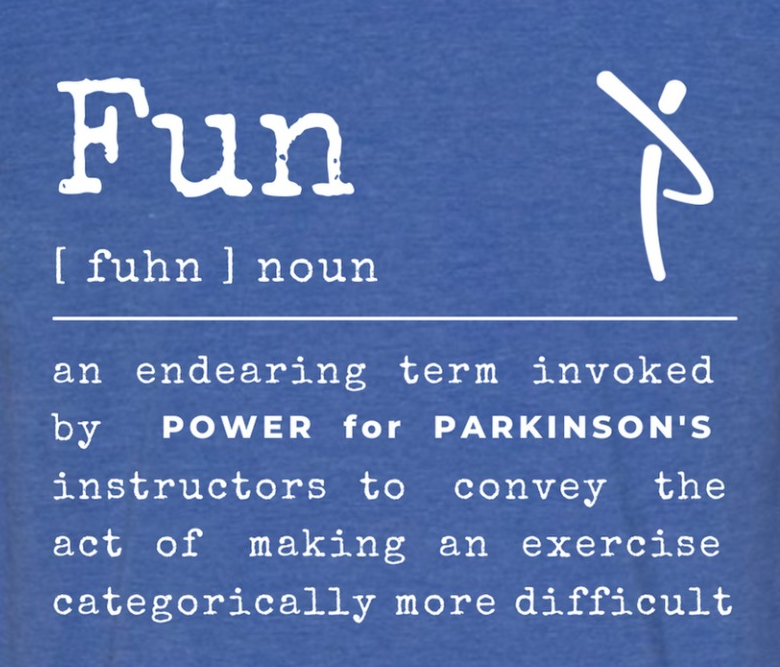
Another point used in the method was to increase challenge by gradually increasing the variety and complexity of movement tasks. In this way, the participants maintained safety while increasing their sense of confidence.  In PfP classes, this is called “Fun.” They even have a t-shirt with the definition of Fun printed on the back.

FUN Tshirt — Power for Parkinson's - www.powerforparkinsons.org

This particular study was published back in 2016,  and most of the authors were associated with Wake Forest University in Winston-Salem North Carolina.

Here’s the citation and a link to the open access article, which goes into more detail about the principles and the practice of the improvisational dance classes.

Batson G, Hugenschmidt CE, Soriano CT. Verbal Auditory Cueing of Improvisational Dance: A Proposed Method for Training Agency in Parkinson’s Disease. Front Neurol. 2016 Feb 17;7:15. doi: 10.3389/fneur.2016.00015. PMID: 26925029; PMCID: PMC4756105.

More information about Power for Parkinson’s®, their classes, and YouTube channel can be found at:

https://powerforparkinsons.org

Another 501(c)(3) charitable organization which happens to be focused on improvisation as a means to offer People with Parkinson’s (and their caregivers) to a safe environment using many of the principles listed above is Yes, and… Exercise (if that sounds familiar, take a look at the methods related to non-competitiveness in the table above) at https://yesandexercise.org.

And since the title says it, here’s a song about dance that I loved as a kid (still do, and probably still will, if I ever grow up)(note 2025-04-08: the original link is no longer available, so I just created a link to a song  that I also loved during my wasted youth, besides, I don’t remember what the original link was about.)

The Contours “Do You Love Me (Now That I can dance?)”

###

Music, movement, and PD

Jerry Coker, who was one of my instructors my first year in undergraduate college, and then again my last semester before graduation , had an hypothesis that for improvisation to be enjoyable, it had to be approximately 75% predictable and 25% unpredictable. Vary too far from those parameters, and you end up with something that is either too boring and predictable, or something that leaves the listener wondering what’s going on, trying to guess where the melody is.

I never advanced far enough to get his insights on swing, or the concept of where the beat is. Duke Ellington, whom I saw at a festival once, did have a short primer on swing. He began with the person who snaps his fingers or taps his feet on the downbeats (ONE-and-TWO-and….). Then he progressed to the folks who tapped their feet or snapped their fingers on the upbeat (1-AND-two-AND..). I forget where it went from there (maybe to Latin rhythm patterns), although I do remember him saying that when he greeted people, he always gave two kisses to the right, and two to the left, one for each cheek.

Love You Madly (ending)

Today’s readings all relate to music and movement –

From  Saluja A, Goyal V, Dhamija RK. Multi-Modal Rehabilitation Therapy in Parkinson’s Disease and Related Disorders. Ann Indian Acad Neurol. 2023 Jan;26(Suppl 1):S15-S25. doi: 10.4103/aian.aian_164_22. Epub 2022 Nov 21. PMID: 37092020; PMCID: PMC10114534. 

(emphasis added to the section quoted below):

Dance, Music, and Singing Therapy in Pd Rehabilitation

Dancing may improve speed of movement, balance, wellbeing, and QOL in patients with PD.[74,75] Multiple dancing interventions and their impact on symptomatology of PD patients have been assessed. In a systematic review of 38 articles that studied the role of various dancing interventions (tango, waltz/foxtrot, Sardinian folk dancing, Irish set dancing, Brazilian samba, Zumba, mixed dance forms, and home-based dance interventions), there was a moderate-to-large beneficial effect of dancing interventions in mild-to-moderate PD. Dancing sessions (once/week to daily for 30 minutes to 2 hours) significantly improved balance, total UPDRS, mobility, endurance, gait freezing, and depression among PD patients.[76]

Music and rhythmic auditory stimulation can improve gait parameters in PD.[77] BEATWALK is a smartphone-based application that initially assesses cadence in PD patients and then progressively increases musical tempo in order to reach the desired speed. A recent study found that BEATWALK significantly improved gait velocity (P < 0.01), cadence (P: 0.01), stride length (P: 0.04), and distance (P: 0.01) among 39 PD patients who could walk unaided and had no gait freezing.[78] The ParkinSong trial studied the effect of singing intervention (at weekly and monthly intervals) in PD and found significant improvements in vocal intensity (P = 0.018), maximum expiratory pressure (P = 0.032), and voice-related QOL (P = 0.043) among PD patients when compared to controls.[79] A recent systematic review and meta-analysis including 67 publications found that tango resulted in significantly improved UPDRS-III scores (Z = 2.87, P = 0.004) and TUG scores (Z = 11.25, P < 0.00001), whereas PD-specific dance resulted in improvement in PDQ-39 scores (Z = 3.77, P = 0.0002) when compared to usual care.[80]

Cox L, Youmans-Jones J. Dance Is a Healing Art. Curr Treat Options Allergy. 2023 Apr 10:1-12. doi: 10.1007/s40521-023-00332-x. Epub ahead of print. PMID: 37361639; PMCID: PMC10088655.

This article is considered an Opinion Statement rather than a “research study,”although they used the same armchair/desk jockey methods used by many reviews and meta-reviews. From the abstract (emphasis added):

The purpose of this review is to evaluate the health benefits of dance and dance therapy in various health domains. Dance interventions included movement therapy with certified therapists, common dances such as ballroom dancing, salsa, and cha-cha as well as ethnic dances, such as the Chinese Guozhuang Dance and the Native American jingle dance. The health domains included depression, cognitive function, neuromotor function, dementia, balance, neurological growth factors, and subjective well-being. The National Library of Medicine, Congress of Library, and the Internet were searched using the terms: dance, dance movement therapy, health, cognitive function, healing, neurological function, neuromotor function, and affective disorders from 1831 to January 2, 2023. Two-thousand five hundred and ninety-one articles were identified. Articles were selected if they provided information on the health benefits of dance in one or more of the above domains as compared to a “non-dance” control population. Studies included systematic reviews, randomized controlled studies, and long-term perspective studies. Most of the subjects in the studies were considered “elderly,” which was generally defined as 65 years or older. However, the benefits of DI on executive function were also demonstrated in primary school children. Overall, the studies demonstrated that DI provided benefits in several physical and psychological parameters as well as executive function as compared with regular exercise alone. Impressive findings were that dance was associated with increased brain volume and function and neurotrophic growth function. The populations studied included subjects who were “healthy” older adults and children who had dementia, cognitive dysfunction, Parkinson’s disease, or depression.

The benefits of dance for PwPs include movements and connections with others:

Jola C, Sundström M, McLeod J. Benefits of dance for Parkinson’s: The music, the moves, and the company. PLoS One. 2022 Nov 21;17(11):e0265921. doi: 10.1371/journal.pone.0265921. PMID: 36409733; PMCID: PMC9678293.

From the abstract:

Dance classes designed for people with Parkinson’s are very popular and associated not only with increasing individuals’ motor control abilities but also their mood; not least by providing a social network and the enjoyment of the music. However, quantitative evidence of the benefits is inconsistent and often lacks in power. For a better understanding of the contradictory findings between participants’ felt experiences and existing quantitative findings in response to dance classes, we employed a mixed method approach that focussed on the effects of music. Participant experience of the dance class was explored by means of semi-structured interviews and gait changes were measured in a within-subjects design through the Timed Up and Go (TUG) test before and after class, with and without music. We chose the TUG test for its ecological validity, as it is a simple test that resembles movements done in class. We hypothesised that the music and the dance class would have a facilitating effect on the TUG performance. In line with existing research, we found that before class, the gait of 26 participants was significantly improved when accompanied by a soundtrack. However, after class, music did not have a significantly facilitating effect, yet gait without music significantly improved after class compared to before.We suggest that whilst the music acts as an external stimulator for movement before the dance class, after the dance class, participants have an internalised music or rhythm that supports their motor control. Thus, externally played music is of less relevance. The importance of music was further emphasised in the qualitative data alongside social themes. A better understanding of how music and dance affects Parkinson’s symptoms and what aspects make individuals ‘feel better’ will help in the design of future interventions.

The entire article is Open Access at the link above. My own impression of the discussion of the contradictory results (from what was expected) reminded me of a quote my statistics professor was fond of repeating: It is meaningless to discuss what the data might have been if the data were something other than what they are. 

As a PwP, one explanation for the lack of significance difference in the TUG post-test could very well be fatigue. I, therefore, suggest that this could be looked into as a possible explanation for the lack of significant difference between external music v no external  music stimulus. Clearly, “Further research is needed.”

Morris ME, McConvey V, Wittwer JE, Slade SC, Blackberry I, Hackney ME, Haines S, Brown L, Collin E. Dancing for Parkinson’s Disease Online: Clinical Trial Process Evaluation. Healthcare (Basel). 2023 Feb 17;11(4):604. doi: 10.3390/healthcare11040604. PMID: 36833138; PMCID: PMC9957486.

The above citation reports on a clinical trial which was conducted with a fairly large and coordinated collaborative effort. Again, an excerpt from the abstract:

Results: Twelve people with PD, four dance instructors and two physiotherapists, participated in a 6-week online dance program. There was no attrition, nor were there any adverse events. Program fidelity was strong with few protocol variations. Classes were delivered as planned, with 100% attendance. Dancers valued skills mastery. Dance teachers found digital delivery to be engaging and practical. The safety of online testing was facilitated by careful screening and a home safety checklist. Conclusions: It is feasible to deliver online dancing to people with early PD.

As a PwP who has participated in Power for Parkinson’s online video dance Rhythm and Moves and other exercise videos, both live and asynchronously, the last line comes as no surprise.

The hour grows late, and I have medications to take before I sleep, oh so many medications to take before I sleep. To sleep, perchance to dream…

###
Don’t Stop Moving To The Music department

I’m not sure why the line numbers were included in the PDF, my guess is that it is/was pre-publication. At any rate, it just adds to the body of evidence that rhythm and movement helps get rid of the blues. 

Exploring the Use of Music to Promote Physical Activity Adherence: An Integrated Theoretical Approach. Kyoung Shin Park1*, David M. Williams, Jennifer L. Etnier  

Abstract …

Music can help people make more positive evaluations of acute exercise as an affective and
113 ergogenic stimulant. A recent meta-analysis of 139 studies revealed that listening to music during
114 acute bouts of exercise and sport activities increases positive affective valence (g = 0.48, CI [0.39,
115 0.56]), reduces ratings of perceived exertion (RPE; g = 0.22, CI [0.14, 0.30]), enhances physical
116 performance (g = 0.31, CI [0.25, 0.36]), and improves oxygen consumption (VO2max; g = 0.15, CI
117 [0.02, 0.27]) compared with activities without music (Terry et al., 2020). These findings support the
118 notion that music helps physical activity to be more joyous, less arduous, and more energetic and
119 efficient, arguably motivating the exerciser to join additional bouts. It is noteworthy that the
120 beneficial effects of music on affect and RPE were not moderated by physical activity intensity in the
121 meta-analysis (Terry et al., 2020), which indicates that music provides psychological benefits across
122 the full range of intensities.

Don’t Stop Moving To The Music

Prodromal symptoms, Parkinson’s Disease (PD), and that old song and dance…

Here’s a few studies that came up in my news feed from  PubMed Central (PMC) or elsewhere for articles recently published on the topics in which I’m interested – namely, prodromal symptoms related to PD, the relationship of REM sleep disorder and depression to PD, and, of course, the use of singing and dance therapies as complementary approaches to dealing with the symptoms of PD.

Prevalence and duration of non-motor symptoms in prodromal Parkinson’s disease

The prevalence and duration of non-motor symptoms (NMS) in prodromal Parkinson’s disease (PD) has not been extensively studied. The aim of this study was to determine the prevalence and duration of prodromal NMS (pNMS) in a cohort of patients with recently diagnosed PD.

…subtracted the duration of the presence of each individual NMS reported from the duration of the earliest motor symptom. NMS whose duration preceded the duration of motor symptoms were considered a pNMS. Individual pNMS were then grouped into relevant pNMS clusters based on the NMSQuest domains. Motor subtypes were defined as tremor dominant, postural instability gait difficulty (PIGD) and indeterminate type according to the Movement Disorder Society Unified Parkinson’s Disease Rating Scale revision.

Results: Prodromal NMS were experienced by 90.3% of patients with PD. … males reporting more sexual dysfunction, forgetfulness and dream re-enactment, whereas females reported more unexplained weight change and anxiety. There was a significant association between any prodromal gastrointestinal symptoms and urinary symptoms  and the PIGD phenotype.[n.b.: phenotype includes inherent traits or characteristics that are observable]. [Emphases added].

Citation:  Durcan R, Wiblin L, Lawson RA, Khoo TK, Yarnall AJ, Duncan GW, Brooks DJ, Pavese N, Burn DJ; ICICLE-PD Study Group. Prevalence and duration of non-motor symptoms in prodromal Parkinson’s disease. Eur J Neurol. 2019 Jul;26(7):979-985. doi: 10.1111/ene.13919. Epub 2019 Mar 1. PMID: 30706593; PMCID: PMC6563450.

Associations of Sleep Disorders With Depressive Symptoms in Early and Prodromal Parkinson’s Disease

Purpose: To explore the effect of sleep disorders, including the probable rapid eye movement (REM) sleep behavior disorder (pRBD) and the daytime sleepiness, on depressive symptoms in patients with early and prodromal PD.

5-year follow-up study showed that sleep disorders, including pRBD and daytime sleepiness, were associated with the increased depressive-related score in individuals with early and prodromal PD.

Conclusion:Sleep disorders, including pRBD and daytime sleepiness, are associated with depression at baseline and longitudinally, …  partially mediated by the autonomic dysfunction in early and prodromal PD, …  implication that sleep management is of great value for disease surveillance.

Citation: Ma J, Dou K, Liu R, Liao Y, Yuan Z, Xie A. Associations of Sleep Disorders With Depressive Symptoms in Early and Prodromal Parkinson’s Disease. Front Aging Neurosci. 2022 Jun 10;14:898149. doi: 10.3389/fnagi.2022.898149. PMID: 35754965; PMCID: PMC9226450.

Group therapeutic singing improves clinical motor scores in persons with Parkinson’s disease

Abstract
Background Previous reports suggest that group therapeutic singing (GTS) may have a positive effect on motor symptoms in persons with Parkinson’s disease (PD).

Objective To determine the effect of a single session of GTS on clinical motor symptoms.

Methods Clinical motor symptom assessment was completed immediately before and after 1 hour of GTS in 18 participants.

Results A significant decrease in average scores for gait and posture and tremor, but not speech and facial expression or bradykinesia was revealed.

Conclusion These results support the notion that GTS is a beneficial adjuvant therapy for persons with PD that warrants further research.

Citation: Stegemoller E, Forsyth E, Patel B, et al. Group therapeutic singing improves clinical motor scores in persons with Parkinson’s disease BMJ Neurology Open 2022;4:e000286. doi: 10.1136/bmjno-2022-000286

More research on Dance

Not a lot to discuss: just a bunch of articles from the last couple of years.

Bearss KA, DeSouza JFX. Parkinson’s Disease Motor Symptom Progression Slowed with Multisensory Dance Learning over 3-Years: A Preliminary Longitudinal Investigation. Brain Sci. 2021 Jul 7;11(7):895. doi: 10.3390/brainsci11070895. PMID: 34356129; PMCID: PMC8303681.

Bek J, Groves M, Leventhal D, Poliakoff E. Dance at Home for People With Parkinson’s During COVID-19 and Beyond: Participation, Perceptions, and Prospects. Front Neurol. 2021 May 31;12:678124. doi: 10.3389/fneur.2021.678124. PMID: 34140925; PMCID: PMC8204717.

Fontanesi C, DeSouza JFX. Beauty That Moves: Dance for Parkinson’s Effects on Affect, Self-Efficacy, Gait Symmetry, and Dual Task Performance. Front Psychol. 2021 Feb 5;11:600440. doi: 10.3389/fpsyg.2020.600440. PMID: 33613357; PMCID: PMC7892443.

Emmanouilidis S, Hackney ME, Slade SC, Heng H, Jazayeri D, Morris ME. Dance Is an Accessible Physical Activity for People with Parkinson’s Disease. Parkinsons Dis. 2021 Oct 22;2021:7516504. doi: 10.1155/2021/7516504. PMID: 34721836; PMCID: PMC8556098.

Christensen-Strynø MB, Phillips L, Frølunde L. Revitalising sensualities of ageing with Parkinson’s through dance. J Aging Stud. 2021 Dec;59:100978. doi: 10.1016/j.jaging.2021.100978. Epub 2021 Oct 23. PMID: 34794724.

Krotinger A, Loui P. Rhythm and groove as cognitive mechanisms of dance intervention in Parkinson’s disease. PLoS One. 2021 May 6;16(5):e0249933. doi: 10.1371/journal.pone.0249933. PMID: 33956853; PMCID: PMC8101757.

Bar A, Czamanski-Cohen J, Federman JD. I Feel Like I Am Flying and Full of Life: Contemporary Dance for Parkinson’s Patients. Front Psychol. 2021 Jul 5;12:623721. doi: 10.3389/fpsyg.2021.623721. PMID: 34290638; PMCID: PMC8287013.

Gyrling T, Ljunggren M, Karlsson S. The impact of dance activities on the health of persons with Parkinson’s disease in Sweden. Int J Qual Stud Health Well-being. 2021 Dec;16(1):1992842. doi: 10.1080/17482631.2021.1992842. PMID: 34694957; PMCID: PMC8547839.

Bevilacqua R, Benadduci M, Bonfigli AR, Riccardi GR, Melone G, La Forgia A, Macchiarulo N, Rossetti L, Marzorati M, Rizzo G, Di Bitonto P, Potenza A, Fiorini L, Cortellessa Loizzo FG, La Viola C, Cavallo F, Leone A, Rescio G, Caroppo A, Manni A, Cesta A, Cortellessa G, Fracasso F, Orlandini A, Umbrico A, Rossi L, Maranesi E. Dancing With Parkinson’s Disease: The SI-ROBOTICS Study Protocol. Front Public Health. 2021 Dec 21;9:780098. doi: 10.3389/fpubh.2021.780098. PMID: 34993171; PMCID: PMC8724049.

Ismail SR, Lee SWH, Merom D, Megat Kamaruddin PSN, Chong MS, Ong T, Lai NM. Evidence of disease severity, cognitive and physical outcomes of dance interventions for persons with Parkinson’s Disease: a systematic review and meta-analysis. BMC Geriatr. 2021 Sep 22;21(1):503. doi: 10.1186/s12877-021-02446-w. PMID: 34551722; PMCID: PMC8456607. (This is a desk review of articles rather than original research. Personally, I am skeptical of the conclusions of such reviews [unless they support my biases, of course]).

Hsu P, Ready EA, Grahn JA. The effects of Parkinson’s disease, music training, and dance training on beat perception and production abilities. PLoS One. 2022 Mar 8;17(3):e0264587. doi: 10.1371/journal.pone.0264587. PMID: 35259161; PMCID: PMC8903281.

Walton L, Domellöf ME, Åström ÅN, Elowson Å, Neely AS. Digital Dance for People With Parkinson’s Disease During the COVID-19 Pandemic: A Feasibility Study. Front Neurol. 2022 Feb 3;12:743432. doi: 10.3389/fneur.2021.743432. PMID: 35185746; PMCID: PMC8850348.

Izbicki P, Stegemöller EL, Compton J, Thompson J. Dancing for Parkinson’s: A Gateway for Connectedness to Peers and Social Assurance. CBE Life Sci Educ. 2021 Jun;20(2):ar27. doi: 10.1187/cbe.20-05-0101. PMID: 33944618; PMCID: PMC8734394.

Sundström M, Jola C. “I’m Never Going to Be in Phantom of the Opera”: Relational and Emotional Wellbeing of Parkinson’s Carers and Their Partners in and Beyond Dancing. Front Psychol. 2021 Jul 29;12:636135. doi: 10.3389/fpsyg.2021.636135. PMID: 34393878; PMCID: PMC8358682.

Carapellotti AM, Rodger M, Doumas M. Evaluating the effects of dance on motor outcomes, non-motor outcomes, and quality of life in people living with Parkinson’s: a feasibility study. Pilot Feasibility Stud. 2022 Feb 9;8(1):36. doi: 10.1186/s40814-022-00982-9. PMID: 35139914; PMCID: PMC8827282.

Mele B, Ismail Z, Goodarzi Z, Pringsheim T, Lew G, Holroyd-Leduc J. Non-pharmacologic interventions to treat apathy in Parkinson’s disease: A realist review. Clin Park Relat Disord. 2021 May 25;4:100096. doi: 10.1016/j.prdoa.2021.100096. PMID: 34316673; PMCID: PMC8299975.

Kang SH, Kim J, Kim I, Moon YA, Park S, Koh SB. Dance Intervention Using the Feldenkrais Method Improves Motor, and Non-Motor Symptoms and Gait in Parkinson’s Disease: A 12-Month Study. J Mov Disord. 2022 Jan;15(1):53-57. doi: 10.14802/jmd.21086. Epub 2021 Nov 3. PMID: 34724780; PMCID: PMC8820889.

And there you have it. A bunch of research or reviews over the last year and a half involving dance and Parkinson’s Disease. I did a search and haven’t had enough time to read any of these yet, but That’s part of the reason for this blog: to serve as a repository of links to articles. All of these are open access articles so the full text should be available.

Meanwhile… 

Keep on Dancing, folks!

Conclusions first:

Conclusions
This study highlighted the challenges associated with the feasibility of using an RCT design in this setting, demonstrated the acceptability of implementing a dance program inspired by the Dance for PD® model in Belfast, Northern Ireland for people living with Parkinson’s, and made suggestions for future research. The results support existing evidence demonstrating that dance may improve functional mobility and symptoms of depression in people living with mild to moderate Parkinson’s, though these findings should be carefully interpreted in the context of the study design and limitations. The small sample size limits the generalizability of the statistical results, though it was not among the aims of this study to test the efficacy of the intervention. The findings also support the idea that meeting and dancing with other people living with Parkinson’s is motivating and fosters a sense of belonging, and that dancing has the potential to support several aspects of physical, emotional, mental, and social health. (emphasis added).

Working back in the article, the authors are very honest about the limitations, including not being able to  establish a large enough group of participants so that they might be able to compare the dance intervention against another form of exercise.

Only ten Parkinson’s Disease diagnosed participants were recruited, which makes generalization difficult, but modest improvements were seen. (I saw no mention of statistically significant results in the 12 week, 20 session study). Some participants noted that the dance intervention made them more aware of certain deficits, such as posture, and that the classes motivated them to make more mindful efforts to correct these outside of the classes.

Some participants also described using tools learned in class in everyday life. For example, one participant reported using breathing exercises when anxious or fatigued, and another reported using the warm-up exercises outside of class to “stop the stiffness” and “feel better as a result of that. (emphasis added).

So: Small number of participants. Some improved scores, but no statistically significant differences. Positive statements from exit interviews. Nothing to contradict other evidence that dance interventions have a positive effect on the lives of people with Parkinson’s Disease.

Don’t stop moving to the music / keep on dancing,  folks

The article is open access and may be downloaded for free at:

Evaluating the effects of dance on motor outcomes…

Citation for this article:

Carapellotti, A.M., Rodger, M. & Doumas, M. Evaluating the effects of dance on motor outcomes, non-motor outcomes, and quality of life in people living with Parkinson’s: a feasibility study. Pilot Feasibility Stud 8, 36 (2022). https://doi.org/10.1186/s40814-022-00982-9

Verbal fluency, DBS, and parkinson’s

How many animals can you name in one minute?

Wait one year, and do the same test. 

How did you do? better or worse? Basically, that’s what this post is about.

Several articles in this post (all free PubMedCentral articles):

  1. Changes in Verbal Fluency in Parkinson’s Disease
  2. Semantic and phonemic verbal fluency in Parkinson’s disease: Influence of clinical and demographic variables
  3. The Verbal Fluency Decline After Deep Brain Stimulation in Parkinson’s Disease: Is There an Influence of Age?
  4. Worsening of Verbal Fluency After Deep Brain Stimulation in Parkinson’s Disease: A Focused Review
  5. Striatal volume is related to phonemic verbal fluency but not to semantic or alternating verbal fluency in early Parkinson’s disease

The first two studies looked at verbal fluency as measured by counting the number of animals one could name during a timed minute. Basically, the further along folks were in the stage of the disease, the lower their verbal fluency, and the lower their quality of life. Analysis indicated that several other factors were involved, such as depression, age, and executive functioning. People with Parkinson’s (PWP) with higher verbal fluency scores had better quality of life and lower caregiver burden, as measured by scores on standardized rating scales such as the PDQ-29 and The Modified Caregiver Strain Index (MCSI)

In the  second pair of articles, The first suggests that age might be accountable for the reported decline in Verbal Fluency (VF) following Deep Brain Stimulation (DBS) surgery, and provides data to support that hypothesis. The second article is a review of the literature, which notes that the effect seems to be moderate, and that studies to find the reason for the observed decline in VF have been inclusive overall.

Based on recent and earlier meta-analyses, there is reliable evidence for a worsening of both phonemic and semantic VF after DBS. This primarily pertains to STN-DBS…  …disease progression does not seem to be able to account for the worsening of VF in DBS patients. Also, DBS-related reductions in dopaminergic medication (mainly in STN-DBS patients) cannot account for the VF decline. …it seems that either surgery or stimulation itself or both together in combination with the electrode positions are driving factors. However, the evidence in this relation is inconclusive and sparse…. …recommendations for future studies on VF include optimizing study designs to include both ON and OFF stimulation as well as baseline measures, calculating reliable change indices (RCI) for neuropsychological results, and acquiring diffusion-weighted MRI on patients for tractography of cortical and subcortical connections to and from STN/GPi

The fifth article reports on brain imaging studies which indicate that the verbal fluency decline is related to different areas of the brain for VF and semantic fluency.

The fact that phonemic fluency, but not semantic or alternating fluency, was associated with caudate gray matter volume at early stage PD suggests that different fluency tasks rely on different neural substrates, and that language networks supporting semantic search and verbal-semantic switching are unrelated to brain gray matter volume at early disease stages in PD.

Since previous research on dance have indicated increased gray matter volume in dancers (somewhere earlier in this blog, search on “dance” to find it); this would suggest that one way to combat the decline in VF is to dance, preferably in classes that are specifically geared towards Parkinson’s symptoms.

At least that’s my take-away from these articles. Your mileage may vary.

###