The polar vor-Texas of 2021


Or, that was the week that was…

On February 11, went outside and snapped these – oak leaves encased in ice, desert willow branches looking more like Apache plume, Opuntia dripping icicles and a frozen “heart”, icicles  hanging from. a cholla tree cactus, frozen Ashe juniper leaves,, brave little four nerve daisy, and Mexican feather grass icy swirls. 

Those were taken on February 11. And yet, there was more to come. On February 15,  2021,   the Four nerve daisy sticking it out above the accumulation.The berm, completely covered by 6 inches of snow, avng been mowed below 4 inches in January, a Texas persimmon leaf encased in ice, an icy silhouette, and a tangled web of branches. Finally, on the 20t, things  bega to start thawing out. 

###

Some research that might be of interest…

My Google Scholar alert feed tossed a couple of items my way  that might be of interest. They are in PDF format, so you can read them online or download them for future reference:

Tricky partners: native plants show stronger interaction preferences than their exotic counterparts.

Citation: Coux, C., I. Donoso, J. M. Tylianakis, D. Garcı´a, D. Martı´nez, D. M. Dehling, and D. B. Stouffer. 2021. Tricky partners: native plants show stronger interaction preferences than their exotic counterparts Ecology 102(2):e03239. 10.1002/ecy.3239

Main takeaway (my interpretation): Increasing presence of exotic plants may put rare native plants at higher risk of extinction.

(Caveat: my browser says the site is not secure. However, I have several security programs that (hopefully) would mitigate. the risks).

That being said, the article is from a group of scientists from New Zealand, Germany and Spain who looked into the interactions that native and exotic plant species had with other plant species.

Exotic species interact with many partners with which they have not coevolved, and it remains unclear whether this systematically influences the strength of neutral processes on interactions, and how these interaction-level differences scale up to entire networks. To fill this gap, we compared interactions between plants and frugivorous birds at nine forest sites in New Zealand varying in the relative abundance and composition of native and exotic species, with independently sampled data on bird and plant abundances from the same sites

The results found that native plants’ interactions with birds were both more positive (preference for) and negative (avoidance of). Their analysis suggests that the blending of species communities through dispersal of exotics into native plant communities might result in an increase of neutral interactions between birds and native plants or exotic plants.

This could make rare species more vulnerable to this loss of selectivity and to greater randomness in the identity of their interaction partner.

So there’s another argument for getting rid of invasives.

Moving right along, here comes

Where Have the Native Grasses Gone: What a LongTerm Repeat Study Can Tell Us about California’s Native Prairie Landscapes

…found that native grass cover decreased dramatically (especially on the valley floor), exotic grass cover fluctuated widely over time, while both native and exotic forb cover increased over time. The findings support the notion that prior grazing management practices may have supported the former stands of Stipa pulchra.

… Several trends became apparent when the data from the three periods are viewed together. Both native and exotic forbs increased between each data collection. There were consistently more native forbs than exotic ones and native grasses decreased in cover. Though exotic grasses fluctuated, they always made up a greater amount of cover than their native counterparts. Lastly, cover of bare ground fluctuated and shrubs declined. The Fisher’s Exact test of the increases and decreases of forb and grass cover across quadrats from 1981 to 2015 had a p-value of 0.00012 indicating that we can reject the null hypothesis of independence…

… native bunchgrasses have declined dramatically since the end of the ranching era. Simultaneously, native forbs have increased (at least temporarily), especially on the valley floor. Our findings also suggest that the historical ranching practices in LJV likely supported the excellent stands of Stipa observed in the valley prior to release from grazing. These findings are in agreement with those of previous long-term studies in other parts of California that also found a decline in Stipa cover on lands released from grazing. (emphasis added).

If one were to generalize the conclusions of this study to Texas, where this writer resides, I would say that the presence of large stands of Prickly Pear (Opuntia sp.). and Texas Cedars (Juniperus ashei) as the dominant species in large parts of Central Texas is probably due to past practices of overgrazing, similar to the presence of the native bunchgrasses in California has been attributed to the previous grazing practices in the study cited above.

However, I do not believe that the answer to the problem is to bulldoze the soil away and to cover the land with non-permeable surfaces like buildings and asphalt parking lots.  One can develop land while leaving large portions of native plant species intact, and without replacing them with crappy myrtles and Nandina plants.

postscript:

One of the references used in the article on California grasses was California’s Fading Wildflowers  by Richard A. Minnich. The table of contents and lists of illustrations and tables and preface are available for open access, but the book itself costs a hefty $128.00.  Another reference was Terrestrial Vegetation of California. California Native Plant Society Special Publication Number 9 (pp. 733–760). Sacramento, California., which is not on the web.

###
Gone to seed, fruits, or berries, mostly…

Took a walk out in the woods, in the middle of the summer, to see if the Phemeranthus calycinus aka Rock Pink, might be in bloom, since we had had several days of rain prior. No such luck. There had been at least 20 specimens in the immediate area about four years ago, and earlier this year I found one in bloom, but even the Bitterweed (Helenium amarum) seemed to be scorched, for the most part, although I did take a photo of one that wasn’t, and some grasses. (For an article describing the flower I was looking for, and some photos, see Stalking the ephemeral Rock-Pink).

The area I’ve dubbed “Lace Cactus Lane” because of its concentration of Echinocereus species, was in fairly decent condition. And a pass through the area I call “Vine Street” revealed some Pearl Milkweed Vine (Matelea reticulata) pods dried and open, as well as some Carolina Snailseed (Cocculus carolinus), starting to put out its berries. Of course, there was the usual Poison Ivy (Toxicodendron radicans), Virginia Creeper (Parthenocissus quinquefolia ) and Sevenleaf Creeper (Parthenocissus heptophylla). And I took a few shots of the Bearded Swallow-Wort vine (Cynanchum barbigerum) just to illustrate the way it braids itself along whatever is supporting it.

A bit closer to home, Butterflyweed (Asclepias tuberosa) were in bloom,  as were Texas Lantana (Lantana urticoides) , Apache Plume (Fallugia paradoxa), Gregg’s Mistflower (Conoclinium greggii), Mealy Blue Sage (Salvia farinacea), Skeleton-leaf Golden-eye (Viguiera stenoloba),  Four-nerve daisies (Tetraneuris sp.), Flame acanthus  (Anisacanthus quadrifidus), Autumn Sage (Salvia greggii), and Manzanilla (better known by the name Turk’s Cap, and rarely called Texas Red Mallow)(Malvaviscus arboreus var. drummondii). Even the Wild petunia (Ruellia nudiflora) has been putting out blooms lately, and the Yellow Passion Flower (Passiflora lutea) seems to have just recently finished its latest cycle.

Which leads to a mention of the life cycle of the Gulf Fritillary (Agraulis vanillae) butterflies, which have tried their best but haven’t succeeded in stripping the Passiflora vines completely this year. Given that it is safe to speculate that the suburban subdivision where I reside has little habitat for these beautiful pollinators, one can only hope that my little nursery is keeping the local population going.

What was blooming (or not) 25 May 2020

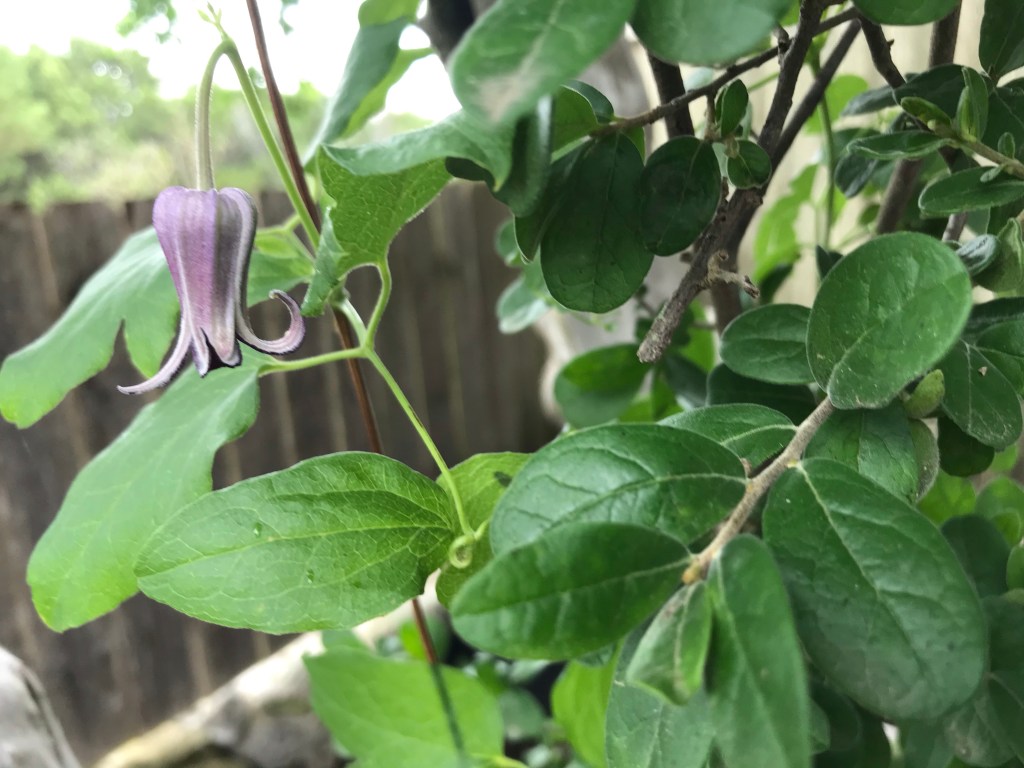
Clematis pitcheri (Purple leather flower) (cultivated)

(Posted about a year ago – edited to add the names of the plants), Went out in the yard and beyond today and captured a few items of interest. Didn’t go into the front yard because it was getting close to dinnertime.

Lantana urticoides (Texas Lantana)
Salvia farinacea (Mealy blue sage)(cultivated)
Symphyotrichum oblongifolium (Fall aster or Aromatic aster) (cultivated)
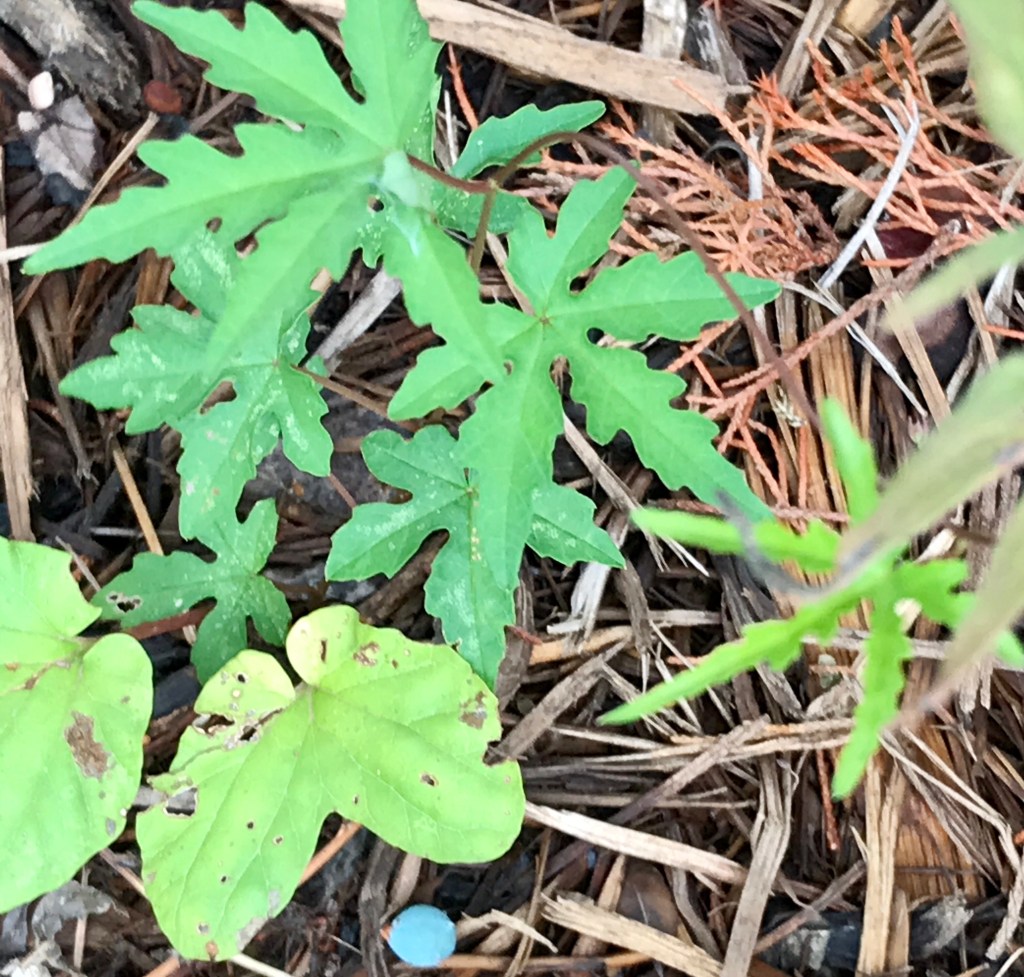
Merremia dissecta. (Alamo vine)(cultivated)(escaped from cultivation)
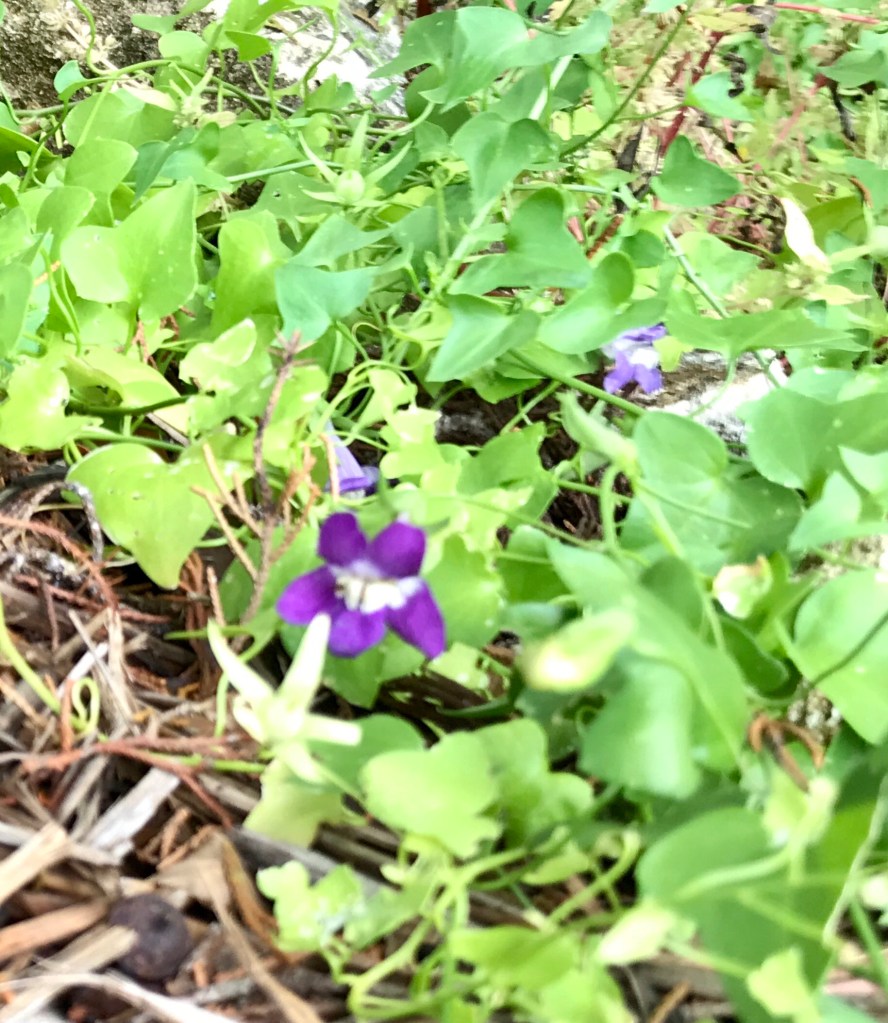
(Maurandella antirrhiniflora) (Roving sailor or Snapdragon vine) (native, not cultivated)
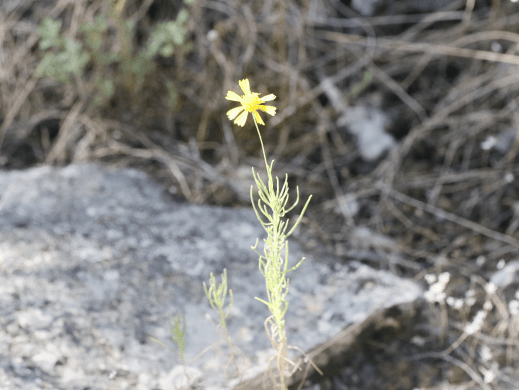
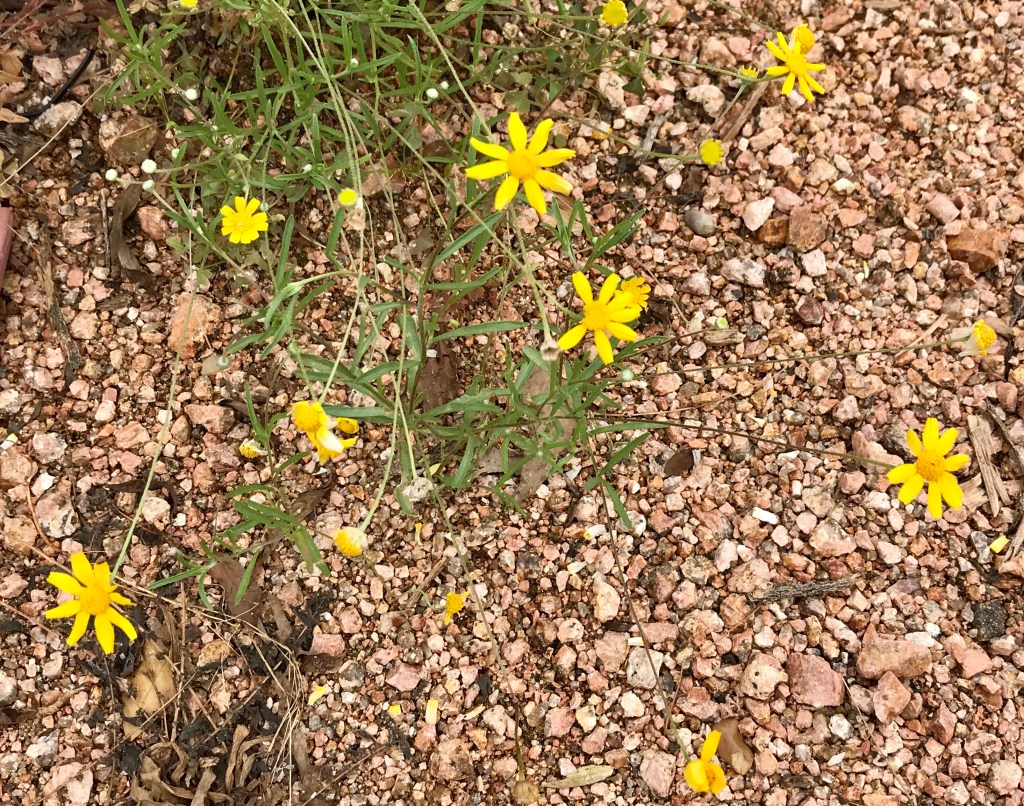
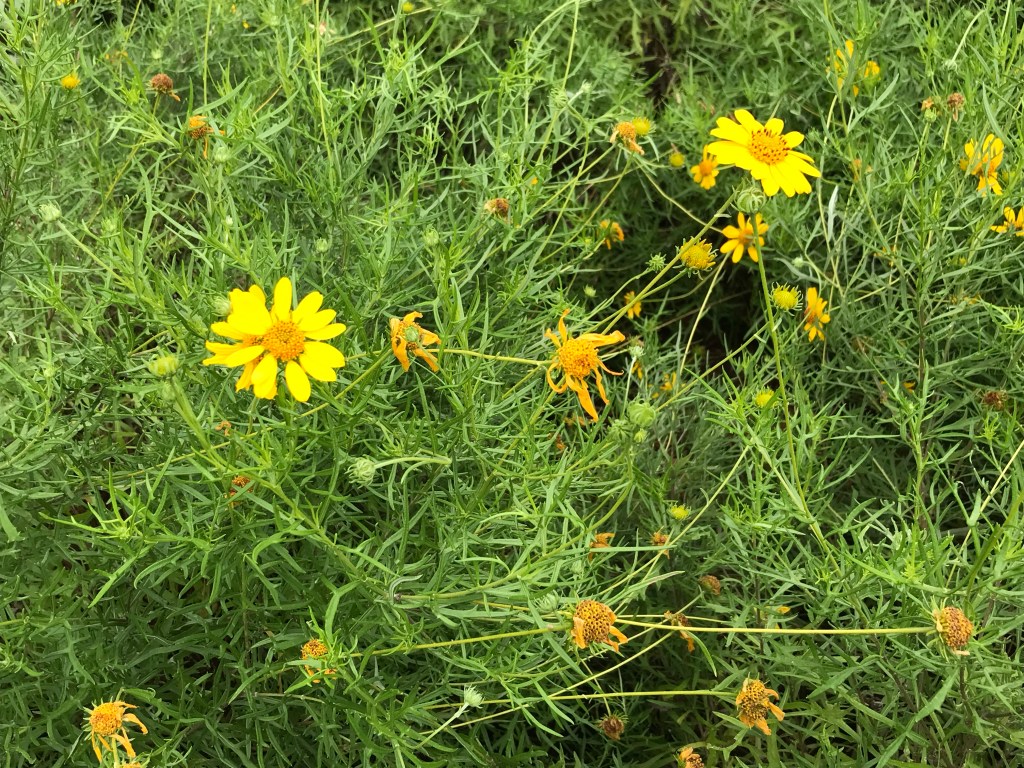
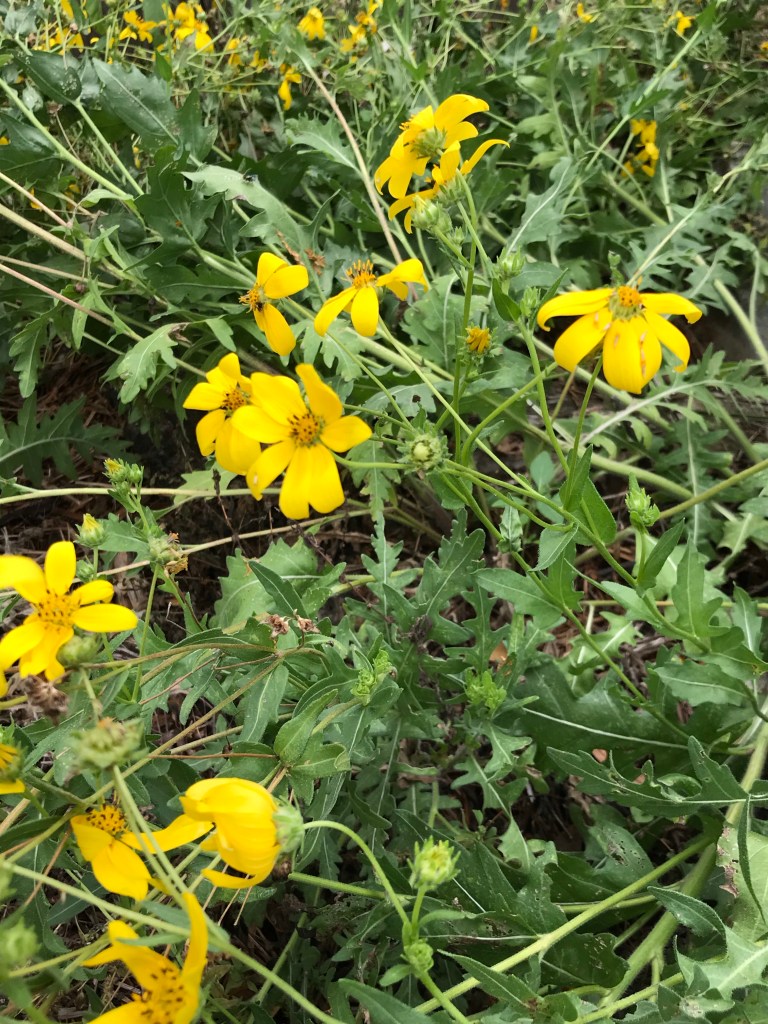
Tetraneuris linearifolia var. linearifolia (Slenderleaf bitterweed) (native, not cultivated)
(Viguiera stenoloba) Skeleton-leaf Goldeneye (cultivated)
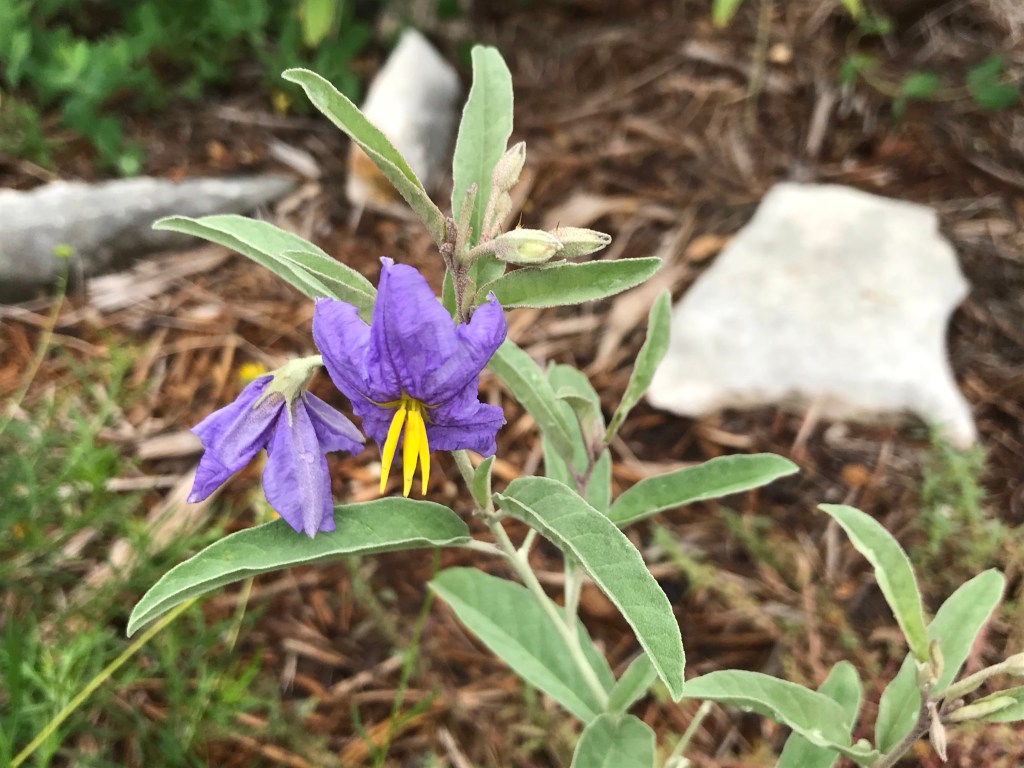
Solanum elaeagnifolium (Silverleaf nightshade) (native, not cultivated)
Conoclinium greggii (Gregg’s mistflower) (cultivated)
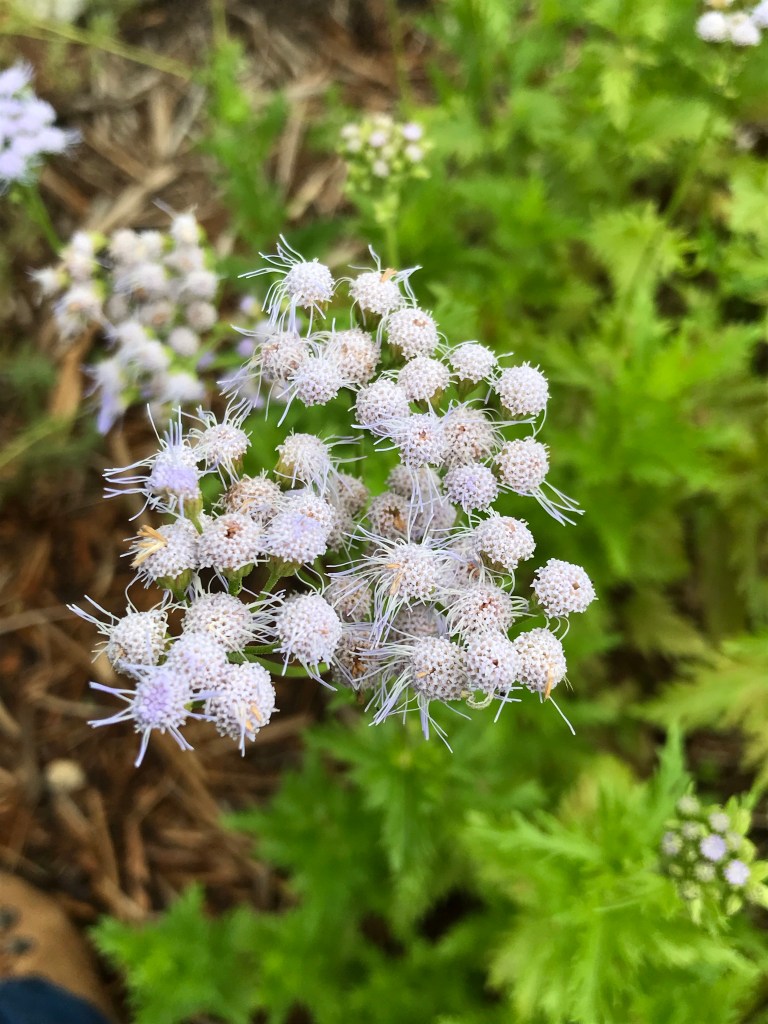
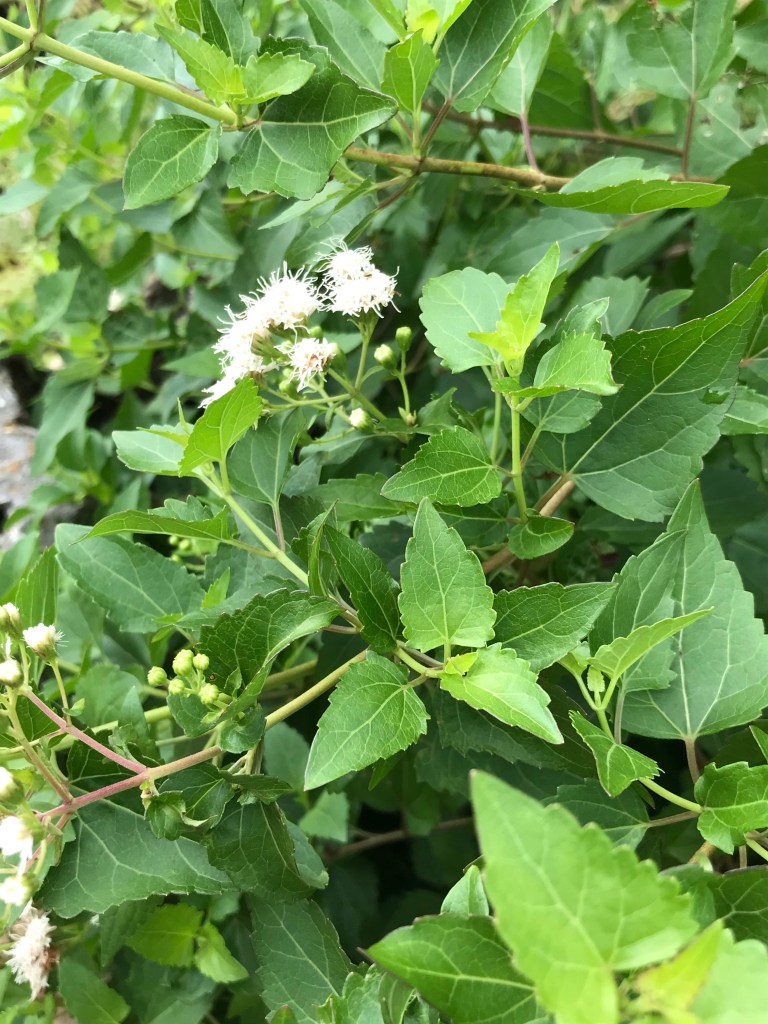
Ageratina havanensis (White mistflower, White boneset) (cultivated)
Viguiera stenoloba . (Skeleton-leaf goldeneye) (cultivated)
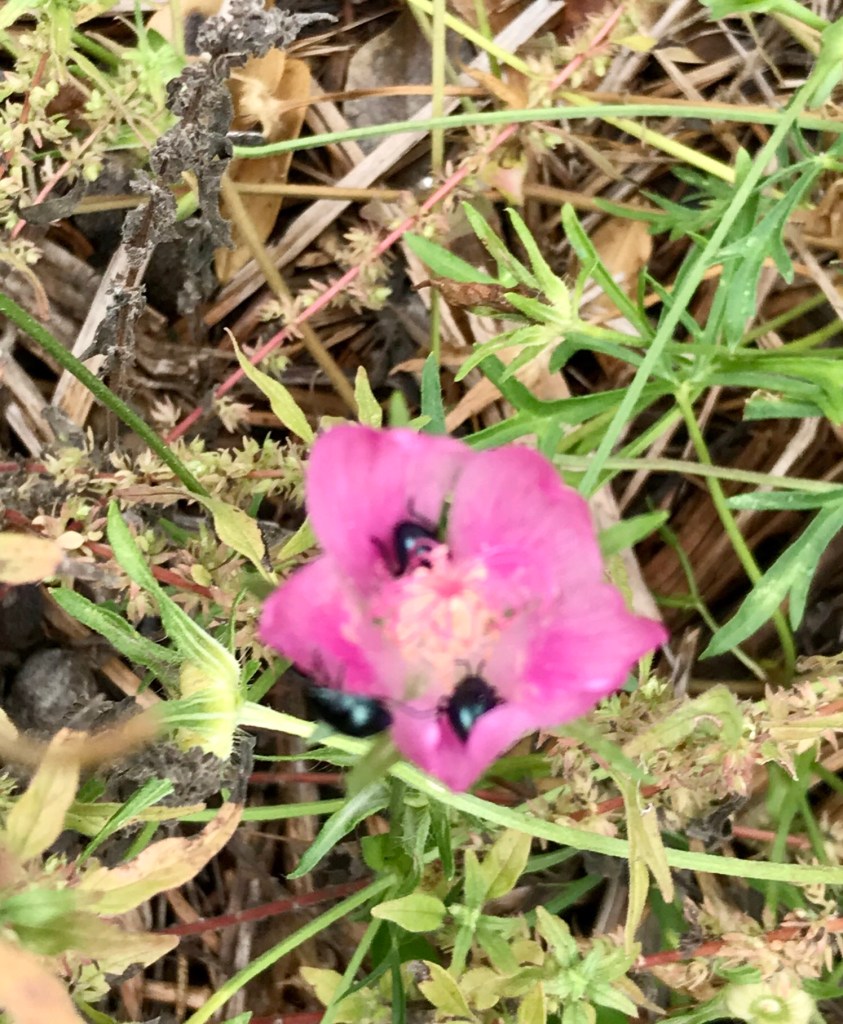
Callirhoe involucrata (Winecup, Purple Poppy Mallow)(cultivated)
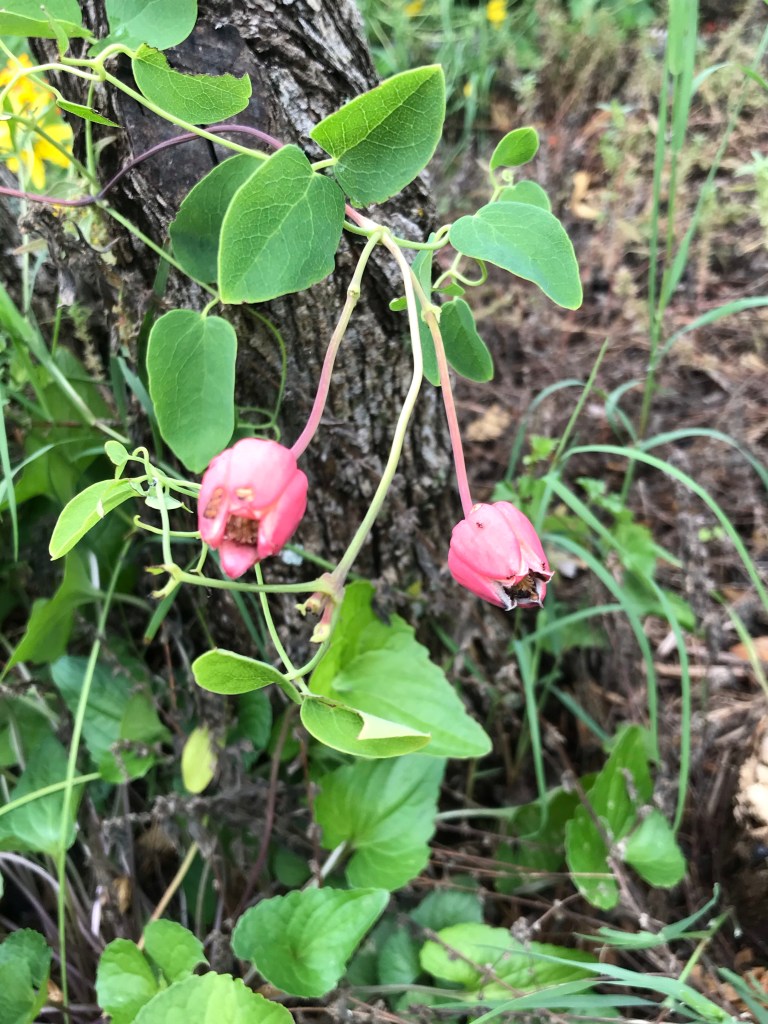
Clematis texensis (Scarlet Clematis, Scarlet Leatherflower, Texas Clematis)(cultivated)
Opuntia sp. (Prickly pear)(cultivated, “spineless varietal)
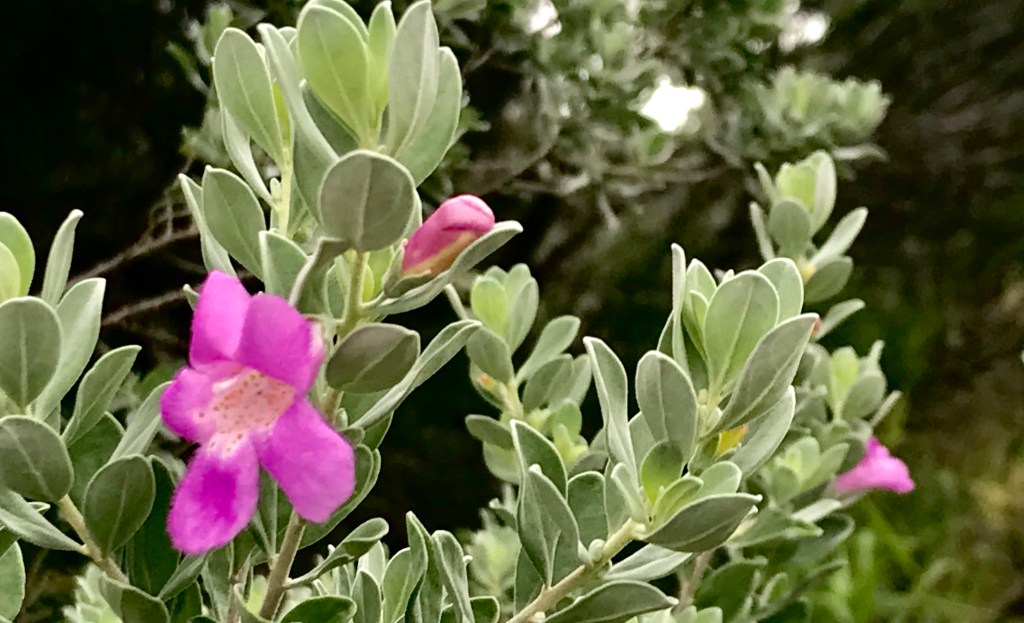
Luchophxllum frutescems (Cenizo, Purple sage, Trvas sage)(cultivated))
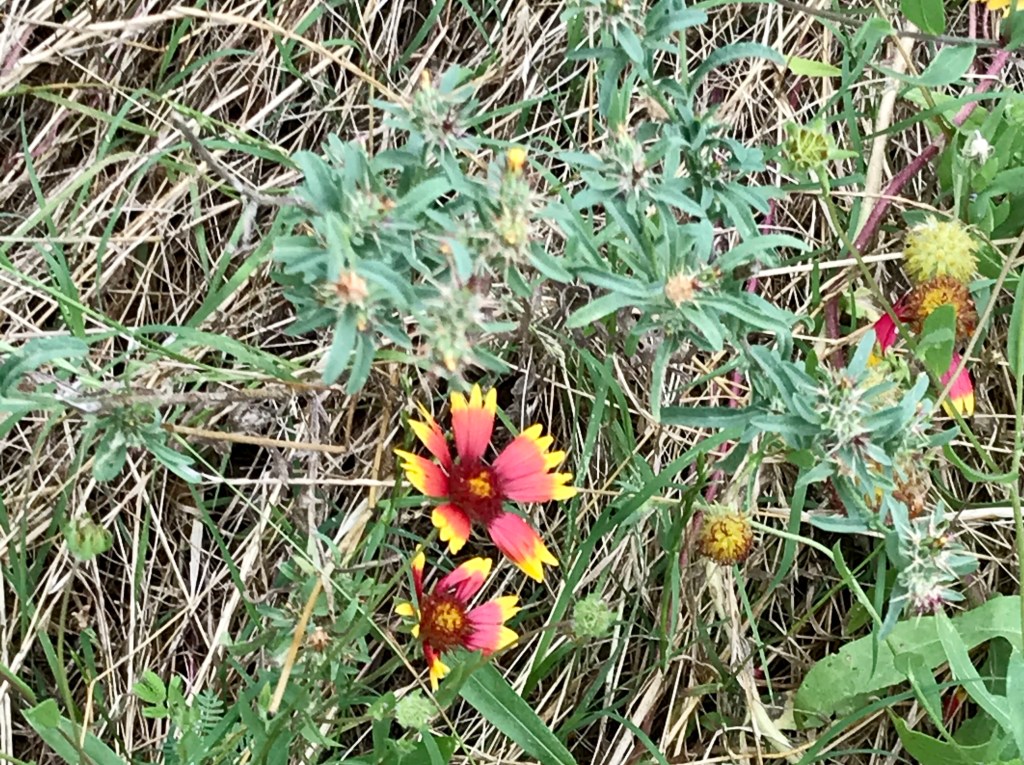
Gaillardia pulchella (Firewheel, Indian Blanket) (natiive, not cultivated)
Oenothera speciosa (Pink Evening Primrose, Pink Ladies) (native, not cultivated)
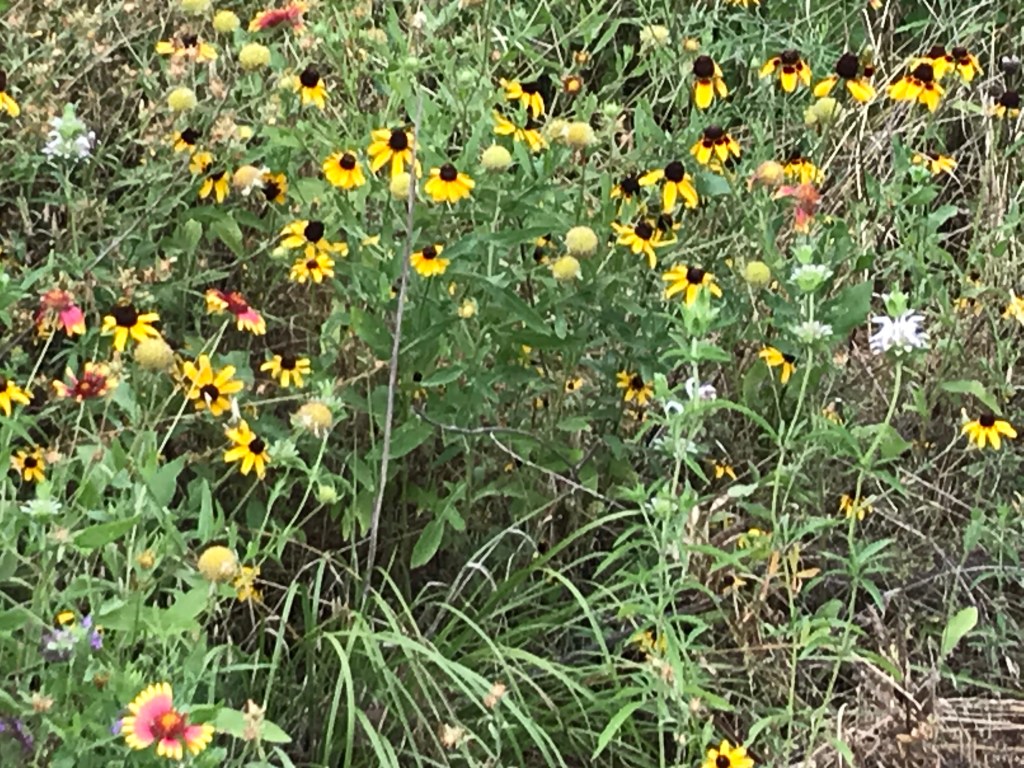
A variety of native plants (mostly)
Glandularia bipinnatifida (Dakota Mock Vervain, Prairie verbena) (native, not cultivated)
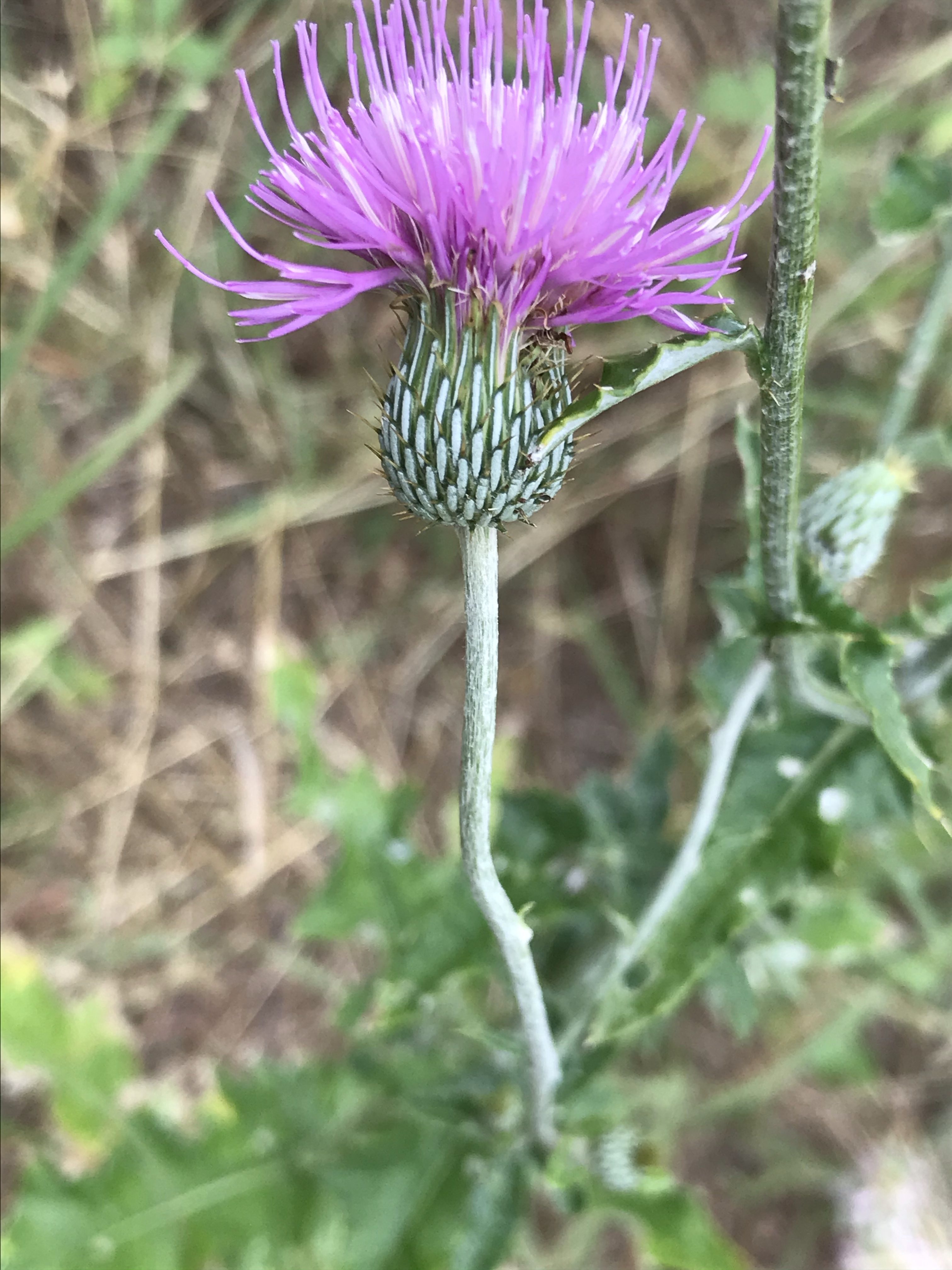
Cirsium texanum (Texas Thistle) (native, not cultivated)
Gaillardia pulchella (Indian Blanket) including recessive gene lacking red pigment, “Sunwheel” (native, not cultivated)
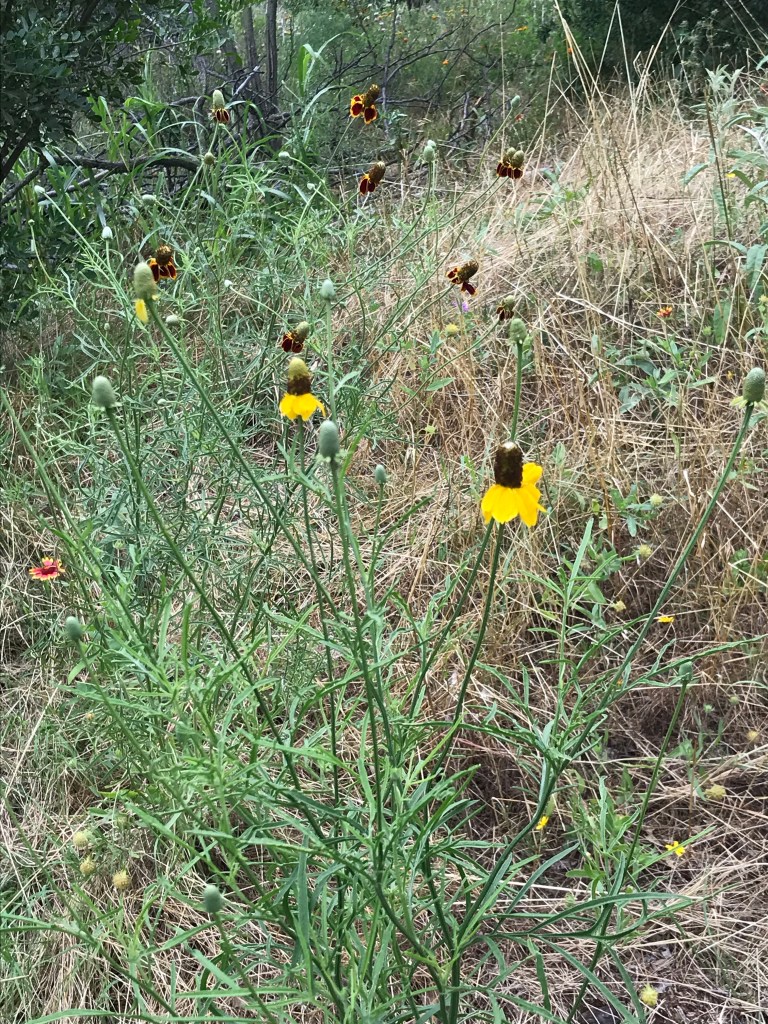
Ratibida columnifera (Prairie Coneflower, Mexican Hat)(native, not cultivated)

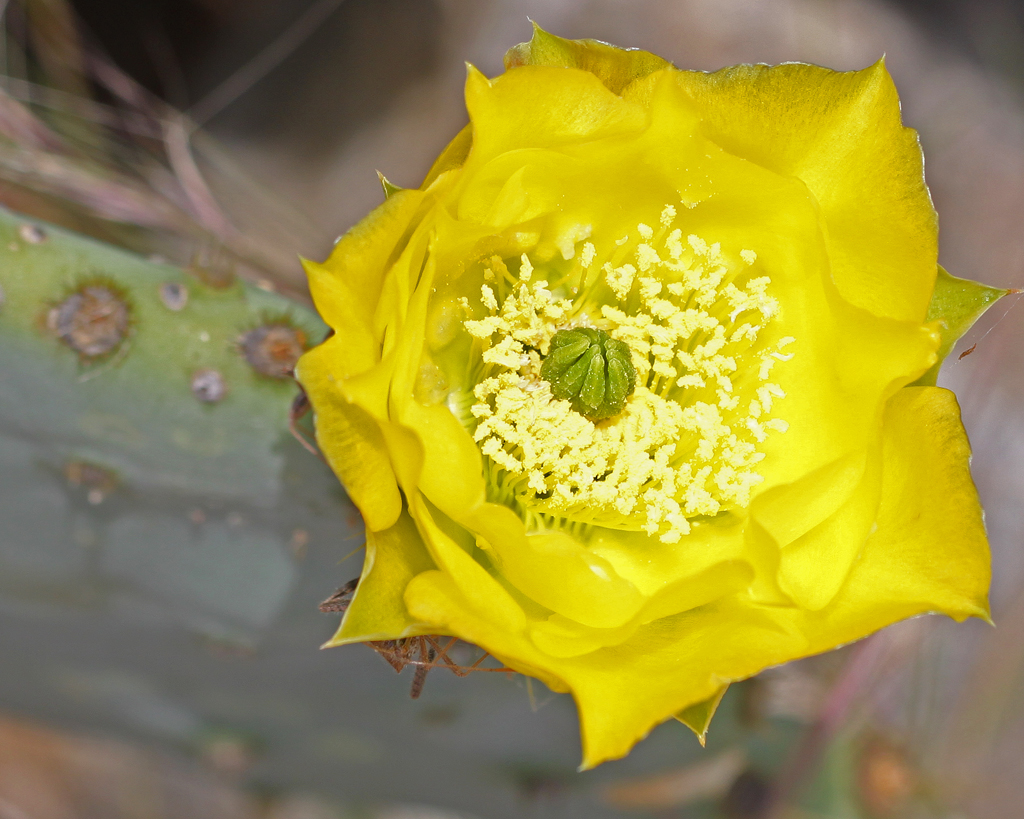
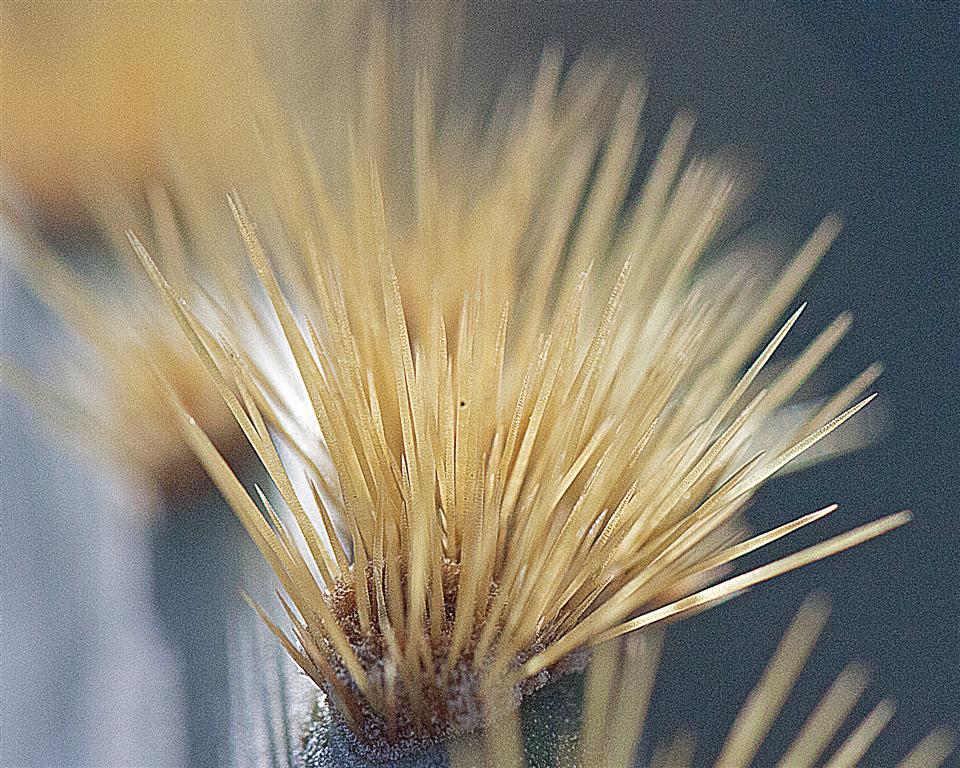
Opuntia species – Prickley Pear

Opuntia species - Prickley Pear

Opuntia species – Prickley Pear

Caught this bloom today at the Wildflower Center south of Austin. The Prickley Pear Cacti behind my house don’t seem to be in any hurry to bloom, or I’d have taken a picture of one of them instead. Prickley Pear is almost ubiquitous in these parts – they’re what’s left after folks let cattle and goats overgraze their land in order to get the agricultural use tax rate. The “tunas” (fruit) of this cactus is edible, as are the pads, once the spines are removed.  They call them nopalitas and you can search Google to find recipes, products and such.