Creating Art with Musk Thistle: Van Gogh Inspired Filters

Or rather, the same photo done in more ways than one…

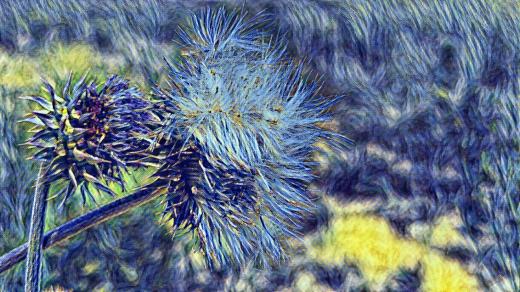
Musk Thistle (Carduus nutans) is an invasive plant native to Europe, Central  Asia, and North Africa. In the photo above we see on the left a flower getting ready to bloom, and behind it a bloom already ggone to seed. The yellow in the background are either Coreopsis or Brown Eyed Susans, or both, out of the depth of field.


The second version was created using a “psychedelic” set of filters.

The third attempts to recreate Vincent Van Gogh’s general style – again, using software filters.
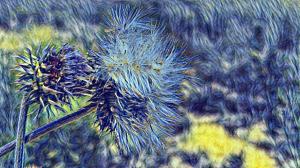
The third variation (and fourth version of the same photo), also uses a Van Gogh approach, this time using a filter that attempts to imitate his Starry Night painting.
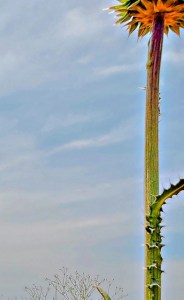
And finally, a “normal” shot accentuating the height of the stem as seen from below. If these photos have pricked your interest about Carduus nutans, you can click on the preceding link to check out the Wikipedia page for more information.

###
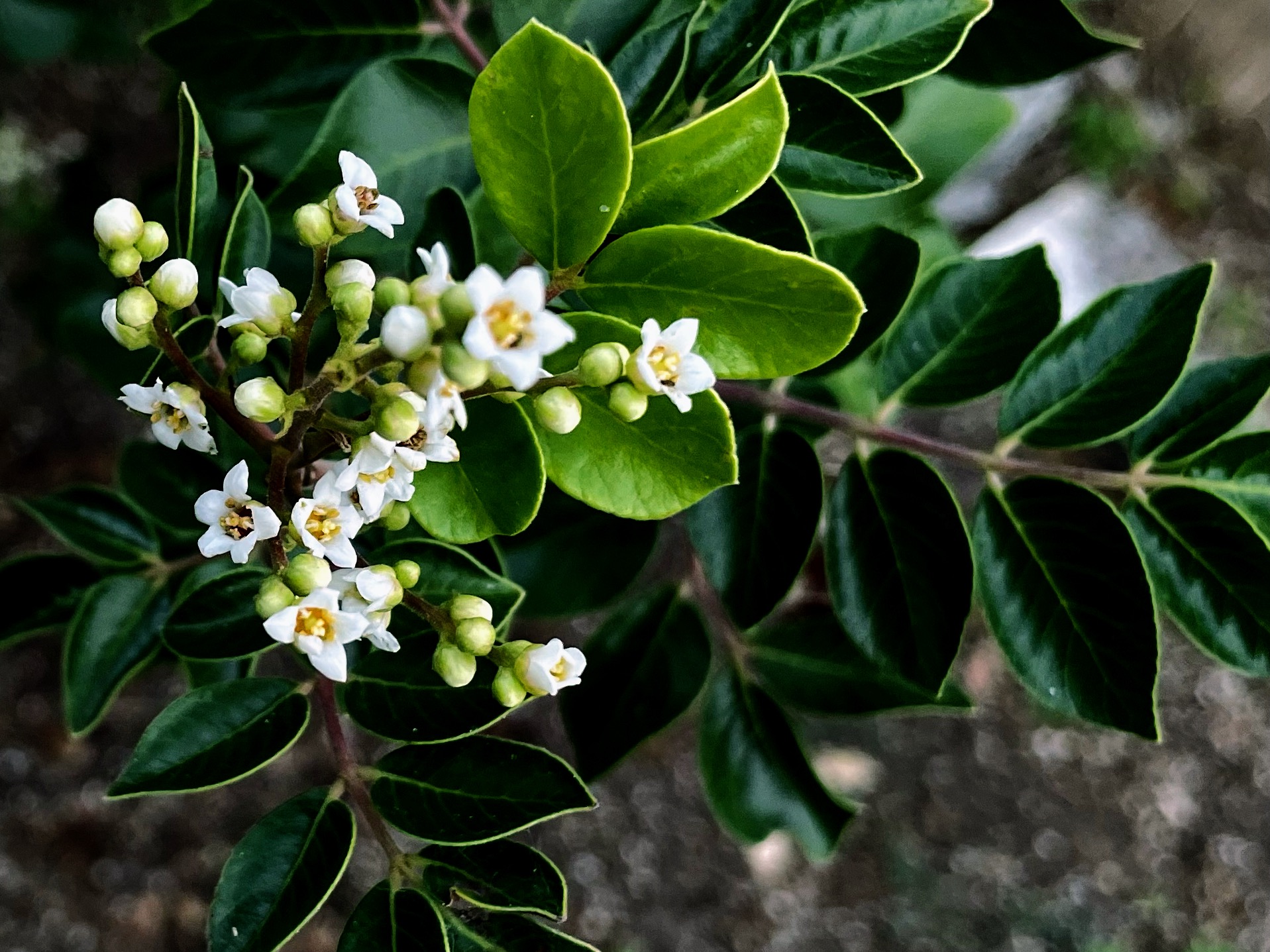
Where have all the (native) flowers gone?

Prosser, R.S., Brain, R.A. Where have all the flowers gone? A systematic evaluation of factors driving native terrestrial plant decline in North America. Environ Sci Pollut Res (2024). https://doi.org/10.1007/s11356-024-34349-9 

Prosser and Brain have done the research and  have come up with the following conclusions:

  • Habitat alteration and non-native species are the most important drivers of the decline in native terrestrial plant diversity in North America.
  • No listed species in the U.S. or Canada faced a singular threat. In the recovery plans for all listed species, several threats were identified as contributing to their risk of extirpation or extinction.
  • Pesticides, specifically herbicides, represent a micro-scale contributor to the decline of plant biodiversity in North America relative to other drivers.

(Note: the above three points are taken verbatim from text in the article, although they are not presented as bullets in the subject article. Emphasis using bold and italics has been added).

In their conclusion, they argue that pesticides and herbicides make an easy target for litigation, even though they contribute minimally to the extirpation or extinction of native plants .

On the other hand, Paraquat is an herbicide that not only has been banned in over 50 other nation-states, and has been linked as a probable cause of Parkinson’s Disease in the book Ending Parkinson’s Disease: A Prescription For Action  and in this February 2024 article on the EarthJustice website: This Weed Killer Is Linked to Parkinson’s. Why Isn’t It Banned Yet?

I would suggest that the authors of the article on causes contributing to reduction of native plant species are failing, in their words, to see the forest by focusing on the trees. I am a native plant advocate who also has Parkinson’s Disease. I don’t know whether I have been exposed to Paraquat in the past. Just because pesticides and herbicides are not a major factor in the reduction of native species doesn’t mean I should just ignore the bigger picture of the effect of herbicides like Paraquat on the species Homo sapiens, many of whom, including myself, have displaced other native occupants of this territory, like the Apaches, the Tonkawas, and other tribal groups who are members of the same Genus and species.

This post has covered most of my main interests: scientific research, Parkinson’s Disease, and native plants. All that’s missing is some music:

The Parkinson’s Anthem (We Ain’t Givin’ Up Hope)

#nativeplants  #research #parkinsonsdisease #advocacy

Recent blooms, both contained and wild

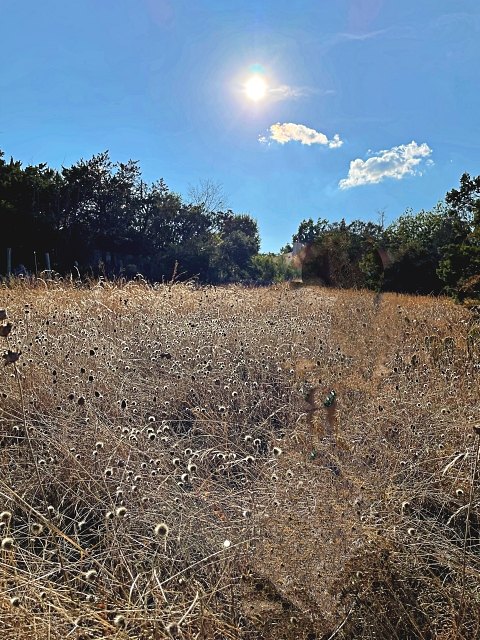
All the photos above were taken in September and October 2023, either in our yard or in the berm and greenbelt behind it. As one can tell, there was some rain during that time, enough to push up a few rain lilies, but not so much that most plants thrived.

###

Blooming in late May and Early June…

Here are a few of the flowers and other stuff I managed to capture on digital media recently.

Actually, there are a lot more items in bloom, but these were closest on hand. The front yard also has Four-nerve daisies, Wright’s skullcap, Autumn Sage, Simpson’s rosinweed, Turkscaps, Engelmann daisies, Rock Rose, and White avens in bloom, besides those pictured below.

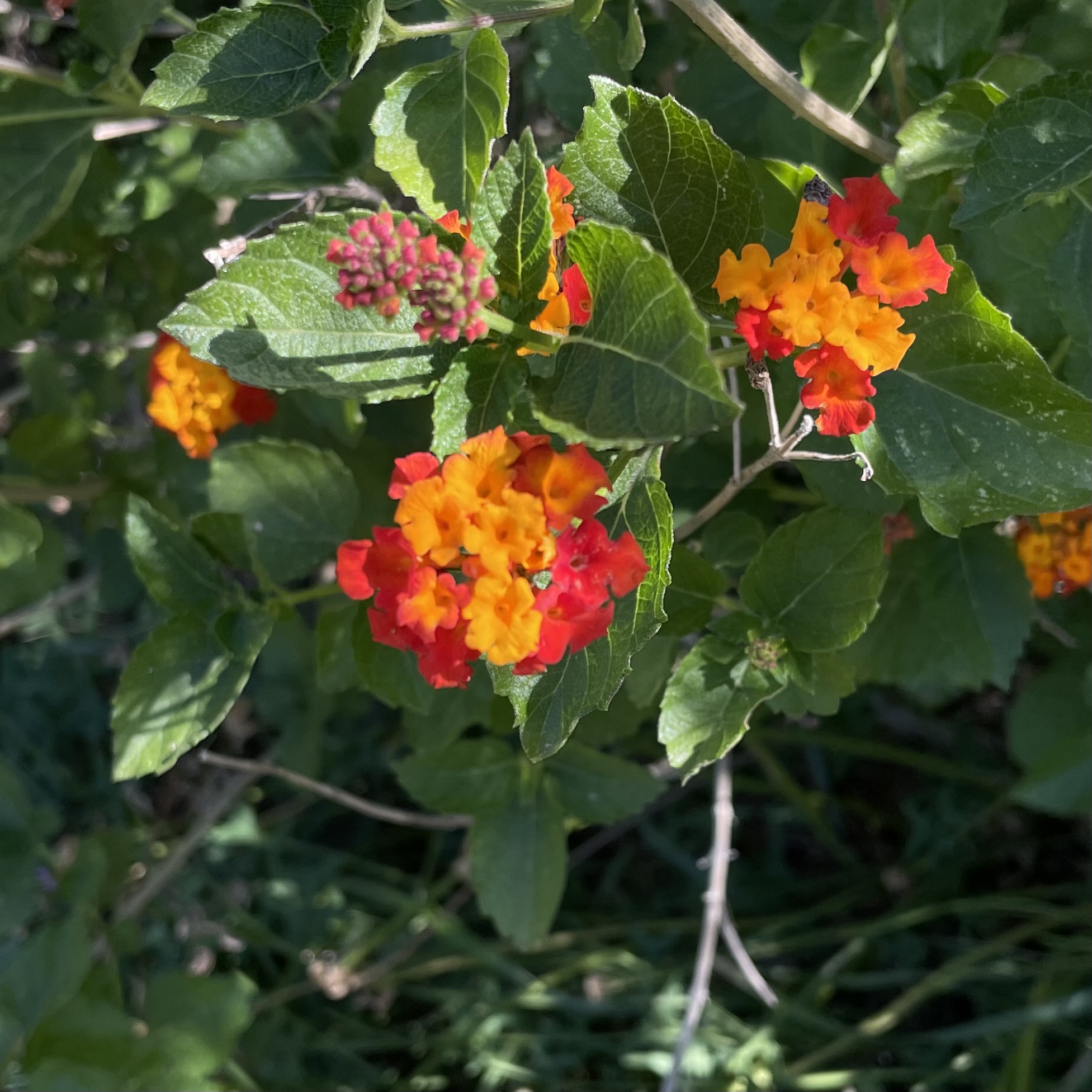
The South side of the house has Passiflora vines, copious amounts of Gulf Fritillary and other butterflies in varied stages of development, a Texas lantana, a Datura , lots of Blue Curls, a couple of White mistflowers (not blooming until the Fall), Clematis texensis and drummondii, some Asclepias plants for the Monarchs, and that pretty much covers what’s on bloom in June.

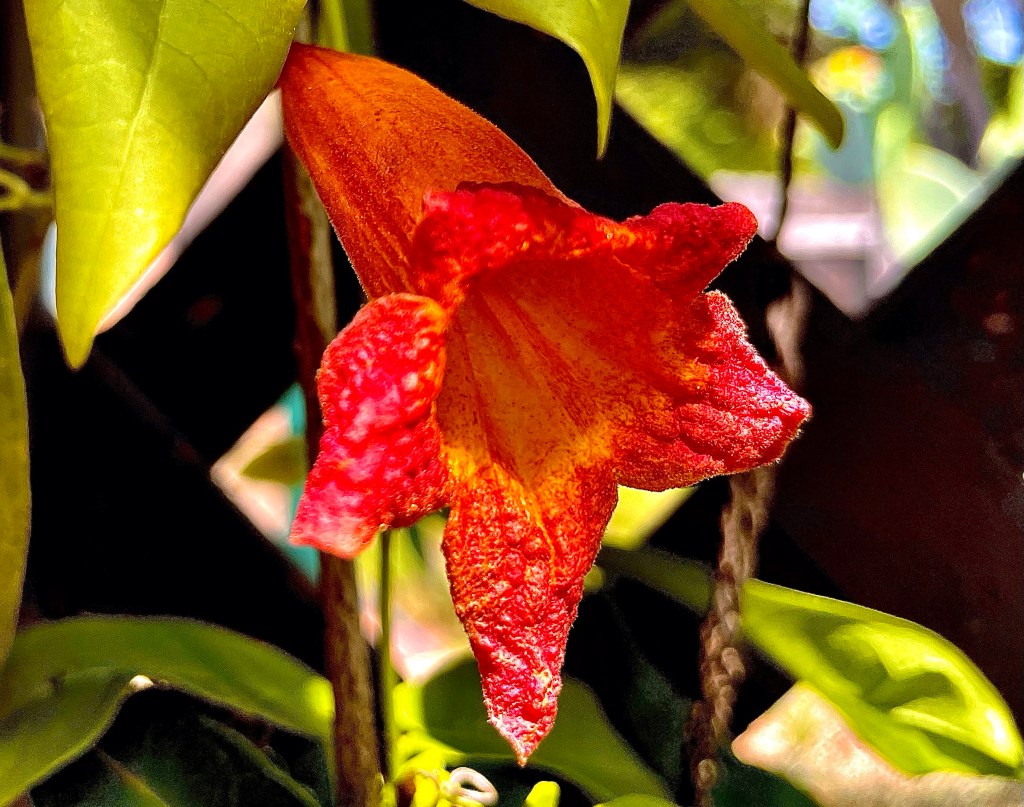
Bignonia capreolata (Crossvine), slightly past its glory

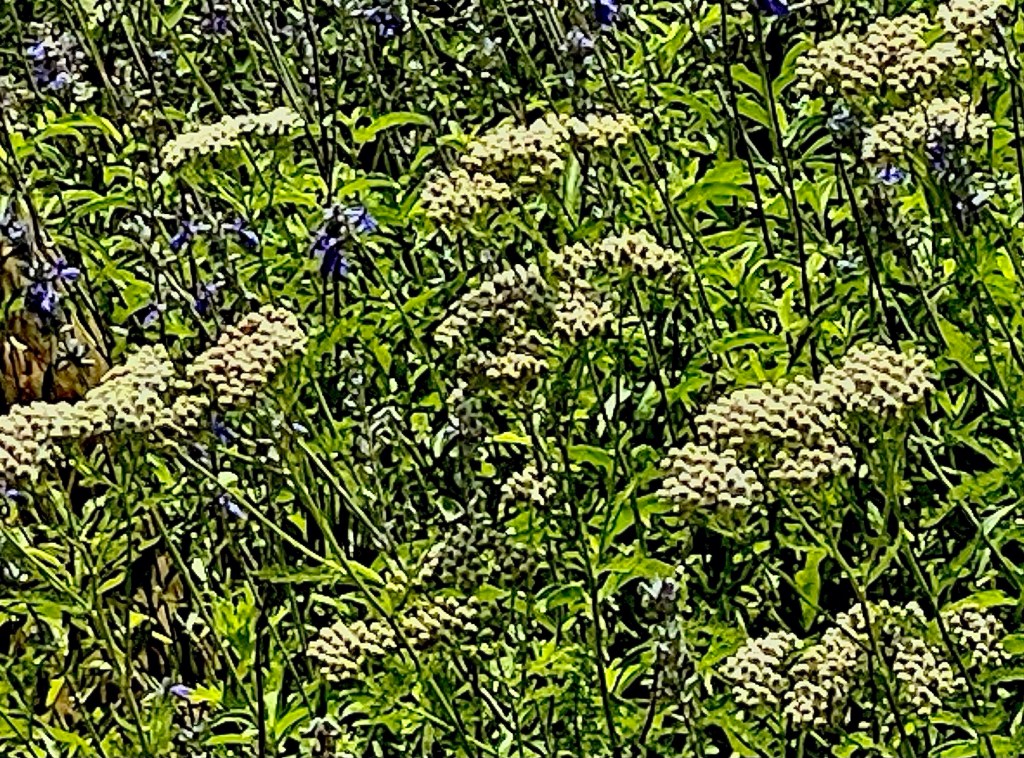
(Achillea millifolium) Milfoil

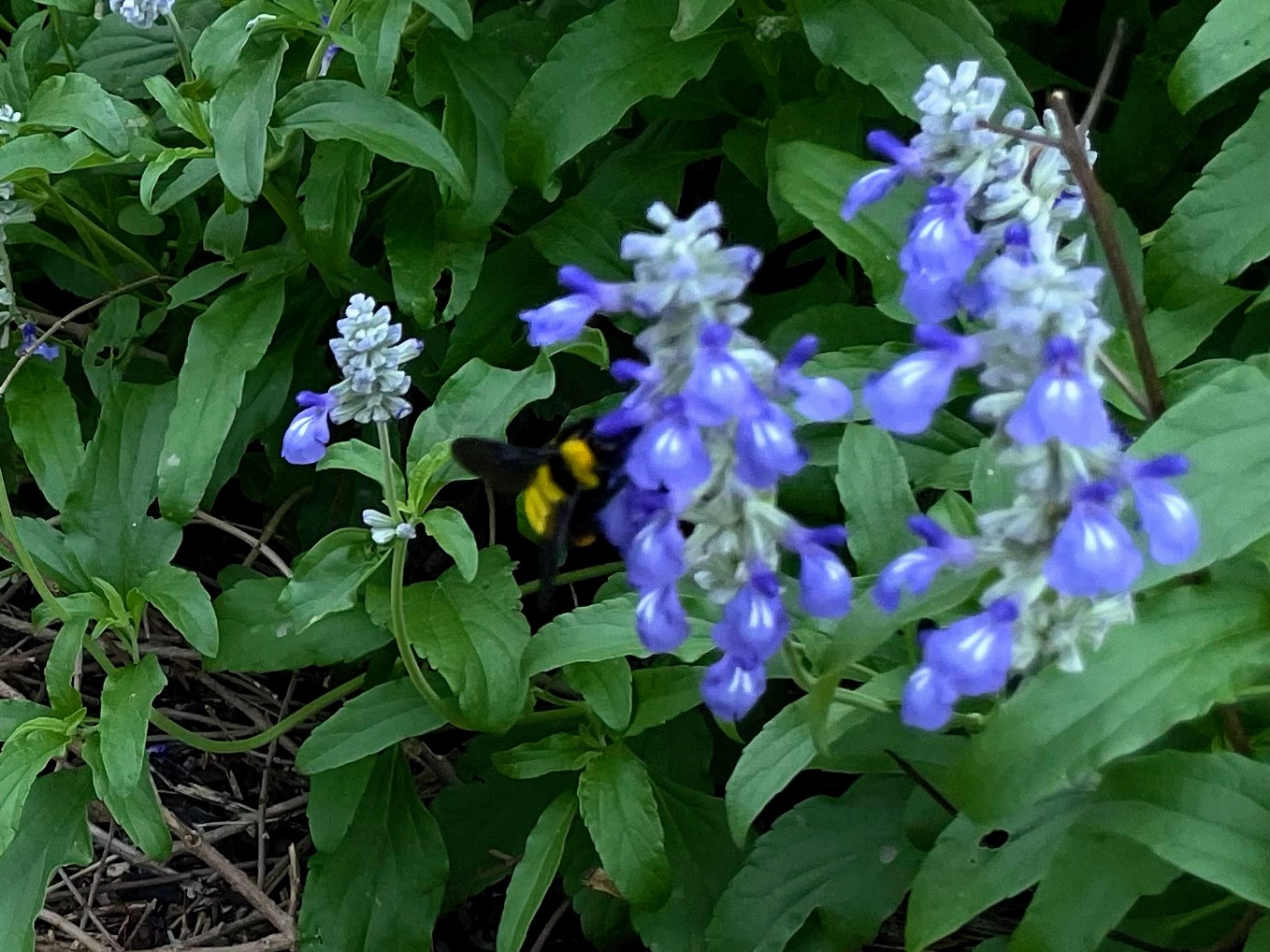
(Salvia farinacea) Mealy blue sage
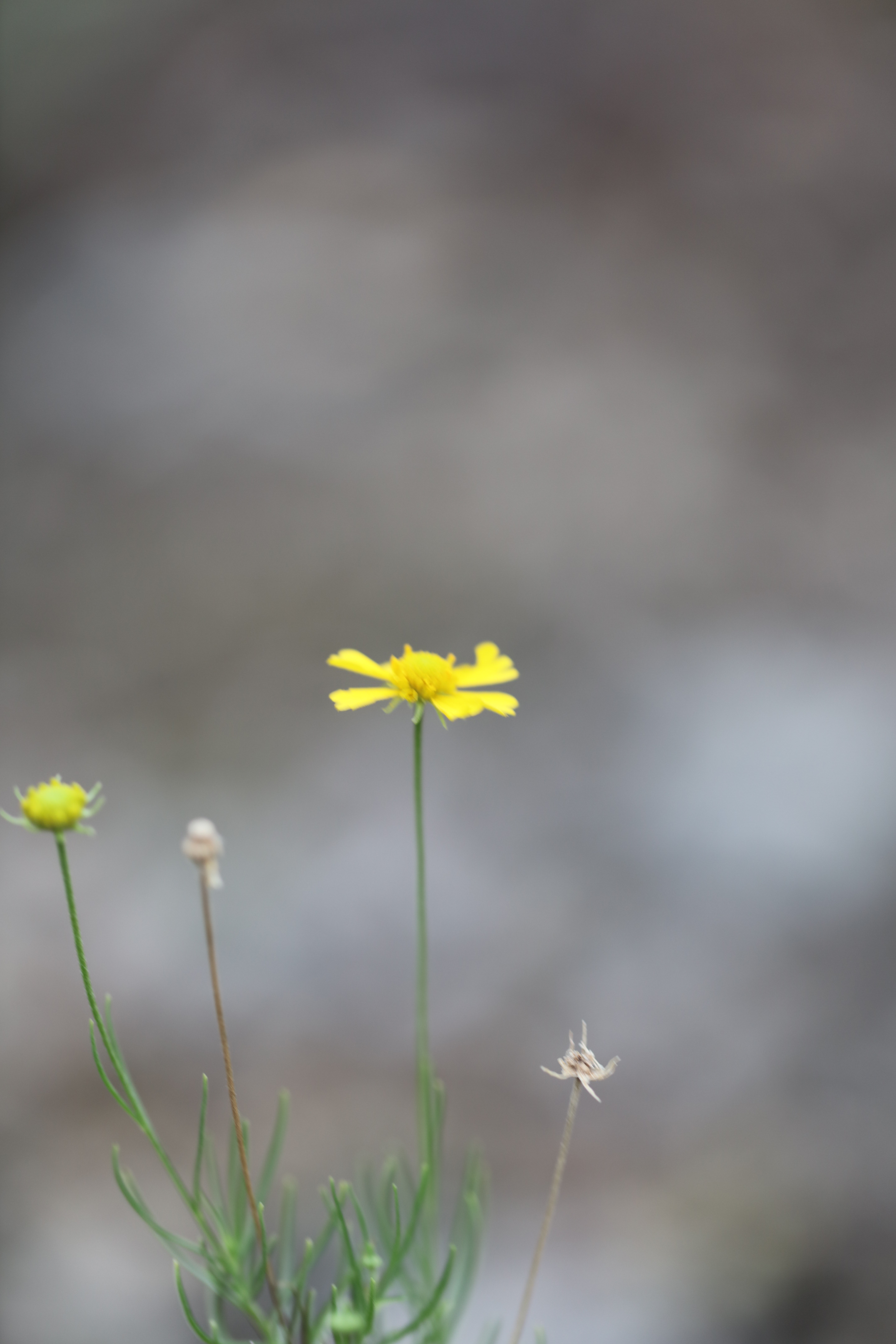
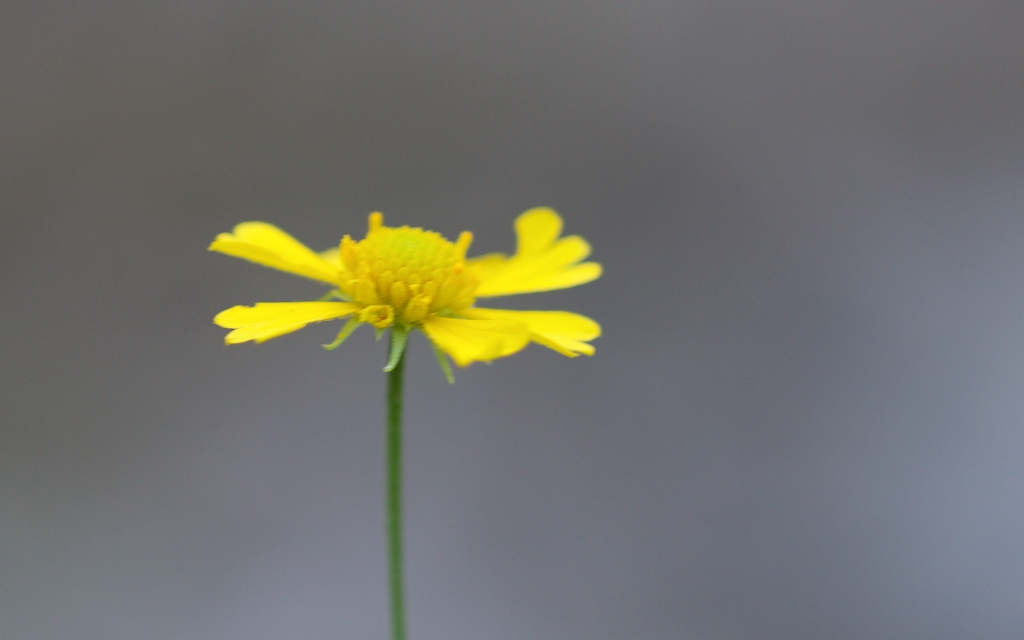
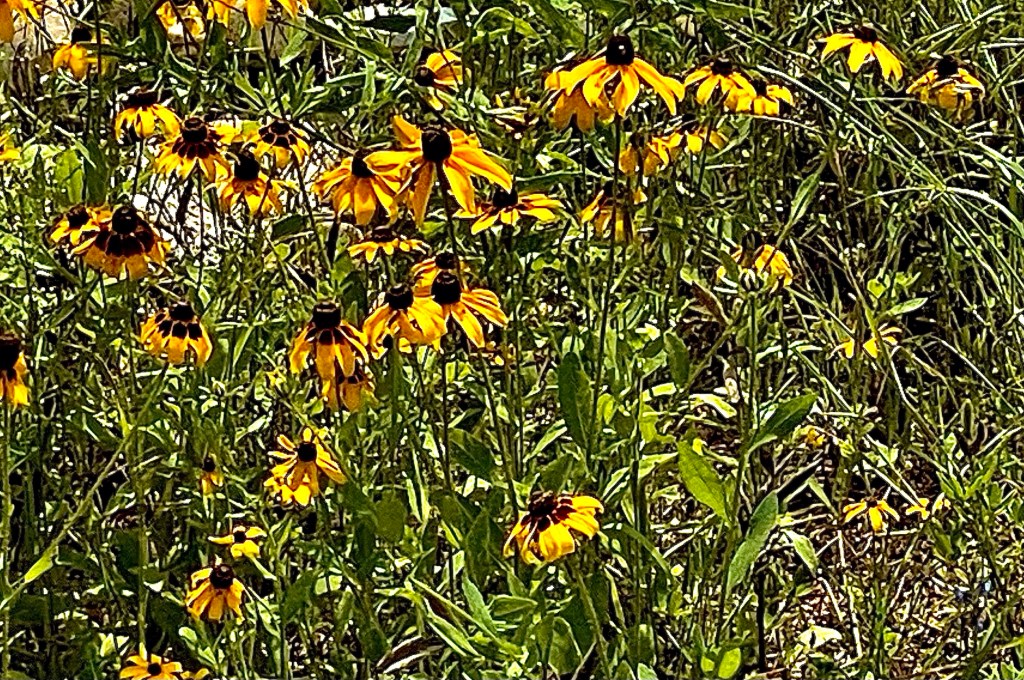
Rudbeckia hirta – Brown eyed Susans

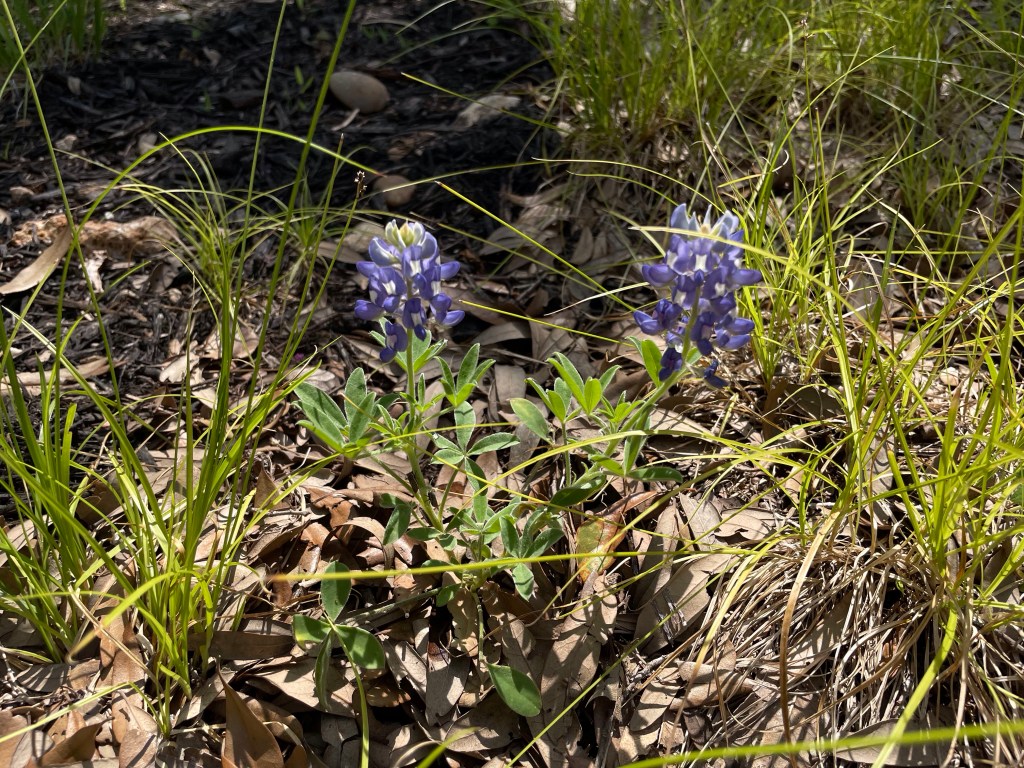
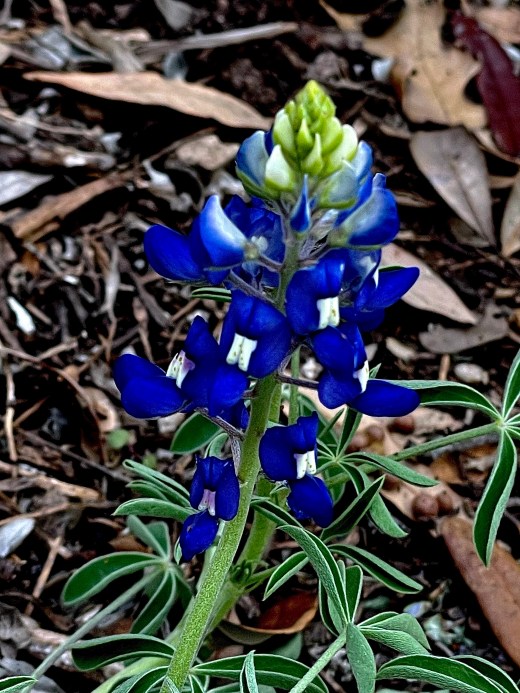
A surprise on June 1st – two baby Bluebonnets (Lupinus Texensis) blooming in the front yard!

From my Nextdoor neighborhood group:

https://nextdoor.com/embed/sxW7MxB4bd-p

Okay, laziness is the mother of invention, so I’m trying to hit two birds with one stone, so to speak. The above is a link to my Nextdoor post this morning showing a few species of plants and animals related to Central Texas.

You might notice that the group there is also named Return To The Natives/Native Plants Are The Answer. If you think that’s a coincidence, you’d be wrong.

Back in my own backyard…

Early June 2022 and the heat is in the “triple digits”as the meteorologists like to say in TV-land. or 39 ° Celsius, as we were told we would have converted to 50 or more years ago. Either system, hot to humans is hot.

But to native plants that evolved in Central Texas for more years than Crepe Myrtle has been here, even these signs of Global Warming haven’t phased them. (Granted, I do some supplemental watering, especially of small trees for the first few years, but other plants like Passiflora incarnata grow like “weeds”).

I’ll  let the plants speak for themselves:

Those are just the photos I took on June 8, 2022, mostly in my yard. The Rain Lilies were just past the back fence (the ones in my yard had bloomed and gone to seed after the previous week’s mild spattering of rain drops).

###

What’s in bloom in December?

Just a look at the most recent shots:

Taken on December 1, 2021. Since March 27, I have seen and photographed at least one Monarch Butterfly in each of the following months in 2021. And that just doesn’t seem right…

A global resource

Who would have guessed it?

There is now a checklist for all the vascular plants on the globe. Actually, probably many folks could have guessed it – this is what the internet was invented for, not for sharing cute kitten pictures on Facebook or Instagram (sorry, don’t mean to offend anyone. I like cute kitten pictures, too).

In an article (open access) published on nature.com, you will find The World Checklist of Vascular Plants, a continuously updated resource for exploring global plant diversity. The DOI reference is https://doi.org/10.1038/s41597-021-00997-6  where you can find the actual citation to use:

Govaerts, R., Nic Lughadha, E., Black, N. et al. The World Checklist of Vascular Plants, a continuously updated resource for exploring global plant diversity. Sci Data 8, 215 (2021). https://doi.org/10.1038/s41597-021-00997-6

There have been other checklists, and the authors provide a table explaining the differences.

To maximise utility, such lists should be accessible, explicitly  evidence-based, transparent, expert-reviewed, and regularly updated, incorporating new evidence and emerging scientific
consensus. WCVP largely meets these criteria, being continuously updated and freely available online. Users can browse, search, or download a user-defned subset of accepted species with corresponding synonyms and bibliographic details, or a date-stamped full dataset

The World Checklist of Vascular Plants (WVCP)

As sloppy as I am as a scientist, I might not make use of this as often as I should. But I’ll post it, and maybe someone else will get more use out of it than I will. Who knows? Maybe I’ll make more use of it, having shared this post.

###