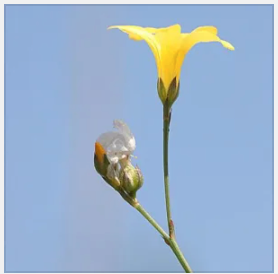
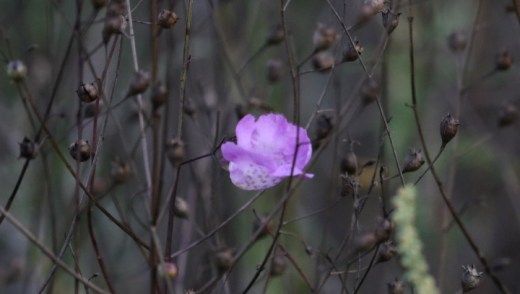
Agalinis species found on my way to cast my ballot . . .

Agalinis strictifolia

November 2nd, 2021, was a primary election day where I live. I decided to carry my camera in order to get some better photos of the first species shown below. Good enough for positive identification, if nothing else. On the other side of the draw, along the actual hike and dog walk bathroom trail, found a different set of Agalinis species. Plus other stuff, which I might post later. The Agalinis species are also known by the common name of “False Foxgloves” due to their resemblance to the “True” Foxgloves, one might suppose.

Agalinis in bloom and gone to seed on Election day:
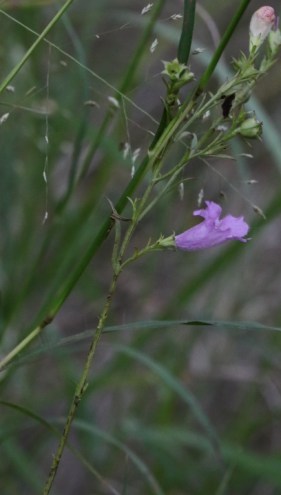
Agalinis heterophylla

Agalinis heterophylla

and, not so far away,  Agalinis strictifolia:
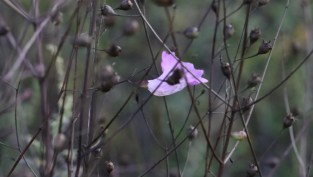
Agalinis strictifolia

Agalinis sstrictifolia

I had a difficult time making the correct identification,  but thanks to the good-hearted folks on iNaturalist.org. I was able to get through my confusion and agree to the IDs they made from my numerous photos. Next year, I won’t wait until November to look for these. And hopefully, will be able to identify which Agalinis is which, using the field guides and other materials available.

###
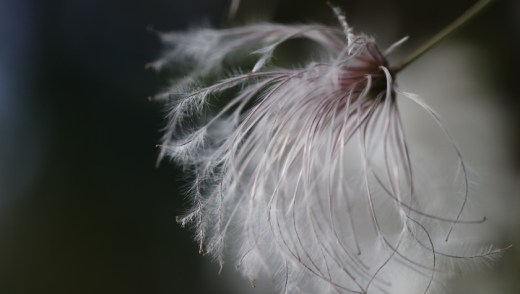
Old man’s beard

Last September, the bulldozers came and razed a 19 acre plot of land that was for sale. Along with it went any number of wildflowers, including a healthy stand of Old Man’s Beard, aka Texas Virgin’s Bower, and other native and a few invasive plants.

recently I came upon a female C. drummondii wending its way through some planted holly (most likely a non-native variety), catching the November sun in feathery achenes. 

A possible explanation to Monarchs’ dallying around Texas this year

This article came up in my newsfeed recently,.

It suggests  why some Monarch butterflies seem to be hanging around Texas this year – the popularity of Tropical milkweed (Asclepias curassavica). The article further goes on to explain that

” Tropical milkweed becomes a problem when planted in temperate areas where it does not die back in winter. A protozoan parasite of monarch butterflies, Ophryocystis elektroscirrha or OE for short, can travel with monarchs visiting the plants and become deposited on leaves. When caterpillars hatch and start eating the plant, they ingest the OE. High OE levels in adult monarchs have been linked to lower migration success in the eastern monarch population, as well as reductions in body mass, lifespan, mating success, and flight ability.”

Milkweeds native to the region die back after blooming, and with them, the OE. Thus each new flight of Monarchs gets to lay their eggs on new, uninfected milkweeds.

Interestingly, the article was written over three years ago…

Tropical Milkweed is a No-Grow – by the Xerxes Society

On the other hand, I have now seen and photographed Monarchs in my backyard from late March through November . I went to vote  on Tuesday, November ,2, and  observed more than a few Monarch butterflies, both in the greenbelt and in the demonstration garden. Sadly,  many of the flowers being used didn’t appear to be natives.  I also noticed that the milkweeds at the community center garden appear to be Tropical milkweed. (They have yellow flowers instead of orange flowers).

Some plants and wildlife in October: