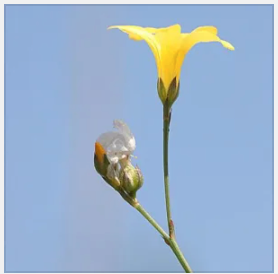
Took a walk out in the woods, in the middle of the summer, to see if the Phemeranthus calycinus aka Rock Pink, might be in bloom, since we had had several days of rain prior. No such luck. There had been at least 20 specimens in the immediate area about four years ago, and earlier this year I found one in bloom, but even the Bitterweed (Helenium amarum) seemed to be scorched, for the most part, although I did take a photo of one that wasn’t, and some grasses. (For an article describing the flower I was looking for, and some photos, see Stalking the ephemeral Rock-Pink).
The area I’ve dubbed “Lace Cactus Lane” because of its concentration of Echinocereus species, was in fairly decent condition. And a pass through the area I call “Vine Street” revealed some Pearl Milkweed Vine (Matelea reticulata) pods dried and open, as well as some Carolina Snailseed (Cocculus carolinus), starting to put out its berries. Of course, there was the usual Poison Ivy (Toxicodendron radicans), Virginia Creeper (Parthenocissus quinquefolia ) and Sevenleaf Creeper (Parthenocissus heptophylla). And I took a few shots of the Bearded Swallow-Wort vine (Cynanchum barbigerum) just to illustrate the way it braids itself along whatever is supporting it.
A bit closer to home, Butterflyweed (Asclepias tuberosa) were in bloom, as were Texas Lantana (Lantana urticoides) , Apache Plume (Fallugia paradoxa), Gregg’s Mistflower (Conoclinium greggii), Mealy Blue Sage (Salvia farinacea), Skeleton-leaf Golden-eye (Viguiera stenoloba), Four-nerve daisies (Tetraneuris sp.), Flame acanthus (Anisacanthus quadrifidus), Autumn Sage (Salvia greggii), and Manzanilla (better known by the name Turk’s Cap, and rarely called Texas Red Mallow)(Malvaviscus arboreus var. drummondii). Even the Wild petunia (Ruellia nudiflora) has been putting out blooms lately, and the Yellow Passion Flower (Passiflora lutea) seems to have just recently finished its latest cycle.
Which leads to a mention of the life cycle of the Gulf Fritillary (Agraulis vanillae) butterflies, which have tried their best but haven’t succeeded in stripping the Passiflora vines completely this year. Given that it is safe to speculate that the suburban subdivision where I reside has little habitat for these beautiful pollinators, one can only hope that my little nursery is keeping the local population going.
 bob's brain: living well with a movement disorder and other comorbidities