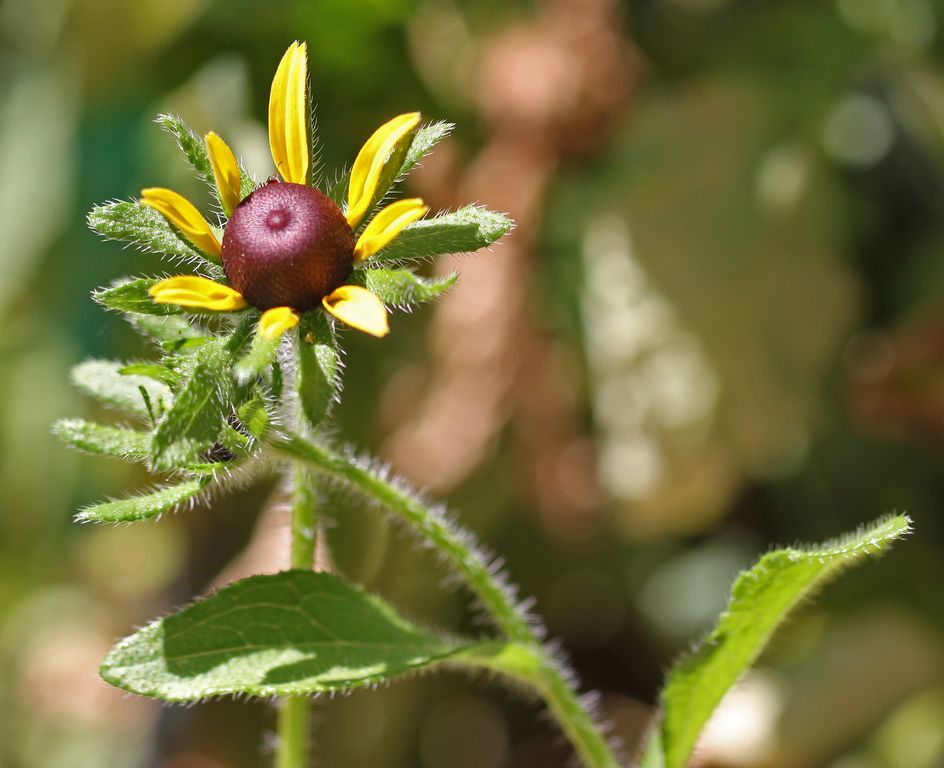
Rudbeckia hirta – Blackeyed Susan
Two of these wildflowers have shown up in my garden this year, most likely sown by birds. Not surprising, since it is one of the most widespread native plants in North America, native across Canada and the U.S. westward to New Mexico. It can grow in many light conditions, from sun to shade, but apparently doesn’t like calcareous or alkaline soils. It propagates itself easily by reseeding and can become aggressive if not faced with competition. It also has been widely used for medicinal as well as aesthetic purposes. What’s not to like about this cheery ornamental? For more information and links to more information than you can imagine, check out the entry at the NPIN plants database.
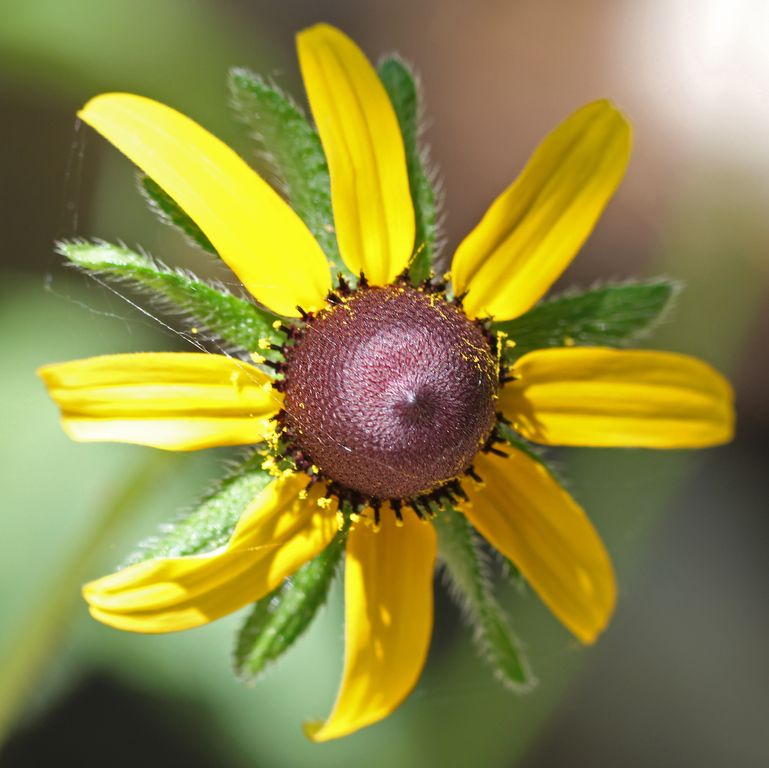
Rudbeckia hirta – Blackeyed Susan
 bob's brain: living well with a movement disorder and other comorbidities