Redbud – Cercis canadensis
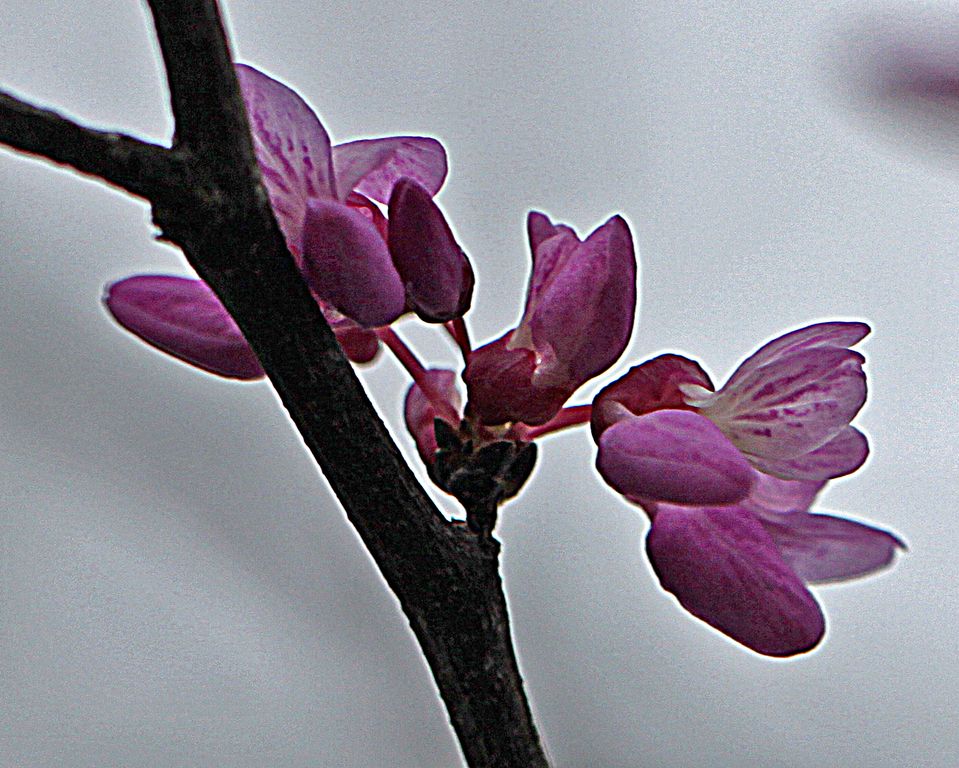
Normal bloom season for the Eastern Redbud is March through May. These buds popped up on 10 February, about three weeks ahead of schedule. Central Texas is about the westernmost part of the range for var. canadensis, where it is replaced by two smaller varieties, var. texensis and var. mexicana , which are also both native to Texas. As you can see here, the flowers appear on the bare branches, while the glossy leaves follow later. Need one add that it is deciduous?
The flowers and leaves apparently are edible, and the twigs have been used to create a yellow dye by boiling in water. The Eastern variety requires more water than the Texas or Mexican varieties, but even it is drought tolerant. It thrives in partial to full shade. and are good in wooded areas. In the past, I have observed an early migrating Monarch Butterfly attracted to the flowers, which in general provide nectar to nectar feeding insects. In North Carolina, I have heard these referred to as “weed trees” and considered a nuisance.
 bob's brain: living well with a movement disorder and other comorbidities