Bouteloua rigidiseta var rigidiseta – Texas Grama

Bouteloua rigidiseta va rigidiseeeta - Texas grama

Bouteloua rigidiseta var rigidiseta – Texas Grama

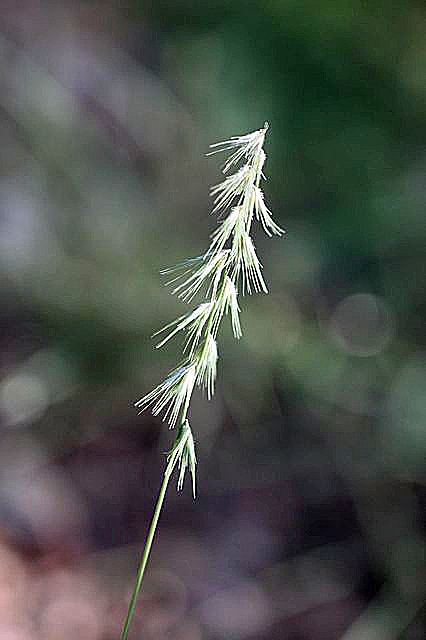
Texas Grama is a weedy grass, often a sign of disturbed soils. It grows on dry plains, rocky hills, and overgrazed land throughout all of Texas except for the northeast. This particular specimen was photographed in Burnet County, although it is common in Williamson County as well, the home base for this blog. Texas Grama also goes by the aliases Bell Grama and Mesquite Grass, showing once again that you just can’t depend on common names. So Bouteloua rigidiseta will continue to wave its bell-shaped seedheads in the wind, providing aesthetic pleasure to those who pay attention.

Desmanthus illinoensis – Illinois Bundleflower

Desmanthus illinoensis - Illinonis Bundleflower

Desmanthus illinoensis – Illinonis Bundleflower


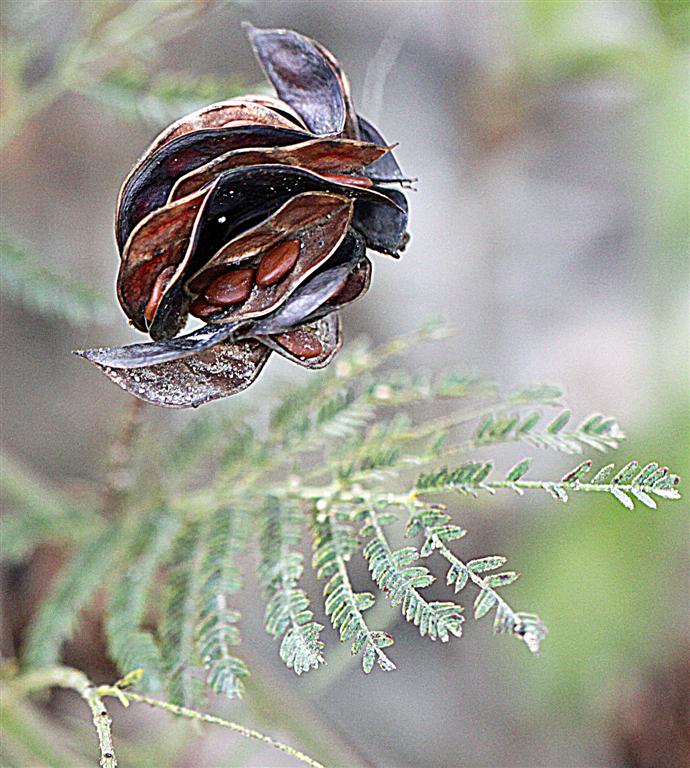
Another shot from Lake Granger/Taylor Park back in mid-July, this time from the shoreline, of the seedpod of the Illinois Bundleflower.

Since the Desmanthus illinoensis usually blooms in May and June, we saw none of the little creamy white flowers, and the seed pods had already turned from green to black.  The leaves have been described as almost fernlike – decide for yourself. Together, they  are a distinctive combination that should be easy to recognize in the field.

Convolvulus equitans – Texas Bindweed

Convolvulus equitans - Texas Bindweed

Convolvulus equitans – Texas Bindweed

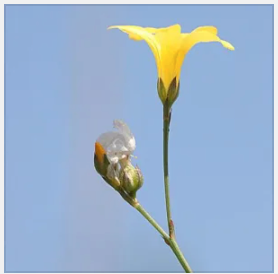
Back to flowering plants, this time a small vine that grows close to the ground and has fairly small flowers which are less than a inch and a half  across, if that much. A member of the Morning Glory family, it resembles other members of the family.  Its leaves are distinctive as seen in this photo just above the blossom. It likes partial shade and is in general easy to overlook.

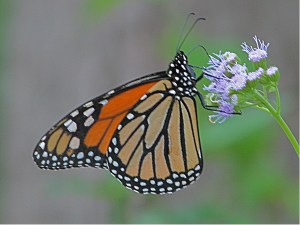
Danaus plexippus – Monarch Butterfly

Danaus plexippus - Monarch

Danaus plexippus – Monarch Butterfly

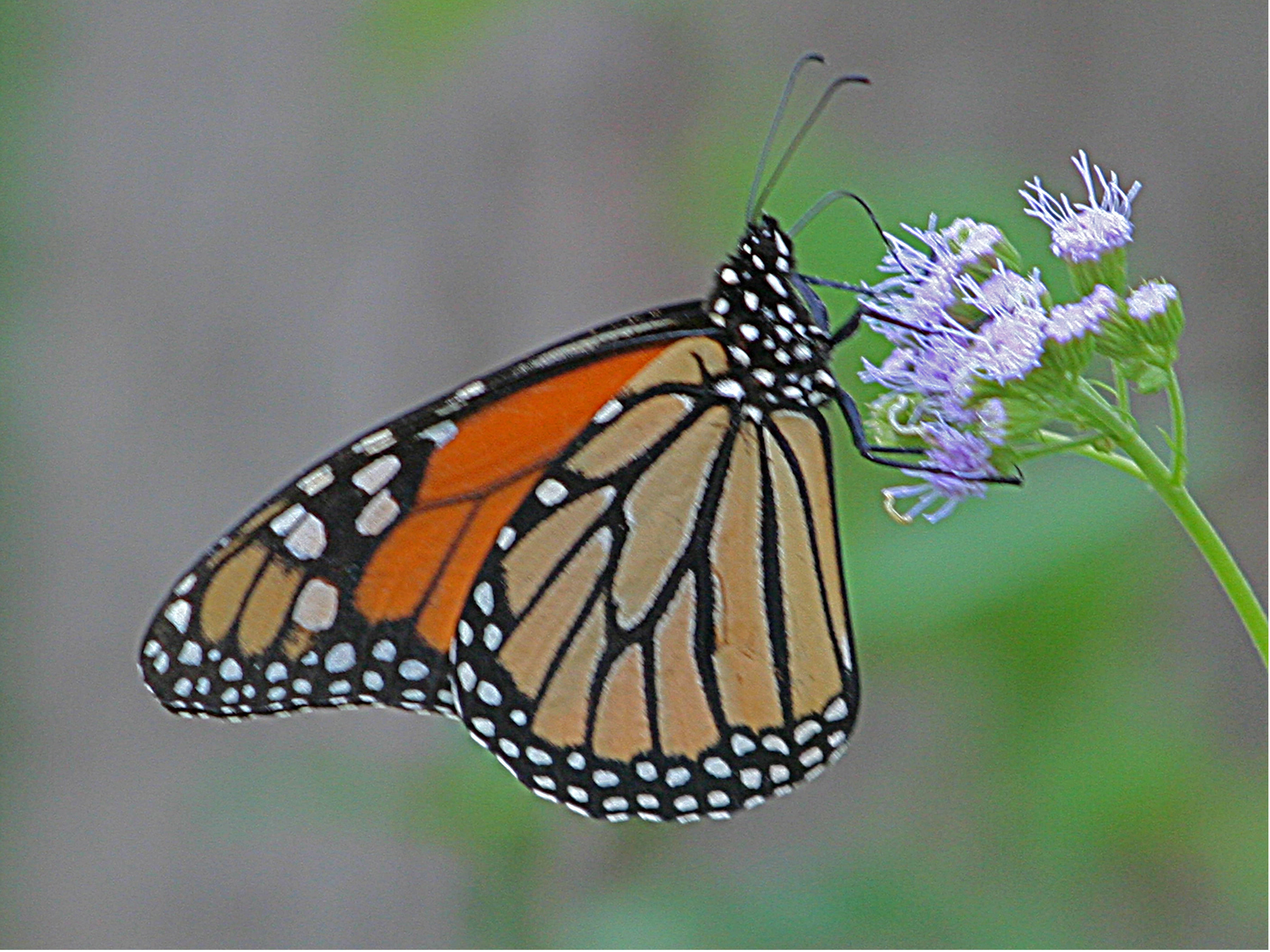
After posting photos of  Monarch mimic Viceroy Butterfly and the Queen Butterfly, it seems only appropriate to post the iconic Monarch Butterfly. if only to distinguish among them.

In Central Texas, both Monarchs and Queens can be found hovering over and feeding on Gregg Mistflower Conoclinium Greggii, shown here alongside the Monarch.  Of course, while Queen can be found here in the middle of July and August,  Monarchs tend to hang in Ohio and Canada until maybe September and October. This particular photo was taken in May a few years ago, probably a second generation new hatched, as Monarchs tend to clear out of Central Texas by May.

Around October, it would be helpful to be able to distinguish between the Monarch and the Queen. One thing is size – Monarchs tend to be larger.  With folded wings, the Monarch has a much lighter orange on its hindwing, while the Queen’s orange is much more saturated. On the upper wing,  the Monarch continues the “stained-glass” like pattern of black lines separating panels of orange, while the Queen has no lines. When the wings are opened, the Queen lacks any lines, with a solid orange, while the Monarch has the same pattern on both sides of its wings. And of course, the Viceroy has the horizontal line across the hindwing and is smaller than the monarch.