Queen Butterfly – Danaus gilippus

Queen Butterfly - Danaus gillippus

Queen Butterfly – Danaus gillippus

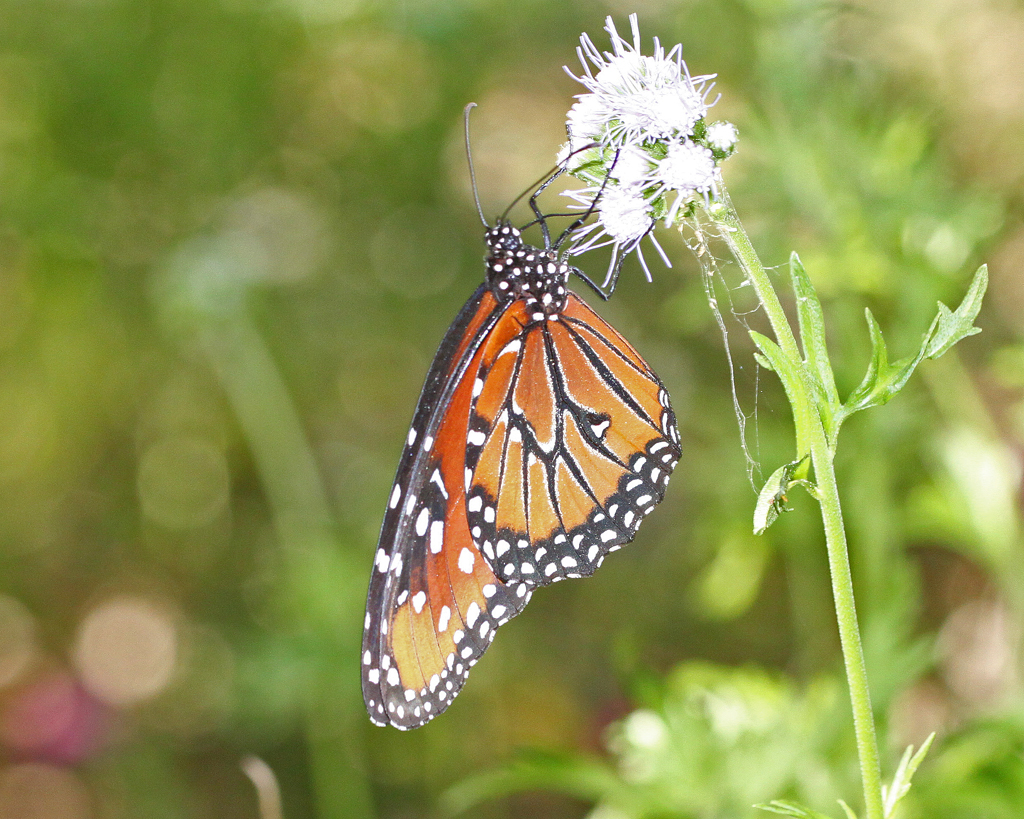
In contrast  to the Viceroy Butterfly that was shot 2 weeks ago, this Queen Butterfly was located in my front yard just  morning. You can see in this view the loose arrangement of white dots across the top of the wing and the lack of the horizontal black line across the hindwing. It isn’t very noticeable, but part of the “black spot” on the lower wing can be seen with a white dot in the middle of it.

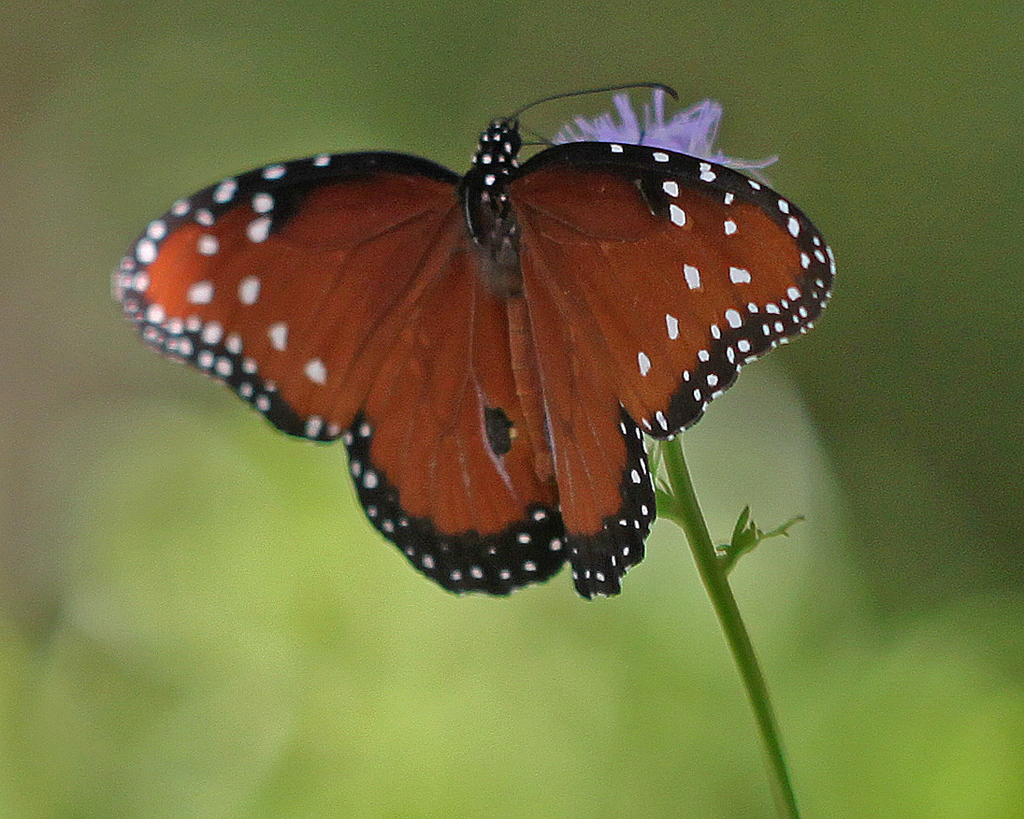
The black spotwhich is more vixible in this other picture with spread wings, is used to attract members of the oppsoite sex.   Note also that when it spreads its wings out that the inner side of the wing doesn’t have the mosaic-like   “staned glass” effect of the outer wings disappears.
Queen Butterfly- Danaus gilippus
Queen Butterfly- Danaus gilippus
Viceroy Butterfly – Limenitis archippus

Viceroy Butterfly - Limenitis archippus

Viceroy Butterfly – Limenitis archippus

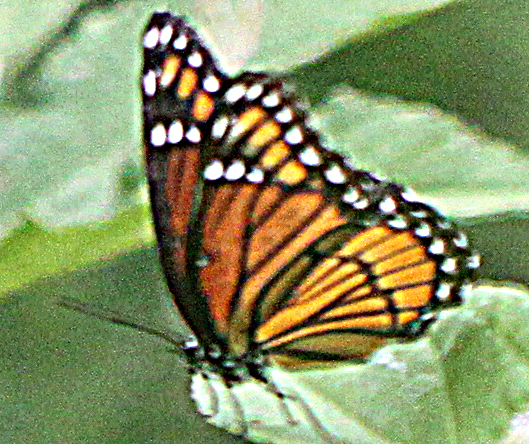
The first tip-off that this might not be a Monarch Butterfly was the size – it wasn’t nearly as large as a Monarch usually is. And it wasn’t a Queen – they have a looser arrangement of spots and a dark spot near the tail. The clincher was the black line  crossing the hind wing in the lower right hand corner of the picture. Sure enough, a Viceroy! Though not an endangered species, they are not seen nearly as often as the Monarch and Queen. And another thing, Monarchs are not seen in Williamson County in mid-July… In fact, the Butterflies and Moths of North America website at http://www.butterfliesandmoths.org/checklists?species_type=All&tid=3013 doesn’t even list the Viceroy among the confirmed sightings for Williamson County. Quite the feather in the cap for our little field trip party. Too bad I didn’t have a telephoto lens with me at the time…

Lygodesmia texana – Skeleton-Plant

Lygodesmia texana - Skeleton-Plant

Lygodesmia texana – Skeleton-Plant

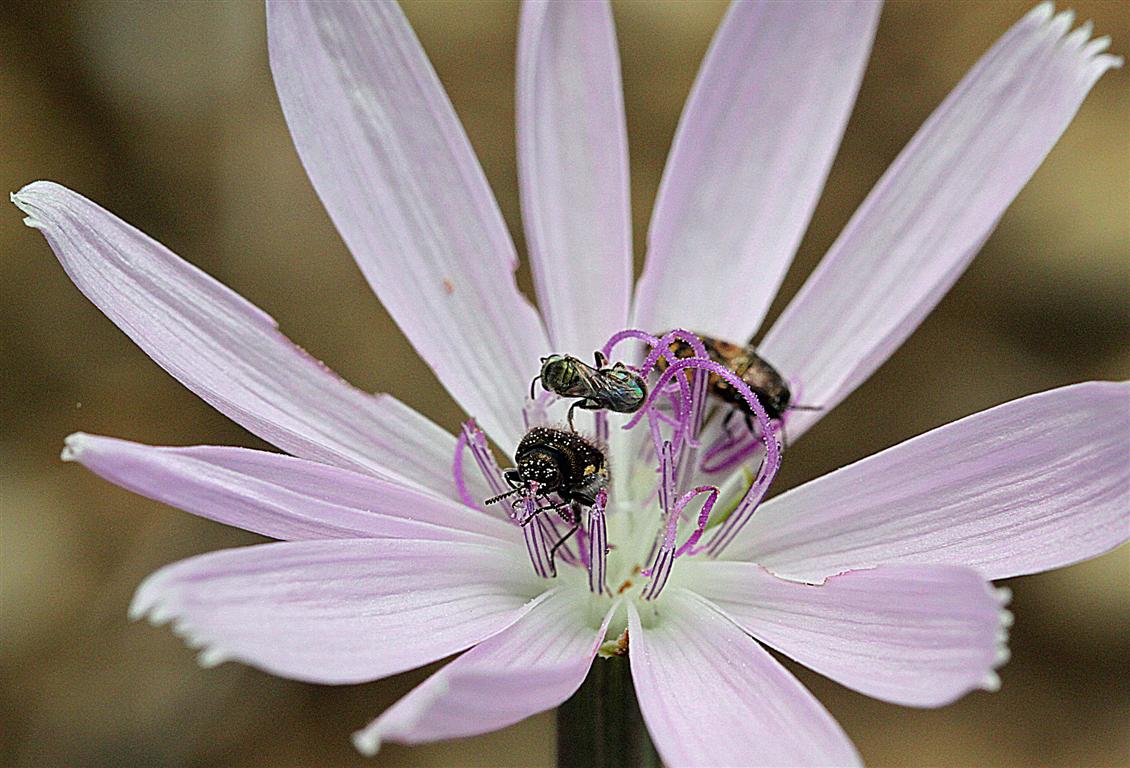
The Skeleton Plant gets its common name from the fact that it has little in the way of foliage, so its stem appears to be the bones of a skeleton-plant. Or so one would guess. This particular shot includes three – count em, three – different types of insects clustered about the flower.  Usually one has trouble getting one insect to stay still long enough to get a shot of it, but these three amigos went about their business with no apparent concern for each others’ presence on the same blossom. It usually blooms throughout the Spring and Summer (April through August), so at least that part of the picture is nothing unusual. This flower is a bit on the pale side, since the flowers usually range from Rose to Lavender in hue, and are often quite saturated as far as color goes. On the other hand, it has attracted three different potential pollinators (one assumes the insects might provide this service), so who are we to criticize?

Liatris mucronata with Strymon melinus

Liatris with hairstreak

Liatris with hairstreak

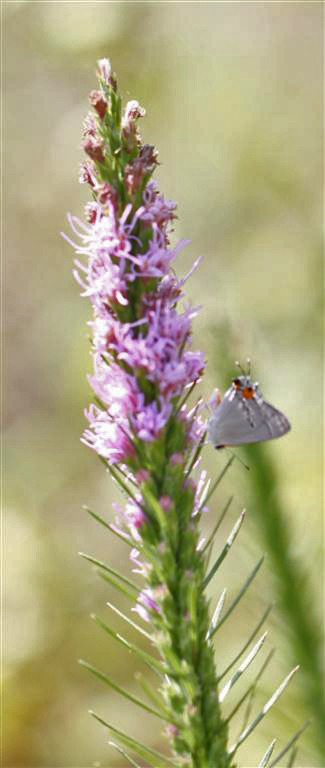
Here we have a Gray Hairstreak Strymon melinus perched on the blooms of Liatris mucronata aka Gayfeather.  The Gray Hairstreak covers much of North America and as far south as Venezuela. It is distinguished by the red spot on its hindwing. One interesting thing about this butterfly is that it bobs its hindquarters up and down while the head remains fairly still, sucking nectar from the flowers. Click on the image anf look closely at the larger image with more detail and you’ll see what I am talking about. This picture was taken July14 at Taylor Park near Lake Granger and shows one of the few Liatris that were actually blooming at the time.


Castilleja species – Indian Paintbrush

Castilleja sp - Indian Paintbrush

Castilleja sp – Indian Paintbrush

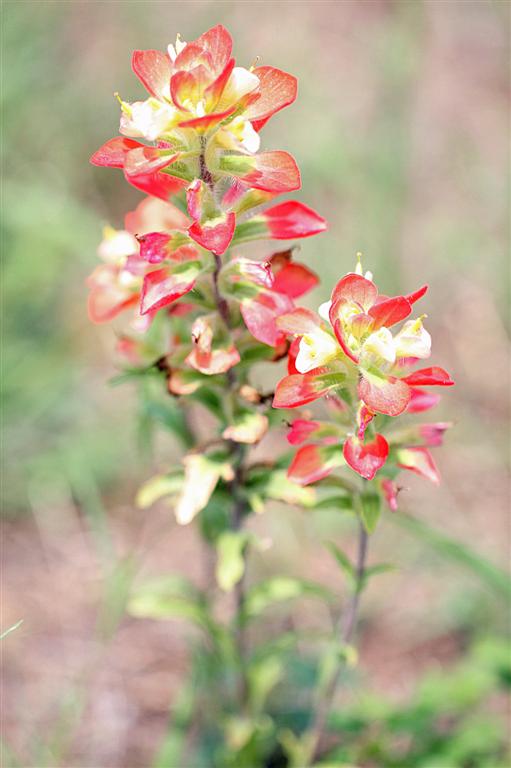
You can file this specimen under “what are you doing blooming on July 14?”, which is when the picture was taken.  Usual bloom period for the Castilleja indivisa species, which this appears to be, is March through May.  Then again, this was a fairly isolated specimen, so it just might be a case of a statistical outlier due to local circumstances.

The colorful part of the plant is due to bracts, leaflike parts of a plant appearing just below the flower, and not actual flower petals.  The actual flower petals are small and white and can be seen at the top of the plant in this picture.

The Indian Paintbrush is something of a parasite, in that its roots grow until they reach the roots of a host plant. Then they hijack the nutrients provided by the host plant’s root system.

Elymus canadensis – Canadian Wild Rye

 Elymus canadensis  - Canadian Wild Rye

Elymus canadensis – Canadian Wild Rye

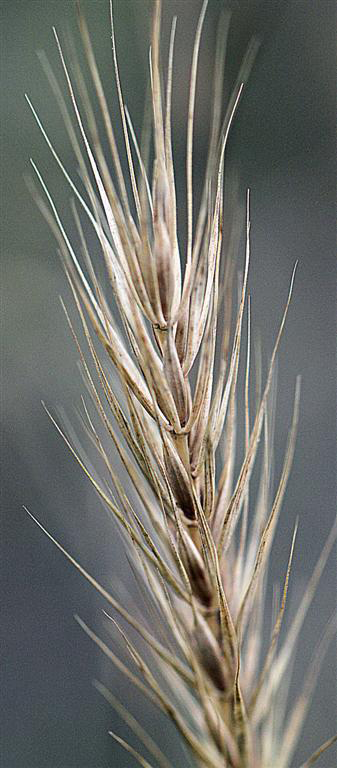
This is a perennial grass with a distinctive pattern of its spiky seedheads. It is shade tolerant and mildly drought tolerant.  It grows to about 2-3 feet high.

This photo was taken July 14 on a field trip to Taylor Park at Lake Granger in Williamson County, Texas. We saw a lot of this grass on the nature trail.

As always, clicking on the image opens a larger picture.


Clematis pitcheri – Purple Leatherflower

Clematis pitcheri - Purrple Leatherflower

Clematis pitcheri – Purrple Leatherflower

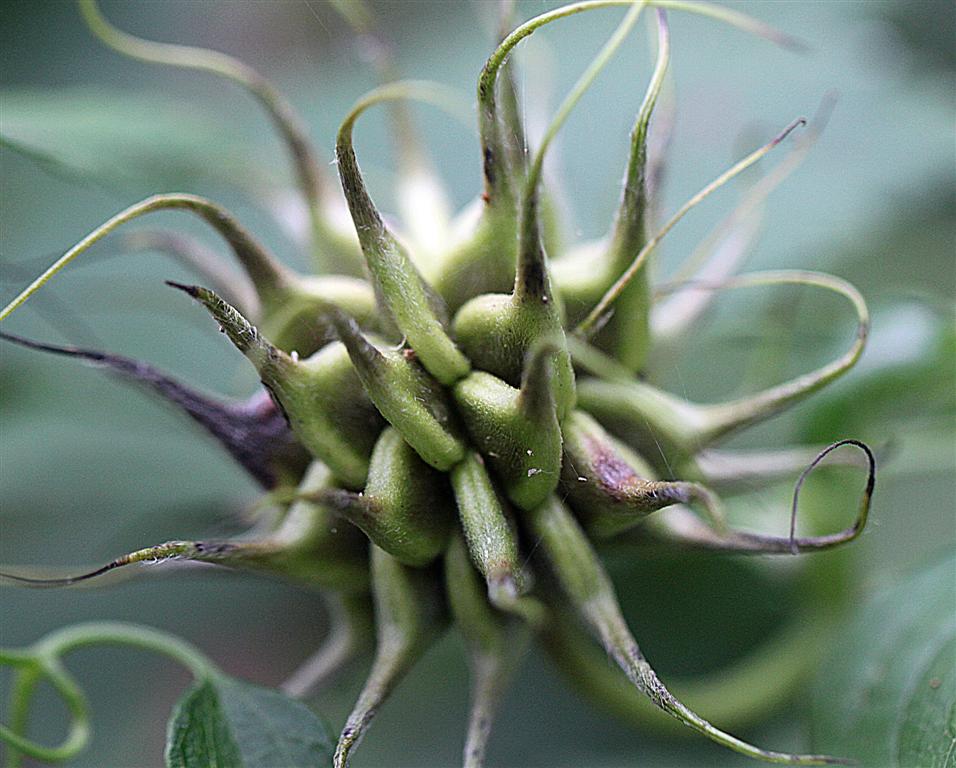
This is part of the Purple Leatherflower, presumably the seed pod after the blossom has faded.

Clematis pitcheri - Purple Leatherflower

Clematis pitcheri – Purple Leatherflower

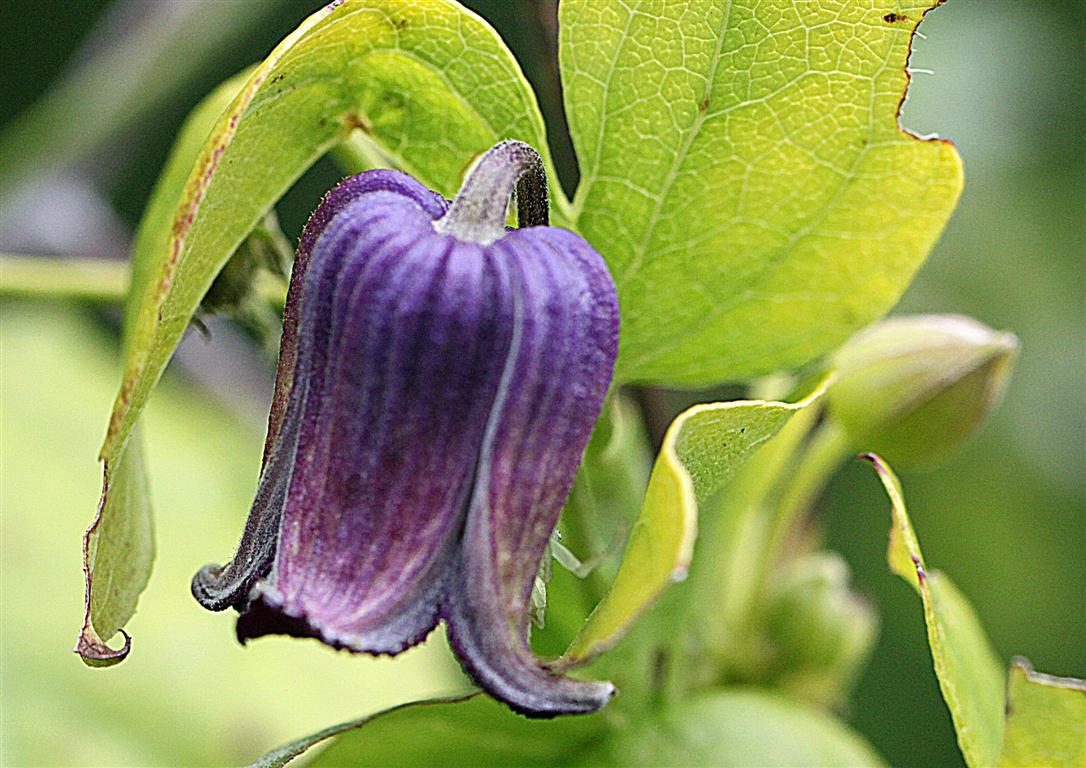
Here we see instead the flower, which is hanging, its four purple sepals looking like petals, which are absent. The flowers do appear to be somewhat leathery, hence the common name. It is a vine, from six to twelve feet in length, and makes its living standing on the shoulders of shrubs.

Liatris – Gayfeather

Liatris - Gayfeather

Liatris – Gayfeather

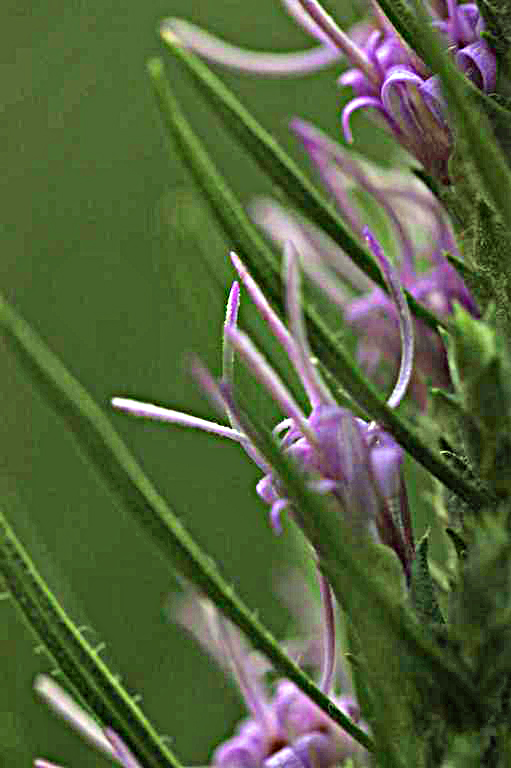
Here’s another shot of the Liatris mucronata in my front yard. Again, up close and personal and looking at a small portion of a spike, showing the needle-like leaves and the flowers. I feel confident in calling this one L. mucronata since that’s what the Wildflower Center had on its label when I bought it, assuming I bought it there…I will be posting some more Liatris in the next few days for which the species is not as certain, since they were found in the wild and mostly they weren’t in bloom, making it more difficult to identify them.


Liatris mucronata – Gayfeather

Liatris mucrinata - Gayfeather

Liatris mucrinata – Gayfeather

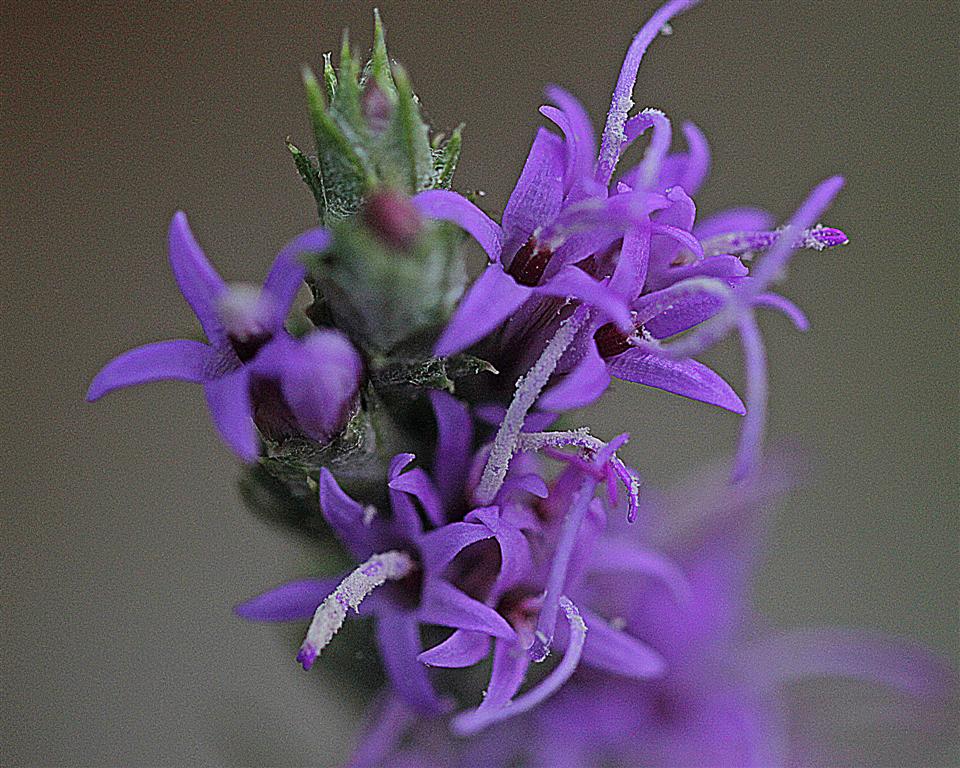
Liatris is in bloom, and this spiky looking plant doesn’t mind the heat, providing nectar for a variety of insects. Last year, it was one of the few plants that stood up to the series of 100 degree days that we had. This is a close-up of the blossoms, which form along the sides of the spikes. While the photo gives you the details, it doesn’t convey the overall shape of the plant and flowers.  That will have to wait for another day.