.
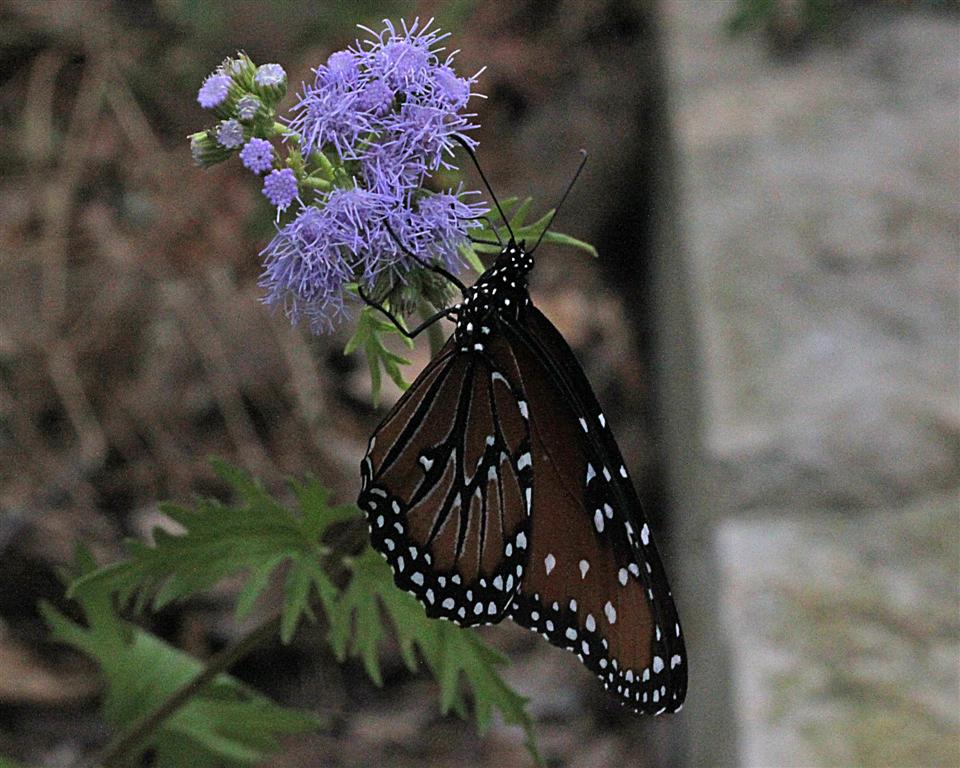
Danaus gilippus, Queen Butterfly is shown here on its favorite flower, Conoclinium greggii or Gregg Mistflower. The Queen gets a toxin from the flower that makes it unpalatable to birds and other predators. The Monarch Butterfly also feeds upon this Mistflower and derives a similar benefit.
Monthly Archives: April 2012
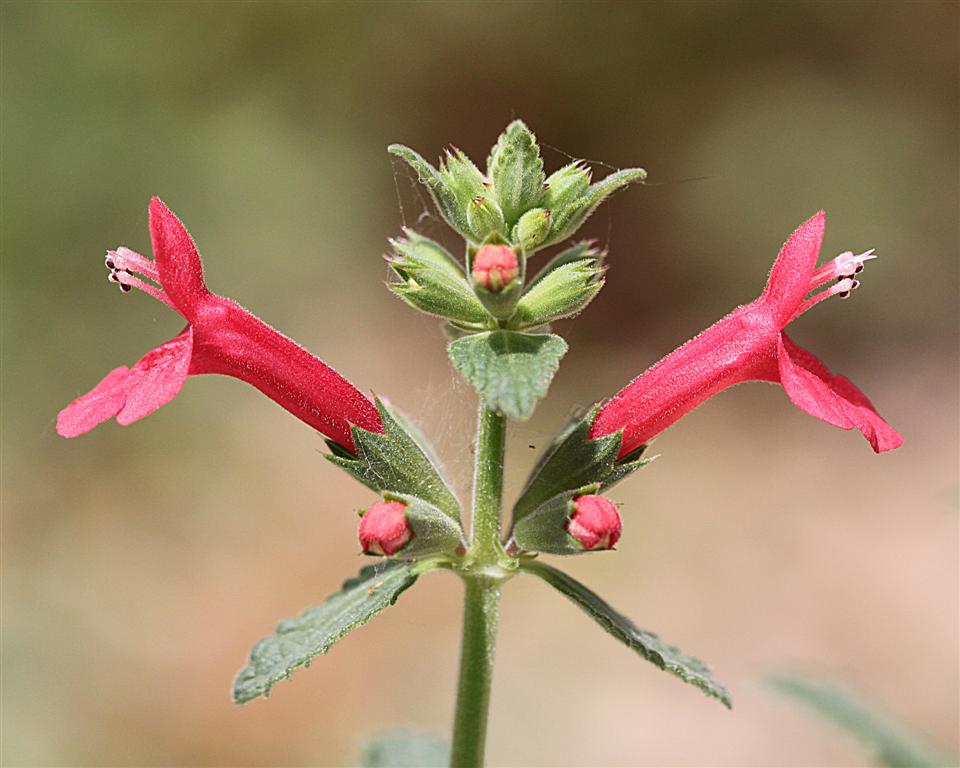
Stachys coccinea – Texas Betony
Also known as Scarlet Hedge-Nettle, I got this at the Wildflower Center plant sale a couple of weeks ago and just planted it in my yard last week. According to their information, this is probably a little too far east to be in its normal range. It has a long blooming period, from March through October, and is a perennial, so if it can make it through the summer it should be back next year. This Betony also attracts hummingbirds, although they seem to be few and rarely seen around here. On the plus side, they won’t be attracting any deer.
Gray On Golden
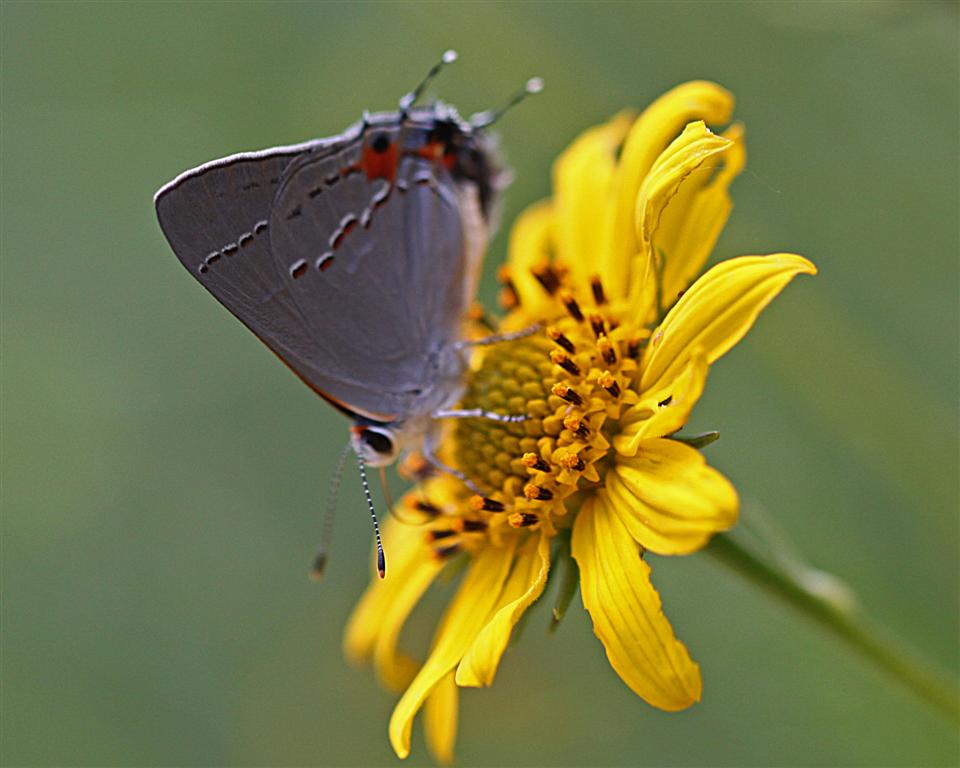
Strymon melinus – Gray Hairstreak sitting on a Viguiera stenoloba – Skeleton-Leaf Goldeneye aka Resinbush. If you look closely you will notice the head at the bottom of the butterfly and the tail sporting a couple of fake antennae that actually wiggle around quite a bit while it is feeding. Apparently this evolved as a survival advantage – one can imagine that if a predator goes after the false antennae , the butterfly is free to fly away and pass on its genes to the next generation which is how natural selection works.
This Wheel’s on Fire…
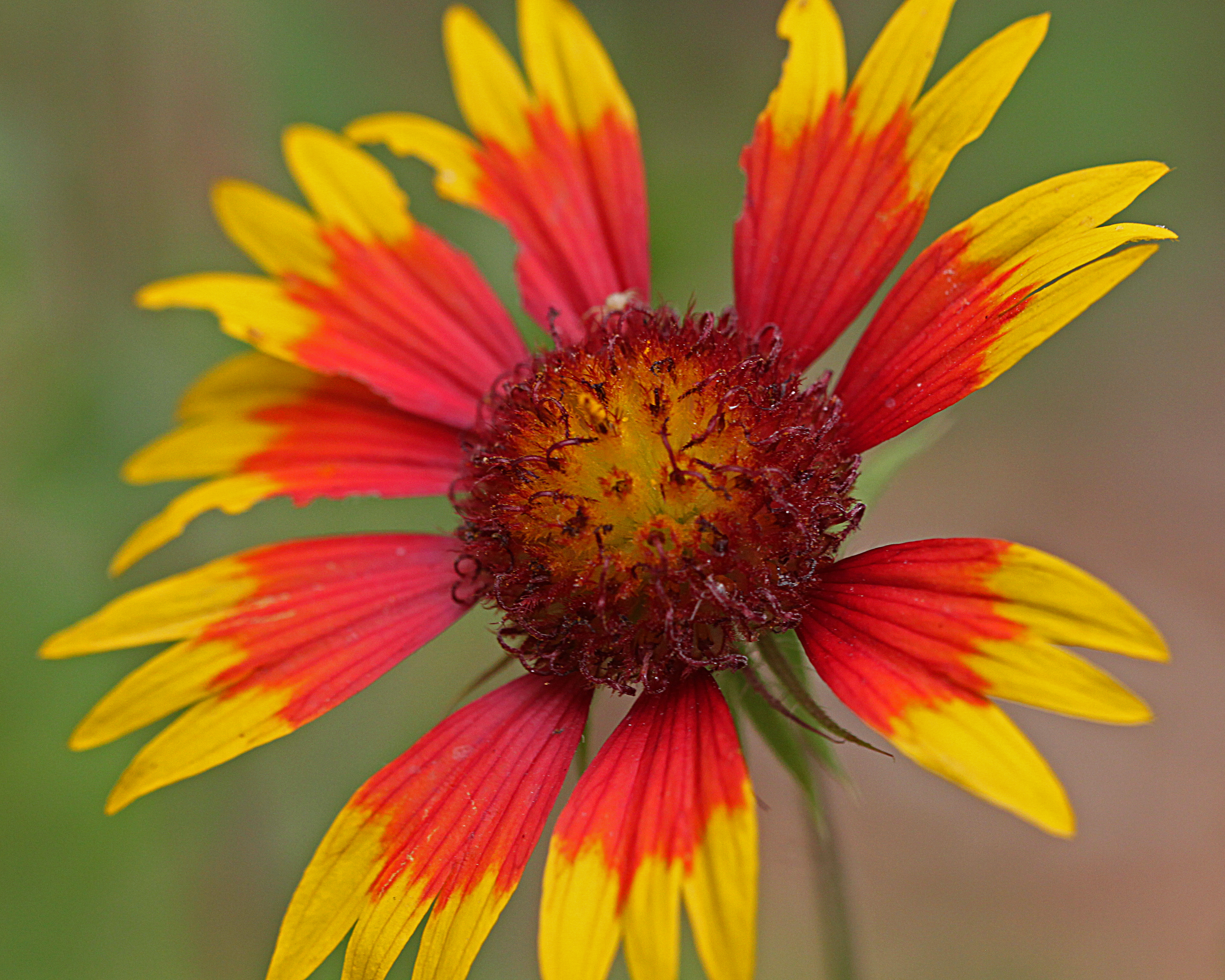
Indian Blanket, aka Firewheel looking a little less than perfect but colorful nonetheless, near the front door. It’s the state flower of Oklahoma, for those keeping track of those things. Bluebonnet, of course, is our state flower. I started my conversion to wildscape by transplanting local Bluebonnets and Indian Blankets rescued from building sites to my yard.
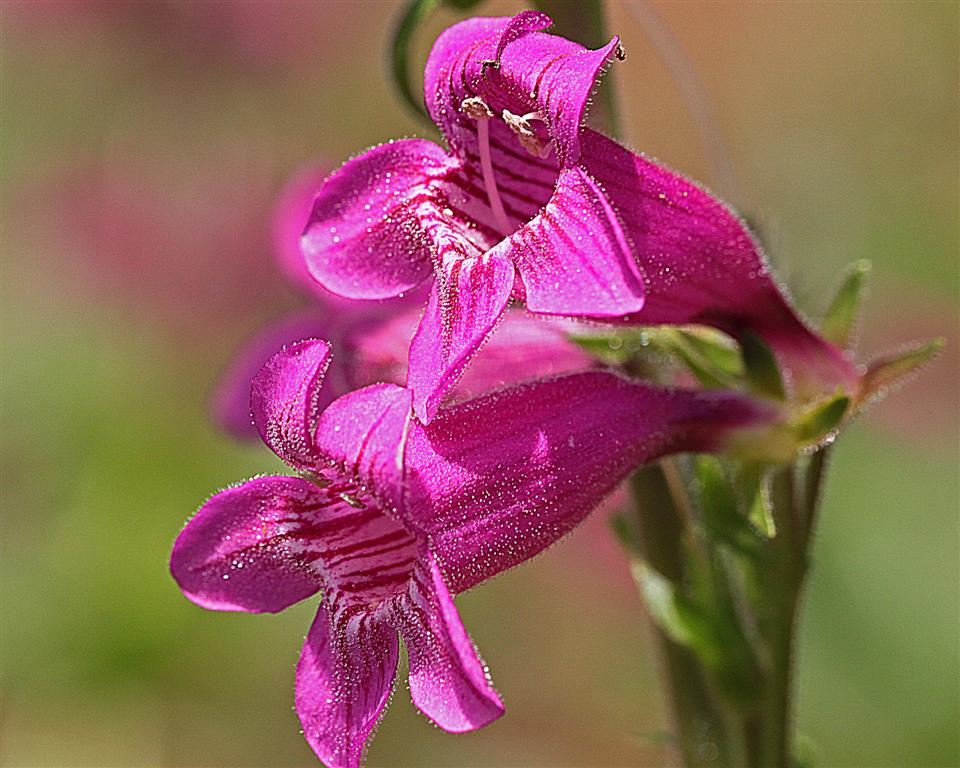
Red Penstemon
whether this is Penstemon barbatus or Pentsemon cobaea is unsettled in my mind at this time, though I’m leaning toward the latter. Typically the Penstemon cobaea or Wild Foxglove is white or creamy overall, with purple to reddish lines. This has the same shape flower, although the coloring is quite different. Still, I think it is probably a red variant of Penstemon cobaea. even though the plant I photographed at the WIldflower Center did have a sign saying Red Penstemon…. which is quite different in form. Good reason to identify these plants by their genus and species names instead of common names.
Oenothera speciosa – Pink Evening Primrose
According to the WFC’s NPIN, this flower tends to open in the morning in the southern parts of its range, which stretches throughout the central plains of the US. So we must officially be in the southern part of the range, here in central Texas. A spreading perennial that tolerates partial shade and drought, it’s another possibility for adding to my wildscape this year. More information can be found at http://www.wildflower.org/plants/result.php?id_plant=OESP2 .
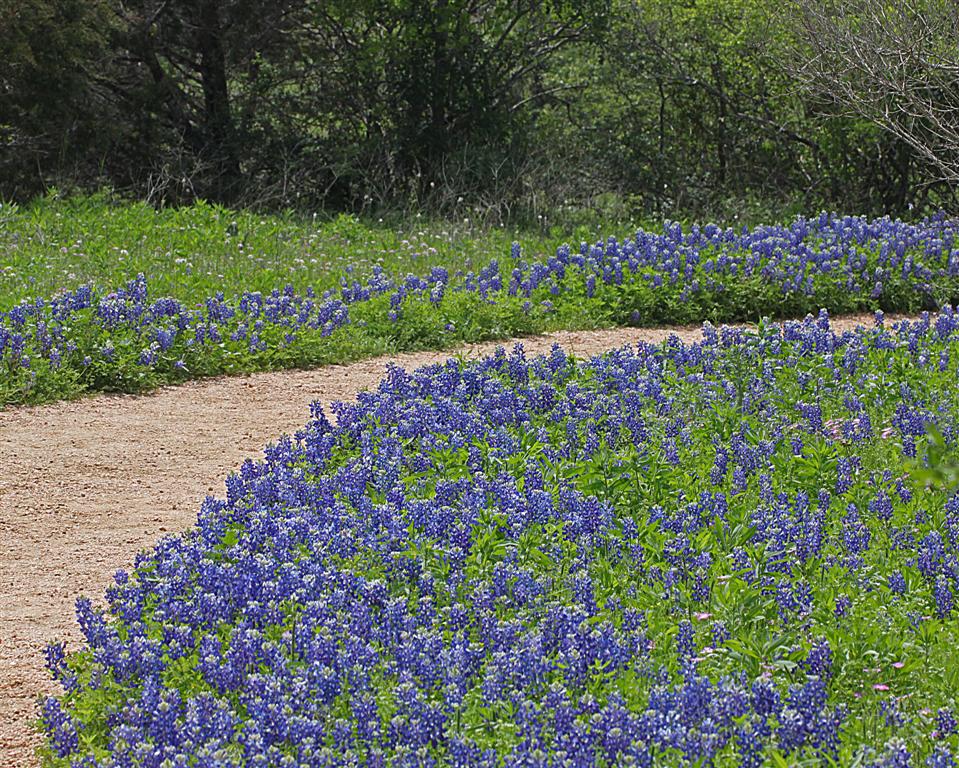
Lupinus texensis – Texas Bluebonnet
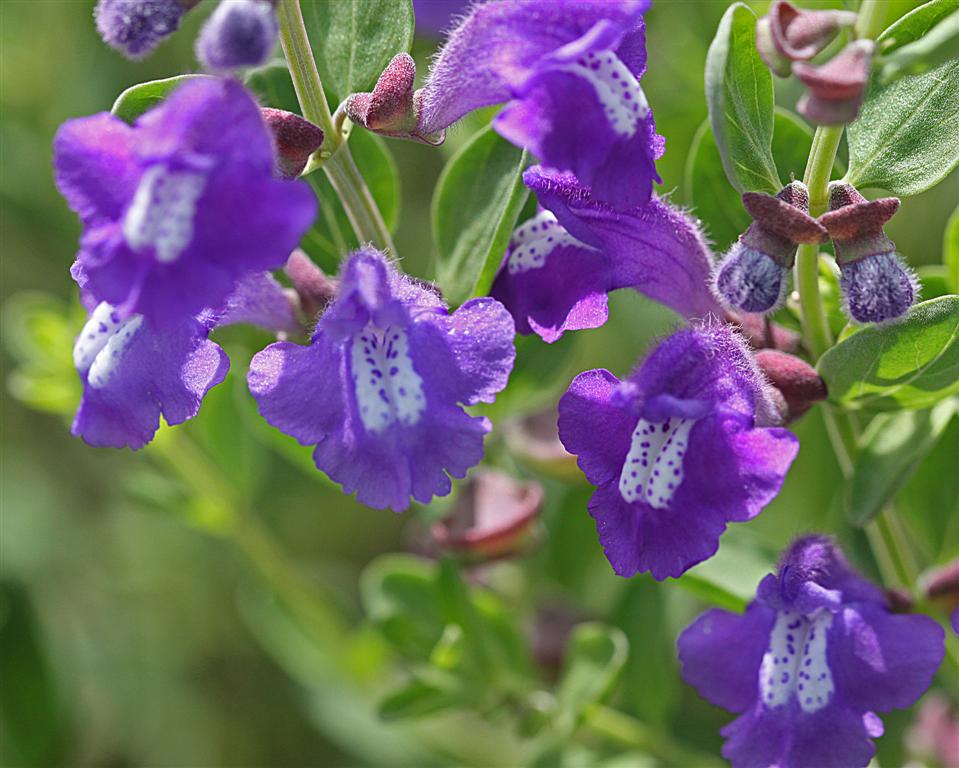
Scutellaria wrightii – Wright’s Skullcap
Found these at the Lady Bird Johnson Wildflower Center down in Austin. Don’t have any in my yard, though perhaps this year we shall. Blooms from March through July with these attractive blossoms, it is an evergreen perennial, which is always welcome. Named after Charles Wright, who did much of his botanical collecting in Texas.